Tag Archives: MaddWolf

The Last Waltz

1982

by Matt Weiner

Wars are complicated. War movies? Not so much, at least not in this country. How, then, to tell the story of an invasion unfolding in the middle of a decades-long civil war?

In 1982, writer and director Oualid Mouaness narrows the lens in his feature debut to focus on the smaller picture. Set at the onset of Israel’s June 1982 invasion in Lebanon during the country’s ongoing civil war, Mouaness’s camera almost never leaves the fenced-in confines of one Beirut school.

Encroaching tanks and fighter jets begin the day as distant updates on the radios, with concerned teachers and school staff furtively trying to stay updated without alarming the children. But as the invasion progresses, it becomes impossible for anyone to keep the reality of war at bay.

How this plays out in a diverse country already torn apart by years of fighting becomes the subject of two love stories. For Yasmine (Nadine Labaki), concerns about her militia member brother outweigh keeping her relationship going with Joseph (Rodrigue Sleiman), a fellow teacher with opposing political views.

Their complicated allegiances serve as a stand-in for the rapidly shifting political landscape in the country, and their uncertainties—toward each other, and the future—are played to great effect by both Labaki and Sleiman.

The film’s other main star-crossed love story is a much lighter one, as 11-year-old Wissam attempts to woo a classmate in the face of challenges both typical—pre-teen embarrassment—and extraordinary, like the one checkpoint to her house being closed.

The split between the faculty and the students is effective, to a point. Although as the idyllic bubble of the students clashes more and more with the war just beyond the school walls, the intensity given to Wissam’s courtship feels increasingly at odds with the stakes.

Some of that seems by design. Mouaness hints at the greater sectarian strife tearing the country apart, but there’s only so much metaphorical weight you can load onto the school’s metaphorical stand-ins. The film does such an economical job sketching the complexities of the war that any single, tidy resolution would do the message a disservice.

In the meantime, we are left feeling much like Wissam, aware for the first time of the complicated forces that determine our lives. And aware too of just how powerless we are to alter their direction.

Breaking the Pattern

Breaking Fast

by Rachel Willis

Most rom-coms, or rom-dramedies, follow a very specific pattern. You already know when each plot point will happen: the meet, the first date, the montage of falling in love, etc.

Writer/director Mike Mosallam’s first feature, Breaking Fast, follows this predictable model to the letter.

So, what makes Breaking Fast different? Mainly, the characters.

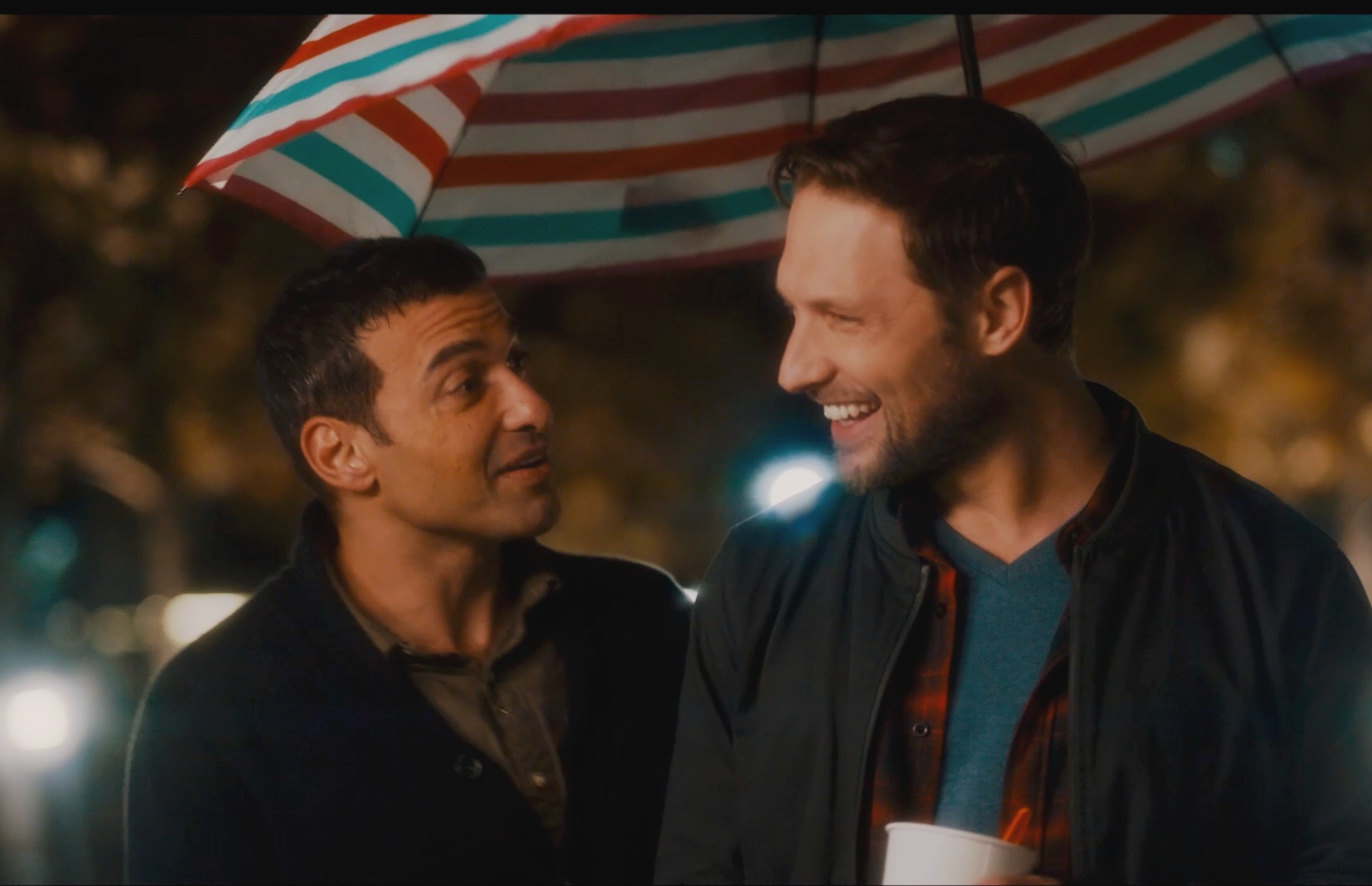
Mo (Haaz Sleiman) is a gay Muslim living in West Hollywood. His best friend, Sam (Amin El Gamal) is eager to see Mo get back into a relationship after his last ended when Mo’s closeted boyfriend broke up with him to marry a woman.

As the holy month of Ramadan begins, Mo meets Kal (Michael Cassidy). From here, you know the plot, but Mosallam weaves into the narrative elements with which you might not be familiar. Mo is adamant that his faith is not incompatible with his sexuality. And as he gets to know Kal, the two grow close as Kal breaks fast with Mo nearly every night during Ramadan.

Most of the gay men we meet in the film, including Sam, have turned their backs on any form of religion due to the harassment they have experienced in the name of faith. But Mo’s experience has been one of love and acceptance, and his devotion to his faith is a large part of the film.

Awkward dialogue makes for some tedious moments. Part of the problem is that Mosallam wants to paint us a new picture of Islam, one that is full of love and acceptance. Unfortunately, that lands on the screen feeling more like a lesson than an integrated narrative layer.

This isn’t the first movie to try to educate its audience, but the clumsiness of the execution weakens the film.

There are also some uncomfortable moments between Kal and Mo, and not the kind of uncomfortable that comes across as cute. These scenes are not awkward enough to leave you rooting for a couple, but embarrassing to the point of being hard to watch.

But then, there are the sweet moments between the two, and you do find yourself pulling for them as they weather the difficulties of a new relationship.

Too bad Breaking Fast never finds the right balance between what it is and what it wants to teach you.

The Beat Goes On

Yung Lean: In My Head

by Brandon Thomas

Thanks to the internet, the world of new music is vast and wide. Anyone can put a song on their website, or upload a poorly produced music video to YouTube. Most of it goes unnoticed. That lack of notice is usually justified.

And then occasionally someone like Yung Lean comes along. 

In the early 2010s, a group of Swedish teens began uploading rap demos to Tumblr and Soundcloud. The same group gained even more notoriety when they began uploading videos to YouTube. This trio, the “Sad Boys,” and their de facto leader, Jonatan Leandoer Hastad (Yung Lean), soon found themselves on a meteoric rise across Europe and then the rest of the world. 

Music documentaries have become a popular subgenre in recent years. The Beatles, Amy Winehouse, and The Beastie Boys have all been the subject of recent, popular docs. Of course, these are artists already known and immortalized through their music and pop culture. The beauty of Yung Lean: In My Head is how the film uses Lean’s underground status to its advantage. The air of mystery is half the point. 

This documentary isn’t one that suffers from a lack of involvement from the principals. Lean’s story is told through his friends and collaborators, video footage shot while on tour, and family photos and video. Thankfully, the film doesn’t get too caught up in talking heads explaining every little detail. The copious amount of footage shot during the American and Canadian tour helps paint a picture of artistic freedom that slowly unraveled into drug-fueled chaos. 

Lean’s story takes a dramatic turn later in the film, one that shifts the focus away from music. This is an area where other films might stumble or even choose to not devote much time at all. Instead, In My Head pivots with ease. The focus was never just the music – it was Lean himself. 

In My Head may not have a subject with the culture cache of the Fab Four or Elvis Presley, but what Yung Lean does have is a compelling story born out of artistic creation and personal perseverance. 

He Ain’t Heavy

Stallone: Frank, That Is

by George Wolf

The title of this documentary is a correct assumption that Frank is not the first name you associate with the last name Stallone.

So that’s a nice, self-aware start to things. But despite a succession of famous faces telling us what a great and multi-talented guy Frank is, the film never can convince us that he’s worthy of a documentary in the first place.

One of the first things writer/director Derek Wayne Johnson lets us know is that Frank loves to talk. He does that often in the film, running through the events in his life with rambling, disjointed stories about how many times he was soooo close to being a contender…only to have fate snatch his dreams away.

Using his own words, many archival stills and too few videos, the Frank Stallone timeline begins to feel propped up by tall tales. These stories are often lacking in specifics (especially for a 73 minute film that clearly has the time) and loosely connected with a magical “and then I get a phone call.”

Still, Frank clearly does have talent. He has a fine voice, has written plenty of songs and even scored one big hit (“Far From Over”, from the film Stayin’ Alive that his brother directed). He’s also shown acting chops in some of the film roles he’s done (Barfly and Tombstone, for example).

But seeing his name as producer of this film only adds to the feeling that it’s nothing but a calculated promotional effort. Many of the platitudes from celebrity friends and facelifts seem more manufactured than authentic, and even though Frank appears fine with poking fun at himself, he never directly address the ironic elephant in the Stallone living room.

He tells us how hard it’s been overcoming the “Rocky’s brother” image even as he’s taking us through a career full of breaks he’s gotten for being just that.

A little self-awareness on that point and SFTI might feel less like, frankly, the insincere vanity project it becomes.

Screening Room: One Night in Miami, Locked Down, Marksman, Rock Camp, MLK/FBI & More

Bad Boys for Life

Promising Young Woman

by Hope Madden

Emerald Fennell keeps you guessing.

In a riotous and incredibly assured feature debut as writer and director, she twists both knife and expectations in a rape-revenge riff that’s relevant, smart and surprisingly hilarious.

If you like your humor dark.

Carey Mulligan is flawless—when is she not?—as Cassandra. By day the one-time med student ignores customers from behind a coffee house counter. By night, she pretends to be obliterated in local clubs and dive bars.

Why would she do that? Well honestly, it’s because Cassandra’s life has lost its purpose and this is to a great degree the drug that numbs her. These opportunities to puncture the moral delusions of self-proclaimed “nice guys” who take her home provide catharsis. It’s like her own version of purgatory, as she forever tries to make amends for that one night back in med school.

And these moments are priceless as, one by one, Fennell exposes the hideous reality of gender norms and how little it takes for a man to be considered a good dude.

Mulligan is marvelous, giving Cassie the courage that comes from an utter disinterest in the opinions or well-being of others. And then a good guy from med school (Bo Burnham) stops in for coffee (in one of Mulligan’s finest, funniest scenes) and the stakes get higher.

Maybe she has a shot at turning the tables on those she considers responsible for this pain. Or maybe she’s found her one chance to put this pain behind her.

It’s a tightly wound script populated by spot on performances. Fennell has a gift for casting small roles with actors who can find the absurd humor and realistic horror of every situation: Jennifer Coolidge, Clancy Brown, Adam Brody, Laverne Cox, Alison Brie, Christopher Mintz-Plasse. But the cherry on this sundae is Burnham, who is quietly magnificent.

A pessimism runs through Fennell’s film that’s hard to ignore and even harder to criticize. But the film is true to the character of Cassie—a woman who’s profoundly dark and unforgiving but not wrong.

Fennell’s film is not a nuanced drama concerning rape culture. It’s not telling us anything we don’t honestly know already. It’s not a scalpel to the brain, it’s a sledge hammer to the testicles.

And why not?

A History of Non Violence

MLK/FBI

by George Wolf

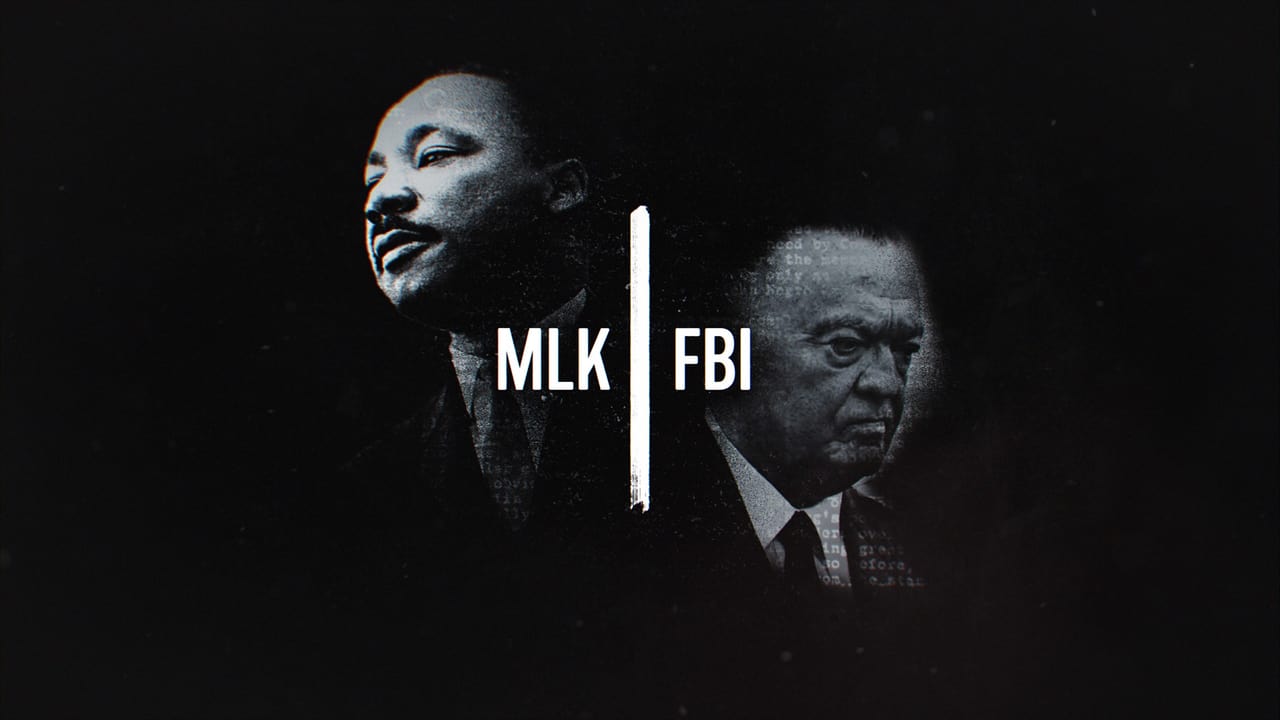
This year’s Dr. Martin Luther King, Jr. day arrives during a time in history that has worn out the word “unprecedented.” And it is the gravity of these times that only serves to make veteran documentarian Sam Pollard’s MLK/FBI ring with more timely urgency.

Mixing some impressive historical footage, newly declassified files and more recent interview perspectives, Pollard dives into the FBI’s harassment of Dr. King with a steady, tactical approach.

For those unfamiliar, it becomes a chilling reminder of a courageous and charismatic civil rights leader, and the powerful white men who felt the best way to weaken Dr. King was through revelations of his sexual indiscretions.

And as you hear racists from decades past recite the same, tired excuses for their fear and bigotry that we’re hearing now, the folly of our confident righteousness is exposed with a sad irony.

Looking back, former FBI director James Comey describes the assault on Dr. King as the saddest days in the history of the bureau. Those times were daunting, too, and they called for accountability that never came.

Are we condemned to repeat that history? We’ll see very soon, which makes the lessons of MLK/FBI as vital as ever.

Nights Are Warm and the Days Are Young

Some Kind of Heaven

by Hope Madden

There is something absurd and mesmerizing about Lance Oppenheim’s documentary Some Kind of Heaven. The greens of the golf courses are insanely green, the aquas of the pools are blindingly blue/green, the synchrony of limbs or golf carts in the choreographed dances is hypnotic.

They have synchronized golf cart dances.

The Villages is nuts!

Sort of the Disneyland of retirement communities, Florida’s The Villages is a 100,000 strong city, gated and catering exclusively to elderly residents. Their town square is painted and constructed to look like a real town square – it even has a fake history that city tour guides will spin with a smile and a deep, savage tan.

This is a community of affluence ripe for satire in an era of catastrophic generational income inequality. Instead, Oppenheim finds a more melancholy and poignant inspiration. Rather than lampoon the wretched excess, the filmmaker develops character studies, unveiling something more bitter than sweet in this dessert topping of a town.

Anne and Reggie, married 47 years, began falling apart before they moved to The Villages, but his recreational drug use and attempts at spiritual awakening are taking a toll. A poignant look at loneliness inside the happiest place in old age, the recently widowed Barbara works all day and finds herself an outsider in a world full of vacant, smiling eyes.

But the true outsider is the seediest and most fascinating character of the bunch. Eighty-one-year-old Dennis cannot afford The Villages, but he’s not ashamed to scam his way in. Living in his van and preying on lonely women with money, he reminded me of the sublime Senior Love Triangle from 2020.

That comparison, though, only draws attention to the fairly superficial treatment Oppenheim gives the subjects. Dennis seemed to be an opportunity to comment on an unseemly reality seeping into this community, itself a perversion of reality.

Oppenheim’s framing and David Bolen’s cinematography create an unforgettable visual experience, preparing you for a Wes Anderson meets John Waters documentary about rich old people synchronized swimming.

Well, that’s just too high a bar. Who could live up to that? Instead, Oppenheim settles for a little razzle dazzle, a little character intrigue, and enough footage to make you wonder what the hell goes on in The Villages.

Diamond Life

Locked Down

by George Wolf

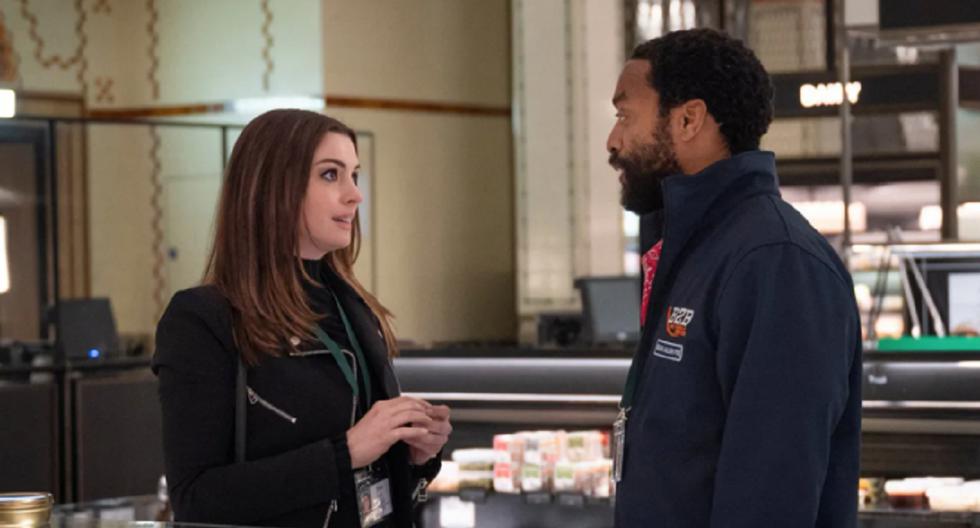
If you’re gonna be quarantined, you could do worse than being stuck with Anne Hathaway or Chiwetel Ejiofor. They’re both extremely talented and – inexplicable internet hate notwithstanding – easy to like.

But in Locked Down, their characters don’t like each other much anymore. In fact, Linda and Paxton were just about to split up when the stay-at-home orders came down. So now he’s been furloughed, she’s been firing people via Skype, and they keep to opposite ends of their (pretty sweet) London townhouse.

But fate is a funny thing, and though Paxton thinks it’s long been against him, suddenly he and Linda have the opportunity to steal a priceless diamond from Herrod’s without anyone noticing.

In writer Steven Knight’s resume of big ups (Locke) and major downs (Serenity – I mean wtf?) Locked Down is a creamy middle with a pleasant enough aftertaste.

Though the dialogue is filled with too-perfect banter and characters who casually drop references to Norse mythology while getting tripped up over “implode” and “explode”, everyone involved seems like their having fun. Expect a couple laugh out loud moments as well, so there’s that.

Hathaway and Ejiofor exude effortless charisma, and a parade of cameos (Ben Stiller, Ben Kingsley, Mindy Kaling, Stephen Merchant, Claes Bang) adds to the comfort food feeling.

And since this is a true socially distant production, most of those famous faces are seen only on computer screens, with director Doug Liman making sure there are plenty of Zoom glitches and other overdone reminders of our interesting times.

But though Liman is best known for action flicks (Edge of Tomorrow, Mr. and Mrs. Smith) this is no Ocean’s Two. The heist is small scale and forgettable fun, but it’s when we’re gently reminded about the things the pandemic hasn’t changed – only revealed – that Locked Down finds a relevant voice.

Locked Down is available now on HBOMax

School of Hard Rocks

Rock Camp: The Movie

by George Wolf

“Thanks for coming out tonight, we’re Motley Jüe..oy!”

Yes, Motley Jüe was a real band, at least for a few days. Picking the perfect band name is just a small part of the fun for the wannabe rockers at Rock and Roll Fantasy Camp. Rock Camp: The Movie takes us inside the experience that bridges the gap between stage and the Gold Circle section.

Because, let’s face it, those in the cheap seats can’t afford this, either. But for the fans that can swing it, RCTM shows us an indulgence that’s a lot less worthy of the kinds of jokes it inspired in year one.

Promoter David Fishof launched the first camp in 1997, to minimal interest. He got the idea from a practical joke played on him backstage by members of Ringo’s All-Starr Band (that home video footage is priceless), though low attendance the first year seemed to signal failure.

But after the camp was featured in various TV and commercial segments, it gained a foothold in popular culture. That brought some big rock stars into the fold, and Fishof (an interesting guy who could merit a documentary himself) suddenly had a hit.

The film is the debut feature for co-writers/directors Renee Barron and Douglas Blush, which often shows. Their focus can wander, and much of the production isn’t far removed from a marketing video. Plus, there’s no escaping that fact that much of the footage – judging by the look of some very famous faces – is clearly less than recent. The overall context of regular folk taking a chance to follow their passion, though, does help these rough edges seem appropriate.

Profiles of fewer campers might have allowed time to foster a more intimate feel, but the dreamers Barron and Blush introduce are worth knowing. We see lives uplifted, families strengthened, and true talent given the chance to grow.

Perhaps most surprisingly, we see rich and incredibly successful musicians truly moved by their students, and reconnecting with the simple joy of music that set them on their path. And some of them – Roger Daltrey, Paul Stanley and Sammy Hagar especially – seem like really nice people.

Yeah, Gene Simmons is still obnoxious. Even fantasies have their limits.