Tag Archives: Madd at the Movies

Occupied!

We Need to Do Something

by Hope Madden

We’ve all felt a little trapped lately. But the pandemic was completely different depending on your situation. Were you trapped and utterly alone, like Bo Burnham? Because that seemed sad and reflective, funny and inspirational and wildly successful. (See Inside if you haven’t.)

Or were you trapped with your family?

We Need to Do Something is a parable about being stuck for a long time with the people you  know best and were probably sick of in the first place. The world outside your doors offers a high possibility of death, but the world inside might be even worse.

Parable is a strong word. We Need to Do Something is a nightmare.

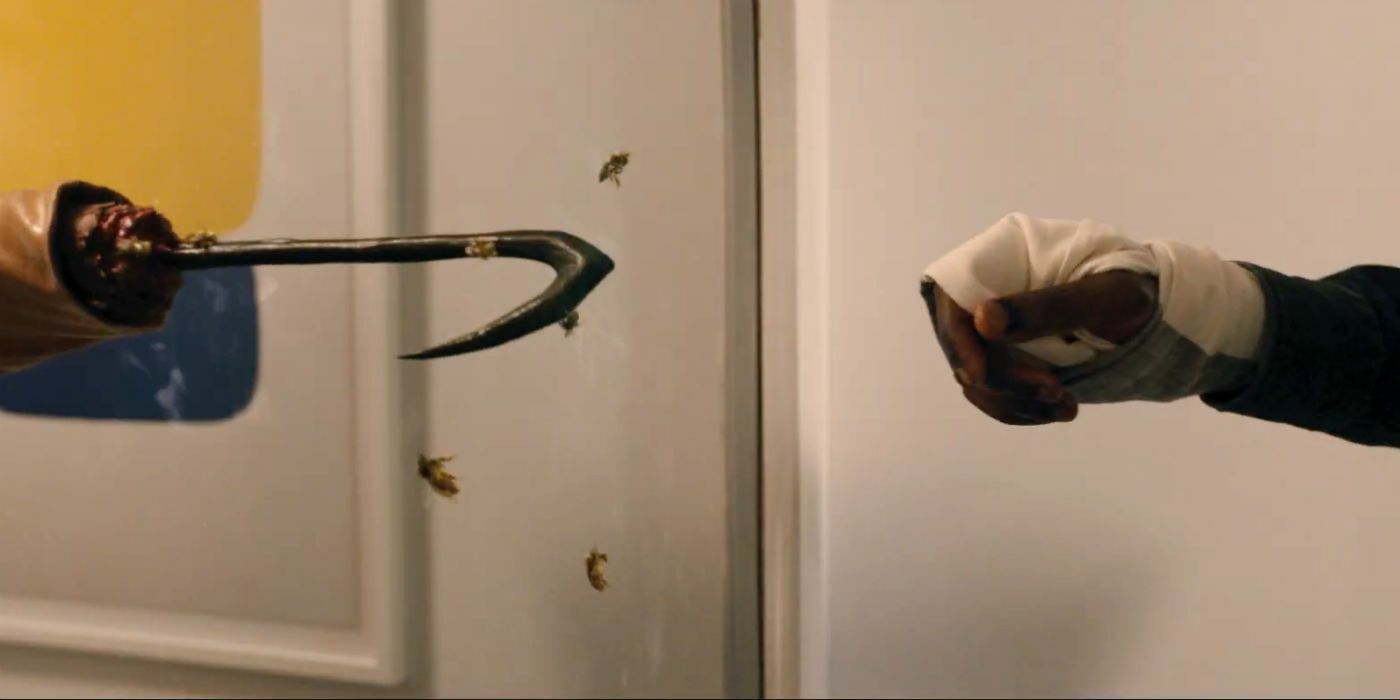
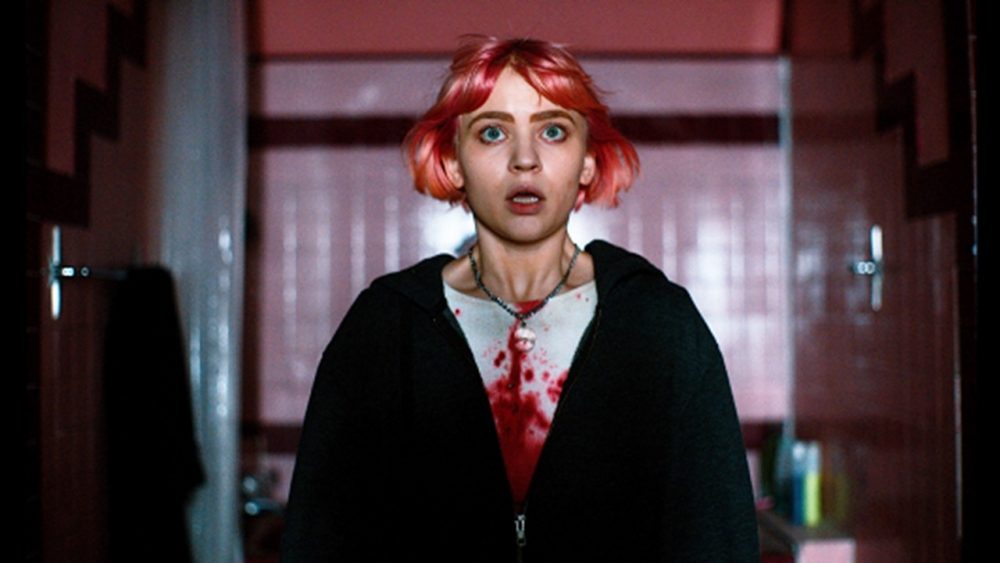
Mel (Sierra McCormick, The Vast of Night) made it home from her friend’s house just in time to miss the tornado. Her mom (Vinessa Shaw) ushers everyone —Mel, her little brother Bobby (John James Cronin) and their dad (Pat Healy) — into the safest room in the house, the bathroom. Here they will wait out the storm.

The storm damages the house, and they are pinned in. Days go by. Why hasn’t anyone come for them? Why is their dad such a dick? What are those noises outside the door?

Director Sean King O’Grady, working from the screenplay Max Booth III adapted from his own novella, mixes claustrophobic dread and adolescent angst with few enough contrivances that he never loses your interest.

Hints dropped early in the story come to hideous life later on (as ugly secrets sometimes do at things like family holidays and vacations or when you’re stuck for a long time in the bathroom). And though the “theater of the mind” component, piquing interest in what exactly lay outside that door, could be stronger, the performances are enough to keep your attention.

Healy, in particular, delivers a characteristically unpleasant performances, feeling very much like a trapped rat.

The hallucinogenic subplot about guilt and trauma and adolescent experimentation with pink goth suggests that the more time you spend with your parents, the more overwhelmed you’ll be by nameless shame and guilt. That feels right.

There’s no real story here. The whole film is essentially Act 2: no catalyst, no resolution. That doesn’t make for a deeply satisfying story, but it does feel a lot like the pandemic.

Fright Club: Librarians in Horror

It’s back to school time, which makes it the perfect time to check back in with the Reel Librarian, Jennifer Snoek-Brown. With her help and deep reserves of information, we count down the very best librarians horror has in store.

5) The Monks  (Necronomicon: Book of the Dead, 1993)

Not a great movie, which is especially disappointing considering its pedigree. Segments in the Lovecraft anthology are directed by Christoph Ganz (Brotherhood of the Wolf), Brian Yuzna (Society) and Shûsuke Kaneko (Death Note).

Still, the wraparound story The Library – directed by Yuzna and starring that filmmaker’s favorite and ours, Jeffrey Combs – is much fun. Combs plays Lovecraft himself, visiting a very private library run by peculiar monks. He’s doing research. Or is he stealing the librarian’s key with hopes of finding the Necronomicon?

That is totally what he’s doing, and it’s a blast. Combs is great, but Tony Azito as the bemused/annoyed librarian is the real star here.

4) Edgar – Laurence Payne (The Tell-Tale Heart, 1960)

Are you a Poe fan? Well, it won’t matter because Ernest Morris’s period thriller bears little resemblance to Edgar’s classic.

So why include it? Because the murderer is a librarian! Laurence Payne plays brittle Edgar, a reference librarian who’s taken with his new neighbor, Betty (Adrienne Corri). He doesn’t know how to talk to women, but his best friend Carl (Dermot Walsh) sure does! And my, how Carl’s heart does beat loudly.

Corri’s exceptional in this film, but Payne is unlikable, entitled, perverted gold. This is an incel movie before we even knew what incel was.

https://www.youtube.com/watch?v=oYkJqS7v2cI

3) Evan – Tomas Arana (The Church, 1989)

Michele Soavi’s dreamy gothic Giallo, co-penned by Dario Argento and co-starring a very young Asia Argento – is no masterpiece. It is endlessly watchable nonsense, though.

Evan (Tomas Arana) shows up late for his first day as cathedral librarian, stopping to flirt with fresco restorer Lisa (Barbara Cupisti) before heading into the library where he will be brazenly lazy and more than a little creepy.

The film takes on the dreamlike logic of a Fulci without losing the more pristine visuals that mark Argento’s earlier films. Its underlying themes are kind of appalling (wait, we’re good with the inquisitors who murdered that village?), but it looks great.

2) Evie – Rachel Weisz (The Mummy, 1999)

Is it a horror movie? Well, it is a monster movie, so close enough. Stephen Sommers’s 1999 swashbuckler boasted fun FX, an excellent villain, the newly beloved Brendan Fraser, and one kick-ass librarian.

Rachel Weisz, more attractive than ought to be allowable, plays Evie Carnahan. Her opening segment of destruction in the library itself is sheer visual poetry, but she’s more than brains and clumsiness. Evie stands up for herself, outsmarts bad guys, accidentally reanimates ancient evil, and really loves her job.

1) Halloway – Jason Robards (Something Wicked This Way Comes, 1983)

There’s a reason Evie Carnahan and Charles Halloway top our list of librarians in horror. Because they are heroes, as are all librarians.

Jack Clayton’s take on Ray Bradbury wields nostalgia with melancholy precision, recognizes time as the enemy, and boasts exceptional performances from its villain Jonathan Pryce as Mr. Dark, and its hero, Jason Robards as town librarian and all-around good guy, Charles Halloway. The fact that the final showdown takes place right in the library is the icing on the cake.

Profiler and the Mad Man

No Man of God

by Hope Madden

True crime is quite a phenomenon, isn’t it? It’s been a staple of watch-at-your-own-risk entertainment for generations, but podcasts have set a genre fire that seems unquenchable. Filmmakers have taken notice.

Still, do we need more Ted Bundy? Joe Berlinger made a miniseries (2019’s Conversations with a Killer: The Ted Bundy Tapes) and a feature (Extremely Wicked, Shockingly Evil and Vile, also 2019). Then there was 2020’s miniseries Ted Bundy: Falling for a Killer, which, like Extremely Wicked, told the Bundy tale with the voice of a former girlfriend. And in a few weeks, Daniel Farrands kicks off his American Boogeyman serial killer film series with a feature on Bundy.

Is it even possible for filmmaker Amber Sealy to tell us anything fresh? And even if she could, is there any legitimate reason to continue to rehash the behavior of such human garbage?

Working from a script by Kit Lesser, Sealy attempts to demystify Bundy, focusing not on his crime spree at all, but on his final years on death row. No Man of God spends most of its time in a confined, colorless chamber where Bundy (Luke Kirby) and FBI profiler Bill Hagmaier (Elijah Wood) converse.

Both actors deliver nuanced, unnerving performances. Their interplay and the evolving relationship help Sealy overcome the limited action, institutional color palette, and dialog-heavy run time.

Hagmaier is essentially the vehicle for the audience. Why is he spending his time with this heinous being? He just wants to understand.

That’s our excuse too, right? And that’s also the danger — at least it is in every movie ever made concerning an FBI profiler trying to get into the head of a serial killer, and No Man of God is no different. Is good guy Bill really Bundy’s opposite, or is he capable of the same acts of violence against women?

There are flashes in Sealy’s film where she nearly punctures her rote though well-acted tale with genuine insight about misogyny. But the film is never as interested in the women harmed by Bundy’s narcissism, insecurity and psychosis as it is in those traits he bore.  

Say His Name

Candyman

by Hope Madden and George Wolf

Sweets to the sweet, indeed.

This new Candyman is the most delicious brand of horror sequel. Thanks to the startling vision of director/co-writer Nia DaCosta and producer/co-writer Jordan Peele, it is a film that honors its roots but lives so vibrantly in the now that it makes you view the 1992 original from an urgent new angle.

We go back to Chicago’s now-gentrified Cabrini Green housing project with up-and-coming artist Anthony McCoy (Yahya Abdul-Mateen II), whose works have taken a very dark turn since he learned of the Candyman legend from laundromat manager William Burke (Colman Domingo).

Anthony’s obsession helps spark the interests of curious doubters, which means blood will soon be shed. Suspicions about Anthony’s possible role in the killings begin to grow, leading his girlfriend Brianna (Teyonah Parris) to worry about her own promising career in the art world – and eventually her own safety.

Research on the legend reacquaints us with events from the first film, gloriously reenacted through the paper and shadow puppet work first seen in the film’s trailer. Without dismantling the backstory, only shifting the point of view from white storyteller to Black, DaCosta takes ownership of the narrative—which is, itself, the point the film makes. Own the narrative.

DaCosta’s savvy storytelling is angry without being self-righteous. Great horror often holds a mirror to society, and DaCosta works mirrors into nearly every single scene in the film. Her grasp of the visual here is stunning—macabre, horrifying, and elegant. She takes cues from the art world her tale populates, unveiling truly artful bloodletting and framing sequences with grotesque but undeniable beauty. It’s hard to believe this is only her second feature.

Compelling performances throughout draw you into the saga. Abdul-Mateen II delivers terrifying layers while Parris gives the filmmaker a vehicle for outrage and satire. The always reliable Domingo (having a banner year) brings the film’s institutional knowledge — important in any sequel (somebody has to tell the protagonist what’s already happened), but invaluable in a film about the legacy of trauma.

And then there’s Vanessa Williams, whose return to the franchise is heartbreaking perfection.

Fans of the preceding films will find no reason to be disappointed, but that’s about the least of what this Candyman accomplishes. By the time a brilliant coda of sadly familiar shadow puppet stories runs alongside the closing credits, there’s more than enough reason for horror fans to rejoice and…#telleveryone.

Bzzz

Mosquito State

by Hope Madden

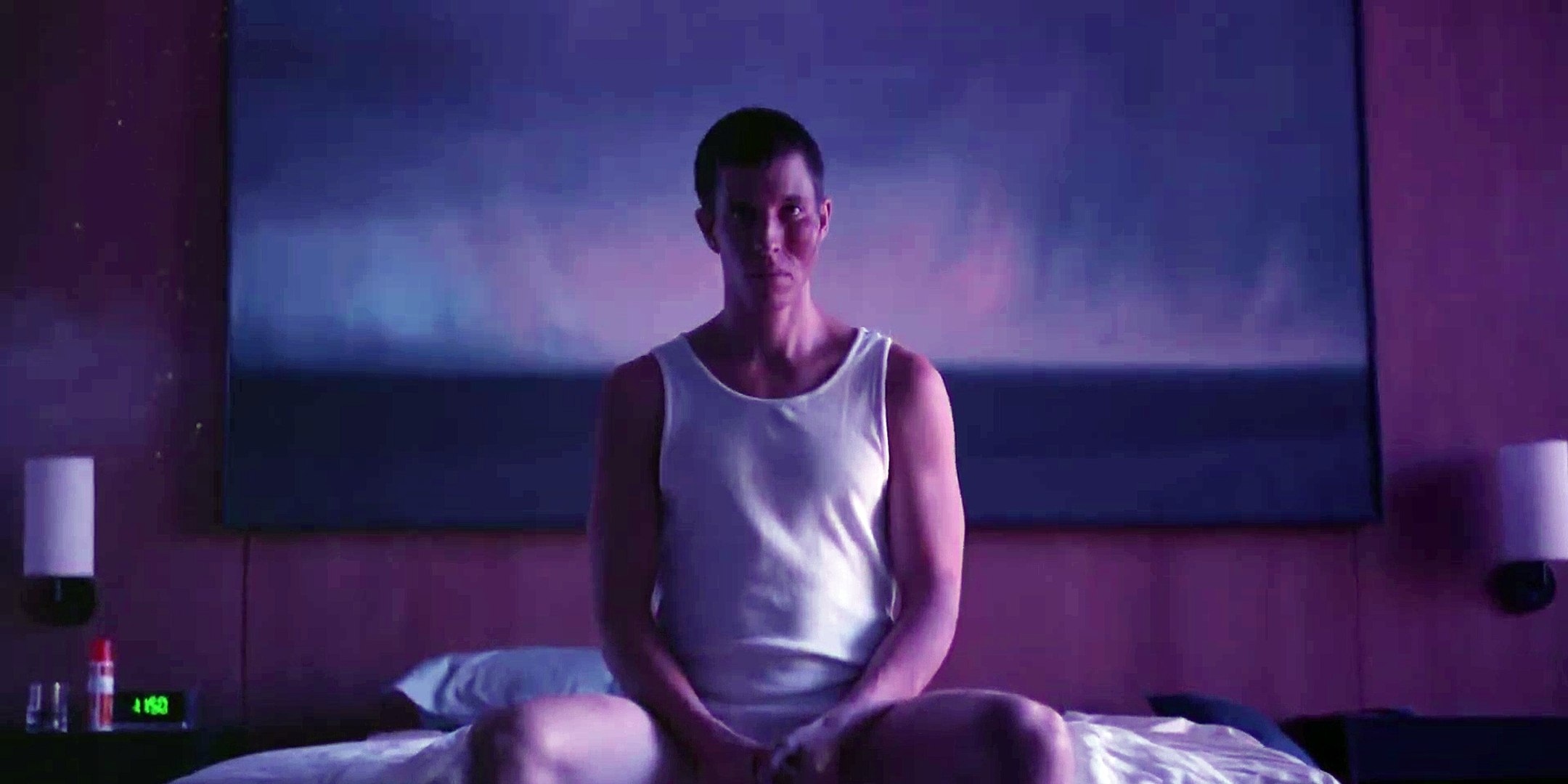
Right from its scientifically precise and profoundly unsettling opening, Filip Jan Rymsza’s Mosquito State is almost unwatchable. The film, about Wall Street analyst Richard Boca (Beau Knapp) and the 2008 financial collapse, takes on an upsetting metaphor.

Richard, brilliant and socially awkward in equal measure, brings two bodies home with him one evening: the poised and lovely Lena (Charlotte Vega) and a thirsty mosquito. Thanks to Richard’s intimacy ineptitude, things don’t go well with Charlotte, but that mosquito gets all she came for.

Though the buzzing of the bloodsuckers that soon breed in Richard’s apartment may suggest those Wall Street parasites whose appetites will soon collapse the market, Rymsza has something less obvious on his mind.

Any underlying themes about benevolence versus predation serve the filmmaker’s somewhat confounding allegory, but his aesthetic is as pointedly horrific as they come. My god, that whining buzz! The sound threatens to overwhelm you as certainly as the insects themselves overwhelm Richard, who becomes utterly submissive, offering his naked body to the unholy swarm.

Rymsza orchestrates a certain ghastly beauty, but first he has to immerse you in sounds and sights that trigger an automatic, primal revulsion and need to swat and flee.

Knapp’s performance suggests a bloodless Nicolas Cage as Elephant Man — bloodless not just because he’s made Richard the mosquitos’ feast, but because Knapp drains his character of charisma and flamboyance. Richard’s as unpredictable and difficult to enjoy as the film itself, but that makes him —and Mosquito State — no less distressingly intriguing.

Rymsza’s anticlimactic finale will leave many unsatisfied with his film. But for a wild combination of revulsion and beauty, Mosquito State is worth a look.

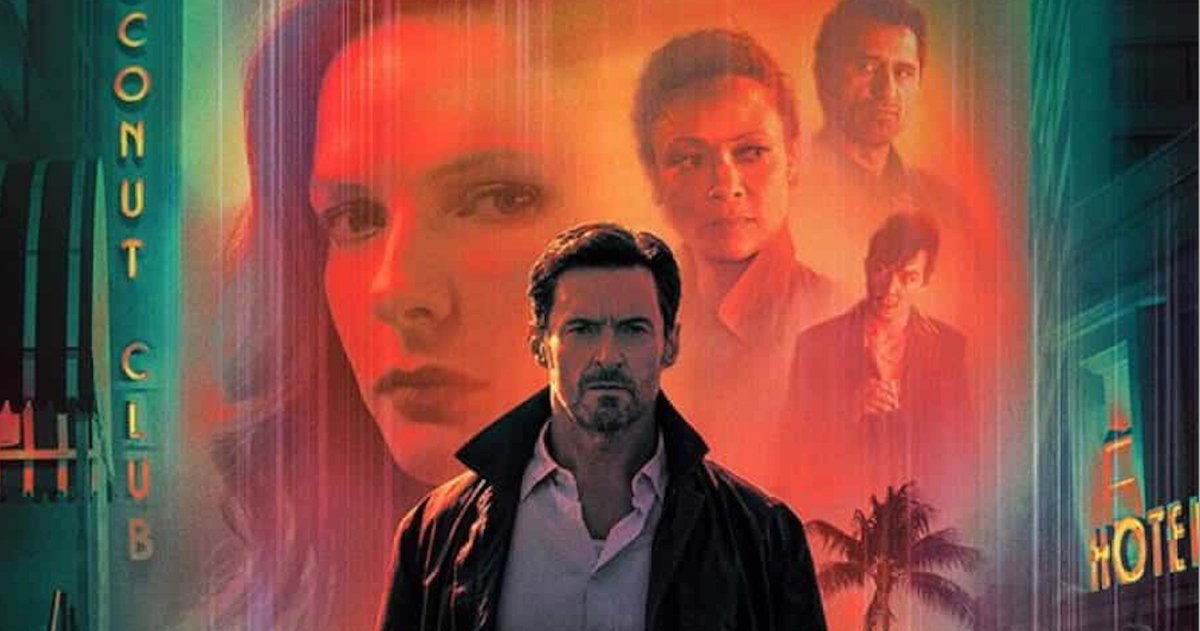
Screening Room: Reminiscence, The Protege, Night House, Sweet Girl & More

Teacher’s Pet

The Protege

by Hope Madden

For one of those hired assassin thrillers to work, it helps to have a convincing lead who has chemistry with the bad guy. Martin Campbell’s The Protégé delivers on both fronts.

And yes, in these films story often takes a backseat to fight choreography, writing rides shotgun to action. This also sounds a lot like Campbell’s latest, although it would be more forgivable if the action stood out enough that you could overlook the shortcomings in story.

Maggie Q is protégé assassin Anna, and while her inner conflict never breaks the surface, Q convinces as she moves bewigged from one set piece to the next. Anna’s mission this time is personal, natch, and her soft spot comes from her mentor, played by Samuel L. Jackson.

How is he? Well, he’s, you know, Sam Jackson. He’s exactly Sam Jackson. That works in almost every other movie, and it works just as well here.

But the real shining treasure in The Protégé is Michael Keaton. His talent, charisma, easy charm and natural good humor elevate every scene. Luckily, he’s in a lot of them, so he elevates most of the film.

Campbell (Casino Royale) stages capable though uninspired action sequences. His script, by action veteran Richard Wenk (The Equalizer), can’t tie character motivation to mystery elements to location or conflict. Instead, it stitches together ideas from a smattering of other films with little concern for coherence.

Perhaps this is why Campbell struggles so mightily with tone. This thing swings back and forth between buddy picture and revenge fantasy, international espionage thriller and romance. The bit that generally drives a film like this—you know, when the steely lead finally faces their demons—feels almost coincidental, leaving it no room to resonate.

The Protégé is not a terrible film. At worst it’s just a waste of your time.  

Sister Christian

Habit

by Hope Madden

Bella Thorne is the best thing about writer/director Janell Shirtcliff’s zany thriller Habit. When is that ever a good sign?

Thorne plays Mads, a Jesus-loving Texan transplanted to Hollywood’s underbelly to be with her two hometown besties Evie (co-writer Libby Mintz) and Addy (Andreja Pejic). Mads really loves Jesus. Like in an entirely unwholesome way.

But that’s the least of her problems after Evie’s one night stand makes off with all the drugs and money the girls are holding for Eric (Gavin Rossdale).

This movie tries so hard to be Tarantino by way of John Waters and it fails so absolutely that it gets credit for commitment. What it lacks is inspiration—Shirtcliff’s odyssey requires that we be shocked by Mads’s behavior, surprised by the stilted lunacy of her pursuers, and weirdly drawn into her unseemly world.

The fact that none of it feels especially wild, or that the pursuers lack originality and panache, takes a backseat to the film’s lacking cinematic quality. Individual scenes have no structure – they drag, most of them missing purpose, punchline or punch.

Nothing feels especially taboo, and that’s a problem because without any real “wild” in these antics, you find yourself paying attention to the writing or, worse still, the acting. Rossdale has a tough time developing a character, partly because there’s no telling whether to like or dislike Eric.

Shirtcliff and Mintz have no idea what to do with the real villains, Queenie (Josie Ho) and Tuff (Jamie Hince). The filmmakers dress them up like something out of Pee-wee’s Playhouse, but their villainy is sloppy and suspect.

Habit plays like a film made by people who really liked David Lynch’s Wild at Heart, Tony Scott’s True Romance, and everything John Waters ever made, but had no real idea what they liked about it. The result is a mishmash of borrowed ideas, none of them interesting enough to merit the label subversive.

Fright Club: Angels in Horror

They’re powerful, beautiful, but not necessarily benevolent. Horror filmmakers have made great use of the heavenly hosts. Sometimes they arrive to protect us. Sometimes they don’t. Here are our five favorite horror films to bring heaven to earth.

5. The Exorcist III (1990)

Yes, this movie made the list based on a single scene. But that scene is so good! Fabio is an angel, wings and all. Patrick Ewing is the angel of death! There’s a quick glimpse of a young Samuel L. Jackson, and George C. Scott chooses a strangely upbeat delivery for the line, “I’m so sorry you were murdered, Thomas. I miss you.”

It’s a dream sequence, a foreboding scene in which Kinderman (Scott) meanders through a holding station between life and afterlife. The piece is weird, a bit gruesome and gorgeous. Its tone and look differ wildly from the rest of the film, but incredible nonetheless.

4. He Never Died (2015)

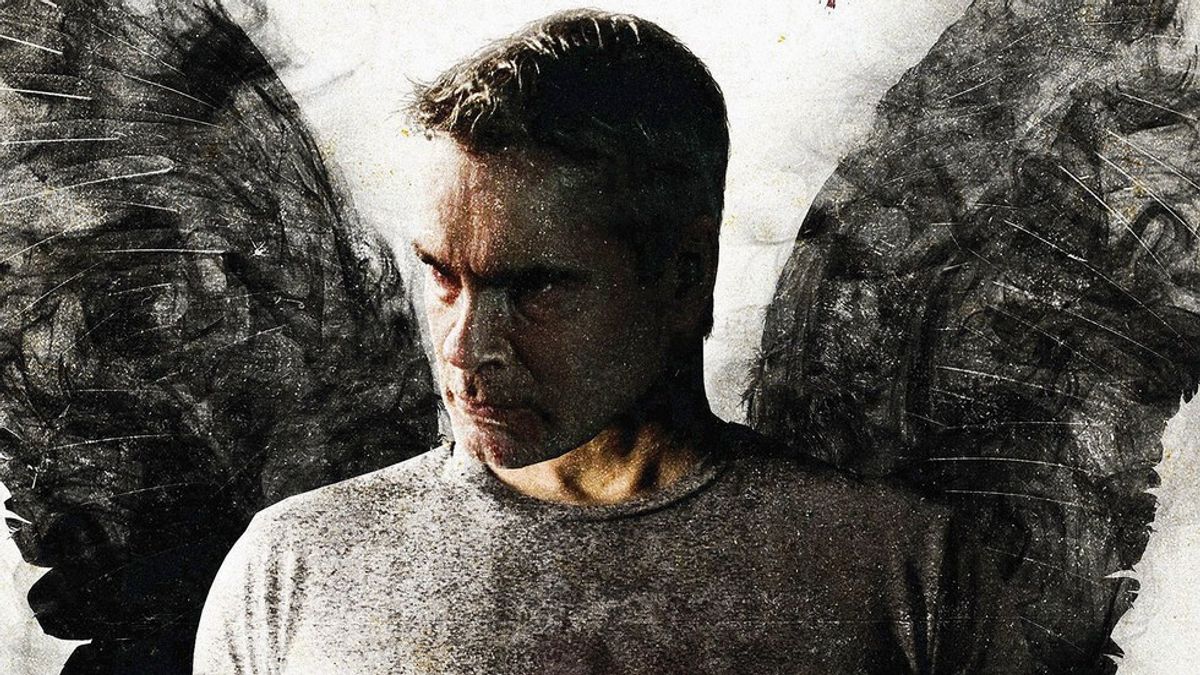
With a funny shuffle step and a blank stare, Henry Rollins announces Jack, anti-hero of the noir/horror mash-up He Never Died, as an odd sort.

Jack, you see, has kind of always been here. The “here” in question at the moment is a dodgy one-bedroom, walking distance from the diner where he eats and the church where he plays bingo. An exciting existence, no doubt, but this mindlessness is disturbed by a series of events: an unexpected visit, a needed ally with an unfortunate bookie run-in, and a possible love connection with a waitress.

From the word go, He Never Died teems with deadpan humor and unexpected irony. Casting Rollins in the lead, for instance, suggests something the film actively avoids: energy. The star never seethes, and even his rare hollers are muted, less full of anger than primal necessity.

3. The Prophecy (1995)

Writer/director Gregory Widen’s fascinating story about a war in heaven over God’s spoiled little meat puppets was a wild, innovative concept with a breathtaking cast: Christopher Walken, Virginia Madsen, Viggo Mortensen, Eric Stoltz, Elias Koteas, Adam Goldberg, Amanda Plummer.

So, is it on Widen that the movie is kind of terrible?

Terrible in an incredibly fun and watchable way, though. Somehow the unusually talent-stacked cast doesn’t feel wasted as much as it does weirdly placed.

There is no question this film belongs to Christopher Walken as the angel Gabriel. (Why are filmmakers so willing to believe Gabe will turn evil?) His natural weirdness and uncanny comic timing make the film more memorable than it deserves to be, but when it comes to sinister, Viggo Mortensen cuts quite a figure as Lucifer. Don’t forget, he was an angel, too.

2. Frailty (2001)

Back in 1980, Bill “We’re toast! Game over!” Paxton directed the short music video Fish Heads. Triumph enough, you say? Correct. But in 2001 he took a stab at directing the quietly disturbing supernatural thriller Frailty, with equally excellent results.

Paxton stars as a widowed, bucolic country dad awakened one night by an angel – or a bright light shining off the angel on top of a trophy on his ramshackle bedroom bookcase. Whichever – he understands now that he and his sons have been called by God to kill demons.

Dread mounts as Paxton drags out the ambiguity over whether this man is insane, and his therefore good-hearted but wrong-headed behavior profoundly damaging his boys. Or could he really be chosen, and his sons likewise marked by God?

Brent Hanley’s sly screenplay evokes such nostalgic familiarity – down to a Dukes of Hazzard reference – and Paxton’s direction makes you feel entirely comfortable in these common surroundings. Then the two of them upend everything – repeatedly – until it’s as if they’ve challenged your expectations, biases, and your own childhood to boot.

1. A Dark Song (2016)

Writer/director Liam Gavin also begins his story by dropping us breathless and drowning in a mother’s grief. Sophia (Catherine Walker) will do anything at all just to hear her 6-year-old son’s voice again. She will readily commit to whatever pain, discomfort or horror required of her by the occultist (Steve Oram) who will perform the ritual to make it happen.

Anything except the forgiveness ritual.

What Gavin and his small but committed cast create is a shattering but wonderful character study. Walker never stoops to sentimentality, which is likely what makes the climax of the film so heartbreaking and wonderful.