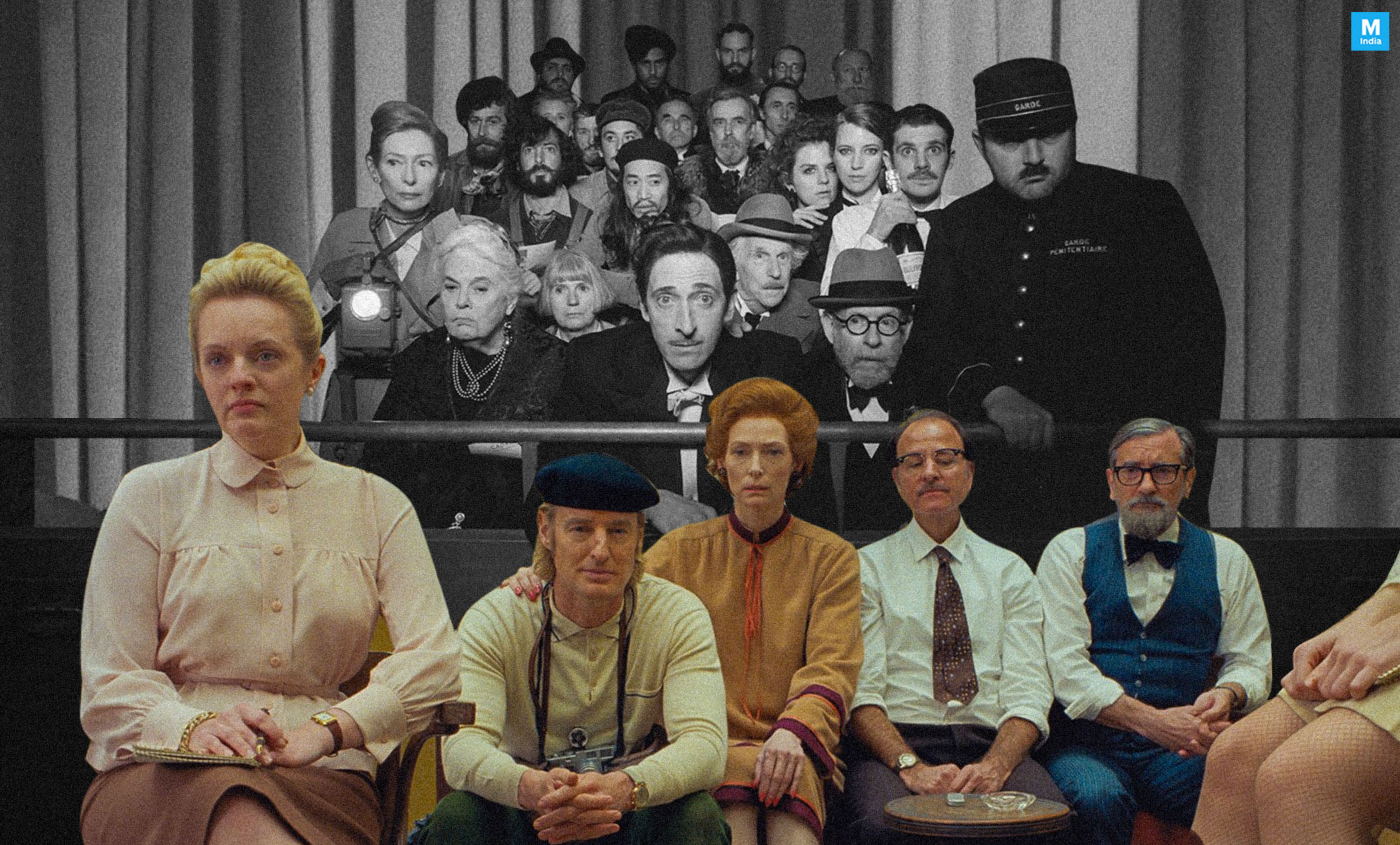
Who’s ready for Wes Anderson’s most Wes Anderson-y movie to date?
It feels like we say that every time he releases a new film, but The French Dispatch is absolutely the inimitable auteur at his most Andersonesque.
The French Dispatch is a magazine — a weekly addition to a Kansas newspaper covering the ins and outs of Ennui, France, the town where the periodical is based. The film itself is an anthology, four shorts (four of the stories published in the final edition) held together not by the one character each has in common, editor Arthur Howitzer, Jr. (Bill Murray), but by Anderson’s giddy admiration for France and The New Yorker.
Boasting everything you’ve come to expect from a Wes Anderson film — meticulous set design, vibrant color, symmetrical composition, elegance and artifice in equal measure, and a massive cast brimming with his own stock ensemble — the film is not one you might mistake for a Scorsese or a Spielberg.
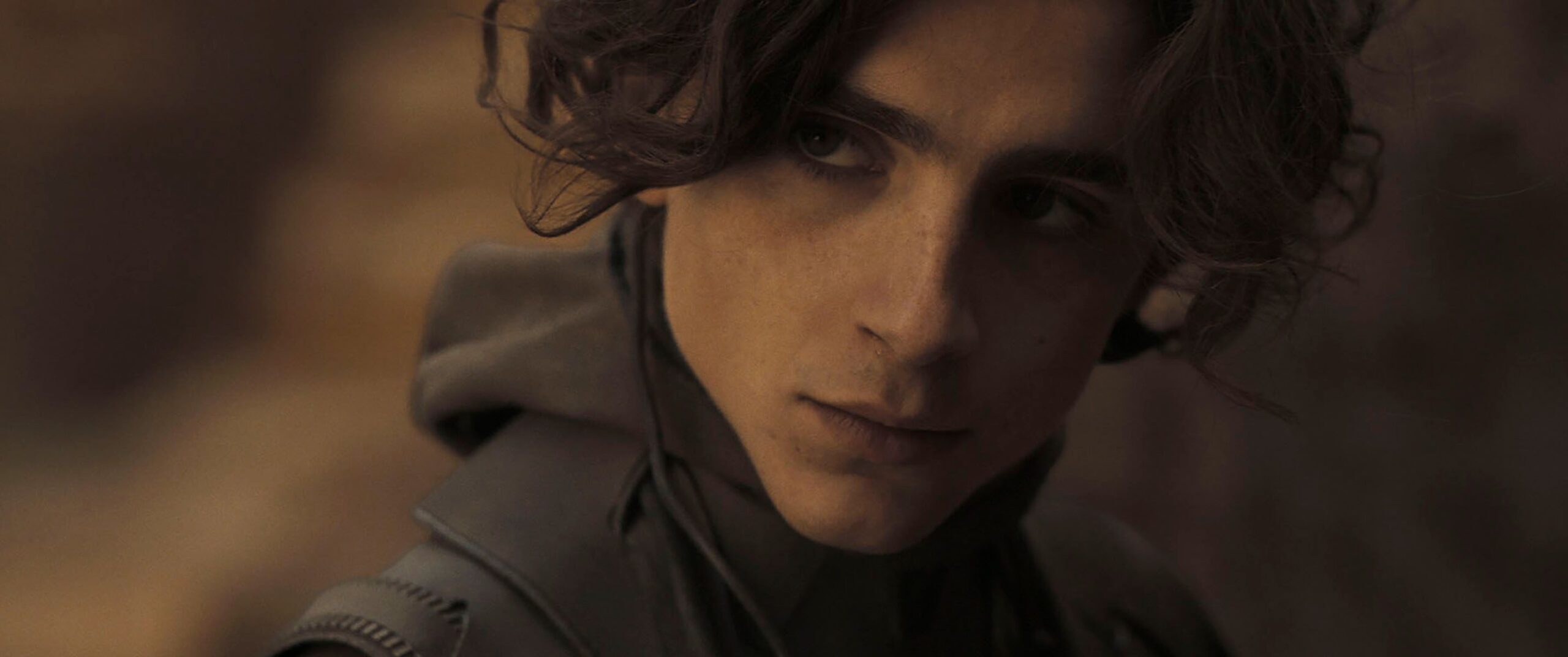
Expect Anderson regulars Tilda Swinton, Mathieu Amalric, Lea Deydoux, Owen Wilson, Adrien Brody, Frances McDormand and newcomers Benicio Del Toro, Timothee Chalamet and Jeffrey Wright. And those are the big roles (although truth be told, no one is on screen all that long).
Blink and you might miss Saoirse Ronin, Willem Dafoe, Henry Winkler, Elisabeth Moss, Ed Norton, Christoph Waltz, Liev Schreiber and Jason Schwartzman.
In the segment filed under the “Taste and Smells” section, Dispatch writer Roebuck Wright (Wright) turns in a sprawling profile on master chef Nescaffier (Steve Park) that – to Howitzer’s chagrin – contains merely one quote from Nescaffier himself. As with the other pieces of the anthology, the many tangents of the piece are explained through Anjelica Huston’s narration, which can’t replace a truly emotional through line and holds the film back from resonating beyond its immaculate construction.
Anderson’s framing of symmetry and motion has never been more tightly controlled, and the film becomes a parade of wonderfully assembled visuals paired with intellectual wordplay and an appropriately spare score from Alexander Desplat.
As a tribute to a lost era of journalism and the indelible writers that drove it, Anderson delivers a fascinating and meticulous exercise boasting impeccable craftsmanship and scattershot moments of wry humor. But the layer of humanity that elevates the writer/director’s most complete films (Rushmore, Moonrise Kingdom, The Grand Budapest Hotel) never makes it from page to screen, and The French Dispatch ultimately earns more respect than feeling.
Remember Shudder’s 2019 documentary Horror Noire: A History of Black Horror from director Xavier Burgin? It was great, wasn’t it? And if you thought to yourself that you’d love a sequel, you should know that this week’s Shudder premiere Horror Noire is not that. Not exactly.
Instead, it is an anthology of six horror shorts made by Black filmmakers. Writers, directors, performers, ideas, perspectives, points of view — everything the documentary made us realize we were not getting – is delivered by the anthology.
Production values and performances in every film are solid. Familiar faces of veteran talent elevate the individual pieces. Tony Todd, Malcolm Barrett, Rachel True, Peter Stormare, Lenora Crichlow and others turn in memorable performances in creature features, Gothic horrors, psychological horrors and comedies.
Todd, True and Barrett star as a married couple pulled apart by a cult in one of the strongest entries, Rob Greenlea’s Fugue State, a sly comment on a common problem. Kimani Ray Smith’s Sundown is a fun reimagining of horror tropes led by Stormare’s characteristic weirdness and the action hero stylings of Erica Ash.
Julian Christian Lutz’s Brand of Evil reworks familiar ideas, turning them into an unexpected creature feature that’s both savvy and strangely touching.
Other shorts are a little less successful. Robin Givens’s Daddy digs into parental horror but can’t balance build-up with payoff. Zandashé Brown’s The Bride Before You brims with insight and style, but an overreliance on voiceover narration keeps the film from developing the kind of atmosphere it hopes for.
Joe West’s The Lake also falls just short of keeping you interested and guessing, although a fuzzy backstory allows for a more thought-provoking lead character than you might expect.
The full stash runs two and a half hours and might have played better as a short series. It’s a long commitment, and every film has weak spots, which makes the time really feel like a commitment. But there’s much to enjoy with each episode. Taken as a whole, there’s variety enough in style and substance to promise something for everyone.
Friends to the end – that’s the whole idea when horror filmmakers tackle friendship, isn’t it? Can they be trusted? Who will sacrifice what, and will it be worth it? Or are they both evil? Horror cinema has an excellent run of best friends in movies, but we’re looking at movies specifically about that friendship. Movies like Shaun of the Dead and Jennifer’s Body. (Both brilliant, but not on the list. We know! There are a lot of great ones!) So let’s get to it!
5. Bedevilled (2010)
Cheol-soo Jang’s first feature film bears witnesses not only to some horrific deeds, but to an amazingly confident new filmmaker who knows how to sidestep expectations, turn the screw, and offer surprising insight in a genre that doesn’t always generate that kind of thoughtfulness.
The film opens as beautiful if cold Hae-won (Sung-won Ji) witnesses a crime and chooses not to involve herself. She takes a (somewhat involuntary) vacation on the remote island where she grew up, to find her childhood friend Bok-nam (Young-hee Seo). On the isolated, backward island – though Hae-won is treated to rest and nurturing by her adoring friend – Bok-nam’s life is about as far from ideal as possible.
Jang captures the rugged, isolated beauty of the island and offsets both ideas with his leads – one, an elegant and pristine beauty, the other a rough-hewn image – and sees two sides of the same humanity. This is a morality tale, but it’s also a brutal but sympathetic (and seriously bloody) comeuppance. Jang does not leave off where you think he might, instead crafting a compelling and satisfying whole that will stick with you.
4. Tragedy Girls (2017)
Heathers meets Scream in the savvy horror-comedy that mines social media culture to truly entertaining effect.
Besties Sadie (Brianna Hildebrand) and McKayla (Alexandra Shipp) are looking for more followers to improve their brand, and they have been doing a lot of research to make their content more compelling. The Tragedy Girls plumb their small Ohio town’s surprising death toll with more insight than the local police seem to have. Where do they get their knowledge?
Provocative.
Hildebrand and Shipp (both X-Men; Hildebrand was the moody Negasonic in Deadpool while Shipp plays young Storm in the franchise proper) nail their characters’ natural narcissism. Is it just the expectedly shallow, self-centeredness of the teenage years, or are they sociopaths? Who can tell these days?
3. Tucker & Dale vs Evil (2010)
Horror cinema’s most common and terrifying villain may not be the vampire or even the zombie, but the hillbilly. The generous, giddy Tucker and Dale vs. Evil lampoons that dread with good-natured humor and a couple of rubes you can root for.
In the tradition of Shaun of the Dead, T&DVE lovingly sends up a familiar subgenre with insightful, self-referential humor, upending expectations by taking the point of view of the presumably villainous hicks. And it happens to be hilarious.
Two backwoods best buds (an endearing Tyler Labine and Alan Tudyk) head to their mountain cabin for a weekend of fishing. En route, they meet some college kids on their own camping adventure. A comedy of errors, misunderstandings and subsequent, escalating violence follows as the kids misinterpret every move Tucker and Dale make.
T&DVE offers enough spirit and charm to overcome most weaknesses. Inspired performances and sharp writing make it certainly the most fun participant in the You Got a Purty Mouth class of film.
2. Let the Right One In (2008)
In 2008, Sweden’s Let the Right One In emerged as an original, stylish thriller – and the best vampire flicks in years. A spooky coming-of-age tale populated by outcasts in the bleakest, coldest imaginable environment, the film breaks hearts and bleeds victims in equal measure.
Kare Hedebrant‘s Oskar with a blond Prince Valiant cut needs a friend. he finds one in the odd new girl (an outstanding Lina Leandersson) in his shabby apartment complex. She, as it turns out, needs him even more.
This is a coming-of-age film full of life lessons and adult choices, told with a tremendous atmosphere of melancholy, tainted innocence, and isolation. Plus the best swimming pool carnage scene ever.
The unsettling scene is so uniquely handled, not just for horrifying effect (which it certainly achieves), but to reinforce the two main characters, their bond, and their roles. It’s beautiful, like the strangely lovely film itself.
1. They Look Like People (2015)
Christian (Evan Dumouchel) is killing it. He’s benching 250 now, looks mussed but handsome as he excels at work, and he’s even gotten up the nerve to ask out his smokin’ hot boss. On his way home from work to change for that date he runs into his best friend from childhood, Wyatt (MacLeod Andrews), who’s looking a little worse for wear. Christian doesn’t care. With just a second’s reluctance, Christian invites him in – to his apartment, his date, and his life.
But there is something seriously wrong with Wyatt.
Writer/director Perry Blackshear’s film nimbly treads the same ground as the wonderful Frailty and the damn near perfect Take Shelter in that he uses sympathetic characters and realistic situations to blur the line between mental illness and the supernatural.
Wyatt believes there is a coming demonic war and he’s gone to rescue his one true friend. Andrews is sweetly convincing as the shell shocked young man unsure as to whether his head is full of bad wiring, or whether his ex-fiance has demon fever.
The real star here, though, is Dumouchel, whose character arc shames you for your immediate assessment. Blackshear examines love – true, lifelong friendship – in a way that has maybe never been explored as authentically in a horror film before. It’s this genuineness, this abiding tenderness Christian and Wyatt have for each other, that makes the film so moving and, simultaneously, so deeply scary.
Did you know that there was a time, at least in England,
when cats were not a popular house pet? And it wasn’t really that long ago. How
weird is that?
Not weird enough to stand out in the highly unusual and very
endearing film The Electrical Life of Louis Wain.
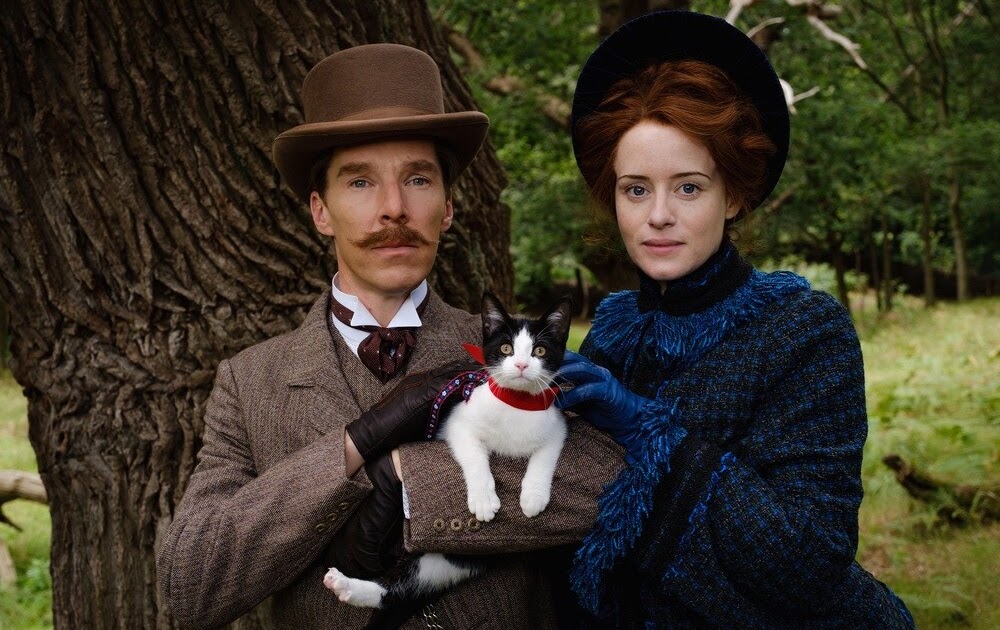
The ever-reliable Benedict Cumberbatch plays Wain, artist
whose drawings of adorably anthropomorphized cats took Victorian England, and
then the world, by storm. Will Sharpe’s biopic looks to introduce us to the
eccentric, charming, and ultimately tragic world of this friend of the feline.
Sharpe’s film is a swirl of color and energy led onward by
the droll musings of narrator Olivia Colman, who gets all the best lines. (“Aside
from its bizarre social prejudices and the fact that everything stank of shit,
Victorian England was also a land of innovation and scientific discovery.”)
As Wain’s life unravels before us, wonderful actors populate
the screen: Toby Jones as the publisher who sees great, if unusual, things in
Wain; Claire Foy as the governess-turned-wife whose love would bring Wain joy
and scandal; Andrea Riseborough, as the eldest sister far better suited to the
world of business and awfully frustrated with her unsuitable brother.
At the center of everything is Cumberbatch, more than up to
the challenge of creating a lovable outsider, a man so full of something
wonderful and so destined to be eaten alive.
Sharpe has trouble with that balance, even if Cumberbatch
does not. While Wain’s talent brought joy to many across the world, his
gullible nature, wild lack of business savvy and likely mental illness made him
an easy mark in a callous world. Sharpe, who co-wrote the script with Simon
Stephenson, has a difficult time conveying the madness that would be Wain’s
undoing.
He keeps us at arm’s length from Wain, even as Cumberbatch repeatedly
invites in. The actor and performance are wonderful, outdone only by an
underused Riseborough as the one character even more shackled by the realities
of the world.
But Sharpe’s vision is not sharp enough, and he ties up Wain’s frantic and messy life with far too much tidiness, a cinematic shortcut that doesn’t suit the film or the subject. Too much effort goes into wrestling Wain’s madness into a coherent, cinema-friendly plotline and it feels like the artist is being cheated once again.
A lot can go wrong when a filmmaker toys with
meta-filmmaking. The movie can become cloyingly clever, it can lose the
audience in its self-indulgence, it can become more of a trick than a film.
While Mia Hansen-Løve’s Bergman Island is arguably as self-indulgent a film as you will find, she risks all these trappings but falls to none.
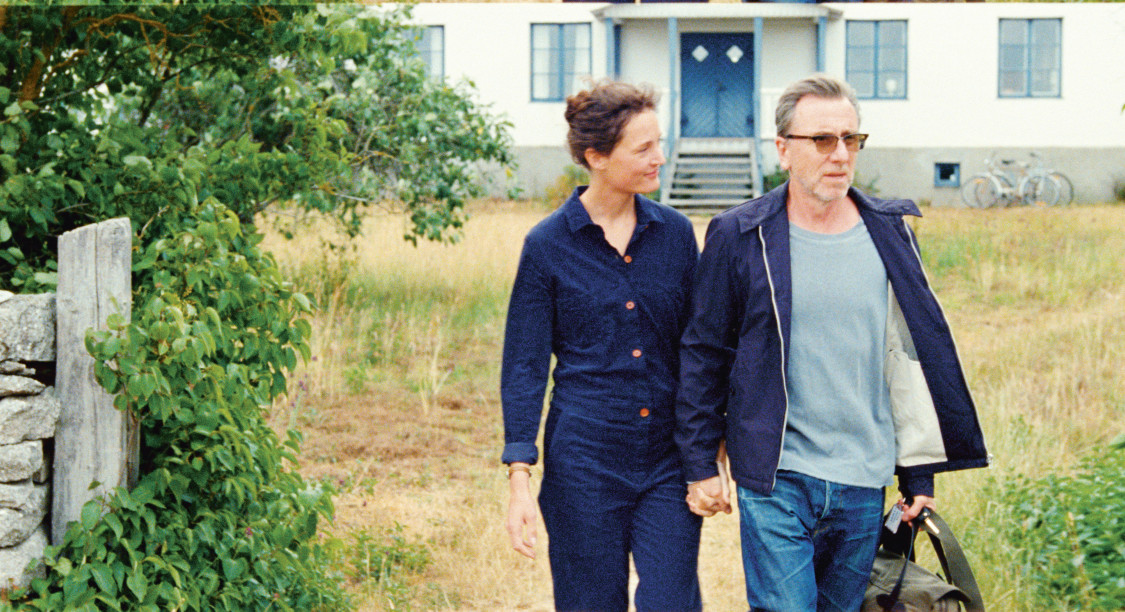
Her movie follows two filmmakers, Chris (Vicky Krieps) and
Tony (Tim Roth), who leave their daughter with Chris’s mom so they can devote themselves
to some solid writing time. They travel to Fårö island, where Ingmar
Bergman lived, worked and shot some of his most famous films.
Bergman Island feels extremely personal in the way that it mirrors, to what degree it’s hard to know, Hansen-Løve’s real-life relationship with filmmaker Olivier Assayas and their devotion to the work of Bergman. There’s also a very intimate sense of the way one filmmaker’s inspiration from the same source can look so very different from another’s. And, of course, there is a kind of dreamy link between generations of filmmakers.
Most importantly, though, this is the story of a couple. Casting is one of Hansen-Løve’s greatest strengths here because, without the committed and vulnerable performances she draws from Krieps and Roth, the film could easily have folded in on itself. It does not, not for a moment.
Roth’s distance as a partner speaks not only to Tony’s ego
and insecurity but to his support and understanding – Tony recognizes that this
process will be prickly and leaves as much room as he thinks his partner may
need to create.
This subtlety becomes a sly maneuver, as you begin to
understand the story Chris works on.
The entire tale unfolds on the breathtaking island, where Chris’s stories — her real-life story with Tony, as well as the story within a story she writes — benefit from the windswept beauty of the island.
Bergman Island tells you a lot but leaves it to you to decide what it’s saying. Whatever tale you decipher, your time on the island is well spent.
Creepy twin stuff, Udo Kier, alternate realities—yes, The
Blazing World. I am in.
Co-writer/director/star Carlson Young takes us on a strange
journey as Margaret Winter, haunted twin who lost her sister ten years ago.
Struggling to get by, she relents and visits her needy mother (Vinessa Shaw)
and difficult father (Dermot Mulroney), who are packing up Margaret’s childhood
home for sale.
And that is the last normal thing that happens.
Working with cinematographer Shane F. Kelly (Boyhood),
Carlson conjures a beautifully melancholic world, one that almost seems like
our world but only if you squint. The colors and music suggest a vibrant but
eerie dreamscape, the ideal spot for Margaret to lose herself – and maybe find
her sister.
The title suggests Margaret Cavendish’s 17th Century feminist utopia, but Young’s script (co-written with Pierce Brown) takes only the loosest inspiration. Rather than the tale of a woman learning to lead in another realm, this The Blazing World reimagines one life’s greatest traumas as fantastical games to be overcome.
Carlson herself does a solid job of shouldering heroine duties,
and she surrounds herself with talent. While Shaw and Mulroney deliver wild and
eerie performances, it is Udo Kier you’ll remember best. Of course it is! As
gamesman, devil and guide, he charms in his wearily creepy way.
Young’s writing can’t quite keep up with her knack for casting, though. While several scenes in and of themselves stand out spectacularly, and the weaving together of the various images creates a strange and intoxicating flavor, the underlying story is just too slight and the metaphors somewhat tortured.
Take a look at the list of screenwriters on The Last Duel, and one name jumps out at you. There beside Oscar-winning writers Matt Damon and Ben Affleck is Oscar nominee Nicole Holofcener. All three, along with director Ridley Scott, are also listed as producers, and while this project may seem out of character for Holofcener (Can You Ever Forgive Me?, Please Give, Enough Said, Lovely & Amazing) her insight proves indispensable,
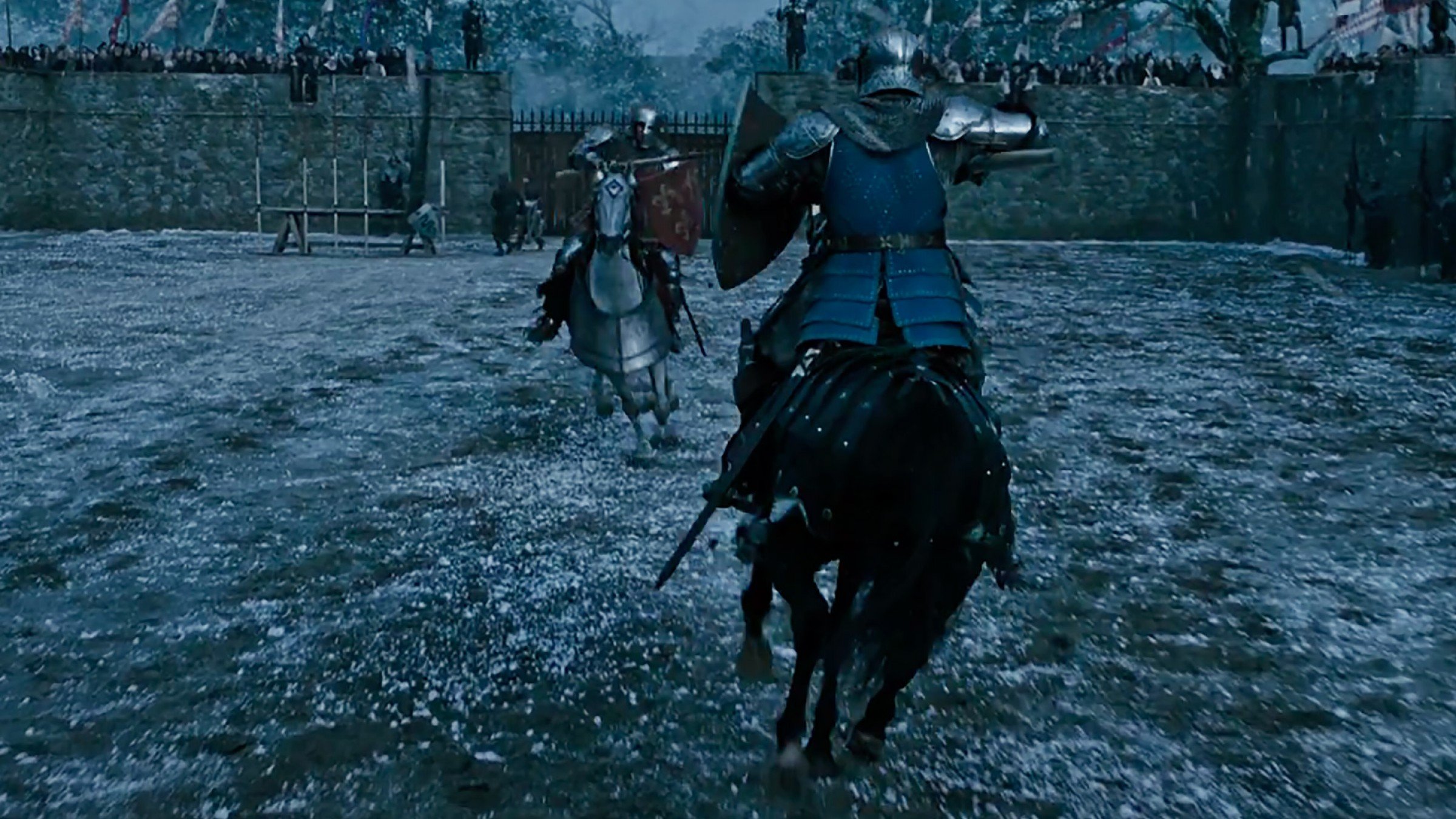
Based on the 2004 book by Eric Jager, the film chronicles events leading to the last officially recognized judicial duel in France, a 1386 trial by combat between knight Jean de Carrouges and squire Jacques Le Gris.
Carrouges (Damon) accused Le Gris (Adam Driver) of raping his wife Marguerite (Jamie Comer). Unsatisfied with the lenient decision handed down by Count Pierre d’Alencon (Affleck), Carrouges appealed directly to King Charles VI (Alex Lawther), where Carrouges threw down the challenge that Le Gris accepted.
Scott presents the tale with exceptional craftsmanship and spectacle, getting big assists from Dariusz Wolski’s gritty, expansive cinematography and Michael Fentum’s detailed sound design.
This is a brooding, brutal, violent and sexually violent film, one that utilizes a Rashomon-style narrative to frame an often-debated moment in history around a centuries-old struggle that continues today.
Separated into three chapters, the film gives us the truth according to Carrouges, Le Gris, and then Marguerite, when the onscreen text holds a few extra beats on the phrase “the truth.” And while what changes with each new side of the story is vital, there’s equal importance to be found in the elements that don’t change.
One man’s crime is another’s entitlement, one man’s denial gets “the benefit of the clergy,” while one woman’s truth is disregarded among the power of men.
The ensemble cast is outstanding, led by Driver’s convincing cad, Damon’s gruff brute and Affeck’s delightful range as the shallow Count. But as Marguerite’s acerbic mother-in-law (a terrific Harriet Walter) dresses down her accusation with a pointed “You think you’re the only one?” Comer shoulders the courage that becomes the soul of the film.
Her nuanced performance chapter to chapter tells us everything about the perspectives of the two men involved, and she carries Marguerite’s mindset with a weary bravery that depicts just how tiresome – even 600 years ago – it is to have to defend yourself after you’ve been raped.
It’s not just Comer, though. Scott’s camera lingers tellingly on the reactions of different women throughout the story as they silently respond to the charges.
Scott presents the climactic duel with the completely thrilling treatment it requires, but by then it’s clear why Holofcener’s contributions were so vital. As talented as Scott, Affleck and Damon are, making this film without the filmmaking perspective of an equally gifted woman would have amounted to more of the same: men telling us how rape is for women.
The Last Duel aims for more than just a gripping history lesson. It’s ultimately able to use that history to remind us that the way society treats women generally – and women’s sexuality specifically – has changed little since the freaking Middle Ages.
Among the many remarkable elements buoying the horror fable Lamb is filmmaker ValdimarJóhannsson’s ability to tell a complete and riveting tale without a single word of exposition.
Not one. So, pay attention.
Rather than devoting dialog to explaining to us what it is we are seeing, Jóhannsson relies on impressive visual storytelling instincts, answering questions as they come up with a gravesite, a crib coming out of storage, a glance, a bleat.
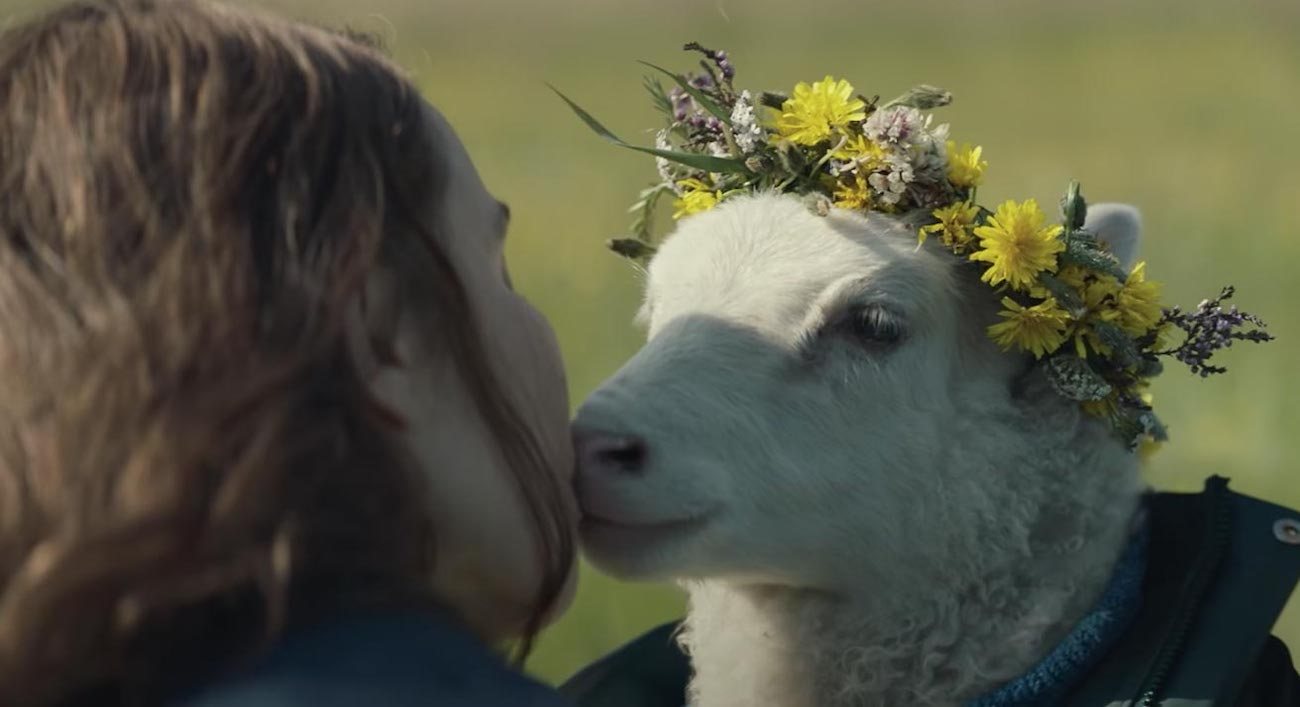
His cast of three – well, four, I guess — sells the fairy tale. A childless couple working a sheep farm in Iceland find an unusual newborn lamb and take her in as their own child. As is always the way in old school fables, though, there is much magical happiness but a dire recompense soon to come.
Noomi Rapace is the stand-out, her character’s emotional arc from melancholy to longing to joy expressed physically as Maria goes about each day’s tasks. Hilmir Snær Guðnason’s tenderness as husband Ingvar offers a lovely balance while offering an intriguing change of pace for fairy tale archetypes.
Jóhannsson, making an astounding feature debut behind the camera, strikes a balance between reality and unreality, beginning with startlingly authentic farming scenes. He casts a spell with the ruggedly gorgeous scenery, the unending but mastered workload of the farm, and its isolation.
The rare dialog exchanges are meaningful but not obvious. When
a brother shows up rather inauspiciously, conflict arrives with him, but even
here the sly storytelling will keep you guessing while still giving you all you
really need to know.
There is a cruelty in the justice meted out in old school
fairy tales, and that element has generally been softened for modern sensibilities.
Ariel didn’t get the prince, she turned into sea foam while he married another.
The gods of yore weren’t swayed by compassion or sentimentality.
That’s another line Jóhannsson and his stellar cast walk perfectly: we love and root for this family, even as we recognize the selfishness and unwholesomeness beneath their joy.
Lamb is an absolutely gorgeous, entirely unusual and expertly crafted gem of a film. You should see it.