Tag Archives: horror

Fright Club: Best PG-13 Horror

Who wants to scare your kids? Because there is ample opportunity to do so without breaking any laws. Yes, year after year the cinemas are lousy with God-awful PG-13 horror (Rings, Ouija, Wish Upon, Bye Bye Man) aiming to cash in on the underaged market with jump scares and lazy writing.

But, if you look closely you can find some scary shit. Nightmares in the making. So, we looked closely…

6. The Grudge (2004)

The amazing thing about The Grudge’s PG-13 rating is the remarkable amount of violence in this film. There is a death, dismemberment or supernatural act in very nearly every single scene in the movie.

There’s also the larger, scarier idea of a contagious haunted house. You’re not just in jeopardy when you’re in it. This shit comes home with you.

The Grudge is one of the rare American remakes of J-horror that stands up, partly because the antagonists from the original are involved (Yuya Ozeki as the terrifyingly adorable Toshio and Takako Fuji as the just terrifying Kayako). It’s also a benefit that director Takashi Shimizu (who also wrote and directed the original, Ju-on) is back, and that he keeps the setting in Japan. Plus those creepy-ass sounds!

5. Insidious (2010)

Director James Wan and writer Leigh Whannell took a break from each other after a disappointing follow up to their breakout 2004 collaboration Saw (Dead Silence—yeesh). The the pair were back strong in 2010 with a wildly imaginative descent into “the further.”

This is the film where Wan finds his way as a director, and a director of horror in particular. Whannell’s bold story offers plenty of opportunity to work, and the atmosphere, practical effects and clever use of jump scares has become the trademark of the filmmaker.

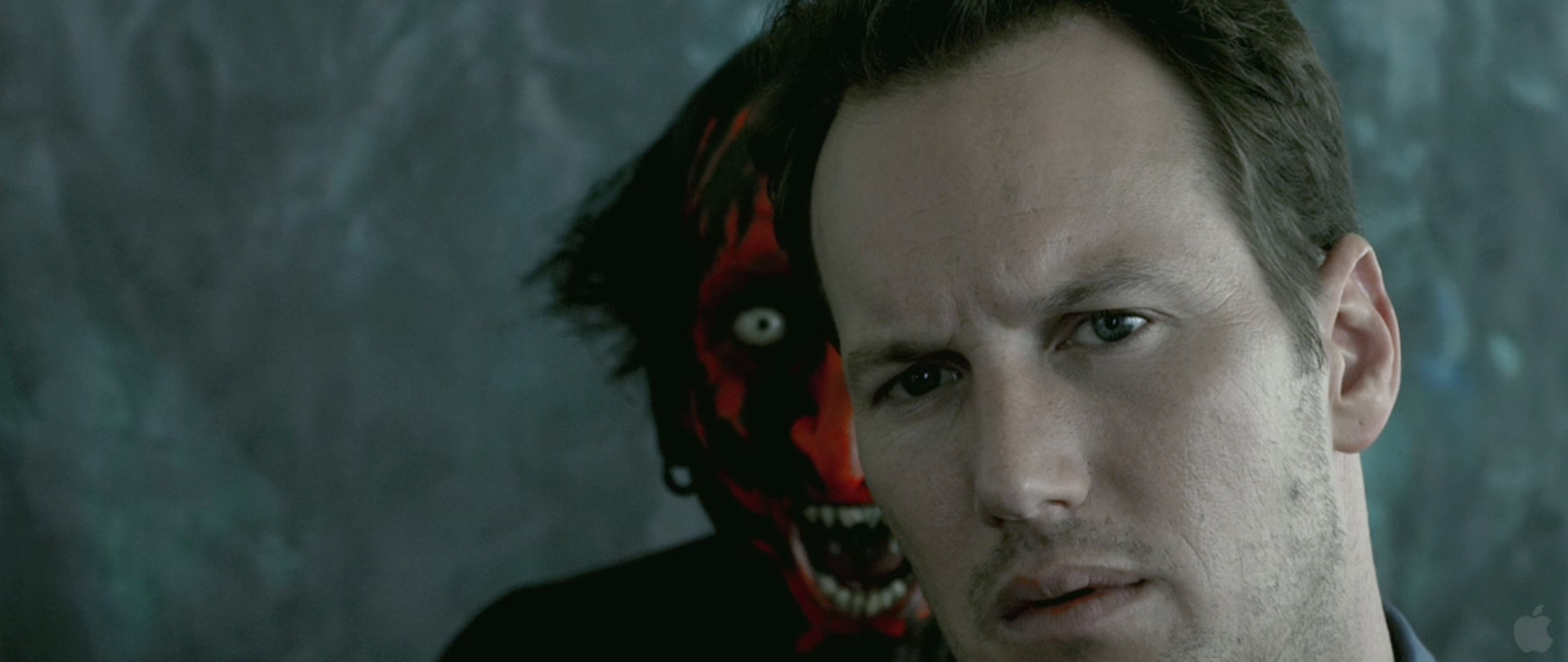
They are also the elements that help this genuinely frightening effort maintain a PG-13 rating. Man, this guy knows how to milk that rating, doesn’t he? That lady in black, that red-faced guy, the whole organ thing, that kid? Tiptoe through the Tulips?

The pair takes a ghost story premise and does what very few people can do well: shows us what we are afraid of.

4. The Sixth Sense (1999)

Oh, you totally didn’t figure it out. Don’t even start.

A troubled child psychologist (Bruce Willis) treats a young boy (Haley Joel Osment) carrying a terrible burden. The execution—basically, seeing ghosts in every corner of Philadelphia—could have become a bit of a joke, but writer/director M. Night Shyamalan delivers a tense, eerie product.

With his 1999 breakout, Shyamalan painted himself into a corner he found it tough to get out of: the spooky surprise ending. And though this would nearly be his undoing as a filmmaker, it started off brilliantly.

Part of the success of the film depends on the heart-wrenching performances: Toni Collette’s buoyant but terrified mother, Willis’s concerned therapist, and Osment’s tortured little boy. Between Shyamalan’s cleverly spooky script, a slate of strong performances and more than a few genuinely terrifying moments, this is one scary-ass PG-13.

3. The Woman in Black (2012)

Director James Watkins was fresh off his underseen, wickedly frightening Eden Lake. Screenwriter Jane Goldman (working from Susan Hill’s novel) had recently written the films Kick-Ass and X-Men: First Class, both of which are awesome. And star Daniel Radcliffe had done something or other that people remembered…

I’d have been worried that Radcliffe chose another supernatural adventure as his first big, post-Hogwarts adventure were it not for the filmmaking team putting the flick together. Goldman’s witty intelligence and Watkins’s sense of what scares us coalesce beautifully in this eerie little nightmare.

A remake of a beloved if rarely shown BBC film, the big screen version is a spooky blast of a ghost story. It makes savvy use of old haunted house tropes, updating them quite successfully, and its patient pace and slow reveal leads to more of a wallop than you usually find in such a gothic tale. Glimpses, movements, shadows—all are filmed to keep your eyes darting around the screen, your neck craned for a better look. It’s classic haunted house direction and misdirection laced with more modern scares.

Ten points for Gryffindor!

2. The Others (2001)

Co-writer/director Alejandro Amenabar casts a spell that recalls The Innocents in his 2001 ghost story The Others. It’s 1945 on a small isle off Britain, and the brittle mistress of the house (Nicole Kidman) wakes screaming. She has reason to be weary. Her husband has still not returned from the war, her servants have up and vanished, and her two children, Anna and Nicholas, have a deathly photosensitivity: sunlight or bright light could kill them.

What unspools is a beautifully constructed film using slow reveal techniques to upend traditional ghost story tropes, unveiling the mystery in a unique and moving way.

Kidman’s performance is spot-on, and she’s aided by both the youngsters (Alakina Mann and James Bentley). Bentley’s tenderness and Mann’s willfulness, combined with their pasty luster (no sun, you know), heighten the creepiness.

With the help of cinematographer Javier Aguirresarobe and supporting actress Fionnula Flanagan, Amenabar introduces seemingly sinister elements bit by bit. It all amounts to a satisfying twist on the old ghost story tale that leaves you feeling as much a cowdy custard as little Nicholas.

https://www.youtube.com/watch?v=ISch6Fi-q0A

1. The Ring (2002)

Gore Verbinski’s film achieves one of those rare feats, ranking among the scarce Hollywood remakes that surpasses the foreign-born original, Japan’s unique paranormal nightmare Ringu. Verbinski’s film is visually arresting, quietly atmospheric and creepy as hell.

This is basically the story of bad mom/worse journalist Rachel (Naomi Watts) investigating the urban legend of a videotape that kills viewers exactly seven days after viewing.

The tape itself is the key. Had it held images less surreal, less Buñuel, the whole film would have collapsed. But the tape was freaky. And so were the blue-green grimaces on the dead! And that horse thing on the ferry!

And Samara.

From cherubic image of plump-cheeked innocence to a mess of ghastly flesh and disjointed bones climbing out of the well and into your life, the character is brilliantly created.


My Roof, My Rules

Mom and Dad

by Hope Madden

I brought you into this world, I can take you out of it.

It’s a joke, of course, an idle threat. Right?

Maybe so, but deep down, it does speak to the unspeakable tumult of emotions and desires that come with parenting. Wisely, a humorous tumult is exactly the approach writer/director Brian Taylor  brings to his horror comedy Mom and Dad.

Horror films have been coming up with excuses to exorcise our forbidden desire to kill our own children for decades, mostly with little-seen cult films like It’s Alive or The Children or Cooties. In those films, the children themselves become monsters and the adults have no choice, you see.

Taylor (co-director of the Crank series) has a different take. In what is basically a long and very bloody metaphor for a mid-life crisis, parents the world over simply give in to an unspecified but urgent need to kill their own offspring.

It’s an epidemic picture, a zombie film without the zombies. Which doesn’t sound that funny, I’ll grant you, but Taylor and a game cast indulge in many of the same family tensions that fuel most sitcoms. They just take it one or two or three demented steps further.

So why do you want to see it? Because of the unhinged Nicolas Cage. Not just any Nic Cage—the kind who can convincingly sing the Hokey Pokey while demolishing furniture with a sledge hammer.

This is one of those Nic Cage roles: Face/Off meets Wild at Heart meets Vampire’s Kiss. He’s weird, he’s explosive and he is clearly enjoying himself.

Selma Blair lands the unenviable role of sharing the screen with Cage, but she doesn’t try to match him as much as keep him focused: they do have a job to accomplish, you know. The result is a fascinating picture of marital teamwork, actually. Good for them.

Taylor’s frantic pace and hiccupping camera mirror Cage’s lunatic energy, and clever writing toys with our expectations while delivering a surprisingly transgressive film.

Others have done it better. (I’m looking at you, Babadook.) But this may be the most amusing way to spend 90 minutes watching people try to murder their own children.

I Don’t Want to Go Out – Week of January 15

A couple of middling horror movies are available this week in home entertainment. Well, one is middling—nothing amazing, but better than expected. The other is a colossal waste of talent in a jumbled mess of a nonsensical plot. Oof!

Click the film title for the full review.

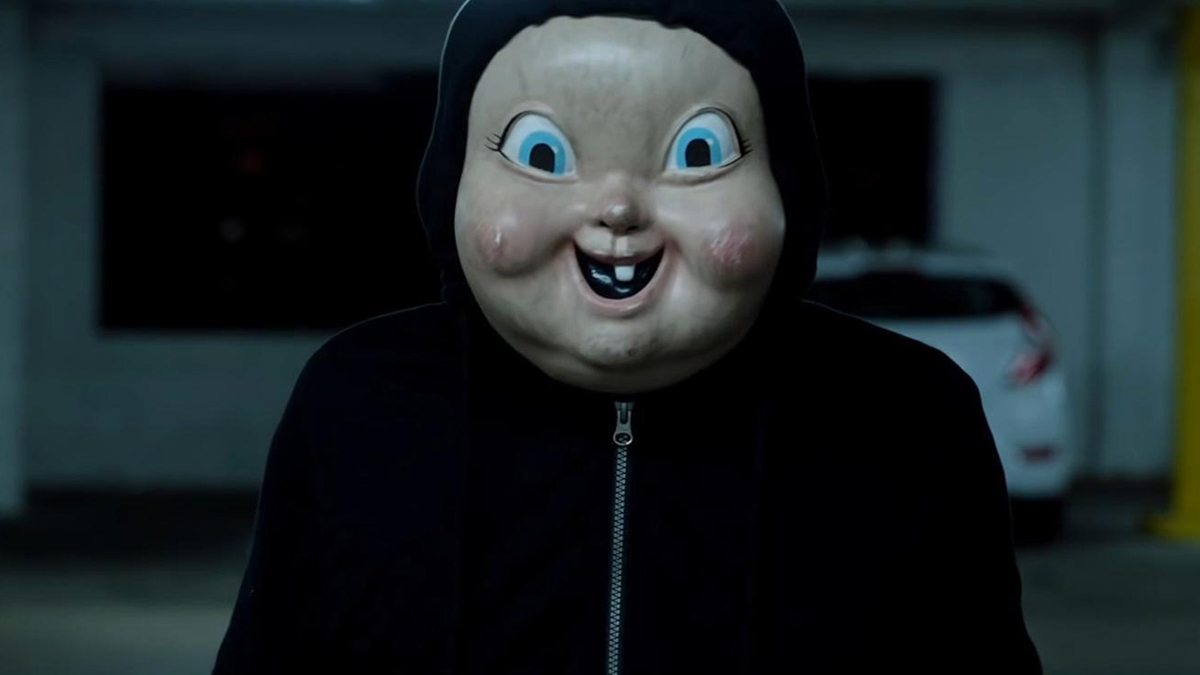
Happy Death Day

The Snowman

Fright Club: Sex + Death

I know what you’re thinking. Sex and death—that could be literally any film in the genre. Aaah, yes, but we’re not talking metaphorically or even loosely connected. Sure, the quickest way onto Michael Meyers’s or Jason Voorhees’s kill list is by having sex, but that’s not immediate enough. Let’s disregard the middle man, lose the pause, and go right to the horror films where sex and death are immediately, gorily and irreversibly linked.

Happy Valentine’s Day, by the way!

5. Killer Condom (1996)

A Troma-distributed splatter/horror/comedy, Killer Condom is an enormous amount of fun. This is a German film—German actors delivering lines in German—but it’s set in NYC. You can tell because of the frequent shots of someone opening a New York Times newspaper machine.

Luigi Mackeroni (Udo Samel) is the grizzled NYC detective who longs for the good old days in Sicily. In German. He’s assigned to a crime scene in a seedy Time Square motel he knows too well, where it appears that women just keep biting off men’s penises.

Or do they?

This film is refreshingly gay, to start with, as nearly every major character in the film is a homosexual. The run-of-the-mill way this is handled is admirable, even when it is used for cheap laughs. (Babette, I’m looking at you).

It’s fun. It’s funny. It’s gory and wrong-headed and entertaining from start to finish. Who’d have guessed?

4. Teeth (2007)

Of all the films built on the hysteria of impending womanhood, few are as specific as Teeth, a film in which a pubescent discovers a sharp set where teeth ought not be. This is a dark comedy and social satire that is uncomfortable to watch no matter your gender, although I imagine it may be a bit rougher on men.

Treading on the dread of coming-of-age and turning male-oriented horror clichés on ear, Teeth uses the metaphor implicit in vagina dentata—a myth originated to bespeak the fear of castration—to craft a parable about the dangers as well as the power of sexual awakening.

Written and directed by artist (and Ohioan!) Roy Lichtenstein’s son Mitchell, Teeth boasts an irreverent if symbol-heavy script with a strong and believable lead performance (Jess Weixler).

Weixler’s evolution from naïveté to shock to guilt to empowerment never ceases to captivate, but the story itself settles for something more conventional and predictable than what the shockingly original first two acts suggest.

3. Trouble Every Day (2001)

Backed by a plaintive, spooky soundtrack by Tindersticks, Clair Denis’s metaphorical erotic horror examines gender roles, sex and hunger. Denis is one of France’s more awarded and appreciated auteurs, so a one-time voyage into horror should not be dismissed.

A newlywed American couple head to Paris, ostensibly to honeymoon, but Shane (Vincent Gallo) is really there to re-establish connection with old colleagues Coré (Béatrice Dalle) and her husband, Léo (Alex Descas). The three scientists once participated in an experiment, and Shane needs to find them.

The film is a startling work of biologic-horror, but its existential riffs on intimacy, dominance and violence—common fare in the genre—are clearer-headed and more disturbing here than in anything else that swims the same murky waters.

https://www.youtube.com/watch?v=oz5VlZc8tC4

2. Raw (2016)

What you’ll find in first-time filmmaker Julia Ducournau’s Raw is a thoughtful coming-of-age tale. And meat.

A college freshman and vegetarian from a meat-free family, Justine (Garance Marillier) objects to the hazing ritual of eating a piece of raw meat. But once she submits to peer pressure and tastes that taboo, her appetite is awakened and it will take more and more dangerous, self-destructive acts to indulge her blood lust.

The film often feels like a cross between Trouble Every Day and Anatomy. The latter, a German film from 2000, follows a prudish med student dealing with carnage and peer pressure. In the former, France’s Claire Denis directs a troubling parable combining sexual desire and cannibalism.

Ducournau has her cagey way with the same themes that populate any coming-of-age story – pressure to conform, peer pressure generally, societal order and sexual hysteria. Here all take on a sly, macabre humor that’s both refreshing and unsettling.

1. It Follows (2014)

It Follows is yet another coming-of-age tale, one that mines a primal terror. Moments after a sexual encounter with a new boyfriend, Jay (Maika Monroe) discovers that she is cursed. He has passed on some kind of entity – a demonic menace that will follow her until it either kills her or she passes it on to someone else the same way she got it.

Yes, it’s the STD or horror movies, but don’t let that dissuade you. Mitchell understands the anxiety of adolescence and he has not simply crafted yet another cautionary tale about premarital sex.

Mitchell has captured that fleeting yet dragging moment between childhood and adulthood and given the lurking dread of that time of life a powerful image. There is something that lies just beyond the innocence of youth. You feel it in every frame and begin to look out for it, walking toward you at a consistent pace, long before the characters have begun to check the periphery themselves.

Mitchell’s provocatively murky subtext is rich with symbolism but never overwhelmed by it. His capacity to draw an audience into this environment, this horror, is impeccable, and the result is a lingering sense of unease that will have you checking the perimeter for a while to come.

Pretty Tasty

Strawberry Flavored Plastic

by Hope Madden

Like Man Bites Dog meets The Last Horror Movie, Strawberry Flavored Plastic attempts to document the behavior of a serial killer.

Not to be mistaken for found footage, the film itself is the result of several months’ worth of documentary footage shot principally by Errol (Nicholas Urda) and Ellis (Andres Montejo), two filmmakers eager to finally make a movie.

They believe they’re following a recently-released felon back into society, but in fact, Noel (Aidan Bristow) is a serial killer.

Do they keep filming?

Strawberry Flavored Plastic revolves around a clever conceit, one that’s easy to overlook if you don’t pay attention. But first time feature filmmaker Colin Bemis shows faith in an audience that’s paying attention.

Though the dialog often feels like wildly overwritten musings on the art of filmmaking and the nature of psychosis, the film cleverly creates a reason for the stilt and Bristow handles the script and the focus of the film well.

The actor creates a frightening, volcanic and surprisingly sympathetic central figure for the film. His is a clever, twisty performance nimbly balancing the conflicting purposes his character embodies.

Urda has a tougher time with the the dialog. As he waxes philosophical on the mercenary nature of the documentarian and the limits of complicity, his delivery too often sounds more like film school pretentions.

Aside from a handful of security camera images that beg POV questions, Bemis’s visual style is a great strength of the film. Rarely betraying the film’s shoestring budget, a nice variation of styles helps to fuel the picture’s momentum. More than that, the use of psycho-held camera manages, with smooth, clean precision, to better articulate the main character.

Made for barely 13K, Strawberry Flavored Plastic not only commands your attention, it announces an intriguing new filmmaker worth watching.

Strawberry Flavored Plastic is available on Amazon January 23.

Fright Club: Oscar Nominee Skeletons in the Closet

You know what? This year’s batch of Oscar hopefuls have made some genuinely excellent horror movies. Richard Jenkins starred in not only the amazing Bone Tomahawk, but also the underseen Fright Club favorite Let Me In. Willem Dafoe took a beating in the amazing Antichrist and grabbed an Oscar nomination for his glorious turn in Shadow of the Vampire. Laurie Metcalf made us laugh and squirm in Scream 2 and Woody Harrelson led one of our all time favorite zombie shoot-em-ups, Zombieland.

But what’s the fun in talking about that when so many of the nominees have made so many bad movies? Here we focus on the worst of the worst, but if you check out the podcast we mention even more.

5. Halloween II (2009)

Octavia Spencer’s 20+ year career, struggling early with low-budget supporting work, guarantees her a place in this list. Indeed, she could have taken several slots (2006’s Pulse is especially rank), but we find ourselves drawn to Rob Zombie’s sequel to his 2007 revisionist history.

Zombie ups the violence, adds dream sequences and suggests that Laurie Strode (played here, poorly, by Scout Taylor-Compton) shares some hereditary psychosis with her brother Michael.

Spencer plays the Night Nurse, which naturally means that she dies. Pretty spectacularly, actually, but that hardly salvages the mirthless cameo-tastic retread.

4. Gary Oldman: Bram Stoker’s Dracula (1992)

Francis Ford Coppola took his shot at Dracula in ’92. How’d he do?

Cons: Keanu Reeves cannot act. Winona Ryder can act—we’ve seen her act—but she shows no aptitude for it here, and lord she should not do accents. Anthony Hopkins has always enjoyed the taste of scenery, but his performance here is just ham-fisted camp.

Pros: Gary Oldman, who can chomp scenery with the best chewers in the biz, munches here with great panache. He delivers a perversely fascinating performance. His queer old man Dracula, in particular – asynchronous shadow and all – offers a lot of creepy fun. Plus, Tom Waits as Renfield – nice!

Still, there’s no looking past Ryder, whose performance is high school drama bad.

3. Clownhouse (1989)

There are several fascinating pieces of information concerning the derivative yet uniquely weird Clownhouse. These range from odd to awful.

1) The Sundance Film Festival somehow found this film—this one, Clownhouse, the movie about 3 escaped mental patients who dress as clowns, break into a house where three brothers are home alone on Halloween night, and commence to terrify and slaughter them— worthy of a nomination for Best Drama. If you haven’t seen this film, you might not quite recognize how profoundly insane that is.

2) The great and underappreciated Sam Rockwell made his feature debut as the dickhead oldest brother in this movie. The clowns themselves—Cheezo, Bippo, and Dippo—are genuinely scary and garishly fascinating, but outside of them, only Rockwell can act. At all.

3) Writer/director Victor Salva would go on to create the Jeepers Creepers franchise. But first he would serve 15 months of a 3-year state prison sentence for molesting the 12-year-old lead actor in this film, Nathan Forrest Winters.

So, basically, this film should never have been made. But at least Rockwell got his start here.

2. Margot Robbie: ICU (2009)

Margot Robbie is a confirmed talent. Underappreciated in her wickedly perfect turn in Wolf of Wall Street, she has gone on to prove that she is far more than a stunning beauty (though she certainly is that).

Not that you’d realize that by way of her early work in this low-budget Aussie dumpster fire.

The then-19-year-old leads a cast of unhappy teens vacationing for the weekend with their estranged dad, who’s called into work yet again. To entertain themselves, they peep on their neighbors through the facing skyscraper windows.

Robbie showers, swims and changes clothes at least 3 needless times within the film’s opening 10 minutes, which makes a film that wags a finger at modern voyeurism feel a little hypocritical. But to even make that statement is to take writer/director Aash Aaron’s film too seriously. Heinously acted, abysmally written and tediously directed, it amounts to 50 minutes of whining followed by utterly ludicrous plot twists, unless Australia boasts the largest per-capita number of serial killers on earth.

But the point is this: Robbie would go on to deliver stellar performances, so this is just something we all need to shake off.

1. Frances McDormand: Crimewave (1985)

Is a horror film really a horror film just because imdb.com says so?

Well, anything as bad as Crimewave is a horror, that’s for sure. The fact that it’s a slapstick crime comedy at its heart hardly matters.

Co-written by Joel and Ethan Coen, directed by Sam Raimi and co-starring Bruce Campbell, this film has a pedigree. And we love them all so much we can almost forgive them for this insufferable disaster. But we suffered through it for two scenes—one at the beginning, one at the end—involving a nun who’s taken a vow of silence.

Frances McDormand, what the hell are you doing in this movie?

No, no. We get it. If we were duped into optimism by Coen brother involvement, what hope did you have? You couldn’t have known that the result would be a tiresome, embarrassing, un-funny, painful waste of 83 minutes.

Don’t Open the Door

Insidious: The Last Key

by Hope Madden

The Insidious franchise—like most horror series—began missing a step about two films in. The fourth installment, Insidious: The Last Key, starts off with promise, though.

Thanks in large part to a heartbreaking performance from Ava Kolker, the newest Insidious opens with a gut punch of an origin story.

By Episode 3, we’d abandoned the core family of the first two films to follow ghost hunters Elise (Lin Shaye), Tucker (Angus Sampson) and Specs (Leigh Whannell, who also writes the series). As this film opens, we glimpse the beginnings of Elise’s gift, the troubles it brings, and the demon she unwittingly released into the world.

Though the minor characters are full-blown clichés, director Adam Robitel (The Taking of Deborah Logan) and his young actors create a compelling opening.

Can Insidious: The Last Key deliver on that promise?

No.

Is it the tedious jump-scare-athon with none of the exquisite delivery we’ve come to expect from James Wan (director of the original Insidious, and producer here)? Is it the mid-film move from spectral thriller to police procedural and back? Is it the creepy attention Elise’s goofball sidekicks pay to her young and pretty nieces?

Or is the problem that the whole cool sequence from the trailer—you know, with Melanie Gaydos and all the ghosts coming out of the jail cells?—is missing from the movie.

Yes—it’s all that and more. The film is a jumbled mess of backstory and personal demons, clichés and uninspired monsters. All of this is shouldered by the veteran Shaye, who is, unfortunately, no lead.

Shaye has proven herself to be a talented character actor in her 40+ years in film, often stealing scenes out from under high-paid leads. (Please see her in Kingpin and There’s Something About Mary, she’s genius.) But she doesn’t have the magnetism to carry a film, and The Last Key feels that much more untethered and pointless for the lack.

Everything runs out of steam at some point. Here’s hoping this franchise has run out of doors to open.

Fright Club: Best Horror Movie Openings

The horror prologue—almost a matter of necessity at this point, a short film in itself to introduce the terror, make you jump, serve as a reference point for a third act call-back.

As cliche as they may be, the opening jump scene is still handled more effectively and more memorably in horror than in any other genre. (I’m looking at you, James Bond.) They can become iconic cinematic moments and pop cultural touchstones like Scream or The Ring. They can, without the aid of the rest of the film, haunt your dreams: It, Martyrs. They can amuse you while setting up the rules for the film: Zombieland. Or they can be just astoundingly beautiful, like Rear Window.

We want to thank Brandon Thomas for joining us this week to count down the six best (fuzzy math!) opening scenes in horror.

6. Dawn of the Dead (2004)

The flick begins strong with one of the best “things seem fine but then they don’t” openings in film.

And finally! A strong female lead who seems like a real person. Poor, overworked Ana (Sarah Polley) just wants to get off her nursing shift—a subtly brilliant way to introduce the facts of the infection without beating you about the face and neck with it.

Then on to a quiet ride home with “Have a Nice Day” on the radio—one of many brilliant musical choices by director Zack Snyder—and our first aerial of the tidy suburban landscape that is about to be destroyed.

Cut to ordinary, comfortable wedded bliss, then Vivian in her bloody little nightgown, then a rabid husband, a bloody escape and the second pan around the neighborhood gone insane.

5. The Reflecting Skin (1990)

It isn’t often when documenting horror cinema that you have the need to mention an art director, but for The Reflecting Skin, the work of Rick Roberts deserves a note. His gorgeous, bucolic Idaho is perfectly crafted, with golden wheat and decrepit wooden outbuildings representing both the wholesomeness and decay that will meld in this tale.

Writer/director Philip Ridley has a fascinating imagination, and his film captures your attention from its opening moments. A cherubic tot walks gleefully through wheat fields toward his two adorable little buddies, carrying a frog nearly as big as he is. “Look at this wonderful frog!” he calls out to them.

What happens next is grotesque and amazing – the casual but exuberant cruelty of children. It’s the perfect introduction to this world of macabre happenings as seen through the eyes of a little boy.

4. It Follows (2014)

David Robert Mitchell wears his fondness for the genre on his sleeve. His startlingly realized prologue not only sets you on edge for one of the strongest new genre films in a decade, but it announces that Mitchell, like many of us, is a very big John Carpenter fan.

As Mike Gioulakis’s camera circles this comfortable suburban street, following poor Annie (Bailey Spry) in circles as she decides her next panicky move, Mitchell’s inspirations are clear. It’s both clever and ballsy: drawing comparisons to the genre master in your opening scene can very well set you up for tremendous failure.

But not if you’re about to follow this pristine piece of horror set-up with one of the most imaginative, well-crafted and terrifying films in recent memory. Well done.

https://www.youtube.com/watch?v=Cs0PrI3ylso

3. Halloween (1978)

Speaking of John Carpenter, here’s a guy who knows how to open a movie. The Thing, for instance, brilliantly and almost wordlessly sets up the entire film with an economy and visual style that tells you all you need to know about the harsh environment, isolation and, if you’re really paying attention, the danger that’s afoot.

But it’s the prologue to Halloween that has been the most inspirational of any of his film openings. Backed by his spare and perfect score, the spooky chanting of children sets the mood: black cats and goblins and broomsticks and ghosts/covens of witches with all of their hosts/ you may think it’s scary/ you’re probably right/ black cats and goblins on Halloween night!

Switch to the now-famous killer’s pov through the eye-holes of a Halloween mask—an iconic image clearly inspired by Bava’s devil mask pov shot in Black Sabbath—and then the blank face and bloody knife of the jester-suited Michael Meyers and your masterpiece has taken its first steps.

https://www.youtube.com/watch?v=nnWw060ygG8

2. Get Out (2017)

Opening with a brilliant prologue that wraps a nice vibe of homage around the cold realities of “walking while black,” writer/director Jordan Peele uses tension, humor and a few solid frights to call out blatant prejudice, casual racism and cultural appropriation.

Lakeith Stanfield is just trying to find the party, but he’s lost on McMansion avenue in a suburb. When a sports car slows down next to him and then stops, Peele has introduced utterly perfectly his method of subverting genre expectations to make terrifying salient points about America.

Backed by Flanagan and Allen’s utterly terrifying golden oldie Run Rabbit Run, we watch the age-old genre scene unfold: a vulnerable innocent alone in the dark with no one coming to the rescue. But suddenly it’s not the beautiful co-ed, not the helpless victim we’re trained to worry for, accustomed to seeing as prey. It’s actually the image we’ve been trained to see as the aggressor, the villain, the reason to fear.

And yet, what happens here feels far, far too much like reality.

https://www.youtube.com/watch?v=GheJAxYvbfs&t=5s

1. Jaws (1975)

Poor, drunk Chrissie and her stupid, wasted suiter.

Steven Spielberg, 29-years-old at the time, was about to cause a tidal wave of pop culture defining terror. But first, a late-night beach party, a couple of wholesome if drunken revelers, a late swim and our first taste of John Williams masterpiece of a score.

No, Chrissie does not look like she’s having a good time, and actress Susan Backlini seems to have gone through enough of an ordeal to come away with PTSD. Bill Butler’s camera switches from the disturbing shark’s-eye-view to the even more disturbing close up just above the water line—that line Chrissy keeps crossing, up and down, up and down, and then back and forth and back and forth.

The result was a lingering terror of the water that not only kept you hoping against hope that every member of Amity stayed off that beach, but very likely caused you at least a little anxiety the next time you want for a late night dip.
d: Steven Spielberg; w: Peter Benchley

Fright Club: Best Western/Horror Movies

Westerns share a lot in common with horror. Both deal in black and white, good and evil, blood. There’s not a lot of true cross over. Sure, you’ve got some brilliant horror that pulls ideas from the Western: Sam Peckinpah’s Straw Dogs, Wes Craven’s The Hills Have Eyes. But that’s not what we’re looking for. We want horses and cowboy hats and shit. And we found them.

Here are the five best Western/horror crossovers.

5. The Burrowers (2008)

Here’s one that bears a resemblance to Bone Tomahawk: someone’s love goes missing, Indians are blamed, a posse heads out in search but finds something more sinister than expected.

Writer/director J.T. Petty laments the barbarism of the white settler and its Cavalry with a bleak and subconsciously gruesome image of the consequences of “progress”.

Burrowers, though, asserts itself as a horror film early and often. It certainly borrows from both genres, balancing themes well by exploring what’s ugliest in Western lore. Horror films tend toward social commentary in a way that Westerns rarely do—indeed, classic Westerns tend to revel in the exact elements of human nature that horror likes to exploit for its blood-curdling nastiness.

Solid performances, especially from veteran character actors Clancy Brown and William Mapother, elevate the film above its monster movie trappings.

4. Ginger Snaps Back: The Beginning (2004)

In 2004, director Grant Harvey offered an origin story for the lycanthropic Fitzgerald sisters (Katharine Isabelle and Emily Perkins reprising their roles). It’s 1815 and Ginger and Bridget find themselves lost in the Canadian wilderness, seeking assistance from a Native American woman and then shelter from a creepy pastor and his flock at a fur trading post.

What’s got the traders so spooked? Werewolves!

They bring the sisters in because they are nicer than the people at The Slaughtered Lamb, but it turns out they’d have been better off leaving G&B to die in the woods.

The movie has a fun, self-consciously anachronistic style to it that allows the Fitzgerald sisters to seem even more like us and like outsiders than they did in the original high school horror show. Dream sequences, practical effects, creepy kids, sisterly love and old fashioned carnage make this one a decent throwback.

3. Dead Birds (2004)

First, we get to liking the rag tag bunch of misfits—deserters from the Confederate army: two brothers (Henry Thomas and Patrick Fugit), two buddies (Michael Shannon and Mark Boone Junior – hell yes!), an escaped slave (Isaiah Washington) and a nurse (Nicki Aycox).

Next, we’re freaked out by the mutant boar and grisly scarecrow in the abandoned plantation where they will hole up with their ill-gotten loot.

What director Alex Turner does best with his supernatural Western is to draw you in with sympathetic characters played well by talented actors. Though the pace is slow—as is often the case with supernatural horror—and the FX are not spectacular, the film has a hypnotic quality and it fills you with dread.

Turner benefits from an empathetic script penned by Simon Barrett, who’d go on to a fruitful partnership with director Adam Wingard (You’re Next, The Guest, Blair Witch). Together with haunting performances, the mind-bender of a story leaves you troubled.

2. Ravenous (1999)

The blackest of comedies, the film travels back to the time of the Mexican/American War to throw us in with a cowardly soldier (Guy Pearce) reassigned to a mountainous California outpost where a weary soul wanders into camp with a tale of the unthinkable – his wagon train fell to bad directions, worse weather, and a guide with a taste for human flesh.

Pearce is great as the protagonist struggling against his own demons, trying to achieve some kind of peace with himself and his own shortcomings, but Robert Carlyle steals this movie.

As the wraithlike Colonel Ives, he makes the perfect devil stand-in. Smooth, compelling and wicked, he offsets Pearce’s tortured soul perfectly. The pair heighten the tensions with some almost-sexual tension, which director Antonia Bird capitalizes on brilliantly.

1. Bone Tomahawk (2015)

In a year rife with exceptional Westerns (Slow West, The Hateful Eight, The Revenant), this film sets itself apart. S. Craig Zahler’s directorial debut embraces the mythos of the Wild West, populating a familiar frontier town with weathered characters, but casting those archetypes perfectly.

Kurt Russell and Richard Jenkins, in particular, easily inhabit the upright sheriff and eccentric side kick roles, while Patrick Wilson’s committed turn as battered heroic lead offers an emotional center.

Zahler effortlessly blends the horror and Western genres, remaining true to both and crafting a film that’s a stellar entry into either category. Bone Tomahawk looks gorgeous and boasts exceptional writing, but more than anything, it offers characters worthy of exploration. There are no one-note victims waiting to be picked off, but instead an assortment of fascinating people and complex relationships all wandering into mystical, bloody danger.

Because the true horror is a long time coming and you’re genuinely invested in the participants in this quest, the payoff is deeply felt. This is a truly satisfying effort, and one that marks a new filmmaker to keep an eye on.

Free Bird

Thelma

by Hope Madden

A surprising, gorgeously filmed prologue creates a mood: a little girl, bundled in a red coat, follows her shotgun-toting father across a frozen pond into the snowy woods. She looks periodically through the ice at the fish moving beneath the ice. In the quiet woods, the two spy a deer. The girl holds her breath, staring silently at the animal while her father prepares to shoot.

The film never again rises to the exquisite, icy tension of its opening scene, but it does work your nerves and keep you guessing. As we follow that little girl, Thelma (Eili Harboe), through the uncomfortable, lonely first weeks of college we gather that her parents are very Christian and very over-protective.

Things could have gone all predictable and preachy from there, but co-writer/director Joachim Trier knows what you’re thinking and he plans to use it against you.

Thelma is a coming-of-age film at its cold, dark heart. The horror here lies in the destructive nature of trying to be something you are not, but here again, nothing in Thelma is as simple or cleanly cut as the beautiful framing and crystal clear camera work suggest.

As familiar as many of the conflicts feel, Trier never lets you forget that something’s not entirely right about Thelma. She seems normal, maybe just sheltered, but that opening scene nags at you.

Like Julia Ducournau’s magnificent coming-of-age horror Raw, Thelma dives into the issues swirling around post-adolescent freedoms and taboos in daring and insightful ways. Trier also fills the screen with metaphorical dangers of indulgence and self-acceptance, although his protagonist’s inner conflicts lead to different results. Where Raw’s horror is corporeal, Thelma’s is psychological.

Thelma takes its time and lets its lead unveil a fully realized, deeply complex character full of contradictions—inconsistencies that make more sense as the mystery unravels. Though the result never terrifies, it offers an unsettling vision of self-discovery that’s simultaneously familiar and unique.