Tag Archives: horror movies

Fright Club: Skeletons in the Closet, Oscar Nominees, 2023

It’s our favorite time of year! This is when we take the Way Back Machine (or this year, the Not-So-Way-Back Machine) to unearth 2023 Oscar nominees’ bad horror movie past.

Some nominees have made exceptional horror films. We’re looking at you, Brendan Gleeson (28 Days Later), Bill Nighy (Shaun of the Dead), Austin Butler (The Dead Don’t Die), Andrea Riseborough (Possessor, Mandy), and let’s not forget the queen, Jamie Lee Curtis (Halloween, duh).

Of course, JLC has also made enough bad horror for her own entire Skeletons podcast. But today, we’re focused on other people. Why? Because these guys made some bad, bad choices.

5) Knock Knock (2015), Ana de Armas

In 2015, Eli Roth remade Peter S. Traynor’s 1977 cult horror Death Game for the uber generation. Ana de Armas and Roth’s then-wife Lorenza Izzo play two wayward strangers, drenched and looking for a party but their uber driver dropped them off at the wrong place. Won’t Keanu Reeves let them in for just a minute to use his laptop and figure things out? Their phones got all wet!

And he does. Where Trynor’s film was a belated entry into the “what’s with these damn hippie kids” horror, Roth only barely taps into the paranoia and tension around generational differences in the social media era. Instead, he digs into midlife crisis and male weakness as Keanu’s devoted dad Evan caves to the pair’s mocking seduction.

You don’t believe it for a minute. De Armas is fine (in her first English language film), but Roth doesn’t find anything to say and the slight premise feels stretched well beyond its breaking point.

4) The Grudge (2020), Andrea Riseborough

Oh, Andrea Riseborough! Oh, Nicolas Pesce!

One of the most reliable character actors of her generation teams up with Eyes of My Mother filmmaker to revisit the haunted world of Takashi Shimizu’s Ju-On: The Grudge. The result is spectacularly unspectacular.

Riseborough is a detective in what amounts to an anthology film, each short a quick look at a haunting. Pesce, who co-wrote the screenplay, revisits a lot of Shimizu’s threads but breathes no new life into anything. Transitions from one short to the next are choppy, the imagery is never compelling, shocking or fun, and worst of all, that creepy sound design that made all the previous installments memorable is absent.

None of the talented cast members – Riseborough, Demian Bishir, Lin Shaye, Betty Gilpin, John Cho or Jacki Weaver (who seems to be acting in an entirely different film) – elevates the listless material.

3) The Intruders (2015), Austin Butler

It’s an iCarly reunion! Miranda Cosgrove and her sometime co-star Austin Butler co-star in this “your new house is probably haunted or something” thriller.

Cosgrove is Rose, and she has stopped taking her meds, so her dad (Donal Logue) doesn’t believe her wild stories about the house being haunted. And maybe it isn’t. Maybe it’s that creepy yet dreamy handyman (Butler).

What it is not is good. Plot holes could swallow you whole, contrivance and convenience are the primary narrative devices, but Butler’s as cute as can be and his little smirk fits both the character and the film itself.

2) I, Frankenstein (2014), Bill Nighy

Good lord, who greenlit this mess? Aaron Eckhart is Frankenstein’s monster, unintentionally drawn into the ongoing war between demons and gargoyles because no one cares. On planet earth. Nothing could be less interesting.

Oh, wait. The CGI is less interesting. Everything looks like the pre-play opening to a 1990s video game. And the gargoyle queen gives the monster a name: Adam. Why? Because co-writer/director Stuart Beattie thinks so little of viewers that he assumes no one will realize Adam is his name. It’s in the book. He thinks we are illiterate morons.

He’s hoping so, anyway, because even the great Bill Nighy cannot do anything to help this turd.

1) Critters 4 (1992), Angela Bassett

So, what’s worse than I, Frankenstein? Worse, sure, but also far more charming, Critters 4 sends those Gremlin/Ghoulie ripoff fur balls to space with Angela Bassett, Brad Dourif and a terrible script.

Cheaply made and far too slight on carnage, the film still benefits from Bassett’s undeniable badassedness. Her lines are garbage, and yet you believe her. (Same with Dourif.) And it’s the kind of stupid that can, if you’re in the right frame of mind, almost be fun. What Bassett is doing in it is too puzzling to consider, but she got her Ripley moment and that’s all that counts.

Honey of a No

Winnie the Pooh: Blood and Honey

by Hope Madden

Leaving the screening of Winnie the Pooh: Blood and Honey, I overheard another viewer say, “So many questions.” I, too, have a lot of questions. Why do Pooh and Piglet have man hands? Where do they get their clothes? When did they learn to drive? What am I doing at this movie?

No, that last one’s not real. There was no question I was going to see this movie. Like most people, I grew up with Winnie the Pooh and all his friends in the 100 Acre Wood. I loved the illustrations in A.A. Milne’s books. I loved the Disney cartoons. That live-action kids’ show, though, with people in suits – that freaked me out. That was just wrong, and it was the kind of wrong I was hoping for with the film.

Nope.

Though the sound mix is often muddy, the film does boast some technical qualities: production values, set design, lighting – writer/director Rhys Frake-Waterfield gathered a competent crew. The problem is the writing. There’s about enough script for a 30-minute film, and even that would not have been very good.

First, Christopher Robin (Nikolai Leon) returns to his old stomping ground to introduce his beloved to his oldest, dearest friends, only to find that Pooh and the gang have not exactly thrived in his absence.

Meanwhile, Maria (Maria Taylor) follows her therapist’s suggestion to take a break, unplug and relax with her girlfriends. She and her besties head to the same stretch of forest for a quiet weekend of grisly, man-bear related slaughter.

The acting throughout is awful, but it’s hard to slight the actors themselves when each of their scenes is stretched to 4 minutes longer than it should be and they have to just find a way to take up the time. This leads to a lot of inaction when action would be reasonable, and an awful lot of repeated, “Why are you doing this?”

Plus, there’s a gun that appears and disappears scene to scene, and a laugh-out-loud car sequence. But any intentional humor is woefully absent.

Whatever the film’s many – almost countless – flaws, Frake-Waterfield deserves tremendous credit for seeing an opportunity and seizing it. Milne’s catalog fell into the public domain last year, a fact Frake-Waterfield met with an idea. What if Pooh and the gang went feral?  

And the world was in. I know I was.

Domesticated Animals

Huesera: The Bone Woman

by Hope Madden

As Huesera: The Bone Woman opens, women climb the 640 steps leading to the world’s largest statue of the Virgin of Guadalupe, located in Ocuilan, Mexico. Valeria (Natalia Solián) and her mother are among the pilgrims, their goal: a blessing leading to Valeria’s fruitful womb.

As writer/director Michelle Garza Cervera’s camera pulls back and back and back, suddenly the 108’ virgin looms like a serene-faced golden Godzilla above a woman who no longer looks so certain about her prayer.

It’s a confident opening to the entirely assured feature debut from Cervera. Her maternal nightmare is bright and decisive, pulling in common genre tropes only long enough to grant entrance to the territory of a central metaphor before casting them aside for something sinister, honest and honestly terrifying.

While it toes certain familiar ground – the gaslighting of Rosemary’s Baby, for instance – what sets Huesera apart from other maternal horror is its deliberate untidiness. Cervera refuses to embrace the good mother/bad mother dichotomy and disregards the common cinematic journey of convincing a woman that all she really wants is to be a mom. 

There’s complexity and subtlety in the various relationships as well, elevating the material above standard horror fare. Valeria has real, joyous chemistry with husband Raúl (Alfonso Dosal). And if he’s weak in the face of his mother’s wishes, Valeria is hardly standing up to her own mother or sister. The ways in which we all dodge family conflict feed into the writing, helping ground the larger metaphor in reality.

Solián’s performance weaves effortlessly and authentically from one family dynamic to the next, each presenting only opportunities to submit, to accept or to be ostracized and rejected. Huesera’s metaphor is brave and timely. Brave not only because of its LGBTQ themes but because of its motherhood themes. It’s a melancholy and necessary look at what you give up, what you kill.

Our Lady of Sorrows

Consecration

by Hope Madden

Consecration is another Catholic horror movie full of potentially vengeful nuns.

Yawn.

It stars Jena Malone and Danny Huston and was directed by Christopher Smith, whose Severance is one of the best horror comedies ever.

Go on.

Malone plays Grace, a woman called to Scotland to identify the body of her brother, a priest who killed himself after murdering another priest in front of a gaggle of nuns. But the Mother Superior (an effectively chilly Janet Suzman) tells the story a bit differently than handsome local detective Harris (Thoren Ferguson). She knows Grace’s brother was possessed by a demon and had the strength to end his life to protect the convent.

Grace is having none of it. What she is having are hallucinations and blackouts, which should probably concern her more than they seem to. But that’s just the beginning of Consecration’s problems.

Malone – a generally welcome sight in any film – is as unconvincing. Her amateur atheist sleuth is as believable as her Scottish accent. The gritty charm and sly intelligence she’s used to mischievous and mysterious effect in so many films evaporate in the face of this super serious if frequently lightheaded character.

Much of the ensemble fares better. Huston’s spot-on as the priest determined to find a solution to this convent problem. Meanwhile, Eilidh Fisher blends warmth and weirdness, creating the film’s sole memorably tragic figure.

But Smith’s script, co-written with longtime collaborator/first-time writer Laurie Cook, leaves too many gaps in logic for its tale to take hold. Most of these holes concern Grace, which is no doubt among the reasons Malone struggles to create a believable character.

The scenery is gorgeous and there is an interesting time/space twist that’s a bit of good fun. But it’s not quite enough to salvage a tired idea told with pretty images and little enthusiasm.

Apples and Trees and All That

Blood

by Hope Madden

Back in 2001, Brad Anderson scared the living shit out of us with the ingenious institutional horror, Session 9. He followed this up with the utterly remarkable The Machinist, and a few years later, the mind-bending thriller, Transsiberian.

Things began to peter out for Anderson as a filmmaker by 2010’s Vanishing on 7th Street, and as he found more success with episodic programming, he more or less stayed there, popping over to film every few years with routinely middling results.

Such is the case with his latest, the supernatural family drama, Blood.

Michelle Monaghan is Jess, a recently sober, recently divorced, harried nurse settling her pre-teen children into their new home, an isolated farmhouse owned by her aunt before she passed. But Pippin, the golden lab, knows something’s wrong out in them woods.

Whatever’s out there ends up in Pippin and then, shortly, in Jess’s 8-year-old, Owen (Finlay Wojtak-Hissong). The obvious tension is amplified by the fact that Jess is desperately afraid to lose custody of her children, so she is loath to admit there’s anything seriously wrong. But things are seriously, seriously wrong with Owen.

Writer Will Honley hits on a topic that was really popular in the genre maybe five years ago (The HoleThe ProdigyBrahms: The Boy 2ZBrightburn ).  His updates actually recall slightly older films – Grace (2009), It’s Alive (the 2009 remake), even 1990’s nutty Baby Blood to a degree. What Blood is saying is not original at all, so to make it relevant, Anderson will need to mine Honley’s script for some real relevance.

The family dysfunction and addiction angle could be it. There’s an undercooked metaphor here concerning addiction and heredity. Owen’s bratty behavior buoys the film’s darker qualities, and that business down the basement is especially gruesome (as “down the basement business” so often is). But none of it pans out. In fact, some of it – the least forgettable bits – are forgotten entirely as the film delivers a kind of final grace that is wildly unearned.

Had that moral ambiguity felt intentional the film would have been at least provocative. The fact that it does not is alarming, but not in a way that makes the film more enjoyable.

All the performances are solid. Monaghan and June B. Wilde spar beautifully with each other. Meanwhile, Skeet Ulrich (nice to see you!) and young Skylar Morgan Jones fill out the problematic family well. They just won’t help you remember the movie.

The Children Are Our Future

There’s Something Wrong with the Children

by Hope Madden

There are things about There’s Something Wrong with the Children that feel familiar. It’s a cabin-in-the-woods horror film, sure, but director Roxanne Benjamin complicates those tiresome tropes because the forest partiers are a little older than your typical co-eds.

The film drops us somewhere near the end of the first night of vacation. Ben (Zach Gilford) and Margo (Alisha Wainwright) are spending the weekend in adjoining cabins with Margo’s best friend, Ellie (Amanda Crew), and her husband and two kids.

There’s a camaraderie as well as a distance among all partiers that feels authentic. Ellie drinks a great deal for a parent whose kids are on-hand. Ben seems more comfortable playing nerdy forest games with the kids than he does hanging out with the adults. Ellie’s husband Thomas (Carlos Santos) is clearly upset with his wife about something.

The kids seem fine.

And then Ben drags everyone on a forest hike that requires a machete to complete. They stumble upon a ruin with a deep, deep well. Everybody gets a little weird, the children’s noses spontaneously bleed, and the campers decide to retire to their cabins.

The kids – as you might predict from the title – are no longer fine.

The entire cast is solid. Even when the film wades into too-familiar territory, the actors elevate the material with realistic and reasonable performances. Both David Mattie and Briella Guiza as the children in question evolve beautifully from precocious youngsters to something terrifying yet still playful.

I appreciate the way Benjamin dwells in that fun-and-games space where adults do childish things, where dangerous behavior can masquerade as playfulness. She draws you into a supernatural world that feels whisper close to reality.

The most intriguing thing about this film is its stance on motherhood. As much as I enjoyed M3GAN, its mom-shaming got to me. Horror (and not only horror) has a terrible habit of developing storylines meant to prove to women that they do, indeed, have a maternal instinct. And woe be to those women who simply do not.

Benjamin, focusing a script by T.J. Cimfel and David White, instead explores the tension involved in simply owning your own decision not to become a mother. Indeed, There’s Something Wrong with the Children wholly approves of this choice. Makes a great case for it, even.

Daddy Issues

Legions

by Hope Madden

I watch a lot of movies. More than anything, I watch horror movies. Once in a long while, you uncover a little treasure, something that sneaks up on you with a distinct voice and magical storytelling. Such is the case with Fabián Forte’s Legions.

Antonio (Germán de Silva) recounts his life stories to the other residents in the hospital where he’s being held instead of prison. Some people call him a shaman. He prefers to be called a mediator between worlds. It’s that mediation that landed him in the hospital and caused a likely irreparable rift between him and his daughter, Helena (Lorena Vega).

But the blood moon is coming and with it a demon that will use Helena to bring about the apocalypse. To save his daughter, Argentina, and the world, Antonio has to make his daughter believe in him again.

Forte’s film traverses three different time periods and three distinct tones but the filmmaker masterfully blends them one to the next. Each new era has a different color palette and score to emphasize the change in tone, as Antonio’s stature and the respect he receives from those around him and from his daughter diminish. Finally, with a fully comedic tenor, Antonio finds himself quarantined in his old age.

In this way, Legions bears a passing resemblance to Don Coscarelli’s amazing Bubba Ho-Tep, though the humor at the expense of residents is sometimes patronizing. Still, by having patients mount a stage production of Antonio’s tales strengthens the thread connecting truth and fiction, real-life horror and entertainment, and day-to-day cynicism with faith.

Forte channels not just Coscarelli but, and far more obviously, Sam Raimi. Still, the film feels entirely its own, partly because it glides through different sub-genres so smoothly, and partly because it wears its heart on its sleeve.

At its core, Legions is a fantasy about regaining the respect of your adult children, and because of that, it’s both relatable and touching.

Fright Club: Best Lakeside Horror Movies

To some, it’s a lovely spot for a holiday or a proposal or just a little picnic. But we know better. Filmmakers have long taken advantage of the idyllic yet dangerous nature of a lake for horror. Almost always, it’s the irony, of finding death and mayhem exactly where you’re expecting joy and frivolity that makes lakeside horror so compelling.

Here are our favorite horror movies side at a lake.

5. Lake Mungo (2008)

This deceptive slow boil of a documentary is two movies in one: the one you think you’re watching and the one beneath. The obvious film is a clever true-crime bit, constantly introducing new information and fascinating twists, each delivered by incredibly authentic performances.

Alice Palmer drownd. Her parents and brother are having a hard time accepting it, and the noises coming from her bedroom at night promote their skepticism. They investigate, turning up a lot of peculiar intel.

But writer/director Joel Anderson does more than lead you through a surprising mystery. He layers into that the melancholy lonesomeness that any ghost story must have, and the two stories together become one wonderfully sad film.

4. Lake Placid (1999)

Fun! Writer David E. Kelly is known more for his quirky TV series, but he takes the exact same approach –smart, bantering and bickering characters facing a huge challenge – to the big screen with this crocodile hunt.

Veteran horror director Steve Miner (Warlock, House, Friday the 13th parts 2 & 3) delivers thrills and comedy in equal measure, but the film lives and dies with this unbelievable cast.

Betty F. White and Brendan Gleeson! Both! And she tells him to suck her dick!! I don’t know what more you want, but you get Bridget Fonda, Oliver Platt, Bill Pullman and Meredith Salenger in a fun, bloody romp.

3. Friday the 13th (1980)

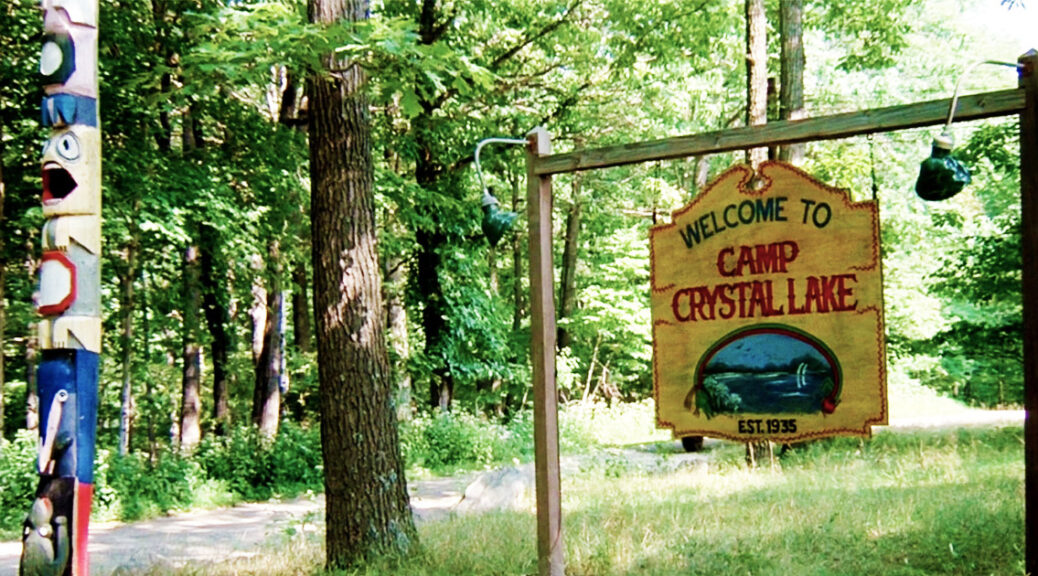
Before the mask, Sean Cunningham’s 1980 slasher penned by Victor Miller created the splatter-by-numbers blueprint for dozens of horror movies to follow – including 10 of its own sequels. Friday the 13th was a cultural and cinematic turning point that changed horror and the way we thought about summer camp.

With next to no budget but plenty of short shorts, remarkable blood fx by maestro Tom Savini, genuinely original kill sequences, and a masterful twist ending, the film awakened something in moviegoers. It’s been copycatted to death, but upon reinspection, the original is still champion.

2. Funny Games (1997/2007)

A family pulls into their vacation lake home. They are quickly bothered by two young men in white gloves. Things, to put it mildly, deteriorate.

Writer/director/genius Michael Haneke begins this nerve-wracking exercise by treading tensions created through etiquette, toying with subtle social mores and yet building dread so deftly, so authentically, that you begin to clench your teeth long before the first act of true violence.

His 2007 English language remake is a shot-for-shot repeat of the 1997 German language original. In both films, it is the villains who sell the premise. Whether the German actors Arno Frisch and Frank Giering or the Americans Brady Corbet and Michael Pitt, the bored sadism that wafts from these kids is seriously unsettling, as, in turn, is each film.

1. Eden Lake (2008)

The always outstanding Michael Fassbender takes his girl Jenny (Kelly Reilly) to his childhood stomping grounds – a flooded quarry and soon-to-be centerpiece for a grand housing development. He intends to propose, but he’s routinely disrupted, eventually in quite a bloody manner, by a roving band of teenage thugs.

Kids today!

The film expertly mixes liberal guilt with a genuine terror of the lower classes. The acting, particularly from the youngsters, is outstanding. Most impressive, Jack O’Connell’s performance as the young psychopath is chilling.

There’s the slow boil of the cowardly self-righteous. Then there’s this bit with a dog chain. Plus a railroad spike scene that may cause some squeamishness. Well, it’s a grisly mess, but a powerful and provocative one. Excellent performances are deftly handled by the director who would go on to helm The Woman in Black.

Come Upstairs

Skinamarink

by George Wolf

(Tom Hanks SNL voice) “My name is Kyle Edward Ball…and I’m going to scare the HELL out of YOU!”

And you know what? He just might do it.

Be extra prepared if the title Skinamarink reminds you of those fun singalongs from Sharon, Lois & Bram. Because Ball’s brand of nightmare fuel taps into the very essence of childhood fears, exploiting those exposed nerves with a committed resolve we haven’t seen since Laurence Olivier in Marathon Man.

Is it safe? It is not.

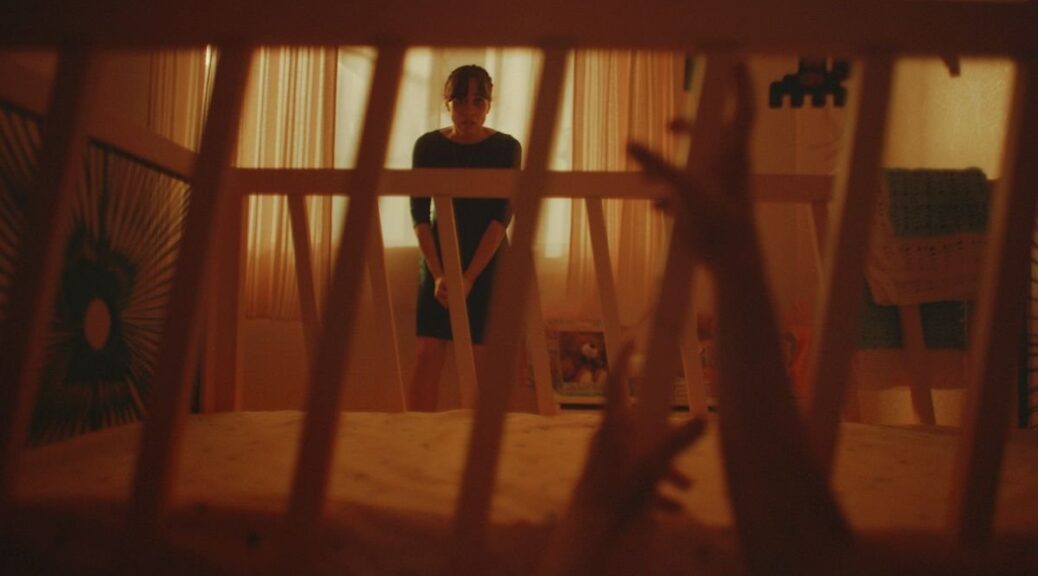
Ball’s premise is brilliant simplicity. It’s 1995, and two young children, Kaylee (Dali Rose Tetreault) and Kevin (Lucas Paul), wake in the night to find they are alone, with the windows and doors in their house suddenly gone. In an instant, the stakes are familiar – but not because you’ve seen this before.

It’s because there’s probably some version of this nightmare in your past. You were just a kid, separated from your parents and trying in vain to reach them or call out for help, or maybe just escape.

Remember how scared you were? Ball and cinematographer Jamie McRae do, and they twist that knife again and again for 100 slightly bloated minutes of dark, disorienting dread.

Cinematography and sound design are intertwined in an analog, cathode-ray aesthetic that recalls vintage, grainy VHS. The children whisper to each other (“Where do you think Dad is? I don’t know.”) as they wander from room to room, with Ball’s camera never allowing you one second of relief.

All through this fright night, familiar sources of comfort such as toys and cartoons turn eerily sinister, accentuating the feeling that it’s not just these kids that are in peril, it is childhood itself. POV is often at floor level, and then tight into a corner of the ceiling or high above the room and rising. You squint in the direction of the children’s flashlight, trying in vain to decipher anything about the house that will give you some sense of its layout, and you strain to separate the cracks of white noise from that deeper voice speaking to the children.

Come upstairs. Look under the bed. Close your eyes.

Ball started down this harrowing hallway by filming 3-4 minute short films of the actual dreams described by viewers of his YouTube channel. Some two years ago, his 29-minute short Heck emerged as the wonder of primal fear that inspired Skinamarink. And though it is a bit disappointing that the single most bone-chilling (and to be fair, most explanatory) moment of the short didn’t make it in the feature, Ball’s $15,000 budget buys much more killer than filler.

More than just nightmarish, this is a literal nightmare onscreen. And the intimate nature of nightmares means that the film’s patient, psychological assault is likely to bring out the “nothing happens!” barbs from those seeking more universally visceral thrills. But for others, the whispers of Skinamarink will hit like a sonic boom.

And they will be hard to shake.

Rad Chad’s Metaverse

Scare Package II: Rad Chad’s Revenge

by Hope Madden

Three years ago, Aaron B. Koontz delighted die-hard horror fans with the squishy, oozy, gory mash note to the video store, Scare Package. It was an anthology of horror shorts, and those only tend to work if they have a compelling frame. In this case, each short represented a film on the shelf at Rad Chad’s Horror Emporium.

For the sequel, Scare Package II: Rad Chad’s Revenge, survivors from Part I regroup for Rad Chad’s funeral. But they find themselves trapped by a sinister mastermind with deadly games they must play if they hope to make it out alive.

Why do they watch the short films? That’s less clear this go-round, but the shorts they do watch are all pretty solid.

Both Alexandra Barreto’s Welcome to the Nineties and Anthony Cousins’s The Night He Came Back Again! Part VI: The Night She Came Back – like Koontz’s framing story – rely on your knowledge of horror tropes to generate laughs. Barreto’s film has some of the sharpest insights via dialog as it celebrates the changing of the “final girl” guard once the grunge-and-garage era took hold.

Rachele Wiggins’s We’re So Dead is a fun Aussie adventure, part Stand by Me part Re-Animator, with a wry delivery. Like all the other shorts in the program, We’re So Dead offers metacommentary without surrendering its standalone charm.

For Special Edition, director Jed Shepherd sets a handful of friends in a lighthouse for the night with a one-of-a-kind video. But what is the film, exactly? As one woman obsessively rewinds, fast forwards and pauses, her friends are the ones making the big discoveries.

Nods to Aliens, Black Christmas, Halloween, Friday the 13th Part 5, A Nightmare on Elm Street Part 3, Hellraiser, Saw and more flavor the product and mark its makers as bona fide fans. You may have to be a fan of Scare Package to appreciate Koontz’s framing story because it picks up not long after the first left off, without explanation. Being in on the joke, as always, makes the gag more satisfying. But that’s the basic premise of every story told in this collection.