Screening Room: The Little Mermaid, You Hurt My Feelings, Kandahar, About My Father, Influencer, Wrath of Becky, Cracked
by Hope Madden
One of filmmaker Nicole Holofcener’s great talents is to acknowledge within a film that there is no reason to feel for her characters, and then making you feel for the characters. She’s a master of the relatable if tedious angst of the privileged. In her hands, these primarily insignificant tensions are humanized and often hilarious.
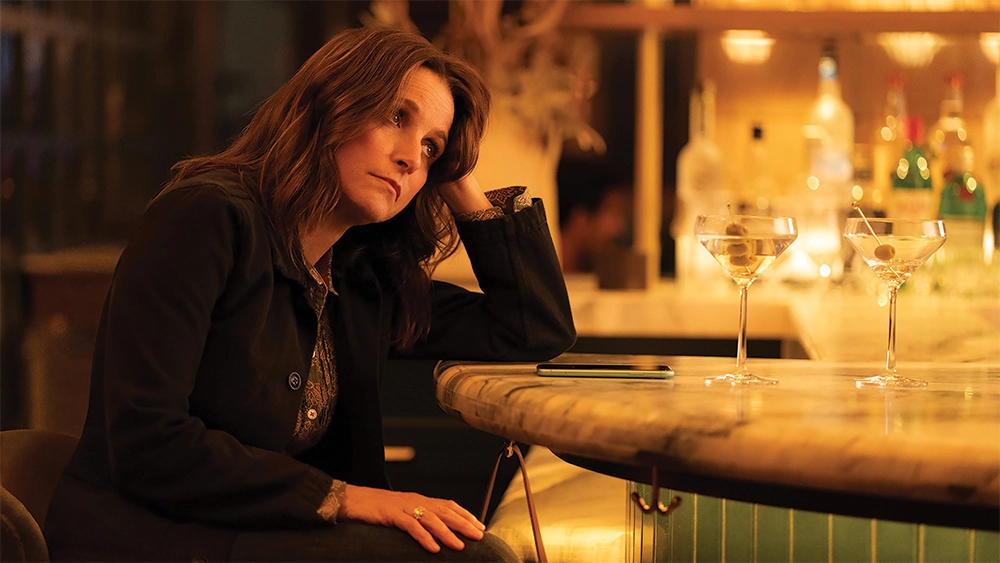
Such is the case with her latest, You Hurt My Feelings, a story about a well-off couple, truly compatible and in love, who fall on hard times when one overhears the other’s honest opinion.
Julia Louis-Dreyfus, who was so magnificently flawed and empathetic in Holofcener’s 2013 film Enough Said, stars as Beth, a novelist. Well, she wants to be a novelist, but her memoir only did OK and now her agent doesn’t seem that thrilled with her first ever novel. Maybe it sucks?
No, supportive-to-a-fault husband and psychologist Don (Tobias Menzies) assures her. But secretly, honestly, maybe that’s not how he feels.
And that’s Holofcener’s next great talent – casting. Louis-Dreyfus is characteristically flawless. Her humanity, comic timing, and self-deprecating yet narcissistic humor make her every character endlessly watchable. Menzies–in many ways the emotional anchor for the film–equals her. Both face the wearying revelation that truth really does hurt, right as their midlife insecurities are at their highest.
Arian Moayed and the always amazing Michaela Watkins play a mirror couple, Beth’s sister – a discontented interior designer for the very wealthy – and her insecure if lovable actor husband. They are both tremendously endearing and funny. Capping the ensemble is Owen Teague (To Leslie), Beth and Don’s 23-year-old only son who’s coming to terms with the fact that he was raised to believe he was more special than he really is. Also, he’s a writer.
Hilarious cameos from Amber Tamblyn and David Cross as an angry couple in therapy help to clarify Holofcener’s themes and push the comedy value higher. But it’s with the core couples that the filmmaker delivers her finest moments, creating a lived-in world, a true microcosm that pokes fun at our insecurities and the little white lies that keep us happy.

by Hope Madden
Back in 2012, Lulu Wilson carved out a frighteningly believable pissed-off adolescent in Jonathan Milott and Cary Murnion’s Becky. As had been the case with the filmmakers’ 2014 horror Cooties, the duo indulges a subversive fantasy that makes you laugh and turn away in equal measure – often at the same moment.
Wilson returns with new directors Matt Angel and Suzanne Coote in The Wrath of Becky, playing the slightly older, no less angry youngster.
Becky and her trusty hound Diego have been on the lam for several years. They’ve found a kind of peace living off the grid with elderly misanthrope Elena (Denise Burse) and making a living at a nearby diner. That peace is shattered when some Proud Boys – I’m sorry, some Noble Men – come to town.
Last time around, Becky did serious damage to a handful of neo-Nazis. Seeing her gut and dismember Proud Boy stand-ins promised to be very fun. Cathartic, even. And it sometimes is, but too often the sequel gets lazy.
Seann William Scott (Goon, American Pie) leads up the contemptible group of baddies with a quietly sinister performance that carries a lot of weight. Jill Larson (The Taking of Deborah Logan), though underused, brings a sassy surprise to the villainy and Aaron Dalla Villa is spot on as the slacker smartass of the group.
Last time around, writers Ruckus and Lane Skye and Nick Morris offered their game cast a bit of intrigue and plot. The sequel’s script, penned by Angel, Coote and Becky’s Morris, misses any of the depth beneath the murder spree.
Gone, too, is the tentative logic behind Becky’s bloodbath logistics. Millot and Murnion showed you how a 12-year-old managed not only to outwit the bad guys, but to physically annihilate them. Angel and Coote do not. They cut away, then cut back and miraculously Becky has accomplished something that defies not only reason but the laws of the known universe as well as the actual story itself.
In fact, every character makes a series of choices that defy the very storyline the film itself is trying to establish. Once or twice is forgivable, but eventually this lapse in internal logic becomes a real burden.
Wilson’s schtick lacks some of the vibrance of the original film, partly because watching a pre-teen on a murder spree is simply more novel, shocking and funny than witnessing another angry teen on a rampage. It would have helped if the filmmakers tried a little harder to convince us Becky could do it.

by Hope Madden
A plucky YA drama that embraces the messiness of grief, identity and general adolescence, B-Side: For Taylor sidesteps cliché in favor of nuance.
Jeannine Vargas is the titular Taylor, and she’s not having a great year. Her grades have slid to near failing since her adoptive mother died last year, and her adoptive father (Dave Huber) is so wrapped up in his own grief that he doesn’t know what to do about it. On top of that, every time Taylor stands up to the neighborhood bully (Dexter Farren Haag), her dad blames her, and she ends up in even more trouble.
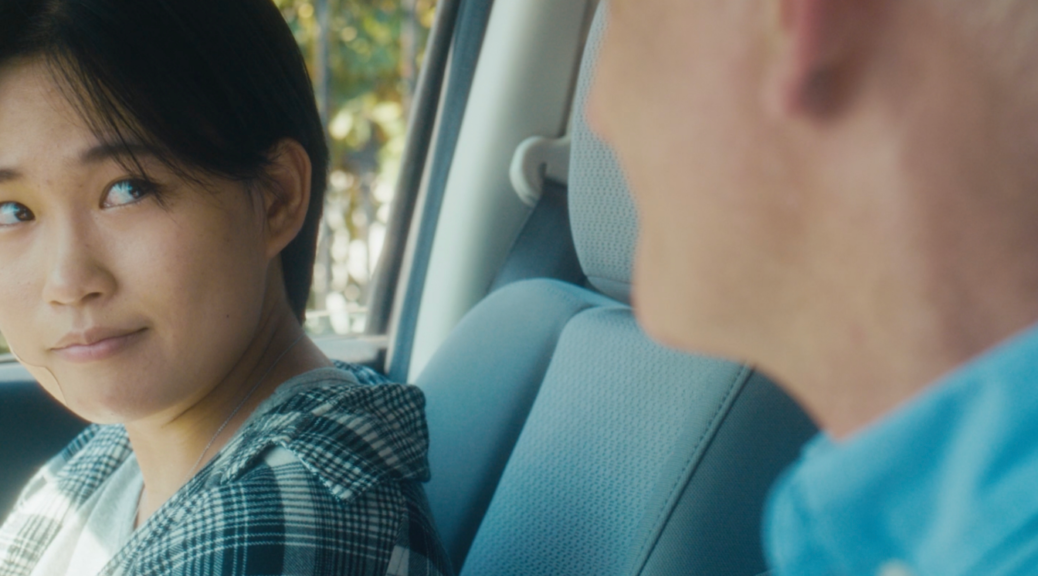
Enter Da-Young (Jacky Jung), a new neighbor whose family has just emigrated from Korea. Da-Young needs help with her English. Taylor needs help finding her Korean birth parents.
The strength in writer/director Christina Yr. Lim’s film is the way it forgives its wounded and often unpleasant characters. There are no one-dimensional characters, even those whose stories remain unresolved and on the periphery. The result is a more authentic tale.
Vargas is especially strong, but Lim surrounds her lead with able support. Esther Moon, playing Da-Young’s demanding mother, delivers a performance that breathes humanity into what could easily have been a trope.
Jung’s upbeat teen brightens a film that deals with some pretty heavy material, and her comic sensibility is welcome. Huber struggles somewhat in the depressed father role, but he gives the character a vulnerability that adds depth to the film’s more emotional moments.
Lim doesn’t pretend that families are easy, or that fixes come quickly if at all. The families in this film struggle, each member trying to find their fit. The lonesome heartache of questioning your worth to those who should love you haunts the entire film. But B-Side: For Taylor is about resilience, forgiveness and acceptance.

by Hope Madden and George Wolf
After knocking it out of the park early with The Jungle Book, Disney’s been hit-or-miss with the live-action reboots of its classic animation tales, especially the nearly shot-for-shot reimaginings. But there was plenty of reason for optimism when it came to Rob Marshall’s The Little Mermaid.
Halle Bailey shines as the irrepressible adolescent Ariel. She’s in fine voice, and thanks to some script updates from writer David Magee, the character has agency. She’s utterly charming, and – again thanks to some updating to the material – Jonah Hauer-King has an actual character to dig into. His Prince Eric has depth and personality. Both characters mirror each other in their longing and belief that they don’t into their own worlds. It’s easy to root for them.
But how is Ursula, one of the best Disney villains of all time?
Happy to report that Ursula the Sea Witch is still delightfully, deliciously evil. And the casting! Melissa McCarthy drips villainy as poor, unfortunate Ariel’s dastardly auntie. Her Ursula is campy, gloriously over the top and yet drolly above it all. The look is perfection, and her voice is magnificent. This villain is the highlight of the film.
And while we’re on casting, Javier Bardem makes a majestic King Triton, and some delightful voice work from Daveed Diggs as Sebastian and Awkwafina as Scuttle brighten scenes both in and out of the water.
Behind the camera, director Rob Marshall brings an impressive musical resume. From the Oscar-winning Chicago to the visionary Into the Woods to some dazzling sequences in the otherwise disappointing Nine, Marshall has proven he knows what makes a musical number pop onscreen.
Strangely, though, the film’s first big music moment, “Part of Your World,” seems a bit muted, leaving us wanting at least one more big crescendo for Bailey’s wonderful voice. Similarly, “Under the Sea” is rollicking fun, if not quite truly magical.
“Kiss the Girl” makes things right with a completely enchanting treatment, while Marshall and McCarthy both shine in a mischievously satisfying “Poor Unfortunate Souls.”
And while these numbers will remind you of the legendary talents of composer Alan Menken and lyricist Howard Ashman (who sadly passed in 1991), the additional of Lin Manuel Miranda will be unmistakable. Miranda not only brings some timely lyrical updates, he also teams with Menken for original songs, including “Scuttlebutt,” a showcase for Awkwafina full of Miranda’s typically snappy wordplay.
The look of the film is mainly strong. Underwater sequences are not quite as impressive as they were in Black Panther: Wakanda Forever, but still better than Aquaman. Above the water line set pieces – including a thrilling shipwreck – are beautifully executed. But Marshall struggles with scenes that break that barrier. When he can’t rely entirely on CGI for water scenes – when characters are partially submerged and the magical quality afforded by FX is missing – you feel it.
And as Ariel and her Prince struggle to find each other, you also feel the karmic beauty of the film’s culturally diverse cast – starting right at the top. Themes about different worlds living in harmony resonate more deeply when everyone doesn’t look the same.
This isn’t a revelation, and the film doesn’t treat it as one. It’s one of the many things The Little Mermaid gets right, and another example of how Marshall and his terrific ensemble manage to navigate the spotty squalls and bring this one home.
by Hope Madden
Who’s up for Polish vampire mermaids?
You do not have to ask me twice!
Gold (Michalina Olszanska) and Silver (Marta Mazurek) are not your typical movie mermaids, and director Agnieszka Smoczynska’s feature debut The Lure is not your typical – well, anything.
The musical fable offers a vivid mix of fairy tale, socio-political commentary, whimsy and throat tearing. But it’s not as bizarre a combination as you might think.
The Little Mermaid is actually a heartbreaking story. Not Disney’s crustacean song-stravaganza, but Hans Christian Andersen’s bleak meditation on the catastrophic consequences of sacrificing who you are for someone undeserving. It’s a cautionary tale for young girls, really, and Lure writer Robert Bolesto remains true to that theme.
The biggest differences between Bolesto’s story and Andersen’s: 80s synth pop, striptease and teeth. At its heart, The Lure is a story about Poland – its self-determination and identity in the Eighties. That’s where Andersen’s work is so poignantly fitting.
Not that you’ll spend too much time in the history books. The context serves the purpose of grounding the wildly imaginative mix of seediness, hope and danger on display.
The film opens with a trio of musicians enjoying themselves on a Warsaw waterfront before hearing a siren song. Cut to screaming, and then to a deeply bizarre nightclub where a kind of Eastern European burlesque show welcomes its two newest performers – mermaids.
From there we explore a changing Warsaw from the perspective of a very fringe family. Mystical creatures play nice – and sometimes not-so-nice – among the city’s thrill seekers and the finned sisters need to decide whether they want to belong or whether they are who they are.
But that’s really too tidy a description for a film that wriggles in disorienting directions every few minutes. There are slyly feminist observations made about objectification, but that’s never the point. Expect other lurid side turns, fetishistic explorations, dissonant musical numbers and a host of other vaguely defined sea creatures to color the fable.
In fact, Olszanska’s film is strongest when it veers away from its fairy tale roots and indulges in its own weirdness.
Whatever its faults, The Lure will hook you immediately and change the way you think of mermaids.
by Hope Madden
We are ten films into the Fast and Furious franchise. So let’s just start with some obvious points. #1, Vin Diesel is easily the most uninteresting thing about 9 of the 10 films (he’s not in #3).
The most interesting thing continues to be the set pieces – the fisticuffs, city explosions, flying car shenanigans. Director Louis Leterrier had some big tires to fill stepping into the tenth episode, and those two Transporter films are not pedigree enough. But he more than holds his own, even if the ridiculous nature of most of these will have you laughing out loud.
I laughed out loud many times. This is probably the funniest movie I’ve seen this year – mainly unintentionally, but how fun!
And then the other reason to like this franchise: the villains. Most of them wind up falling to Dom’s charms and joining his cult, but still! And a ton of them are back for this one: Statham, Mirren, Cena, Theron, and now, Momoa.
Jason Momoa has a ball, all swagger and silliness as the devil – a foe so evil that all previous villains (even those who sought to end the world; even those who actually killed members of Dom’s beloved family) quake in his presence. His every moment onscreen is a joy, but I honestly think one particular scene with toenail polish might have been added late just to show us how amazing he can be.
The core group – the family – of course returns, although the adventure splits them up to allow opportunities to bloat the run time. I mean, to give each of them arcs and storylines. Tyrese Gibson and Chris ‘Ludacris’ Bridges lead the comic relief squad. They head one way while Uncle Jakob (John Cena) takes Dom’s precious son a different direction.
Most interesting, per usual, is whatever Letty (Michelle Rodriguez) does. It mainly involves Oscar winner Brie Larson (making her F&F debut as Mr. Nobody’s daughter) and Oscar winner Charlize Theron (who, once again, delivers a performance far better than the material deserves).
Cameos galore, plus a stinger you’ve heard about but probably still want to stick around to see, add to both the run time and the fun.
Somewhere around Justin Lin’s Fast 5 (ironic, given the Fast X storyline), Dom and his family just became superheroes, flying, impenetrable, imperturbable superheroes. Yes, you will hear the word family more often than every other word in the script combined. No, Diesel never acts.
I mean, he can. We all saw Saving Private Ryan once up on a time. He just doesn’t do it here. He’s a gravelly voiced Buddha, as he always has been. And he’s the least compelling element in the film or the series, as he always has been. It takes nothing way from the film. It never has.
Fast X. Dumb as hell. Thumbs up all around.
by Hope Madden
A damaged man imposes order on his life, eventually growing confident enough in this structure to try to save someone else because he cannot save himself.
That’s right. This is a Paul Schrader movie. Like most of Schrader’s best features (First Reformed, The Card Counter, all the way back to his script for Taxi Driver) Master Gardener delivers a variation on that same riff. Lucky his characters are so compelling they keep us watching.
In this case, that character – the titular gardener – is Narvel (Joel Edgerton). Narvel tells us, via his journal: Gardening is a belief in the future, that change will come in its due time.
Is Schrader growing more optimistic? Or will we grow to hope for Narvel only to witness the worst possible outcome (a la Card Counter)? Longtime fans may get a little nervous before the general moviegoer, but either way, Schrader sets a hook early.
The other element that jumps out early is the look of this film. Schrader’s gift for visual composition has never seen so exceptional a vehicle. Fitting, given the beauty of a garden. The lovely orderliness of Narvel’s garden is set against the riotous disarray that arrives in the shape of Mya (Quintessa Swindell): sloppy clothes, hair everywhere, no plans, no future. Maya doesn’t crave orderliness. Mya just is.
What Mya is not is like her Great Aunt Norma (Sigourney Weaver, letter perfect as the wealthy matriarch of the estate). Norma has arranged for Mya to apprentice on the property. She’d like Narvel, or “Sweet Pea” as she calls him, to look after the girl.
The arrival of this outsider sets wheels in motion. Narvel’s once orderly world now falls victim to his own past, drug dealers, the Feds. Edgerton’s a solid choice for the role, stoic but roiling with regret and quietly desperate for redemption. Swindell’s free spirit, tempered with the justifiable righteousness of youth, offers an excellent counterweight and Weaver outshines them all, stealing every inch of scene she’s in.
But they don’t have enough to do. Redemption feels unearned. Drug addiction is treated as too easily overcome. Most troubling is the way racism is skirted throughout the film.
“Gardening is the manipulation of the natural world, the creation of order out of disorder,” Narvel tells us. Filmmaking can provide much the same exercise. But forgiveness comes too easy for this damaged antihero, and Master Gardener feels too much like Schrader light.

The Seventh Seal, Blindness, Carriers, Rabid, Mayhem, Masque of the Red Death, Infection, Flesh + Blood, The Crazies – all amazing movies exploring our communal fear of contagion. They pick that scab, so to speak, but are there others that do it better?
Our two rules: no zombies, no living beasties (The Thing, Shivers, etc.) Just some kind of virus. Here goes!
Canadian director Bruce McDonald’s shock jock horror film is best appreciated as a metaphor on journalistic responsibility and the damage that words can do. Radio air personality and general pot-stirrer Grant Mazzy (Stephen McHattie) finds himself kicked out of yet another large market and licking his wounds in the small time – Pontypool, Ontario, to be exact. But he’s about to find himself at the epicenter of a national emergency.
McDonald uses sound design and the cramped, claustrophobic space of the radio studio to wondrous effect as Mazzy and his producers broadcast through some kind of mad epidemic, with Mazzy goosing on the mayhem in the name of good radio. As he listens to callers describe the action, and then be eaten up within it, the veteran McHattie compels attention while McDonald tweaks tensions.
Shut up or die is the tagline for the film. Fitting, as it turns out that what’s poisoning the throng, turning them into a mindless, violent mob, are the very words spewing at them. It’s a clever premise effectively executed, and while McDonald owes debts all around to previous efforts, his vision is unique enough to stand out and relevant enough to leave an impression.
If you could catch Kim Kardashian’s cold, would you?
This is the intriguing concept behind writer/director Brandon Cronenberg’s seething commentary on celebrity obsession, Antiviral.
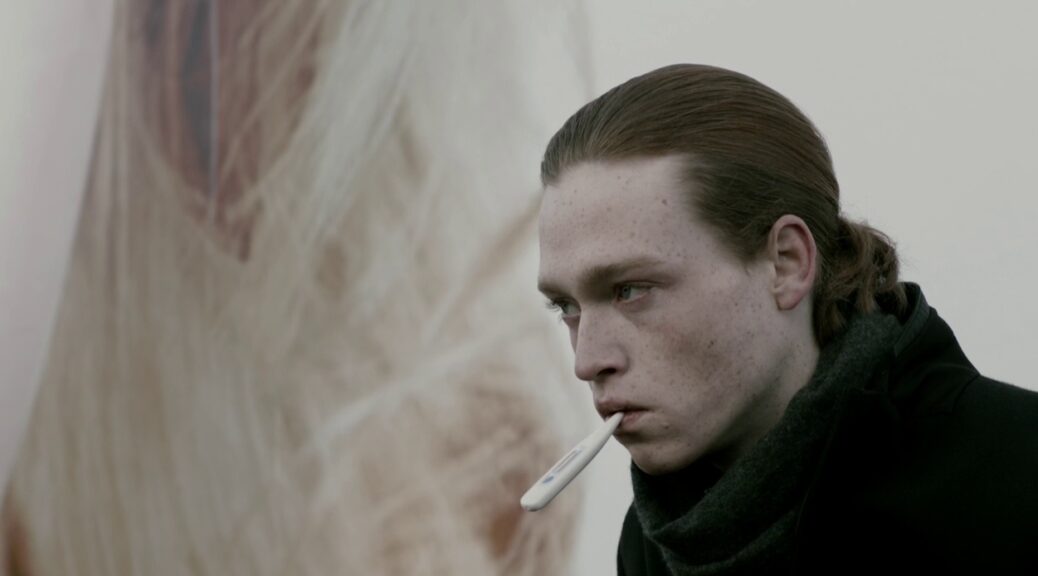
Young Syd March (Caleb Landry Jones) works for a clinic dealing in a very specific kind of treatment. They harvest viruses from willing celebrities, encrypt them (so they can’t spread – no money if you can’t control the spread), and sell the illnesses to obsessed fans who derive some kind of bodily communion with their adored by way of a shared herpes virus. Gross.
But the ambitious Syd pirates these viruses by injecting himself first, before the encryption. Eventually, his own nastiness-riddled blood is more valuable than he is, and he has to find a way out of quite a pickle. Maybe vitamin C?
Deep in the woods, Paul (Joel Edgerton, solid as always), Sarah (Carmen Ejogo) and their teenage son Travis (Kelvin Harrison, Jr.) have established a cautious existence in the face of a worldwide plague. They have boarded their windows, secured their doors, and enacted a very strict set of rules for survival.
At the top of that list: do not go out at night.
Writer/director Trey Edward Shults explores the confines of the house with a fluid camera and lush cinematography, slyly creating an effective sense of separation between the occupants and the dangers outside. But what are those dangers, and how much of the soul might one offer up to placate fear itself? In asking those unsettling questions, It Comes at Night becomes a truly chilling exploration of human frailty.
It Follows is another coming-of-age tale, one that mines a primal terror. Moments after a sexual encounter with a new boyfriend, Jay (Maika Monroe) discovers that she is cursed. He has passed on some kind of entity – a demonic menace that will follow her until it either kills her or she passes it on to someone else the same way she got it.
Yes, it’s the STD or horror movies, but don’t let that dissuade you. Mitchell understands the anxiety of adolescence and he has not simply crafted yet another cautionary tale about premarital sex.
Mitchell has captured that fleeting yet dragging moment between childhood and adulthood and given the lurking dread of that time of life a powerful image. There is something that lies just beyond the innocence of youth. You feel it in every frame and begin to look out for it, walking toward you at a consistent pace, long before the characters have begun to check the periphery themselves.
Mitchell’s provocatively murky subtext is rich with symbolism but never overwhelmed by it. His capacity to draw an audience into this environment, this horror, is impeccable, and the result is a lingering sense of unease that will have you checking the perimeter for a while to come.
Activists break into a research lab and free the wrong effing monkeys.
28 days later, bike messenger Jim wakes up naked on an operating table.
What follows is the eerie image of an abandoned, desolate London as Jim wanders hither and yon hollering for anybody. In the church, we get our first glimpse of what Jim is now up against, and dude, run!
Prior to 28 Days Later, the zombie genre seemed finally dead and gone. But director Danny Boyle single-handedly resurrected the genre with two new(ish) ideas: 1) they aren’t dead, 2) therefore, they can move really quickly.
Both Brendan Gleeson and Cillian Murphy are impeccable actors, and Naomie Harris is a truly convincing badass. Their performances, and the cinematic moments of real joy, make their ordeal that much more powerful. But you know you’re in trouble from the genius opening sequence: vulnerability, tension, bewilderment, rage, and blood – it launches a frantic and terrifying not-zombie film.