Screening Room: The Bikeriders, Thelma, Robot Dreams, The Exorcism & More
by Hope Madden and George Wolf
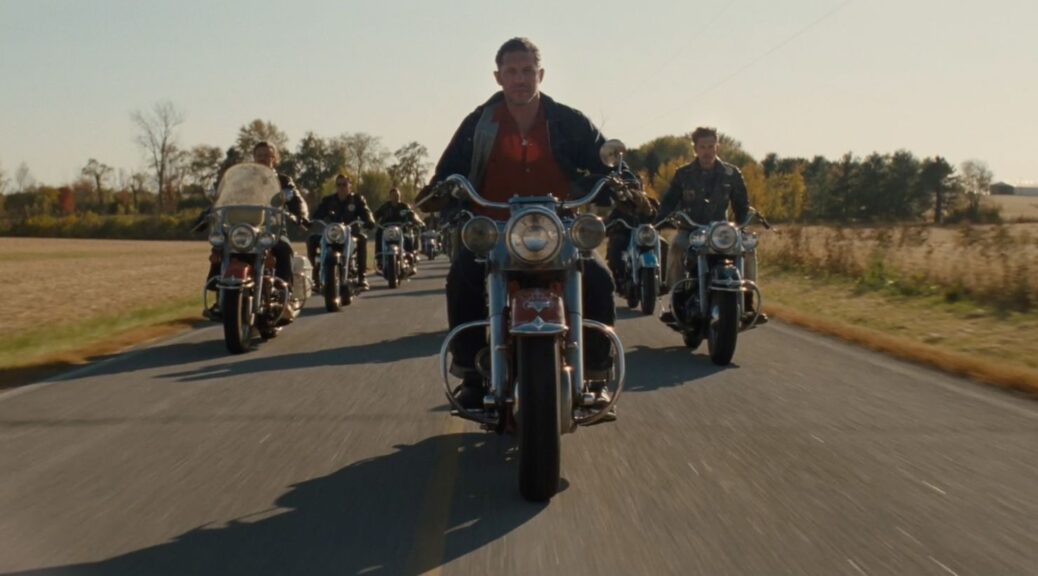
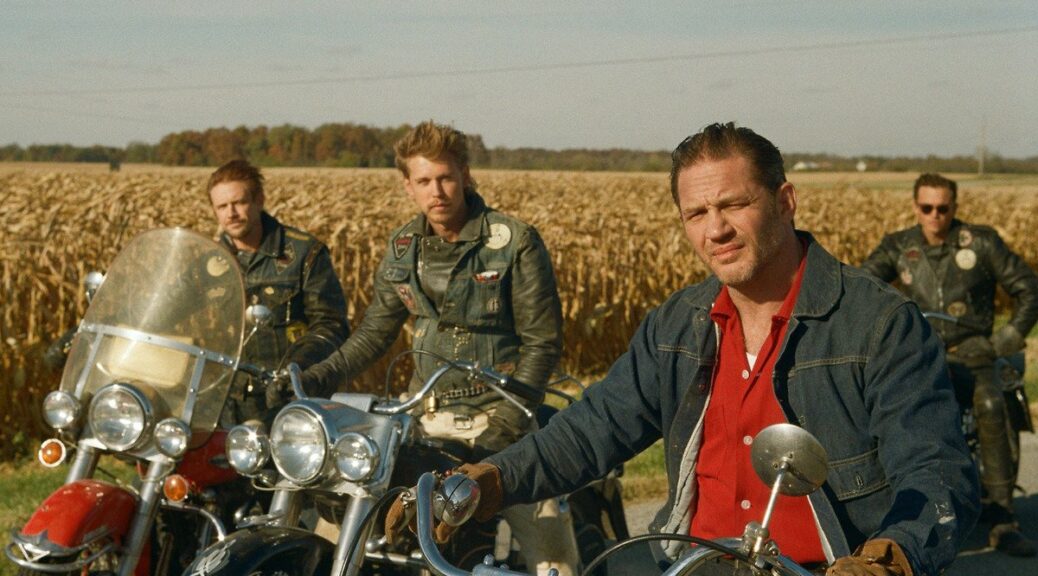
Jeff Nichols has never made a bad movie. Hell, he’s never made a mediocre movie. Nothing but glory with this guy. And The Bikeriders has everything a good Nichols film delivers—location, bruised masculinity, lyrical realism, Michael Shannon—but this time the writer/director has cast for days. Tom Hardy. Austin Butler. Jodie Comer. Shannon (natch). Columbus hometown hero Mike Faist, Boyd Holdbrook, Norman Reedus, Damon Herriman—all in top form, all clinging to camaraderie and connection and that fleeting American rebellion that is freedom.
Based on Danny Lyon’s 1968 book of photos and interviews of the Chicago-based motorcycle club the Vandals, Nichols’s tale catches a moment in history.
The setting—mainly areas in and around Cincinnati—captures the texture of the era, allowing this fine ensemble to transport you. Butler’s the James Dean to Hardy’s Brando. As gang leader Johnny, Hardy stalks the screen in a deeply felt performance full of pathos, tenderness and fear. His spiritual opposite, Butler (as Benny) haunts the film, a beautiful phantom forever outside anyone’s grasp.
But as Benny”s wife Kathy, it is Comer who drives The Bikeriders. As she warily enters this fringe existence, Kathy brings us along. And it is through her interviews with Danny (Faist, standing in for the actual photojournalist Danny Lyons) that the tales emerge, eventually interconnecting and expanding to mirror not only the Vandals’ evolution but a moment of cultural shift in American history.
Comer’s a force. Her Midwest accent is a strangely melodic storytelling device, but her impish facial changes tell us even more about Kathy. Marrying Benny barely a month after they meet, Kathy becomes the narrative lynchpin standing between Johnny and Benny’s undevided devotion.
This love triangle of sorts gives the film its magnetic center, but those oddballs who orbit the trio are almost as compelling. Shannon, with limited screen time, is transfixing and both Boyd and Reedus carve out memorable madmen.
Nichols’s character building and patient, lyrical pace combine with cinematographer Adam Stone’s gritty, gorgeous, picture postcard pastiche for an immersive experience that gracefully echoes the source material. Pages are turned and stakes are raised for these characters, their way of life and the country they call home.
And like most of us, that’s what these people are searching for: a place to feel like they belong. Weaving thematic threads from The Wild One, Goodfellas and even Shakespearean tragedy, The Bikeriders gives that search brutal beauty and compelling life.

by Hope Madden
“Cora, I don’t need you to fix it, I just need you to not break anything else.”
We’ve all had those friends. Some of us have been those friends. Director Hannah Pearl Utt’s generous and forgiving film Cora Bora—with a huge lift from a remarkable lead performance—empathizes with both sides.
Megan Stalter is Cora, and she is clearly delusional. She’s living in LA, playing her acoustic guitar and singing to sparce crowds at open mics and coffee shops; hitting parties where food, cocktails and pot might be on hand and free; and looking for hookups, despite her girlfriend Justine (Jojo T. Gibbs) back in Portland. But it’s OK because they have an open relationship. Although, since Justine isn’t returning calls much, maybe she’s using their “open” relationship to actually start another relationship.
Cora better plan a surprise trip home to double check.
Stalter is a perfect mix of vulnerability and avoidance, her performance never spinning into broad comedy that would lampoon the underlying pain Cora is dealing with. Rhianon Jones’s script wisely suggests that Cora’s behavior is not entirely new, but tremendously amplified since a tragedy hinted at but never belabored. This allows Stalter to be reasonably ridiculous—her actions becoming “I can’t believe she did that!” in a way that you do, indeed, kind of believe.
It’s the type of character the Clevelander has honed throughout her career as a comic, but it’s her skill as an actor that allows this to stretch to feature length without wearing out its welcome.
A nimble supporting cast, including Ayden Mayeri and Manny Jacinto in meaty roles and Chelsea Peretti and Darrell Hammond in fun cameos, offer ample opportunity for Stalter to draw you in to Cora’s chaos.
A number of plot threads feel pretty convenient and the resolution of Cora’s arc feels a bit like a cheat, but at no point does Cora Bora lose your interest. And when the time comes for Stalter to prove her dramatic mettle, she more than impresses.

by Hope Madden
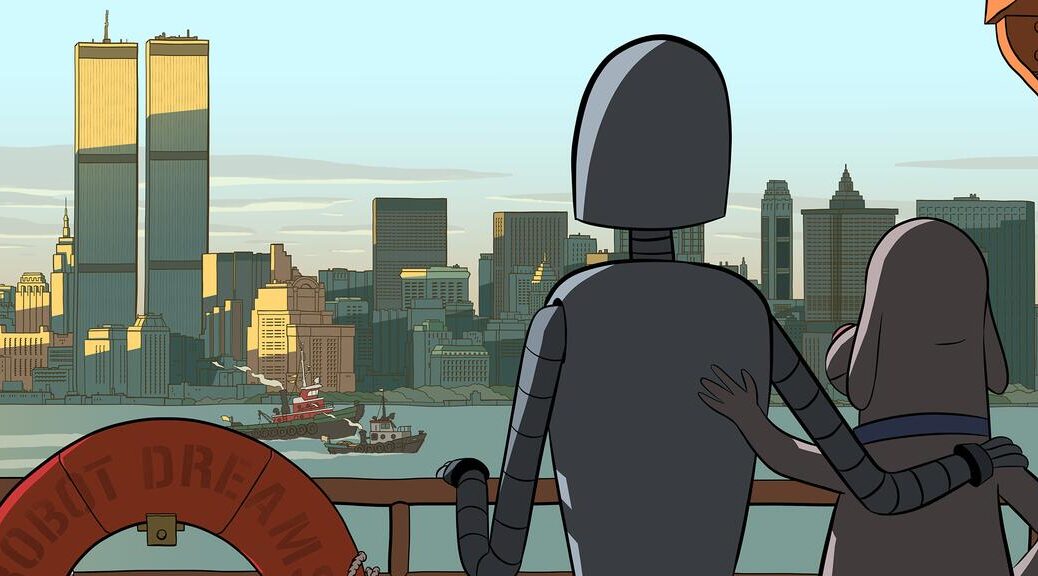
The dearest, most charming, heartbreaking delight to be found on screens this summer, Robot Dreams finally makes it to theaters. This 2023 Oscar nominee for best animated feature is an exploration of relationships, and though children will be entertained, you should go see it whether you have a family to bring along or not.
The less you know about the plot (based on Sara Varon’s graphic novel) the more filmmaker Pablo Berger can surprise you, and every frame of Robot Dreams holds a touching surprise. Set in New York City of the 1980s, the film travels with hopeful introvert Dog, who finds friendship with Robot. Thanks to a mechanical miscalculation, Berger takes the pals and you on an emotional and genuine look into what makes and breaks a relationship.
Berger wordlessly articulates what few films have managed: friendship, with all its joy and pain; and friends, with all their tenderness and failings. In many ways, it’s as much about love and couple-hood as friendship.
The animation and editing are so masterful, impish but emotionally honest, that you won’t miss the dialog. And the soundtrack is pure joy— Earth, Wind and Fire fans, delight.
Fun, visually rich moments on roller skate and sleds, bowling and trick-or-treating will engage children, but the emotional richness in this movie is aimed directly at adults. Berger’s film is endearingly forgiving—perhaps more than I am. You’ll be frustrated, elated, worried, wearied, and overjoyed because you feel so deeply for these characters. And the film takes on a wonderfully surreal quality as Robot dreams.
Slyly authentic in its examination of how we grow, sometimes apart, Robot Dreams honors the pain of losing the one you thought was your forever home, but it also celebrates the memories made with the one who got away.
It can be hard to make friends, and it can be just as hard to be a friend. In Pablo Berger’s skilled hands, lonesomeness takes on a magical quality and friendship becomes an evolving surprise.

Nightmares may be the source of all horror. There’s a theory that sleep paralysis may be to blame for history’s waking nightmares: ghosts, demons, specters. We dive into this horrifying complex and the horror films it has inspired.
5. The Night House (2020)
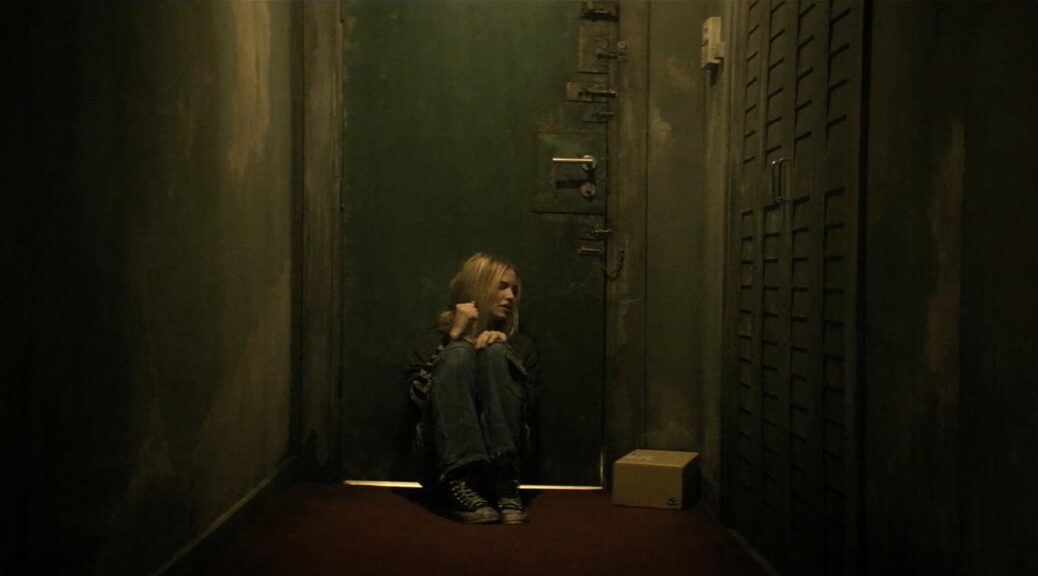
Director David Bruckner’s The Night House rests on a trusted horror foundation that’s adorned with several stylishly creepy fixtures. A remarkable as always Rebecca Hall plays the recently, startlingly widowed Beth whose grief combines with nightmares, sleuthing with doubt.
Though Beth’s neighbor (Vondie Curtis-Hall, always a pleasure) and best friend (Sarah Goldberg) both warn her not to fill the void in her life with “something dark,” the dark keeps calling. The more Beth digs into things Owen left behind, the more signs point to an unsettling secret life, and to the possibility that Owen may not have entirely moved on.
Beth’s sustained grief, and her indignation toward everyone who’s not Owen, carries an authenticity that gets us squarely behind Beth’s personal journey. And that pays dividends once the film relies on our belief in what Beth believes. Thanks to Hall, we end up buying in.
4. Insidious (2010)
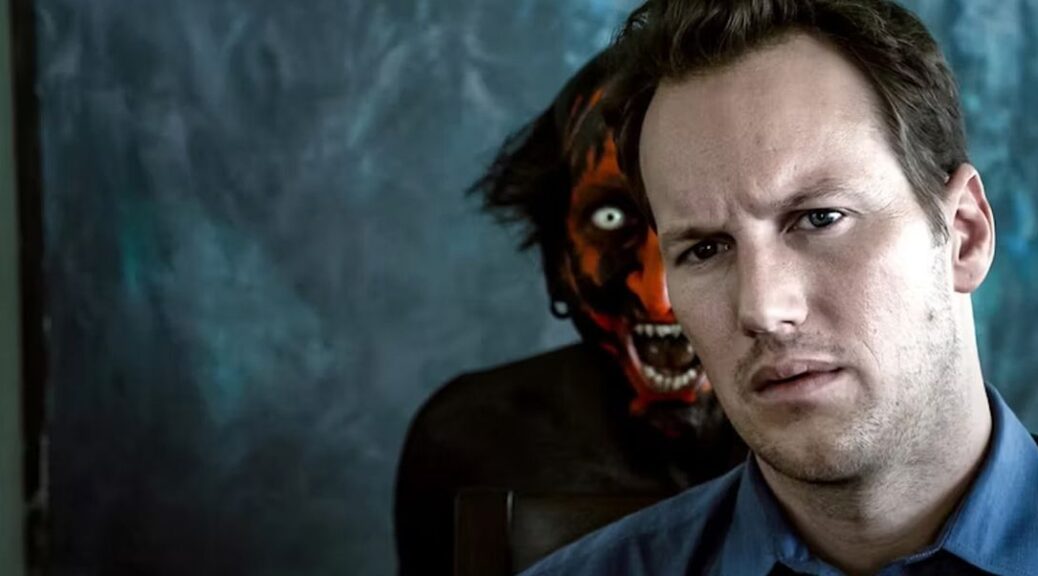
Director James Wan and writer (and co-star) Leigh Whannell launched a second franchise with this clever, creepy, star-studded flick about a haunted family.
Patrick Wilson (who would become a Wan/Whannell staple) and Rose Byrne anchor the film as a married couple dealing with the peculiar coma-like state affecting their son, not to mention the weird noises affecting their house. The catch in this sleep paralysis film is that we are not with the dreamer. Instead, the dreamer is an innocent, helpless child, combining the hallucinatory imagery with child-in-peril tension.
But what makes this particular film so effective is that we get to go into The Further to reclaim the lost soul. It’s a risky move, but these filmmakers do what few are able to: they show us what we are afraid of.
3. A Nightmare on Elm Street (1984)
Teens on suburban Elm St. share nightmares, and one by one, these teens are not waking up. Not that their disbelieving parents care. When Tina woke one night, her nightgown shredded by Freddie’s razor fingers, her super-classy mother admonished, “Tina, hon, you gotta cut your fingernails or you gotta stop that kind of dreamin’. One or the other.”
Depositing a boogieman in your dreams to create nightmares that will truly kill you was a genius concept by writer/director Craven because you can only stay awake for so long. It took everyone’s fear of nightmares to a more concrete level.
The film was sequeled to death, it suffers slightly from a low budget and even more from a synth-heavy score and weak FX that date it, but it’s still an effective shocker. That face that stretches through the wall is cool, the stretched out arms behind Tina are still scary. The nightmare images are apt, and the hopscotch chant and the vision of Freddie himself were not only refreshingly original but wildly creepy.
2. Borgman (2013)
Writer/director Alex van Warmerdam delivers a surreal, nightmarish, sometimes darkly comical fable guaranteed to keep you off balance. It is meticulously crafted and deliberately paced, a minefield of psychological torment.
van Warmerdam offsets his mysterious script with assured, thoughtful direction, buoyed by a fine ensemble cast and crisp, sometimes remarkable cinematography.
Like its title character, Borgman is unique and hypnotic, leaving you with so many different feelings you won’t be quite sure which one is right.
1. The Nightmare (2015)
An effective scary movie is one that haunts your dreams long after the credits roll. It’s that kind of impact that most horror buffs are seeking, but even the most ardent genre fan will hope out loud that Rodney Ascher’s documentary The Nightmare doesn’t follow them to sleep.
Sleep paralysis is the phenomenon that inspired Wes Craven to write A Nightmare on Elm Street. It’s a clear creative root for Insidious, Borgman, and scores of other horror movies. But it isn’t fiction. It’s a sometimes nightly horror show real people have to live with. And dig this – it sounds like it might be contagious.
We spend a great deal of time watching horror movies, and we cannot remember an instance in our lives that we considered turning off a film for fear that we would dream about it later. Until now.
by George Wolf
It’s been nine years since Pixar’s Inside Out took us on that wonderful ride through a young girl’s feelings. Almost a decade, and I’m still not over what happened to Bing Bong.
Revisiting Riley (voiced by Kensington Tallman) when she hits her teen years seems like a natural exercise. And beyond that, Inside Out 2 delivers enough warmth, humor and insight to make the sequel feel downright necessary.
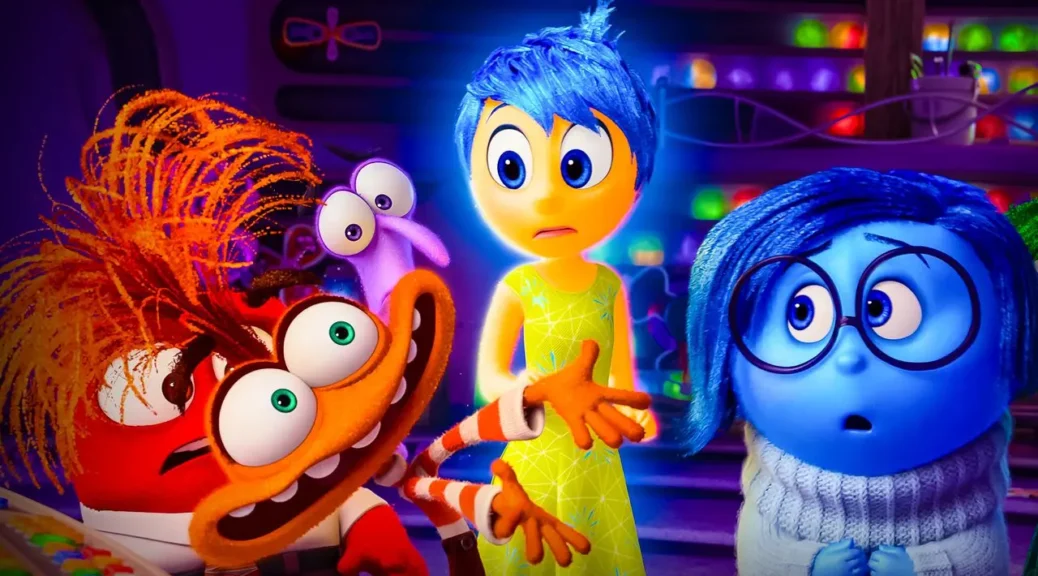
Riley’s now turning 13, and all seems status quo. Joy (Amy Poehler) keeps the reins on Anger (Lewis Black), Fear (Tony Hale), Sadness (Phyllis Smith) and Disgust (Liza Lapira) as Riley gets set to head to the Bay Area hockey skills camp.
Then, overnight, the puberty alarm goes off. Oh Lord.
Director Kelsey Mann and writers Meg LeFauve (returning from part one) and Dave Holstein unleash this emotional onslaught with a mix of laughs and empathy that sets the perfect catalyst for another winning Pixar trip into a secret world.
And this world is more chaotic than ever. Anxiety (Maya Hawke) turns up with a plan to take over, leaning on Envy (Ayo Edebiri), Embarrassment (Paul Walter Hauser) and Ennui aka Boredom (Adèle Exarchopoulos) to steer Riley away from who she is and toward “who she needs to be”.
Will Riley abandon her BFF teammates Bree (Sumayyah Nuriddin-Green) and Grace (Grace Lu) to cozy up to star player Val (Lilimar) and the other older girls? Will Riley’s belief that “I’m a good person” crumble under doubt and desperation?
In his feature debut, Mann proves adept at showcasing what Pixar does best: meaningful stories for kids that are also emotional for parents. From the demo crew that arrives with puberty to the “sar-chasm”, this is another very clever romp through all that builds the sense of self. The film’s battle between joy and anxiety is relatable for all generations, and it’s filled with levels of creativity, humor, and visual flair that are undeniably fun.
And while it may not be Toy Story 4 funny, it is funny, especially when a leftover memory from Riley’s favorite kiddie show turns up to help our heroes out of “suppressed emotions” exile. His name is Pouchy (SNL’s James Austin Johnson). He’s a pouch. He’s hilarious. Trust me on this.
Could we now be moving closer to a Disney-fied treatment of Paul Almond’s Up series? Well, June Squibb’s charming cameo as Nostalgia just might be a peek at things to come. Either way, Inside Out 2 is a completely entertaining two-hour guide toward understanding – or appreciating – the messy emotions of growing up.
by Hope Madden
“You have no idea.”
It’s the refrain forever punctuating the silence between father, Edek (Stephen Fry), and daughter, Ruthy (Lena Dunham), in co-writer/director Julie von Heinz’s family tragicomedy, Treasure.
Both Ruth and Edek are grieving the loss of Ruth’s mother, and each is dealing with that grief in their own way. Edek closes out anything unpleasant and focuses on the positive. Ruth books a trip to Poland to visit everything her Auschwitz survivor father has stricken from his memory.
The fact that von Heinz can mine any comedy from this family vacation is a great credit to her lowkey direction and, of course, to the neurotic charm of her leads.
Fry excels. He’s affable and dear, proud and protective, and—as dads tend to be—infuriating. It’s a great part and Fry expands to fill this larger-than-life presence.
Dunham has her work cut out for her as the hyper-intelligent emotional basket case grappling with the reality that she knows nothing of the nightmare of her parents’ past. The absence of her mother has left her feeling untethered; the trip offers a point of connection with a past that’s lost to her.
Auschwitz is a big image. In stronger moments, Treasure aches with a longing to understand why you are the way you are, a longing for connections to your past. It acknowledges that you may be built from your parents’ trauma, but that does not give you the right to own it.
In weaker moments, the film itself feels like trauma tourism.
Dunham does what she can to humanize this character, to examine Ruth’s grief, hollowing self-loathing, and need. But in the face of her father’s pain, this unholy exercise in picking scabs makes Ruth profoundly, unforgivably self-centered. Grief is necessarily selfish, but Ruth is obliviously sadistic.
Von Heinz walks a tightrope of tone. She taps into the reverberating echoes of war crimes right in the streets and apartments of Poland. She keeps it light but respectful, unveiling a heartbreaking reality most may not know.
There’s much to like in Treasure, but the film keeps siding with Ruthy without giving us any reason to do so ourselves.

by Hope Madden
A descent into madness horror that relies almost entirely on two performances, writer/director James Drake’s Latency makes effective use of his single location to amplify themes and create tension.
Sash Luss is Haha, an agoraphobic professional gamer with a lot to lose. She’s months behind on rent, for one, and the last thing an agoraphobic needs is to have to find a new place to live. So, when she gets the chance to test new gear that enhances performance—which she can use to win a high stakes tournament before anyone else gets ahold of the tech—she jumps.
But the mind meld gear exacerbates some troubling aspects of Hana’s mental health, kicking off a rapid deterioration that blends memory with video game until she’s not sure what’s real and what’s not.
Latency feels a bit like a gamer’s Repulsion. Instead of mining sexual hysteria as Polanski did, Drake digs into the way seclusion and technology can intensify trauma and deepen mental illness.
Alexis Ren injects Latency with needed cheer and color, but it’s Luss who anchors the film. She’s in every scene. It’s a demanding role that asks, for instance, for magnetism while staring listlessly at a video game you can play with your mind. The arc of the character is dizzying and Luss can’t always deliver. While she transmits the fear and much of the regret authentically, the madness never feels quite mad enough.
The scares aren’t especially scary, either, but the narrative’s game like quality does build a sense of existential horror. Still, though the video game quality of the aesthetic cheats the need for realistic horror images, they’re still missed.
The film sees agoraphobia as a kind of macabre, inherited coping mechanism. But there’s something honest in the nightmare of days disappearing into other days, a timeless malaise of hyper-isolation.