Tag Archives: Hope Madden

RoboCop Meets Short Circuit

Chappie

by Hope Madden

In what amounts to RoboCop meets Short Circuit, Neill Blomkamp’s latest, Chappie, celebrates the outsider.

Chappie is the first sentient robot, his consciousness a program crafted by the engineer behind Johannesburg’s “scout” police force. The scout robots – a simple form of artificial intelligence assisting the Jo’burg po po – have all but eliminated urban crime.

Two problems. 1) A handful of the city’s remaining thugs want one to help them pull a heist, and 2) a weirdly coiffured rival engineer (Hugh Jackman) believes AI is an abomination and thinks his own robot – controlled by a human brain – is superior.

Imagine how pissed he gets when he finds that his rival Deon (Dev Patel – everywhere this weekend) has taken the body for one of his scouts and given it life.

Blomkamp’s third film proves that he is kind of entrenched in a single story: the corrupt wealthy versus the damaged poor with an innocent outsider hero to bring it all together. But in Blomkamp’s hands, the story always feels wildly, deeply his own. The fact that he tells it through richly imagined characters doesn’t hurt.

Chappie tells this tale with more heart and enthusiasm than the director’s last effort, the middling Elysium, but it lacks the originality (obviously) and much of the tension of his impressive debut effort, District 9.

His film suffers from an abundance of sentimentality and attention-seeking. Jackman’s over-the-top aggression and bizarre costuming are almost overshadowed by the often fascinating (though sometimes cloying) oddity that is the duo of Nija and Yo-Landi Visser (South African rappers cast as Chappi’s thug-life parents).

Blomkamp favorite Sharlto Copley performs admirably as the maturing robot-child Chappie, though you can’t help but feel abused by the manipulative child-mind/adult-world theme.

Blomkamp, who also wrote the screenplay with District 9 collaborator (and wife) Terri Tatchell, finds fertile ground in the images of Johannesburg’s criminal population, and when he can keep the sentimentality in check he does a nice job of balancing drama, comedy and action.

His real aim – as is usually the case with decent SciFi – is social commentary. The consequences he leaves unexplored in his film are so big and complex they are often the entire storyline of other films, but Blomkamp has his muse to follow. Chappie is true to his creator’s intention, and though it’s certainly a flawed and limited image, the experiment is not a complete failure.

Verdict-3-0-Stars


Hatin’ on Hollywood

Maps to the Stars

by Hope Madden

Who but David Cronenberg could take the bubbling Hollywood cesspool that is Maps to the Stars and create from it a chilly but fascinating snapshot of industry dysfunction?

The truth is that Bruce Wagner’s screenplay requires Cronenberg’s anthropological approach and perverse sense of humor. Without it, he’s written a vulgar soap opera. With it, he’s written a revoltingly compelling, oddly austere essay on the self-indulgent, self-congratulatory, fraudulent, repugnant, insecure insanity that is Hollywood.

The story itself couldn’t be more lurid, which is why Cronenberg’s peculiarly distant style is so effective. Some elements of his direction have changed little since he was bursting heads in Scanners.

What has changed over the decades is his ability to draw talent to his projects, and few of his casts have been as stocked as this one. The great (and finally Academy-acknowledged) Julianne Moore steals every scene as the prototypical damaged, aging starlet. Needy, vulnerable, charming and venomous – Moore hits every note on time and in tune.

The versatile Mia Wasikowska – who played Moore’s daughter in The Kids are All Right – here plays her newly hired personal assistant, or “chore whore” as she so delightfully puts it. Wasikowska’s Agatha is the vehicle for chaos in the film, although given the temperament and predilections of the characters involved, chaos is probably never far away.

Agatha wants to make amends for something she did to her family (Olivia Williams, Evan Bird and a gleefully toxic John Cusack) – something related, we assume, to the scarring on her face and neck. Meanwhile, she falls for a sweet but opportunistic limo driver (Cronenberg favorite Robert Pattinson).

Though the actions, reactions and eventualities are never entirely clear, there’s nothing convoluted about this film. Behaviors and reactions feel insane but never ridiculous, as if every self-serving act – no matter how vile – feels natural in this hotbed.

Maps to the Stars is unforgiving, yet somehow weirdly watchable. Cronenberg’s films can be a challenge – not that they’re necessarily tough to understand, just sometimes tough to stomach. Maps to the Stars is certainly not his most violent, although the violence here is tough and surprising. What makes his latest so startling is that, though these characters are as horrid as those found in his best horror and SciFi, they belong right here in our own world.

No wonder he makes independent films.


Verdict-4-0-Stars


Lazy Lazarus

The Lazarus Effect

by Hope Madden

Four years ago filmmaker David Gelb directed the lovely, layered, joyous documentary Jiro Dreams of Sushi. This weekend we see his newest effort, The Lazarus Effect. What the hell happened?

Gelb abandons novelty and nuance for a by-the-numbers Frankenstein horror. Medical researchers work on a cure for death. Big Pharm is looking to steal their ideas for nefarious gain. Think Splice.

The scientists test their process on animal subjects, but make the leap to human trials a tad prematurely when one of the team-Zoe (Olivia Wilde) – is electrocuted. Things do not go well. Think Pet Sematary.

The serum super-powers Zoe’s brain. Think Lucy.

But Zoe may have been brought back from hell, and may have brought some of hell back with her. Think Event Horizon. Or Flatliners.

It appears screenwriters Luke Dawson and Jeremy Slater have seen enough movies to be able to cobble together plenty of stale ideas to fill 83 minutes, although you will swear the film runs two full hours.

Part of the problem is the blandness of the set. For most of the running time we’re trapped in the hospital’s sub-basement with the doomed scientists. This should create anxiety, develop claustrophobic dread, but the dull set and uninspired direction do little but breed tedium.

Gelb can generate tension now and again, but he doesn’t know how to deliver the payoff. The film is so paint-by-numbers – from the greedy chemical company to the dream sequence, from the dog to the unrequited love to the twist ending – there’s nary a surprise to be found.

Wilde and cast (Mark Duplass, Evan Peters, Sarah Bolger and Donald Glover) can’t bring depth to their characters, though Wilde does give it a shot. There’s more to Zoe than what’s on the page, but not nearly enough to keep the film interesting.

There are plenty of awful horror movies, and The Lazarus Effect is not one of them. It’s succinct, tidy, offers a jolt or two, and it’s held together workmanlike-fashion with enough logic and borrowed ideas to remain lucid for as long as it needs to. But horror also has some great films to offer, and this is certainly not one of those. It’s a disposable February flick and a genuine disappointment from Gelb.

Verdict-2-0-Stars

Dead and Loving It

What We Do in the Shadows

by Hope Madden

Which sounds more stale, a fake documentary or a vampire movie? Maybe it’s a tie, but don’t let that dissuade you. What We Do in the Shadows – a fake documentary about vampires – is a droll gem of a film, and it feels like a gift during this dreary cinematic season.

That’s right! Believe it or not, filmmakers are still doing something interesting with vampires. It’s as if the collective artistic mind decided to retrieve the once-worthy villain from the shame of Twilight. The great Jim Jarmusch made them cool again last year with Only Lovers Left Alive. That same year, newcomer Ana Lily Amirpour made them mysterious again with A Girl Walks Home Alone at Night. And now What We Do in the Shadows makes them ridiculous – but in a good way.

In the weeks leading up to the Unholy Masquerade – a celebration for Wellington, New Zealand’s surprisingly numerous undead population – a documentary crew begins following four vampire flatmates.

Viago (co-writer/co-director Taika Waititi) – derided by the local werewolf pack as Count Fagula – acts as our guide. He’s joined by Vladislav (co-writer/co-director Jemaine Clement), who describes his look as “dead but delicious.” There’s also Deacon (Jonathan Brugh) – the newbie at only 187 years old – and Petyr. Styled meticulously and delightfully on the old Nosferatu Count Orlock, Petyr is 8000 years old and does whatever he wants.

Besides regular flatmate spats about who is and is not doing their share of dishes and laying down towels before ruining an antique fainting couch with blood stains, we witness some of the modern tribulations of the vampire. It’s hard to get into the good clubs (they have to be invited in) or find a virgin. Forget about tolerating the local pack of werewolves (led by the utterly hilarious alpha Rhys Darby).

The reliably hysterical Clement is best known for his outstanding comic work in the series Flight of the Conchords, and the film benefits from the same silly, clever humor. Together he and Waititi spawned the underappreciated 2007 comedy Eagle vs Shark. Their work here is more charming and good natured, so likely more crowd pleasing.

The filmmakers know how to mine the absurd just as well as they handle the hum drum minutia. The balance generates easily the best mock doc since Christopher Guest. It’s also the first great comedy of 2015.

Verdict-4-0-Stars


Let’s Not Do the Timewarp Again

Hot Tub Time Machine 2

by Hope Madden

Every year or so there’s a film that simply should not work, but does. Machete. Kick-Ass. Hot Tub Time Machine. And every year or so, Hollywood leeches what it can from the fresh, silly, undemanding body of that film with a lifeless and inexplicably mean-spirited sequel. I give you: Hot Tub Time Machine 2.

Lou (Rob Corddry) turned his miserable life around at that ski resort in 2010/1986. Or not. Turns out, Lou is still a big problem in that he’s a toxic asshole, so someone shoots him and it’s up to his remaining friends (Craig Robinson, Clark Duke – John Cusack is noticeably, wisely absent) to fire up the hot tub and stop the murder before it happens.

The fact that the hot tub sends them to the future hardly matters in this lazily scripted semen joke of a film.

Gone entirely, along with Cusack, are the charm and good nature of the original, the light heartedness that offset the darker edges and made the toilet humor and sex jokes almost endearing. It was a nostalgiafest, complete with “I want my two dollars!” shouted at John Cusack from a ski slope. Priceless.

With no such built in fondness for 2025, and Corddry in the lead, the sequel is just a smattering of self-referential gags held together with homophobia and misogyny.

Corddry is a magnificent, unseemly talent, but he’s not a lead. With Lou in the center of the film, rather than the charming, curmudgeonly everyman of Cusack, the movie substitutes an anchor for flailing misanthropy. That’s hard to build on.

The lack of a lead is one of the film’s larger concerns. Corddry, returning time-tripper Craig Robinson, and new 4th wheel Adam Scott are all comic talents, but also all side characters.

With Steve Pink returning to direct another script from Josh Heald, you might think lightning could strike twice, right? No. Let’s be honest, no one thought this film would be any good. We’re all still stunned that the lightweight goofiness of the original was as entertaining as it was. Who knows how that worked, but whatever ingenious, low-brow magic put Crispin Glover (two arms or one) at that ski lodge, it’s missing from the sequel.

But rape jokes are always funny, right?

Verdict-1-5-Stars

Spike Lee’s Next Remake

Back in 1973, sandwiched between blaxsploitation classics Blacula and its sequel, Scream Blacula Scream, Philadelphia playwright Bill Gunn quietly released his own Africa-rooted vampire tale, Ganja and Hess. Critically acclaimed yet virtually unseen at the time, the film has been lovingly reanimated by Spike Lee.

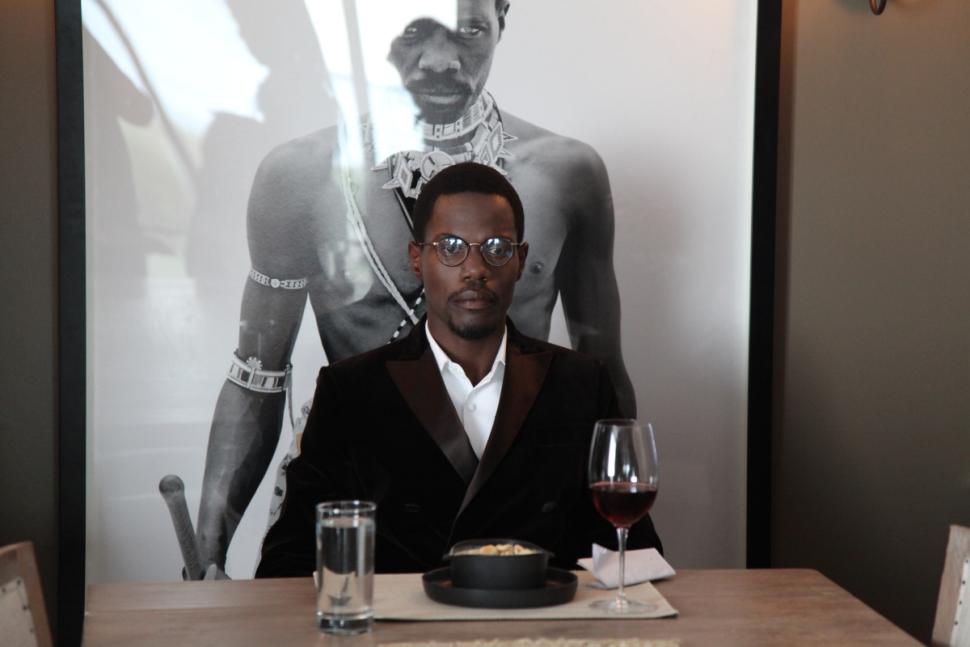
Da Sweet Blood of Jesus follows wealthy academic Dr. Hess Green (Stephen Tyrone Williams) through a very life-altering couple of weeks.

As in G&H, Hess suffers an addition to blood after being attacked with one of the ancient African artifacts he collects. He soon falls for his attacker’s brassy ex-wife Ganja (Zaraah Abrahams).

Though Lee’s film is nearly a shot for shot remake of Gunn’s, he wisely cuts and tweaks certain scenes to effectively update themes and improve pacing.

Vampire tales are always metaphorical, and Lee certainly keeps with this tradition. While Gunn’s original used the traditional vampire movie tropes to examine the era’s racial and cultural tensions, Lee’s film grounds the same examination with more modern concerns.

The object of Gunn’s wrath was, among other things, the cultural imperialism of the white majority. Lee puts this on the back burner in favor of more parasitic epidemics. Lee likens the spread of vampirism to irresponsible sex, leaving its own form of neglected children and disease in its wake.

Lee’s version also has a little more sly fun with race relations, injecting the picture with welcome comic relief now and again. Rami Malek, for instance, is an understated hoot as Hess’s uptight, formal butler.

Lee has less luck with the rest of his cast, though.

Gunn’s titular characters – Duane Jones (Night of the Living Dead) and the stunning Marlene Clark – were charismatic romantic leads. Abrahamson has all the swagger but none of the smolder, while Williams lacks the passion and gravitas Jones wielded so naturally.

Williams is the larger problem. The film opens with breathtaking footage of the actor dancing across NYC – his fluidity and grace are gorgeous. His acting, on the other hand, is as rigid and unbreathing as anything you’ll ever see.

There are also simple storyline problems that Lee neglected to address, and without the compelling romantic relationship to distract you, they are more glaring now than they were in ’73.

It’s not Lee’s first or worst misstep with a remake, and Sweet Blood certainly holds up better than his 2013 remake debacle of Chan-wook Park’s classic Oldboy. That film may have suffered from Hollywood entanglements, a problem Lee sidestepped this time around by crowd funding. But his limited budget likely led to actors who were not quite up to the task.

Verdict-2-5-Stars

Fright Club: Best Doomed Romances

Valentine’s Day came and went, but we are still in a romantic mood. Why not celebrate those great, doomed romances so often found in horror? Surely, The Bride of Frankenstein may be the all-time best, but we wanted to share some of our lesser-appreciated favorites, beginning with one of the very best horror films of the last decade.

The Loved Ones (2009)

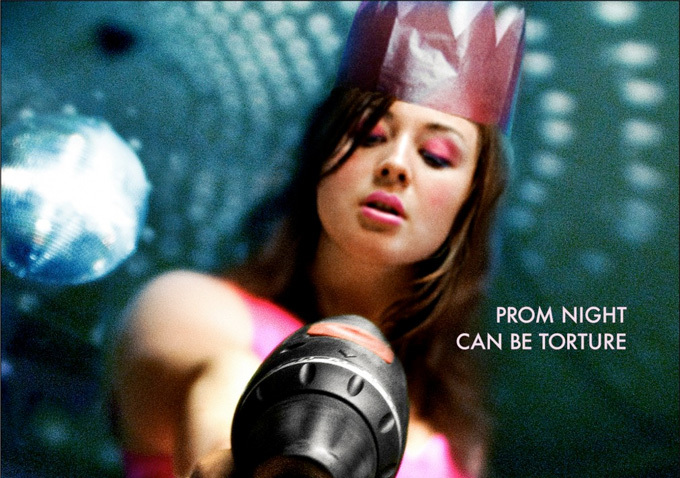
Brent (Xavier Samuel) is dealing with guilt and tragedy in his own way, and his girlfriend Holly tries to be patient with him. Oblivious to all this, Lola (a gloriously wrong-minded Robin McLeavy) asks Brent to the school dance. He politely declines, which proves to be probably a poor decision.

The Loved Ones is a cleverly written, unique piece of filmmaking that benefits from McLeavy’s inspired performance as much as it does its filmmaker Sean Byrne’s sly handling of subject matter. It’s a wild, violent, depraved to spend 84 minutes. You should do so now.

https://www.youtube.com/watch?v=olB5Wrg8Sxc

Thirst (2009)

Leave it to the great Chan-wook Park (Oldboy) to think of turning the Postman Always Rings Twice storyline into a vampire tale. Thirst would be a weird movie regardless, but the steamy/guilty romantic entanglements with an ailing friend’s young wife take on a peculiar tone when the other man is not just a vampire, but a former priest to boot.

Father Sang-hyeon (Kang-ho Song) volunteers for a medical experiment, but instead of a cure the procedure creates vampirism. The poor guy’s barely wrapped his head around his new drinking problem before he falls for his buddy’s scheming wife. Park’s visuals are a sumptuous wonder, and his romantic bloodletting is as curiously humorous as it is creepy.

May (2002)

Few horror films are as touching, funny, heartbreaking or bloody as May. Lucky McKee’s 2002 breakout is a showcase for his own talent as both writer and director, as well as his gift for casting. As the title character, Angela Bettis inhabits this painfully gawky, socially awkward wallflower with utter perfection. McKee’s screenplay is as darkly funny as it is genuinely touching, and we’re given the opportunity to care about all the characters: fragile May, laid back love interest Adam (a faultless Jeremy Sisto), hot and horny Polly (a wonderful Anna Faris).

McKee’s film pulls no punches, mining awkward moments until they’re almost unendurable and spilling plenty of blood when the time is right. He deftly leads us from the sunny “anything could happen” first act through a darker, edgier coming of age middle, and finally to a carnage laden climax that feels sad, satisfying and somehow inevitable.

https://www.youtube.com/watch?v=es0HnQqCqg0

The Signal (2007)

A transmission – a hypnotic frequency – broadcasting over TV, cell and landline telephones has driven the good folks of the city of Terminus crazy. David Bruckner, Dan Bush and Jacob Gentry created a film in three segments, or transmissions. Transmission 1 introduces our lover heroes as well as the chaos. Can Mya and Ben remain sane, reunite and outrun the insanity? Transmission 2 takes a deeply, darkly funny turn as we pick up on the illogical logic of a houseful of folks believing themselves not to have “the crazy.” The final transmission brings us full circle.

The movie capitalizes on the audience’s inability to know for certain who’s OK and who’s dangerous. Here’s what we do know, thanks to THE SIGNAL: duct tape is a powerful tool, bug spray is lethal, and crazy people can sure take a beating.

Hellraiser

Here’s an alternative to Fifty Shades of Grey. Clive Barker’s feature directing debut worked not only as a grisly splatterfest, but also as a welcome shift from the rash of teen slasher movies that followed the success of Halloween. Barker was exploring more adult, decidedly kinkier fare, and Hellraiser is steeped in themes of S&M and the relationship between pleasure and pain.

Hedonist Frank Cotton solves an ancient puzzle box, which summons the fearsome Cenobites, who literally tear Frank apart and leave his remains rotting in the floorboards of an old house. A gash on brother Larry’s leg spills blood on the floor, which awakens the remains of Frank, who then requires more blood to complete his escape from the underworld. Larry’s wife (and Frank’s lover) Julia, both repulsed and aroused by her old flame’s half-alive form, agrees to make sure more blood is soon spilled.

Listen in every week for our FRIGHT CLUB PODCAST. Join the club!

All the Kingsman

Kingsman: The Secret Service

by Hope Madden

Matthew Vaughn and Jane Goldman work well together. The writing/directing team produced two new era superhero movies – Kick-Ass and X-Men: First Class – and now they want to create a new kind of spy movie with Kingsman: The Secret Service.

Based on comics by Mark Millar and Dave Gibbons, their screenplay hips up the old Bond-style gentlemen agent when Code Name: Galahad (a very fit Colin Firth) introduces a talented street kid to the world of espionage.

Eggsy (Taron Egerton) is Galahad’s candidate to join the Kingsmen – a nation-agnostic spy organization as old and as prim as they come. If Eggsy makes it through training and beats the other candidates, he will take his place alongside Galahad as the group’s newest member, Code Name: Lancelot.

Unless, that is, some lisping billionaire (Samuel L. Jackson) takes his super villain role too seriously and ends the world before training is over.

Firth is a charmer and a joy in the mentor role, and though Jackson’s lisp comes and goes, he makes for a fun villain and his odd-couple onscreen chemistry with Firth is priceless. Egerton, who shoulders much of the film, is an effortlessly likeable presence.

But Vaughn is the star of this film. Kingsmen is often vulgar and crass but always fun and sometimes shockingly funny. The whole affair feels a tad like a British version of Kick-Ass: lovable loser turned unexpected hero, affectionate nods to cinematic forebears, brash new ideas taking familiar genre tropes in excitedly sloppy new directions. Aaah, the refreshing chaos of youth.

The comic timing is fresh and the action sequences are a blast There’s one scene in particular of hillbilly church service carnage set to Skynyrd’s redneck classic Free Bird that is magnificent.

Not every joke lands well. Some fly off in crass directions, but none more than the Bond-esque romantic entanglement that finishes the film. It starts off a saucy little homage, turns questionably but forgivably rank, then, quite unfortunately takes that ugly joke two steps further. Maybe you always thought Bond has too much respect for women? This is not that film, bro.

But, you know, leave after that last bit with Jackson and this movie is really good!

Verdict-3-5-Stars

Finally Julianne

Still Alice

by Hope Madden

Unless something goes terribly amiss Julianne Moore will finally win an Oscar this year, and that’s simply good news. She probably should have won one for Savage Grace, Magnolia, Boogie Nights, Far From Heaven, Safe and maybe half a dozen other films. Moore is among the most versatile and talented performers of her generation, and Still Alice represents that talent well. Too bad it’s just not that great a film.

Moore plays Alice Howland, a psychology professor at Columbia University who suffers from early onset Alzheimer’s.

Perhaps the best film on Alzheimer’s is Michael Haneke’s brilliant and devastating Amour, a breathtaking journey into one couple’s struggle with the disease. By comparison, Still Alice feels under developed and tidy, particularly as the disease affects the minor characters in the piece. Alec Baldwin, in particular, is hamstrung with an underwritten role as Alice’s husband. Only Kristin Stewart manages to uncover a real character arc as Alice’s daughter, much thanks to an intriguing chemistry with Moore.

The film too often feels like a made for television tragedy, with the only really interesting choice being the decision to make the victim of the disease the point of view character. In Amour as well as Away From Her and other films treading similar ground, our vehicle into the medical tragedy is a loved one. Still Alice wants to give us the first hand sense of what it is like to watch yourself disappear.

It’s a risky choice, but thanks to Moore’s impeccable, understated handling of the role, Still Alice avoids a maudlin, self-congratulatory or sentimental fate. She’s more than up to the challenge.

Moore establishes a character that is more than the irony and heart tugging on the page. Characteristically nuanced and honest, it’s a performance that makes up for many of the weaknesses in the rest of the film.

Moore’s understatement keeps the film from melodrama, but unfortunately, everything else about the movie needed a bit more drama. It’s a superficial tale with contrived bits of tension that end in uninspired resolutions. The lack of insight into the marriage itself is probably the film’s most noticeable failing, but aside from Moore’s ability to show us how the disease ravages a once sharp mind, we don’t get to know Alice – her relationships, her past, her passions – well enough to really understand what she’s losing.


Verdict-2-5-Stars


Dancing with the Past

Match

by Hope Madden

Match opens on a ballet instructor – smilingly supportive yet rigorous, the kind of mentor with a joy for teaching that inspires. He is Tobi, an aging Julliard ballet instructor played with confidence and enthusiasm by the wonderful Patrick Stewart.

Director Stephen Belber adapts his own Broadway play for the screen, and though Frank Langella originated the role on stage, it feels custom made for Stewart.

Tobi craves his solitude, yet he’s agreed to meet with Lisa (Carla Gugino), who, with her husband Mike (Matthew Lillard) in tow, wants to interview Tobi for her dissertation on classical dance choreography.

Like the Richard Linklater film Tape, also penned by Belber from his own stage play, Match is a three-way dialog about the effects of the past. But where Tape was a grim exercise in regret, Match pairs regret with celebration, and the entire effort is buoyed by Stewart’s nervous showman’s energy.

Gugina and Lillard are solid as well, she conveying the depths of tenderness and heartbreak with an expression, and he capably animating his character’s pain and its protective layer of anger. Their chemistry with the lead, particularly in more intimate, one-on-one scenes, packs a punch. But the show belongs to Stewart.

Tobi is a character, not a type, and Stewart so fully inhabits this fascinating, multi-dimensional man that the actor ceases to exist.

Belber’s casting is spot on, and his dialog is sharp and insightful. How could Stewart do anything but soar with such magnificent lines? But the film feels trapped, confined. Belber is rarely able to open up, take advantage of the opportunities cinema offers that the stage cannot. His film feels like a play.

And though the second act, surprisingly fresh and raw as Lisa and Tobi get to know each other, is very strong, the entire effort feels just slightly stale, a bit contrived, and inevitably predictable.

Still, it’s a lovely film about chance, consequences, choice. If nothing else, it’s a magnificent showcase for an underappreciated talent.

Verdict-3-5-Stars