This is especially true when said party is thrown by your ex and her new man in the house that used to be yours. So, why go?
Curiosity – which is what will or will not keep you invested in director Karyn Kusama’s new film The Invitation.
Will (Logan Marshall-Green) and his new girlfriend Kira (Emayatzy Corinealdi) tough it out. They drive out to the LA hills to join Will’s ex Eden (Tammy Blanchard) and all the friends Will has forgotten about since his son accidentally died in this very house a couple years back.
The party marks Eden’s return to the fold and an introduction to the new man in her life, David (Michiel Huisman), another grief survivor who, like Eden, owes his very sanity to the life-changing vision of Dr. Joseph.
Oh, God. Have they unwittingly submitted themselves to the one thing worse than a time-share opportunity gathering – a religious conversion attempt?
Kusama’s slow build mines societal tensions well. Besides the obvious ex-lover friction and the fear of cult propaganda, many in this once tight circle of friends have avoided the grief-stricken parents since the accident. It’s all very uncomfortable, though the film slowly turns the discomfort toward paranoia as Will begins to wonder where missing buddy Choi (Karl Yune) may be, why Eden has a bottle of barbiturates in her bedroom, and why David keeps all the partygoers locked inside.
Is something amiss, or is Will just dealing with those damaging issues of grief that Eden and David were able to overcome thanks to Dr. Joseph?
As The Invitation slowly evolves from tense drama to thriller to horror, Kusama is always throwing uncomfortable moments and unsettling clues at you. Were it not for the often tediously stilted dialog penned by Phil Hay and Matt Manfredi – whose track record includes the Ride Along series, if that tells you anything – The Invitation would have a consistently nightmarish, hypnotic quality that keeps you uncomfortably captive.
You know, just like that last dinner party you went to.
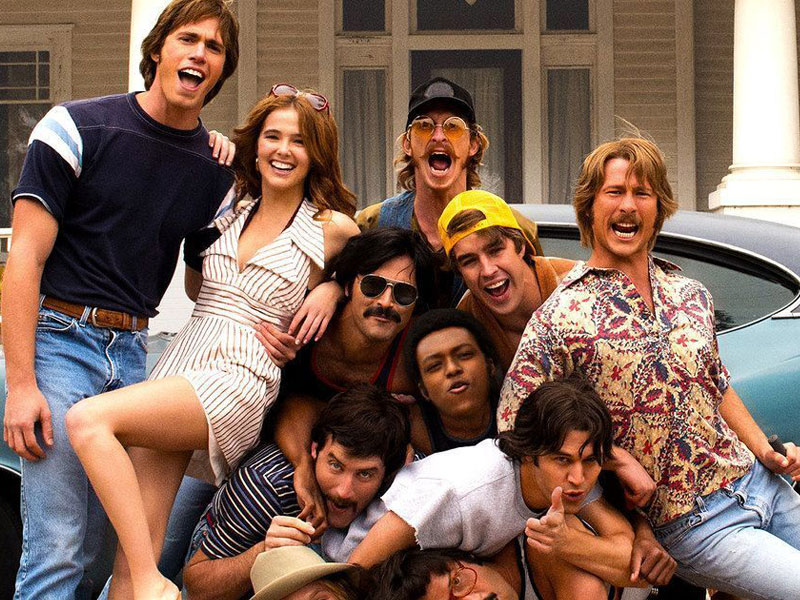
Of all filmmakers in the world, few – if any – can do slice-of-life as well as Richard Linklater. Never weighed down by plot structure or the rigid expectations of modern cinema, Linklater’s the master of fluid, easygoing, day-in-the-life filmmaking. His latest exercise in the craft, Everybody Wants Some, is a charmer.
You’re invited to a 3-day bender in the late summer of 1980 – the long weekend before the first day of classes – and Linklater’s meandering camera makes you feel like you’re just wandering through the party.
Everybody Wants Some is, without question, too forgiving. A South Texas university baseball team settles into the new year by scoping out the female action on and off campus. They’re adaptive – disco one night, urban cowboys the next, punk rockers on a random Sunday. Linklater not only nails 1980, but pinpoints the almost invisible moments of import in a person’s life.
This is a consequence-free zone that smells a bit of nostalgia and self-congratulations. And yet, thanks to a slew of utterly charming performances, the film still works exceptionally well.
Linklater has assembled an outstanding ensemble – not a false note in the lot, from the quiet everyman Jake (Blake Jenner) to the hypercompetitive McReynolds (Tyler Hoechlin) to the philosophical ladies’ man Finnegan (Glen Powell) to the ranting wacko Jay (Juston Street) – and basically the entire team. The first thing Linklater does is establish each ballplayer’s type, just to quietly destroy your preconceived notions of character.
Billed as the “spiritual sequel” to 1993’s coming of age classic Dazed and Confused, Everybody Wants Some is even more laid back, decidedly more masculine, and quite a bit more existential. Linklater’s more existential films tend toward the bittersweet – some more bitter, this one more sweet.
Like Dazed, the new film litters its fluid storyline with hijinks and casually perceptive dialog.
“It’s all so damn tribal.”
“Embrace your inner strange.”
It’s a film about competition and identity, the battle between self-discovery and authenticity, but with Linklater’s light, affectionate touch, nothing ever feels heavy. The writing is as good as anything Linklater has produced, positively glowing with “unsolicited wisdom and fuckwithery.” And all of it leads to an absolutely perfect ending.
Horror films have the power to freak you out, to terrify you, to disturb and unsettle you. And often enough, along with inspiring some combination of the aforementioned emotions, certain horror films just beg the question WTF?! Like, almost anything Takashi Miike has ever directed. Or Antichrist – I’m sorry, did that fox just speak? Whether the bizarre puppetry of Hausu or the skull sex of Headless, the orifice’s point of view camera angles in Enter the Void or the queasying sibling relationship in Pin, horror movies can hit that unsettling nerve. So let’s just embrace it today, shall we? Today we count down the five (or six!) best in WTF?! horror.
6. The Woman (2011)
There’s something not quite right about Chris Cleese (an unsettlingly cherubic Sean Bridgers), and his family’s uber-wholesomeness is clearly suspect. This becomes evident once Chris hunts down a feral woman (an awesome Pollyanna McIntosh), chains her, and invites the family to help him “civilize” her.
The film rethinks family – well, patriarchy, anyway. Notorious horror novelist and co-scriptor Jack Ketchum may say things you don’t want to hear, but he says them well. And director Lucky McKee – in his most surefooted film to date – has no qualms about showing you things you don’t want to see. Like most of Ketchum’s work, The Woman is lurid and more than a bit disturbing. Indeed, the advanced screener I watched came in a vomit bag.
Aside from an epically awful performance by Carlee Baker as the nosey teacher, the performances are more than just good for the genre, they’re disturbingly solid. McIntosh never veers from being intimidating, terrifying even when she’s chained. Bridgers has a weird way of taking a Will Ferrell character and imbibing him with the darkest hidden nature. Even young Zach Rand, as the sadist-in-training teen Brian, nails the role perfectly.
Nothing happens in this film by accident – not even the innocent seeming baking of cookies – nor does it ever happen solely to titillate. It’s a dark and disturbing adventure that finds something unsavory in our primal nature and even worse in our quest to civilize. Don’t even ask about what it finds in the dog pen.
5. Bad Boy Bubby (1993)
The hell?! Why? What?! Good God.
Nicholas Hope is astonishing as the titular Bubby, a 30-year-old manchild who’s never, ever left the room he keeps with his mum.
Remember the Oscar-winning indie film Room? Remember how tragedy is somehow skirted because of the courageous love of a mother for her son? Well, this was not Bubby’s mum. Bad things are happening in that room, and once Bubby is finally free to explore the world, his adventure is equal parts deranged and soul-crushing. Hope is so frustratingly empathetic in the lead that no matter what he does, you root for him. You root for friends who will love him, for someone who will care for him, but it’s the resigned cheerfulness with which he faces any kind of abuse that really just kills you.
This taboo-shattering film is so wrong in so many ways, and yet it’s also lovely, optimistic, sweet, and funny. And just so, so fucked up.
4. Baskin (2015)
Welcome to hell! Turkish filmmaker Can Evrenol invites you to follow a 5-man police squad into the netherworld, where eye patches are all the rage, pregnancy lasts well under the traditional 40 weeks, and you don’t want to displease Daddy.
The serpentine sequencing of events evokes a dream logic that gives the film an inescapable atmosphere of dread, creepily underscored by its urgent synth score. Evrenol’s imagery is morbidly amazing. Much of it only glimpsed, most of it left unarticulated, but all of it becomes that much more disturbing for its lack of clarity.
The further along the squad gets, the more often you’ll look in horror at something off in a corner, that sneaking WTF? query developing along with your upset stomach.
The central figures in this nightmare are one eye-patch wearing helper who enjoys tossing his or her hair over one shoulder, and the breathtaking father figure played by Mehmet Cerrahoglu. There is no one quite like him.
Cerrahoglu’s remarkable presence authenticates the hellscape. Evrenol’s imaginative set design and wise lighting choices envelope Cerrahoglu, his writhing followers, and his victims in a bloody horror like little else in cinema.
3. Calvaire (The Ordeal) (2004)
A paranoid fantasy about the link between progress and emasculation, The Ordeal sees a timid singer stuck in the wilds of Belgium after his van breaks down.
Writer/director Fabrice Du Welz’s script scares up the darkest imaginable humor. If David Lynch had directed Deliverance in French, the concoction might have resembled The Ordeal. As sweet, shy singer Marc (a pitch perfect Laurent Lucas) awaits aid, he begins to recognize the hell he’s stumbled into. Unfortunately for Marc, salvation’s even worse.
The whole film boasts an uneasy, “What next?” quality. It also provides a European image of a terror that’s plagued American filmmakers for generations: the more we embrace progress, the further we get from that primal hunter/gatherer who knew how to survive.
Du Welz animates more ably than most our collective revulsion over the idea that we’ve evolved into something incapable of unaided survival; the weaker species, so to speak. Certainly John Boorman’s Deliverance (the Uncle Daddy of all backwoods survival pics) understood the fear of emasculation that fuels this particular dread, but Du Welz picks that scab more effectively than any filmmaker since.
His film is a profoundly uncomfortable, deeply disturbing, unsettlingly humorous freakshow that must be seen to be believed.
https://www.youtube.com/watch?v=Hn3oba5HmH8
2. Possession (1981)
Speaking of sex and monsters – wait, were we? – have you seen Possession? WTF is going on there?
Andrzej Zulawski – writer/director/Czech – created this wild ride with doppelgangers, private investigators, ominous government agencies, and curious sexual appetites. It’s more precisely fantasy than horror, but it feels like David Cronenberg meets David Lynch, which is a pairing we can get behind.
Sam Neill plays Mark. Mark has just left his job – a mysterious position with some kind of lab. He’s being offered a lot of money to stay, but he needs to go home. We don’t know why.
Back at home, he greets his genuinely adorable son Bob (Michael Hogben). Bob – the names is so normal, and yet feels so unusual for a small child. Mark’s wife Anna (Isabelle Adjani) is also at home with Bob. There’s nothing normal about Anna.
Mark and Anna’s relationship boasts an intentional artificiality – a queasying sexuality – that makes it hard to root for either of them as their marriage deteriorates. Anna, it seems, is in love with someone else. Is it the sexually open – really, really open – Heinrich? Is it a bloody, mollusk-like monster? Is Mark boning Anna’s mean friend with a cast on her leg? Does Bob’s kindergarten teacher bear an unreasonable resemblance to Anna? Is anyone caring properly for Bob?
These questions and more go basically unanswered in a deviant, summary-defying, fantastical bit of filmmaking that mocks the idiocy, even insanity of obsession and boasts a handful of weirdly excellent performances. And sex with a bloody mollusk monster.
1. Gozu (2003)
If you are looking for genuine lunacy in film, your search should begin and quite possibly end with filmmaker Takashi Miike. His shit is nuts. Truth be told, there are scads of Miike films that could have populated this list because even his tamest, most logical, no-puppetry films are wild rides. So when he starts coloring way outside the lines, expect to be surprised.
This one starts off as a yakuza film – one guy on a mob-style assignment – then descends into absolute madness.
Minami (Yuta Sone) has been ordered to assassinate his feeble-minded yakuza boss Ozaki (Sho Aikawa), but he’s conflicted. Then he loses him and wanders, in search, into – you might say it was the Twilight Zone, except this place is considerably weirder. There’s a minotaur. An electrified anal soup ladle death scene. Some seriously, seriously weird shit.
Like a walk through somebody’s subconscious, the film is awash in repressed sexual desires of the very most insane and unspeakable. There’s a comical element that’s almost equally unsettling. Gozu is not as violent as many Miike films – it’s violent, don’t be mistaken, but the horror here is more in unseemly behavior and wildly inappropriate imagery. It’s just stuff you can’t unsee.
Get to know Jeff Nichols. The Arkansas native is batting 1000, writing and directing among the most beautiful and compelling American films being made. His latest, Midnight Special, is no different. But then again, it is very, very different.
You should know as little as possible going into this film because Nichols is the master of slow reveal, pulling you into a situation and exploiting your preconceived notions until you are wonderfully bewildered by the path the story takes.
Suffice it to say, Nichols mainstay Michael Shannon, as well as Joel Edgerton, are armed men in a seedy motel. They have a child in tow (Jaeden Lieberher – wonderful). Local news casts a dark image of the trio, but there’s also a Waco-esque religious community looking for the boy, not to mention the FBI. So, what the hell is going on?
Nichols knows, and he invites your curiosity as he upends expectations. The film toys with the clash between logic and the supernatural, not unlike the themes of Nichols’s masterpiece Take Shelter (also starring a magnificent Shannon). While moments of Midnight Special will feel more reminiscent of memorable films in the SciFi vein, what this filmmaker does with his subject is beautifully novel.
The film, like all of Nichols’s work, is deeply rooted in traditions and atmosphere specific to the American South, and the filmmaker boasts a deep and easy skill as a storyteller. He’s also truly gifted with casting.
Lieberher, who showed amazing natural talent in 2014’s St. Vincent, again offers a beautifully restrained central figure. Edgerton and Kirsten Dunst are likewise wonderful, both turning in nuanced performances that reflect Nichols’s uncanny way of dealing with the extraordinary in the most naturalistic way.
But Michael Shannon, a remarkable talent no matter what film he graces, anchors the film with a heartbreaking, award-worthy performance.
Midnight Special is just another gem of a film that allows Nichols and his extraordinary cast to find exceptional moments in both the outlandish and the terribly mundane, and that’s probably the skill that sets this filmmaker above nearly anyone else working today. He sees beyond expectations and asks you to do it, too.
“Hell is not a place you see. You carry Hell with you at all times.”
Cheery stuff, that! If you’ve ever wondered what hell might look like, first time feature director Can Evrenol has some ideas to share. They are vivid. You’ll swear they even have an odor.
Evrenol’s Baskin is a loose, dreamily structured descent into that netherworld in the company of a 5-man Turkish police unit. (Baskin is Turkish for “police raid.”) The serpentine sequencing of events evokes a dream logic that gives the film an inescapable atmosphere of dread, creepily underscored by its urgent synth score.
We are trapped along with this group of somewhat detestable, somewhat sympathetic men as they respond to a call for backup in an “off the map” nearby area. What they find is deeply disturbing.
Unless you really like frogs. If so, then – hooray! Frogs!
The rest of it, though? Horrifying.
Evrenol’s imagery is morbidly amazing. Much of it only glimpsed, most of it left unarticulated, but all of it becomes that much more disturbing for its lack of clarity.
The cast is uniformly solid with the exception of Mehmet Cerrahoglu, who may leave you speechless. The director has taken to calling him the new Michael Berryman – a name genre fans will recall as the haunting, hulking, hairless menace in Wes Craven’s The Hills Have Eyes and their nightmares.
Cerrahoglu’s remarkable presence authenticates the hellscape of these characters’ descent. Evrenol’s imaginative set design and wise lighting choices envelope Cerrahoglu, his writhing followers, and his victims in a bloody horror like little else in cinema.
There are moments when Baskin feels like a classier, more stylishly made Nightbreed, but there’s no camp factor here. Just a surreal exploration of the corruptibility of the human soul, and its final destination.
Baskin may infuriate viewers looking for a tidy package, and it may underwhelm gorehounds intrigued by reports of audience walk outs. Be that as it may, the film represents a vital new voice in the genre (Evrenol), not to mention a potentially iconic new face in horror and bad dreams (Cerrahoglu).
If the title Video Massacre Volume 1 conjures the image of some Eighties VHS compilation of B-horror, then perfect. You’re ready for the viewing.
An assortment of 20 shorts filmed by Brooklyn filmmakers, the series boasts a nice mix of polish and camp, all surrounded by the joyously self-referential framing story of demon-ghost Belfy and the hostages he’s forcing to watch the shorts.
Humor – frequently of the toilet variety – gives the film its tone, and the individual shorts are sequenced to offer the experience a good pace. While a handful of the films feel too amateurish, most of them boast excellent production values. It’s clear these were made on tight budgets, but the filmmakers across the board know how to match cinematic technique to the tone of the short.
One animated piece and the fake trailer for “The Shitting” rank among the most entertaining, and two “experiments gone awry” efforts are the most fun. You can also expect a lot to go wrong in the woods.
More than anything, the film feels like a mash note to the genre, right down to the twist ending. (Pay close attention to the credits inside the film. Priceless!)
Join us as we host a Midwest premier of Video Massacre Volume 1 at Gateway Film Center this Saturday, 4/2, at 9:30pm and stick around after for a Q&A with some of the directors:
Grier Dill, director: Trashed, Fungus Adventure
Brett Glass & Grier Dill, director: Brood X
Brett Glass, director: frame story
Joseph Colmenero, director: The Coffin
Winnie Cheung, director: Exit Interview
Suzi Sadler, director: The Retreat
Cale Hughes, director: Jackolantern
At one point in I Saw the Light, Marc Abraham’s biopic of legendary country performer Hank Williams, the singer tells us, “Everybody has a little darkness in them. I show it to them and they don’t have to take it home.”
It’s a fascinating scene. Too bad it doesn’t describe the film we’re seeing.
The reliably talented Tom Hiddleston lost some pounds as well as his Brit accent to take on the role of the lanky Alabaman. While his performance is not perfect, it is quite good. Between the surprisingly effective singing and the occasionally haunted expression, Hiddleston brings Williams to charming if conflicted life.
Hiddleston is joined by the equally talented Elizabeth Olsen, and the two attempt to animate the volcanic relationship between Williams and wife Audrey. Their chemistry keeps the rocky pairing believable and fascinating, and Olsen’s spitfire performance shows fearlessness.
No, the problem with I Saw the Light is definitely not the cast. But make no mistake, there are serious problems here.
In perhaps the best scene in the film, Williams unveils his most recent effort, the iconic Your Cheatin’ Heart. Heartbroken, ill, and spent, the singer whispers the final line and Abraham cuts to his wife Billie (Maddie Hasson). This might have been a powerful choice if we had spent any time with or been given any information about this particular wife and her allegedly cheatin’ heart.
Abraham (Flash of Genius), who adapted the nonfiction book by Colin Escott, meanders through the musical legend’s personal life while entirely neglecting his music. The film never feels like it is moving forward, offers no real context or reflection on Williams’s personal struggles, and is exasperatingly slight when showcasing his artistry.
Williams tells us in the film that when a country singer sings a sad song, you know that he knows sadness.
Man, I bet that’s true. Too bad I don’t hear his sad songs, nor do I see him battle sadness. I do see him drink, show up too drunk to perform, and marry several times. That may be the fodder for a country song or two, but a satisfying biopic on one of the most influential songwriters in modern music? Nope.
We’re on a music kick. Last week we looked at the best rock star horror movies, so it seemed only natural to move on to the best horror musicals this week. At our house, this particular sub-genre might serves as a kind of bridge between the two of us, since Hope generally hates musicals while George appreciates them. And though it is true that Hope can find some love in her heart for a musical with a side of bloodletting, it turns out that George only likes actually good musicals. Which is to say, they disagree a bit on this list.
Dude, 1974 must have been nuts. Brian De Palma’s first and only musical is a Phantom of the Opera/Faust/The Picture of Dorian Gray mash up (with some Frankenstein, The Cabinet of Dr. Caligari, and more than a little Rocky Horror thrown in for good measure). That’s a heady mix, and while the film was nominated for an Oscar for its music, it isn’t exactly the classic you might expect.
A campy skewering of the soulless music industry, Phantom sees tiny Seventies staple Paul Williams as the Satan-esque Swan, a music executive with a contract for you to sign. Poor Winslow (William Finley) is just as wide-eyed about his music as all those would-be starlets are about their chances for fame and fortune in this evil world of pop super stardom.
Like many horror musicals, the film works best as a comedy, but Finley’s garish visage once he makes his transformation from idealistic musician to mutilated Phantom is pretty horrifically effective. The film as a whole is a hot Seventies mess, but that’s kind of the joy of it, really.
4. House (Hausu) (1977)
If Takashi Miike’s Happiness of the Katakuris were to marry Pee-wee’s Playhouse, this would be their offspring.
A spoof of sorts, Hausu tells the story of six uniform-clad high school girls named Gorgeous, Fantasy, Sweet, Melody, Kung Fu, and Mac. The nomenclature alone should clue you in on the film’s lunacy. The giggling sextet spend spring break at an aunt’s spooky house – or, in fact, a cheaply made set of an aunt’s spooky house. Not a single thing that follows makes sense, nor is it really meant to.
Expect puppets, random musical sequences, remarkably bad backdrops, slapstick humor, and an amazingly sunny disposition given the sheer volume of human dismemberment. The trippy nonsense wears a bit thin eventually. Luckily director Nobuhiko Obayashi’s film clocks in at under 90 minutes, so the screen goes dark before the novelty wears off.
3. Sweeney Todd: The Demon Barber of Fleet Street (2007)
Here’s a bizarre idea for a musical: The barber upstairs kills his clients and the baker downstairs uses the bodies in her meat pies. Odd for a Broadway musical, yes, but for a Tim Burton film? That sounds a little more natural.
Burton’s Sweeney Todd: The Demon Barber of Fleet Street is a full-on musical – Burton’s first – and every inch a stage play reproduction. For many films, this would be a criticism, but Burton’s knack for dark artificiality serves the project beautifully, and he achieves the perfect Dickensian Goth tone. His production is very stagy and theatrical, but never veers from his distinct, ghoulish visual flair.
As in most of Burton’s best efforts, Sweeney Todd stars Johnny Depp in the title role. Depp is unmistakably fantastic – consumed, morose, twisted with vengeance – and he’s in fine voice, to boot.
The supporting cast boasts a liltingly nefarious performance by Alan Rickman. As the judge whose sent an innocent Todd off in shackles, raped his wife, then took custody of his daughter, whom he leeringly admires, Rickman is wonderful as always. His duet with Depp on “Pretty Women” is the film’s real musical gem.
With Burton’s help, Depp found another dark, bizarre anti-hero to showcase his considerable talent. With Depp’s help, Burton gorgeously, grotesquely realized another macabre fantasy.
2. The Happiness of the Katakuris (2001)
Takashi Miike is an extremely prolific director. He makes a lot of musical films, a lot of kids’ movies, a lot of horror movies, and then this – a mashup of all of those things. Like Sound of Music with a tremendous body count.
The Katakuris just want to run a rustic mountain inn. They’re not murderers. They’re lovely – well, they’re losers, but they’re not bad people. Buying this piece of property did nothing to correct their luck, either because, my God, their guests do die.
You might call this a dark comedy if it weren’t so very brightly lit. It’s absurd, farcical, gruesome but sweet. There’s a lot of singing, some animation, a volcano, a bit of mystery, more singing, one death by sumo smothering, and love. It sounds weird, truly, but when it comes to weird, Miike is just getting started.
https://www.youtube.com/watch?v=XDfMXwRapNc
1. The Rocky Horror Picture Show (1975)
Surely you expected no other atop this list because, honestly, nothing else comes close. The most iconic of all horror musicals, The Rocky Horror Picture Show boasts the best soundtrack, the best performances, the best mad scientist, and quite possibly the most fun there is to be had (legally) at the movies.
I’m afraid you’ve touched on a rather tender subject there.
Tim Curry is utter perfection as Frank-N-Furter (A Scientist). The entire balance of the cast is also amazing, but no matter how many times you watch Curry step out of that elevator, abuse his servants, or seduce his houseguests, it never gets old.
Creator Richard O’Brien’s raucous, once controversial film about a sweet transvestite, a slut, an asshole, and a couple of domestics who sing, time warp, throw rice, animate monsters, swap partners, and finally put on a show is still as much fun as it ever was.
Once a subversive take on the classic musicals and sci-fi films of the 30s and 40s, Rocky Horror is now a high-camp icon of its own.
The rock star/horror movie crossover seems a natural extension of the darkness and cool of each, and it has happened countless times. Some of the crossovers are almost too obvious – Ozzy Osbourne in Trick or Treat or Grace Jones as an aggressive stripper/vampire in Vamp. John Mellencamp, Iggy Pop, Cherie Curie, Jon Bon Jovi, and, of course, Meat Loaf – these rockers and others have lined up to dance with the dead.
But here are the best rock star performances in horror.
Let us just get this out of the way now – we don’t care for this film. Yes, John Carpenter is a master of horror, but this film felt stale in ’87 and it has not aged well.
However, perhaps the greatest stroke of genius Carpenter had when filming was to cast Alice Cooper as the leader of the demon-possessed band of shopping cart people.
As scientists and theologians hole up inside an abandoned church in a very bad neighborhood, they begin to notice the attention of the silent, menacing homeless man outside. And every time they look, he has more friends. It is possibly the only genuinely chilling image in the film, and much of the success is due to Cooper’s effortlessly menacing presence.
Alice Cooper’s stage persona makes him a perfect fit in horror – perhaps moreso than any other rock star. Indeed, he’s gone on to play Freddy Krueger’s father, a vampire, and all manner of supernatural lowlife in film. But for his most unsettling turn, all he needed was a disheveled appearance and his own natural presence.
5. Tom Waits: Bram Stoker’s Dracula (1992)
Francis Ford Coppola took his shot at Dracula in ’92. How’d he do?
Cons: Keanu Reeves cannot act. Winona Ryder can act – we’ve seen her act – but she shows no aptitude for it here, and lord she should not do accents. Anthony Hopkins has always enjoyed the taste of scenery, but his performance here is just ham-fisted camp.
Pros: Tom Waits as Renfield – nice! Creepy yet sympathetic, with that haggard voice, Waits brings a wizened mania to the character that’s more than refreshing. Likewise, Gary Oldman, who can chomp scenery with the best chewers in the biz, munches here with great panache. He delivers a perversely fascinating performance. His queer old man Dracula, in particular – asynchronous shadow and all – offers a lot of creepy fun.
Still, there’s no looking past Ryder, whose performance is high school drama bad.
4. Henry Rollins: He Never Died (2015)
With a funny shuffle step and a blank stare, Henry Rollins announces Jack, anti-hero of the noir/horror mash up He Never Died, as an odd sort.
Jack, you see, has kind of always been here. The “here” in question at the moment is a dodgy one bedroom, walking distance from the diner where he eats and the church where he plays bingo. An exciting existence, no doubt, but this mindlessness is disturbed by a series of events: an unexpected visit, a needed ally with an unfortunate bookie run-in, and a possible love connection with a waitress.
From the word go, He Never Died teems with deadpan humor and unexpected irony. Casting Rollins in the lead, for instance, suggests something the film actively avoids: energy. The star never seethes, and even his rare hollers are muted, less full of anger than primal necessity.
Rollins’s performance is strong, offering Jack as a solitary figure who clings to all things mind numbing as a way to pass the time without complication or human interaction. As a survival mechanism, he’s all but forgotten how to behave around humanity, a species he regards without needless sentimentality.
3. Sting: Brimstone & Treacle (1982)
Easily the best acting of Sting’s career, his con man Martin turns out to be a far more malevolent presence in the Bates household than poor Norma (Joan Plowright – wonderful as always) and Tom (Denholm Elliott) could imagine.
Martin feigns a fainting spell on the street long enough to lift Tom’s wallet. When he returns it – cash light – to the address on the license, he quickly eyeballs the surroundings and claims to be the fiancé of their bedridden daughter Pattie (Suzanna Hamilton).
The film mines layer after layer of repression – societal, sexual, religious and other – as it plays on your constantly expanding sense of dread. Sting is wonderful. His playfully evil performance and the way he eyes the audience/camera gives him the air of something far more unwholesome than your run of the mill conman. Maybe even something supernatural.
2. Debbie Harry: Videodrome (1983)
As bizarre as anything he ever made – even Cosmopolis – Videodrome shows an evolution in David Cronenberg’s preoccupations with body horror, media, and technology as well as his progress as a filmmaker.
James Woods plays sleazy TV programmer Max Renn, who pirates a program he believes is being taped in Malaysia – a snuff show, where people are slowly tortured to death in front of viewers’ eyes.
Punk goddess Deborah Harry co-stars as a seductress intrigued by the slimy Renn. Harry is, as always, effortlessly sultry – a quality that works queasyingly well in this Cronenberg head trip.
But the real star is Cronenberg, who explores his own personal obsessions, dragging us willingly down the rabbit hole with him. Corporate greed, zealot conspiracy, medical manipulation all come together in this hallucinatory insanity that could only make sense with the Canadian auteur at the wheel.
Long live the new flesh!
1. Bowie: The Hunger (1983)
Tony Scott’s seductive vampire love story has a little bit of everything: slaughter, girl-on-girl action, ’80s synth/goth tunage, David Bowie. What more can you ask?
Actually the film’s kind of a sultry, dreamily erotic mess. Oh, the gauzy, filmy curtains. It looks great, but the internal logic of the vampirism as a disease doesn’t work very well. Lots of meaningless parallels with some experiment apes don’t help.
Catharine Deneuve is the old world vampire Miriam, David Bowie is her lover. But he suddenly begins aging, and she needs to find a replacement. Enter Susan Sarandon as a medical specialist in unusual blood diseases and a fine actress who’s not above smooching other girls.
There are three reasons people still watch it: Bowie, Catherine Deneuve’s seduction of Susan Sarandon (classy!), and the great dark-wave Bauhaus number Bela Lugosi’s Dead. Together it’s a Goth Trifecta! And Goths do love them some vampires.
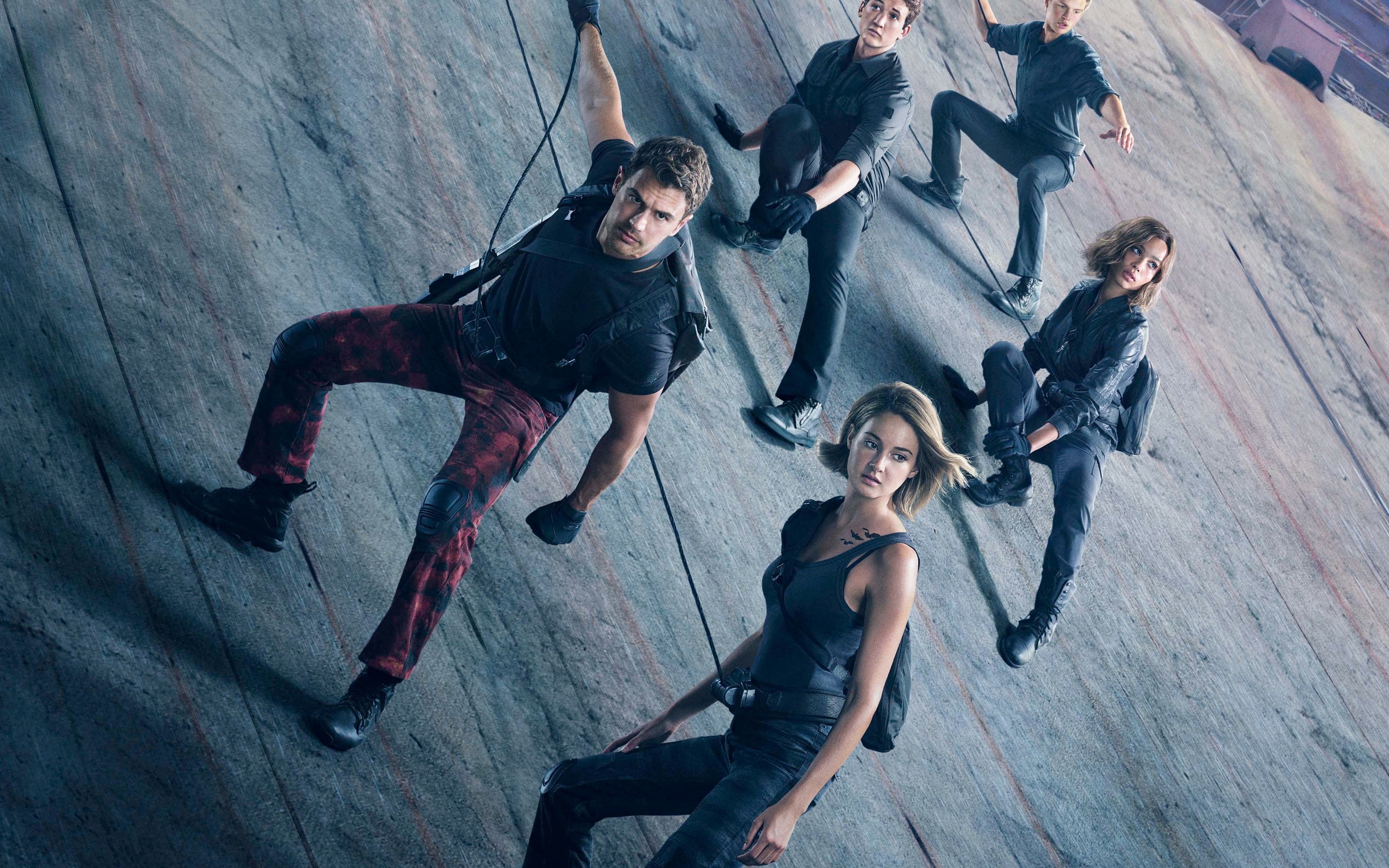
For anyone waiting with bated breath for the conclusion of Tris Pryor’s heroic quest through the Divergent series, expect to be disappointed by The Divergent Series: Allegiant. The final book in the series has been split into two films – a choice we should, by this time, expect from a cash cow-ready industry.
For anyone hoping for a bit of entertainment regardless of the split, you should also expect to be disappointed. Director Robert Schwentke’s slick but soulless third act can’t overcome the dull pacing, superficial scripting, or one dimensional characters that have plagued the series since its inception.
Tris (Shailene Woodlely) broke from the factions that kept her society separated, then toppled the dictatorship that sought to oppress her people. Now she sees the same mistakes being made, but she believes there is something more beyond the wall around the city. She and her rag tag group of friends will find what’s out there – but what if it’s just more of the same?
Unfortunately for Tris and for all of us, that is exactly what the film offers. More and more and more of the exact same – all of it handled with far more energy and integrity in the Hunger Games series.
Woodley is a genuine talent, but she doesn’t seem to have the energy to even try, and who can blame her? She’s wasted in one more film where she does little more then look ponderous, then look thoughtful, now fierce but vulnerable.
Miles Teller – another actual talent – also returns as the woefully underused opportunist, and though his dialog is just as flat and obvious as everyone else’s, he does offer the only bright spots in an otherwise endless expanse of blandness.
Schwentke’s visual style offers slapped together images from Seventies SciFi, while his direction goes the extra mile when it comes to telegraphing every line, move, or event in the film. The final product is a by-the-numbers adolescent adventure lacking all energy and imagination.