What if women, traumatized veterans, blacks, Asian Americans, American Indians, Mexican Americans and whatever white men we have left with a conscience exerted their inalienable right to govern a country that belongs as much to them as to anyone?
Or, what if Hollywood injected these themes into an old Western and hired fewer white guys playing Mexicans?
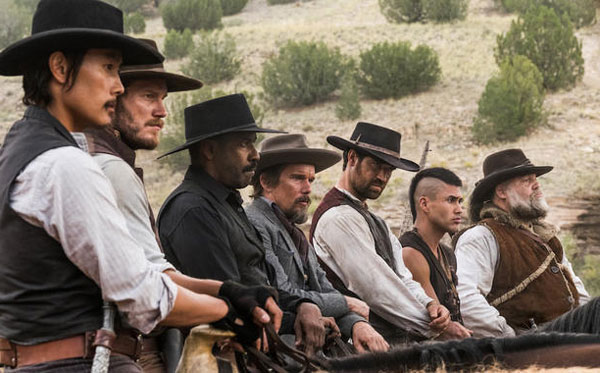
I give you, Antoine Fuqua’s The Magnificent Seven.
Denzel Washington anchors the septet as Sam Chisolm, bounty hunter. Newly widowed Emma Cullen (Haley Bennett) approaches him with a proposition: Rid Rose Creek of its evil despot (Peter Sarsgaard, wearily evil) in return for everything they have to give.
He’s been paid a lot before, but never everything.
So, Chisolm gathers a group of amiable rogues and heads to near-certain doom in the name of justice – like a Suicide Squad that doesn’t suck.
Based on John Sturges’s 1960 adaptation of Kurasawa’s 1954 classic Seven Samurai, Fuqua’s attempt is already three steps removed from originality. More than that, it’s tough to reignite the spark that made a 50+ year old story fun in the first place.
Not that Fuqua doesn’t take some liberties. Riding alongside Chisolm is as diverse an array of gunslingers as you’re likely to find.
Byung-hun Lee’s efficient knife expert, the solitary Comanche (Martin Sensmeier), and Mexican lawbreaker Vasquez (Manuel Garcia-Rulfo) join haunted Confederate Goodnight Robicheaux (Ethan Hawk, voted coolest name), Chris Pratt (playing Chris Pratt) and Vincent D’Onofrio as something else entirely. As Pratt’s Faraday describes him, “That bear was wearing people clothes.”
The film’s multicultural, multi-gendered slant, while appealing, is also jarringly anachronistic. Aside from a handful of good-natured barbs from inside the posse and a bit of stink eye from some of the dodgier locals, there’s nary a racist whisper. In America, circa 1867.
Let’s not even talk about Bennett’s cleavage.
Obvious flaws aside, you can’t argue the cast. D’Onofrio’s a freak (I mean that in the best way), Lee is quietly fascinating, and Denzel has the inarguable gravitas and wicked charm to pull the plan together.
For those of you afraid that Hollywood was about to turn your favorite old Western into an action flick with one liners – I give you…
Seriously, though, Sturgis’s film is more charmingly nostalgic than it is classic – like a toothless Wild Bunch. Fuqua respects the film that inspired his, and works in affection for many of the Westerns that define the genre.
He proves again his capacity to stage action, and the film’s final hour is a mixture of genre odes and glorious choreography as explosions crash, bullets fly and projectiles project.
Which would be great – given the cast, it might even be enough – if Fuqua understood the element that separates Westerns from other genres. It’s not a gatling gun, a saloon or a lonesome street itching for a shoot-out. It’s the haunted heartbeat of the damaged gunslinger. The Magnificent Seven, though fun, is too slick and superficial to find that rhythm.
When aren’t vacations a horror show? Remember that time the car a/c broke and your dad wouldn’t let you roll the windows down because the wind made his hearing aids whistle? God, that sucked. But our research had led us to believe that there are worse miseries than driving cross country with Mark Madden. Hundreds, actually – traveling abroad, camping, boating, island adventures. Here are a handful that will make you want to just stay home.
5. Wolf Creek (2005)
Using only digital cameras to enhance an ultra-naturalistic style, writer/director Greg McLean’s happy backpackers find themselves immobile outside Wolf Creek National Park when their car stops running. As luck would have it, friendly bushman Mick Taylor (John Jarratt) drives up offering a tow back to his camp, where he promises to fix the vehicle.
If this sounds predictable and obvious to you, rest assured that McLean has plans to burst every cliché in the genre, and he succeeds on almost every level.
His first triumph is in the acting. Jarratt’s killer is an amiable sadist who is so real it’s jarring. You find yourself hoping he’s an actor. His performance singlehandedly shames the great Tobe Hooper and Wes Craven, whose backwoods horror films relied so completely on caricatures for villains.
A horror film this realistic is not only hard to watch, but a bit hard to justify. What makes an audience interested in observing human suffering so meticulously recreated? This is where, like a true artist, McLean finally succeeds. What is as unsettling as the film itself is that its content is somehow satisfying.
4. Eden Lake (2008)
The always outstanding Michael Fassbender takes his girl Jenny (Kelly Reilly) to his childhood stomping grounds – a flooded quarry and soon-to-be centerpiece for a grand housing development. He intends to propose, but he’s routinely disrupted, eventually in quite a bloody manner, by a roving band of teenaged thugs.
Kids today!
The film expertly mixes liberal guilt with a genuine terror of the lower classes. The acting, particularly from the youngsters, is outstanding. Most impressive, Jack O’Connell’s performance as the young psychopath is chilling.
There’s the slow boil of the cowardly self-righteous. Then there’s this bit with a dog chain. Plus a railroad spike scene that may cause some squeamishness. Well, it’s a grisly mess, but a powerful and provocative one. Excellent performances are deftly handled by the director who would go on to helm The Woman in Black.
Don’t expect spectral terror in this one, though. Instead you’ll find a bunch of neighborhood kids pissed off at their lot in life and taking it out on someone alarmingly like you.
https://www.youtube.com/watch?v=_9kuMFPW0YI
3. The Descent (2005)
A bunch of buddies get together for a spelunking adventure. One is still grieving a loss – actually, maybe more than one – but everybody’s ready for one of their outdoorsy group trip.
Writer/director Neil Marshall begins his film with an emotionally jolting shock, quickly followed by some awfully unsettling cave crawling and squeezing and generally hyperventilating, before turning dizzyingly panicky before snapping a bone right in two.
And then we find out there are monsters.
Long before the first drop of blood is drawn by the monsters – which are surprisingly well conceived and tremendously creepy – the audience has already been wrung out emotionally.
The grislier the film gets, the more primal the tone becomes, eventually taking on a tenor as much like a war movie as a horror film. This is not surprising from the director that unleashed Dog Soldiers – a gory, fun werewolf adventure. But Marshall’s second attempt is far scarier.
For full-on horror, this is one hell of a monster movie.
2. Deliverance (1972)
Nine notes on a banjo have never sounded so creepy.
Deliverance follows four buddies staving off mid-life crises with a canoeing adventure in southern Georgia, where a man’s not afraid to admire another man’s mouth.
James Dickey streamlined his own novel to its atmospheric best, and director John Boorman plays on urbanite fears like few have done since. Dickey and Boorman mean to tell you that progress has created a soft bellied breed of man unable to survive without the comforts of a modern age.
The film, while steeped in testosterone, also mocks modern man’s desire to conquer nature. It does so by viewing the manly weekend through the eyes of four different types of men: Burt Reynolds’s alpha male, Ronny Cox’s open-hearted optimist, Jon Voight’s introspective intellectual, and poor, doomed Ned Beatty’s smug businessman.
Solid performances, particularly from Voight and Reynolds (this is the guy you want on your zombiepocalypse team), and startlingly effective photography fold perfectly into Boorman’s harrowing tale. This raw, unsettling authenticity helps Deliverance sidestep a hixploitation label, but you’re not likely to look at rural Southerners the same way again.
1. Funny Games (’97, ’07)
A family pulls into their vacation lake home. They are quickly bothered by two young men in white gloves. Things, to put it mildly, deteriorate.
Writer/director/genius Michael Haneke begins this nerve wracking exercise by treading tensions created through etiquette, toying with subtle social mores and yet building dread so deftly, so authentically, that you begin to clench your teeth long before the first act of true violence.
The teen thugs’ calm, bemused sadism leaves you both indignant and terrified as they put the family through a series of horrifying games. And several times, they (and Haneke) remind us that we are participating in this ugliness, too, as we’ve tuned in to see the family suffer. Sure, we root for the innocent to prevail, but we came into this with the specific intention of seeing harm come to them. So, the villains rather insist that we play, too.
His English language remake is a shot for shot repeat of the German language original. In both films, it is the villains who sell the premise. Whether the German actors Arno Frisch and Frank Giering or the Americans Brady Corbet and Michael Pitt, the bored sadism that wafts from these kids is seriously unsettling, as, in turn, is each film.
Oliver Stone’s cinematic output has been hit or miss. The hits leave a mark: Platoon, JFK, Salvador. Unfortunately, it’s been mostly misses this millennium.
But any time Stone has a topic that means something, one with government conspiracy and one hyper-serious guy trying to make things right, at least he’s in his wheelhouse.
Snowden offers him exactly that.
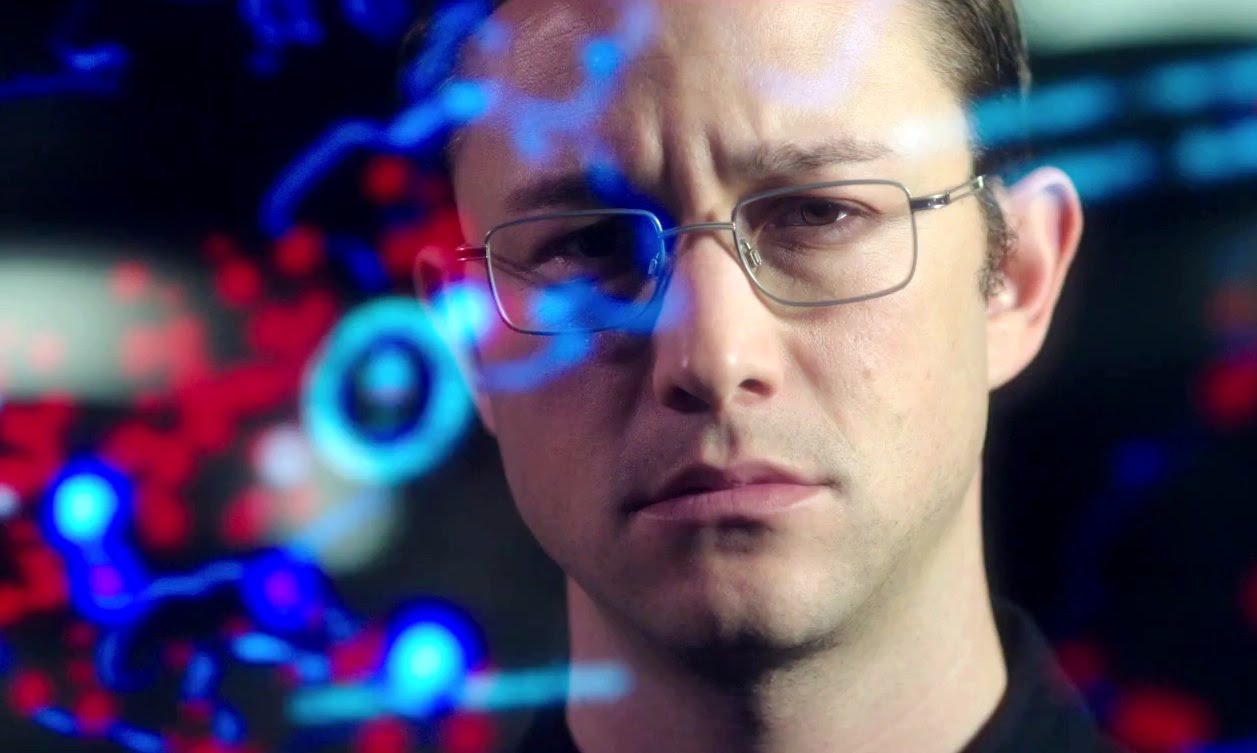
Opening with the clandestine meeting between NSA whistleblower Edward Snowden (Joseph Gordon-Levitt) and the journalists who would make the 2014 documentary Citizenfour (see it if you haven’t), Stone takes us through the harrowing journey that led to that taping.
Gordon-Levitt continues to impress in a performance that is eerily authentic. We see Ed as an optimistic patriot who becomes increasingly more outraged by what he sees and does with his high-security clearance for the CIA.
Interestingly, what the film itself lacks is outrage. Ed Snowden’s personality is very subdued. This no doubt benefitted his escapade, but it does not make for a vivid film.
And while vivid is Stone’s middle name, his attempts to enliven the story too often feel like tricks from an old bag: the mysterious mentor who conveniently shares information just when it’s most provocative; intensely suspicious camera angles; ominous score.
For the most part, though, Stone dials it down this time around, and that’s kind of a shame. Just a touch of the hyperbole and bombast of his usual fare might have benefitted a film that should deeply shock and appall, but does not.
Streamlining would have helped, as well. The 2+ hour running time sometimes feels like 3, often because Stone and his team of writers skim across so much information rather than digging deeply in a single area.
A large supporting cast includes some real gems – Zachary Quinto is especially good. Many of the minor characters, though, are so cartoonishly drawn (Rhys Ifans, in particular) that they distract from what is, in most areas, a reasonably realistic portrait.
There are just enough Stone-isms here to make the film irritating, but not enough to leave a mark. Despite strong performances and directorly panache, Snowden feels unfocused. Worse still, it lacks the gut punch that it should deliver.
Youngsters agitate an old hermit who has a padlocked basement. Things don’t go well.
Yes, this sounds strangely familiar, and comparisons to the far superior Don’t Breathe will haunt Kasra Farahani’s feature debut The Good Neighbor. The two films vary wildly, though, for a number of reasons.
One of those is the pop psychology fueling Good Neighbor. The film’s premise is slight – two high school knuckleheads wire up a neighbor’s house to make it seem haunted, with the goal of observing his behavior and somehow becoming famous. Undergirding the plot, though, are a handful of interesting if underdeveloped themes.
Social media celebrity and the lacking morality that seems to come with it is certainly a thematic influence at work here, although Farahani doesn’t know how to weave it into his story. Ethan (Logan Miller) sees himself as a budding filmmaker and believes this unconscionable tormenting of the elderly as his road to YouTube fame.
His bestie Sean (Keir Gilchrist) is in it for – what, exactly? Science? Hard to say, and when Ethan wants to push things beyond Sean’s comfort zone, Sean’s unclear motive is one reason the film begins to unravel.
James Caan plays grumpy old Harold Grainey, the mean geezer across the road that the boys subject to the “haunting.” His character is primarily viewed from a distance – he’s entirely alone and being watched via surveillance cameras. Still, Caan delivers a skilled and deeply lonesome performance.
Generation gaps, the slippery nature of privacy as well as perception, and “what the hell is wrong with kids these days?” are all concepts toyed with in the film – none of them very successfully.
The problem is not solely the fault of Mark Bianculli and Jeff Richard’s screenplay, although it does begin there. The film doesn’t boast nearly enough jumps to register as scary, and the bend toward drama is too obvious to be effective.
The larger issue, though, is Farahani’s shifting tone. From found footage horror to courtroom drama to melodramatic flashback sequences, the film spins in so many directions you’re never sure what you’re watching.
You should probably just be watching Don’t Breathe.
Before heading to the screening of Rob Zombie’s new flick 31, I hopped on imdb to find out how long a film it was. I needed to know whether Chipotle would still be open when the movie got out. While on the site, I happened to notice that 31 possessed a metacritic score of 11.
For those of you new to metacritic, it’s a website that calculates a film’s ratings from major film critics across the globe and offers an aggregate score from 1 to 100. Now, I didn’t read those reviews – I like to go in clean – but still…
Eleven.
It’s Halloween night, 1976. A van full of what appear to be do-it-yourself carnies pulls into a dusty, woebegone Southern gas station and meets a couple of creepy characters.
You’ve seen at least one horror movie in your life. You know things cannot end well for everyone involved. But if you’re familiar with Zombie’s work, you’ll know that 31 is neither a spoof nor a ripoff. Every film in Zombie’s repertoire is a mishmash homage to everything from slashers to Blaxploitation flicks to grindhouse movies to the “savage cinema” of the Seventies. 31 is no different, except that the mishing and mashing don’t work especially well.
The homages continue with the cast. As is the director’s way, Zombie’s populated his overly familiar yet strangely mismatched world with similarly remembered yet out-of-place faces. Favorites Sheri Moon Zombie (natch), Jeff Daniel Phillips and Malcolm McDowell join Laurence Hilton-Jacobs (that’s right! Boom Boom Washington, people!), Meg Foster and Richard Brake in a game of death on Halloween night. (31 – get it?)
The writing is dreadful and the acting worse. While Zombie’s attempts at humor may make you recoil, the carnage itself is generally uninspired. He contrasts the grimy fight on the ground with a weirdly opulent games-masters celebration (powdered wigs and all). What I’ve learned is that you can bedeck Malcolm McDowell with all the frilly collars and broaches you like, he can’t deliver with a shitty script. And if he can’t manage, what’s a hack like Sheri Moon Zombie supposed to do with it?
“You want to know what’s in this head of mine? I’ll tell you what’s in this head of mine. What’s in this head of mine is…”
Do you know what that is?
That’s bad writing.
Is 31 an 11? No. It’s probably a 31 – not bad enough to be memorable, not good enough to pay to see.
The great news, though, is that Chipotle was still open.
What’s in The Disappointments Room? Is it a monkey?
Nope. The room is as good as its name.
Kate Beckinsale is the damaged woman who may or may not be imagining ghosts in her new home – a rambling, crumbling old estate that has at least 70 rooms too many for her family of 3. But they moved from Brooklyn to this isolated, overgrown, creepy mansion for a fresh start.
And do you know why? Because that is the most clichéd way you could possibly begin a ghost story.
Beckinsale’s Dana begins to believe there’s something amiss in her new digs when she uncovers a secret room in the attic and the door slams behind her! Plus, a cat! And a dog!! Or are all these domesticated animals and secret rooms the fault of those prescription pills she keeps eyeballing in her medicine cabinet – but not taking! Those are prescription drugs. I bet she needs those.
Luckily there’s a woman in town working in some sort of historical society who happens to have a file handy on the old Blacker home because, you know, lazy writing.
Beckinsale struck gold earlier this year with Whit Stillman’s Love & Friendship. Blessed with maybe the best role of her career, she outshone an already impressive cast and displayed her wicked sense of humor we haven’t seen since Cold Comfort Farm.
You’ll see precious little of that here. On the whole she handles the film well, although the emotional climax is beyond her. It’s even farther beyond Mel Raido, who plays Dana’s well-meaning dumbass of a husband, David.
The film was co-written by Wenworth Miller, the Prison Break actor who also penned one of the most interesting inverted serial killer films in recent memory, Chan Wook-Park’s Stoker. Where is all that nuance, subversion, originality? It’s somewhere else. It is not here.
There’s nothing seriously wrong with The Disappointments Room, but there is not a single new idea or interesting twist on an old trope. No, this is exactly the same movie you’ve seen at least a dozen times, handled this time around with nothing to distinguish itself, no flair, no pizazz, and not nearly enough scares to keep your attention.
To find a serial killer, you have to get inside his head. This is not a new concept in horror movies, thrillers, police procedurals. No, this is a tired conceit.
But Irish filmmaker Billy O’Brien (Isolation) finds a new vision for it with his wry, understated indie I Am Not a Serial Killer.
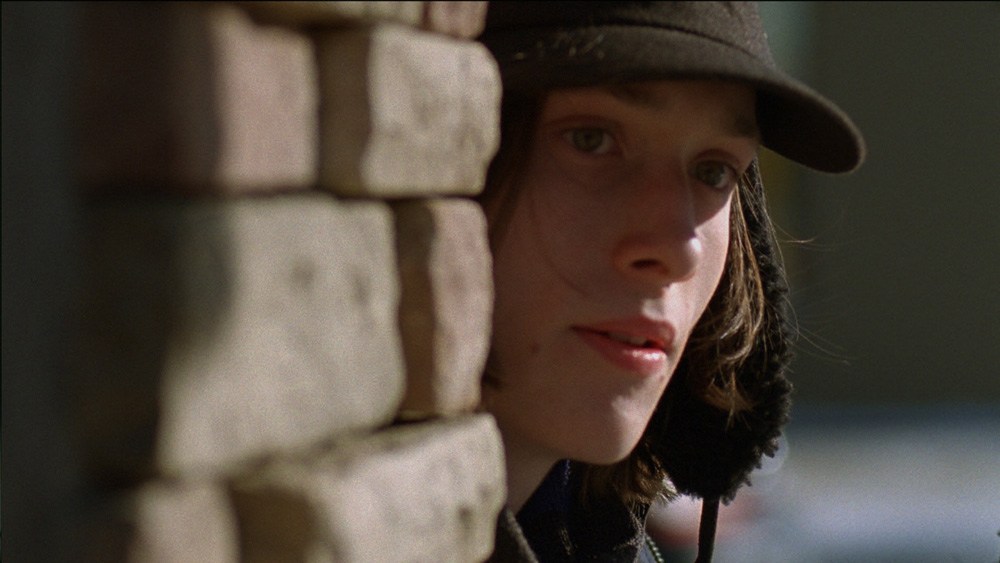
John (Max Records) is an outsider in a small Minnesota town. He works in his mom’s morgue, writes all his school papers on serial killers, and generally creeps out the whole of his high school. His preoccupations have landed him a therapist, the bird enthusiast Dr. Neblin (Karl Geary).
Turns out, John is a budding sociopath – that’s his official diagnosis. A good kid who lacks empathy, may not feel love, and obsesses over death and murder, he follows self-imposed rules and rituals to try to make himself normal and ensure the safety of those around him.
But when townsfolk start turning up in gory pieces, John turns his keen insights on the case.
Though O’Brien’s film may be too quiet an effort to command attention, his coming-of-age approach and indie sensibilities help him turn this outlandish and contrived effort into something touching, humorous and rewarding.
Records, who melted me as young Max in Spike Jonze’s 2009 masterpiece Where the Wild Things Are, serves up an extraordinarily confident, restrained performance. One scene, in particular – when he turns the tables on a bully at the school dance – is outstanding.
His onscreen chemistry with the nice old man across the street – Back to the Future’s Christopher Lloyd – generates thrills enough to offset the movie’s slow pace.
For his part, Lloyd is in turns tender, heartbreaking and terrifying.
The story cleverly inverts the age-old “catch a killer” cliché and toys with your expectations as it does. Robbie Ryan’s grainy cinematography gives the film a throwback looks that fits the image of a depressed Midwest town lost in time.
Bursts of driest humor keep the film engaging, while Records’s performance engenders the kind of empathy from the audience that the character himself could never muster.
It’s an effective twist on the serial killer formula, certainly, not to mention a coming-of-age tale that accepts its unpopular protagonist for who he is rather than how he could be made over to be happier in a way that makes us comfortable.
The weekend of wasted talent rolls on with Morgan, a derivative AI adventure that boasts an impressive cast and a lot of borrowed material.
Luke Scott’s feature directorial debut finds trouble with the L7 – an unnamed corporation’s newest attempt at artificial intelligence. There’s been an injury, and we don’t want a repeat of Helsinki, (it’s always Helsinki!) so Corporate sends the risk analyst (Kate Mara) to assess the situation.
The cast offers loads of reason for optimism. Joining Mara are Brian Cox, Jennifer Jason Leigh, Toby Jones and the great Paul Giamatti. That is a stacked ensemble. And even if every single one of them is underused, each brings something genuine and human – you know, the kind of thing that comes from deep and true talent – to the proceedings.
Highest hopes, though, are hung on the potentially dangerous cyborg herself, played by Anya Taylor-Joy. Hot off a brilliant lead in The Witch, Taylor-Joy again takes on a role in which her innocence is in question.
Like Witch helmsman Robert Eggers, Scott employs full screen close ups of Taylor-Joy’s face – her enormous, wide-set eyes and round, innocent features – to exacerbate a struggle to determine whether the character is good or evil.
And Scott clearly knows a good idea when he sees it because he borrows, grabs and plunders with glee.
His film is a mish-mash of Ex Machina, The Silence of the Lambs, Blade Runner and Terminator buoyed with decent performances and one vaguely fresh notion.
Every major character – every hero, villain, person of authority and character pivotal to the plot – is female. Every good decision, poor decision, and bit of badassery is made by a woman. And – get this – even when two of those women are soaking wet, their shirts are neither clingy nor sheer.
Right?!
I’m not going to lie to you – any horror/action hybrid with a predominantly female cast that chooses not to stoop to titillation and exploitation gets an extra star.
There are subtle moments that toy with sexuality, and Scott wisely lets Taylor-Joy express these themes primarily through a nuanced physicality. That, decent pacing and performances better than the material demands elevate the film above the predictable off-season action vehicle that it is.
The evil stepmother has been a source of fear and dread for eons. The Grimm brothers knew it – they disliked stepmothers as much as they disliked wolves. Horror has picked that same scab again and again over the years, but it’s not just that mom-substitute that you need to worry over. As we discover this week, stepdads – especially the heavily bearded, axe-wielding variety – are just as problematic.
5. The Stepfather (1987)
Years before Terry O’Quinn gained a following on Lost (or West Wing or Alias or Millennium), he crafted a memorable villain out of a weakly written toss-off of a horror flick, creating, in turn, a movie worth a second look.
With an idyllic suburb-turned-nightmare hellscape, the film opens like John Carpenter’s Halloween, the camera wading through the falling leaves and quiet street before stopping on the window of one particularly unpretentious little home. Inside, O’Quinn quickly and effectively establishes character. This is an actual character, not a cookie cutter psycho, and on the strength of his performance, this bloody confection of 80s family values works.
O’Quinn’s Jerry Blake marries into fatherless homes, ever seeking the perfect family. As soon as he sees the reality of familial bliss, he decides his family is a disappointment and slaughter ensues. As the film unspools, Jerry’s new brood, including Charlie’s Angel’s Shelley Hack, as well as Jill Schoelen, as her 16-year-old daughter, show signs of fatigue already.
Stepfather explores ideas of the exclusivity of the American dream and the inexplicable popularity of shaker knit sweaters. Mostly, though, it mines that same tension that worked so well for the Brothers Grimm: the fear inherent in taking on a step parent, in that they not only represent the finality of the loss of a beloved, but the possibility that the new household head to which you must submit will actually bring you danger.
https://www.youtube.com/watch?v=HZGHTP2dH10
4. Amityville Horror (1979)
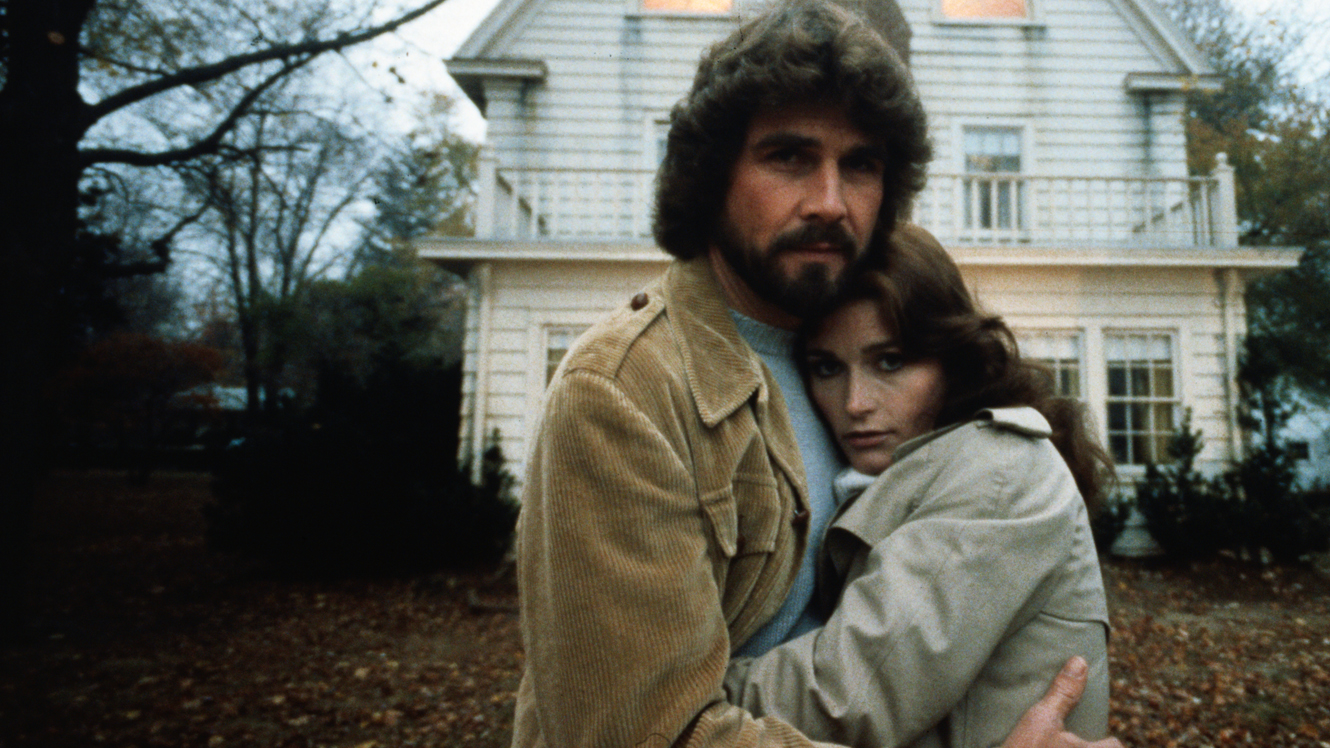
Back in the Seventies, Long Island residents Kathy and George Lutz caused quite a stir with their tale of a diabolical house that nearly killed their whole family. The cultural hysteria they stirred led to a bestselling book, at least ten feature films and a documentary. The most famous of the cinematic efforts was the 1979 flick, a picture that followed the Lutzes as they took one step inside 112 Ocean Avenue and screamed, “Oh my God, this wallpaper is hideous!”
But, the house was really cheap, what with the former tenants having all been slain by their oldest son/brother Ronald DeFeo, so the Lutzes turned a blind eye to the hideous décor and moved right in.
James Brolin and his hair star as George Lutz, newly married to Kathy (Margot Kidder), new father to her three kids, serious wood cutter. George goes a little nuts, and who can blame him? There is obviously not a single decent barber in all of Long Island, and he’s sunk his life savings into a lovely home that sits atop the gateway to hell. (Honestly, though I always thought Tiffin, Ohio was the gateway to hell, the actual gateway lies beneath Columbus, OH. It’s true. Look it up.)
The film seems like low-level exploitation for director Stuart Rosenberg (Cool Hand Luke), whose approach is more melodramatic than horrific. He rode the cultural hysteria to big box office, but his effort feels a little silly now. Maybe it’s the red-eyed pig out the window?
3. The Snowtown Murders (2011)
John Bunting tortured and killed eleven people during his spree in South Australia in the Nineties. We only watch it happen once on film, but that’s more than enough.
Director Justin Kurzel seems less interested in the lurid details of Bunting’s brutal violence than he is in the complicated and alarming nature of complicity. Ironically, this less-is-more approach may be why the movie leaves you so shaken.
An unflinching examination of a predator swimming among prey, Snowtown succeeds where many true crime films fail because of its understatement, its casual observational style, and its unsettling authenticity. More than anything, though, the film excels due to one astounding performance.
Daniel Henshall cuts an unimpressive figure on screen – a round-faced, smiling schlub. But he brings Bunting an amiability and confrontational fearlessness that provides insight into what draws people to a sadistic madman. There’s not a false note in his chilling turn, nor in the atmosphere Kurzel creates of a population aching for a man – any adult male to care for them, protect them and tell them what to do.
http://www.youtube.com/watch?v=qcoCTA2IZ7c
2. Tale of Two Sisters (2003)
A lurid Korean fairy tale of sorts – replete with dreamy cottage and evil stepmother – Jee-woon Kim’s Tale of Two Sisters is saturated with bold colors and family troubles.
A tight lipped father returns home with his daughter after her prolonged hospital stay. Her sister has missed her; her stepmother has not. Or so it all would seem, although jealousy, dream sequences, ghosts, a nonlinear timeframe, and confused identity keep you from ever fully articulating what is going on. The film takes on an unreliable point of view, subverting expectations and keeping the audience off balance. But that’s just one of the reasons it works.
The director’s use of space, the composition of his frame, the set decoration, and the disturbing and constant anxiety he creates about what’s just beyond the edge of the frame wrings tensions and heightens chills. The composite effect disturbs more then it horrifies, but it stays with you either way.
Tale masters the slow reveal, and the dinner party scene is a pivotal one for that reason. One of the great things about this picture is not the surprise about to be revealed – one you may have guessed by this point, but is nonetheless handled beautifully – but the fact that Tale has something else up its sleeve. And under its table.
1. Night of the Hunter (1955)
Robert F. Mitchum. This may be the coolest guy there ever was, with an air of nonchalance about him that made him magnetic onscreen. His world-wizened baritone and moseying way gave him the appearance of a man who knew everything, could do anything, but couldn’t care less. And perhaps his greatest role in definitely his best film is as serial killer/preacher Harry Powell in the classic Night of the Hunter.
The iconic film noir sees Mitchum as a con man who cashed in on lonely widows’ fortunes before knocking them off. He’s set his sights on Willa Harper (Shelley Winters), whose bank robber husband had been a cell mate before his execution.
What unravels is a gorgeously filmed, tremendously tense story of Depression-era terror as Powell seduces the widow and her entire town, but not her stubborn son. Many of the performances have that stilted, pre-Method tinge to them, but both Winters and Mitchum bring something more authentic and unseemly to their roles. The conflict in styles actually enhances an off-kilter feel director Charles Laughton emphasizes with over-the-top shadows and staging. It gives the whole film a nightmarish quality that, along with Mitchum’s unforgettable performance, makes Night of the Hunter among the best films of its era.
In 2002, filmmaker Gus Van Sant released one of his more polarizing and thoughtful films. In Gerry, two guys named Gerry (Casey Affleck and Matt Damon) hike ill-prepared into the desert to find themselves fighting for survival.
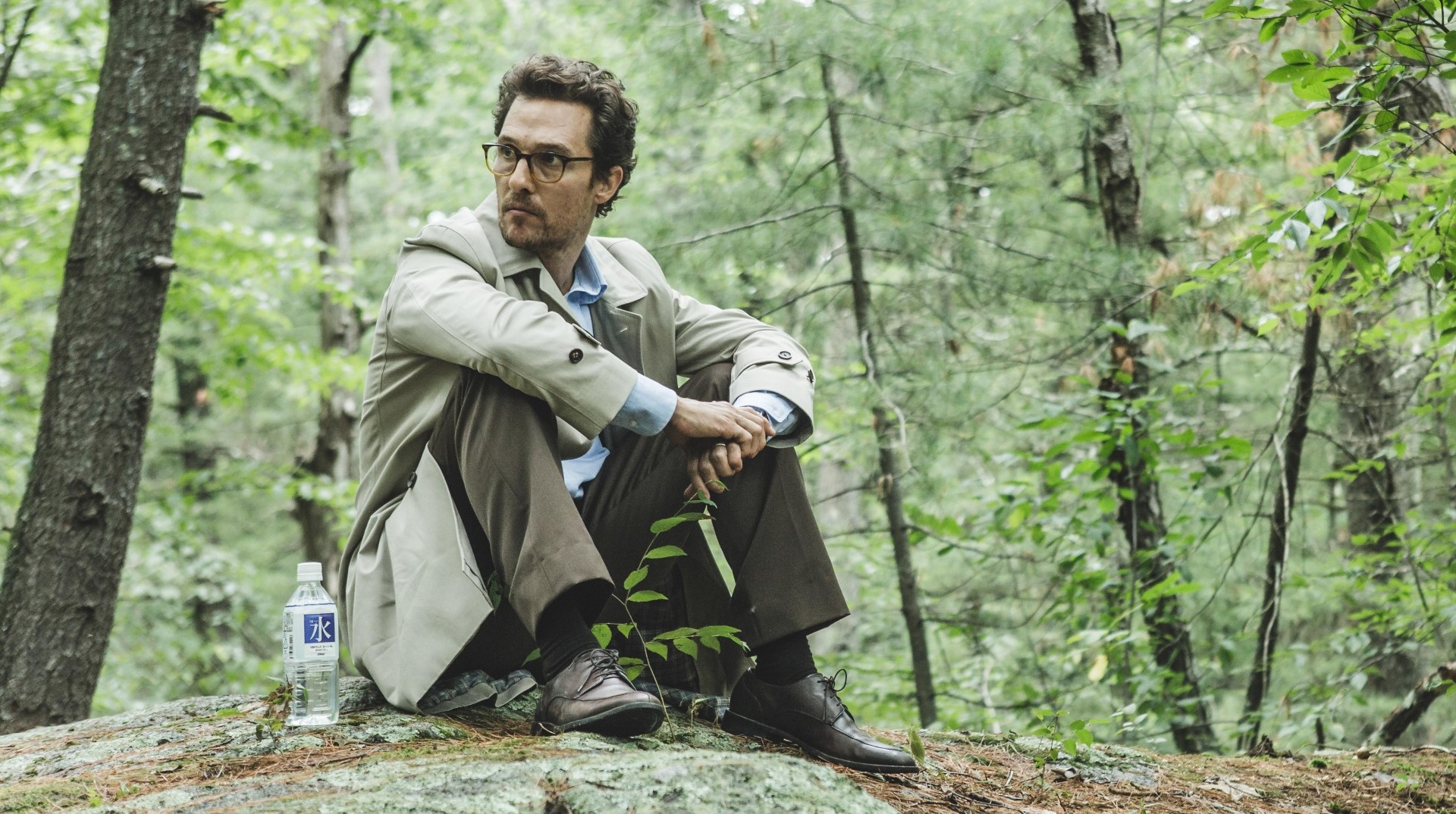
A quick glance at The Sea of Trees suggests that perhaps Van Sant returned to these themes. Matthew McConaughey loses himself in a Japanese forest, befriends another wayward traveler (Ken Watanbe), their treacherous journey offering life lessons aplenty.
Because horror writer Chris Sparling penned The Sea of Trees, I was kind of hoping the film would be a cross between Gerry and The Blair Witch Project.
It is not.
No, it’s an overtly sentimental, culturally patronizing waste of one Oscar winner and two Oscar nominees.
We wander Aokigahara, Japan’s “suicide forest,” with McConaughey’s Arthur Brennan. Brennan’s a scientist, and you know that that means. That’s right – atheist.
Van Sant falls back on the crutch of the flashback to help us understand what this handsome scientist is doing in the suicide forest. It’s in these segments that we meet Naomi Watts’s Joan Brennan and begin to unravel the mystery behind Arthur’s trip into the woods.
Watts suffers most from Sparling’s hackneyed dialog. Her few scenes need to be pivotal and weighty – we know this because of her utterly unrealistic speeches as well as Mason Bates’s condescending score.
Van Sant is no stranger to schmaltz. As great a filmmaker as he has been, sentimentality tripped him up in Promised Land, Finding Forrester and others. His career is peppered with other writers’ projects, many of them with a point to make, and those statement films tend to be Van Sant’s weakest.
Perhaps it’s because, rather than finding his own language for the story via camerawork or score, he relies on an existing style. The Sea of Trees certainly suffers from a heavy handed score. Van Sant also misses opportunities to create a sense of foreboding, claustrophobia, isolation or even redemption with the forest itself, Kasper Tuxen’s photography instead offering irrelevant yet lovely images of windblown treetops.