Click HERE and join us in The Screening Room this week to break down Spider-Man: Homecoming, The Big Sick, The Hero, Okja and what’s new on home video!
Click HERE and join us in The Screening Room this week to break down Spider-Man: Homecoming, The Big Sick, The Hero, Okja and what’s new on home video!
by Hope Madden
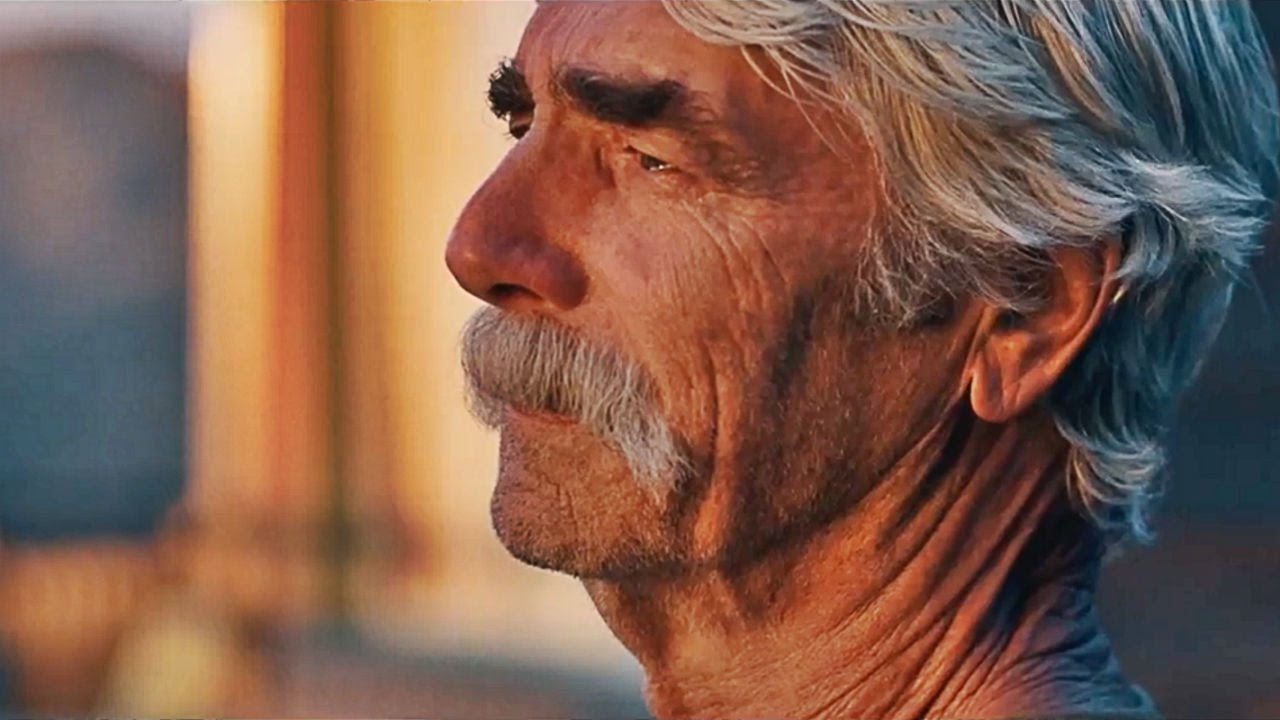
Somebody finally wrote a starring role for Sam Elliott. Let’s be honest, we all love him. What’s not to love? His lived-in masculinity, mannered charm and sonorous delivery make every line a comic/dramatic/romantic dream.
His latest film, the Brett Haley directed and co-penned The Hero, feels like an attempt to give Elliott his own The Wrestler or Crazy Heart.
I’m cool with that.
Haley was responsible for the 2015 life-renewing romance I’ll See You In My Dreams, a post-middle-age adventure starring Blythe Danner, with Elliott joining as her mustachioed gentleman caller.
With Hero, Haley places Elliott firmly in the lead of another “life begins when you decide it does” kind of story.
In a role undoubtedly written specifically for the actor, Elliott plays an aging performer who’s knocked around Hollywood for decades but is best known for his deep, cowboy voice. The film opens with that memorable baritone recommending, “Lone Star barbeque sauce – the perfect pardner for your chicken.”
It’s an inspired scene, full of humorous indignity and carried beautifully by the voice-over veteran. It’s really a shame Haley can’t build on it.
Elliott’s Lee Hayden has cause to reevaluate his life when a health issue, a lifetime achievement award, a viral video and a surprising new girlfriend all collide unexpectedly. Oh, so many reasons to contemplate your own mortality.
Elliott’s quiet, moseying way remains as enigmatic and charming as it ever has been, and seeing him play a character so very close to himself is sometimes eerie. Real-life wife Katharine Ross even plays his ex.
The film scores highest marks in two scenes with Ross, and in everything with a delightful Nick Offerman, playing against type as Lee’s goofy former co-star and current weed dealer.
It derails hardest, though, when it tries to juggle a distant relationship with a daughter (Krysten Ritter) and a new romance with a hot, much younger woman (Laura Prepon).
The Hero breaks no new ground. Had Haley and co-writer Marc Basch (who also co-wrote Dreams) thrown one or two fewer contrivances at us, or found perhaps a fresher way to contend with their obvious choices, they might have had something.
Instead they ride Elliott’s charm and settle for sentimentality, which is such a shame. It’s high time Sam Elliott gets to lead his own movie, but he deserves a little more than this.

by Hope Madden and George Wolf
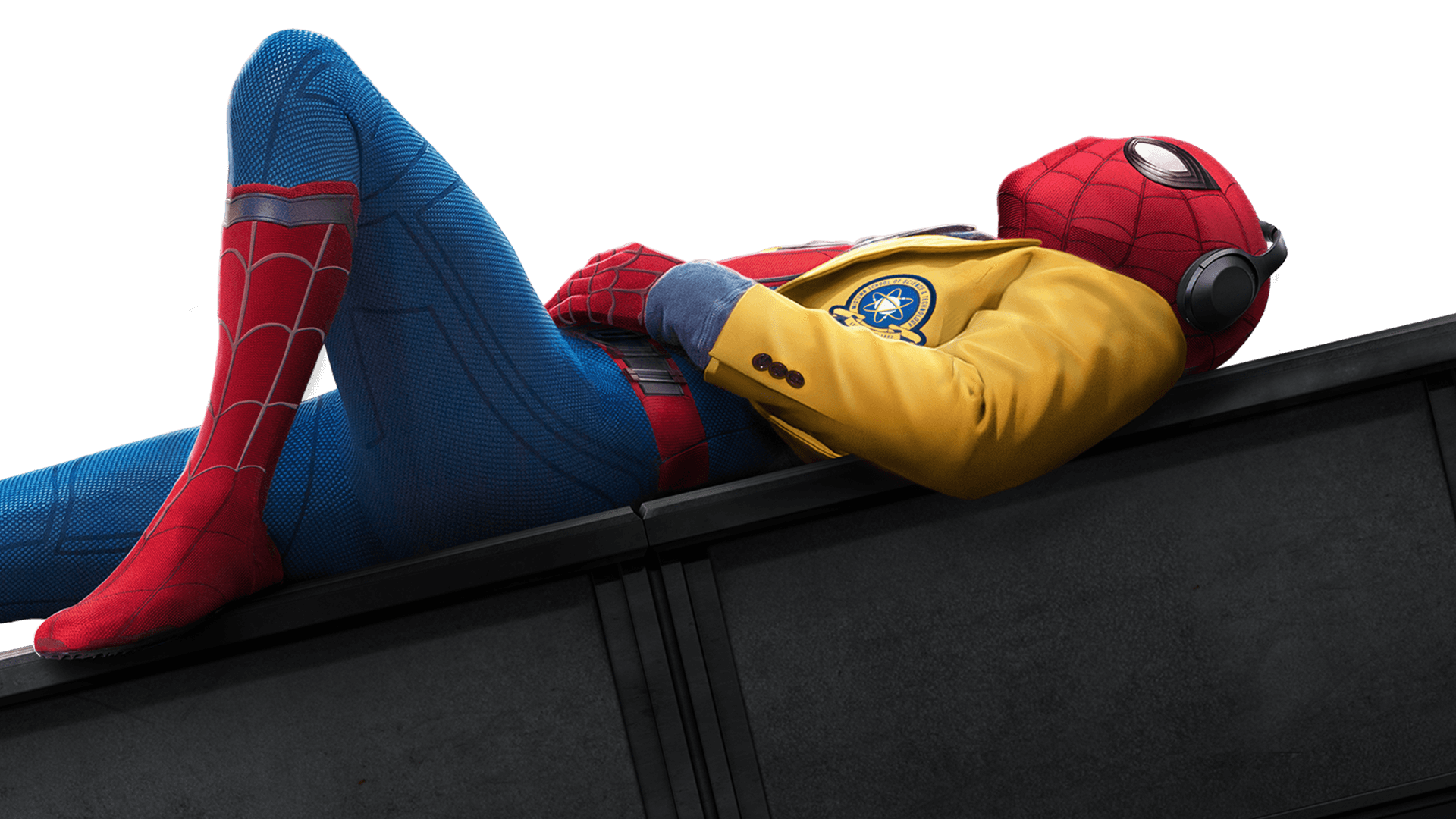
With brief but wildly enjoyable screen time, the newest Spider-Man (Tom Holland) introduced himself to us in last year’s Captain America: Civil War. His presence was energetic, light-hearted and fun – childlike. Appropriate for a high school freshman.
It’s exactly that bottled exuberance that makes Spider-Man: Homecoming so enjoyable.
The events of Cap and Iron Man’s battle for control of the Avengers only months behind them, Tony Stark (Robert Downey, Jr. – like you didn’t know) takes arachnid-bitten science nerd Peter Parker under his wing.
Pete’s not ready for the big time yet, though. Mr. Stark would prefer his protégé focus on being a friendly, neighborhood Spider-Man instead of pestering for an invite to be the next Avenger.
There are several things director Jon Watts (Clown, Cop Car) and his enormous team of writers get right.
Firstly, they know we’re hip to Pete’s origin story, so the bite, Uncle Ben and all that needless angst are mercifully missing.
Next, they keep the story tight and low to the ground. It’s a training-wheels villain – somebody too big for you or me to contend with, but no intergalactic menace or god waiting to annihilate global humanity.
It also helps that said villain, the “Vulture,” is played by the reliably nutty and likeable Michael Keaton, who brings the perfect mix of psychosis and humanity to a role that could have easily been pushed over the top.
But mainly, Watts hits a bullseye with the film’s joyously entertaining tone.
As solid as the Marvel universe has been, it’s not hard to find moments (especially in Civil War) when the push for a hip chuckle undercuts the action. The humor in Homecoming hits early and often, but only to reinforce that the film’s worldview is sprung from a teenage boy. In this way, it feels more true to its comic origins than most in the entire film genre.
Holland, who just turned twenty-one, has no trouble passing for fifteen in a wonderfully wide-eyed performance. Paired with a nicely diverse group of classmates, Holland finds the perfect sweet spot to contrast the social minefields of high school with the learning curve of his new Stark Industries super suit.
Best of all, Holland re-sets the character to a place where its growth seems both unburdened and unpredictable. That’s exciting, and not just for Pete.
Same goes for the film. Watts and his writing team fill Homecoming with the thrills, wit and humanity (plus a plot twist that’s subtle genius) to give the entire superhero film genre a freshness that’s plenty welcome.
Throw in a letter-perfect final scene, and we’re already tingling about what Spidey might be up to next.

by Hope Madden
That lovely period of youth, close enough to childhood to be magical, near enough to adulthood to be tinged with longing – it’s that moment where people like Spielberg made their greatest mark.
Filmmaker Joon-ho Bong takes us there with the story of a super pig – a genetically engineered and yet utterly adorable hippo-like beastie bred to feed a lot of people cheaply – and her best friend.
If you haven’t seen the films of Joon-ho Bong, you should. All of them. Repeatedly.
This versatile Korean filmmaker is as comfortable with dystopian fantasy as he is creature features, with dark family dramas as police procedurals. Whatever he makes, he edges it curiously with humor and shadows with a bit of horror. It’s a heady mix, but in Bong’s hands, it never ceases to satisfy.
In this case, we tag along as Korean farm girl Mija (Seo-hyun Ahn) wiles away days in the rural mountains with Okja. Ten years earlier, the Mirando corporation left the tiny piglet with Mija’s farmer grandfather. It’s now time for the company to take her back.
What opens as a beautiful story of magical childhood friendship a la E.T. or some kind of live-action Miyazaki film turns, in Act 2, into something far darker. Once Tilda Swinton (glorious – and playing twins!) and Mirando Corp come calling, Okja becomes satire of the most broad and brutal sort.
Though Bong peppers the prolog with a couple F-bombs, there’s still no way to be ready for the pivot his film makes. Not every actor is prepared for the shift, either.
Swinton – so breathtakingly brilliant in Bong’s 2013 flick Snowpiercer (Be a shoe!) – is characteristically fascinating as Mirando’s mogul, and Paul Dano offers a startlingly unpredictable eco-terrorist.
The generally reliable Jake Gyllenhaal can’t seem to nail his part, kind of a Jack Hannah patterned after a crackhead version of Richard Simmons. It’s less interesting than it sounds.
Otherwise, though, the collision of styles and gut punch of a third act guarantee that the film will stick with you.
Okja is the first film in which Bong clearly states a prescribed purpose, rather than simply writing and directing a fine, if politically astute, film. That doesn’t take away from his movie’s power, and only cements his position as a filmmaker at the top of his game.

Who’s crazy, who’s not? Whose perspective can you believe? Why can’t I look in the basement?
All fine questions that have been asked in film since around 1920. We sifted through all the loonies and the asylums to generate a list of the best and nuttiest available.
Thanks to Senior Lunatic Correspondent Dr. Neil McRobert – affectionately known as NakMac – for returning, hangover and all, to help us count down the best horror films in set an asylum.
So, here’s one that lives up to its title. If you were to choose any “lunatics running the asylum” film, this is the one to go with.
Set in Czech Republic 2005, disturbed young Jean (Pavel Liska) accepts an invitation to stay with a man who believes himself the Marquis de Sade (Jan Triska) – frilly shirts, horse-drawn carriage and all.
If you’ve seen any of the films of Jan Svankmajer, you know to expect the unexpected. It turns out, his talent for the surreal and the grotesque so perfectly fit the topic of the film, it’s hard to imagine anyone else making it.
Animated meat cutlets, insane speechifying, burlesque and unpleasantness aplenty work together in a film that defies summarization but leaves an unmistakable impression.
Dr. Hal Ragland – the unsettlingly sultry Oliver Reed – is a psychiatrist leading the frontier in psychoplasmics. His patients work through their pent-up rage by turning it into physical manifestations. Some folks’ rage turns into ugly little pustules, for example. Or, for wide-eyed Nola Carveth (Samantha Eggar), rage might turn into bloodthirsty, puffy coated spawn. This is Cronenberg’s reimagining of procreation, and it is characteristically foul.
What’s she so mad about? Her divorce. So angry, indeed, that she’s gone mad – and begun neglecting, even endangering, her puffy coated actual daughter.
Cronenberg wrote the film during his own ugly divorce and custody battle. He created a fantasy nightmare rooted firmly in the rage, despair, and the betrayal that comes from watching someone who once loved you turn into someone who seems determined to harm you.
Cronenberg is the king of corporeal horror, and The Brood is among the best of the filmmaker’s early, strictly genre work. Reed and Eggar both are unseemly perfection in their respective roles. Eggar uses her huge eyes to emphasize both her former loveliness and her current dangerous insanity, while Reed is just weird in that patented Oliver Reed way.
https://www.youtube.com/watch?v=RVQkJJxjdIM
Nyctophobia, dissociative identity disorder, creepy tapes, an abandoned asylum – the pieces are there for a spooky, if recognizable, horror movie. Credit writer/director Brad Anderson for swimming familiar waters and yet managing a fresh, memorable and disturbing film.
Gordon (Peter Mullan) needs some cash – and some sleep. Troubles at home aside, he’s having problems getting his latest assignment completed on time. With just a skeleton crew and an unreasonable turnaround time, Gordon has to remove the asbestos from the long-abandoned Danvers Lunatic Asylum.
He sneaks away a lot to call his wife and listen to these therapy tapes he’s found. Meanwhile, a couple of his guys are bickering over a shared girlfriend, another one’s a pothead, and then there’s Gordon’s sweet, mulleted nephew Jeff (Brendan Sexton III), who’s afraid of the dark.
Atmosphere is everything in this film. And though several surprises may not really surprise, performances are outstanding and Anderson has some seriously scary moments in store. Oh, poor Jeff.
https://www.youtube.com/watch?v=TYC83LCttW8
In 1967, the great documentarian Frederick Wiseman announced his presence with authority, producing the first film in American history to be banned for reasons other than obscenity or national security.
While the American legal system may have believed the filmmaker had violated the privacy of the patients of the Massachusetts Correctional Institution Bridgewater, the film suggests it cared less about the patients’ other rights.
Haunting and spare, juxtaposing patients’ day-to-day abasement against choreographed musical numbers performed with a saucy baritone on staff, Wiseman’s film rattles you. The filmmaker offers no voiceovers to guide you. Instead, he assaults your sensibilities with the raw and unacceptable truth.
Few films of the silent era or any other are as visually striking as this. A German Expressionist, director Robert Wiene uses light and shadow, exaggerated angles and gloomy spirals to envelope us in a nightmare.
In a story told in flashback we learn of Francis, who is visiting his bewitched beloved in an asylum. He tells the tale madness – a traveling hypnotist and his somnambulist, performing at a town fair; murder, magic and lunacy.
The film’s twist ending and framed storytelling have become commonplace in horror – particularly in “asylum” horror – but the look of this film has never been truly recreated.
Taken in the context of the time, Caligari becomes a metaphor and premonition of Germany’s mindless obedience to a lunatic, homicidal authority figure. Carl Mayer and Hans Janowitz wrote it just after WWI to reflect their experiences in the war, but it mirrored a growing, terrifying phenomenon in their country.
https://www.youtube.com/watch?v=Y0A0sfxM6AE
Click HERE and join us in The Screening Room this week to break down Baby Driver, The Beguiled, Despicable Me 3, The House, The Bad Batch and what’s new on home video!
Land a’ goshen, the year’s half over already! How the F did that happen? Well, we’ve watched 161 films so far this year. Whew! Which have been the best? The new episodes of both Planet of the Apes and Spider-Man would’ve made the cut, but our judges said July releases didn’t count, so….let’s have a look at what did.
You want to know the fears and anxieties at work in any modern population? Just look at their horror films.
You probably knew that. The stumper then, is what took so long for a film to manifest the fears of racial inequality as smartly as does Jordan Peele’s Get Out – an audacious first feature that never stops entertaining as it consistently pays off the bets it is unafraid to make.
At the top of that list: do not go out at night.
But what are the dangers, and how much of the soul might one offer up to placate fear itself?
In asking those unsettling questions, It Comes at Night becomes a truly chilling exploration of human frailty.
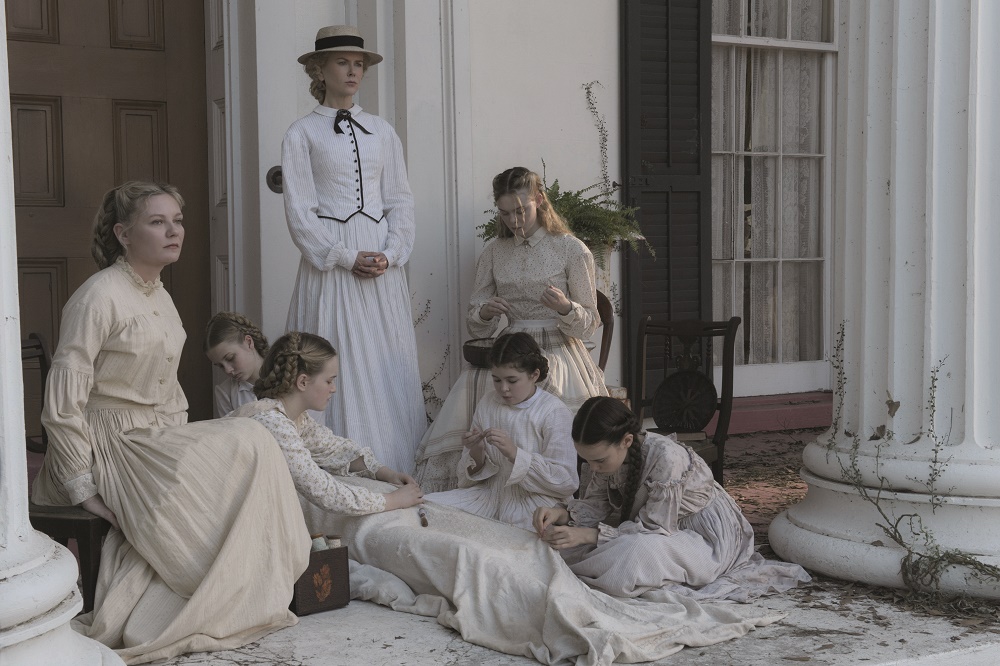
Snugly hidden near the fighting in Confederate territory, a girls’ school takes in a wounded Union soldier. Delicately shifting allegiances, power struggles, competition, longing, fear, and danger waft between the columns of Miss Farnsworth’s Seminary for Young Ladies.
Sofia Coppola develops a languid and ornate atmosphere, punctuated where necessary to create a sense of dread and urgency. Her cast is uniformly excellent, their commitment to character leading to a finale that’s as devastating as it is inevitable.
Bloody and bleak, tossing F-bombs and the franchise’s first flash of nudity, Logan is not like the other X-Men.
Logan relies on themes of redemption – a superhero’s favorite. Director James Mangold pulls ideas from Children of Men and Mad Max Beyond Thunderdome, but his film reminds me more of The Girl with All the Gifts. (If you haven’t seen it, you should.)
The point? The children are our future and Logan’s real battle has always been with himself. Almost literally, in this case.
Start to finish, the soundtrack-driven heist flick Baby Driver has a bright, infectious charm – and you can dance to it.
The beats offer more than a gimmick to ensure the flick dances along – the tunes getaway driver Baby (Ansel Elgort) has buzzing through his ear buds give rhythm to his impressive high speed antics.
The game cast never drops a beat, playing characters with the right mix of goofiness and malice to be as fun or as terrifying as they need to be. For all its danceability, Wright’s film offers plenty of tension, too.
No doubt, events get brutal, but never without reminders that Young is a craftsman. Subtle additions, such as airplanes flying freely overhead to contrast with the theme of captivity, give Hounds of Love a steady dose of smarts, even as it’s shaking your core.
https://www.youtube.com/watch?v=UNEurXzvHqE
Writer/director Julia Ducournau’s has her cagey way with the same themes that populate any coming-of-age story – pressure to conform, peer pressure generally, societal order and sexual hysteria. Here all take on a sly, macabre humor that’s both refreshing and unsettling.
It’s a performance that should not be forgotten come award season, and it anchors a smart, detailed film as compelling as any political thriller, yet as familiar as your last little white lie.
Blackcoat’s Daughter behaves almost the way a picture book does. In a good picture book, the words tell only half the story. The illustrations don’t simply mirror the text, they tell their own story as well. If there is one particular and specific talent this film exposes in its director, it is his ability with a visual storyline.
Pay attention when you watch this one. There are loads of sinister little clues to find.
The split personality trope has been used to eye-rolling effect in enough films to be the perfect device for writer/director M. Night Shyamalan’s clever rope-a-dope. By often splitting the frame with intentional set designs and camera angles, or by letting full face close-ups linger one extra beat, he reinforces the psychological creepiness without any excess bloodshed that would have soiled a PG-13 rating.
The noteworthy fact about Free Fire is not that it has a ballsy first act, but that the entire film is a third act. With scarcely a word of context, we’re rolled into an empty warehouse just in time for a shootout to begin, and there we will stay until the film concludes.
There is a barely controlled, very funny, incredibly bloody chaos afoot here, and it is a wild and entertaining sight to behold.
Perhaps best of all is how Colossal works out of the conceptual corner it backs into. Much like the Koreans who keep coming downtown no matter how often the monster appears, Vigalondo is committed to the end, delivering a strange but satisfying in-the-moment fable.
The Lovers is sneaky in its casual nature. Through subtle storytelling and stellar performances, it finds meaning in places rarely explored this effectively, and a gentle confidence that frayed emotions can still bond.
No, Volume 2 can’t match the ruffian charm of the first, and there are some stretches of not-much-happening-here. But James Gunn’s sequel shares a lot of heart, swashbuckling visuals and more than a few solid belly laughs.
by Hope Madden
In a mist-laden Virginia woods, pre-adolescent Amy (Oona Laurence) mushroom picks her way to uncovering a wounded Union soldier. Sure he’s a bluebelly, but she can’t leave him there to die, can she?
Amy helps him back to Miss Farnsworth’s Seminary for Young Ladies, the isolated boarding school where she, Miss Farnsworth, one teacher and just a handful of pupils are waiting out the Civil War.
The Beguiled marks a return to critical favor for writer/director Sofia Coppola, who won best directing honor at this year’s Cannes Fest Festival for her adaptation of Thomas Cullinan’s novel.
Few frame delicate, ornate beauty quite like Coppola. She has found quite a palette with this film – the draping trees, columned porches, foggy woods, the tender grace of the school’s inhabitants.
The film is a study in restraint, and probably the most conventional film Coppola’s made. She abandons the sexual hysteria of Don Siegel’s pulpy 1971 adaptation, creating instead a chamber piece lush with decay and longing.
From his first words at the school – “Corporal John McBurney, 66th New York, grateful to be your prisoner,” – Colin Farrell’s wounded deserter is a likeable mystery. Is he earnest or manipulative? A good guy, or a wolf in the hen house?
Clint Eastwood’s performance (easily the best thing about Siegel’s version) was immediately creepy and scheming. Farrell’s slightly more of a blunt instrument. He’s less conniving, more primal –vulnerable and explosive, sometimes in the same breath.
He’s met his match, though, in Martha Farnsworth – Nicole Kidman. Coppola’s script is crisp, and no one delivers a passive aggressive barb quite as skillfully as Kidman.
Like her girls, Martha carries a lived-in weariness that weakens her to this attractive distraction from the war. But she is a survivor, an instinct she hopes to bring out in her charges as well.
The cast is uniformly wonderful – Kirstin Dunst, in particular. Coppola is fascinated by the internal power struggle as well as the morphing moral and emotional factors at work here. As patriotism battles Christian compulsions in the beginning, so competition for the Corporal’s attention evolves into fear.
The film makes a sharp turn with the inevitable explosion of impotent male dominance. As sudden as it seems, Coppola’s languid approach earlier in the film ensures that each character’s inner motivations and interpretations are clear – without the hackneyed flashback or interior monologue Siegel resorted to.
The result is a bewitching film – beautifully acted, gloriously filmed and haunting.
by Hope Madden
Start to finish, the soundtrack-driven heist flick Baby Driver has a bright, infectious charm – and you can dance to it.
It needs to be good, though. The third film in as many years about a mixtape, a rag-tag gang and a dead mom, this movie needs to bring something genuinely mesmerizing.
If there is one thing writer/director Edger Wright knows how to do, it’s propel a film’s action. That’s hardly his only talent, but few excel here quite the way he does. Scene to scene, set piece to set piece, he makes sure your eyes and your ears are aware that things are moving at a quick clip.
Never has this been more true than with Baby Driver.
Wright edits in time with his expertly curated mix tape, creating a rhythm that keeps his lead dancing, his film moving, and his audience engaged.
The beats offer more than a gimmick to ensure the flick dances along – the tunes getaway driver Baby (Ansel Elgort) has buzzing through his ear buds give rhythm to his impressive high speed antics.
Baby is the one constant in the teams Doc (Kevin Spacey) assembles to pull off his jobs. A reluctant participant making good on a debt, Baby keeps his distance from the crew – whether it’s the oily Buddy (Jon Hamm, marvelous as ever), his sketchy girlfriend Darling, (Eiza Gonzales), or the straight-up psycho, Bats (Jamie Foxx – glad to see you in something worthwhile again).
Of course, the tension comes in when Baby tries to leave the robbery biz behind, egged on by feelings for the cute waitress at his favorite diner (Lily James).
If you’ve ever seen a movie, you’ll know that getting out is never easy.
Wright’s agile camera keeps tempo with his killer playlist. Whether back-dropping romance at the laundromat with gorgeous color and tongue-in-cheek visual call-backs, or boogying through back alleys, on-ramps and highways, Baby Driver is as tasty a feast for the eyes as it is the ears.
The game cast never drops a beat, playing characters with the right mix of goofiness and malice to be as fun or as terrifying as they need to be. For all its danceability, Wright’s film offers plenty of tension, too.
Like much of the filmmaker’s work, Baby Driver boasts a contagious pop mentality, intelligent wit and sweet heart.
Oh, the bounty that is home entertainment this week! Loads of stuff – most of it mediocre – but one brand spanking new option that kicks all manner of ass.
Here’s what you can find in new home entertainment. Click the title for a complete review. And as always, please use this information for good, not evil.