Tag Archives: Hope Madden

Good Night and Good Luck

Best Wishes to All

by Hope Madden

Filmmaker Yûta Shimotsu has seen a few Takashi Miike films. Everyone should. He’s one of the world’s greatest and most prolific genre filmmakers, so that’s not a drag on the Best Wishes to All (also known as Best Regards to All) writer/director.

His first feature follows a nursing student (Kotone Furukawa) visiting her grandparents over break. They’ve gotten odd. Or have they always been odd and she’s just blocked it out more effectively until now?

Shimotsu’s film, co-written with Rumi Katuka and based on his own 2022 short, is a nimble little beast. What begins as a reckoning with the horrors of aging twists into something else altogether. And then, something else. Because what the unnamed granddaughter learns is that her family is keeping a secret from her. But what’s even more disturbing than the secret itself is the nonchalance with which it’s held, and that the secret does not belong to her family alone.

The filmmaker mines unease, even queasy dread, surrounding obligation to an older generation, the notion of one day turning into that same monstrous burden, or even worse, the realization that you never were anything other than a monster yourself.

Stylistically, Best Wishes to All recalls some of Miike’s more absurd horrors, Gozu in particular. But Shimotsu stitches the absurdity of Gozu or The Happiness of the Katakuris or even Ichi the Killer to pieces of grittier horror. Not quite Audition, but in that zip code. But he can’t strike a tone that can carry the two extremes.

The grotesquerie is always in service of a tale that’s more folk horror than body horror. This doesn’t always work, but it’s never less than interesting.

Kurukawa is delightfully absorbing as the obedient granddaughter utterly gobsmacked by her grandparents’ behavior. What appears to townsfolk as naiveté actually mirrors the audience’s horrified confusion, making the poor girl all the more empathetic.

But what is it, exactly, that’s expected of her? And why? Best Wishes to All is frustratingly unclear in terms of the narrative’s underlying mythology. This limits the satisfaction of the climax and robs the film’s final image of its necessary impact.

It’s a weird one, though, and certainly entertaining. Shimotsu can’t quite pull it all off, but it’s fun even as it falls apart.

Hunting Season

Predator: Killer of Killers

by Hope Madden

In 2022, director Dan Trachtenberg reinvigorated the Predator franchise by taking the story back in time and investing in character. Prey (especially the Comanche language dub) unveiled thrilling new directions for the hunt to take—directions Trachtenberg picks up with three short, animated installments in Hulu’s Predator: Killer of Killers.

The anthology moves between three different earth-bound time periods: Viking conquest, feudal Japan, and WWII. Each short is focused on an individual warrior—one whose cunning and skill draws the attention of a predator on the hunt.

While the overall animation style can be tiresome, there are sequences that impress, even wow. This is not a kids’ cartoon. There’s carnage aplenty, and when it’s at Ursa’s (Lindsay LaVanchy) hands, it’s nasty business gloriously rendered.

The first and best installment, that of Ursa the Viking, packs the screen with visceral action and memorable characters. It also hits on themes of family, loyalty and vengeance that Trachtenberg and co-writer Micho Robert Rutare return to in the second installment. Here, Samurai brothers do battle with the beast, before an alien invader sets his sits on a cunning young mechanic turned fighter pilot in WWII.

Each story boasts a quick, engaging, violent narrative that adds a bit of fun to the canon. The wrap up, which enshrines these individual tales into a larger mythology, feels cynical and uninspired by comparison.

Credit Trachtenberg, along with co-director Joshua Wassung, for continuing to push the IP in new directions. But the Predator series has long understood its flexibility and shown a willingness to experiment. Some of these experiments (Prey) have worked better than others (Alien vs. Predator: Requiem). But most of the efforts have been, at the very least, entertaining.

Predator: Killer of Killers likewise entertains. And it fills the gap between 2022’s top tier Predator effort and Trachtenberg’s next adventure in the series, due out later this year.

Fun With Hand Grenades

From the World of John Wick: Ballerina

by Hope Madden

Who are the greatest female action heroes? Ellen Ripley, obviously. Beatrix Kiddo makes a good case for herself. Viola Davis cut one badass figure in G20 last year. Let’s not forget Atomic Blonde.

Ana de Armas is the latest to throw her hat in the ring — her tutu on the stage? — as Eve, orphan turned assassin in From the World of John Wick: Ballerina.

Why is she a ballerina? No idea. Zero actual narrative reason for it. But how much of Ballerina are we going to hold to that high a standard of logic?

Ironically, director Len Wiseman’s action choreography is less balletic than what we’ve come to expect from the franchise. It certainly lacks the elegant choreography that delivered the bloodshed in John Wick 4. But what Ballerina lacks in grace it makes up for with brute force. Most of the action sequences (most—not all) are on a smaller but more brutal scale than the norm for the series. This has much to do with Eve’s fondness for hand grenades.

The result is a colorful, messy but impressive bit of action.

The spectacle is still there, as is the fun mythology where essentially every third person on the planet is secretly a highly trained assassin bound to rules and consequences set by the High Table.

Ballerina remains true to that mythology. Keanu Reeves makes an appearance, as do Anjelica Huston, Ian McShane, and the much missed Lance Reddick. We visit the Continental, and the film even expands the legend to include a snow globe like little town of killers.

The spinoff film fits into that legacy, of course, because it’s the spawn of the same writing team. Derek Kolstad, who penned even the 2014 original, and Shay Hatten, who joined the project for its 2019 third installment, stay within the confines they set for the universe, just changing perspective by delivering a different killer’s POV.

So, they’re true to the idea, if not the timeline. Funny how we’re willing to suspend disbelief when giant flamethrowers are involved, but some fuzzy math with dates on the calendar is troubling.

The plot is irrelevant, which is lucky because it’s pretty trite and overused. Vengeance over a puppy? That was new. You killed my father, prepare to die? I feel like I’ve heard that one. So, the colorful shell feels pretty empty, but sometimes pretty colors are enough.

Mother’s Little Helper

Bring Her Back

by Hope Madden

Damn, son. The Philippou brothers know how to unsettle you.

Filmmakers Danny and Michael Philippou drew attention in 2022 for their wildly popular feature debut, Talk to Me. Before releasing the sequel, due out this August, the pair changes the game up with a different, but at least equally disturbing, look at grief.

Sora Wong and Billy Barratt are stepsiblings Piper and Andy. Andy, on the cusp of 18, is fiercely protective of his visually impaired little sister. When their dad dies unexpectedly, the pair finds themselves navigating the world of foster parenting until Andy can apply for legal custody and they can get their own place.

In the interim, Laura (the always welcome Sally Hawkins) has agreed to take them in. Well, she agreed to take in Piper, and kind of wound up saddled with Andy. Not to worry! The upbeat former counselor, whose own daughter had been blind, will find the room.

Hawkins is a dream. The film asks a great deal of her character, and she delivers on every request and more. There are countless facets to Laura, so many that a weaker actor would have had trouble delivering the depth necessary to connect them authentically. Hawkins doesn’t just manage the depth; she mines it effortlessly.

She’s surrounded by an extremely natural and charismatic young ensemble. Wong, in her first professional acting role, charms as a kid who never gives her disability a second thought. Barratt delivers heartbreaking tenderness under general adolescent dumbassedness and winds up being the character you root hardest for.

Jonah Wren Phillips haunts the film. Though he is utterly terrifying, there’s also something unmistakably sad in the performance that shakes you.  

Danny Philippou, who again co-writes with Bill Hinzman, grounds the film in character and upends tropes so often that on the rare occasion that Bring Her Back falls to cliché, it’s noticeable.

It’s a slow burn, a movie that communicates dread brilliantly with its cinematography and pacing. But when Bring Her Back hits the gas, dude! Nastiness not for the squeamish! Especially if you have a thing about teeth, be warned. But the body horror always serves the narrative, deepening your sympathies even as it has you hiding your eyes.

Australia has a great habit of sending unsettling horror our way. The latest package from Down Under doesn’t disappoint.

Black & Blue Hawaii

Lilo & Stitch

by Hope Madden

As a general rule, I’m no fan of Disney’s live action remakes. Loved Jon Favreau’s 2016 reimagining of The Jungle Book, but not a single reboot since has lived up to the impressive fun of that one, and most just feel like a soulless cash grab.

Can Lilo & Stitch, an update of Dean DeBlois and Chris Sanders surprise 2002 cultural treasure, meet that high bar?

No, but it comes a lot closer than most.

Sanders wrote and directed 2024’s beautiful emotional gut-punch The Wild Robot, and the pair is responsible for 2010’s equally brilliant How to Train Your Dragon. Director Dean Fleischer Camp’s update, based on an adapted screenplay by Chris Kekanoikalani Bright and Mike Van Waes, remains true to the original’s themes of outsiders longing for connection.

Also, the actual Hawaii is one of the few locations as eye-popping as any animated world. The new Lilo & Stitch is also blessed with a lead who surpasses her animated predecessor in wily spunk and pinchable cheeks. Maia Kealoha’s Lilo, never cloying or false, allows the film the sense of childlike chaos that helps it transcend the artificiality of the story.

The tale itself—about a cute, fuzzy, dangerous, alien scientific experiment crash landed in an undeveloped spot of Hawaii, chased by its creator as well as American intelligence, who’s taken in as a rescue dog by a lonely orphan—remains mainly true to the original.

Live action Stitch is at least as much fun as animated Stitch, although the moments of physical connection—hugs, pets, kisses on the nose–look off. But the joy between Lilo and Stitch is as vibrantly real as ever.

The balance of the cast—Sydney Agudong as Lilo’s frazzled older sister Nani, Zach Galifianakis as bumbling evil genius Jumba, Billy Magnussen as Earth fanboy Pleakley, among others—fully commit to the bit. They make the fun spots funnier and the emotional beats heart-tuggier.

The biggest let down is the updated script, which can’t match the original in terms of the delightfully, delicately human writing. But the contrast between the alien and natural world makes this a natural fit for the leap to live action, and the charming lawlessness of the story is as much fun today as it was in 2002.

That’s His Name, Don’t Wear it Out

Pee-wee as Himself

by Hope Madden

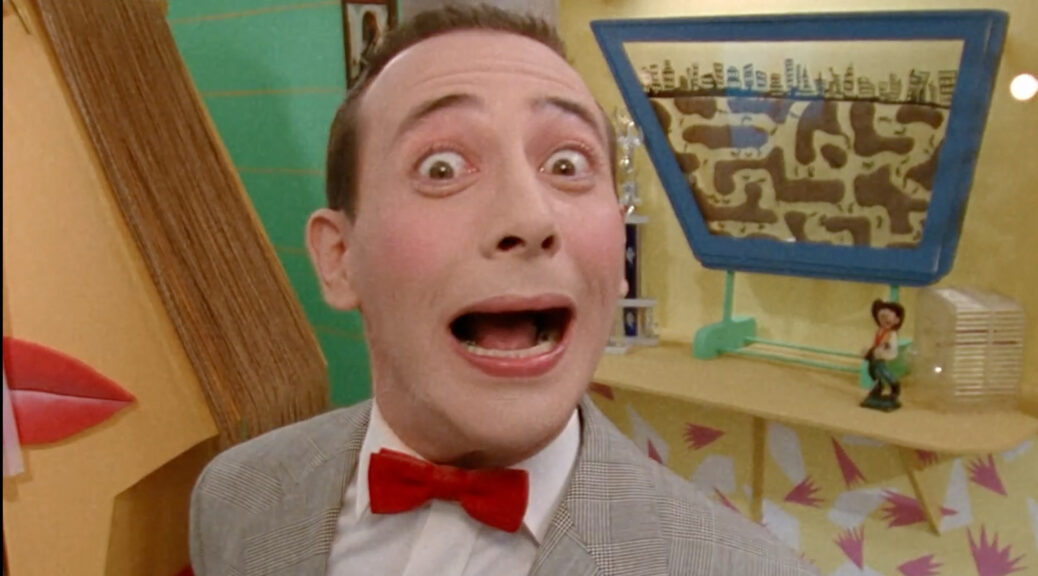
If there’s one thing Matt Wolf’s 2-part documentary Pee-wee as Himself does, it reminds you what a cultural phenomenon Pee-wee Herman was in the 80s. Movies to TV to MTV to toys to talk shows, he was everywhere and he was beloved by children, college kids, and adults alike.

Who would have guessed that this goofy, bow-tied man-child could steal so many hearts? Or how decidedly and abruptly it could all have ended?

The filmmaker walks an interesting line. The Pee-wee story seems custom-made for a rags-to-riches-to-rags doc, but that’s clearly not what either Wolf or Paul Reubens—the man behind the bowtie—wants.

Unbeknownst to Wolf, during the filming of the documentary, Reubens was in the midst of the 6-year battle with cancer he would lose on July 30, 2023. Knowing now what he did not know then, Wolf lingers over weighty turns of phrase.

Charmingly acerbic but often candid, Reubens is openly reluctant to hand over control of his image after so many years of calculating every detail of his public life. Part of what makes the film so electric is how early and often the two butt heads over which of them ought to be in control of the documentary. This conflict itself paints a portrait of the artist more authentic than any amount of historical data ever could.

Wolf pulls from 40 hours’ worth of interviews with Reubens, who is playful, funny, and occasionally confrontational and annoyed—mainly with Wolf. The filmmaker flanks those conversation snippets with family photos and video from the actor’s massive collection.

The utterly delightful Episode 1 introduces a Paul Reubens unknown even to his most ardent fans (of which I am most certainly one). We’re privy to the foundational yearnings and explorations, choices and happenstances that led the eccentric and creatively gifted young Reubens toward abandoning himself entirely to his adorably oddball alter ego.

These clues to the early budding of the genius are as fascinating as clips from his work on The Gong Show and with The Groundlings are joyous. And for those who’ve loved Pee-wee since childhood, footage from his HBO special, early Letterman appearances, and of course, Pee-wee’s Big Adventure thrill to the point of tears.

Episode 2 could be called Post Adventure. P.W.  Herman was at the top of the world and still climbing. One blockbuster film under his white belt, Pee-wee was about to conquer, of all things, children’s television. Wolf reminds his audience—those who may not know and those who may have forgotten—of the show’s subversive genius.

The inevitable tragic downfall haunts the second film from its opening shot, but neither the filmmaker nor Reubens play the victim card. Whether recounting the collateral damage of his fame (partnerships fractured and friends lost), his career missteps (Big Top Pee-wee), or the immediate and deafening public reaction to his 1991 arrest, both Wolf and Reubens are clear eyed.

You may not be as the second film comes to its close. Wolf lets Reubens have the last word, maybe because he had no choice at all, but again, it’s that conflict itself that best defines the consummate performance artist. Paul Reubens decided who got to know what.

Pee-wee as Himself is revelatory, nostalgic, glorious viewing for Pee-wee fans. That’s me. Maybe that’s not you. Maybe you think I’m a big dummy for loving Pee-wee like I do.

I know you are, but what am I?

Daddy’s Little Girl

The Surrender

by Hope Madden

At one point in writer/director Julia Max’s feature debut The Surrender, Barbara (the always reliable Kate Burton) tells her daughter, Megan (Colby Minifie), that their grief over the death of the family patriarch is not the same. After 40 years together, Barbara says, “I don’t know who I am without him.”

That’s really the heart of the horror film that sees a bereaved mother and daughter transgress the laws of nature to bring their beloved husband/father back from the dead.

Max uses horror tropes to play nimbly with the dishonesty of memory and the ugliness of reality. What The Surrender unveils is that mother and daughter do not know who they are as a family without Robert (Vaughn Armstrong); they don’t recognize the other without the third wheel for balance.

As a character study and a glimpse into family politics, particularly during the tailspin of grief, The Surrender is beautifully, authentically written. Every inexplicable grace Barbara has granted Stephen during their decades is somehow unavailable to her daughter, who, in turn, forgives and forgets conveniently when it comes to her father. But Megan’s less forgiving of her mom.

And so, the two grasp desperately to regain balance and relieve their panic and grief, which is where the horror comes in. Max returns to the exquisitely horrific image that opens the film once Megan and Barbara, aided by “the man” (Neil Sandilands, compellingly understated), go in search of Stephen.

Max’s image of the other realm is as imaginative as it is stark. There’s a bleak beauty to it all that recalls Liam Gavin’s genre masterpiece, A Dark Song. The Surrender never reaches those heights, but Max knows how to ground the supernatural in relatable reality and wonders which is worse.

Fright Club: Punk Rock Horror

There is a chaotic energy, a violence to punk rock that makes it a perfect score to horror. Like horror, punk frightens. It upsets the status quo, that’s its whole purpose. It’s inspired a lot of filmmakers and a lot of movies: Uncle Peckerhead, Class of 1984, Driller Killer and more. But here are our own personal favorite punk rock horror movies.

5 Repo Man (1984)

Is it horror? Maybe, maybe not. Is it punk?

You’re goddamn right!

Here’s who you’ll hear in Repo Man: Iggy Pop, Suicidal Tendencies, Flack Flag, Fear, The Plugz, Circle Jerks – probably more that I’ve forgotten. Three punks wander the streets doing crimes. And the whole movie is basically a love letter to people who repossess cars. It’s anarchy!

Writer/director Alex Cox brought a decidedly anarchic vibe to the project, which served him well in later films Sid & Nancy (masterpiece!) and Straight to HellI. The guy’s got his bona fides.

Plus Harry Dean Stanton. And a lot of people explode, leaving behind only their bloody shoes, so that’s horror, right?

4 Freaky Tales (2024)

Eric “Sleepy” Floyd played thirteen years in the NBA, making the All Star team in 1987 as a member of the Golden State Warriors. Freaky Tales makes him the heroic centerpiece of a wild anthology that loves the late 80s, Oakland, and Nazis dying some horrible deaths.

Let’s party!

Ryan Fleck may be an Oakland native, but his films with partner Anna Boden haven’t primed us for this campy, Grindhouse detour. Freaky Tales feels like a return to a low budget indie mindset, where ambitious and energetic newcomers want to showcase their favorite movies, music, and neighborhoods while they splatter blood and blow shit up.

3 Return of the Living Dead

Do you want to party? Because guess what time it is!

Dan O’Bannon, writer behind Alien and Total Recall, co-wrote and directed the film that introduced into the genre the abiding zombie trait of brain eating, and is the first film in which zombies groan “braaaaiiiinnnnssss.”

Plus, the great Linnea Quigley Leg Warmer Dance Scene, a fun 80s punk rock soundtrack, Clu Gulagar and a lot of campy fun – all of this combined to create one of the more memorable and weirdly important zombie comedies.

2 The Ranger (2018)

The ordered, quiet, vintage world of Smokey the Bear meets the chaos and volume of punk rock in Jenn Wexler’s feature debut, The Ranger.

Chloë Levine and her buddies/band are hiding out from the law. She takes them to the wooded cabin where she spent her childhood, which may not have been as idyllic as she’s letting on.

Jeremy Holm is a stitch as the zealous park ranger here to ensure rules are followed and punks clean up their act. The culture clash is a ton of fun, as is the 80s slasher vibe. This movie’s a blast.

1 Green Room (2015)

Young punk band the Ain’t Rights is in desperate need of a paying gig, even if it is at a rough private club for the “boots and braces” crowd (i.e. white power skinheads). Bass guitarist Pat (Anton Yelchin) eschews social media promotion for the “time and aggression” of live shows, and when he accidentally witnesses a murder in the club’s makeshift green room, Pat and his band find plenty of both.

As he did with Blue Ruin, Saulnier plunges unprepared characters into a world of casual savagery, finding out just what they have to offer in a nasty backwoods standoff.  It’s a path worn by Straw Dogs, Deliverance, and plenty more, but Saulnier again shows a knack for establishing his own thoughtful thumbprint.