Tag Archives: Hope Madden

Lonely is the Night

Dark Night

by Hope Madden

An eerie soundtrack echoing with alienation and longing pairs with a roaming camera in search of human connection. With these and little more filmmaker Tim Sutton creates the loose and lonesome architecture for Dark Night.

His film glimpses disparate lives that will eventually meet and, in some cases, end in a bland suburban movie theater.

Sutton bases this prelude to a massacre around a fictional copycat shooting. With no help from exposition, he builds an unsettling dread as we and the camera so dispassionately watch each character.

This anxiety grows as we realize one of these people will eventually act on the same urge that pushed James Eagan Holmes to open fire, killing 10 and wounding 20 more in an Aurora, Colorado screening of The Dark Night Rises in 2012.

The focus remains splintered, meandering from one character to the next – an Iraq veteran struggling with PTSD, a video game obsessed teen, a selfie-compulsive would-be model, a skate kid tellingly dying his hair orange. The only discernible commonality – aside from the lifeless landscape of their suburban digs – is personal alienation.

As their stories begin to coalesce, you’re asked to guess who will become the shooter. You understand that there will be an incident and instinctively begin to distinguish potential culprits from likely victims. It’s a sort of whodunit in reverse.

Sutton’s interest is in our preconceived notions as well as possible inspirations for this particular brand of American mayhem.

The filmmaker creates a drowsy cadence – clearly reminiscent of Gus Van Sant’s own meditation on mass shootings, Elephant – pulling each thread tighter and tighter as the climax draws near.

Much of the power in Sutton’s film comes not from imagery but absence. Dark Night is adamantly bloodless. You know what is coming, feel the weight of its inevitability. What’s the use in seeing it?

Dark Night becomes a lyrical American nightmare, although at times its pursuit of authenticity feels more like cinematic sleight of hand. Characters begin to feel like red herrings, undercutting the basic, flawed humanity Sutton offered each one early in the film.

Still, between Hélène Louvart’s fluid camerawork, Maica Armata’s doleful score, naturalistic performances from an ensemble of newcomers and Sutton’s hypnotic structure is a potent vision of the damage of disconnection.

Verdict-3-5-Stars

Should Win/Will Win 2017

by Hope Madden and George Wolf

Oscar cometh, and with him the possibility of drawing attention to some of the best films from 2016 that many people didn’t see. By all means, check out Hell or High Water and Moonlight. Watch Natalie Portman’s brilliant turn in Jackie, or Viola Davis’s blistering performance in Fences. And for the love of God, watch Manchester by the Sea already. It won’t kill you.

And while you’re at it, pull out your Oscar score card and compare it with ours.

Best Picture
There are a lot of solid contenders and one possible winner. Such is the case every year, but the best thing about the real race this year is that it’s the movie you enjoyed most versus clearly the best film you saw this year. For us, it’s La La Land versus Moonlight, and however it turns out, we all win. This is how it will turn out:

Should: Moonlight
Will: La La Land


Best Director
We would love to say David Mackenzie, beautiful visionary behind Hell or High Water, should win but will lose to someone else. But, Mel Gibson got that nomination for Hacksaw Ridge. So Mackenzie can’t lose, at least he has that. The winner, then?

Should: Damien Chazelle, La La Land
Will: Chazelle


Best Actress
This is a stacked category (including Streep, Portman, and Loving‘s Ruth Negga)– one of the strongest pack of contenders for Best Female Lead we’ve seen in years. Congratulations to us that it will be so tough to choose. But here’s the way it’ll likely go:

Should: Isabelle Huppert, Elle
Will: Emma Stone, La La Land


Best Actor
Tightest race this year, and only getting tighter. Even Denzel Washington was surprised to see the Screen Actors Guild award come his way for Fences, and with all the overlap in the voting pool between that organization and the Academy, Denzel’s chances have only gotten better. But we still give Casey Affleck the slightest of leads.

Should: Casey Affleck, Manchester by the Sea
Will: Affleck


Best Supporting Actress
Regardless of her limited screen time in Manchester by the Sea, Michelle Williams has every right to this award, only because the great Viola Davis should be nominated in the best actress category. But since she’s not…

Should: Viola Davis, Fences
Will: Davis


Best Supporting Actor
This is another group of impressive performances. Nice to see Lucas Hedges included for his great work in Manchester by the Sea. Still, this ranks as the second strongest lock on the ballot (after Viola’s certain win).

Should: Mahershala Ali, Moonlight
Will: Ali


Best Original Screenplay
Wow, the brilliance off all this work could blind you. The Lobster, 20th Century Woman, La La Land and more, some of the most original, most provocative and most moving screenplays we’ve seen in years. There are no losers here.

Should: Taylor Sheridan, Hell or High Water
Will: Kenneth Lonergan, Manchester by the Sea


Best Adapted Screenplay
Matching the originals in style and substance is this group of adapted screenplays (including Lion, Arrival, and Fences). Breathtaking.

Should: Barry Jenkins, Moonlight
Will: Moonlight


Best Animated Film
Oscar liked some obscure cartoons this year – and good for all of us that they drew attention to such gems as The Red Turtle and My Life as a Zucchini. Still, it’s the big boys who delivered. No, not Pixar. For once, the ultimate behemoth in ‘toon-tainment, Disney, put out the most relevant and gorgeous piece of animation, and will be rewarded for it.

Should: Zootopia
Will: Zootopia


Best Documentary
Three films here, including Ava DuVernay’s gripping 13th, are almost equally deserving of this award, each of them speaking to the nation’s racial tensions in a way that illustrates both the history and currency of the topic. We’ll be happy however it turns out, but if it were up to us…

Should: I Am Not Your Negro
Will: OJ: Made In America

Catch the show Sunday night on ABC. Coverage begins at 7pm.

Fright Club: Best of Vincent Price

Few figures in horror are more familiar, no matter your age, than Vincent Price. With more than 100 films to his credit, not to mention the Scooby Doo episodes and Thriller rap, the iconic voice and face of evil (and sometimes comedy) left an impression. Whether it’s his hapless scientist in The Fly (1958), the sole survivor of a zombie/vampire epidemic in 1964’s The Last Man on Earth, or his murderous supervillain in The Abominable Dr. Phibes (1971), Price put his voice, his height, his hair and pencil-thin mustache to evil use with a panache few could match.

With the help of Phantom Dark Dave, we take a look at the best Price had to offer.

5. Masque of the Red Death (1964)

One of many Poe adaptations director Roger Corman did with Price, this one sees the actor as a Satanic prince ruling over a plague-beset village. While he tries to turn one village innocent (Jane Asher) from her naïve ways, his lover Juliana (Hazel Court) decides she’s finally ready to wed Satan.

All this takes place at a party the prince is throwing – a closed-off house party of sorts, where guests are encouraged toward debauchery and kept safe (they believe) from the plague outside.

Price cuts a bemused presence of evil in this overly dramatic adaptation that throws some provocative notions and bold color into the Poe mix.

4. House on Haunted Hill (1959)

Price famously worked with B-movie maestro William Castle twice. While The Tingler succeeded in many ways – cinematic and historical – House on Haunted Hill became their most iconic and memorable collaboration.

Chock-full of cheese and floating heads, the film is best watched as a joyous bit of nostalgia. Price’s millionaire Frederick Loren hosts a party in a haunted house at the behest of his wife. Isn’t she amusing? Guests are locked in, and those who survive the night will take home $10k.

The bumps in the night are laughable by today’s standards, but the fact that this plot has been lifted so many times – even making its way into a Flintstones episode – speaks to the simple power of the tale.

https://www.youtube.com/watch?v=FmgAsLr2bgI

3. House of Usher (1960)

Roger Corman made 8 films with Vincent Price, most of them adaptations of the work of Edgar Allen Poe. House of Usher is the strongest of the efforts, primarily because of Price’s presence.

Starkly blond and working his height to achieve a ghastly presence, Price’s Roderick Usher is a weirdo from the word go. The performance fits this tale of sibling trouble perfectly, as Corman – with the help of Price and Myrna Fahey as Roderick’s sister Madeline – mines something unseemly and yet well hidden in the family dynamic.

What is Roderick’s deal with his sister, really? Corman finds something symbolic and uthinkable in the Usher madness that Poe barely hinted, and though this House of Usher is never entirely out with it, it lays a queasying undercurrent that makes the film a success.

2. Theatre of Blood (1973)

Vincent Price made 101 films, but in a way, it feels like fewer. Maybe because so many of them were basically the same film: a decent man is believed to have died horribly; disfigured and insane, he returns to exact bloody vengeance in increasingly bizarre yet clearly outlined ways.

This could be House of Wax, any of the Dr. Phibes films, and Theatre of Blood. What makes the latter stand out is that, even as it reworks themes so terribly familiar to Vincent Price fans, it does it in a way that sends up Price’s image and still tells a clever tale.

Price’s Edward Lionheart believed himself to be the greatest actor in London. When the city’s eminent critics fail to give him the recognition he is due, he falls to his death. Or does he?

Using strategies that not only call back to Price’s earlier works but predict both Seven and some of the Saw franchise, the spurned actor comes calling to make his critics eat their words – and sometimes their dogs.

1. Witchfinder General (The Conqueror Worm) (1968)

Price’s one true horror film asks him to step outside his comfort zone a bit. Yes, he once again plays the evil villain – clearly the role the lanky, mustachioed tenor was born to play. But as Matthew Hopkins, self-appointed “witchfinder general” he gets to really tear into his work.

Hopkins, along with his evil henchman John Stearne (Robert Russell) travel the English countryside ridding villages of witches on the taxpayer’s dollar. Woe to those who think they can spurn a sexual advance – which makes you wonder just why righteous soldier Richard (Ian Ogilvy) leaves his bride-to-be alone with her uncle, the priest who’s losing favor in the village. Hell, he even gives the two witch hunters directions to her house. What kind of love is that?

Director Michael Reeves takes the movie in directions unlike those found in most of Price’s work. The film was released in the states as The Conqueror Work, a Poe phrase meant to connect it to Price’s slew of Poe-inspired films, but fans of that franchise would likely balk at the overt violence on display here.

It remains an effective work of horror, and Price’s most convincing performance.

Gifted & Talented

The Girl with All the Gifts

by Hope Madden

It is the top of the food chain that has the most reason to fear evolution.

Isn’t that the abiding tension in monster and superhero movie alike? The Girl with All the Gifts explores it thoughtfully and elegantly – for a zombie movie.

In 2010, director Colm McCarthy took an unusually restrained and intimate look at lycanthropy in his underseen Outcast – kind of a werewolf Romeo and Juliet among Irish travelers. This time he mines Mike Carey’s screen adaptation of his own novel with the same quietly insightful bent.

Melanie (startlingly strong newcomer Sennia Nanua) lives out her young life in a cell, then restrained head, hands and feet in a wheelchair as part of ongoing research conducted by Dr. Caldwell (Glenn Close).

Let’s pause. When 6-time Oscar nominee and all around acting badass Glenn Close deems a zombie film worthy of her talent, we should all pay attention.

So, what’s the deal? A horde of “hungries,” each infected with a plant-based virus, has long since overrun the human population. Dr. Caldwell, her researchers and the military are holed up while trying to derive a cure from the next generation, like Melanie – the offspring of those infected during pregnancy.

It is an unsettling premise handled with restraint and realism, bolstered by uniformly admirable performances.

Melanie aside, the characters could be standard fare zombipocalypse cogs: gung ho military guys, driven researcher, tender-hearted woman here to remind us all of the civilization we’re fighting to save.

But expect something surprising and wonderful out of every actor involved – from Paddy Considine as the Sarge with something to learn to Gemma Arterton as Melanie’s beloved teacher to Close, steely and cagey in a underwritten role.

But much of the weight sits on Nanua’s narrow shoulders, and she owns this film. The role requires a level of emotional nimbleness, naiveté edged with survival instinct, and command. She has that and more.

McCarthy showcases his bounty of talent in a film that knows its roots but embraces the natural evolution of the genre. It’s not easy to make a zombie film that says something different.

Girl brims with ideas and nods to films of the past – in many ways, it is the natural extension of the ideas Romero first brought to the screen when he invented the genre in ’68. It definitely picks up where his Day of the Dead left off in ’85, working in nods to 28 Days Later as well as other seminal flicks in the genre.

But what Girl has to say is both surprising and inevitable.

And she says it really, really well.

Verdict-4-0-Stars

Cure for Insomnia

A Cure for Wellness

by Hope Madden

Not too far into The Silence of the Lambs, Hannibal Lecter suggests that Buffalo Bill’s behavior seems “desperately random.”

Director Gore Verbinski’s latest, A Cure for Wellness, feels desperately creepy – and far too random.

His film is a little bit Kubrick, a little more Cronenberg, a touch Scorsese and an awful lot Burton. Maybe that’s why it’s so long – it takes Verbinski a while to squeeze all those other people’s vision into his movie.

What’s it about? How avaricious humanity’s lost its way, how an ambitious corporate cog travels to a spa in the Swiss alps to retrieve his boss, and eels.

All of it amounts to a bunch of nothing, but man, the package is great.

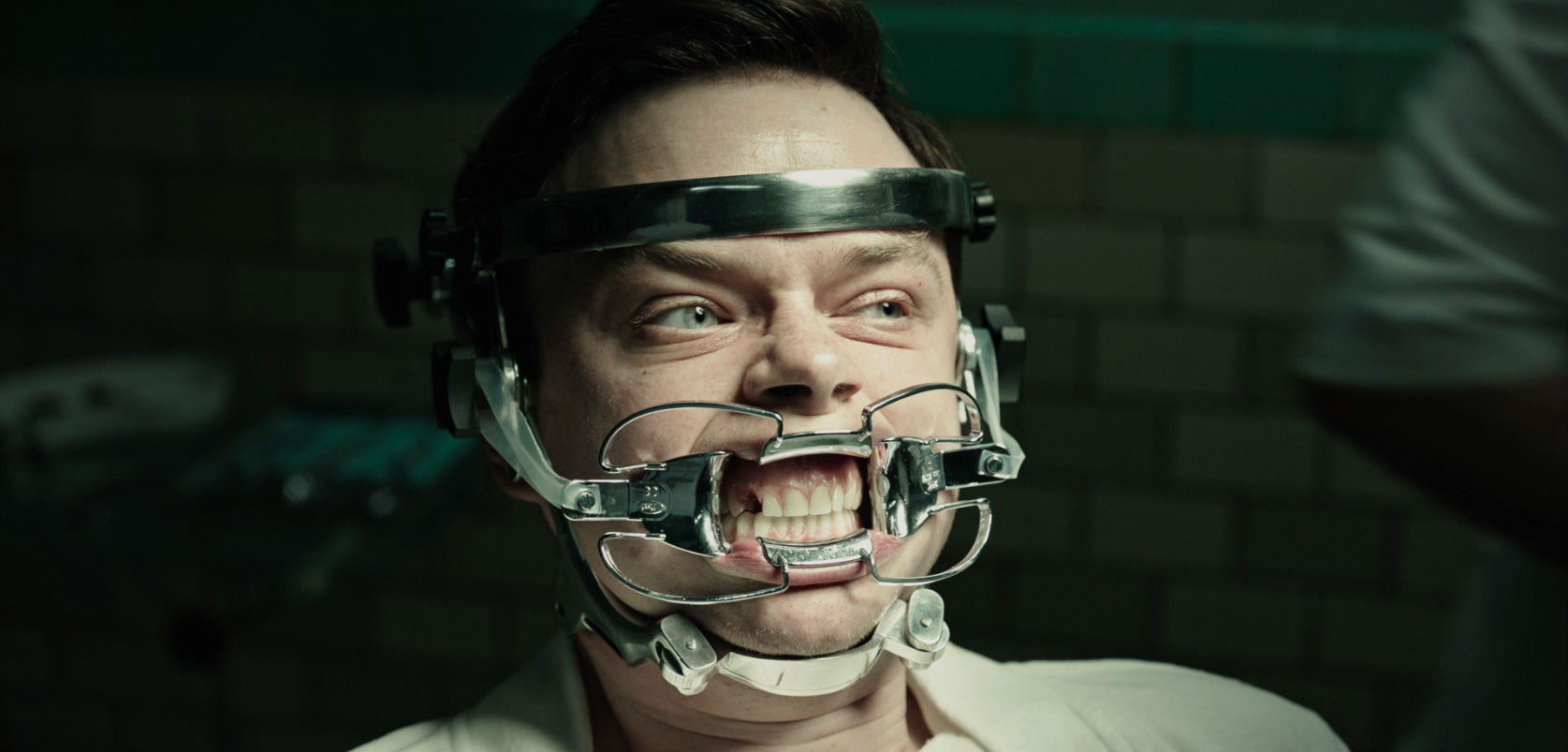
Dane DeHaan plays Lockhart, relentless executive headed for the top. When the firm sends him to a “wellness center” in hopes of retrieving a missing CEO, Lockhart sees his chance for the big time. But, like Scorsese’s Shutter Island, things are not as they seem.

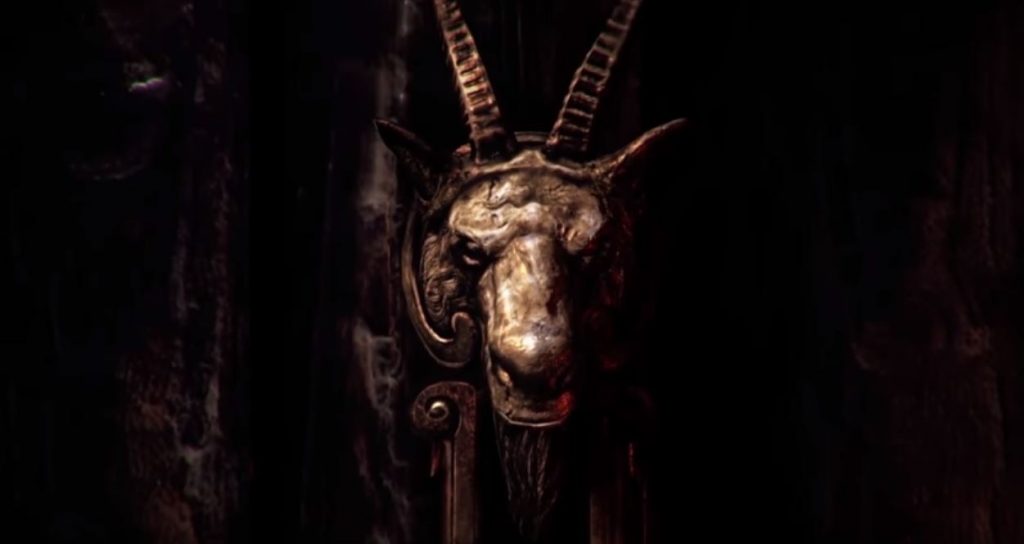
Verbinski hasn’t been as visually unleashed in years, and his picture is very pretty, very creepy and endlessly stylized.

Beneath that distracting layer of polish is a hodgepodge – a mainly incoherent assortment of unrelated ideas. A Cure for Wellness slides images at you, each of them meant to conjure a particular feeling, but it never lays out any cohesive narrative to bring them together.

And, my God it’s so long.

On the surface is a familiar story of a man who is not a patient at a sanitarium becoming a patient against his will. And then, of course, is the mystery he must solve concerning his CEO – unless he’s going mad in the process? Mwa ha ha ha ha….

Plus some confluence of vaguely Nazi imagery (this is the whitest film you will ever see), a bit of a creature feature, odds and ends that feel like folklore horror, flashbacks and/or dream sequences, and a dance scene that could be straight out of Harry Potter. (The fact that Lucius Malfoy – Jason Isaacs – plays the villain doesn’t hinder that notion.)

Random creepy images grow tiresome after 80 or so minutes. Unmercifully, A Cure for Wellness has another sixty minutes to go, without a coherent thread or satisfying payoff. Or any payoff, really.

Verdict-2-5-Stars

Don’t Knock At All

Don’t Knock Twice

by Hope Madden

Two Thomas the Tank Engine writers team up with fledgling director Caradog James to talk of witches, urban legends, estranged children and doors.

They just don’t do it very well.

Do you ever watch a horror film where a storyline leads to a jump scare, and then characters move on with their lives as if no spindly legged giant demon woman just crawled out of their closet toward them? They just go to the next scene?

Frustrating, right?

Welcome to Don’t Knock Twice.

The film follows a recovered addict turned successful sculptor (Katee Sackhoff) as she tries to regain custody of the teen daughter she gave up years ago. Chloe (Lucy Boynton – who was so good in last year’s Sing Street) wants nothing to do with her mum until buddy Danny goes missing and Chloe suspects the long dead neighborhood witch is to blame.

A mishmash of horror tropes follows as Chloe and her mother believe idiocy and do ridiculous things.

There’s a Baba Yaga – nice! Now there’s a fresh idea.

There’s also a beautiful foreigner spinning hocusy pocusy nonsense, which is straight out of every “her husband left town and something supernatural is happening” piece of garbage ever to be set to film.

Lucy Boynton has talent. Katee Sackhoff, as far as Don’t Knock Twice exposes, does not. Her flat delivery never suggests the maternal devotion meant to drive her character’s actions and her chemistry with the rest of the cast is nonexistent.

The main trouble, however, is James. He cannot create a cohesive mythology, which is especially important in supernatural horror. Very little holds together and even less holds your attention.

It’s a mystery, you see – one that routinely mentions doors without ever really doing anything with that; one that returns repeatedly to clues just to pretend they mean something different this time; one that asks you to accept that a conscious human could find a box of evidence in her own art studio and not ask, “Hey, how did this get here?!”

It’s bad, is what I’m saying.

And worse yet, it’s dull.

Verdict-2-0-Stars

Just Another Brick

The Great Wall

by Hope Madden

You’ve seen the trailers for The Great Wall, right?

It looks terrible, doesn’t it?

It’s not.

It’s not good – let’s not get crazy. But I was expecting Warcraft bad – maybe worse – and The Great Wall is a borderline-passable piece of monster-laden eye candy.

Matt Damon plays William, a bow-for-hire who travels with a band of ne’er-do-wells into China seeking the legendary black powder.

Dreams of selling this weapon in the West keeps the Irish…Scottish…what kind of accent is Damon attempting?And why does it only show up in about 25% of the film?

Anyway, William and his mercenary friend Tovar (Pedro Pascal) must eventually surrender to the color-coordinated forces within The Great Wall – who actually have better things to do.

After that, director Yimou Zhang (House of Flying Daggers, Raise the Red Lantern) does what he can to visually wow an audience and draw attention away from the leaden screenplay.

Zhang is a nearly unparalleled visual showman, and though Great Wall never approaches the style of his best efforts, the aesthetic will keep your attention and create wonder. Vivid color and rhythm drive a joyous spectacle of monster carnage once the CGI swarms come calling.

And then we’re back inside, with one-dimensional characters stumbling through obviousness about greed, trust and teamwork.

Zhang takes advantage of 3D as few filmmakers have. The approach rarely serves a larger purpose than to transport and amaze, but those who come to The Great Wall seeking a larger purpose should prepare for crushing disappointment.

The generally strong Damon struggles with more than the accent. Though glib humor enlivens several scenes with Pascal, the deadly serious tone the film takes and the broadly drawn characterizations of the Chinese warriors make chemistry or human drama impossible.

But damn, look at those hills and swirling bodies, the acrobatics of monster mayhem.

It may be that the only thing The Great Wall did right was to swap out director Edward Zwick (associated early in development with the film) for Zhang, because if you weren’t so distracted by how glorious this film looks, it might really be as bad as the trailers made it out to be.

Verdict-2-5-Stars

Wickity Wack

John Wick: Chapter 2

by Hope Madden

Keanu Reeves is a cyborg. He’s seen human behavior – he just can’t replicate it very believably. It’s a reasonable theory, isn’t it?

But every once in a while he lands on a role where acting like an actual human just doesn’t matter – like the surprise 2014 hit John Wick. If you enjoyed that splashy bit of violence and canine love, you’re likely to appreciate its strangely anticipated sequel, John Wick: Chapter 2.

The Keyser Soze of international hitmen, Wick was brought out of retirement, you’ll remember, when a half-assed Russian mobster stole his dog and his car. And if you could make it through the maudlin, sentimental crap and focus just on that kickass hotel shit, it was a mildly entertaining film despite Reeves’s absence of talent.

Once out of retirement, though, Wick has a tough time getting back out of the biz.

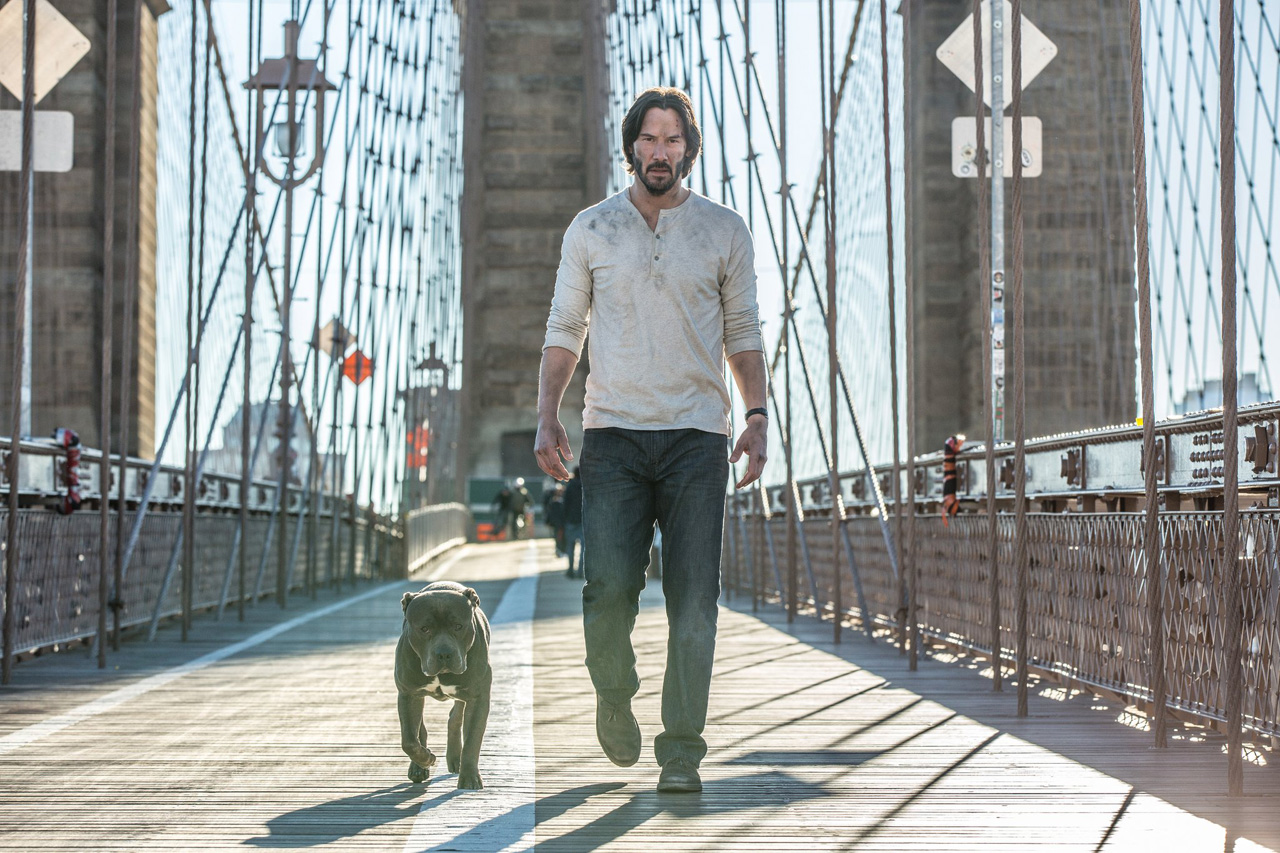
Chapter 2 picks up right where the previous installment ended. Wick, his beloved if unnamed pit by his side, re-buries the gold coins and weapons of his trade. But Santino D’Antonio (Riccardo Scamarcio) requires Wick’s services – and he’s not above doing ill-advised things to acquire his compliance.

Director Chad Stahelski and writer Derek Kolstad return, both improving on their previous effort by streamlining the story, limiting sentimentality and spending more time exploring what was cool the first time – The Continental.

Turns out there’s a mirror hotel in Rome, site of Wick’s new gig. There’s also a high-powered organization of the world’s most influential criminals as well as an armed, underground network masquerading as New York’s homeless.

Basically, 4 out of every 5 people walking the street are trained killers. Who’s paying for all this?

Stahelski ups his game with the action sequences. Wick’s movements are without ego – they are clean and efficient, which is appropriate. And he likes to shoot the knees out, so points for that. Stahelski films with flair – fascinating framing, often beautifully backlit. It’s fun.

Still, there’s the problem of Reeves’s acting. (I’m sure he’s a very nice man.) Stahelski does what he can by pairing his lead with slightly more agile actors to buoy the few scenes with dialog. The always-welcome Ian McShane returns. Peter Serafinowicz and Franco Nero make tangy appearances, along with one co-star who would have been a fun surprise had his face not been splashed all over the trailer.

Sure, there are problems – besides the dialog. Why are the bad guys all such bad shots? Where are all the witnesses? Eye-rolling contrivance follows ludicrous convenience, but these guys brought their shootin’ boots.

It’s not like you don’t know what you’re in for here.

Verdict-3-0-Stars

The Angsty Frontier

The Space Between Us

by Hope Madden

Space – the weepy YA film’s final frontier. Hopefully.

Asa Butterfield (Miss Peregrine’s Home for Peculiar Children) is Gardner, the first child born on Mars – even if it was an accident. But he’s lonely and isolated and apparently we can build a community on Mars but we can’t get them contemporary movies.

Gardner’s lonely! He’s angsty! He’s smitten with Tulsa, the bored, hardened foster kid he met online (Britt Robertson – Tomorrowland).

Wouldn’t it be dreamy if they met? Maybe fell in love? I’m sure each one of them could appreciate how deeply special the other one is, even if no one else notices it.

The Space Between Us is harmless enough. Butterfield and his big blue eyes make Gardner’s exploration of Earth sweet, and solid performances from a veteran supporting cast including Gary Oldman and Carla Gugina give what life they can to the plodding, predictable plot.

The film, which screams of adolescent literature, is actually an original piece of writing by Allen Loeb. Loeb most recently brought us the excruciating Collateral Beauty. If you haven’t seen it, don’t.

Schmaltz and emotional manipulation – these are some of the tricks employed to draw your attention away from the utterly ludicrous storyline. Unfortunately, they don’t mask the lack of chemistry between the leads.

This is a love story without sparks, a potential tragedy without an emotional pull. The payoff feels not only predetermined but unearned.

Is it as bad as If I Stay or The Fault in Our Stars? Why, no. The Space Between Us mercifully avoids the truly maudlin. But there is enough overlap in theme that it feels more like a sanitized version of those tear jerkers than it does an original idea.

Verdict-2-0-Stars

Viral Video

Rings

by Hope Madden

Releasing a film without a pre-screening for critics is usually a bad sign. A mid-February studio release is never good.

You know what else isn’t good? Rings.

If you’re wondering whether Samara’s story disappeared with the last VCR, puzzle no longer. Sadly, it did not. Indie hipsters at a garage sale take home some vintage equipment, find an old VHS tape inside and watch it.

If you’ll recall, watching said video of freaky images condemns the viewer to death within a week. The images relate to the accursed life of, in the English language films, a little girl named Samara.

Gore Verbinski’s 2002 The Ring managed to do two remarkable things. One: it surpassed its Japanese-language original (Hideo Nakata’s Ringu) in quality. Two: it was a deeply frightening PG-13 movie.

But Verbinski has talent, as does his cast, most notably 2-time Oscar nominee Naomi Watts.
Rings director F. Javier Gutiérrez is playing without those kind of all-stars.

At this film’s heart is still that Scooby-doo mystery to solve that is the foundation of nearly every ghost story – and Samara’s tale is essentially that. In this episode – which forgets 2005’s The Ring 2 ever existed – two college freshmen do the sleuthing.

The leads are, as far as I can tell, made entirely of wood or wheat toast. Matilda Lutz is Julia the Bland, devoted girlfriend and courageous ghost hunter. Her boyfriend Holt (Alex Roe – yawn) participated in a wild psychological experiment led by his professor Gabriel (Johnny Galecki) – garage sale junkie. That experiment leaves Holt with 7 days to live…and his time is almost up.

The film’s running time isn’t, though. Oh, no. Holt’s fate is revealed and we still have at least 3/4 of the movie to suffer through.

Sadly, the genuinely talented Vincent D’Onofrio gets dragged into this at a certain point, his only real contribution is to remind the audience what acting actually looks like.

Why do I get my hopes up?

Verdict-2-0-Stars

https://www.youtube.com/watch?v=ouwST4IEvJo