Just two years ago, writer Samantha Kolesnik crafted the hypnotic road trip horror True Crime and introduced us to a frightening, insightful and bold central figure.
Much has changed in Kolesnik’s approach to her latest novella, Waif. And yet, a master of complex characters, Kolesnik delivers another fascinating point of view vehicle in Angie, whose thoughts and rationalizations defy clean moral categorization. Waif travels an unusual path along with Angie, an abused wife whose husband concocts a bizarre plan to recapture her sexual interest. The undertaking draws her into a wild world full of new dangers, and it awakens something.
The novella probes this damaged psyche without apology or
judgment, Kolesnik’s writing here frank and often frankly sexual. Where her
previous novella delivered dreamlike stream of conscious horror, Waif’s
punch is direct.
The plot itself is never less than fascinating, allowing
Kolesnik to explore sexual politics, loss, and an almost endless set of ideas
concerning abuse. Through Angie, a less-than-reliable reliable narrator,
Kolesnik asks provocative questions, and the answers she offers are often
disturbing.
She complicates the ideas of innocence, agency and
complicity, and once again her choice of narrator allows for a morally fluid
point of view, which gives the author opportunity to look at every topic from a
wide and wild range of perspectives. The story role-reverses again and again,
giving nearly every character the chance to try on the robes of victim and
perpetrator, often willingly.
Waif wastes not a sentence on sermonizing. Instead,
it explores dangerous possibilities in the name of reclaiming something you
thought you’d lost.
Among the many remarkable elements buoying the horror fable Lamb is filmmaker ValdimarJóhannsson’s ability to tell a complete and riveting tale without a single word of exposition.
Not one. So, pay attention.
Rather than devoting dialog to explaining to us what it is we are seeing, Jóhannsson relies on impressive visual storytelling instincts, answering questions as they come up with a gravesite, a crib coming out of storage, a glance, a bleat.
His cast of three – well, four, I guess — sells the fairy tale. A childless couple working a sheep farm in Iceland find an unusual newborn lamb and take her in as their own child. As is always the way in old school fables, though, there is much magical happiness but a dire recompense soon to come.
Noomi Rapace is the stand-out, her character’s emotional arc from melancholy to longing to joy expressed physically as Maria goes about each day’s tasks. Hilmir Snær Guðnason’s tenderness as husband Ingvar offers a lovely balance while offering an intriguing change of pace for fairy tale archetypes.
Jóhannsson, making an astounding feature debut behind the camera, strikes a balance between reality and unreality, beginning with startlingly authentic farming scenes. He casts a spell with the ruggedly gorgeous scenery, the unending but mastered workload of the farm, and its isolation.
The rare dialog exchanges are meaningful but not obvious. When
a brother shows up rather inauspiciously, conflict arrives with him, but even
here the sly storytelling will keep you guessing while still giving you all you
really need to know.
There is a cruelty in the justice meted out in old school
fairy tales, and that element has generally been softened for modern sensibilities.
Ariel didn’t get the prince, she turned into sea foam while he married another.
The gods of yore weren’t swayed by compassion or sentimentality.
That’s another line Jóhannsson and his stellar cast walk perfectly: we love and root for this family, even as we recognize the selfishness and unwholesomeness beneath their joy.
Lamb is an absolutely gorgeous, entirely unusual and expertly crafted gem of a film. You should see it.
Daniel Craig’s had a good run. As Bond, he delivered a much needed transformation for the Brit spy series, shouldered the best film in the entire franchise (2012’s Skyfall), and allowed considerable nuance to seep in to the characterization.
Bravo.
He needed a bold and fitting final film to cap his time with MI6, and 2015’s disappointing return to the old guard Spectre wasn’t it. A global plague pushed his finale back nearly two years. Luckily, No Time to Die was worth the wait.
Craig’s retired agent is lured back to the game (of course
he is) by a global threat (of course it is) involving an old nemesis (natch), a
new rival (sure) and the beauty who broke his heart.
Yes, but wait, because co-writer/director Cary Joji Fukunaga
(Beasts of No Nation) takes these familiar elements in new directions,
thanks mostly to Craig’s wearily vulnerable performance.
Bond is a tough gig for an actor because there has generally been so little actual acting required – or allowed. And while Craig shows us a wizened soul with humor, longing and vulnerability to spare, Fukunaga surrounds that performance with a story worthy of his send off.
Since the Craig era began, his Bond has always seemed more determined to exist in a more relatable world with more universal stakes. Here, Craig’s final outing speaks often of love, legacy, sacrifice, and precious time, against the threat of human contact itself becoming fatal. And while there are still plenty of moments to suspend disbelief, this film again benefits from the move away from the parody-ready version of 007 that reigned for decades (cheekily emphasized here by Bond’s brief adventure with Ana de Armas’s rookie agent, Paloma).
Mysterious new villain Safin (Rami Malek) shares a tragic past with Bond’s love Madeleine (Léa Seydoux), while the legendary Blofeld (Christoph Waltz) is still able to pull deadly strings from inside maximum security.
Bond’s old friend Luther (Jeffrey Wright) and an over-eager newbie (Billy Magnussen) recruit Bond for the CIA, seemingly pitting him against M”s (Ralph Fiennes) MI6 team and its new 007 agent, Nomi (Captain Marvel‘s Lashana Lynch). Can Q (Ben Whishaw) and Moneypenny (Naomie Harris) sit this one out and remain neutral?
Not bloody likely.
Opening with a tense and expansive 26-minute prologue, Fukunaga unveils thrilling set-pieces and gorgeous visuals that beg for a big-screen experience. Aided mightily by a soaring, throwback score from Hans Zimmer, Fukunaga infuses NTTD with a respectful sense of history while it marches unafraid into the future.
The one-liners, callbacks and gags (like Q’s multi-piece tea set) are well-placed and restrained, never undercutting the nearly three-hour mission Fukunaga clearly approached with reverence.
Where does James Bond go from here? Hard to say, but this 007 doesn’t care. Five films in 15 years have changed the character and the franchise for the better, and No Time to Die closes this chapter with requisite spectacle and fitting emotion.
An unusual note about comic book movies is that the sequel is often, perhaps usually, superior to the original. Why? Because the original can be so burdened by telling an origin story – usually one we already know.
Venom: Let There Be Carnage is one such film, superior to the original not because we already knew the symbiote antihero’s origin tale, though. Rather, director Ruben Fleischer’s much-maligned 2018 blockbuster suffered from a choppy first act and uninspired direction.
With director Andy Serkis (this guy knows how to motion capture) at the helm and a streamlined writing team (Kelly Marcel is the only writer from the original film to return, this time sharing the pen with star Tom Hardy), Let There Be Carnage determines its tone and pace from the opening scene and, for better or worse, rides that through to its concluding, post-credit moments.
The tone runs far closer to horror-comedy than the original,
a theme that suits the story of frenemies, one trying to keep the other from
eating human brains.
Hardy returns as Eddie Brock, a one-time superstar San
Francisco reporter who ran afoul of his fiancé (Michelle Williams), his news
outlet and the law last go-round, but found a life partner in the flesh-hungry extra-terrestrial
parasite, Venom (also voice by Hardy). They have inadvertently infected
cannibal serial killer Cletus Kassidy (Woody Harrelson) with symbiote blood,
and now he, too, has a little voice and big alien inside of him.
Harrelson and his slightly digitally modified eyeballs offer
villainous fun — though, to be honest, Riz Ahmed’s evil genius in the previous
film was not only underappreciated but superior to Harrelson’s lunatic menace.
Still, Hardy is the reason to see the film. His Eddie is put upon and weary while his Venom is boisterous and often very funny. Through the two performances, Hardy delivers the type of lived-in animosity needed to sell any odd-couple story.
Though the CGI was sharper last time, the overall aesthetic Serkis creates is far campier and Goth, which feeds the film’s spooky season vibe. Williams, in a smaller role, finds her stride, though Naomie Harris’s underwritten character is a shame.
The result is a mish-mash of messy, frenetic fun with a higher body count than you might expect. Plus a post-credits stinger worth sticking around to see.
Sometimes a title really hits you, like Bingo Hell.
Maybe because the idea of playing this game makes me lose the will to live.
Co-writer/director Gigi Saul Guerrero has a slightly
different use for the image of folks hunched over their boards hoping to win
something from the community chest. A veteran of the horror short film,
Guerrero pulls together conflicted thoughts about gentrification and
neighborhood loyalty, poverty and affluence, and the sketchy influence of
organized gambling for her first feature.
Speaking of veterans, Adriana Barraza — reliable as ever — leads the film as Lupita, the aging but spunky heart of her community, Oak Springs. She doesn’t dig gentrification. Watching members of her community take the cash and bail because they don’t have the cash to pay newly exorbitant rents doesn’t break her heart, it fuels her rage.
Lupita is a spitfire and Barraza’s relish with her outbursts
drives the film’s energetic, campy outrage. Bingo Hell has social
commentary to spare, but it’s not preaching. It’s attacking.
Guerrero’s film, part of Amazon Prime’s 2021 Welcome to the
Blumhouse program, doesn’t oversimplify causes and solutions. Still, it
delivers its recommendations as more of a blunt instrument than a surgical
tool.
It is much fun to watch Barraza and other mature actors (L.
Scott Caldwell, Grover Coulson, Clayton Landey) inhabit characters with agency
and some degree of complexity, but it’s Richard Brake who offers Barraza the
best sparring partner. Effortlessly sinister, the underappreciated character
actor delivers another memorable baddie.
With characters to root for, violence to spare, and a healthy acceptance of chaos, Bingo Hell is pretty fun.
I have always counted myself among the major fans of Kiwi horror filmmaking. Peter Jackson may mean Middle Earth to others, but to us he is king of splatter-gore comedy, and a generation of New Zealand horror filmmakers has embraced that same sense of viscous fun.
Not James Ashcroft. Nope, making his feature debut with the road
trip horror Coming Home in the Dark, the filmmaker is carving out a very
different style.
Not long into Hoaggie (Erik Thomson) and Jill’s (Miriama McDowell) weekend outing with their teenage sons, two armed drifters approach. The family is miles from anywhere, and it isn’t until they all stand by and let a car pass without incident that Ashcroft lets us in on two things.
“Looking back on today’s events, I think this will be the
moment you realized you should have done something.”
The moment Mandrake (Daniel Gillies, chilling) utters this sentence, Ashcroft lets you know that this story will not go well for the family. He also introduces the general theme of this film: do something while you have the chance.
Mandrake is the more talkative of the two villains, though friend Tubs (Matthias Luafutu) cuts an impressive figure. And in a style closer to that characteristic of Australian horror, Coming Home in the Dark offers a spare but unblinking span of gritty, punishing thrills.
Ashcroft, who adapted Owen Marshall’s short story for the screen
along with writer Eli Kent, crafts a deceptively layered drama. The trickiest
bit comes near the end, but it would be unfair to give that away.
Unfortunately, the audience has to be patient enough to wade
through what feels like preachiness to get to the sucker punch. Performances
are exceptional, loose ends are welcome, but with little in the way of visual
panache and lots in the way of discomfort, not everyone will stick it out.
I should confess that I firmly believe terror awaits anybody
who wanders out into the wilderness. I am the audience for this movie.
Murmurs, complaints, and whispers come in and out of focus as a camera meanders through an empty cemetery at midday: we hear souls telling the stories of their lives. We stop over the resting place of Christopher Moltisanti (Michael Imperioli). He has a tale to tell.
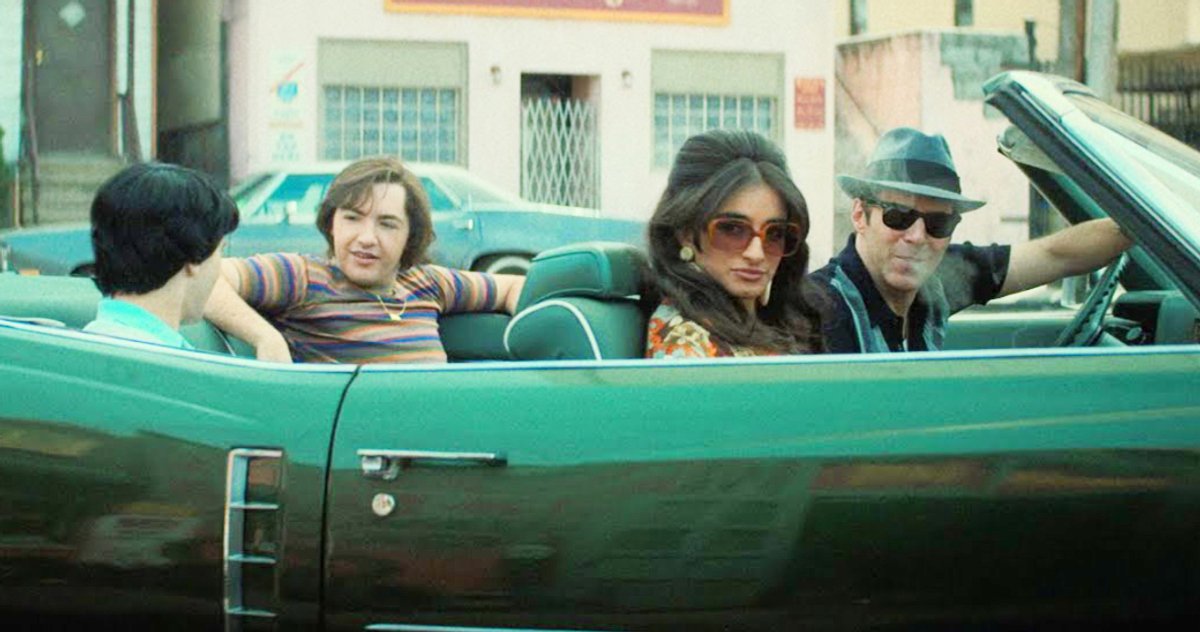
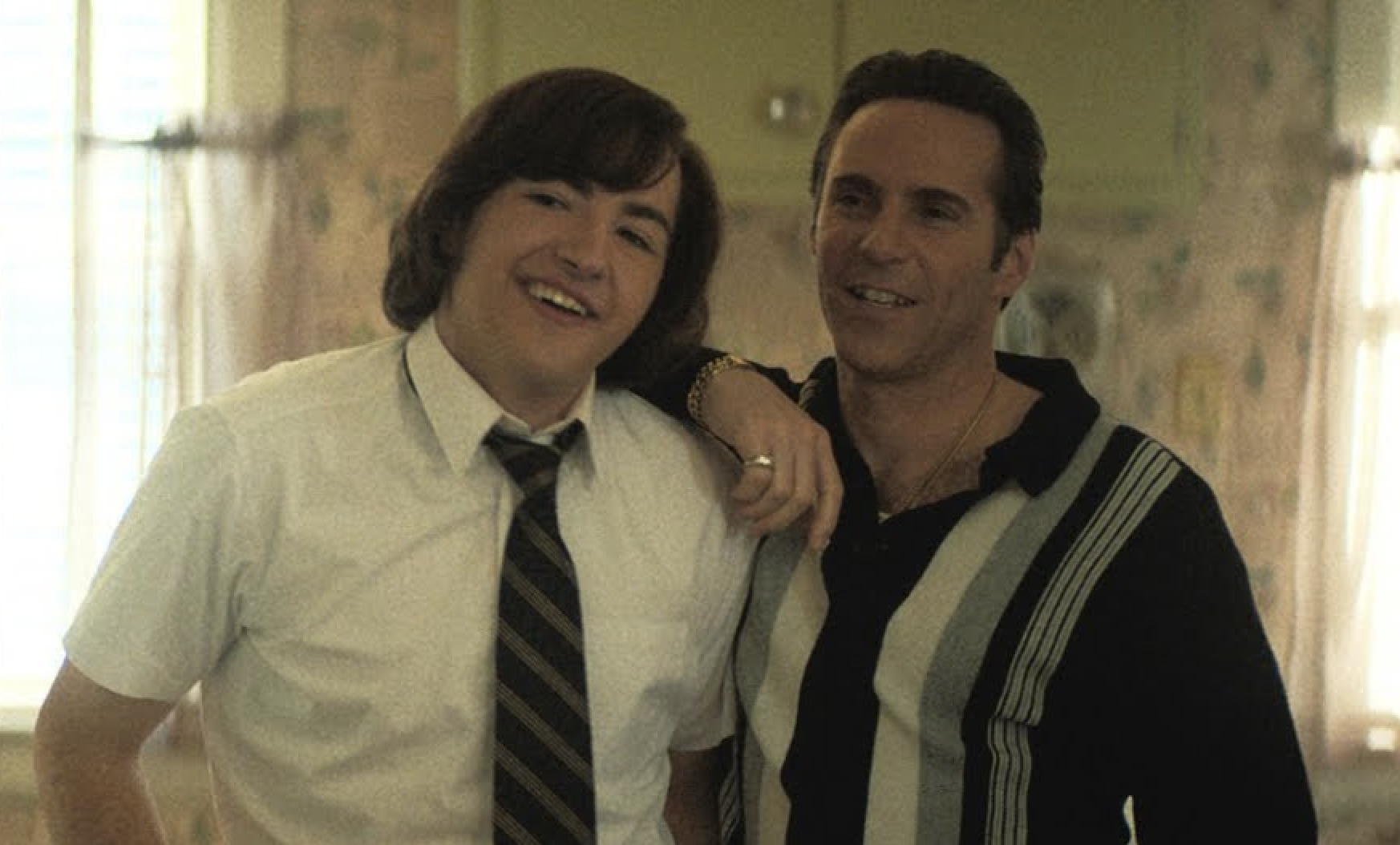
It’s a beautiful opening, spooky but with a bitter, familiar humor about it. With it, director Alan Taylor sets the mood for a period piece that lays the groundwork for one of the best shows ever to grace the small screen. The Many Saints of Newark brings Christmas early for Sopranos fans, but this is not exactly the story of Tony Soprano. In uncovering the making of the future, Taylor and writer Lawrence Konner invite us into the life of Uncle Dickie Moltisanti (Alessandro Nivola).
Nivola makes for an ideal choice to play the beloved “uncle.” The always reliable actor depicts the film’s central figure as the struggling, complicated result of his circumstances – an excellent theme given the film’s long game to uncover the forces that forged a future boss. In many ways, Uncle Dickie’s weaknesses, indulgences, strengths and goals create a mirror image of the Tony Soprano we would come to know over eight years and six seasons.
Longtime fans will have a bada bing blast recognizing familiar characters in their youth. Vera Farmiga is characteristically excellent as Tony’s formidable mother. John Magaro is a spot-on and hilarious Silvio, matched quirk for quirk by Billy Magnussen as Paulie Walnuts. Corey Stoll brings a younger but no less awkward Uncle Junior to life beautifully.
Of course, the one you wait for is young Tony, played with lumbering, melancholic sweetness by James Gandolfini’s son Michael. The resemblance alone gives the character a heartbreaking quality that feeds the mythology, but young Gandolfini serves Tony well with a vulnerable, believable performance that only expands on our deep investment in this character.
But the film is really more interested in those we never got to know: Tony’s father Johnny Boy Soprano (Jon Bernthal), Dickie’s father Aldo and uncle Sal Moltisanti (Ray Liotta, in two exceptional and very different roles), and stepmother Guiseppina Moltisanti (Michela De Rossi).
De Rossi and Leslie Odom Jr. (who plays colleague-turned-competitor Harold McBrayer) offer some of the most intriguing complexity and context in the entire film. The first half pokes holes in the “woe is me” backstory of the entitled white male Mafioso figure by spending some time with two characters who actually did have a tough go making a life for themselves in this community.
Taylor (Thor: the Dark World, Terminator Genisys, GoT) helmed nine Sopranos episodes, winning an Emmy for one, while Konner penned three solid episodes of his own, although his decades of work for the big screen has been mediocre at best.
But here the filmmakers combine for extended family drama that, despite one major plot turn landing as entirely illogical, weaves themes old and new in a ride that is often operatic and downright Shakespearean.
If the Sopranos family feels like family, turning back the clock on these indelible characters is just as giddy and delightful as it sounds. But The Many Saints of Newark impresses most by the balance it finds between fan service and fresh character arcs.
It’s an often cruel and bloody tale of wanton crime, treacherous deceit, family dysfunction and cold-blooded murder. And it just might be the most fun you’ll have at the movies all year.
Familial relationships can be a killer – especially in the hands of horror filmmakers. This week we look at the fraught relationships between fathers and daughters in horror movies.
5. We Are What We Are (2013, American)
As in Jorge Michel Grau’s original, one family’s religious custom is thrown into havoc when the family leader dies unexpectedly, leaving the ritual unfinished and the children left to determine who will take over. Both films look at a particularly religious family as a sort of tribe that evolved separately but within the larger population. Grau has better instincts for mining this paradigm to expose the flaws of the larger population, but Mickel takes an American Gothic tone to create an eerily familiar darkness that treads on common urbanite fears.
The always exceptional Michael Parks plays a gentle, rural doctor heartbroken over the years-old disappearance of his daughter and intrigued by some grisly bits unearthed by the recent flood. Meanwhile, the devout and desperate Parker family prepares for Lamb’s Day.
The film sets a tone that sneaks up and settles over you, like the damp from a flood. Mickel proves adept with traditional horror storytelling, casting aside any flash in favor of smothering atmosphere and a structure that slowly builds tension, and the impressive climax is worth the wait.
4. Dracula’s Daughter (1936)
Dad himself isn’t even in this film, but what Dracula’s Daughter does well is to depict the hold parents can have on us – if taken to beautifully melodramatic and metaphorical extremes.
Gloria Holden is the hypnotic and almost despondent daughter, Countess Marya Zaleska. After Von Helsing (spelled with an “o” in this movie for some reason) kills the Count, the Countess travels to London to steal the body, hoping to perform a ritual that would cure her of her own awful thirst.
Holden is wonderful, as is Nan Grey as the Countess’s first victim. Lambert Hillyer’s film suggests lesbianism as the shameful curse that can’t be cured – as many a Dracula film has pointed toward homoeroticism as the true curse of vampirism. Thanks to Holden’s melancholy performance, though, instead of feeling like some unwholesome threat, Marya’s desire for women feels more like something her father and now society has made her believe is shameful.
3. Train to Busan (2016)
We are always, always interested when a filmmaker can take the zombie genre in a new direction. Very often, that direction is fun, funny, political—but not necessarily scary. Co-writer/director Sang-ho Yeon combines the claustrophobia of Snakes on a Plane with the family drama of Host, then trusts young Su-An Kim to shoulder the responsibility of keeping us breathlessly involved. It works.
Kim plays Soo-an, a wee girl on a train with her overworked, under-attentive father (Gong Yoo). They are headed to her mother’s. The filmmaker will teach Dad what’s important in this life.
Sometimes funny, sometimes shocking, always exciting and at least once a heartbreaker, Train to Busan succeeds on every front.
2. Oldboy (2003)
A guy passes out after a hard night of drinking. It’s his daughter’s birthday, and that helps us see that this guy is a dick. He’s definitely not much of a father. He wakes up a prisoner in a weird, apartment-like cell. Here he stays for years and years.
The guy is Dae-su Oh (Min-sik Choi). The film is Oldboy, director Chan-wook Park’s masterpiece of subversive brutality and serious wrongdoing.
Choi is unforgettable as the film’s anti-hero, and his disheveled explosion of emotion is perfectly balanced by the elegantly evil Ji-tae Yu.
Choi takes you with him through a brutal, original, startling and difficult to watch mystery. You will want to look away, but don’t do it! What you witness will no doubt shake and disturb you, but missing it would be the bigger mistake.
1. The Host (2006)
Visionary director Bong Joon Ho’s film opens in a military lab hospital in 2000. A clearly insane American doctor, repulsed by the dust coating formaldehyde bottles, orders a Korean subordinate to empty it all into the sink. Soon the contents of hundreds of bottles of formaldehyde find its way through the Korean sewer system and into the Han River. This event – allegedly based on fact – eventually leads, not surprisingly, to some pretty gamey drinking water. And also a 25 foot cross between Alien and a giant squid.
Said monster – let’s call him Steve Buscemi (the beast’s actual on-set nickname) – exits the river one bright afternoon in 2006 to run amuck in a very impressive outdoor-chaos-and-bloodshed scene. A dimwitted food stand clerk (Joon Ho regular Kang-ho Song) witnesses his daughter’s abduction by the beast, and the stage is set.
What follows, rather than a military attack on a marauding Steve Buscemi, is actually one small, unhappy, bickering family’s quest to find and save the little girl. Their journey takes them to poorly organized quarantines, botched security checkpoints, misguided military/Red Cross posts, and through Seoul’s sewer system, all leading to a climactic battle even more impressive than the earlier scene of afternoon chaos.
If you have donated to our IGG fund, we thank you! If you have not and you care about horror movies (we know you do because you’re here!), women-led film and independent film, check out our awesome perks and give or share!