Tag Archives: George Wolf

Fright Club: Frightful Forests

We’re thrilled to welcome filmmaker George Popov back to Fright Club. His Sideworld docuseries explores different supernatural whatnot the world over, beginning with the Haunted Forests of England. So, we thought we’d comb through our favorite haunted forests together. Here’s what we came up with!

5. The Hallow (2015)

Visual showman Corin Hardy has a bit of trickery up his sleeve. His directorial debut The Hallow, for all its superficiality and its recycled horror tropes, offers a tightly wound bit of terror in the ancient Irish wood.

Adam (Joseph Mawle) and Clare Hitchens (Bojana Novakovic) move, infant Finn in tow, from London to the isolated woods of Ireland so Adam can study a tract of forest the government hopes to sell off to privatization. But the woods don’t take kindly to the encroachment and the interloper Hitchens will pay dearly.

Hardy has a real knack for visual storytelling. His inky forests are both suffocating and isolating, with a darkness that seeps into every space. He’s created an atmosphere of malevolence, but the film does not rely on atmosphere alone.

Though all the cliché elements are there – a young couple relocates to an isolated wood to be warned off by angry locals with tales of boogeymen – the curve balls Hardy throws will keep you unnerved and guessing.

4. Without Name (2016)

Haunting and hallucinatory, this Irish gem develops a menacing presence you cannot shake. Director Lorcan Finnegan (Vivarium) leads surveyor Eric (AlanMcKenna) into the Irish woods with no real hope of finding his way back.

Like The Hallow, this film braids ecological horror with the supernatural, all of it rooted in Irish folklore. The’s an understanding that not everything was pushed out once Catholicism took over, the two sides just kept their distance. But now that it’s big companies making the decisions, a lack of reverence in the presence of the past is more than one man can survive.

3. Antichrist (2009)

A meditation on grief and sexual politics, it’s not until Antichrist moves into its second act that you know the kind of film Lars von Trier has actually made. It’s a cabin in the woods horror show, and one of the very best.

Grief becomes something supernatural, a hellish nightmare perfectly suited to the type of woods Shakespeare wrote of. The forest is a lurking, magical place where danger and enchantment frolic.

In this case, they frolic perhaps too close to the tool shed.

2. The Blair Witch Project (1999)

Blair Witch may not date especially well, but it scared the hell out of a lot of people back in the day. This is the kind of forest adventure that I assume happens all the time: you go in, but no matter how you try to get out – follow a stream, use a map, follow the stars – you just keep crossing the same goddamn log.

One of several truly genius ideas behind Blair Witch is that filmmakers Daniel Myrick and Eduardo Sanchez made the audience believe that the film they were watching was nothing more than the unearthed footage left behind by three disappeared young people. Between that and the wise use of online marketing (then in its infancy) buoyed this minimalistic, naturalistic home movie about three bickering buddies who venture into the Maryland woods to document the urban legend of The Blair Witch. Twig dolls, late night noises, jumpy cameras, unknown actors and not much else blended into an honestly frightening flick that played upon primal fears.

1. The Witch (2015)

Ideas of gender inequality, sexual awakening, slavish devotion to dogma, and isolationism roil beneath the surface of the film, yet the tale itself is deceptively simple. One family, fresh off the boat from England in 1630 and expelled from their puritanical village, sets up house and farm in a clearing near a wood.

Every opportunity writer/director Roger Eggers has to make an obvious choice he discards, though not a single move feels inauthentic. Rather, every detail – whether lurid or mundane – feels peculiarly at home here. Even the most supernatural elements in the film feel appallingly true because of the reality of this world, much of which is owed to journals and documents of the time, from which Eggers pulled complete sections of dialog.

You are trapped as they are trapped in this inescapable mess, where man’s overanxious attempt to purge himself absolutely of his capacity for sin only opens him up to the true evil lurking, as it always is, in the woods.
The Showman and the Snowman

Elvis

by George Wolf

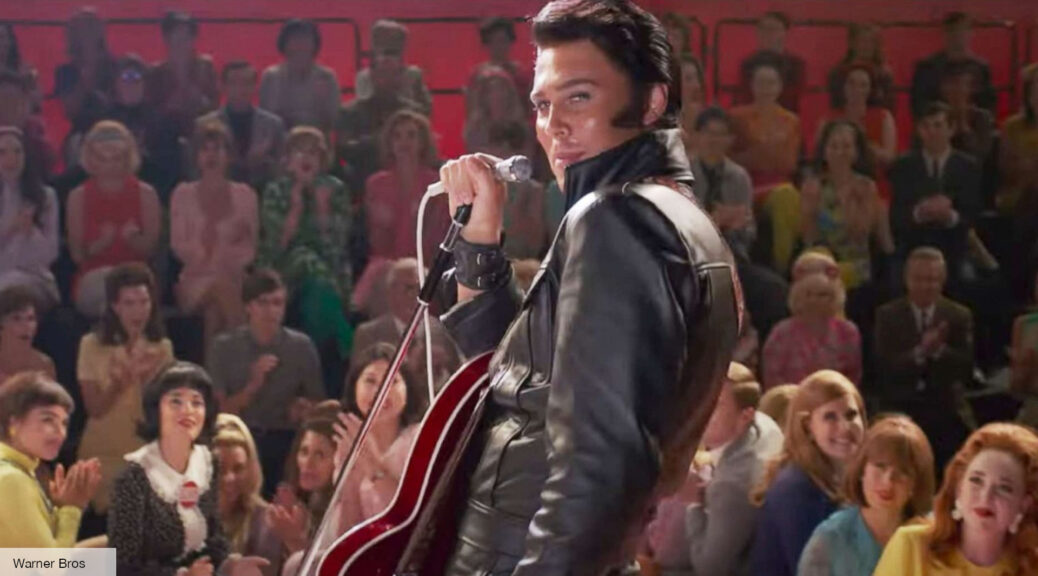
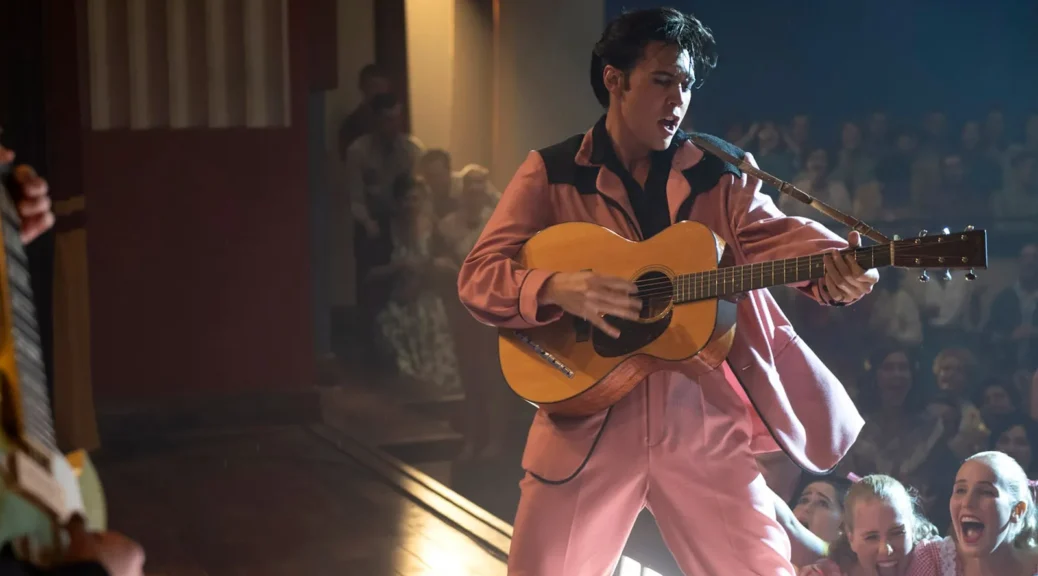
If you’re looking for someone to bring a fresh perspective to the Elvis Presley story, Baz Luhrmann would seem like a no brainer. Though he can certainly lean too hard toward style and away from substance (Australia), he can also fill a screen with tremendous energy, visual pizazz and musical exuberance (Moulin Rouge!).

And by now, any by-the-numbers take on Elvis would just be silly. Think more Rocketman, less Bohemian Rhapsody.

Luhrmann’s Elvis succeeds – to a point, as inspired choices often push the film forward while others seem to hold it back.

At the top of the win column is Austin Butler’s mesmerizing performance as The King. Beyond capturing the smoldering good looks and iconic speech pattern, Butler finds power in the raw physicality of role, an essential part of believing how this one man’s sexuality shook the world. No doubt Butler will be remembered comes awards season.

And yet, this film is only partially about Elvis.

GD national treasure Tom Hanks – an awards contender himself under layers of impressive makeup and prosthetics – narrates the film as Elvis’s longtime manager, Col. Tom Parker. Ill and seemingly nearing his end, Parker wants to tell us his side of story, and why he’s maybe not as bad as we’ve been told.

And while focusing on the perspective of the “Snowman” (Parker’s term for a master of the snow job) without legitimizing it is an interesting approach, it also keeps us detached from the Showman.

Even when depicting Elvis’s childhood, Luhrmann (co-writing as well as directing) frames him as akin to a comic book hero. So as we follow the meteoric rise, the Hollywood floundering, the comeback and the Vegas rot, the film is more interested in holding Presley up as a mythical figure than holding him accountable as a mere mortal.

There are moments with show-stopping visuals and stand-up-and-cheer performances (especially the “If I Can Dream” sequence from Elvis’s TV special in 1968), but they never feel like enough. Luhrmann drops in occasional clips of the real King, and peppers the impressive cast with Kelvin Harrison, Jr. (as B.B. King), Gary Clark, Jr. (Big Boy Crudup) Yola (Sister Rosetta Tharpe) Kodi Smit-McPhee (Jimmie Rodgers Snow) and more, gearing you up for a gloriously indulgent showcase that never comes.

Elvis is stylistic, well-performed and often highly entertaining. But with an overlong running time of 2 1/2 hours plus, you’d think there would be at least a little room left to go full Luhrmann.

Tears in His Eyes, I Guess

The Phantom of the Open

by George Wolf

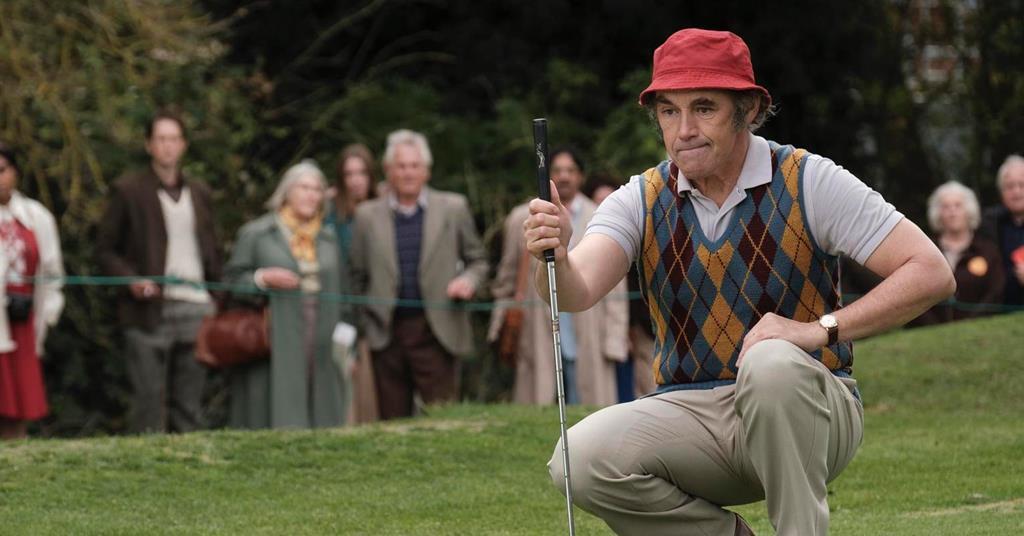
Olympic ski jumping found its unlikely warrior in Eddie the Eagle. Championship golf has a similar everyman hero in Maurice Flitcroft, and while Maurice still needs a catchy nickname, his tale finally gets the big screen treatment with The Phantom of the Open.

Maurice actually made his name years before Eddie, when he qualified for the British Open back in 1976.

And?

Up until that time, Maurice was a crane operator at a British shipyard who had never played even one full round of golf.

Cinderella story, meet Cinderella boy.

Well, not exactly, as Maurice shoots the worst round in Open history and quickly runs afoul of the course director (Rhys Ifans).

But a legend is born, and right from the film’s storybook-styled opening, director Craig Roberts (Eternal Beauty) and writer Simon Farnaby (Paddington 2) adapt Scott Murray’s book on Maurice’s often hilarious exploits with a whimsical, endlessly optimistic treatment. It fits like a pair of plaid pants at the 19th hole.

And what perfect casting. Oscar-winner Mark Rylance effortlessly brings Maurice to lovable life as a gentle, indefatigable dreamer. He’s also a soft-spoken family man, devoted to his wife (an equally perfect Sally Hawkins), the older stepson who’s embarrassed by him (Jake Davies) and his twin sons obsessed with disco (Christian and Jonah Lees).

His wife supports him, so why shouldn’t Maurice take a stab at the Open? Why can’t his friend at the shipyard open that pub he’s always wanted? And who says his boys can’t be disco dance champions? The world is your oyster, go find that pearl!

The film may not always share Maurice’s grand ambitions, but it has plenty of good humor and nearly overflows with crowd-pleasing charm. An unassuming ode to staying committed to what – and who – you love, The Phantom of the Open plays to the gallery with an awkward, sweater-vested panache that makes one history-making slouch seem pretty tremendous.

Screening Room: Lightyear, Spiderhead, Cha Cha Real Smooth, Mad God & More

The Pleasure Principle

Good Luck to You, Leo Grande

by George Wolf

If we’re boiling down film narratives to heroes and quests, it won’t take long to define Good Luck to You, Leo Grande.

Nancy is our hero, and sex is her quest.

And she would like good sex, thank you, although she can’t quite bring herself to expect the elusive release that she spent decades faking for her husband’s benefit.

But now Nancy (Emma Thompson) is an aging widow, fidgeting nervously in a hotel room and second-guessing her decision to hire handsome young escort Leo Grande (Daryl McCormack) for a tryst.

Thompson is, of course, glorious. And as much fun as it always is to see her command those in-charge characters spitting ruthlessly droll asides, Nancy reminds you how equally adept Thompson is with self-effacing humor, vulnerability and longing.

Writer Katy Brand’s script is filled with delightful wordplay, subtle wit and insightful details, one of the most resonant being Nancy’s history as a religious education teacher. We see her as a woman not only desperate to learn things she was never taught (and she has a list!), but also now regretting some of the lessons she passed down to young girls in her classrooms.

To Nancy, Leo represents more than just lust. He is the power of youth, and all the possibilities of a different generation that have long felt shameful to many from her generation.

McCormack is terrific, worthy of extra kudos for not shrinking from the prospect of simply being the “other half” of a two-hander led by a rarified talent. Leo has some issues of his own beneath his suave demeanor, and McCormack reveals them with subtlety and heart.

But back to our hero.

Nancy’s journey is, of course, an intimate one, and director Sophie Hyde doubles down on the intimacy, rarely leaving the privacy of the hotel room. Regardless, the film is never claustrophobic and always cinematic, framing even the most sexual moments with a refreshing honesty that the characters (and these two impeccable performances) deserve.

And you know what? We deserve it, too. Good Luck to You, Leo Grande is a simply wonderful look at embracing who you are and what you want. It’s funny and empowering, warm and touching, even heartbreaking at times.

Let’s hope it finds the audience it deserves.

Fright Club: They Had Sex with What?!?

Horror flirts with taboo, teases decency, and sometimes comes right out and has sex with a monster. Most often this is a violation of the flesh, but we’re most interested in films and characters that are pretty OK with it. Most of those movies are gloriously bonkers. We count down our favs in episode 225:

5. The Shape of Water (2017)

An unforgettable Sally Hawkins—an actor who has never hit a false note in her long and underappreciated career—gets her chance to lead a big, big show. She plays Elisa, a mute woman on the janitorial team for a research institute in Cold War-era Baltimore.

Enter one night a malevolent man (Michael Shannon), and a mysterious container. Color Elisa intrigued.

In its own way, The Creature from the Black Lagoon is a tragic romance. But what if it weren’t? Tragic, I mean. What if beauty loved the beast?

Writer/director Guillermo del Toro is an overt romantic. So many of his films—CronosThe Devil’s BackboneCrimson Peak—swim in romance, but he’s never made as dreamily romantic or hypnotically sensual a film as The Shape of Water.

4. Spring (2014)

Evan (a spot-on Lou Taylor Pucci) has hit a rough patch. After nursing his ailing mother for two years, Evan finds himself in a bar fight just hours after her funeral. With grief dogging him and the cops looking to bring him in, he grabs his passport and heads to the first international location available: Italy.

It’s a wise setup, and an earnest Pucci delivers the tender, open performance the film requires. He’s matched by the mysterious Nadia Hilker as Louise, the beautiful stranger who captivates Evan.

At its core, Spring is a love story that animates the fear of commitment in a way few others do. The film’s entire aesthetic animates the idea of the natural world’s overwhelming beauty and danger. It’s a vision that’s equally suited to a sweeping romance or a monster movie, and since you’ll have a hard time determining which of those labels best fits Spring, it’s a good look.

3. The Untamed (2016)

Sexual frustration leads to a lot of bad choices, but sexual satisfaction may be the real monster in Amat Escalante’s wild scifi/horror flick.

Alejandra (Ruth Ramos) is one of the sexually frustrated. Veronica (Simone Bucio) is not. Angel (Jesus Meza) is making bad choices. But there was this meteor, and it landed out by this isolated farm. What if the answer to all their problems is there?

Taking direct inspiration from Andrzej Zulawski’s Possession, Escalante reframes the taboo-defying frenzy of unbridled sexuality. Where Zulawski’s surreal, antiseptic environment suggested absurdism, Escalante grounds the fantasy in profoundly ordinary and relatable human drama. The result is horrifying.

https://www.youtube.com/watch?v=v9tkf3WHYmk

2. Possession (1981)

Andrzej Zulawski – writer/director/Czech – created this wild ride with doppelgangers, private investigators, ominous government (or are they?) agencies, and curious sexual appetites. 

Sam Neill plays Mark. Mark has just left his job – a mysterious position with some kind of lab.

Back at home, he greets his genuinely adorable son Bob (Michael Hogben). Mark’s wife Anna (Isabelle Adjani) is also at home with Bob.

Anna, it seems, is in love with someone else. Is it the sexually open – really, really open – Heinrich? Is it a bloody, mollusk-like monster? Is Mark boning Anna’s mean friend with a cast on her leg? Does Bob’s kindergarten teacher bear an unreasonable resemblance to Anna? Is anyone caring properly for Bob?

These questions and more go basically unanswered in a deviant, summary-defying bit of filmmaking that mocks the idiocy, even insanity of obsession and boasts a handful of weirdly excellent performances. And sex with a bloody mollusk-like monster.

1. Titane (2021)

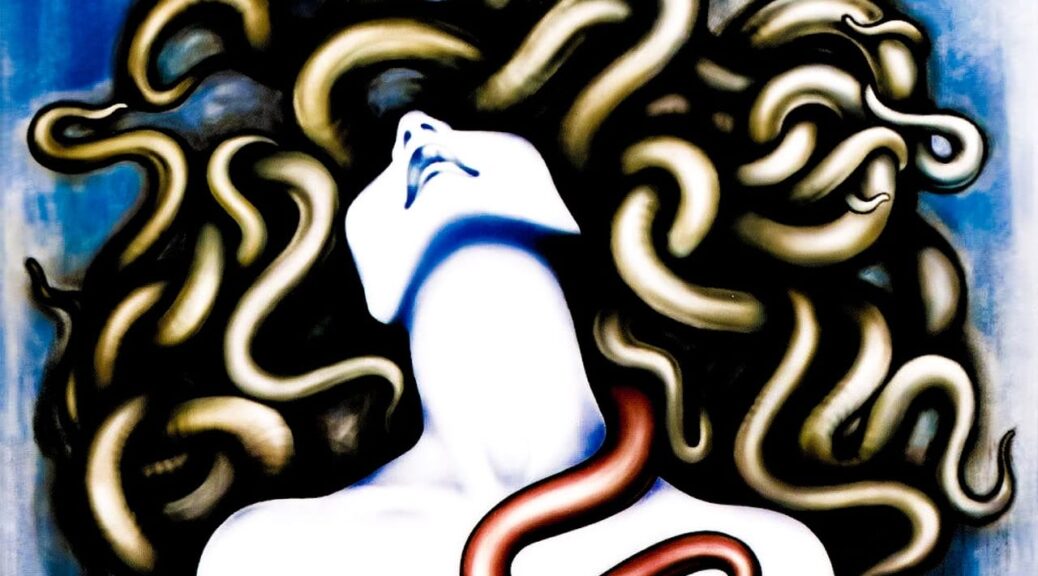
Julia Ducournau’s Palme d’Or-winning Titane is alive with alternating color palettes, pulsating sounds and endless shocks of body horrific visuals. The sudden bursts of violence are downright pedestrian alongside the parade of boldly squirm-inducing clashes of flesh, bone and other.

But as she did with her first feature, Raw, Ducournau finds humanity clawing out from the inhumane. Truly unforgettable performances from Vincent Lindon and Agathe Russell provide intimate examples of the extremes that even the most damaged souls are capable of in the search to care and be cared for.

It may not be shy about homages and influences, but Titane is indeed its own ferocious animal. Open the cage look the F out.

We’re Gonna Need a Montage

Hustle

by George Wolf

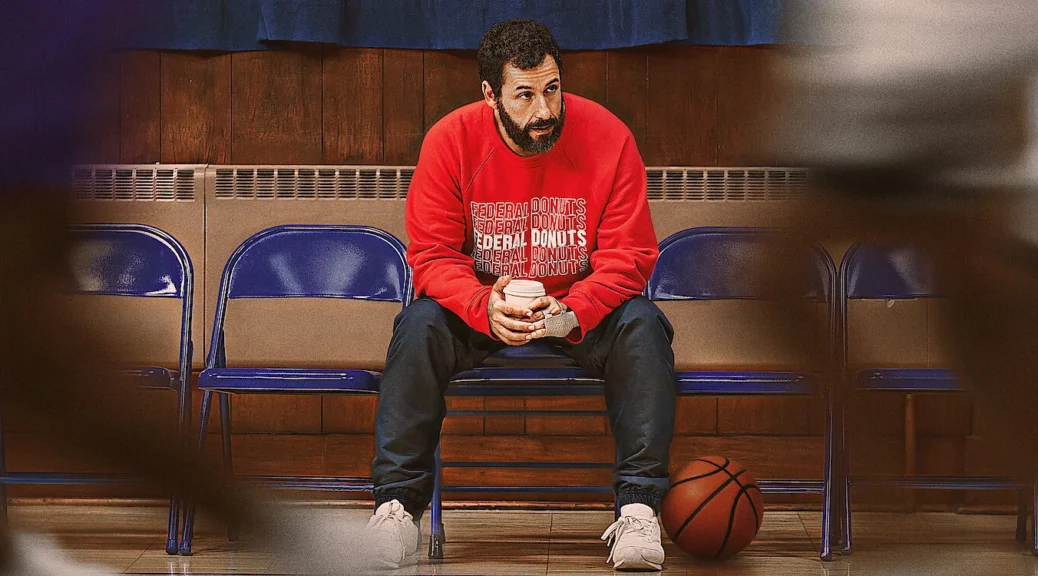
Adam Sandler’s passion for basketball is fairly well known, so the fact that Hustle is a love letter to the NBA shouldn’t be a huge surprise. And, this being a sports movie, you can expect some familiar benchmarks the film wisely doesn’t shy away from.

But this film about the heart and commitment that’s required in the Association boasts plenty of both from nearly everyone involved, landing Netflix an enjoyable winner.

Sandler plays Stanley Sugerman, a road-weary scout for the Philadelphia 76ers whose devotion to team owner Rex Merrick (Robert Duvall) is finally rewarded with a job on the bench as Assistant Coach.

But with clear shades of the Buss family drama in L.A., Rex’s son Vince (Ben Foster) wrestles control of the team from his sister (Heidi Gardner), and Stan is back living out of a suitcase while he scours the globe for a susperstar.

Writers Will Fetters and Taylor Materne set some nice stakes early, as Vince dangles a return to coaching in front of Stan. The quicker he finds the team a game-changing phenom, the sooner he can be home closer to his wife (Queen Latifah) and daughter (Jordan Hull).

On a gritty playground in Spain, Stan thinks he’s found his unicorn in the 6’9” Bo Cruz (NBA vet Juancho Hernangomez). The talk of big money lures Bo to Philly, but the path to a payday hits some roadblocks, and Bo’s longing for this mom and daughter back home creates some effective character-driven parallels with Stan.

Sandler and Hernangomez share a sweet, funny chemistry, and a constant stream of past and present NBA stars adds plenty of authenticity. Even better is director Jeremiah Zagar’s (We the Animals) skill in framing on-court action with speed, sweat and a tense, in-the-moment feel that gives the standard sports themes some needed vitality.

Hustle is a story of father figures, redemption, perseverance, and leaving your mark. No one’s claiming to re-invent anything here, and the winking nod to an iconic Rocky moment cements a self-awareness that only adds to the film’s charm.

It’s also another example of Sandler’s versatility, and the good that comes from surrounding himself with unique voices. When Sandler cares, he shines.

And he clearly cares about basketball.

Rites of Passage

Tahara

by George Wolf

If you saw Rachel Sennot’s breakout performance in last year’s wonderful Shiva Baby, the setup of Tahara is going to look pretty familiar. But in their feature debut, writer Jess Zeidman and director Olivia Peace find a vibrant, refreshing lens for their own look at one funeral’s anxious aftermath.

Sennot is terrific again as the self-centered Hannah, who joins her more reserved best friend Carrie (Madeline Grey DeFreece, also excellent) at the service for their Hebrew school classmate Samantha. Samantha killed herself at the age of 18, and after the funeral the girls will join other classmates at a grief session to talk about their feelings.

They will also gossip, navigate cliques, and bitch about having to be there while they try to catch the eye of Tristan (Daniel Taveras).

At least Hannah will be flirting with Tristan. Because Carrie is hiding some true feelings for her bestie, a conflict that Peace and Zeidman surround with some touching and effective parallels.

Peace frames most of the film in a square, 1:1 aspect ratio, but goes wide at important moments, most of which are animated. It’s a clear nod to the times when Carrie, a young Jewish queer woman of color, sees herself – and the world – in new ways.

Though the animation sequences and lack of score can give the film an experimental feel, a juxtaposition with the Jewish ritual meant to cleanse the body before burial (Tahara) ultimately grounds it as a deeply personal journey.

The students tell their teacher (and by extension, those not familiar with Jewish traditions) that the ritual’s goal is to “erase social status,” which feeds perfectly into the teenage power struggles (and one suicide) we see through the eyes of a type of character not often represented.

At times funny, uncomfortable, and heartbreaking, Tahara is an ambitious and ultimately moving film, from a pair of voices we should look forward to hearing again.