Screening Room: Priscilla, What Happens Later, Rustin, The Marsh King’s Daughter, Nyad & More
by George Wolf
Numerous biopics have shown us numerous ways to illustrate a life through formula and cliche. Nyad smartly maneuvers around most of those by anchoring a tale of persistence and achievement with a warm and intimate friendship.
The achievement is Diana Nyad’s quest to become the first to swim the 110 miles from Cuba to Key West. She tried – and failed – at the age of 28, then took a few years off. Well, more than a few.
Crediting a “soul ignited by passion,” Nyad (Annette Bening) returned to her dream at the age of 61. And her best friend Bonnie Stoll (Jodie Foster) was there to train her, push her, and sometimes protect her from herself.
Oscar-winning documentarians Jimmy Chin and Elizabeth Chai Vasarhelyi (Free Solo, The Rescue) are right at home with a true story of personal struggle, but together with screenwriter Julia Cox and the two veteran leads, carve out an entertaining and satisfying narrative.
Nyad is proud, motivated, and shamelessly self-absorbed (“It’s not that I don’t know I’m this way!”), while Bonnie is pragmatic, patient and heroically loyal. They make a fascinating and sometimes frustrating pair, and of course, Bening and Foster bring them both to life with a brilliant, lived-in authenticity.
And rather than a generic, chronological rehashing of Nyad’s life, indelible moments are seen in flashback, often at the most organic times. The long, solitary hours in the water meant Nyad’s mind would search for motivation, even if it was painful.
Chin and Vasarhelyi are not shy about weaving in some actual archival footage. And while that helps accentuate both the difficulty of Nyad’s quest and her love of self-promotion, it also adds to the list of story elements being juggled.
But with Bening and Foster setting the gravitation center, this ship never strays too far off course, and Nyad comes ashore as a worthwhile endeavor.

by Hope Madden and George Wolf
In 2020, filmmaker George C. Wolfe used theatrical set design combined with snappy, rhythmic editing to contextualize the mournful, defiant music of Ma Rainey’s Black Bottom. Wolfe’s style remains much the same for his biopic of trailblazing civil rights activist Bayard Rustin. And once again, the drama sings.
That’s much thanks to a soaring performance by Colman Domingo. A character actor known for decades of memorable performances, Domingo takes the lead in Rustin and owns the film from frame one. Vulnerability and resolve pass across Domingo’s face in a performance the should absolutely be remembered this coming award season.
He’s not alone. Support work from Audra McDonald, CCH Pounder, Glynn Turman, Aml Ameen and a scorching cameo from Jeffrey Wright bring enough acting mastery to make Chris Rock’s turn seem a bit out of out of place.
Rustin was a key figure in the 1963 March on Washington, battling racism and homophobia as he mobilized scores of volunteers, advocacy groups and sometimes competing interests.
Ands Wolfe, working from a script by Julian Breece (When They See Us) and Dustin Lance Black (Milk, When We Rise), keeps his film grounded in the political realities that not only mark American history but American present. Fueled by an electric performance, Wolfe’s production saturates that history with undeniable life and passion.
The film consistently moves with the energy and staging of a musical. It’s an approach that should help hold sustained interest for home streaming, but one that results in a broad-brushed, sometimes hurried feel to the important matters at hand.
But Rustin should invite further study about a man who deserves it. And while doing so, it reminds us that the fight for equality doesn’t end until it includes all of us, and that every victory depends on the day-to-day groundwork of warriors we may never get to know.
Plus, Colman Domingo. Get to know him.
by George Wolf
Even if you’ve never taken the tour at Graceland, the bare feet on shag carpeting that Sofia Coppola uses to open Priscilla should serve as a proper metaphor for the biography to come.
Welcome to a world you could never imagine being a part of. Tread lightly.
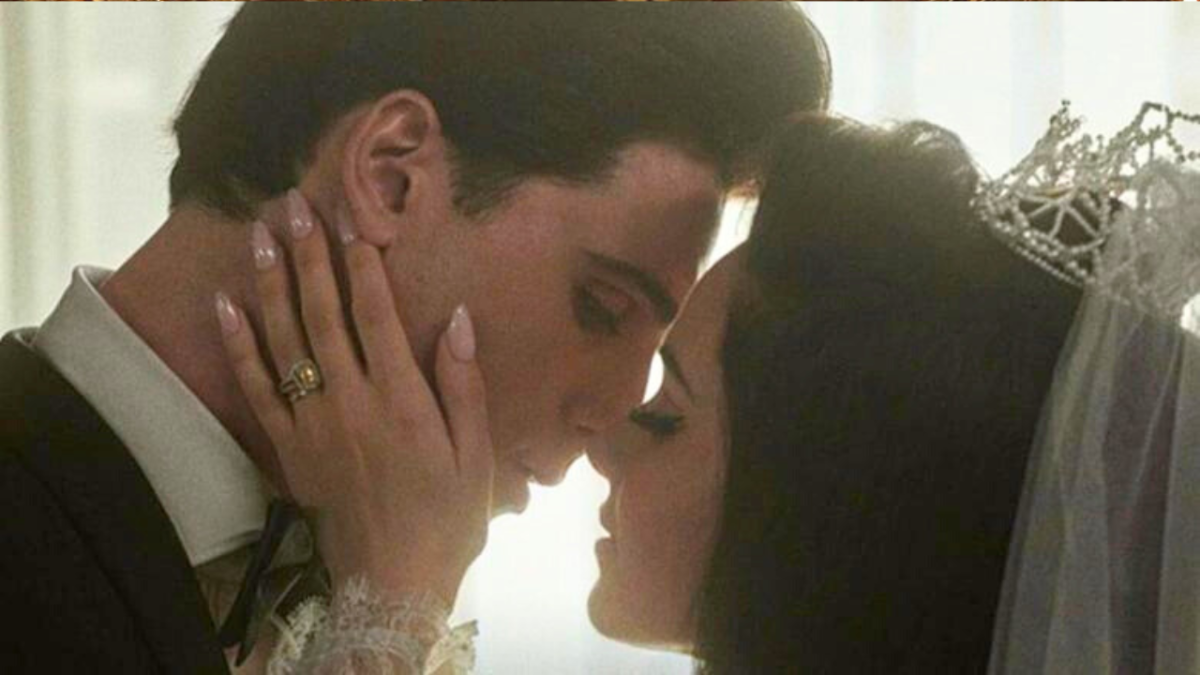
Priscilla Beaulieu (Cailee Spaeny) was just a ninth grader when she met Elvis Presley (Jacob Elordi) on the West German Air Force base where her stepfather was stationed. They eventually married in 1967, had daughter Lisa Marie, and divorced in 1973.
Like most stories about Elvis, this one is pretty familiar. But this point of view is not. That’s likely what interested Coppola, and she adapts Priscilla’s 1985 memoir “Elvis and Me” as a lush, compelling, and often heartbreaking portrait of the woman at the heart of a uniquely American love story.
As Priscilla enters Elvis’s world, she’s a stranger in a strange land, wide eyed and wondering what this older man wants from her. It’s a theme that calls to mind Coppola’s Lost in Translation, but this young girl is much more at the mercy of Elvis than Scarlett Johansson ever was to Bill Murray.
And Spaeny (On the Basis of Sex, Bad Times at the El Royale) gives a breakout performance that is utterly transfixing. With grace and ease, she is able to take Priscilla from the shy schoolgirl hiding a big secret behind her knowing smile, to a woman no longer willing to sacrifice her life to the whims of an icon.
Just last year, Baz Luhrmann used Colonel Tom Parker as a fresh window into the legend of the King. But as entertaining as it was, Luhrmann’s film suffered from its one-note treatment of Elvis, the man. For Coppola, this is an area of strength.
Here, he’s a gaslighting, manipulative ass with a God complex, Mommy issues and weird ideas about sex. And Elordi (Euphoria) embodies it all through a strong performance that captures the charisma and complexities without leaning toward comic impersonation (and with Elvis, that is not easy).
Coppola’s pace and construction are reliably assured and more easily identifiable than anything she’s done since The Beguiled. The production design and time stamp are both detailed and gorgeous, wrapped in a dreamlike haze that slowly fades when reality starts chipping away at Priscilla’s youthful naivete.
And if you’re expecting a hit parade of Elvis classics, you’ve forgotten whose story this is. Coppola’s soundtrack choices are on point, right down to the way she incorporates the few moments of recognizable Elvis hits that we do hear. We only see that side of Priscilla’s husband the way she saw it: as a mythical creature she couldn’t pry loose from the man that always promised he’d make more time for her.

In this bonus episode recorded live at Nightmares Film Festival from Gateway Film Center, the fest’s panel on what distribution looks like in 2023 for independent horror filmmakers.
This year Hope got to join a panel with Justin Seaman of Nevermore Production Film (and filmmaker behind The Barn & The Barn 2), Cicely Enriquez of The Owens Group, and Scott Donley of Good Deed/Cranked Up Films. Thanks to everyone who participated!
by George Wolf
It’s been over twenty years since American Psycho personified the soulless self-interest of the Reagan 80s with bloody, hilarious precision.
Around the same time, the French duo of writer Alexis “Matz” Nolent and illustrator Luc Jacamon published the first of their graphic novels centered around the life of “Le Tueur” a ruthless, unnamed assassin.
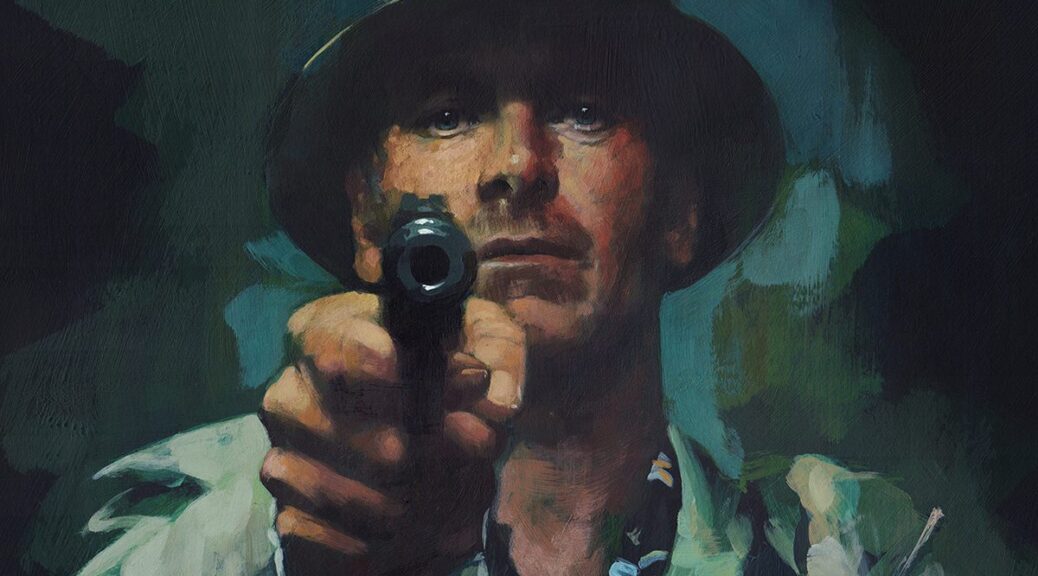
Now, writer/director David Fincher gives us The Killer as a Patrick Bateman for a new generation. And while his film is not as outwardly comedic as Mary Harron’s classic, Fincher manages some dark fun as he probes our descent into cold, violent narcissism.
After some brisk and stylish opening credits, Fincher and star Michael Fassbender slow the pace to a crawl, and the opening chapter of their character study begins in France, with the quiet assessing of a target.
The Killer (Fassbender) is an ex-law student turned assassin for hire, and his years of completed assignments have earned him big targets and big rewards. The Killer has iron clad rules for success in work and in life, and Fassbender’s voiceover narration puts them on repeat.
“Keep calm. Keep moving.”
“Empathy is weakness. Weakness is vulnerability.”
“What’s in it for me?”
But when The Killer’s aim fails him on that Paris job, he is the one who is suddenly hunted. Things get nasty, and The Killer sets off on a multi-national manhunt for vengeance, buoyed by another effectively moody, pulsating score from Trent Reznor and Atticus Ross.
There are no business cards involved, but passports with increasingly funny aliases (brush up on your classic sitcoms) provide levity as scores are settled with inventive bloodshed and impressive fight choreography. And through it all, The Killer keeps preaching his mantra as a MAGA Bond, unwavering in his devotion to self and the perpetual need to feel aggrieved.
Fassbender is perfection as this meticulous, emotionless killbot, and the great Tilda Swinton’s late stage cameo brings the film more star power, plus one genuinely hilarious and insightful moment.
It’s a fascinating film, and one that feels like a new kind of Fincher. Recalling not only American Psycho, but also his own Fight Club and Anton Corbijn’s assassin creed The American, The Killer succeeds both as a surface-level thriller, and as a deeper illustration of another empty era.
Hats! They tell you a lot about a villain. Norma’s lightning bolt hat in Carrie tells us that she lacks fashion sense. Leprechaun’s golden buckled hat tell us that he’s sassy. Art the Clown’s tiny little hat lets us know that he doesn’t take himself too seriously. The Wicked Witch of the West wore the greatest, most iconic villain hat of all time, but The Wizard of Oz is not horror, so she didn’t make this list.
Who did make our list of best use of hats in a horror movie? Let us share with you.
Ethan Hawke’s look for Scott Derrickson’s adaptation of the Joe Hill short story is epic. The constantly evolving, endlessly sinister mask is the push over the cliff, but it all starts with that hat. A black top hat not unlike the one that brought Frosty to life, this hat means magic.
He is a part time magician, after all! And in 1973, I guess people did not se magicians or clowns as scary. But they should have.
Another dark top hat, Mr. Dark’s headwear of choice also conjures the image of magic. But somehow, even in Green Town, Illinois, Mr. Dark doesn’t look out of place with so formal a look. Sure, every other Joe wears something less fancy, but on Mr. Dark, the hat seems perfectly in place.
That’s all part of his charm.
The bowler – headwear of choice for Alex and his Droogies. You have to look sharp when on the prowl for a bit of the old in and out.
The iconic costuming in Stanley Kubrick’s masterpiece adaptation of Anthony Burgress’s novel creates the mood for the piece. Somehow retro and futuristic, elegant and brutal, punk rock and Ludwig Van all come together in this one ensemble: white trousers, white shirt, white cod piece, and suspenders, black boots, one set of black lashes and that spiffy bowler. Welly, welly, welly, welly well.
If it’s in a word, or if it’s in a book
you can’t get rid of the Babadook.
He wears a hat
he’s tall and black
but that’s how they describe him in his book.
A rumbling sound, than three sharp knocks
you better run, or he’ll hold you in his locks.
ba-ba-ba-dook-dook-dook…
Your closet opens
and your honestly hopin’
that he won’t hear a sound
but that’s when you know that he’s around.
The book close
you have an itch under your nose
and that’s just how the story goes.
So close your eyes and count to ten
better hope you don’t wake up again.
‘Cause if it’s in a word, or if it’s in a book
you can’t get rid of the Babadook
…. you’ll see him if you look
Possibly the hottest villain since Salma Hayak wrapped a yellow python around her neck, Rose the Hat (Rebecca Ferguson) will swallow your soul.
Ferguson’s performance is eerily, hauntingly believable in Mike Flanagan’s courageous take on Stephen King’s The Shining sequel. Of his many successes with this film, his villain ranks highest. Rose the Hat is savvy, strong, and more than anything, merciless.
by George Wolf
“Can you find the wolves in this picture?”
The question comes from a book on Osage Indian history that Ernest Burkhart is perusing, and it’s one that lingers throughout Martin Scorsese’s triumphant epic Killers of the Flower Moon.
After serving as a cook in WWI, Ernest (Leonardo DiCaprio) has come home to work for his uncle William “King” Hale (Robert De Niro) on an Oklahoma ranch. But while King is a wealthy powerbroker in the town of Fairfax, he laments that his “cattle money” is nothing next to the oil money of the Osage tribe, at that time the richest people per capita on the face of the Earth.
The Osage natives are worried, too, about the price of assimilation, the dangers that come with the comforts of wealth, and the white men eager to marry into their money.
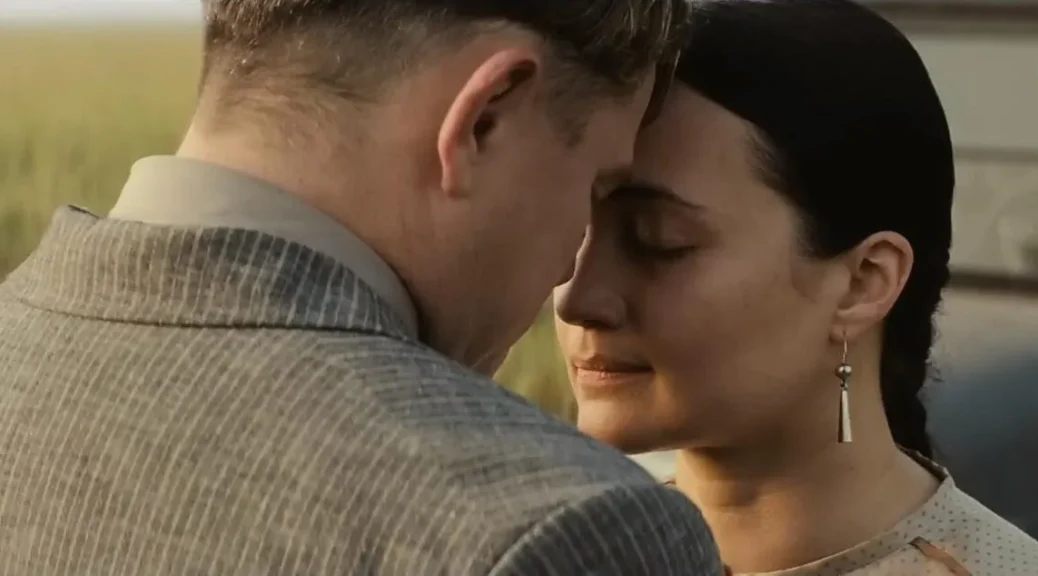
King assigns Ernest a job driving for the reserved, pensive Mollie (Lily Gladstone). And when the couple marries, King calmly explains to Ernest how much closer the legal union puts them to the oil shares in Mollie’s family.
But Ernest has trouble “finding the wolves,” and as unsolved murders of the Osage people begin to mount, Ernest is drawn into a quagmire of lies and killings that eventually brings federal investigator Tom White (Jesse Plemons) and his team to Fairfax.
Scorsese and co-writer Eric Roth adapt David Grann’s nonfiction book with an engrossing mix of true crime fact-finding, slow burning thrills and devastating heartbreak. The characters are rich in culture and in shades of human grey, each one caught in an infamous crossfire of American envy, arrogance, bigotry and greed.
Expect multiple notices in the coming awards season.
Editing from three time Oscar-winner Thelma Schoonmaker is subtle and patient, every frame buoyed by a mesmerizing, evocative score that is sure to land the legendary Robbie Robertson posthumous nominations, right beside those of an acting ensemble that is don’t-forget-to-breathe tremendous.
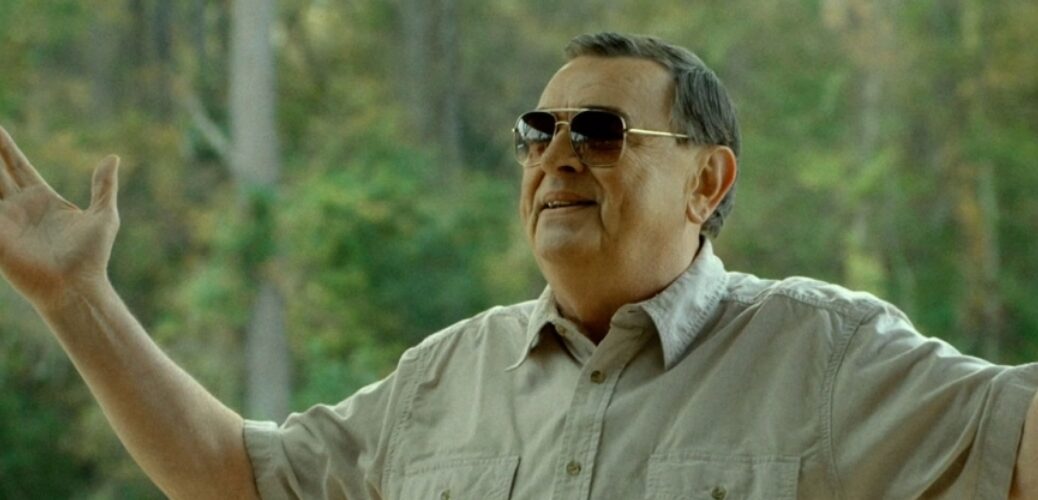
De Niro makes King a scheming sociopath hiding in plain sight, with his kindest words saved for those he is most gaslighting. DiCaprio has never been better, as the simple Ernest’s journey from war hero to murder suspect is both a singular character study and a broad personification of confident ignorance.
Every member of the cast, from familiar faces such as Plemons, John Lithgow and Brendan Fraser to lesser known actors like Jason Isbell, Cara Jade Myers and William Belleau, brings limited roles to wonderfully realized fruition.
But it is Lily Gladstone who carries the very soul of this film. Mollie is a woman very aware of the daggers that are out for her people. She wants desperately to trust in her husband and their future, and the deeply held emotion that Gladstone (Certain Woman, First Cow) is able to communicate – often with her eyes alone – is a masterful thing to behold.
Scorsese and cinematographer Rodrigo Prieto (Barbie, The Irishman, Brokeback Mountain, Silence) find beauty in the expanse of the landscape, intimacy in moments of violence and betrayal, and a purposeful sense of history in the way numerous snapshots are held for an extra beat.
Still, not one moment of the film’s three hours and twenty-six minutes feels like filler. This is majestic, vital storytelling, from a legendary filmmaker who has not lost the drive to push himself. Beyond his clickbait comments about superhero franchises, here is proof that Scorsese still finds plenty on the big screen that inspires him.
He has given credit to Ari Aster for Flower Moon‘s committed pacing, while the film’s surprising finale feels directly influenced by Spike Lee’s success with connecting past and present via bold and challenging choices.
Like Lee, Scorsese is out to document American history while pointing out why so many look to bury it. The correct answer isn’t that there are no wolves in the picture, and Killers of the Flower Moon is a searing reminder that we can’t move forward together until we’re brave enough to confront where we’ve been.

What is it about one charismatic leader that can cause so much devastation? Horror filmmakers have long dug into the narcissism, vanity, and downright evil that lurks within these figures. Here are our five favorite films about a backwods Messiah.
Ti West dives into Jim Jones territory in probably his most assured film prior to X. A cast of West regulars Joe Swanberg, AJ Bowen join the great Gene Jones for a tense news event.
West mines tensions, upends ideas of safety and power, but never dismisses the vulnerability that draws people toward charismatic figures like Father (Jones). It’s this openness that creates room for the real frights in the film.
Writer/director Chad Crawford Kinkle brings together a fine cast including The Woman’s Sean Bridgers and Lauren Ashley Carter, as well as genre favorite Larry Fessenden and late-life scream queen Sean Young to spin a backwoods yarn about incest, premonitions, kiln work, and a monster in a pit.
As a change of pace, Bridgers plays a wholly sympathetic character as Dawai, village simpleton and jug artist. On occasion, a spell comes over Dawai, and when he wakes, there’s a new jug on the kiln that bears the likeness of someone else in the village. That lucky soul must be fed to the monster in the pit so life can be as blessed and peaceful as before.
Kinkle mines for more than urban prejudice in his horror show about religious isolationists out in them woods. Young is particularly effective as an embittered wife, while Carter, playing a pregnant little sister trying to hide her bump, a jug, and an assortment of other secrets, steals the show.
As colorful as a dream, Juan Diego Escobar Alzate’s feature film debut Luz: The Flower of Evil looks like magic and brims with the casual brutality of faith.
Set inside a religious community in the mountains of Colombia, the film drops us into ongoing struggles with the group’s religious leader, El Señor (Conrad Osorio). No one knows the devil as he does, he reminds his daughter Laila (Andrea Esquivel).
She lives contentedly, devoutly, along with her two adopted sisters. El Señor and the villagers consider the trio angels—just as they believe the little boy chained up out back is the Messiah who will deliver the community from its recent calamities.
The first step toward freedom is telling your own story.
Writer C.S. McMullen and director Malgorzata Szumowska tell this one really well. Between McMullen’s outrage and the macabre lyricism of Szumowska’s camera, The Other Lamb offers a dark, angry and satisfying coming-of-age tale.
Selah (Raffey Cassidy, Killing of a Sacred Deer, Vox Lux) has never known any life except that of Eden, the commune where she lives with the sisters, the wives, and the Sheperd (Michiel Huisman, The Invitation).
Szumowska doesn’t tell as much as she unveils: Selah’s defiant streak, Sheperd’s unspoken rules, what puberty can mean if you’re a good follower. She strings together a dreamlike series of visions that horrify on a primal level, the imagery giving the film the feel of gruesome poetry more than narrative.
The Other Lamb does not simply suggest you question authority. It demands that you do far more than that, and do it for your own good.
Writer/director Sean Durkin took essentially the Charles Manson story, set it within modern privilege, and swapped the point of view to create an unnervingly realistic look at the reasons people find themselves drawn to cults.
And then, once we relate to Martha (Elizabeth Olsen), he sets the true terror in motion.
This film – through brilliantly written and beautifully directed – benefits from perhaps the best ensemble of 2011: Sarah Paulson, Christopher Abbott, Brady Corbet, Julia Garner, Hugh Dancy. But Olsen’s fearless, vulnerable turn as the woman who just doesn’t fit is only exceeded by the great John Hawes in the most mesmerizing, blistering turn of his magnificent career.