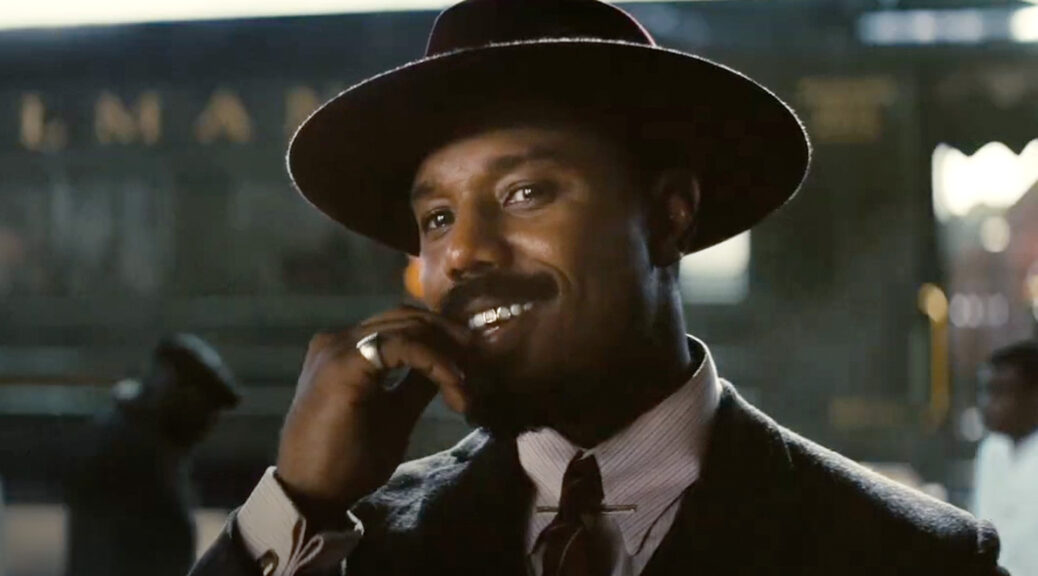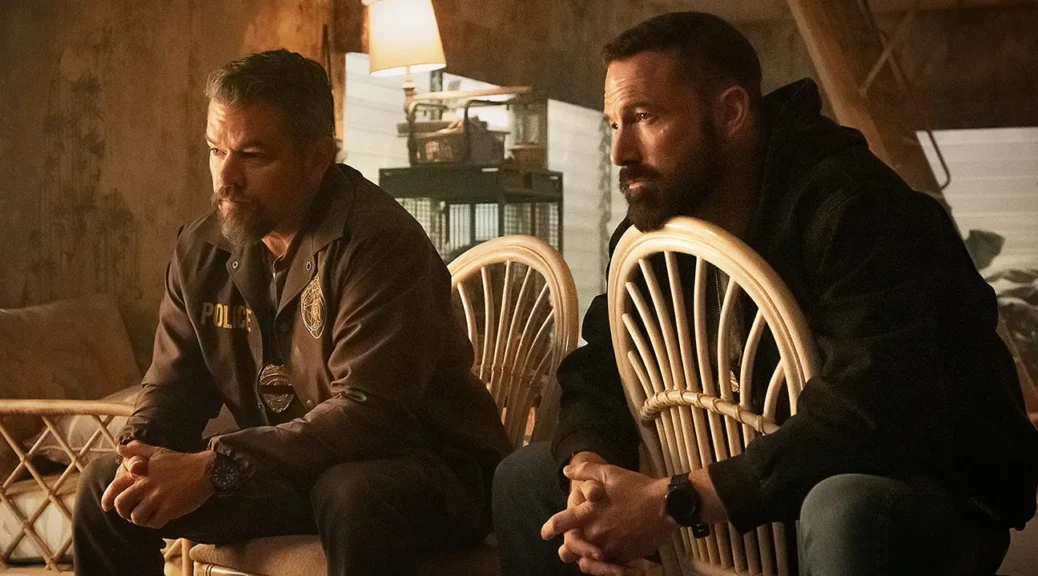
On this week’s Screening Room podcast, Hope & George review Mercy, Return to Silent Hill, The Testament of Ann Lee, H Is for Hawk, Magellan, and Mother of Flies.
On this week’s Screening Room podcast, Hope & George review Mercy, Return to Silent Hill, The Testament of Ann Lee, H Is for Hawk, Magellan, and Mother of Flies.
Well, if you’re a horror fan, 2025 was your year, at least according to the Academy. All told, the genre racked up 27 Oscar nominations. Ryan Coogler’s period vampire epic Sinners led the pack with a record breaking 16 nominations. The previous high-water mark was 14 nominations.
Guillermo del Toro’s Frankenstein nabbed nine noms, while Zach Cregger’s Weapons got one—Best Actress in a Supporting Role for Amy Madigan—and Emilie Blichfeldt’s The Ugly Stepsister garnering a nomination for Best Makeup and Hair.
Films outside horror did quite well, too. Paul Thomas Anderson’s One Battle After Another received 13 nominations, Joachim Trier’s Sentimental Value nabbed five. Joseph Kosinski’s F1 received three Oscar nominations and Park Chan-wook’s No Other Choice received none. What?!
Wicked for Good got shut out, even in the makeup, costume, hair design and production design categories, which is a bit of a surprise. Otherwise, the Academy recognized what we all expected them to recognize, but, per usual, we have a handful of complaints.
Best Actor in a Supporting Role
Oh, glorious day, they recognized Delroy Lindo! This is a stacked category—Del Toro stole every scene he was in, and Sean Penn has not been such a hoot in any film in decades. Expected to see Paul Mescal, whose turn in Hamnet was so beautiful. Others who were great in smaller roles were Adam Sandler in the utterly forgotten Jay Kelly, and Miles Caton from Sinners. Not sure where we’d put them, though.
· Benicio Del Toro, One Battle After Another
· Jacob Elordi, Frankenstein
· Delroy Lindo, Sinners
· Sean Penn, One Battle After Another
· Stellan Skarsgård, Sentimental Value
Best Actress in a Supporting Role
Another stacked category with so much to be happy about. No real nits to pick here.
· Elle Fanning, Sentimental Value
· Inga Ibsdotter Lilleaas, Sentimental Value
· Amy Madigan, Weapons
· Wunmi Mosaku, Sinners
· Teyana Taylor, One Battle After Another
Best Actor in a Lead Role
This shook out the way we’d expected, although we would have loved to see Jesse Plemmons remembered for Bugonia. We’d have given Ethan Hawke’s slot to him or to Joel Edgerton for Train Dreams, although right now Hawke looks like he may be the upset winner, so what do we know?
· Timothée Chalamet, Marty Supreme
· Leonardo DiCaprio, One Battle After Another
· Ethan Hawke, Blue Moon
· Michael B. Jordan, Sinners
· Wagner Moura, The Secret Agent
Best Actress in a Lead Role
We are thrilled to see Hudson get attention for her delightful performance in Song Sung Blue, although the money’s on Buckley. Chase Infiniti would have been welcome for her fearless performance in One Battle After Another, as would Amada Seyfried for The Testament of Ann Lee, but again, not sure who we’d lose to make room.
· Jessie Buckley, Hamnet
· Rose Byrne, If I Had Legs I’d Kick You
· Kate Hudson, Song Sung Blue
· Renate Reinsve, Sentimental Value
· Emma Stone, Bugonia
Best Director
Would have loved to see Park Chan-wook on this list for just another masterpiece, No Other Choice, perhaps in Safdie’s place, but it’s a good group.
· Paul Thomas Anderson, One Battle After Another
· Ryan Coogler, Sinners
· Josh Safdie, Marty Supreme
· Joachim Trier, Sentimental Value
· Chloé Zhao, Hamnet
Best Casting
It’s the first year for the award, and the Academy only came up with four films. Given the sheer volume of acting nominations One Battle After Another received, seems funny they didn’t make this list.
· Hamnet
· Marty Supreme
· The Secret Agent
· Sinners
Best International Feature
Where on earth is No Other Choice? These films are great—intense, heartbreaking, fascinating—but only Sentimental Value and It Was Just an Accident deserve the spot over Park Chan-wook’s film.
· The Secret Agent, Brazil
· It Was Just an Accident, France
· Sentimental Value, Norway
· Sirãt, Spain
· The Voice of Hind Rajab, Tunisia
Best Score
What a great group! So thrilled for all five films, although we would have given Train Dreams the nod over Bugonia.
· Bugonia
· Frankenstein
· Hamnet
· One Battle After Another
· Sinners
Best Original Song
Loved seeing Train Dreams and Sinners in there.
· “Dear Me,” Diane Warren: Relentless
· “Golden,” KPop Demon Hunters
· “I Lied to You,” Sinners
· “Sweet Dreams of Joy,” Viva Verdi
· “Train Dreams,” Train Dreams
Best Adapted Screenplay
Not to beat a dead paper executive, but where is No Other Choice? We love you, Bugonia, but we’d have given your slot away.
· Bugonia
· Frankenstein
· Hamnet
· One Battle After Another
· Train Dreams
Best Original Screenplay
Maybe it would have been too much to ask for Weapons over Blue Moon?
· Blue Moon
· It Was Just an Accident
· Marty Supreme
· Sentimental Value
· Sinners
Best Documentary Feature
In another year of searing, heartbreaking, brilliant documentaries, great to see Come See Me in the Good Light get noticed.
· The Alabama Solution
· Come See Me in the Good Light
· Cutting Through Rocks
· Mr. Nobody Against Putin
· The Perfect Neighbor
Best Animated Feature
Solid choices in a relatively weak year in animation.
Best Cinematography
What an absolute gift we got in cinematography this year. Look at these gorgeous films!
Best Costume Design
Here’s one where Wicked: For Good is a surprise omission.
Best Film Editing
The Perfect Neighbor was a marvel of editing, and The Testament of Ann Lee was like a dream, but these choices are tough to argue.
Best Production Design
Wicked: For Good could be included here, too, but what to toss out?
Best Picture
F1? It was thrilling fun, but….
· Bugonia
· F1
· Frankenstein
· Hamnet
· Marty Supreme
· One Battle After Another
· The Secret Agent
· Sentimental Value
· Sinners
· Train Dreams
The 98th Academy Awards will be held Sunday, March 15th.
by George Wolf
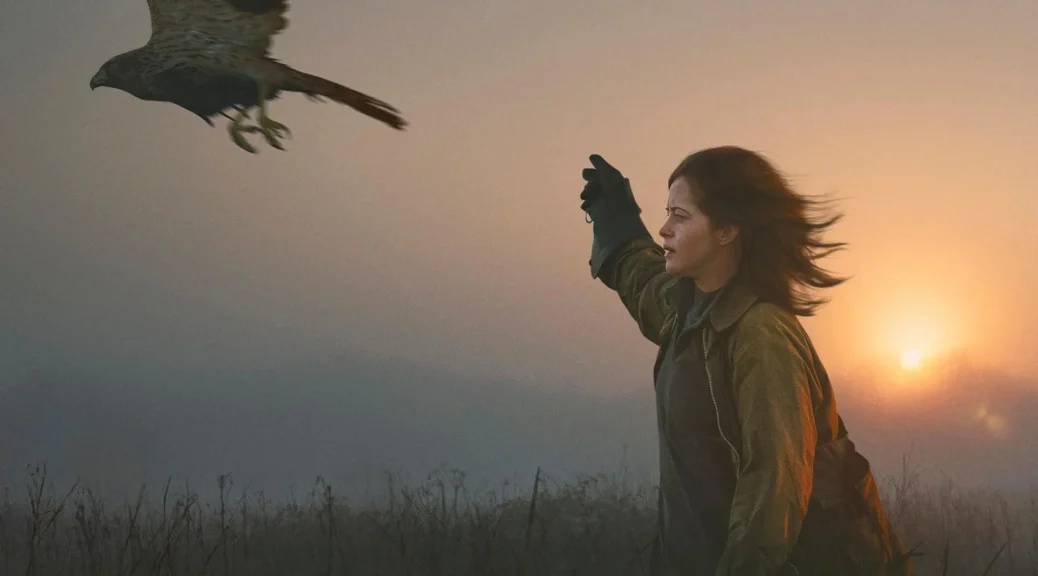
“I don’t have a hobby, I have a hawk.”
“Mabel” became much, much more than a hobby for Helen Macdonald, and H Is for Hawk adapts their award-winning memoir with nearly equal amounts of the magical and the mundane.
Claire Foy is understated and touching as Helen, who was teaching English at a university in Cambridge when their beloved father Alisdair (Brendan Gleeson, characteristically splendid) suddenly collapsed and died in 2007.
Leaning on memories of exploring nature and birding with their father, and their years of experience in falconry, Helen channelled feelings of grief into the adoption and training of a Eurasian goshawk.
Just the fact that the emotional vessel here is a notoriously stubborn bird of prey instead of a dog, a horse, or a wayward teen is enough to stir your interest. Director and co-writer Philippa Lowthorpe rewards it early. Foy and Gleeson shine in some bittersweet flashbacks, and Helen’s cautious bonding with Mabel is in turns emotional and educational.
As Mabel hones her hunting instincts, the wildlife framing from cinematographers Charlotte Bruus Christiansen and Mark Payne-Gill can be beautifully majestic. Eventually, though, the lack of firmer hands from Lowthorpe and editor Nico Leunen begins to take a toll.
The pace of the film becomes laborious and plodding, enough to even overshadow the introspective and touching work from Foy. There is never a doubt we believe the healing journey Helen and Mabel are sharing, but the excessive documentary-ready wildlife footage eventually increases our detachment while it bloats the run time.
Despite the similarities with 1969’s Kes, Lowthorpe isn’t trying for a Ken Loach-style social critique. At the heart of this film is an intensely personal story of “an honest encounter with death.” It is a unique and well-crafted film, but the honesty of H Is for Hawk is just spread too thin for a truly memorable flight.

On this week’s Screening Room podcast, Hope & George review 28 Years Later: The Bone Temple, The Rip, No Other Choice, Dead Man’s Wire, The Choral, Night Patrol, Maldoror, Resurrection and Obex! PLUS! News & Notes from Daniel Baldwin, ada The Schlocketeer!
by George Wolf
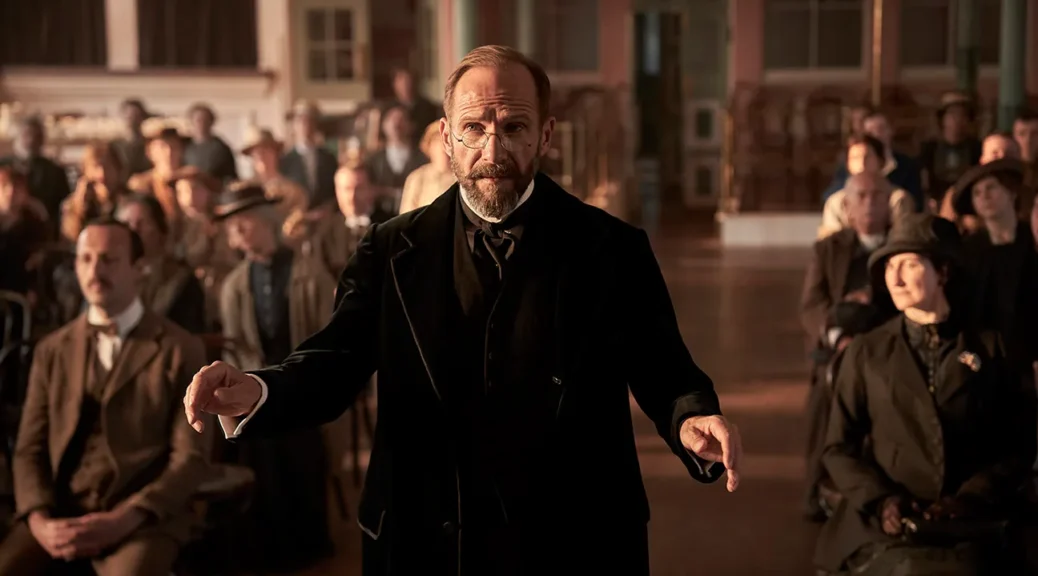
In case you need a reminder about the versatility of Ralph Fiennes, here it is. In the same week we find him trying to outsmart a psychotic gang leader while working to cure a rage virus in 28 Years Later: The Bone Temple, he’s also looking to assemble a suitable group of singers in the midst of WW1 for The Choral.
The man has range, and he’s wonderful as Dr. Henry Guthrie, who has returned to Yorkshire in 1919 after a career in Germany. Those ties draw suspicious catcalls of “Fritz!’ from the locals, but with many of the best male voices leaving for the army, the choral committee feels he’s the best choice to move the group forward as chorus master.
The blunt and uncompromising Dr. Guthrie isn’t exactly thrilled at the prospect, which is evident right from the auditions. Fiennes gives him some delightfully pained expressions when notes are mangled, but glorious looks of enlightenment when true talent hits his ears.
Director Nicholas Hytner and writer Alan Bennett set a pleasing enough hook, but end up getting bogged down in a marsh of routine subplots and surface-level messaging.
Hytner (The Madness Of King George, The History Boys) gives the wartime period details a sheen that seems too glossy for an effective contrast between the boys who’ll soon go to the front and those coming home. It begins to resemble a more musical riff on Dead Poets Society, but the boys’ wartime bravado and impatience for sexual experience just distract from the more engaging conflict with Dr. Guthrie.
Due to the young age of his best male voice, Dr. Guthrie has to make some story changes to the Choral’s performance piece, “The Dream of Gerontius” by Edward Elgar – without telling Elgar himself.
And then guess who shows up.
If the themes of wartime loss and sacrifice cut deeper, the performance tension would play an understandable supporting role. But little outside of Fiennes’s orbit holds your attention, and The Choral settles into its place as a perfectly generic period drama.
by George Wolf
Even without the cameo from Al Pacino, Dead Man’s Wire has the gritty, absurdist vibe of legendary 70s thriller Dog Day Afternoon. Also based on true crime events, the latest from director Gus Van Sant leans on a timely, anti-hero tone and some stellar performances for a look into the desperate edges of the American dream.
Bill Skarsgård is utterly manic and completely magnetic as Tony Kiritsis, who held an Indianapolis mortgage company executive hostage in February of 1977. Kiritsis, who hoped to build a shopping center on his 17 acres of land, became convinced that Meridian Mortgage president M.L. Hall (Pacino) was sabotaging the project. Finding M.L. out of town, Kiritis settled on son Richard Hall (Dacre Montgomery from Stranger Things) for his plan of revenge.
Armed with a sawed-off shotgun and a “dead man’s wire” running from the trigger to Richard’s neck, Tony demanded media access, immunity, compensation and a personal apology from M.L. himself.
Tony’s mood swings with wild abandon, but he’s downright starstruck when telling his story to WCYD deejay Fred Temple, the “voice of Indianapolis.” The great Colman Domingo plays Temple with a grounded mix of caution and curiosity, as the confused local celeb is reluctantly pulled into a life-or- death drama where a potential murderer is a gushing fanboy.
Writer Austin Kolodney comes from a comedy background, and Van Sant weaves some darkly comedic layers through terrific period details that only enhance the through line from 1977 to today’s breaking news.
Just two years ago, we saw how a communal feeling of hopelessness can turn a fugitive into a heroic man of the people. Dead Man’s Wire reminds us this feeling of simmering resentment is as old as the art of stacking decks. And while his narrative approach ultimately carries more polish than bite, Van Sant and a terrific ensemble never fail to make this history lesson an engaging high wire act of sadness, surprise and bittersweet delight.

The last decade has seen an explosion in Spanish language horror—so many incredible options that we went fuzzy math for this list and still had to leave off some incredible movies, including Amigo, Veronica, The Platform, Terrified, Luz: The Flower of Evil, La Llorona, Huesera: The Bone Woman, and The Untamed. So, make sure you check every one of those out, but first, you should peruse the films that did make our list.
Thanks as always to a great crowd at Gateway Film Center!
6. El Conde (2023, Chile)
On Netflix
Pablo Larraín has a particular gift for poetic historical retellings grounded in a singular woman’s perspective: Spencer, Jackie. But his passion for the political history of his native Chile rings through most of his films, including Naruda and No. But did we see a vampire movie coming?
El Conde reimagines Augusto Pinochet as a vampire weary of his many years on earth and ready to leave his bickering family in squalor and finally die – until the church sends a vampire slayer after him. What follows is a near-slapstick political satire, sort of The Death of Stalin meets What We Do in the Shadows.
Every moment’s a delight, and a late-film reveal is a cynical and biting reward for a gloriously spent couple of hours.
5. Tigers Are Not Afraid (2019, Mexico)
On Shudder, Prime and AMC+
Lopez’s fable of children and war brandishes the same themes as Guillermo del Toro’s masterpiece Pan’s Labyrinth, but grounds the magic with a rugged street style.
Tigers follows Estrella, a child studying fairy tales—or, she was until her school is temporarily closed due to the stray bullets that make it unsafe for students. As Estrella and her classmates hide beneath desks to avoid gunfire, her teacher hands her three broken pieces of chalk and tells her these are her three wishes.
But wishes never turn out the way you want them to.
4. Piggy (2022, Spain)
On Hulu, HBO Max, Prime, AMC+
Mean girls are a fixture in cinema, from Mean Girls to Carrie, Heathers to Jawbreaker to Napoleon Dynamite and countless others. Why is that? It’s because we like to see mean girls taken down.
Writer/director Carlota Pereda wants to challenge that base instinct. But first, she is going to make you hate Maca (Claudia Salas), Roci (Camille Aguilar) and Claudia (Irene Ferreiro). In one tiny Spanish town, the three girls make Sara’s (Laura Galán, remarkable) life utterly miserable. Like worse than Carrie White’s.
The filmmaker complicates every trope, all the one-dimensional victim/hero/villain ideas this genre and others feast on. Redemption doesn’t come easily to anyone. Pereda also seamlessly blends themes and ideas from across the genre, upending expectations but never skimping on brutal, visceral horror.
3. The Coffee Table (2022, Spain)
On Shudder, Prime, Tubi, AMC+
A remarkably well written script fleshed out by a stunning ensemble becomes utter torture as you want so badly for some other outcome. Co-writer/director Caye Casas ties threads, builds anxiety, plunges the depths of “what’s the worst that could happen?” and leaves you shaken.
David Pareja and Estefania de los Santos craft indelible, believable, beautifully flawed characters so convincing that their experience becomes painful for you. Casas salts the wounds with dark comedy, but the tenderness and tragedy collaborate toward something far more crushingly human.
2. The Wolf House (2018, Chile)
On Prime, Tubi, Plex, Fawesome
Another Chilean horror, so you’re safe in assuming it has something to do with Pinochet. This breathtaking, incredibly creepy stop motion animated wonder tells of a true cult, Colonia Dignidad. One of its inhabitants escapes into the woods, has a near-miss catastrophe with a wolf, and hides in an abandoned house.
Directors/animators Cristobal León and Joaquín Cociña pull you into Maria’s dreamlike world, as her thoughts and reality blend before your eyes. Sets are painted, built, melted, and destroyed on the screen as Maria’s thoughts and the dangers she faces come and go. It’s an eerily beautiful and unforgettable fairy tale rooted in reality.
1. When Evil Lurks (2023, Argentina)
On Shudder, Hulu, Max, AMC+, Prime
Just when you thought no one could do anything fresh with a possession movie, Terrified filmmaker Demián Rugna surprises you. When Evil Lurks does sometimes feel familiar, its road trip to hell detouring through The Crazies, among others. But Rugna’s take on all the familiar elements feels new, in that you cannot and would not want to predict where he’s headed.
This is a magnificently written piece of horror, and Rugna’s expansive direction gives it an otherworldly yet dirty, earthy presence.
The inexplicable ugliness – this particularly foul presence of evil – is handled with enough distance, enough elegance to make the film almost beautiful, regardless of the truly awful nature of the footage. And Rugna never lets up. Each passing minute is more difficult than the last, to the very last, which is an absolute knife to the heart.
Hope & George review this week’s new releases: Is This Thing On?, Primate, Greenland 2: Migration, Father Mother Sister Brother, The Chronology of Water, All That’s Left Behind, and Sleepwalker.
by George Wolf
January is often regarded as a dumping ground for throwaway theater releases, featuring films not good enough to make into the holiday/award season push.
But this month is the perfect time to catch Father Mother Sister Brother, a richly human big screen triptych that explores the type of strained family get- togethers many of us experienced just weeks ago.
Writer/director Jim Jarmusch reportedly began writing the film as a way to cast Tom Waits as Adam Driver’s dad, and the opening “Father” sequence gives us just that. Jeff (Driver) and sister Emily (Mayim Bialik) don’t exactly seemed thrilled about visiting their father (Waits) at his place in very rural New Jersey. As the siblings converse in the car, we learn some things about Dad. But it isn’t long into their strained family reunion that we begin to doubt every one of these things.
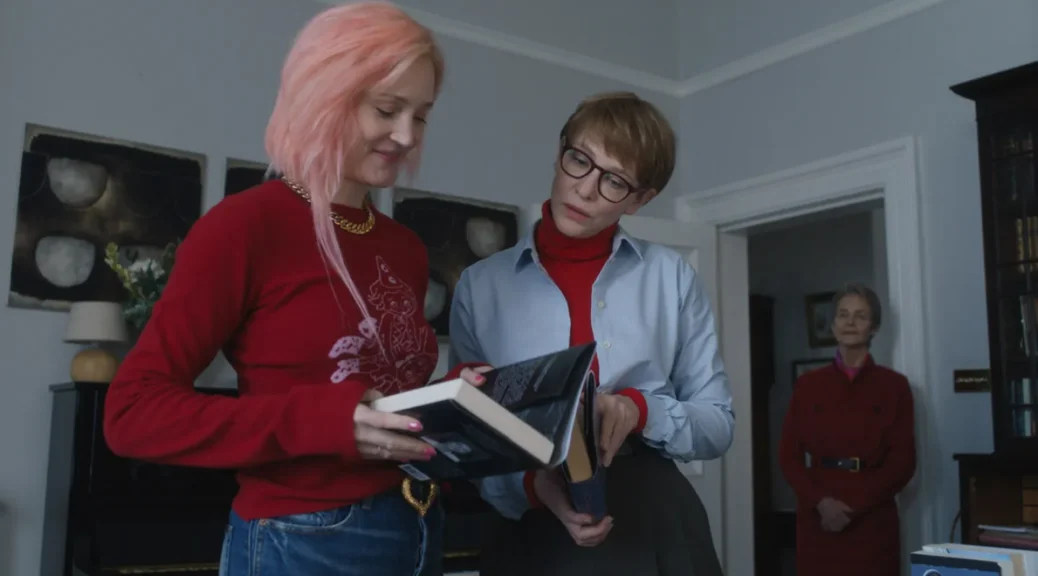
The “Mother” chapter takes us to Dublin, Ireland, where Mom (Charlotte Rampling) is awaiting daughters Lilith (Vicky Krieps) and Timothea (Cate Blanchett) for their annual visit. Though life updates are spilled around a beautiful array of tea and cakes, only a few crumbs of truth actually get shared.
And in Paris for the “Sister Brother” finale, twins Skye (Indya Moore) and Billy (Luka Sabbat) meet after the recent plane crash that killed their parents. From a small cafe to an empty apartment, sister and brother sort through mementos and memories as they take a small step toward moving on.
Though Jarmusch films can sometimes be glacially paced (The Limits of Control) or deadpan enough (The Dead Don’t Die) to frustrate the uninitiated, FMSB finds him at perhaps his most tender and warmly funny.
The segments aren’t connected through these characters, but instead via beverages, watches, skateboarders and the old English phrase “Bob’s your uncle.” The camera lingers on old frames, photographs and empty rooms, making a subtle call to all that caused these recent moments to be less worthy of commemorating. Ultimately, what we don’t see happen begins to weigh as heavily as the things we do.
The cast – full of Jarmusch favorites old and new – is uniformly terrific. Each character is weary with obligations and regrets that seem as authentic as they are relatable, and each reacts to breaks of humor in ways that are different yet still feel very much like family.
And those people you were with over the holidays – would you have hung out even if they weren’t your family? Father Mother Sister Brother might make you consider the answer a bit longer.
Just find a screening, and you know, Bob’s your uncle.

by George Wolf
2025 was yet another year with an impressive list of great performances from young film actors. Ana Sophia Heger (She Rides Shotgun), Cary Christopher (Weapons), and Nina Ye (Left-Handed Girl) were among those seasoned beyond their years. Now, The Plague‘s Everett Blunck leads a terrific ensemble of youngsters to join this group of standout turns.
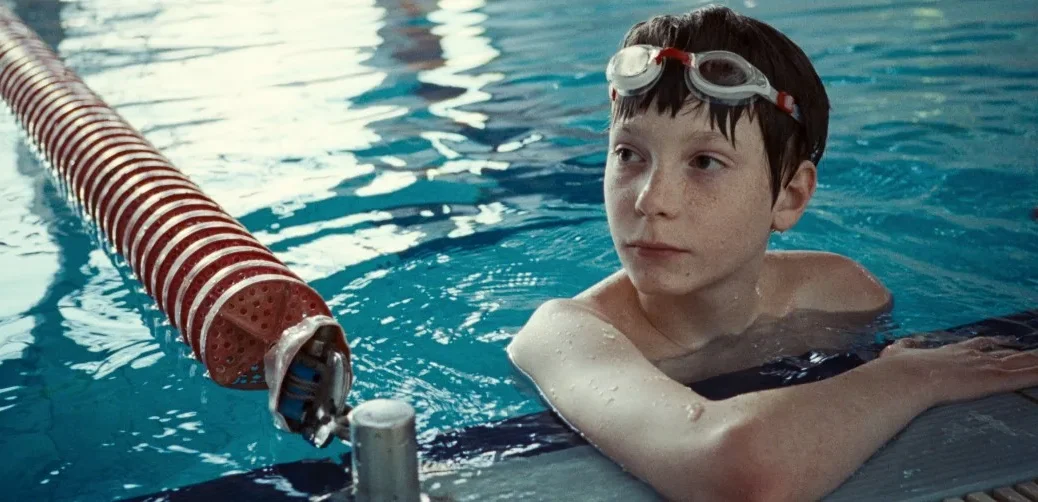
Blunck (last year’s Griffin in Summer) is 12 year-old Ben, one of the young athletes spending the summer at a boys’ water polo camp in New England. A bit shy and awkward, Ben still finds a way to be accepted at the cool kids’ table.
And led by the smug, sarcastic Jake (Kayo Martin, also stellar), those kids target Eli (Kenny Rasmussen, just wonderful) – the weird kid with the rash – for taunts and bullying. Dubbing Eli’s skin condition as a “plague” that’s contagious, the boys are not shy about the finger pointing and mocking laughter.
Ben goes along to get along. But when he dares to show Eli some sympathy, he crosses an unpopular line. Jake and the King Bees decide it is Ben who now has the plague and must be cast out.
Writer/director Charlie Polinger’s feature debut bursts with vision and craftsmanship. He wanders the confines of the swimming pool, locker room and the campus buildings with a probing, studious eye, unveiling some gorgeously shot sequences with a cold detachment that fuels the mood of alienation.
Polinger’s writing is also urgent enough to make this more than just a chlorinated Lord of the Flies. Joel Edgerton’s coach character is aware of some of what’s going on in camp, but he’s purposely kept on the fringes, as Polinger explores how the boys navigate their cruelty around the adults’ anti-bullying sit downs.
Working equally as a microcosm and a singular coming-of-age narrative, The Plague is fascinating, heartbreaking and often quite beautiful. It’s a major debut for a gifted filmmaker, and an emotional showcase for a talented group of young performers.