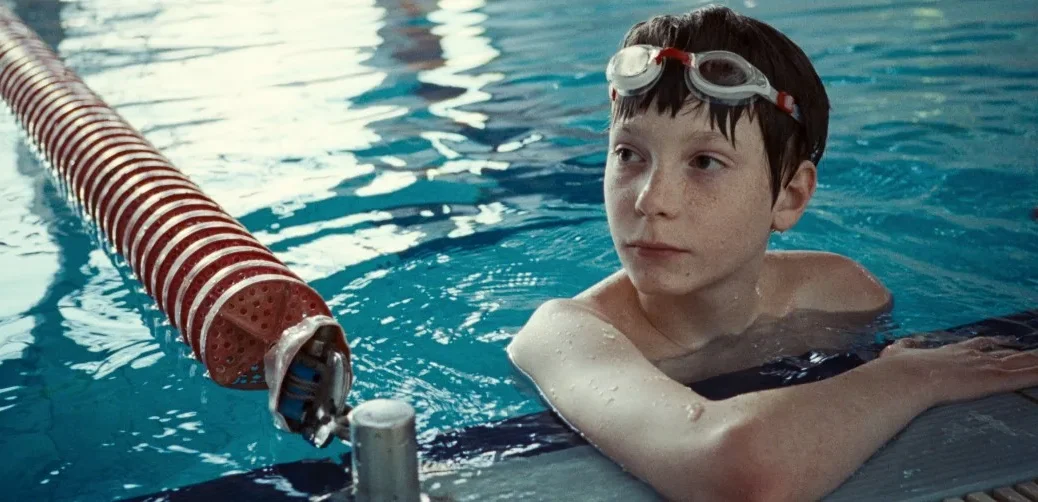
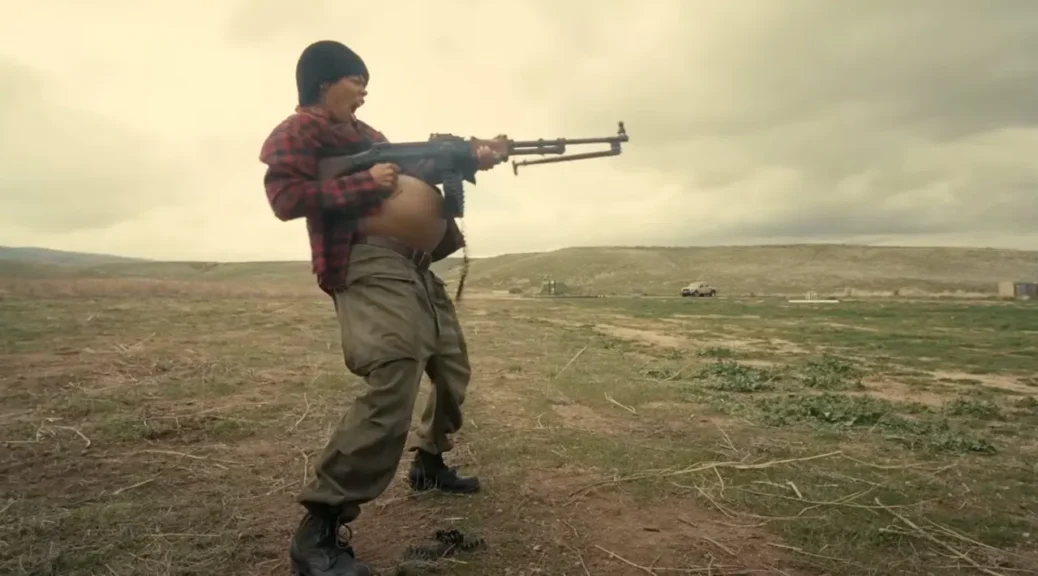
2025 was yet another year with an impressive list of great performances from young film actors. Ana Sophia Heger (She Rides Shotgun), Cary Christopher (Weapons), and Nina Ye (Left-Handed Girl) were among those seasoned beyond their years. Now, The Plague‘s Everett Blunck leads a terrific ensemble of youngsters to join this group of standout turns.
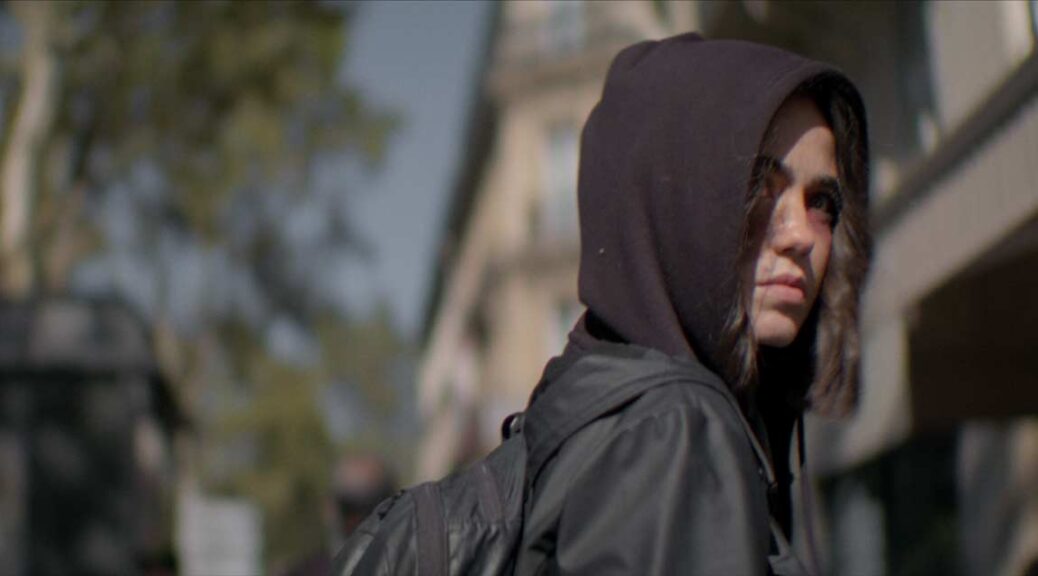
Blunck (last year’s Griffin in Summer) is 12 year-old Ben, one of the young athletes spending the summer at a boys’ water polo camp in New England. A bit shy and awkward, Ben still finds a way to be accepted at the cool kids’ table.
And led by the smug, sarcastic Jake (Kayo Martin, also stellar), those kids target Eli (Kenny Rasmussen, just wonderful) – the weird kid with the rash – for taunts and bullying. Dubbing Eli’s skin condition as a “plague” that’s contagious, the boys are not shy about the finger pointing and mocking laughter.
Ben goes along to get along. But when he dares to show Eli some sympathy, he crosses an unpopular line. Jake and the King Bees decide it is Ben who now has the plague and must be cast out.
Writer/director Charlie Polinger’s feature debut bursts with vision and craftsmanship. He wanders the confines of the swimming pool, locker room and the campus buildings with a probing, studious eye, unveiling some gorgeously shot sequences with a cold detachment that fuels the mood of alienation.
Polinger’s writing is also urgent enough to make this more than just a chlorinated Lord of the Flies. Joel Edgerton’s coach character is aware of some of what’s going on in camp, but he’s purposely kept on the fringes, as Polinger explores how the boys navigate their cruelty around the adults’ anti-bullying sit downs.
Working equally as a microcosm and a singular coming-of-age narrative, The Plague is fascinating, heartbreaking and often quite beautiful. It’s a major debut for a gifted filmmaker, and an emotional showcase for a talented group of young performers.
Damn fine year, 2025. Well, for movies it was. Magnificent original films, like Ryan Coogler’s breathtaking Sinners, as well as blistering new work from Park Chan-wook and Yorgos Lanthimos. Gorgeous literary adaptations, including Chloé Zhao’s heartbreaking Hamnet, Clint Bentley’s lonesome Train Dreams, and GDT’s wondrous Frankenstein. Breathtaking stage-to-screen visions from Paul Thomas Anderson and Thomas Kail. Incredible documentaries, the best superhero film in years, remarkable horror, unusual comedies—if you couldn’t find a movie to love this year, you were not looking. But, we had to narrow it down, so here are our 25 favorites.
One Battle After Another
Though the massive cast is characteristically littered with incredible talents crackling with the electricity of writer/director Paul Thomas Anderson’s script, Benicio del Toro stands out. He brings a laidback humor to the film that draws out Leonardo DiCaprio’s infectious silliness. While much of One Battle After Another is a nail-biting political thriller turned action flick, thanks to these two, it’s also one of Anderson’s funniest movies.
It may also be his most relevant. Certainly, the most of-the-moment. A master of the period piece, with this film Anderson reaches back to clarify present. By contrasting Bob’s paranoid, bumbling earnestness with the farcical evil of the Christmastime Adventurer’s Club, he satirizes exactly where we are today and why it looks so much like where we’ve been during every revolution.
But it is the filmmaker’s magical ability to populate each moment of his 2-hour-41-minute run time with authentic, understated, human detail that grounds the film in our lived-in reality and positions it as another masterpiece.
2. Sinners
Ryan Coogler reteams with longtime creative partner Michael B. Jordan to sing a song of a 1932 Mississippi juke joint. The Smoke Stack twins (Jordan) are back from Chicago, a truckload of ill-gotten liquor and a satchel full of cash along with them. They intend to open a club “for us, by us” and can hardly believe their eyes when three hillbillies come calling.
Jack O’Connell (an amazing actor in everything he’s done since Eden Lake) has a brogue and a banjo. He and his two friends would love to come on in, sing, dance, and spend some money, if only Smoke would invite them.
It’s scary. It’s sexy. The action slaps. It’s funny when it needs to be, sad just as often. It looks and sounds incredible. And there’s a cameo from Buddy F. Guy, in case you needed a little authenticity. When Ryan Coogler writes and directs a vampire movie, he gives you reason to believe there is yet new life for the old monster.
3. Train Dreams
Beautiful, lush, and quietly meditative, Clint Bentley’s Train Dreams is the kind of movie you just don’t ever get to see. It’s a wonderous, melancholy character study set against the rapidly changing America of the early 20th Century, and it is shouldered by the best performance of Joel Edgerton’s career.
Edgerton has yet to turn in a bad performance, nor even a mediocre one, but he seems custom built for this introspective figure, a witness, haunted but open and admirably vulnerable. Bentley surrounds him with so many marvelous performances, sometimes leaving an astonishing mark—on audience and protagonist alike—in only a single scene. Edgerton will no doubt be remembered this awards season, as should the film itself.
4. Hamnet
Chloé Zhao has crafted, aided by magnificent performances and hauntingly stunning cinematography from Lukasz Zal (The Zone of Interest, Cold War), a film that is shattering in its articulation that it is the depth of love that deepens and amplifies the pain of grief.
People make movies about grief all the time. We can expect one every Oscar season. But what Chloé Zhao does with Hamnet is ask us to experience that grief, not just witness it, and in experiencing it we understand the power and vital importance of art.
5. Frankenstein
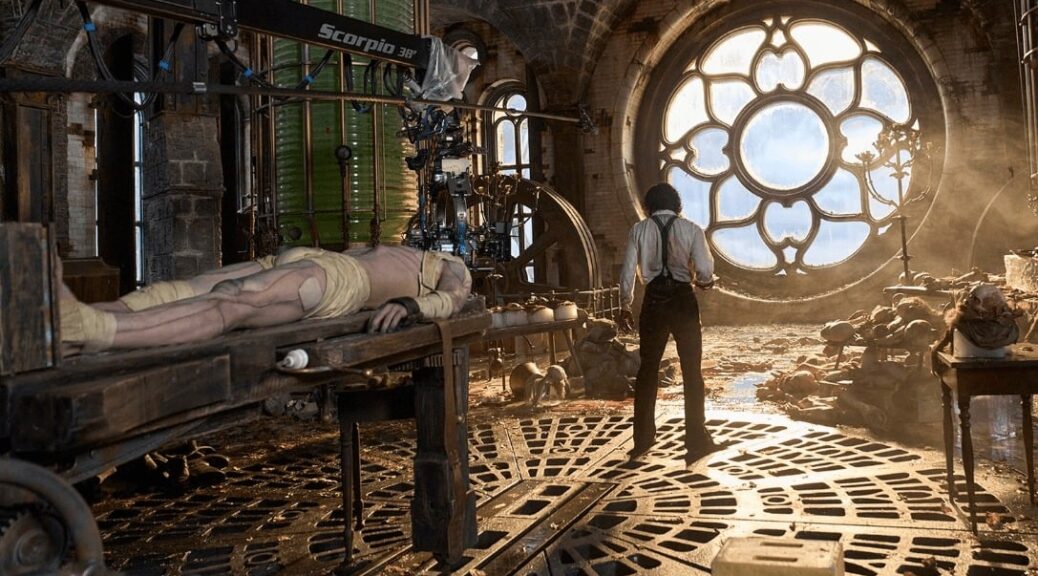
Lush and gorgeous, even when it is running with blood, the world del Toro creates for his gods and monsters is breathtaking. The choices are fresh and odd, allowing for a rich image of creator and creation, the natural versus the magnificent.
Oscar Isaac is a marvel of angry arrogance made humble. As his creature, the long and limby Jacob Elordi offers a monster who’s more sensitive son than wounded manchild.
Mia Goth delivers the same uncanny grace that sets so many of her characters apart, and del Toro’s script allows Elizabeth an arc unlike any previous adaptation. You don’t wander into a Guillermo del Toro film expecting less anything than glorious excess—another reason why Frankenstein and he were meant for one another.
6. No Other Choice
Park Chan-wook’s crafted a seething satire on capitalism but manages to edge the biting farce with strange moments of deep empathy—just one example of the tonal tightrope Park doesn’t just walk, he prances across.
No Other Choice is complicated but never convoluted, constantly compelling and almost alarmingly funny. Between the intricate detail of the thriller and the gallows humor of the comedy, Park crafts a wondrously entertaining film.
7. It Was Just an Accident
This is the first film for Jafar Panahi (No Bears, Taxi, Closed Curtain) since Iran lifted his decade-long filmmaking and travel ban, and while he’s no longer filming himself in secret, Panahi’s storytelling still bursts with intimacy and courage. It Was Just an Accident is more proof that he is one of the true modern-day masters, with a clear and distinctive voice that demands attention.
8. Sentimental Value
Joachim Trier’s rich, quiet, masterfully performed film is about the places we keep our memories rather than dealing with them directly. It could be a house, like the one patriarch Gustav Borg (never-better Stellan Skarsgård) turns into a movie set. It could be the movies, or any art where the artist attempts to address conflicting emotion and memory without the interference of others’ interpretations or responses. But at the heart of these repositories is the family that fosters these memories. In this case, among others, Gustav’s daughters (Renate Reinsve, magnificent, and Inga Ibsdottter Lilleaas, also wonderful).
Sentimental Value is a gorgeously crafted family drama brimming with visual flourishes, comedic moments, heartbreak and honesty. It also boasts one of the finest ensembles of 2025.
9. Hamilton
(Released in theaters for the first time this year) The difference between seeing something live and feeling the energy exchange between cast and audience, as opposed to watching it on a screen where you’re removed from the human element of it, is often hard to overcome. (Remember Cats?) But Thomas Kail – who also directed the 2016 Broadway shows that were recorded for this film – has crafted a near perfect mix of spatial movement and character intimacy.
10. Bugonia
The script from Will Tracy and Jang Joon-hwan offers director Yorgos Lanthimos and his small but savvy (including Emma Stone and Jesse Plemmons, brazenly magnificent) cast fertile ground for the bleak absurdism the filmmaker does so well. Bugonia treads tonal shifts magnificently, slipping from comedy to thriller to horror and back with precision. Lanthimos’s control over audience emotion has never been tighter.
11. Superman
12. Pee-wee Herman as Himself
13. Springsteen: Deliver Me from Nowhere
14. The Ugly Stepsister
15. Black Bag
16. Eddington
17. Hedda
18. Weapons
19. Zootopia 2
20. Friendship
21. Marty Supreme
22. Wake Up Dead Man: A Knives Out Mystery
23. A House of Dynamite
24. The Secret Agent
25. Baltimorons
Honorable mentions: Sirat, Nouvelle Vague, Warfare, Eephus
What an incredible year for horror! Two unquestionable Oscar contenders, great international fare, great reboots and sequels, amazing original material, great independent horror, great studio horror—remarkably spooky stuff!
The year held so much great stuff that we were forced to leave incredible films off our final top 10 list. Our apologies to Companion and Animale, Hood Witch and Dead Mail, Final Destination: Bloodlines and 40 Acres and a lot of other really quality films. But that’s just how strong the competition was this year!
10. The Toxic Avenger
On Prime
Though the story’s changed, much remains the same in writer/director Macon Blair’s reboot in all its goopy, corrosive, violent, hilarious glory.
Peter Dinklage is one of the most talented actors working today, and as Winston he is effortlessly heartbreaking and tender. He’s also really funny, and this is not necessarily the kind of humor every serious actor can pull off.
Blair’s vision for this film couldn’t be more spot-on. Joyous, silly, juvenile, insanely violent, hateful of the bully, in love with the underdog—Blair’s Toxic Avenger retains the best of Troma, rejects the worst, and crafts something delirious and wonderful.
9. Chain Reactions
On Prime
Not everyone believes Tobe Hooper’s The Texas Chain Saw Massacre is a masterpiece of American filmmaking. I find those people suspicious. Luckily, those are not the people filmmaker Alexandre O. Philippe (Memory: The Origins of Alien, 78/52) talks to for his latest documentary, Chain Reactions.
The film is a celebration of 50 years of TCM. The celebrants are five of the film’s biggest fans: Patton Oswalt, Takashi Miike, Alexandra Heller-Nicholas, Stephen King, and Karyn Kusama. It’s a good group. Each share intimate and individual reminiscences and theories about the film, its impact on them as artists, and its relevance as a piece of American cinema. What their ruminations have in common is just as fascinating as the ways in which their thoughts differ.
Each of these artists came to the film from a different perspective—some having seen it early enough in their youth to have been left scarred, others having taken it in as adults and still being left scarred. But each one sees layers and importance—poetry, even—in Hooper’s slice of savage cinema.
8. Invader
On Shudder & Prime
Lean, mean and affecting, Mickey Keating’s take on the home invasion film wastes no time. In a wordless—though not soundless—opening, the filmmaker introduces an unhinged presence.
Immediately Keating sets our eyes and ears against us. His soundtrack frequently blares death metal, a tactic that emphasizes a chaotic, menacing mood the film never shakes. Using primarily handheld cameras from the unnerving opening throughout the entire film, the filmmaker maintains an anarchic energy, a sense of the characters’ frenzy and the endless possibility of violence.
Joe Swanberg, with limited screentime and even more limited dialog, crafts a terrifying image of havoc. His presence is perversely menacing, an explosion of rage and horror. Invader delivers a spare, nasty, memorable piece of horror in just over an hour. It will stick with you a while longer.
7. Bring Her Back
On Prime, HBO, Hulu, and Disney+
Filmmakers Danny and Michael Philippou drew attention in 2022 for their wildly popular feature debut, Talk to Me. Before releasing the sequel, due out this August, the pair changes the game up with a different, but at least equally disturbing, look at grief.
It’s a slow burn, a movie that communicates dread brilliantly with its cinematography and pacing. But when Bring Her Back hits the gas, dude! Nastiness not for the squeamish! Especially if you have a thing about teeth, be warned. But the body horror always serves the narrative, deepening your sympathies even as it has you hiding your eyes.
Australia has a great habit of sending unsettling horror our way. The latest package from Down Under doesn’t disappoint.
6. The Monkey
On Prime, HBO, Hulu, and Disney+
Why is it that so many kids’ toys are creepy? Not that you should call The Monkey a toy. You should not, ever. Because this windup organ grinder monkey, with its red eyes and horrifyingly realistic teeth, is more of a furry, murder happy nightmare.
The film itself is a match made in horror heaven. Osgood Perkins (Longlegs, Gretel & Hansel, The Blackcoat’s Daughter) adapts and directs the short story by Stephen King about sibling rivalry and the unpredictability of death.
Perkins surrounds deliberately low energy leads with bizarre, colorful characters—even more colorful when they catch fire, explode, are disemboweled, etcetera. The film is laced with wonderful bursts of Final Destination-like bloodletting, as the Monkey’s executions are carried out via Rube Goldberg chain reactions that quickly become fun to anticipate.
Yes, fun. And funny.
5. Dust Bunny
In theaters
Imagine Guillermo del Toro meets Wes Anderson. Equal parts fanciful and gruesome, the film tells the tale of a precocious youth named Aurora (Sophie Sloan), who hires the neighbor in 5B (Mads Mikkelsen) to kill the monster that lives under her bed.
Sloan delivers Roald Dahl’s Matilda by way of Wednesday Addams, braids and all. Mikkelsen’s adorably gruff, and the great Sigourney Weaver is having a blast playing gleefully against type and shoplifting every second of screentime.
Writer/director Bryan Fuller wastes not a frame of his feature film debut. The saturated colors and intricate patterns and textures of the set design, the ballet of horror that is his shadow imagery, the boldly whimsical costuming—all of it conjuring an amplified fairy tale. It’s tough to believe this remarkably confident feature is his first foray behind the camera.
4. Weapons
On Prime, HBO, Hulu, and Disney+
Weapons delivers an elaborate mystery slowly revealing itself, ratcheting tension, and leading to a bloody satisfying climax. Unspooling as an epilogue followed by character-specific chapters, the film builds around a single event, developing dread as it delivers character studies of a town of hapless, fractured, flawed individuals in over their heads.
This is smartly crafted, beautifully acted horror. Those who worry Cregger’s left nasty genre work behind for something more elevated need not fear. Weapons is here to work your nerves, make you gasp, and shed some blood. It does it pretty well.
3. The Ugly Stepsister
On Prime, HBO, Hulu, Disney+, and Shudder
Writer/director Emilie Blichfeldt infuses her feature debut with an impossible-to-ignore blast of sharp wit, subdued rage, and grotesque bodily horrors.
The Ugly Stepsister(Den stygge stesøsteren) is the latest new angle to a classic tale, but don’t expect it follow the trend of humanizing misunderstood villains. Blichfeldt makes sure there are plenty of bad guys and girls throughout this Norwegian Cinderella story, punctuated by grisly violence surprisingly close to what’s in the 17th Century French version of the fairy tale penned by Charles Perrault.
It is fierce, funny, gross and subversively defiant. But is one feature film enough to immediately put Blichfeldt on the watch list of cinema’s feminist hell raisers?
Yes. The shoe fits.
2. Frankenstein
On Netflix
Lush and gorgeous, even when it is running with blood, the world del Toro creates for his gods and monsters is breathtaking. The choices are fresh and odd, allowing for a rich image of creator and creation, the natural versus the magnificent.
Oscar Isaac is a marvel of angry arrogance made humble. As his creature, the long and limby Jacob Elordi offers a monster who’s more sensitive son than wounded manchild.
Mia Goth delivers the same uncanny grace that sets so many of her characters apart, and del Toro’s script allows Elizabeth an arc unlike any previous adaptation. You don’t wander into a Guillermo del Toro film expecting less anything than glorious excess—another reason why Frankenstein and he were meant for one another.
1. Sinners
On Prime, HBO, Hulu, and Disney+
Ryan Coogler reteams with longtime creative partner Michael B. Jordan to sing a song of a 1932 Mississippi juke joint. The Smoke Stack twins (Jordan) are back from Chicago, a truckload of ill-gotten liquor and a satchel full of cash along with them. They intend to open a club “for us, by us” and can hardly believe their eyes when three hillbillies come calling.
Jack O’Connell (an amazing actor in everything he’s done since Eden Lake) has a brogue and a banjo. He and his two friends would love to come on in, sing, dance, and spend some money, if only Smoke would invite them.
It’s scary. It’s sexy. The action slaps. It’s funny when it needs to be, sad just as often. It looks and sounds incredible. And there’s a cameo from Buddy F. Guy, in case you needed a little authenticity. When Ryan Coogler writes and directs a vampire movie, he gives you reason to believe there is yet new life for the old monster.
It’s been six years now, have we recovered from the panic and palpitations brought on by Josh Safdie’s Uncut Gems?
Better towel off and grab hold of something, because Marty Supreme serves up another harried drama set at a breakneck pace.
Served up, see what I did there? Marty “The Mouse” Mauser is a table tennis phenom looking to cement his name as the best in the world.
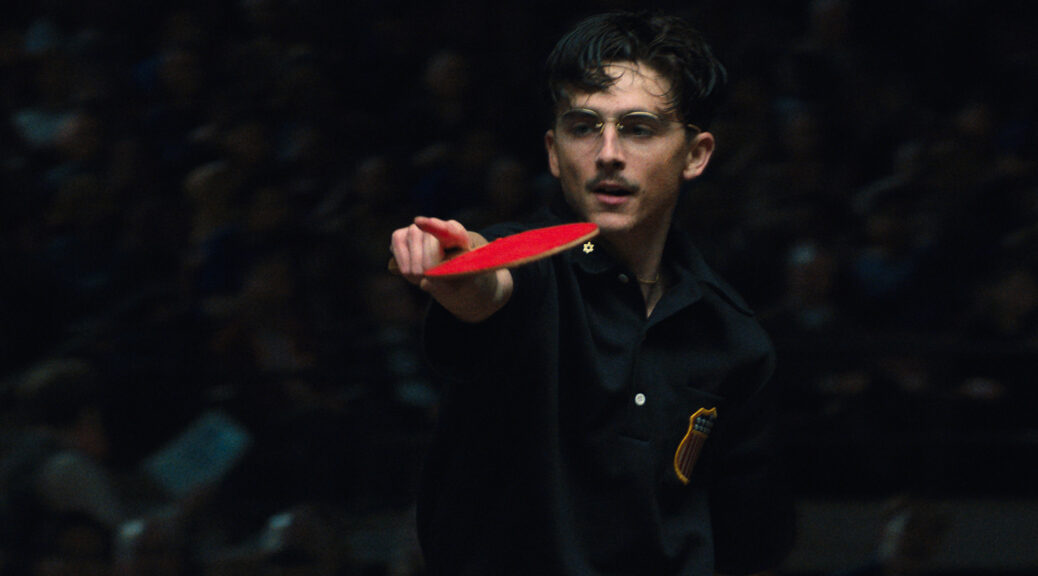
But when we first meet him, Marty (an absolutely electric Timothée Chalamet) is working in a shoe store in 1950s New York. He’s a born salesman, but makes it clear he’s only there to make enough money to finance his next trip to a big tournament. And in that opening few minutes, Safdie and Chalamet gives us a clear glimpse into the Marty Mauser worldview that will grab us by the throat for the next two and a half hours.
Everyone and everything is a means to an end. And Marty is relentless.
It could be an adoring young woman who’s already married (Odessa A’zion), a rich ink pen tycoon (Shark Tank‘s Kevin O’Leary in another bit of Safdie stunt casting) or his bored actress wife (a terrific Gwyneth Paltrow), or even a man out to find his lost dog. It doesn’t matter, Marty will size you up and instantly start working the angle he thinks is most likely to make you an asset.
The entire film, loosely based on Jewish-American table tennis champ Marty Reisman, is a fascinating character study and Chalamet is in mesmerizing, career-best form. Safdie (co-writing again with Ronald Bronstein) might as well just shoot Marty out of a cannon when he leaves that shoe store, and Chalamet makes you afraid to miss anything by looking away.
Like everything else here, the table tennis action is fast, furious and intense, and after an early loss to an unknown, Marty’s singular mission becomes avenging that upset and proving his greatness. But Marty Supreme could be about any type of American unafraid to dream big. It’s another intoxicating ride from Josh Safdie, with an award-worthy Chalamet digging soul deep into a man’s journey toward finding something he values more than himself.
I admit it, I didn’t pay enough attention to the trailer and I really thought Song Sung Blue was a Neil Diamond biopic. And from what I did notice from the trailer, it looked like a pretty bad Neil Diamond biopic.
Wrong on all counts.
The latest from writer/director Craig Brewer leans on terrific performances from Hugh Jackman and Kate Hudson for an unabashed feel good salute to the dreamers who won’t be derailed from following their joy.
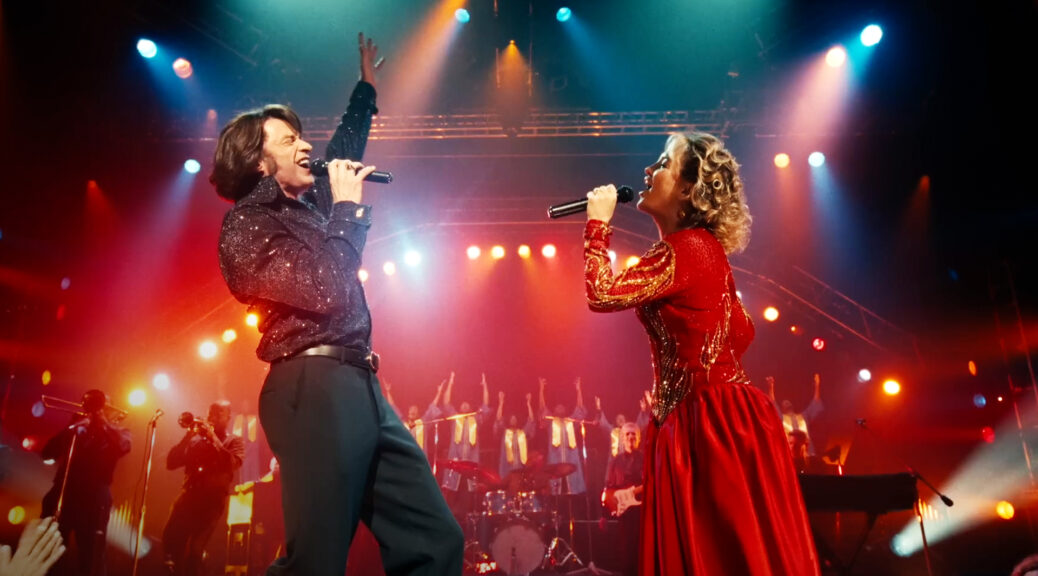
Jackman and Hudson are Mike and Claire Scardina, a Milwaukee couple who built up quite a following in the 80s and 90s as Lightning and Thunder, a Neil Diamond “tribute experience.” Starting out playing restaurants and small clubs, they worked their way up to bigger venues around the Midwest – even opening for Pearl Jam! – before a terrible accident put the future in doubt.
Brewer (Hustle and Flow, Black Snake Moan, Dolemite is My Name, Coming 2 America) adapts Greg Koh’s 2008 documentary with committed earnestness. There isn’t a cynical note to be found about the Scardinas, the nostalgia circuit they love or the ways any of these people measure success. The moments of joy, pain and perseverance are proudly displayed on all their sleeves, and the film is able to pull you in pretty quickly.
Expect plenty of Neil Diamond music, and a reminder that the man has a ton of hits. Yes, the rehearsal and performance set pieces are too perfectly polished, but even that fuels the vibe of dreams-coming-true that the Scardinas are living. And also yes, Jackman and Hudson do their own singing and both sound terrific, while the ensemble cast (including Jim Belushi, Fisher Stevens, Michael Imperioli and Ella Anderson) carves out some unique support characters.
The leads also make Mike and Claire two people that are easy to root for. Off stage, the two bring hardscrabble pasts and children of various ages to their new relationship. They come to believe they were truly meant for each other, and the blended family dynamic offers many relatable beats that run from tender to tragic.
And ironically, it’s those narrative successes that make the missteps in Act III more disappointing. Brewer ends up veering from true events pretty dramatically, adding twists of high melodrama that land as overly contrived.
They also feel unnecessary for a film so committed to the worth of these people and their journey. Song Sung Blue is unapologetic feel-good filmmaking. It plays the heartstrings, the greatest hits and even the cheesy gimmicks so earnestly that the whole show becomes pretty damn hard to resist, even if sequins aren’t exactly your thing.
Krampus is the anti-Santa, St. Nick’s mean sidekick of lore from the Alpine region of Europe. He accompanies Santa on his rounds, and while Santa hands out treats to good kids, Krampus beats them or bags them and hauls them off to hell. I swear! If you’ve tired of the regular old traumatized youth who grows up to don the red suit and murder townsfolk, then Krampus might deck your log this season. Here are some of our favorites.
5. Mother Krampus 2: Slay Ride (2018)
Who is Mother Krampus? Technically, she’s Frau Perchta, a real legend, also from the Alpine region of Europe, also likely to beat and maim idle or misbehaved youth around Christmastime. And while you’ll find about a dozen micro-budget Krampus slashers to choose from, only a couple give Frau her due. We recommend Mother Krampus 2: Slay Ride.
A few Clevelanders are serving out their community service on Christmas Eve. These include KateLynn E. Newberry as good-as-gold Victoria, and Roger Conners gloriously portraying Lady Athena Slay. Conners’s every moment on screen is a hoot.
The film boasts some effective blood fx, solid performances, and a villain you can get behind.
4. Saint (2010)
What is every child’s immediate reaction upon first meeting Santa? Terror. Now imagine a mash-up between Santa, Krampus, a pirate, and an old-school Catholic bishop. How scary is that?
Well, that’s basically what the Dutch have to live with, as their Sinterklaas, along with his helper Black Peter, sails in yearly to deliver toys and bag naughty children to kidnap to Spain. I’m not making this up. This truly is their Christmas fairy tale. So, really, how hard was it for writer/director Dick Maas to mine his native holiday traditions for a horror flick?
Allegorical of the generations-old abuse against children quieted by the Catholic Church, Saint manages to hit a few nerves without losing its focus on simple, gory storytelling.
3. Krampus (2015)
Hometown boy Michael Dougherty, whose 2007 directorial debut Trick ‘r Treat is a seasonal gem, returned to the land of holidays and horror with his second effort behind the camera, Krampus.
When family dysfunction pushes young Max (Emjay Anthony) too far, he tears up his letter to Santa, unwittingly inviting in his stead, the evil shadow-Santa, Krampus.
The ancient demon and his anti-merrymakers get a fantastic design, and the entire film looks great. Plus an ensemble stacked with A-listers (Toni Collette, Adam Scott, David Koechner, Conchata Ferrell) elevates a script that might feel lacking otherwise.
2. A Christmas Horror Story (2015)
A trio of Canadian directors – Steve Hoban, Brett Sullivan, and Grant Harvey – pull together a series of holiday shorts with this one. Held together by Dangerous Dan (William Shatner), the small-town radio announcer who’s pulling a double shift this Christmas Eve, the tales vary wickedly from three teens trapped in their own wrong-headed Nativity, to a family who accidentally brought home a violent changeling with their pilfered Christmas tree, to a dysfunctional family stalked by Krampus, to Santa himself, besieged by zombie elves.
Yes, there is a second film out this holiday season with Krampus in it. You know what? This one’s better – in fact, it’s almost patterned after Krampus director John Dougherty’s cult favorite Trick r’ Treat and it offers more laughs and more scares.
Plus Shatner! He’s adorably jolly in the broadcast booth, particularly as the evening progresses and his nog to liquor ratio slowly changes. This is a cleverly written film, well-acted and sometimes creepy as hell. Merry f’ing Christmas!
1. Rare Exports (2010)
It’s not just the Dutch with a sketchy relationship with Santa. That same year Saint was released, the Fins put out an even better Christmas treat, one that sees Santa—or is it his evil counterpart, Krampus?—as a bloodthirsty giant imprisoned in Korvatunturi mountains centuries ago.
Some quick-thinking reindeer farmers living in the land of the original Santa Claus are able to separate naughty from nice and make good use of Santa’s helpers. There are outstanding shots of wonderment, brilliantly subverted by director Jalmari Helander, with much aid from his chubby-cheeked lead, a wonderful Onni Tommila.
Rare Exports is an incredibly well-put-together film. Yes, the story is original and the acting truly is wonderful, but the cinematography, sound design, art direction and editing are top-notch.
I saw someone post a question recently, asking when Avatar: Fire and Ash would hit streaming.
He might as well have been asking when he could plan to unload some time and money, because seeing this anywhere else but the big screen is a waste of both.
Right from the opening sequence, writer/director James Cameron pushes us one notch closer to a VR experience. The film’s sensory phaser is set to stun, even as Avatar installment number three suffers from the same narrative misfires that hampered the first two.
The timeline has moved ahead one year, with Jake (Sam Worthington) and Neytiri (Zoe Saldaña) settling in as members of the Metkayina clan. Neteyam’s death has left Neytiri grief-stricken and bitter, particularly toward Spider (Jack Champion), who is a constant reminder of the humans who killed her son.
The clone of Colonel Quaritch (Stephen Lang) is still out for revenge on Jake and his family, only this time he has some hot-tempered help.
Varang (Oona Chaplin) is the leader of the volcano-dwelling Mangkwan clan (aka the “Ash People”), a battle-tested warrior who not only gives Quaritch a valuable ally, she alone makes the film more interesting than The Way of Water.
Chaplin digs into Verang’s talents as a Black Magic Woman, and thanks to her, the film’s complete lack of humor is offset by layers of voodoo, dark arts and the conjuring of fire. Cool.
And again, the 3D IMAX whizbangery is pretty spectacular. The human and avatar worlds blend as seamlessly as the land-to-water transitions, with battle sequences that are more detailed and thrilling than ever.
But also again, Cameron and his writing team can’t hold themselves back from bland excess. Cameron borrows from his own films (The Abyss, especially), story beats are repeated and repeated again while dialog is often awkward and sometimes unintentionally funny – unless he was trying to recall Anchorman?
More than anything, Fire and Ash is out to just batter you with its sheer experience-ness. The running time bloats to an unnecessary three hours and fifteen minutes with unrelenting attempts at crescendo moments that rarely allow any time to breathe.
I mean, come on, if every day was like Christmas, then Christmas Day wouldn’t mean that much, would it? Fire and Ash brings over all the best new toys and throws them at you until you’re feeling both exhilarated and wondering what just happened.
Unless you wait until it streams. Then you’re just watching while your neighbor rides his sweet new bike past your house.
Our Christmas gift to you, an extra Fright Club episode! We talk with filmmaker Kurtis David Harder, whose newest feature, Influencers, hits Shudder this weekend. He chats with us about the new film, his Nightmares Film Festival award winning Influencer, making movies, inspirations, and Christmas films. Check it out!
If you saw Influencer three years ago, no doubt you noticed that little smile from CW (Cassandra Naud) in the final shot. If, like me, you were hoping that meant she’d find a way to stir up more social media mischief, it’s a merry Christmas for both of us.
CW has quieted down a bit since we left her on that island, settling down enough with girlfriend Diane (Lisa Delamar) to let her guard down and actually pose for photos. But an encounter with a travel influencer (Georgina Campbell) lures CW back to her old ways, and it isn’t long before she has more bloody tracks to cover.
Again, writer/director Kurtis David Harder has good instincts for knowing what questions we’re asking as this world wide web gets more tangled, and for keeping the beats relevant to the changing landscape of social media.
The introduction of toxic bro blogger Jacob (Jonathan Whitesell) feels right on time, as does the re-introduction of Madison (Emily Tennant), who now has even more scores to settle with old frenemy CW.
Naud gives another terrific performance, as CW remains a smart, slippery and ever intriguing mystery girl. Dancing in and around more gorgeously framed locales, CW makes it fun to try and guess what she’ll do next. What’s even more fun? The fact that we’re not prepared for just how batshit things get in act three.
Harder’s observational nature about social media never feels like finger-wagging, and the continually rising stakes of mystery, mayhem and fun land Influencers as another lethal blast of engagement.