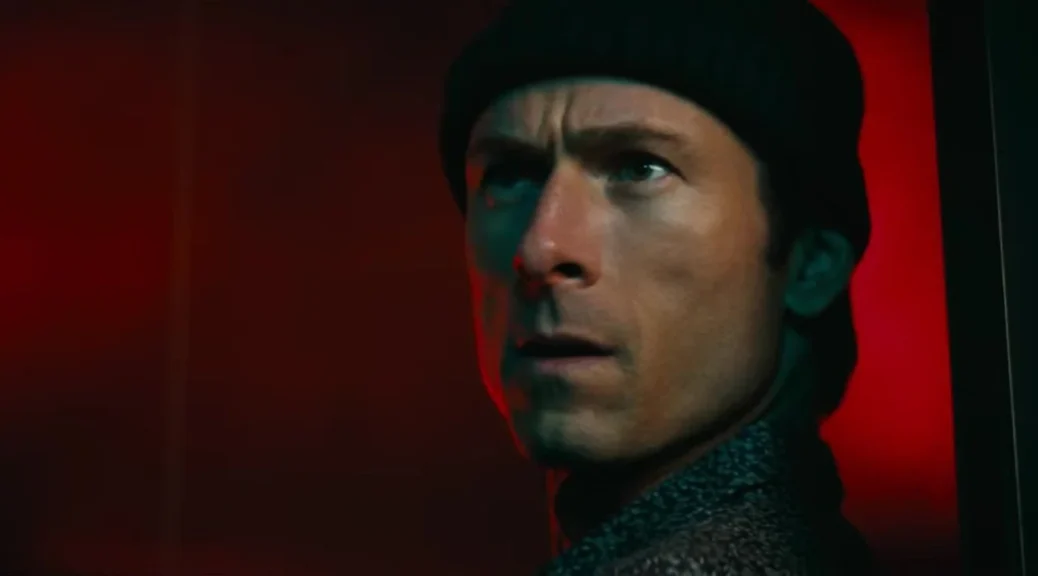
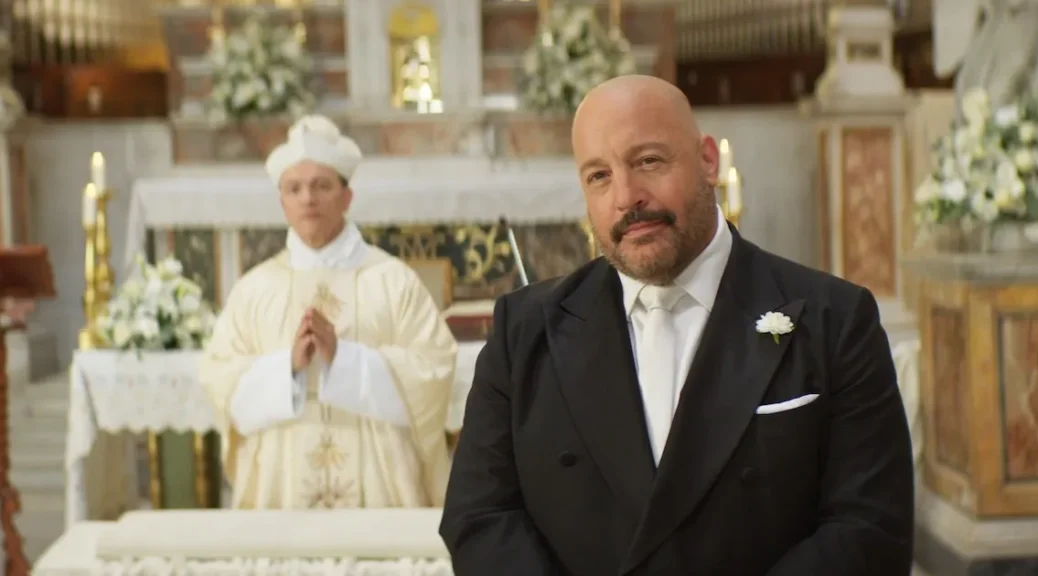
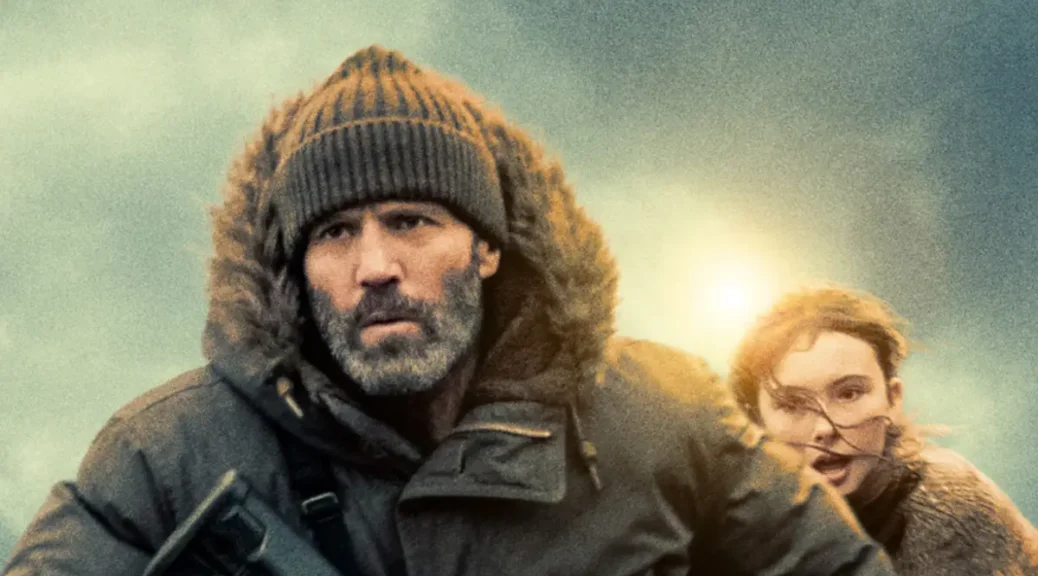
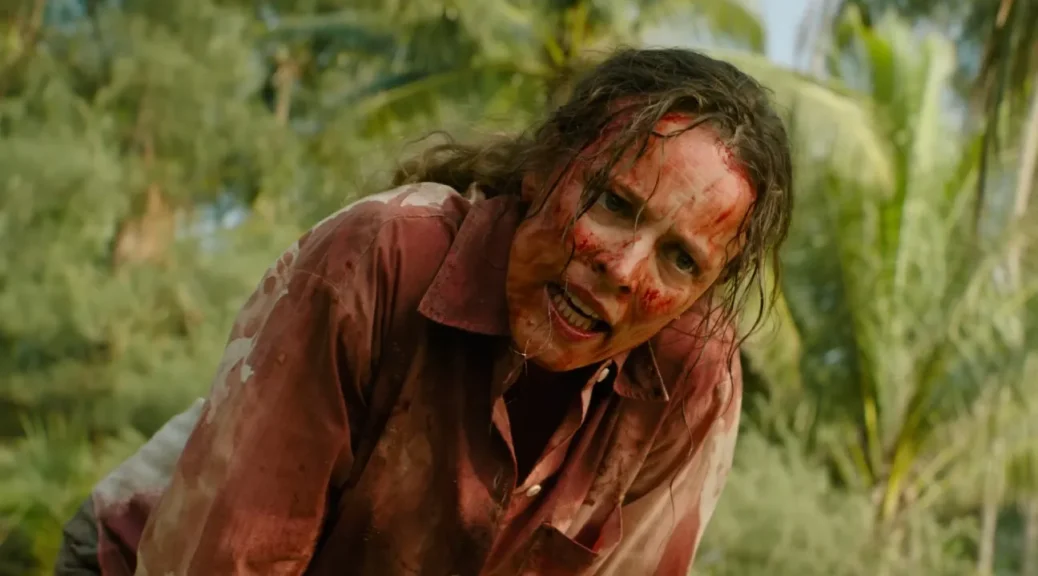
On this week’s Screening Room podcast, Hope & George break down this week’s new releases: How to Make a Killing, Psycho Killer, Paul McCartney: Man on the Run, EPiC: Elvis Presley in Concert, The Oscar Nominated Short Films, This Is Not a Test, The Last Sacrifice, The Dreadful, Diabolic, Kokuho, and Ghost Train.
We’re looking at heartbreak in horror for Valentine’s Day! Not unrequited love turned to stalkerism, because that’s been done to death and it’s not romantic. But the heartbreak and longing of love and loneliness. And blood.
5. The Fly (1986)
It was not just David Cronenberg’s disturbed genius for images and ideas that madeThe Fly fly. It was the performance he drew from Jeff Goldblum.
Goldblum is an absolute gift to this film, so endearing in his pre-Brundlefly nerdiness. He’s the picture’s heartbeat, and it’s more than the fact that we like his character so much. The actor also performs heroically under all those prosthetics.
He and Geena Davis make the perfect pair, with their matching height and mullets, and their onscreen chemistry does give the film a level of human drama traditionally lacking from the Cronenberg canon. You root for Seth, and your heart breaks for him too.
4. Candyman (1992)
Has it really been Helen all along? Was she once, long ago, Daniel Robitaille’s forbidden lover? The reason for his suffering and murder?
Tony Todd makes Candyman a seductive, heartbroken phantasm with no choice but to shed blood to continue to exist. When he whispers to Helen, “Be my victim,” how could she say no?
3. Bram Stoker’s Dracula (1992)
Francis Ford Coppola and screenwriter James V. Hart mined Stoker’s text for as much romance and heartbreak as they could find, and if it wasn’t there, they made it up. The Count pines for his tragically lost love, crossing oceans of time for her. That, of course, leaves poor Jonathan heartbroken. But wait, there’s more! Because Lucy chooses Arthur, leaving Quincy and Dr. Jack both heartbroken, and then breaks Arthur’s heart with her own tragic death.
Coppola’s is the hottest, most gorgeous and heartbroken version of the ancient bloodsucker’s story you’re likely to find.
2. Guillermo del Toro’s Frankenstein
Guillermo del Toro is a big ol’ softy. In many ways, that’s what makes Frankenstein a perfect property for him. His heart has always been with the monster, so why not tell the most heartbreaking and terrifying monster story?
Oscar Isaac is a marvel of angry arrogance made humble. As his creature, the long and limby Jacob Elordi offers a monster who’s more sensitive son than wounded manchild. The creature’s heartbreaking relationship with the eternally misunderstood Elizabeth (Mia Goth) is so full of tenderness and longing that the inevitable heartbreak crushes.
You don’t wander into a Guillermo del Toro film expecting less anything than glorious excess—another reason why Frankenstein and he were meant for one another.
1. May (2002)
Oh, May. Oh, Angela Bettis. No one – not even Sissy Spacek – captured the crushing awkwardness of trying to fit in when you are, deep down, cripplingly odd as well as Bettis.
Her May aches for a friend. Maybe even a lover? She has some heartbreaking trouble finding that in Adam (Jeremy Sisto) and Polly (Anna Faris – brilliant). But if you can’t find a friend, you might just have to make one.
Bettis’s performance is all awkward pauses, embarrassing gestures and longing. It’s beautiful, tender, sweet and – eventually – forgivably bloody. We love May.
A nice mix of variety in this year’s live action nominees. You’ll find social commentary, cheeky parody, surprising comedy, warm humanity and a bitter cold look at the near future. As is the case every Oscar season, don’t miss the chance to catch the live action program on the big screen while you can.
The Singers
United States 18 mins. Director: Sam A. Davis Writer: Based on Ivan Turgenev short story from 1850
You’ve probably been to some bars that have dollar bills stapled all over the walls, right? Well, in this smoke-filled dive, one of those bills is C-note, and pestering from one bothersome barfly leads the bartender to set up a competition.
The best singer in the room gets free beer, plus that one hundred dollar bill! Surprises ensue.
The Singers is a completely delightful talent show that you wish would go on a bit longer than its 18 quick minutes.
A Friend of Dorothy
United Kingdom 21 mins. Writer/director: Lee Knight
An estate trustee (Stephen Fry) is ready to read the will of Dorothy (Miriam Margolyes) to two young men. Dorothy’s grandson Scott (Oscar Lloyd) is expecting a nice payout, and he doesn’t know why JJ (Alistair Nwachukwu) has also been invited.
Through flashbacks, we see the tender friendship that developed after JJ accidentally kicked a soccer ball into the 87 year-old widow’s garden.
The title may give you a clue about the lessons learned, and A Friend of Dorothy becomes a gently accessible reminder about kindness in a cruel world.
Butcher’s Stain
Israel 26 mins. Writer/director: Meyer Levinson-Blount
Samir (Omar Sameer) is a quiet, hard-working butcher in an Israeli grocery. He’s a talented and well-liked employee, but Samir’s manager (Rona Toledo) tells him there is a problem.
Someone has been tearing down the posters of Israeli hostages that hang in the break room. Another employee has reported that Samir is to blame.
In less than thirty minutes, filmmaker Meyer Levinson-Blount (who also plays a small role) crafts a timely and well-earned message about suspicion and rushes to judgment when complex issues are reduced to hot takes and social posts.
Two People Exchanging Saliva
France/U.S. 36mins. Writers/directors: Natalie Musteata and Alexandre Singh
Led by the perfectly detached narration from Vicky Kreips, we’re invited into a high-end department store in a strange, near-future world. Here, purchases are paid for with slaps across the face, and overall affection (specifically, kissing) is forbidden.
Through the strange attraction that develops between the well-to-do Angine (Zar Amir Ebrahimi) and a rookie salesgirl (Luana Bajrami), filmmakers Natalie Musteata and Alexandre craft an intoxicating take on class, intimacy, pleasure and risk.
This is probably the Oscar favorite.
Jane Austen’s Period Drama
United States 13 mins. Writers/directors: Julia Aks and Steve Pinder
With names like Mr. Dickley, Vagianna, Mrs. Bitts and Dr. Bangley, you can quickly guess where this parody of suppressed ribaldry and sexual ignorance is headed.
In 1800s England, Estrogenia Talbot (co-writer/co-director Julia Aks) is finally getting her long-awaited marriage proposal from Mr. Dickley (Ta’imua), when this Period Drama drops a dramatic period. Dickley mistakes the blood for a serious injury to Estrogenia, and the cheeky sendup of Austen is off and winking.
It’s more amusing than outright hilarious, but Austen fans should especially appreciate a sendup that respectfully pokes fun at some classics.
The Oscar Nominated Short Films are presented in three separate feature-length programs (Live Action, Animated, Documentary) at theaters beginning this weekend.
Hope & George review this week’s new releases: Wuthering Heights, Crime 101, Good Luck Have Fun Don’t Die, GOAT, The Mortuary Assistant, Honey Bunch, Sweetness, and Misdirection
I saw the fairly generic title, I saw the February release date, I saw the two hour and twenty minute run time, and I was less than excited about Crime 101.
Let me tell you how quickly it proved me wrong.
Writer/director Bart Layton and a cracking ensemble put a stylish, character-driven sheen on some familiar crime thriller tropes. What results is a tense and twisty ride that taps into a healthy amount of world weary anxiety.
Chris Hemsworth is Mike, a controlled and elusive master thief, dealing in diamonds and jewelry along the California coast. Mark Ruffalo’s Lou is a disgruntled and disheveled L.A. cop out to prove his theory of a lone wolf criminal. And Halle Berry is Sharon, a high-end insurance broker who deals in plenty of bling.
And long before their lives intersect, Layton (adapting Don Winslow’s novella) brings authenticity to the disillusion the three characters share. Each feels they’re grasping at something just out of reach, trying to live with certain ideals that have lost value. Lou’s refusal to put arrest quotas first does not make him popular at work, while Sharon feels her chance at a big promotion may be slipping away with age. And Mike is the classic criminal with a haunted past and moral code. In lesser hands, these all become empty cliches. But three standout performances and a sharp script pay character development dividends from the film’s opening minutes.
The supporting cast (featuring Corey Hawkins, Nick Nolte and a quick cameo from Jennifer Jason Leigh) is exceptional as well. Barry Keoghan is electric as a tightly wound hotshot out to move up to big league heists and Monica Barbaro brings sweet tenderness to Maya, who navigates a possible relationship with Mike through caution and curiosity.
Layton’s camera is patient – obviously, with this run time – but never aimless. Everything fuels our understanding of these characters, the city canvas where they operate, and the tension that builds for the looming showdown. Layton’s narrative misdirections are sly and subtle, aided stylistically by some nifty scene transitions and a vibrant, mysterious score from Blanck Mass.
You may recognize other crime thrillers (especially Michael Mann’s Heat) embedded in the film’s DNA, but Crime 101 feels especially in the moment. Since moving from television to features, Layton has shown a persistent interest in exploring the psyche behind audacious crimes.
I’m a Cleveland Cavaliers fan, so the name Steph Curry brings up one glorious memory, and plenty of forgettable ones.
But yes, fine, he is the game’s G.O.A.T. shooter and he seems like a good guy. And now he brings a bit of his own legend to the big screen as producer and supporting voice talent in GOAT, the story of a little sharpshooter with big dreams.
Will Harris (Caleb McLaughlin from Stranger Things) is an undersized goat in Vineland who is a big fan of Roarball (“Regional Organized Animal Roarball”). It’s just like basketball, if basketball was played by gigantic animals on a shape shifting court.
Will loves ball, his hometown Vineland Thorns and their best player, Jett Fillmore (Gabrielle Union). But as great as Jett is, the Thorns have never won the Claw (championship) and are mired in another losing streak, much to the delight of arch rival Mane Attraction (Aaron Pierre), a trash-talking horse with an extensive grooming routine.
One day at the local playground, Mane is accepting court challenges from all comers, and Will steps up. He drains a few long range threes, the footage goes viral, and Thorns owner Flo (Jenifer Lewis) decides the little guy might be just what her team needs.
But how can Will prove himself if Jett and Coach Dennis (Patton Oswalt) won’t accept the league first “small” as part of the team and give him some playing time already?
Nick Kroll, David Harbour, Jennifer Hudson, and Nicola Coughlan join Curry as supporting voices, as first time directors Tyree Dillihay and Adam Rosette adapt the book “Funky Dunks” with a team of four writers and a narrative that finds some fun in the familiar.
Parents and grandparents will get one or two solid LOLs, plus some tried and true sports plotting seen in Major League, Semi-Pro, Bad News Bears and even the “dream big” mantra from last year’s Marty Supreme. It’s surface level, easily digestible stuff for the younger set, built with 3-D animation that’s more busy and colorful, less memorable.
GOAT‘s not exactly a championship contender, but it is a scrappy gamer, and should give young sports fans and pop culture first stringers some ninety odd minutes to hold their attention.
Where’s Jane Fonda? Sally Field? Michael Douglas? Morgan Freeman?
Nowhere to be found.
Ditto Lily Tomlin, Bette Midler, Andy Garcia or any of the more veteran stars we’ve seen in the formula that Solo Mio executes with some charming success.
Kevin James stars as Matt Taylor, an elementary school art teacher who is left at the altar by fiancée Heather (Julie Ann Emery) during a lavish excursion wedding in Italy (Heather must be making the big bucks.) The tours, packages and perks are all paid for, so Matt falls in with a travel group that quickly takes the lonesome loser under its wing.
Julian and Meghan (Kim Coates/Alyson Hannigan), Neil and Donna (Jonathan Roumie/Julee Cerda), a supportive concierge and various Italian children keep tabs on Matt during his picturesque cobblestone road to rebound.
The lovely Gia (Nicole Grimaudo) owns the local cafe, and it isn’t long before she becomes Matt’s “plus one” on the tour group outings, and his mood gradually perks up.
But can he really forget Heather so quickly? And what about that handsome Vincenzo (Gaincarlo Bartolomei), Gia’s former flame who keeps popping by the cafe?
James has this sad likable sack act down cold, Grimaudo is sweetly understated and the Coates/Hannigan pairing pays comedic dividends. Directors Charles and Daniel Kinnane take the script from their brothers John and Patrick (with help from James himself) and start checking off boxes that have become so familiar to their elders over the last several years.
Constant travel, no worries about jobs or money, and the chance at late-stage romance. It’s right out of the AARP fantasy film playbook, but this time we get the younger James (a spry 60!) who is cavorting through various hijinks at gorgeous locales, rubbing elbows with surprise celebrities and finding the spark to try love again.
And then just as your eyes are ready to roll, the film pulls out a cheeky twist that stops just short of being Nicolas Sparks-worthy. Instead of shameless, the late turn lands as more heartfelt and actually logical, helping Solo Mio leave you with satisfying aftertaste as the credits start to roll.
Just how many off-the-books groups of elite assassins are there? And does Jason Statham have expired membership cards from all of them?
Apparently, quite a few. And yes.
In Shelter, the secret group is called Black Kite, and Michael Mason (Statham) has been exiled and on the run since he broke a golden rule ten years ago. While hiding out at a lighthouse in the Scottish Isles, Mason’s rescue of a drowning girl named Jesse (Hamnet‘s talented Bodhi Rae Breathnach) gets them both spotted by MI-6’s new high tech surveillance system.
So now Michael’s been made, Jesse’s an orphan and they’re both on the top secret hit list.
This time out, Naomi Ackie gets to be the director barking orders in front of video feeds, while Bill Nighy is the oily spymaster who crossed Statham years ago. Much like the chess pieces Mason likes to play with, director Ric Roman Waugh is just moving new pieces around the same formulaic playground.
Screenwriter Ward Parry adds on the trusty child-in-danger trope, along with no shortage of cliched dialog.
“You really think we can outrun what we are?”
“Maybe I’m becoming like you…”
“You don’t want this life.”
It’s more plug-and-play action on the way to a requisite showdown, but Statham and Breathnach share decent chemistry, Waugh (the Greenland films, Angel Has Fallen) orchestrates some effective hand-to-hand combat sequences, and he’s able to build the film with a bit more nuance than Statham’s usual fare.
It ain’t Hamnet, but at least our righteous killing machine isn’t lathering up with a tube of shark repellant.
As much as Send Help feels like the Sam Raimi film that it is, the writing credits seem a bit unfinished. With a premise taken more from Triangle of Sadness than Castaway, and two pivotal plot points lifted from films I won’t mention for fear of spoilers, you’d expect at least an inspired by or story elements citation of the previous works.
No? Alrighty then. Raimi works from a script by the team of Damian Shannon and Mark Swift (Baywatch, 2009’s Friday the 13th, Freddy vs. Jason), providing the requisite dark humor, blood splatter and body fluids for a fun, root-for-the-underdog romp.
Linda Liddle (Rachel McAdams) is that underdog. Linda puts in long, committed hours in the strategy and planning department of a big firm. She’d been promised a major promotion from the founder (nice Bruce Campbell portrait on the wall!), but now he’s passed on and the d-bag son Bradley (Dylan O’Brien) has taken over.
And Bradley’s gonna give Linda’s promotion to his frat buddy instead.
Linda sticks up for herself, so Bradley gives her the chance to prove her worth at a big merger meeting in Bangkok. But when their plane crashes, Linda and Bradley end up as the only ones left alive on a deserted island. And right away, Linda’s skills are very valuable indeed.
Turns out, she’s a survivalist junkie who has auditioned for Survivor. Linda knows her way around the dangers of an uninhabited locale, while Bradley doesn’t know much beyond silver spoon-fed privilege. So Linda will not take kindly to being ordered around like the under-appreciated underling she was back in the office.
Bradley eventually becomes contrite, but can he be trusted? Linda appears ever helpful, but can she be trusted? Their castaway days become an increasingly bloody game of cat, mouse and wild boar, with some wonderfully competitive chemistry between McAdams and O’Brien.
She makes Linda’s transition to alpha female a crowd-pleasing hoot, and he crafts Bradley with a perfectly obnoxious mix of misguided mansplainer and smug elitist.
Yes, it’s over the top, just like you expect a Sam Raimi deserted island playground to be. What an unspoiled canvas for some blood spray, projectile vomiting, and a little survival of the deadliest. Game on!
Send Help delivers the R-rated fun, and it’s instantly relatable to the countless souls who’ve secretly dreamed of doing bodily harm to an insufferable boss. But it’s a comeuppance fantasy that still remains easily forgettable…unless you’ve seen the couple films it repeatedly recalls.
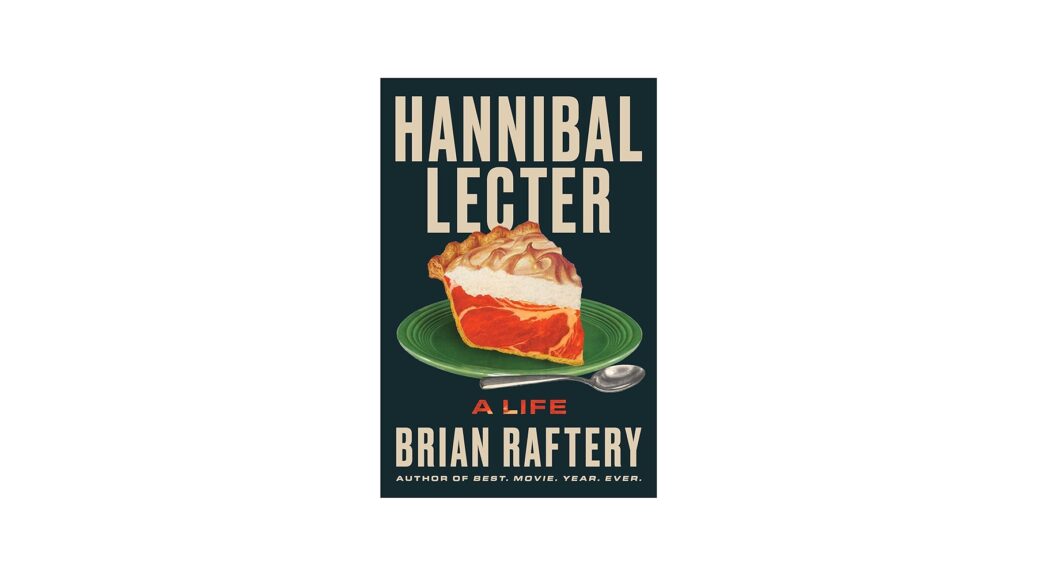
Bonus episode! Hope & George talk with author Brian Raftery, whose nonfiction book Hannibal Lecter: A Life is a fascinating must-read for all Silence of the Lambs fans.