Tag Archives: Gateway Film Center

Fright Club: Maybe a Vampire

So many vampires – so many! And then there are all these other guys who may or may not be. Sometimes it’s hard to say. Sure they drink blood, but do they really need to? Let’s explore.

5. Vampire’s Kiss (1988)

Sure, Nicolas Cage is a whore, a has-been, and his wigs embarrass us all. But back before The Rock (the film that turned him), Cage was always willing to behave in a strangely effeminate manner, and perhaps even eat a bug. He made some great movies that way.

Peter Lowe (pronounced with such relish by Cage) believes he’s been bitten by a vampire (Jennifer Beals) during a one night stand. It turns out, he’s actually just insane. The bite becomes his excuse to indulge his self-obsessed, soulless, predatory nature for the balance of the running time.

Cage gives a masterful comic performance in Vampire’s Kiss as a narcissistic literary editor who descends into madness. The actor is hilarious, demented, his physical performance outstanding. The way he uses his gangly mess of limbs and hulking shoulders inspires darkly, campy comic awe. And the plastic teeth are awesome.

Peter may believe he abuses his wholesome editorial assistant Alva (Maria Conchita Alonso) with sinister panache because he’s slowly turning into a demon, but we know better.

4. The Transfiguration (2016)

Milo likes vampire movies.

Eric Ruffin plays Milo, a friendless teen who believes he is a vampire. What he is really is a lonely child who finds solace in the romantic idea of this cursed, lone predator. But he’s committed to his misguided belief.

All this changes when Milo meets Sophie (Chloe Levine), another outsider and the only white face in Milo’s building. A profound loneliness haunts this film, and the believably awkward behavior of both Ruffin and Levine is as charming as it is heartbreaking.

The Transfiguration is a character study as much as a horror film, and the underwritten lead, slow burn and somewhat tidy resolution undercut both efforts.

Still, there’s an awful lot going for this gritty, soft-spoken new image of a teenage beast.

3. The Reflecting Skin (1990)

Writer/director Philip Ridley has a fascinating imagination, and his film captures your attention from its opening moments.

Seth Dove lives with his emotionally abusive mother and his soft but distant father, who run a gas station in rural Idaho sometime after WWII. Seth’s older brother Cameron (Viggo Mortensen) is off serving in Japan. Seth has decided that the neighborhood widow Dolphin Blue (a wonderfully freaky Lindsay Duncan) is a vampire.

Positively horrible things begin to happen, each of them clouded by the dangerous innocence of our point of view character.

The film plays a bit like a David Lynch effort, but with more honesty. Rather than the hallucinatory dreaminess Lynch injects into films like Blue Velvet (the most similar), this film is ruled by the ferociously logical illogic of childhood.

With this point of view, the realities of a war blend effortlessly with the possibility of vampires. Through little Seth Dove’s eyes, everything that happens is predictably mysterious, as the world is to an 8-year-old. His mind immediately accepts every new happening as a mystery to unravel, and the jibberish adults speak only confirm that assumption.

This film is a beautiful, horrifying, fascinating adventure unlike most anything else available.

https://www.youtube.com/watch?v=DBGHoknFI2I

2. Cronos (1993)

In 1993, writer/director Guillermo del Toro announced his presence with authorty by way of this tender and unusual “vampire” flick. Del Toro favorites Federico Luppi and Ron Perlman star. Luppi is Jesus Gris, the elder statesman, an antique store owner, loving husband and doting grandfather.

Perlman plays Angel, a thug – what else? Angel’s miserable but very rich uncle wants an Archangel statue from Gris’s store, but the real value has already found its way into Gris’s veins.

A vampire film of sorts, it’s a beautiful story about faith and love – not to mention the real meaning of immortality. Performances are wonderful, and watching this masterful filmmaker find his footing is the real joy.

1. Martin (1978)

Martin (John Amplas) is a lonely young man who believes he’s a vampire. He may be – the film is somewhat ambivalent about it, which is one of the movie’s great strengths. He daydreams in black and white of cloaks, fangs and mobs carrying pitchforks.

Or are those memories? Does Martin’s uncle hate him because Martin, as he claims, is really in his Eighties, as his uncle would surely know? Romero has fun balancing these ideas, tugging between twisted but sympathetic serial killer and twisted but sympathetic undead.

Romero’s understated film is more of a character study than any of his other works, and Amplas is up to the task. Quietly unnerving and entirely sympathetic, you can’t help but root for Martin even as he behaves monstrously. It’s a bit like rooting for Norman Bates. Sure, he’s a bad guy, but you don’t want him to get into any trouble!

The film’s a generational culture clash wrapped in a lyrical fantasy, but quietly so. It’s touching, gory at times, often quite tense, and really well made. That, and it’s all so fabulously Seventies!

https://www.youtube.com/watch?v=NNIGTSdKPl0

Fright Club: Rituals

Everybody has their rituals, and that’s all fine and dandy. But we aren’t looking for fine and dandy, are we? Hell no – we’re looking for the kind of rituals that generally includes goats heads and/or black candles and/or virgins and/or special meat preparation.

Where will we find these? In some great horror movies. Check it.

5. Kill List (2011)

Never has the line “Thank you” had a weirder effect than in the genre bending adventure Kill List.

Hitman Jay (a volcanic Neil Maskell) is wary to take another job after the botched Kiev assignment, but his bank account is empty and his wife Shel (an also eruptive MyAnna Buring) has become vocally impatient about carrying the financial load.

Without ever losing that gritty, indie sensibility, Ben Wheatley’s fascinating film begins a slide in Act 2 from crime drama toward macabre thriller. You spend the balance of the film’s brisk 95 minutes actively puzzling out clues, ambiguities and oddities.

Everything builds, unsettlingly, to a climactic ritual you won’t see coming.

For those looking for blood and guts and bullets, Kill List will only partially satisfy and may bewilder by the end. But audiences seeking a finely crafted, unusual horror film may find themselves saying thank you.

4. The Wicker Man (1973)

In the early Seventies, Robin Hardy created a film that fed on the period’s hippie- versus-straight hysteria. Uptight Brit constable Sgt. Howie (Edward Woodward) flies to the private island Summerisle, investigating charges of a missing child. His sleuthing leads him into a pagan world incompatible with his sternly Christian point of view.

The deftly crafted moral ambiguity of the picture keeps the audience off kilter. Surely we aren’t to root for these heathens, with their nudey business right out in the open? But how can we side with the self-righteous prig Howie?

But maybe Howie’s playing right into something he doesn’t understand – and what would the people of Summerisle do if he didn’t play along? The ritual would be blown!

Hardy and his cast have wicked fun with Anthony Shaffer’s sly screenplay, no one more so than the ever-glorious Christopher Lee. Oh, that saucy baritone!

The film is hardly a horror movie at all –more of a subversive comedy of sorts – until the final reel or so. Starting with the creepy animal masks (that would become pretty popular in the genre a few decades later), then the parade and the finale, things take quite a creepy turn.

3. We Are What We Are (2010)

In a quiet opening sequence, a man dies in a mall. This is a family patriarch and his passing leaves the desperately poor family in shambles. An internal power struggle begins to determine the member most suited to take over as the head of the household, and therefore, there is some conflict and competition – however reluctant – over who will handle the principal task of the patriarch: that of putting meat on the table.

We’re never privy to the particulars – giving the whole affair a feel of authenticity – but adding to the family’s crisis is the impending Ritual, which apparently involves a deadline and some specific meat preparations.

Grau’s approach is so subtle, so honest, that it’s easy to forget you’re watching a horror film. Indeed, were this family fighting to survive on a more traditional level, this film would simply be a fine piece of social realism focused on Mexico City’s enormous population in poverty. But it’s more than that. Sure, the cannibalism is simply an extreme metaphor, but it’s so beautifully thought out and executed!

https://www.youtube.com/watch?v=EBkNz3_pzsw

2. Martyrs (2008)

This is one you may need to prepare yourself for. Equal parts orphanage ghost story, suburban revenge fantasy, and medical experimentation horror flick, the whole of Martyrs is a brutal tale that is hard to watch, hard to turn away from, and worth the effort.

Mining the heartbreaking loneliness of abandoned, damaged children, the film follows the profound relationship between Lucie (Mylene Jampanoi) and the only friend she will ever have, an undeterrably loving Anna (Morjana Alaoui).

Constantly subverting expectations, including those immediately felt for Anna’s love, writer/director Pascal Laugier makes a series of sharp turns, but he throws unforgettable images at you periodically, and your affection for the leads keeps you breathlessly engaged.

The third act offers the most abrupt change of course as well as tone. Here is where the ritual begins – it began long ago, but the subject wasn’t quite right. Though it feels like an abrupt shift, it ends up a gruesome but inevitable conclusion.

https://www.youtube.com/watch?v=Jbct9qWBSME

1. The Exorcist (1973)

For evocative, nerve jangling, demonic horror, you will not find better than The Exorcist.

Slow-moving, richly textured, gorgeously and thoughtfully framed, The Exorcist follows a very black and white, good versus evil conflict: Father Merrin V Satan for the soul of an innocent child.

But thanks to an intricate and nuanced screenplay adapted by William Peter Blatty from his own novel, the film boasts any number of flawed characters struggling to find faith and to do what’s right in this situation.

So was Friedkin, the director who balanced every scene to expose its divinity and warts, and to quietly build tension. The titular ritual was simply the climax of a film filled with rituals, big and small, Catholic and non-religious, that we use to keep us clean and safe.

Schwarzenegger’s Aftermath Premieres at Gateway

He said he would be back, and he is – onscreen, anyway. Open fan of Columbus Arnold Schwarzenegger stars in Aftermath, a movie filmed and set in central Ohio.

Based on the real-life mid-air collision of Danish airplanes in 2002, recast as an American disaster, the film follows the merging paths of a grieving father (Schwarzenegger) and the air traffic controller he holds responsible (Scoot McNairy).

Greater Columbus Film Commission and Gateway Film Center celebrate the release with a premier this Friday, April 7. Local cast and crewmembers will share the excitement, which begins with a mixer at the film center at 7:30 pm and a screening at 9.

Schwarzenegger delivers one of his best performances in a role that contrasts with the type that made him an icon. He’s thoughtful and understated in a film draped in a haze of sadness and regret.

He’s joined onscreen by Columbus native Maggie Grace in a film written by Javier Gullon (Enemy), produced by Darren Aronofsky (Black Swan, The Wrestler), and directed by Elliot Lester (Nightingale).

Add to that cameos by former Mayor Mike Coleman and shout outs to local media Sunny 95 and Channel 6 – not to mention locations you’re sure to recognize – and the whole thing feels just darn homey.

Tickets for this special opening night event are $15 each ($5 for myGFC members).

Standard showtimes and pricing also available at www.gatewayfilmcenter.org.

Fright Club: Best Surreal Horror

Everybody’s first experience with horror is a nightmare – their own bad dreams. Surreal horror manages to recreate the anxiety, confusion and dreamlike quality of those nightmares.

In fact, it’s such fertile ground for horror that there are dozens of excellent possible films to celebrate – beginning with Bunuel and Dali’s 1929 head trip Un Chien Andelou to Bergman’s 1968 film Hour of the Wolf, Shin’ya Tsukamoto’s fantastical 1989 fantasy Tetsuo, the Iron Man to Turkey’s latest foray into the genre, Can Evrenol’s 2015 head trip Baskin. All of these films are required viewing for horror fans, but something had to be set aside.

So, here you have it: our pick of the five best surreal horror films.

5. Vampyr (1932)

The well-groomed Allen Grey (Julian West) is an aimless dreamer preoccupied by tales of the supernatural. He wanders thusly, with what appears to be a fish net, to a secluded little inn. But trouble’s afoot.

And dig those crazy shadows!

Early in Vampyr, Grey receives a package from a weary looking man. The package says, “To be opened upon my death.” It appears that Grey has stumbled into a deadly mystery with nothing to help him puzzle out the details except that needless fish net.

The great Carl Theodor Dreyer co-wrote and directed this gorgeous black and white fantasy. The painterly quality of Dreyer’s frames and the bizarre character behavior give the film a surreal atmosphere you can’t shake. His decision to limit dialog to a minimum and craft the film with traditional silent film gimmicks benefitted the dreamscape atmosphere.

As Grey wanders through this picturesque nightmare realm, the film becomes almost drunk with weirdness. Dreyer captures the gorgeous terror of a dream more perfectly than any other filmmaker, in a movie that is never predictable, always a bit surreal and spooky.

https://www.youtube.com/watch?v=5xEWT23yA3o

4. Possession (1981)

Speaking of sex and monsters – wait, were we? – have you seen Possession? WTF is going on there?

Andrzej Zulawski – writer/director/Czech – created this wild ride with doppelgangers, private investigators, ominous government (or are they?) agencies, and curious sexual appetites. It’s more precisely fantasy than horror, but it strikes me as David Cronenberg meets David Lynch, which is a pairing we can get behind.

Mark (Sam Neill) and Anna’s (a fearless Isabelle Adjani) relationship boasts an intentional artificiality – a queasying sexuality – that makes it hard to root for either of them as their marriage deteriorates. Anna, it seems, is in love with someone else. Is it the sexually open – really, really open – Heinrich? Is it a bloody, mollusk-like monster? Is Mark boning Anna’s mean friend with a cast on her leg? Does Bob’s kindergarten teacher bear an unreasonable resemblance to Anna? Is anyone caring properly for Bob?

These questions and more go basically unanswered in a deviant, summary-defying, fantastical bit of filmmaking that mocks the idiocy, even insanity of obsession and boasts a handful of weirdly excellent performances. And sex with a bloody mollusk-like monster.

3. Repulsion (1965)

The first of Polanski’s brilliant “apartment trilogy,” Repulsion takes on its protagonist’s point of view. As Carol (an utterly amazing Catherine Deneuve) spirals into a hallucinogenic stupor of violence and paranoia, Polanski wisely decided to occupy that same headspace, rather than observing it as an outsider.

It gives the film its surreal feel, developed partly by the wonderful camera work of Gilbert Taylor, who uses the black and white necessitated by the budget to wondrous, shadowy, menacing effect.

Though the marketing for the film promoted a virgin’s hysteria, close attention to the film suggests something far more sinister beneath Catherine’s breakdown. Is it ironic that Roman Polanski of all people is able to articulate the mental and emotional chasm left by a likely sexual assault? Why yes, yes it is, but God help me, he does it well.

2. Gozu (2003)

If you are looking for genuine lunacy in film, your search should begin and quite possibly end with filmmaker Takashi Miike. His shit is nuts. Truth be told, there are scads of Miike films that could have populated this list because even his tamest, most logical, no-puppetry films are wild rides. So when he starts coloring way outside the lines, expect to be surprised.

This one starts off as a yakuza film – one guy on a mob-style assignment – then descends into absolute madness.

Minami (Yuta Sone) has been ordered to assassinate his feeble-minded yakuza boss Ozaki (Sho Aikawa), but he’s conflicted. Then he loses Ozaki and wanders, in search, into – you might say it was the Twilight Zone, except this place is considerably weirder. There’s a minotaur. An electrified anal soup ladle death scene. Some seriously, seriously weird shit.

Like a walk through somebody’s subconscious, the film is awash in repressed sexual desires of the very most insane and unspeakable. There’s a comical element that’s almost equally unsettling. Gozu is not as violent as many Miike films – it’s violent, don’t be mistaken, but the horror here is more in unseemly behavior and wildly inappropriate imagery. It’s just stuff you can’t unsee.

https://www.youtube.com/watch?v=penZT2N2xDw

1. Eraserhead (1977)

There truly is no film quite like David Lynch’s first feature, eh?

Eraserhead defies simple summarization. Easily the most surreal of all Lynch’s films – which is a huge statement – the film follows sad-sack Henry Spencer (Jack Nance) dealing poorly with fatherhood.

The film becomes a nightmare of paternal angst and existential crisis – indeed, it may be impossible to name a film or filmmaker more able to bring a nightmare to life.

It’s also among the finest examples of corporeal horror you will find. The shadowy, grimy b/w photography – partially handled by Lynch’s longtime cinematographer Frederick Elmes – amplifies the dismal stagnation facing Henry.

At the same time, it gives a weird, nostalgic camp factor to the Lady in the Radiator and adds a particularly lurid element to that whole bleeding “chicken” thing.

Plus, the baby. Yikes. Alive with the most disturbing imagery, Eraserhead is impossible to forget.

Fright Club: Best Zombie Comedies

Prepare to be pissed off. Why? Well, because we’re going to explore the best zombie comedies today and there are hundreds of options. We guarantee that we will leave something off this list that you want to see on it. There’s really no question about it. Probably at #5. So just know that we know that there are at least a dozen great zombie comedies that we do not address here, given that we’ve limited our list to five.

And here they are!

5. The Return of the Living Dead (1985)

Why Return of the Living Dead? Because it was one of the very first zombie comedies, mainly. But its pedigree is impressive. The original story – one of bumbling warehouse employees who unwittingly unleash the very biochemical that caused the Night of the Living Dead in the first place – was conceived by Russell Streiner, producer of the Romero zombie classic.

Also, Dan O’Bannon, writer behind Alien and Total Recall, co-wrote and directs.

The film also introduced into the genre the abiding zombie trait of brain eating, and is the first film in which zombies grown braaaaiiiinnnnssss.

Plus, the great Linnea Quigley Leg Warmer Dance Scene, a fun 80s punk rock soundtrack, Clu Gulagar and a lot of campy fun – all of this combined to create one of the more memorable and weirdly important zombie comedies.

4. Dead Snow (2009)

Nazi zombies, everybody! Hell yes!

Like its portly nerd character Erlend, Dead Snow loves horror movies. A self-referential “cabin in the woods” flick, Dead Snow follows a handsome, mixed-gender group of college students as they head to a remote cabin for Spring Break. A creepy old dude warns them off with a tale of local evil. They mock and ignore him at their peril.

But co-writer/director/Scandinavian Tommy Wirkola doesn’t just obey these time-honored horror film rules. Like Scream and The Cabin in the Woods, Dead Snow draws your attention to them. It embraces our prior knowledge of the path we’re taking to mine for comedy, but doesn’t give up on the scares. Wirkola’s artful imagination generates plenty of startles and gore by the gallon.

Spectacular location shooting, exquisite cinematography, effective sound editing and a killer soundtrack combine to elevate the film above its clever script and solid acting. Take, for example, the gorgeous image of Norwegian peace – a tent, lit from within, sits like a jewel nestled in the quiet of a snowy mountainside. The image glistens with pristine outdoorsy beauty – until it … doesn’t.

The unapologetically faithful image of the traditional American horror film, Dead Snow is funny and scary, utterly gross and thoroughly enjoyable.

3. Juan of the Dead (2011)

By 2011, finding a zombie film with something new to say was pretty difficult, but writer/director/Cuban Alejandro Brugues managed to do just that with his bloody political satire Juan of the Dead.

Breathtakingly and unapologetically Cuban, the film shadows slacker Juan and his layabout pals as they reconfigure their longtime survival instincts to make the most of Cuba’s zombie infestation.

I’m sorry – dissidents. Thankfully the Cuban media is on top of this situation, letting the faithful patriots know that the violent, flesh-hungry villains outside are all dissidents. Your old, fat auntie? Dissident. Paperboy, missing a foot and dragging himself toward that priest? Dissident.

One of a thousand hilarious touches is that the word zombie is used only once, by a non-Cuban – even Juan and his friends thoughtlessly refer to the mayhem-happy characters as dissidents. It’s a whole new approach to the zombiepocalypse – not to mention social satire – and it’s entirely entertaining.

It’s such a clever, eye-opening film with some added oomph via soundtrack and closing credits animation. Juan of the Dead promises one killer dia de los muertos!

2. Shaun of the Dead (2004)

This is a hard movie not to like. Writer/director Edgar Wright teams with writer/star Simon Pegg to lovingly mock the slacker generation, 80s pop, and George Romero with this riotous flesh-eating romance. But what is easy to overlook is the genuine craftsmanship that went into making this picture.

Every frame of every scene is so perfectly timed – pauses in conversation synchronized with seemingly random snippets of other conversations, or juke box songs, or bits from the tele. (The movie will turn you British. By the end you’ll be saying holiday instead of vacation, spelling colour with a u and saying, “How’s that for a slice of fried gold?” even though you don’t really know what that means.)

Shaun offers such a witty observation of both a generation and a genre, so well told and acted, that it is an absolute joy, even if you’re not a fan of zombie movies. As social satire, it is as sharp as they come. It also manages to hit the bull’s eye as a splatter horror film, an ode to Romero, a buddy picture, and an authentic romantic comedy. And it’s more than just a remarkable achievement; it’s a fresh, vivid explosion of entertainment. It’s just a great movie.

1. Zombieland (2009)

Zombieland is quite possibly the perfect movie. Just when Shaun of the Dead convinced me that those Limey Brits had created the best-ever zombie romantic comedy, it turns out they’d only created the most British zom-rom-com. The Yank counterpart is even better, and with this amount of artillery, it’s certainly a more American vision.

Let’s start with the writing. Rhett Reese and Paul Wernick take the tried-and-true zombiepocalypse premise and sprint with it in totally new and awesome directions.

And the cameo. I cannot imagine a better one. I mean that. I’m not sure a walk on by Jesus himself could have brought me more joy.

That’s not true. Plus, in zombie movie?! How awesome would that have been?!

Jesse Eisenberg anchors the film with an inspired narration and an endearing dork characterization. But Woody Harrelson owns this film. His gun-toting, Twinkie-loving, Willie Nelson-singing, Dale Earnhart-number-wearing redneck ranks among the greatest horror heroes ever.

I give you, a trip to a loud and well-lit amusement park is not a recommendation Max Brooks would make during the zombiepocalypse. Still, you’ve got to admit it’s a gloriously filmed piece of action horror cinema.

Video Massacre Volume 1 Comes to Gateway

If the title Video Massacre Volume 1 conjures the image of some Eighties VHS compilation of B-horror, then perfect. You’re ready for the viewing.

An assortment of 20 shorts filmed by Brooklyn filmmakers, the series boasts a nice mix of polish and camp, all surrounded by the joyously self-referential framing story of demon-ghost Belfy and the hostages he’s forcing to watch the shorts.

Humor – frequently of the toilet variety – gives the film its tone, and the individual shorts are sequenced to offer the experience a good pace. While a handful of the films feel too amateurish, most of them boast excellent production values. It’s clear these were made on tight budgets, but the filmmakers across the board know how to match cinematic technique to the tone of the short.

One animated piece and the fake trailer for “The Shitting” rank among the most entertaining, and two “experiments gone awry” efforts are the most fun. You can also expect a lot to go wrong in the woods.

More than anything, the film feels like a mash note to the genre, right down to the twist ending. (Pay close attention to the credits inside the film. Priceless!)

Join us as we host a Midwest premier of Video Massacre Volume 1 at Gateway Film Center this Saturday, 4/2, at 9:30pm and stick around after for a Q&A with some of the directors:

Grier Dill, director: Trashed, Fungus Adventure
Brett Glass & Grier Dill, director: Brood X
Brett Glass, director: frame story
Joseph Colmenero, director: The Coffin
Winnie Cheung, director: Exit Interview
Suzi Sadler, director: The Retreat
Cale Hughes, director: Jackolantern

Fright Club Live: Inside

Inside (2007)

Holy shit. Inside is not for the squeamish.

Beatrice Dalle’s insidious performance is hard to shake. Fearless, predatory, pitiless and able to take an enormous amount of abuse, her nameless character stalks a very, very pregnant Sarah (Alysson Paradis). Sarah lost her husband in a car crash some months back, and now, on the eve of Christmas, she sits, enormous, uncomfortable, and melancholy about the whole business. She’s grown cynical and despondent, more depressed than excited about giving birth in the morning.

Alexandre Bustillo’s film seeks to change her mind, make her want that baby. Because Dalle’s lurking menace certainly wants it. Her black clad silhouette is in the back yard, smoking and stalking – and she has seriously bad plans in mind.

Bustillo and directing partner Julien Maury swing the film from intelligent white collar angst to goretastic bloodfest with ease. The sadistic humor Dalle brings to the performance adds chills, and Paradis’s realistic, handicapping size makes her vulnerability palpable.

The film goes wildly out of control, and by the third act, things are irredeemably out of hand. And yet, this is a brilliant effort, a study in tension wherein one woman will do whatever it takes, with whatever utensils are available, to get at the baby still firmly inside another woman’s body.

Secret of Their Lack of Success

Revenge of the Mekons

by Hope Madden

Is there a more punk rock concept than anarchy?

The answer is no, and that is what makes The Mekons the most punk rock band ever, regardless of the fact that their music is more of a folk/honkytonk/punk blend.

Born of Britain’s punk scene in ’77, the band consisted of an art college collective who, characteristically, had no musical ability at all. Naturally, they were immediately signed to a label.

Now, nearly 40 years later, the band is still together, still recording, still touring, regardless of the fact that they’ve been repeatedly dropped by labels and have never achieved even a moderate level of success.

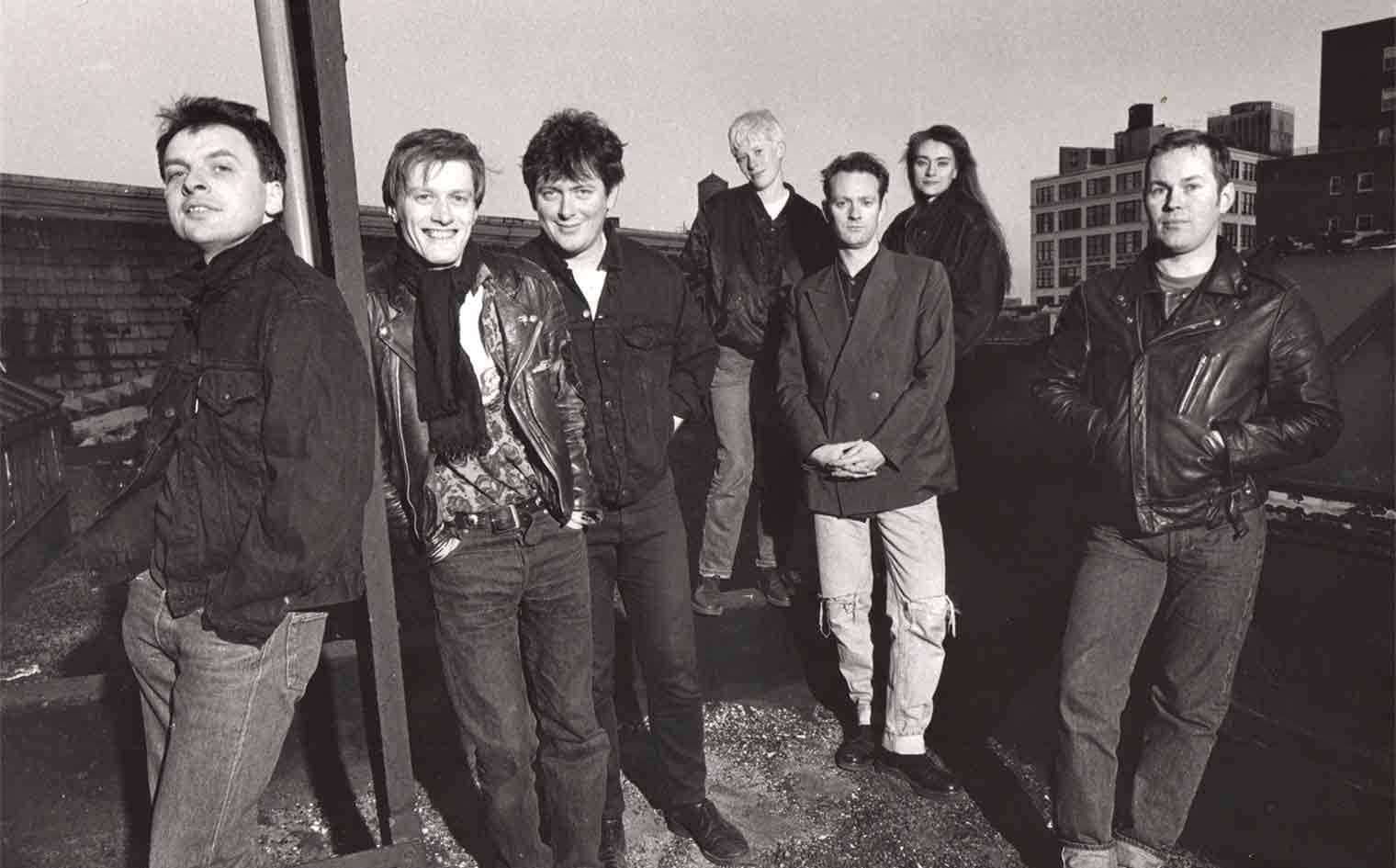
Joe Angio’s documentary Revenge of the Mekons enjoyable catalogs the band’s journey from talentless punks with a philosophy to brilliantly listenable artists with integrity and the same philosophy.

The film marks the evolution of a band that constantly reinvents itself, each new direction a natural progression from the last while also being a fascinating surprise. They find the “voice of the people” foundation in wildly varying styles of music and, rather than abandoning their previous style, they marry it with the next. The result is always fresh because the Mekon’s natural style is, as founder Jon Langford calls it, “bloody minded.” Whatever genre they adopt, it naturally changes. Just like, as the film points out, when the Ramones started recording they were trying to sound like the Beach Boys.

But it’s the band’s almost comical indifference to financial or popular success that sets the film apart. Says Ed Roche of the Mekon’s label Touch and Go Records, “Every critic loves the Mekons. Unfortunately, they get free records.”

Rock docs almost invariably follow the same format: humble beginnings, meteoric rise, trouble handling success, crash and maybe the glimmer of a resurgence, depending on the film and subject. To spend 95 minutes cataloging all the ways a band manages to avoid success is fascinating – it’s like the story of Anvil, except that the Mekons aren’t even trying to succeed.

What they are doing is focusing solely on their own artistry, which can be a pretentious thing to watch for a feature length running time, but the band does not possess an ounce of pretentiousness. They are what they are. They do what they do. Like them or don’t, it doesn’t matter to them.

How punk rock is that?

Verdict-3-5-Stars

Every Dog Has His Day

The Dog

By Christie Robb

Hollywood is captivated by bank robbers: John Dillinger, Bonnie and Clyde, Patty Hearst, Butch Cassidy and the Sundance Kid…

And John Wojtowicz, aka the Dog.

Not familiar? He’s the inspiration for the 1975 Al Pacino movie Dog Day Afternoon.

The Gateway Film Center is showing the latest of three documentaries on Wojtowicz, The Dog, starting Friday, August 22nd—the 42nd anniversary of the day Wojtowicz robbed a Chase Manhattan bank in order to finance his partner’s sex change operation.

The documentary offers the perspective of the progressively ailing Wojtowicz as well as those of his “wives” (both female and male), mother, eye witnesses, hostages, reporters, and gay rights activists. Directors Allison Berg and Frank Keraudren position Wojtowicz in the context of the burgeoning gay liberation movement, reminding the viewer how eye-opening this event was to many of the television viewers and local bystanders who watched the robbery and subsequent hostage negotiation unfold live. The Stonewall Riots had only happened three years previously.

Wojtowicz gave a good performance during the robbery—threating to beat up police for calling him a faggot, visiting with his adoring mother, having pizza delivered to the bank, throwing thousands of dollars out of the door, and French kissing a man at the bank threshold while still holding hostages. Wojtowicz was primed for theatricality; he went to a screening of The Godfather to psych himself up for the robbery.

And Wojtowicz, gives a good performance here. He describes himself both as a “romantic” and a “pervert” and narrates events leading up to the robbery and his life in its aftermath with a jovial demeanor that often jars with his subject matter. Several times I had to blink and process what just happened. (Is he narrating a butcher knife suicide attempt while smiling and wearing a puffer coat? Did he just offer a blowjob to a walrus?)

Berg and Keraudren leave it up to the audience to form their own conclusions about Wojtowicz. Romantic, willing to face prison to make his partner’s dream come true, as he maintains? Controlling, chauvinistic, sex addict, as interviews with his partners make it seem? A man clinging to his 15 minutes of fame? An ex-con with limited options, making a buck off the crime that prevents him from following his preferred career path in finance?

His story is indeed captivating and probably worth giving him another 15 minutes of fame.


Verdict-3-5-Stars


It’s Asia – to the Extreme!

It’s coming!!

What’s coming? The coolest thing ever – a film festival Hope got to help program. And it is too nutty!

Asia Extreme opens at the Gateway Film Center next Thursday, August 8 and runs through the following Tuesday (8/13). Expect showers of blood, technology ghosts, regular ghosts, ass kicking, face kicking, face sliting, demonic cats, and vengeance. Oh, so much vengeance.

Some highlights include the Park Chan-wook’s full Vengeance Trilogy, in one location for one low price. See Oldboy as it was meant to be seen before the American version potentially ruins it. Truth be told, Spike Lee’s trailer looks pretty good. Still, the original’s a surefire weirdfest that may kill your soul just a little.

Another insane set of three: Kim Jee-Woon’s I Saw the Devil, Doomsday Book (in its Midwest premier) and A Tale of Two Sisters. A punishing director with tremendous visual flair and subversive humor, Jee-Woon work is meant to be enjoyed on a big screen.

Another two from Joon-ho Bong – the riveting drama of Mother (voted Best Foreign Language Film by the Central Ohio Film Critics Association in 2011), and the spectacular creature feature The Host – will keep you wildly entertained.

There’s more, including the Asian originals of Hollywood flicks you know and may love: Ringu, Shutter, Ju-On: The Grudge, and Pulse. Plus action and Sci-Fi to rip your flesh off, like the infamous Battle Royale, Election, BKO: Bangkok Knockout, and the fascinatingly titled This Girl Is Bad-Ass (in its Ohio premier, no less).

And more! Seriously, there are like another dozen movies I haven’t even mentioned! Who’s geeked?!

So, obviously, go. Do it! How could you not?!!


http://www.youtube.com/watch?v=nQV7ejqpbPc


Thursday, August 8

7:30 PM             BLOOD C: THE LAST DARK (2012) – US Theatrical Premiere!

10:30 PM          BATTLE ROYALE (2000)

12:00 AM          HOUSE (1977)

Friday, August 9       

1:30 PM             MOTHER (2009)

Three films from legendary director Kim Jee-Woon:

4:30 PM             I SAW THE DEVIL (2010)

7:30 PM             DOOMSDAY BOOK (2012) – Midwest Premiere!

10:30 PM          A TALE OF TWO SISTERS (2003) – First Ohio Theatrical Screening!

12:00 AM          THE HOST (2006)

Saturday, August 10             

1:30 PM             RINGU (1998)

4:30 PM             JU-ON: THE GRUDGE (2002)

7:30 PM             HORROR STORIES (2013) – US Theatrical Premiere!

10:30 PM          IP MAN: THE FINAL FIGHT (2013)

12:00 AM          THE SLIT MOUTHED WOMAN (2006)

Sunday, August 11  

The Vengeance Trilogy – First combined theatrical screening in Columbus! Patrons can see SYMPATHY FOR MR. VENGEANCE, OLDBOY, and LADY VENGEANCE at normal prices or all three for $15!

1:30 PM             SYMPATHY FOR MR. VENGEANCE (2002)

4:30 PM             OLDBOY (2003)

7:30 PM             LADY VENGEANCE (2006)

10:30 PM          THE RED SHOES (2006) – Columbus Premiere Screening!

Monday, August 12 

1:30 PM             PULSE (2001)

4:30 PM             SHUTTER (2004)

7:30 PM             BKO: BANGKOK KNOCKOUT (2010) – Ohio Premiere!

10:30 PM          THIS GIRL IS BAD-ASS!! (2012) – Ohio Premiere!

Tuesday, August 13              

1:30 PM             ELECTION (2005)

The Ghost School Trilogy – First combined screening in the Midwest! Patrons can see WHISPERING CORRIDORS, MEMENTO MORI, and WISHING STAIRS at normal prices or all three for $15!

4:30 PM             WHISPERING CORRIDORS (1998)

7:30 PM             MEMENTO MORI (1999)

10:30 PM          WISHING STAIRS (2003) – Closing Night Screening!