Tag Archives: film reviews

Shipping Up to Sligo

Pixie

by Matt Weiner

There was a time in the late 90s when you couldn’t go six months without a quippy crime comedy that was obviously pitched as “Pulp Fiction, but this time you get to be the studio making a boatload of money.” Some of these, like Doug Liman’s Go, were quite good. Others, like The Boondock Saints, belong in the Hague. Most of them, though, were simply reliable—reliably watchable, and equally forgettable.

Thankfully, the new action comedy Pixie takes as many cues from its distinct local sensibilities as it does from forebears like Tarantino and especially Guy Ritchie, the capo di tutti capi of British gangster cinema.

It all starts, naturally, with a drug deal gone bad—and things just get worse from there. Pixie has all the convenient plot twists and beyond belief interconnectedness you’d expect in this sort of crime thriller. But it also has heart, anchored by Olivia Cooke (Ready Player One) as the title moll.

A nonstop series of crosses, double crosses and double-double crosses take Pixie and her inept partners in crime on a scenic if slightly murderous tour through the West of Ireland as they attempt to make their big score without getting snared by misfit hitmen, killer priests and country gangsters hot on their heels. This includes Pixie’s own family (with the great Colm Meaney as patriarch, who seems to be thoroughly enjoying this “teddy bear who might also kill you” stage of his career).

For all the contrivances of the genre, director Barnaby Thompson, working off a script by his son Preston Thompson, imbues the film with an archness that keeps the action entertaining even at its most improbable. So much of this falls to Cooke, who switches effortlessly from femme fatale to agent of pure chaos, a beguiling anti-heroine who has figured out how to entice others to clean up the carnage she leaves in her wake.

And if the bawdy jokes, nun-related gunplay and jaw-dropping vistas still aren’t enough, perhaps Alec Baldwin chewing through his scenes and an Irish accent with equal aplomb will seal the deal.

Eye Spy

Keep an Eye Out

by Hope Madden

If there is one filmmaker whose movies resist summarization, it’s Quentin Dupieux. I have tried (Deerskin, Wrong).

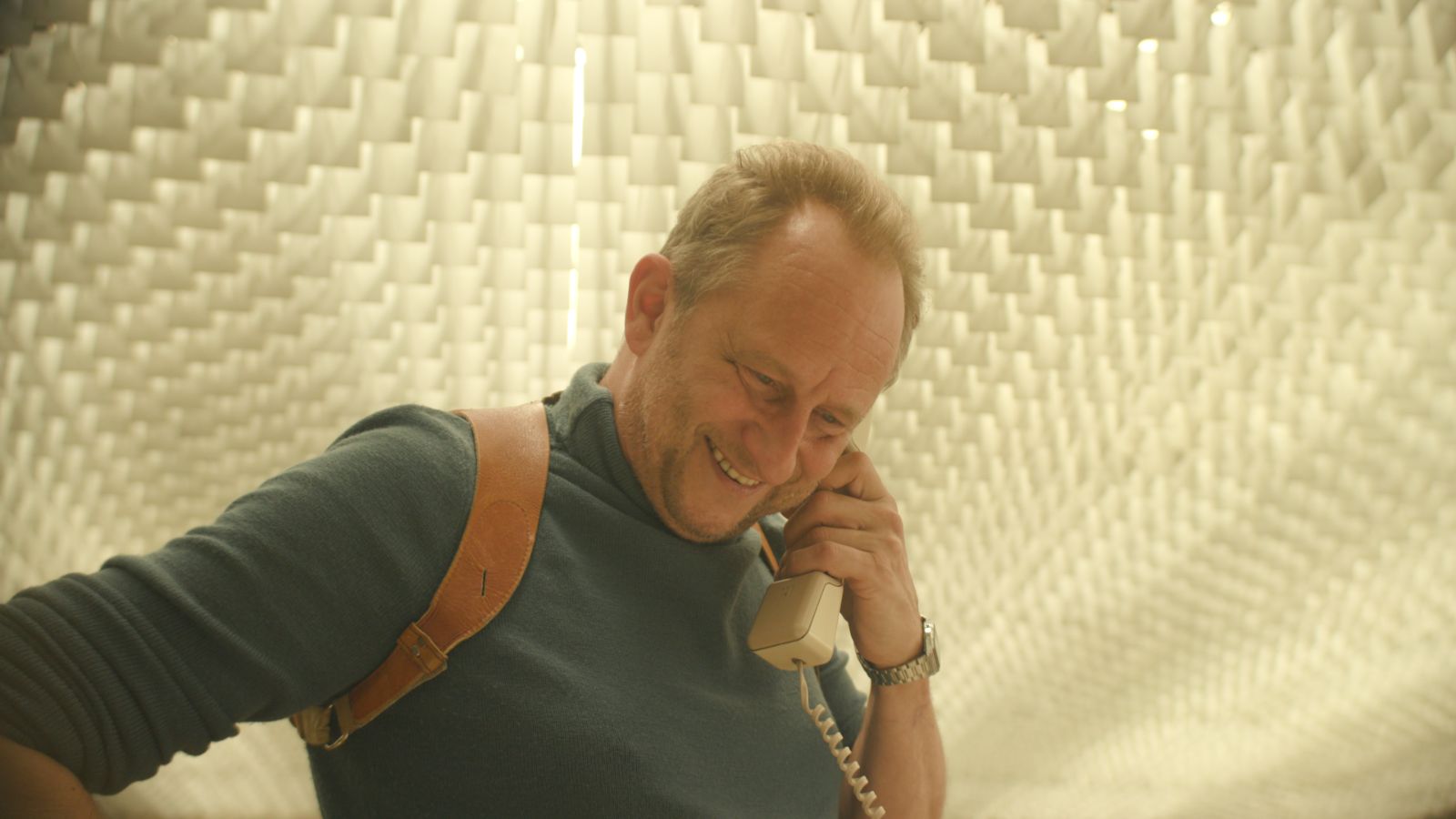
His latest, Keep an Eye Out, takes us on a murder mystery in the most charmingly monotonous of ways. In fact, as Chief Commissioner Buron (Benoît Poelvoorde, Man Bites Dog) questions suspect Fugain (Grégoire Ludig), the officer complains that this is the most boring interrogation he’s ever done.

It’s not just the questioning (Fugain bought bug spray, then ate some potato chips, then accidentally knocked over a planter and broke it…) that’s mind numbing, though. Dupieux situates this aggressively dull conversation in a French police station leeched of color—everything in the room an unflattering shade of putty, except for the bizarre abundance of overhead lights.

It’s often tempting to seek symbolism in Dupieux’s absurd situations. Many of us are still wrestling with the message in his 2010 breakout, Rubber, about a discarded car tire on a nationwide killing spree.

Perhaps there’s no hidden meaning. In Keep an Eye Out, in particular, the filmmaker seems simply to be setting up jokes. As soon as Philippe (Marc Fraize) arrives on the scene—one eye on the accused, the other missing and grown over with skin—things take an almost Monty Python level of lunacy. It’s uncomfortably silly, stupid even.

There’s a freedom to the absurdism of a Dupieux film, although Keep an Eye Out feels far more superficial even than Deerskin (a film released prior to but filmed after Keep an Eye Out). Even his most focused work lacks the cynicism or bite of Yorgos Lanthimos, maybe the most consistent absurdist working in film today.

Which is not to say a Dupieux film can’t be as enjoyable. In many ways, they’re easier to enjoy than a Lanthimos film because they’re less likely to fill you with existential terror.

They’re weird. They’re delightfully unpredictable. They’d grow tiresome, but they’re all so short. (Keep an Eye Out runs barely longer than an hour.)

My Sister’s Keeper

Dementer

by Hope Madden

Authenticity is certainly the main differentiator between Chad Crawford Kinkle’s latest horror and others of the genre.

It’s been eight years since the filmmaker released his underseen backwoods gem Jug Face. He once again pits a tenacious female against the unrelenting pressure of an unholy presence, but Kinkle has a more personal kind of dread in store with Dementer.

Katie (Katie Groshong), looking for a fresh start, applies for a job at a skills training facility that works with adults who have special needs. She’s hired, working with clients two days a week in the facility, then spending two nights in a group home with three of them.

Katie is especially concerned with Stephanie (Stephanie Kinkle, the filmmaker’s sister).

Kinkle’s sister is an adult with Down Syndrome, which not only elevates the reality of the situation but also the tenderness and anxiety around the character’s safety. You can almost feel the filmmaker’s own personal dread over his sister’s vulnerability in an untrustworthy world.

Aside from Larry Fessenden, who appears briefly, Groshong is the only professional actor in the film. Kinkle, working with a skeleton crew, films in an actual skill center. The majority of the staff and clients represented in the film are, indeed, staff and clients.

The approach gives the film a verité style often seen in horror films, rarely if ever seen in a horror film with a main character who has special needs. Dementer lacks any of the sheen or noble heroism you often find in films centered around a character with a disability. The realism adds a level of discomfort, a sense that vulnerable adults who need care could easily find themselves in a precarious situation.

Dementer also offers an uncomfortably realistic look at working poverty.

Kinkle mines these anxieties as Groshong begins to see and hear signs that suggest Stephanie may be in real danger. As she races against the clock to save her, Kinkle slyly upends plenty of horror tropes.

It’s an often fascinating deconstruction of a particular subgenre of horror, an approach that usually benefits from the verité style. But too much of the loose narrative feels like filler. We watch Katie buckle her seat belt no fewer than five times.

Unanswered questions can strengthen a film, but Dementer feels underwritten. Still, you get the sense that Kinkle made the best of what he had on hand and told a deeply personal story in the most authentic way he could.

Not Itchy and Scratchy

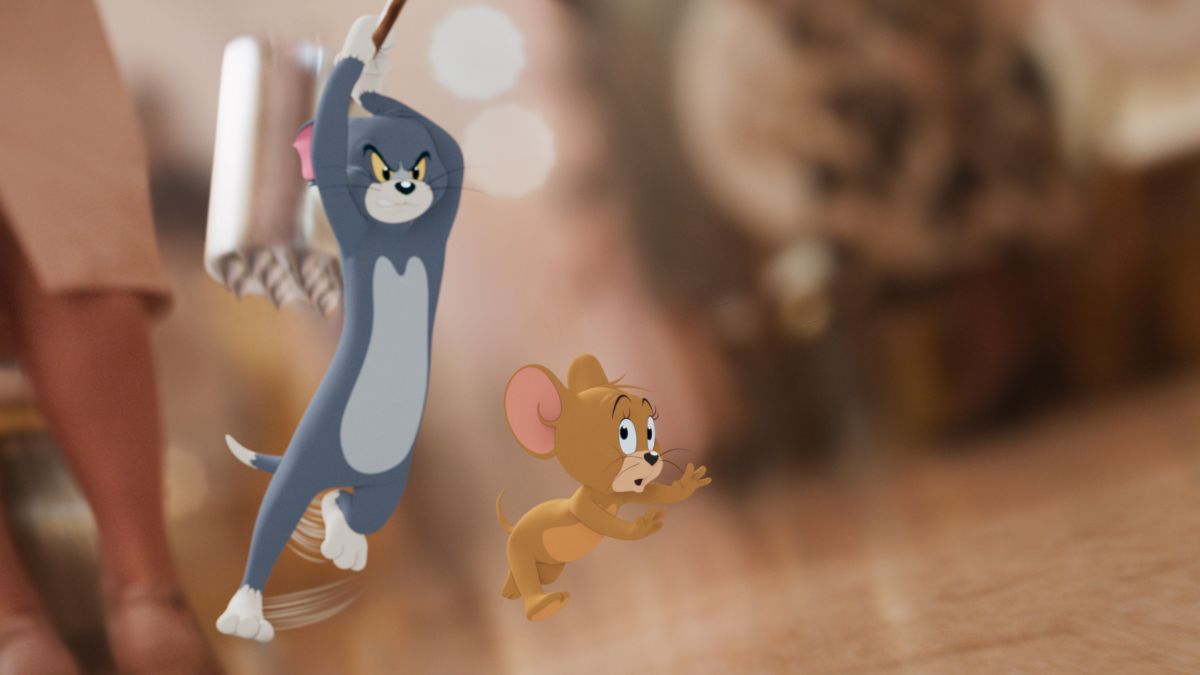
Tom and Jerry

by Hope Madden

Scooby-Doo is having a moment. The franchise got its first wide release feature film last year, and the brains of the Mystery, Inc. outfit, Velma, just nabbed her own spin off show. Why not dig deep and reintroduce us to other cartoon favorites?

Tom and Jerry make their case for relevance with a live action/animation hybrid by director Tim Story (Ride Along, Barbershop). The film sees the squabbling cat and mouse team relocating to New York City, where Tom hopes (presumably – he doesn’t talk so it’s hard to say definitely) to become a musician.

Jerry just wants to keep being a jerk.

Is it me, or is Jerry really the villain in this twosome?

They run afoul of Kayla (Chloe Grace Moretz, who needs to fire her agent because she should definitely be getting better movies than this).

Kayla requires a new job after some insane, hand-drawn cat knocks her off her bike, ruining her delivery. She cons her way onto a hotel staff. Now if she can just prove that she is good enough and keep the guests’ (Pallavi Sharda and Colin Jost) wedding-of-the-century on the rails, she’ll be fine.

Or will there be animated chaos?

Trying to make old school ‘toons fresh and interesting for a modern audience does not always work. Even Scoob from 2020 was a miss, but Tom and Jerry’s failure to entertain lands closer to the colossal disappointment of Garfield (a film so bad Bill Murray apologized for it in a death scene in an entirely different movie).

The animation sequences are hand drawn, so that’s a great change of pace from the lifeless CGI churned out in films like Earwig and the Witch. Too bad Story doesn’t know how to blend them with live action in a way that feels at all engaging.

T&J is long. The story, by Brigsby Bear writer Kevin Costello, is over-stuffed and under-enjoyable. He mistakes idiocy for lunacy, busy for kinetic. A lot happens, none of it interesting, none of it funny, all of it surrounded by a bombastic soundtrack. Surprisingly little of the adventure really has to do with the ‘toons, either.

There are long stretches of Kayla learning valuable lessons and Michael Peña affecting some kind of unplaceably bizarre accent.

When your funniest joke is about scooping animated dog poop, no one is enjoying themselves.

Enter at Your Own Risk

Wrong Turn

by Hope Madden

Writer/director Mark P. Nelson is kind of fixated on the social rifts in America.

His 2018 film Domestics followed the aftermath of an apocalypse intentionally deployed by a ruling class looking to thin the herd. The smaller herds only fracture into groups of radicalized, violent maniacs, though, and even your white bread nuclear family types are threatened.

Which is to say, this filmmaker brings a different perspective to the inbred cannibal franchise, Wrong Turn.

Yes, big city liberals on a hiking trip run afoul of Virginia rednecks. But where Nelson varies from the script of the 2003 original is in reimagining the antagonists.

We know there’s trouble afoot from the opening scene when Matthew Modine drives into the quaint Virginia town looking for his character Scott’s missing daughter (Charlotte Vega). The lovely blonde was last seen here, along with her African American boyfriend, another heterosexual couple, and a gay couple, one of whom is Muslim.

Because apparently not one of these people has ever seen a horror movie.

The film gets into trouble early by conjuring moments from Tucker and Dale vs Evil, which is a great movie. It’s an insightful lampooning of movies just like the one Nelson is trying to make, though.

Nelson’s more successful when he borrows a bit from the likes of Green Room and The Ritual, although he plants Wrong Turn’s folkloric barbarism firmly on American soil. This is a film about America.

If you’re looking for a movie about cannibal families, you will most definitely be disappointed.

The horror is less unseemly, all of it in support of Nelson’s image of a divided America. There are some startling moments of gore, and other more harrowing ideas that suit the picture well.

Nelson takes too long getting to the point, unfortunately. The film runs just under two hours, which is at least 20 minutes too long. A trimmer runtime might have helped the film leave more of a mark. Instead, Wrong Turn is a decent if unremarkable backwoods thriller.

https://www.youtube.com/watch?v=fkoCo1bpNRs

Bad Influence

Shook

by Hope Madden

People really hate social media influencers.

I mean, somebody must love them or who is it they influence? But horror definitely does not love them. Influencers have become the go-to objects of horror in recent years, seen as the vacuous product of a narcissistic culture that doesn’t value—or even make—human connections.

Meet Mia (Daisye Tutor). The rising makeup influencer has way more followers than her two besties and her boyfriend, so they’re unhappy when she pulls out of their livestream event this Saturday to dog sit for her sister.

But being selfless is totally on brand for Mia, and another makeup influencer just died trying to protect her own dog from a canine killer. Is it guilt? Is it opportunism?

Neither. It’s a setup for the premise of Shook. Mia is home alone with Chico (the dog, who’s awfully cute). But she’s never unplugged and soon someone is playing life or death games with her.

Writer/director Jennifer Harrington’s film really begins with a plot as old as the genre. It could be the babysitter and the escaped lunatic, the point is to have a vulnerable (and acceptably stupid) young woman alone, trying to protect those in her charge from an unseen and menacing force.

So, it doesn’t start out fresh, but movies have made a go of this plot. Harrington layers in newer cliches derived from our collective, plugged-in anxieties. The result is When a Stranger Calls meets Scream meets Unfriended.

It feels exactly that derivative, a fact that doesn’t entirely sink the film. It definitely never lives up to its opening, though.

Harrington makes her most incisive comment about the performance art that is influence culture as she pans back from a glamorous, opening red carpet photo shoot to show the bleaker reality of the staged event. It’s a smart, cinematic revelation that works on two levels.

Thematically, it underscores the film’s point about the artifice of Mia’s life. As a horror movie, we’re suddenly aware that someone is watching – someone who sees all of it.

Watching Shook, you’ll find solid filmmaking followed by two acts of uninspired, sometimes idiotic, sometimes enjoyable horror.

Far From Wonderland

Alice Fades Away

by Rachel Willis

Watching Alice Fades Away is akin to stepping into a Flannery O’Connor short story (without the overt religiosity). The film crackles with ominous energy as a larger-than-life villain haunts the rural, isolated landscape. As a horror/thriller blend, this one hits the mark.

In his first feature, writer/director Ryan Bliss crafts a film that seamlessly blends genres: horror, drama, mystery. Set in the early 1950’s, the film is reminiscent not only of O’Connor, but films such as The Night of the Hunter. The tradition of the Southern gothic lends itself well to Bliss’s vision.

Seeking refuge on her uncle Bishop’s farm, Alice (Ashley Shelton) is on the run. She is accepted by a group of people suffering from their own terrible pasts, all taken under the wing of her generous uncle. We’re not quite sure of Alice’s story, but we’re given disturbing glimpses as past and present merge on screen.

As Alice’s past catches up with her, we’re held hostage to the increasing dread the situation conjures. The cinematography works wonders at turning the idyllic setting of Bishop’s farm into one of dreadful isolation. Its setup as the ideal hideaway melts beautifully into a desolate trap.

All of the actors in the movie are well cast, but the one to watch is Timothy Sekk as Holden. His performance, along with Bliss’s writing, adds depth to a character that could have easily been a lifeless stereotype. Sekk’s energy adds to the mounting horror of what has followed Alice.

With so many great scenes, the film’s blunders are even more obvious. It performs best when it has minimal dialogue, some lines are melodramatic while others are poorly delivered. Many themes are broached, but only a few are explored. A character disappears, leaving us scratching our heads. And what’s with the rabbits?

However, the few moments that don’t land can’t wholly detract from the film’s overall effect. Bliss knows how to invoke dread, and the moments that take us out of the film are easily ignored considering what works. You’ll care less about some of the details and more about what’s ahead.

Same goes for the filmmaker, as Alice Fades Away is a debut that will make you curious to see what Bliss does next.

https://www.youtube.com/watch?v=CBZJCLqUO6c

Avenging Fred Hampton

Judas and the Black Messiah

by Hope Madden

Daniel Kaluuya’s range is simply unreal. From the vulnerable hero of Get Out to the chilling sociopath of Widows, he’s prepared us for quite a gamut of characters. I’m not sure he’s prepared us for his Chairman, though.

Kaluuya plays Fred Hampton, Chairman of the Illinois Chapter of the Black Panther Party circa 1969, in Shaka King’s Judas and the Black Messiah. A feeling of mortality permeates his performance, and with it a melancholy sense of urgency. His quiet moments swell with tenderness and turmoil, and his speeches burn through the screen. We’ve seen some great performances this year, but we’d give Kaluuya the Oscar right now.

That’s a lot to live up to, but the balance of King’s cast meets the task. LaKeith Stanfield, as police informant Bill O’Neal, strikes the right balance between cowardice and regret. He doesn’t try to make us pity O’Neal and the deal he’s struck with the devil, but he gives the character an energy that suggests more emotional and psychological layers than what’s found on the page.

As FBI Agent Roy Mitchell, Jesse Plemons is as solid as ever, delivering lines with enough genuineness that Mitchell doesn’t become an outright villain until he, along with O’Neal, have gone too far to pretend they’re anything else.

Their performances draw support from an understated Dominique Fishback as a firmly but not blindly committed comrade—Hampton’s girlfriend Deborah Johnson. Meanwhile, Dominique Thorne has badassedness to burn as part of a deep ensemble that impresses in most every turn.  

The film never feels like a biopic. The rendering is far more crime thriller, and had this been a simple fictional account of a mole in a political organization, King’s film would have been riveting. Performances alone would have elevated the genre beats.

The real star may be King’s script, co-written with Will Berson and Keith and Kenneth Lucas. There’s no placating. There’s no playing to the masses. King doesn’t water down Hampton’s message of unifying the poor or throwing off the oppression of a police state. In fact, this is a film that means to show the difference between revolution and the “candy coated façade of gradual reform.”

The Wrong Contractor

Paradise Cove

by Hope Madden

What’s that network that plays movies round the clock with titles like Cheerleader Murderer and Sultry Stepmom or Deadly Realtor? Because Paradise Cove is three F-bombs and an on-the-nose title away from fitting right in.

Martin Guigui directs Sherry Klein’s script. Either he did not read it first, or he did read it and simply didn’t understand it. I can think of no third option to explain this mess.

Knox (Todd Grinnell, henceforth to be known as “Cardboard Paul Rudd”) and Tracey (Mena Suvari) move into the beachfront Malibu property Knox’s mom left him after she died in a fire onsite. It needs a lot of work, but Knox is a contractor, and he’s certain that he sees a 6-million-dollar view.

With a little help from Griff (Eddie Goines) and a blind eye from the zoning department, maybe he and Tracey can flip this, build a home of their dreams far from Malibu, and start that family they’re already using fertility treatments to conceive.

But there’s this homeless woman (Kristin Bauer van Straten) who lives under their deck. Unfortunately, it appears that folks from Malibu stick up for other folks from Malibu—no matter how dangerous, homeless or insane—and outsiders aren’t welcome. It’s like Maine with Botox.

The script manages to provide opportunities for a genre-specific tension. Knox knows this woman can get inside their house, but an event keeps him from telling his wife. This single event should, if handled properly, create anxiety around whether or not she’s in the house while it develops conflict within the main character.

Instead, Guigui treats every scene as if no other scene has taken place. It doesn’t help that all of this tension non-building is in service of Knox’s character arc.

Is Knox that wholesome Midwesterner we first meet, the one so willing to hand $5 to the homeless vet out his car window? (FYI: The homeless are not treated with much respect by this film. )

Or is he something more, the product of a sketchy background, able to hold his innocent wife’s hormone treatment over her head whenever she thinks she might smell a rat?

Who knows? He’s being played by Cardboard Paul Rudd, who’s better suited to the role of Handsome Carpool Dad.

Offer It Up

Saint Maud

by Hope Madden

Never waste your pain.

What a peculiarly Catholic sentiment. Like old school, self-flagellating, “suffering cleanses” kind of Catholic: the agony and the ecstasy. It’s in the eyes of the martyrs. This is how you see God.

This is what Maud wants.

Writer/director Rose Glass knows that Catholicism is one of the most common elements in horror. You see it in the way she shoots down an old staircase in an alley, or up at the high windows of a lovely manor.

There’s been a glut of uninspired, superficial drivel. But there are also great movies: The Devils (1971), The Omen (1976), and the Godfather of them all, The Exorcist (1973). Saint Maud stakes its claim in this unholy ground with a singular vision of loneliness, purpose and martyrdom.

Maud (an astonishing Morfydd Clark) has some undefined blood and shame in her recent past. But she survived it, and she knows God saved her for a reason. She’s still working out what that reason is when she meets Amanda (Jennifer Ehle), a former choreographer now crumbling beneath lymphoma.

Maud cannot save Amanda’s body, but because of just the right signs from Amanda, she is determined to save her soul.

Ehle’s performance strikes a perfect image of casual cruelty, her scenes with the clearly delicate Maud a dance of curiosity and unkindness. Ehle’s onscreen chemistry with Clark suggests the bored, almost regretful thrill of manipulation.

Clark’s searching, desperate performance is chilling. Glass routinely frames her in ways to evoke the images of saints and martyrs, giving the film an eerie beauty, one that haunts rather than comforts. The conversations and pathos are so authentic that suddenly the behavior of one mad obsessive feels less lurid and more tragic.

As a horror film, Saint Maud is a slow burn. Glass and crew repay you for your patience, though, with a smart film that believes in its audience. Her film treads the earth between mental illness and religious fervor, but its sights are on the horror of the broken hearted and lonesome.