Tag Archives: entertainment

State of Shark

Great White

by George Wolf

Wait, no new scientific term mixing sharks and weather? No genetically modified sharks? Unearthed prehistoric giants? Sharks with lasers on their heads?

Geesh, do these guys even know how to Sharkmovie?

Don’t get me wrong, Shudder’s Great White gives you plenty of opportunity to suspend disbelief, but it’s built on a premise that now seems almost quaint.

People in the water. Sharks in the water. Big sharks.

Farewell and adieu to you fair Spanish ladies….

Actually these are Australian waters, with Charlie (Aaron Jakubenko) and Kaz (Katrina Bowden) running the Pearl Air charter service, where they debate getting married and fire up the seaplane to take tourists on excursions to Hell’s Reef.

The business needs some renewed cash flow, so Charlie is only too happy to book a last minute trip for superdouche investment analyst Joji (Tiim Kano) and his wife Michelle (Kimie Tsukakoshi), who wants to scatter her Grandfather’s ashes in the sea.

But even before cook Benny (Te Kohe Tuhaka) can whip them up a delicious lunch on the island, a ridiculous accident puts everyone in a life raft trying to evade some large, hungry predators that supposedly injured some bathers.

Yes, that’s another Jaws reference, which seems appropriate as director Martin Wilson doesn’t shy away from them either, even including a pretty shameless re-working of one of Spielberg’s classic scenes. But Wilson does craft one major jump scare of his own, and adds frequent shots framed right on the waterline to consistently simmer the tension through simultaneous looks at the castaways and what they fear.

Bowden and Jakubenko mine Michael Boughen’s script for enough authenticity to seem like real people who care for each other. Kano and Tsukakoshi aren’t as lucky, with the Joji character painted as such an over the top asshole that it’s clear he’ll be an entree, the only question is how bloody satisfying it will be to watch.

These man-eaters never do get lasers, but there’s still some pretty outlandish shark wrangling before the shoreline comes into view. So while Great White gets some props for not drowning in silliness from the start, that may have been the only way to make it memorable.

Who Are You, Again?

Yourself and Yours

by Hope Madden

It’s taken four years, but Hong Sang-soo’s Yourself and Yours is finally screening internationally. The delightfully confusing love story uses inebriation and one well-placed mannequin to illustrate the giddy, identity-demolishing euphoria of love.

Young-soo (Kim Ju-hyuk) decides to believe his friends when they tell him his girlfriend Minjung (Lee Yoo-Young) goes out drinking—and who knows what else?—with other men.

But does she? I mean, it sure looks like she does, but maybe it isn’t her? Or maybe it is her, but there’s some kind of explanation, like mental illness? Or maybe it doesn’t matter, because the filmmaker is less interested in who is (or isn’t) doing what to whom than he is in how others react.

The film is a charming change of pace in at least a dozen ways. Its intentional ambiguity works in its favor because it keeps you from falling into the frustrating trap of seeing Yourself and Yours in the same terms as some kind of American doppelganger erotic thriller noir, which is certainly what the same story could have become.

Instead, the film delivers an entirely off-kilter sensation (as, some would say, does love). Lee’s enigmatic performance is captivating—at times tender, defensive and silly but always engaging. It’s hard to imagine the film working with anyone else in this role because, thanks to her unshowy but convincing portrayal, you are never absolutely certain what the hell is going on.

Supporting performances couldn’t be richer, whether the flatly disgusted female friend, the “sorry I started this whole thing” buddy, the nonchalant bartender or Minjung’s (or is it?) other smitten beaus. With limited screen time and limitless commitment to the concept, the ensemble adds to the confusion and the joy to be found throughout the film.

It may be Kim’s turn and the transformation of his character that elevate Yourself and Yours above quirky love story to truly solid, insightful art. His performance is quite beautiful, as is the film.

As, some would say, is love.

Saturday Screamer: The Mist

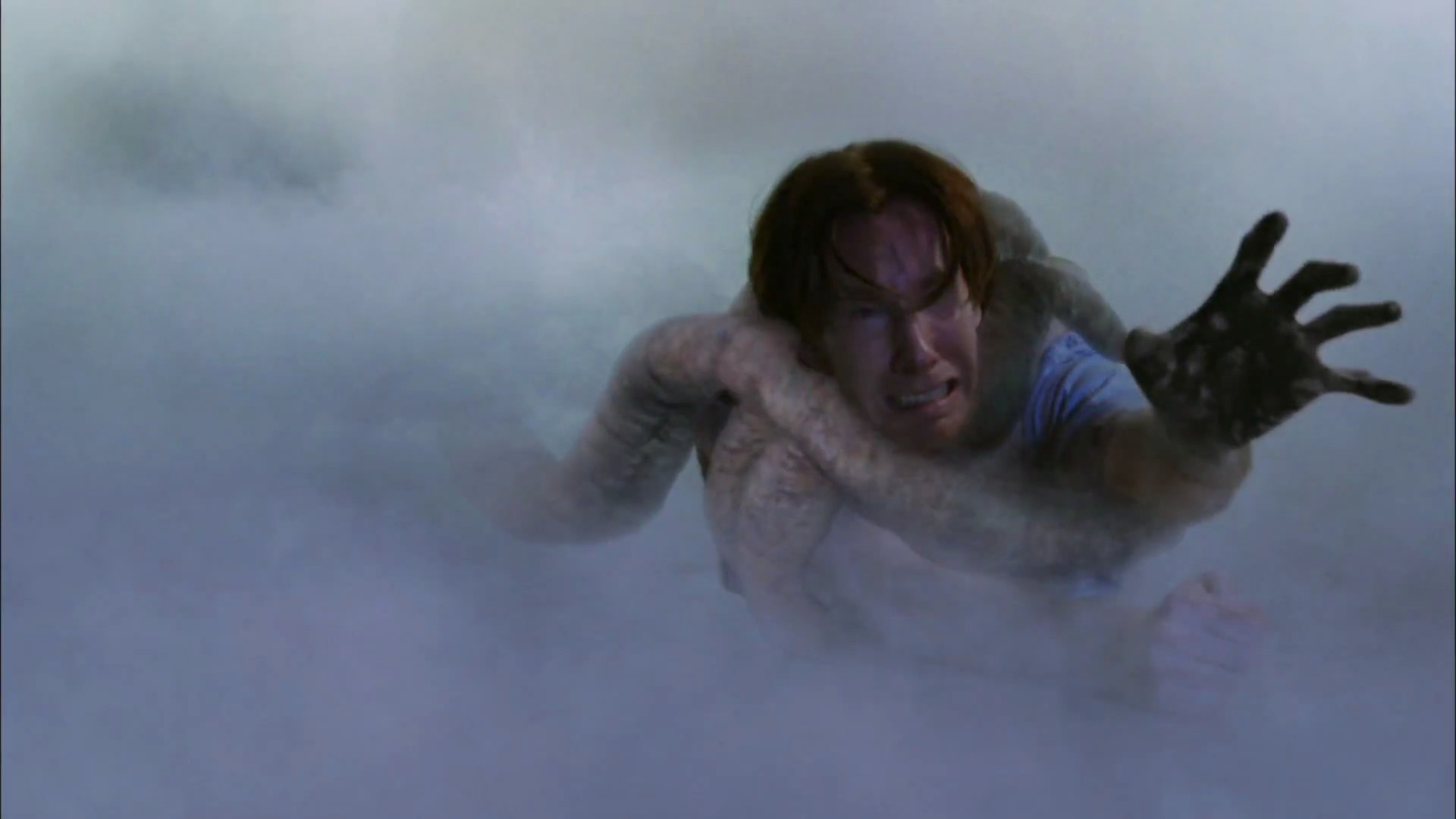
The Mist (2007)

Frank Darabont really loves him some Stephen King, having adapted and directed the writer’s work almost exclusively for the duration of his career. While The Shawshank Redemption may be Darabont’s most fondly remembered effort, The Mist, an under-appreciated creature feature, is our vote for his best.

David Drayton (Thomas Jane) and his young son head to town for some groceries. Meanwhile, a tear in the space/time continuum (who’s to blame?!) opens a doorway to alien monsters. So Drayton, his boy, and a dozen or so other shoppers all find themselves trapped inside this glass-fronted store just waiting for rescue or death.

Marcia Gay Harden is characteristically brilliant. As the religious zealot who turns survival inside the store into something less likely than survival out with the monsters, she brings a little George Romero to this Stephen King.

In a Romero film, no matter how great the threat from the supernatural, the real monsters tend to be the rest of the humans. King does not generally go there, but he does so with The Mist and it’s what makes this one of his most effective films.

While Harden excels in a way that eclipses all other performances, the whole cast offers surprisingly restrained and emotional turns – Toby Jones is especially effective.

The FX look good, too, and let’s be honest, a full-on monster movie with weak FX is the lamest. The way Darabont frames the giants, in particular, gives the film a throw-back quality to the old matinee creature features. But he never gives into cheekiness or camp. The Mist is a genuinely scary film – best seen in the black and white version if you can find it.

Regardless, it’s the provocative ending that guarantees this one will sear itself into your memory. Though this is likely what kept The Mist from gaining an audience in theaters, it is a brilliant and utterly devastating scene that elevates the film from great creature feature to great film.


Zombie Eat World

The Night Eats the World

by Hope Madden

People like to make lists. For some people, it’s a bucket list. Some like to keep track of the celebrities they are allowed to sleep with if the opportunity arises. Not me.

Years ago I put together my zombie survival team. And though I know plenty of people with varied and worthy skills, making my team mainly came down to two things. Are you smart? Are you quiet? Because it is the introverts of the world who will survive the zombie apocalypse.

Director Dominique Rocher’s unusually titled The Night Eats the World understands this.

Sam (Anders Danielsen Lie) reluctantly stops by his ex’s party to collect his things. It is a loud, raucous event and Sam is in no mood. He stands moping alone until finally he wanders into a quiet back office, locks the door to the partygoers and waits.

By morning, Sam may be the only living human left in Paris.

The majority of the film quietly follows Sam through the apartment building as he fortifies his position, spends his time, survives. It’s a pleasantly pragmatic approach to the zombie film, although it asks many of the same questions Romero asked in Dawn of the Dead.

In fact, TNETW sometimes bears an amazing resemblance to the underseen German zombie flick Rammbock: Berlin Undead. (It’s great. You should see it.)

There’s a lot going on here that’s fresh, though. Rarely is a zombie film this introspective or a horror hero this thoughtful. More than that, though, Rocher’s horror is a meditation on loneliness.

Not only is that an unusual topic for horror, it’s delivered with the kind of touching restraint that’s almost inconceivable in this genre.

Danielsen Lie, in what nearly amounts to a one-man-show, never lets you down and never feels showy. Sam is a man who is maybe too at home with the situation in a film that quietly asks, just what has to happen before a true introvert longs for human companionship?

That’s why they’ll outlast us. It’ll just be a few dozen socially uncomfortable loners skilled at closing themselves off from the chaos around them. Plus Keith Richards.

Bald & Bickering

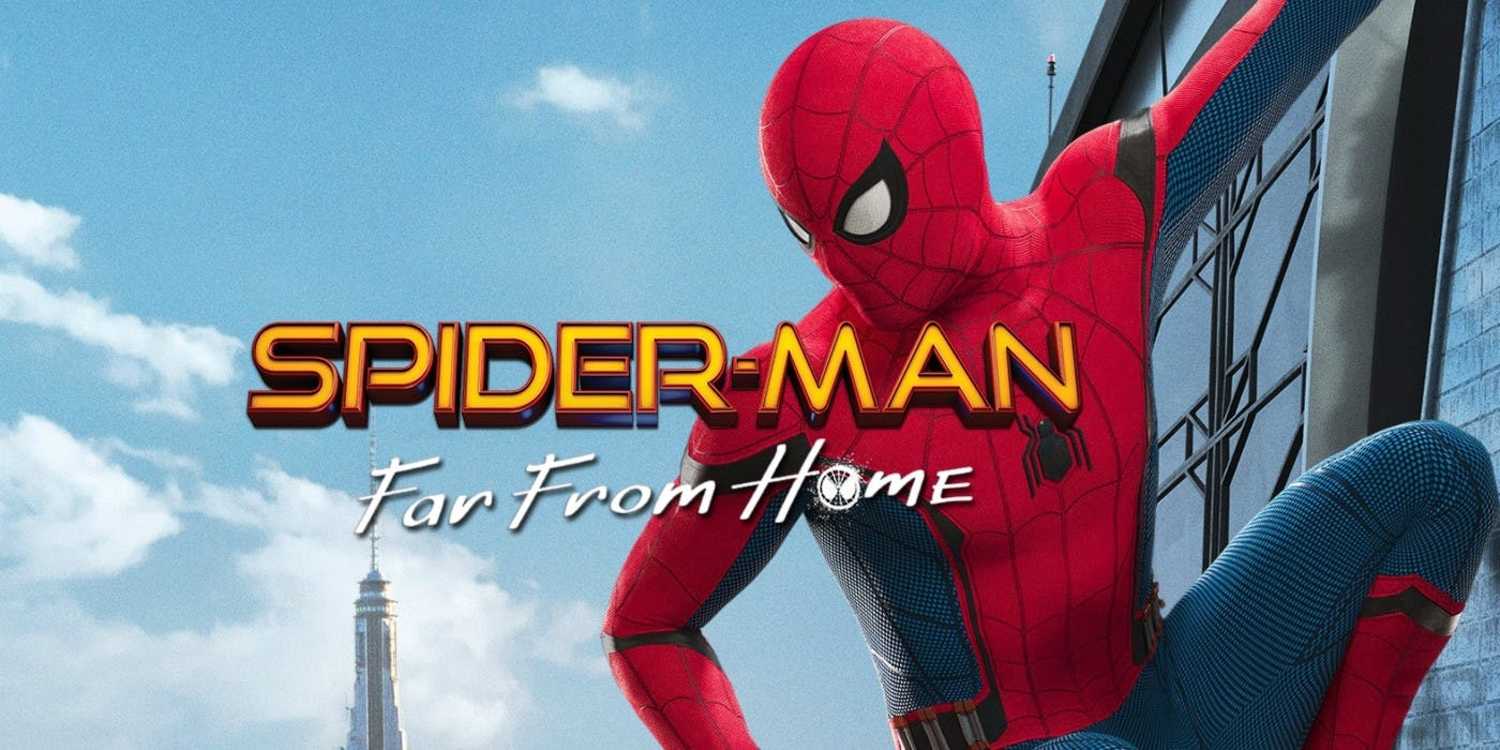
Fast & Furious Presents: Hobbs & Shaw

by Hope Madden

Somewhere around its 6th installment, the Fast & Furious franchise tweaked its direction, abandoning logic and embracing ludicrous action as it jumped cars from skyscraper to skyscraper and waterskied off the back of launched torpedoes.

But things took off for real around Episode 7 when some mad genius decided to pit mountainous government operative Hobbs (Dwayne Johnson) against Limey nogoodnik Deckard Shaw (Jason Statham), each of them playing a self-lampooning version of themselves. Fun!

Where to go from there? How about we drop that whole car heist and espionage thing, expel Vincent Toretto and gang, bring in Idris Elba and see what happens?

And for the very first time, I was kind of looking forward to a F&F film.

Fast & Furious Presents: Hobbs & Shaw boasts more than ampersands. Internal logic? Cohesive plot? Thoughtful insights on man’s inhumanity to man?

Why, no.

Cheeky fun? Indeed!

The film indulges in the best elements of F&F (action lunacy, self-aware comedy) and dispenses with its weaknesses (schmaltz, Diesel). F&F: H&S consists primarily of fistfights, gun fights and vehicular chicanery stitched together with comic lines. Unfortunately, there is a plot, but it doesn’t get in the way too much.

A virus meant to thin the herd falls (or is injected!) into the hands of a rogue
(or is she?!!) MI6 agent. The CIA (or is it?!!!) pulls together the two old enemies for no particular reason, but Ryan Reynolds shows up in a decidedly peculiar cameo (one of several to look out for) that draws your attention away from the first of many gaping plot holes.

By this point (about 7 minutes into the film) we’ve been through three separate fight sequences, each meant to articulate the character of one of our leads: down-and-dirty badass (Hobbs), smoothly lethal sophisticate (Shaw), smart and efficient and highly contagious (Vanessa Kirby as MI6 virus thief Hattie), and Black Superman (Idris Elba, who gives himself the name, but if it fits…).

Right. Enough with plot, on to stupifyingly illogical and imaginative action. Hobbs & Shaw offers quite a spectacle.

It bogs down when it gets away from the explosions, wheelies and punches. Whether devoting excessive time to pissing contests or to dysfunctional family backstories, director David Leitch—who proved his action mettle with Atomic Blonde—too often forgets that words are not this franchise’s strongest suit.

Still, there is something compelling about watching Black Superman V Samoan Thor. I don’t know that there’s enough here for a franchise springboard, but there’s plenty for a wasted afternoon.

A Masterpiece It Is Not

Leo Da Vinci: Mission Mona Lisa

by Christie Robb and Emmy Clifton

During the recent heatwave as a bid to keep everyone entertained and out of the sun, I asked my upcoming Kindergartner, Emmy, to help me with my latest movie review.

Mom says…

Even a cup of ill-timed afternoon coffee was barely enough to keep me from nodding off during director Sergio Manifo’s animated adventure. The premise was interesting, centered around a teenage Leonardo Da Vinci who brings mechanical contraptions into being in  15th century Italy. But as we passed the 10 minute mark with no inciting incident, I realized we were in trouble.

Eventually we get it. Leo’s friend Lisa’s farm has been vandalized. The crops are destroyed. And without them, Lisa’s dad can’t pay the mortgage and she’ll have to be married off to the anemic son of their nobleman landlord.

The film has a little bit of everything: jokes that don’t land, phoned-in voice acting, questionable gender stereotypes (girls are described as “moody” and cry to get their way), characters who lack development, painful musical numbers that appear out of nowhere, exposition dumps delivered through dialogue, and a romance that makes Anakin and Padme’s in Attack of the Clones look nuanced.

But my favorite thing by far is the closing song. I’ll leave you with some of the lyrics:

When I am here with you

I’m a fish inside a creek

And I don’t know how to speak

Maybe a mobile phone would help

Kid says…

I enjoyed it more than the Little Mermaid, but less than Frozen. Leo was my favorite character. He did the fun stuff. Lisa, the girl, was ok. I’d watch it again. It was kind of scary in parts. Why does everything end up a skeleton in this movie?

Mom’s Verdict:

Emmy’s Verdict:

Rocking Behind the Curtain

Leto

by Christie Robb

Entrancing, Kirill Serebrennikov’s Leto layers a variety of stylistic flourishes over the relatively simple plot—a love triangle between a rising rock star, his mentor, and the mentor’s wife.  Set in 1980s Leningrad, I was thrown off-balance from the first.

When it comes down to it, I don’t know all that much about rock and roll. I know even less about the Soviet Union.

So, it was a bit of a surprise to see OG hipsters playing a show to a crowd of fans. But then I noticed that the fans were sitting politely in their seats and that men in suits patrolled the performance hall ready to put down any display of unruly behavior—piling on a sweet-faced girl who sedately held up a small poster with a hand-drawn heart on it.

This is a country where, if you are going to play, you first have to have your lyrics analyzed for ideological appropriateness.

The rising star Viktor Tsoi (Teo Yoo) and his mentor Mike Naumenko (Roma Zver) were both real people fronting the influential bands Kino and Zoopark, respectively.  A statement contained within the credits informs that the plot was based on Naumenko’s wife Natalia’s (Irina Starshenbaum) memories. However, there is also a character credited as “sceptic” who often breaks the fourth wall to explain to the viewer that “Sadly, this did not happen.”

 Shot in moody black and white, with emotional pops of color, periodically animation creeps in to punctuate the more fraught moments. There’s also the occasional song and dance number in what is roughly a biopic—featuring covers of Talking Heads’ “Psycho Killer,” Iggy Pop’s “The Passenger”, and Lou Reed’s “Perfect Day.”

Weird, occasionally wandering, Leto, provided a glimpse into the experience of artists living in a gritty, austere world that I’ve not thought much about before, but probably will now.