Tag Archives: documentary reviews

God is Irish

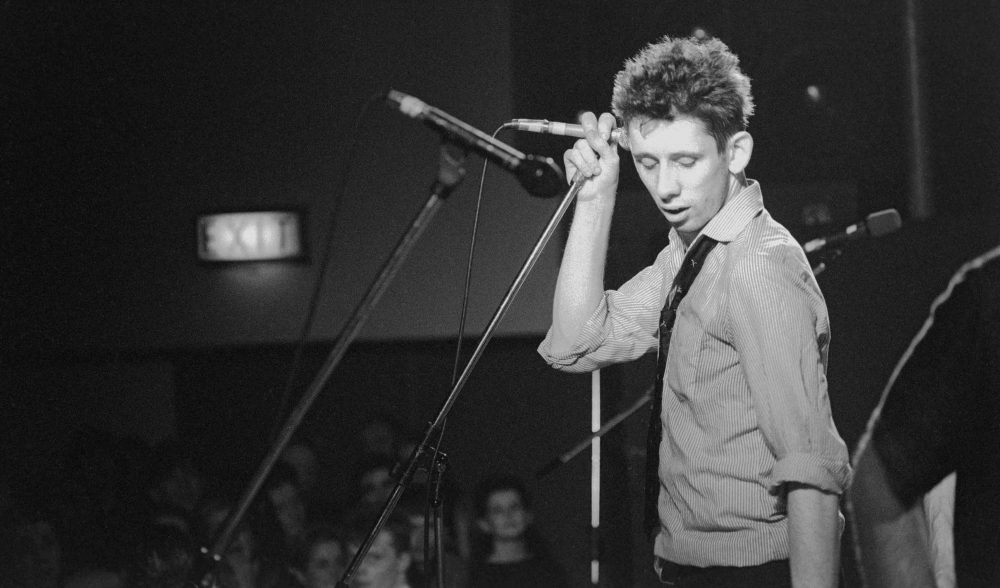
Crock of Gold: A Few Rounds with Shane McGowan

by Hope Madden

Sloppy and ruinous, raucous and charged, and more than anything, punk rock—honestly, this could describe about a dozen Julian Temple movies. In this case, crashing the party of his Sex Pistols docs and his intimate Joe Strummer film is Shane McGowan. And he’s pissed.

Drunk, I mean.

Crock of Gold: A Few Rounds with Shane McGowan is Temple’s exploration of life after punk.

The poet of Irish rock, a traditionalist who set gritty street ballads to Celtic tunes, McGowan wanted to save Irish music. This was the legacy he was after, and as frontman of the Pogues—Ireland’s second most successful and likely most Irish band—he did.

Yes, here’s where all rock biopics ask, “At what cost?” Temple’s film doesn’t wait, though. Opening as it does on McGowan, 60-years-old, slurring, wheelchair bound and still drinking, Crock of Gold never hides from the ravages of a punk rock life.

The young McGowan railed at the cliché of the drunken Irishman even as he personally confirmed it. “You want a Paddy?” he says of the British establishment. “I’ll give you a fucking Paddy!”

The film faithfully follows McGowan’s chronology, from boyhood in County Tipperary to angry adolescence in London, on to thrashabout music and eventually international stardom before the inevitable crash, slow rebuild, and crash some more.

And McGowan himself is right there, either narrating the unfolding events or listening in to earlier tapes of him narrating. His constant presence anchors the wild, fascinating tales with their physical toll.

Temple also fills the screen with bizarre animation, old movie footage of the Irish War and of bucolic country life, as well as images of McGowan’s late 70s London, Sex Pistols show and all. What he conjures is an image of clashing ideas and ideals that found a home in McGowan’s imagination and translated into melancholy street music.

McGowan’s touring life of drink and drugs, violence and very little toothpaste are well documented. It’s hard to pin down the feelings drummed up by all these stories. The modern day balladeer—a full set of dentures on display when he smiles, which is rarely—seems simultaneously brash and regretful.

For passing fans or newcomers to McGowan’s music, Crock of Gold is an unusually clear-eyed testament to the toll of punk rock excess. These guys were not meant to live forever.

But for true fans, it’s a painful and strangely beautiful look into one remarkable if misspent life.

Down the Rabbit Hole

Collective

by Brando Thomas

On October 30, 2015, a massive fire broke out at the Colectiv Club in Bucharest, Romania. Twenty-seven people died in the initial blaze while another 180 were injured. In the days and weeks following the fire, dozens of survivors died in the hospital of preventable infections. Over the next year, journalist Catalin Tolontan would uncover a trail of corruption that had all but hobbled the country’s health care system.

There’s a restraint to Collective that is much appreciated. Absent are the talking heads and exposition-heavy voiceovers that have become staples of documentaries. In fact, Collective is a film more than happy to let multiple scenes set in boardrooms and offices play out almost in real-time.

And it is riveting. 

The access granted to filmmaker Alexander Nanau is nothing short of astounding. They are there as Tolontan interviews a doctor that has smuggled disturbing footage out of a Romanian hospital. Nanau is also granted unprecedented access to newly appointed Romanian Health Minister Vlad Voiculescu. The juxtaposition between Tolontan’s journalistic work and Voiculescu’s navigation of hostile political waters is fascinating and demoralizing all at once. 

Collective’s foundation is built around that tragic fire and the deaths that occurred. However, the film never once seems exploitative. The victims and their families loom large, but Nanau feels no need to use their grief to propel his film forward. 

The power of Collective is in the film’s desire to avoid one specific point of view. There’s a matter-of-factness to the film that is methodical and precise. Films and filmmaking are all about manipulation, and this clinically observational approach feels more authentic. For a film so steeped in the hunt for the truth, Nanau’s fly-on-the-wall perspective just seems right.

Collective isn’t a flashy film – it doesn’t want to be. What it is, though, is a gripping look at the good that can come from honest, professional investigative journalism. 

Down With the Sickness

Totally Under Control

by George Wolf

Totally Under Control is arriving at a complicated time, making a case that exists in a contrasting space.

The film eviscerates Donald Trump’s administration mere weeks from Election Day, yet it’s presentation is miles away from inflammatory. It’s timely enough to feature a tail-end acknowledgment of Trump’s recent COVID-19 diagnosis, but feeling more outdated with each day’s increasing infection numbers.

Directors Suzanne Hillinger, Ophelia Harutyunyan and the Oscar-winning Alex Gibney present a devastating case against the government’s handling of the pandemic. From the first documented U.S. case (Jan. 20th, Washington state), the response has been fought with brazen dishonesty, stupefying incompetence, and a firm insistence on politics Trumping science.

Apparently filmed in secrecy with the aid of a portable “covid cam” to avoid in person interviews, the film unveils its step-by-step timeline with a measured and confident tone. Utilizing a series of whistleblowers, graphs, stats and archival footage, Gibney, Harutyunyan and Hillinger earnestly deconstruct the folly of treating a country like a business.

And though Trump is certainly an understood subject, the finger-pointing is never belabored. Indeed, a flow chart of malfeasance sporting this many lackeys and sycophants would usually conclude a conspiracy, but by then it’s clear that’s not among this film’s objectives.

Sadly, this crisis is probably a long way from being over. But when the history is finally written, the most nagging question will be “How in the hell did this happen in America?”

And there will be no better time for Totally Under Control.

Club Champion

If These Walls Could Talk

by George Wolf

If you’ve lived anywhere near Columbus, Ohio during the last few decades, you’ve probably got some great memories of the longest continually running rock club in America: Newport Music Hall.

Full disclosure: I tended bar right next door for two years, was lucky enough to meet many of the Newport headliners, even used the access from the shared basement storeroom to sneak behind stage a time or two.

My wife and I had our first date there at a Warren Zevon show in 1990. Years later we dropped our teenage son off to see some band I can’t remember.

Still, I instantly think of an electric James Brown concert in 1986. It was the second of two sold out shows at the Newport, and Mr. Dynamite was riding a smash with “Living in America.” He loaded the stage with about 500 band members, never letting up until we begged for mercy.

Pure funky magic.

The Newport has enjoyed countless nights of magic in the 50 years since it began hosting live shows as the Agora in 1970. If These Walls Could Talk gives the club the respectful, nostalgic salute it deserves, one full of history, some rockin’ archival footage, and plenty of damn good stories.

Ted Nugent threatening a sound man’s life. Melissa Etheridge going acoustic when the power went out. Todd Rundgren staying up all night to fix the sound system. Future O.A.R. members walking to class at Ohio State and dreaming of playing on the Newport stage. U2 live for four dollars and fifty cents.

And offstage, the tale of how Scott Stienecker saved the North High St. venue in 1984 ain’t bad, either. The short version: sorry Walgreens, hello Newport.

The film effortlessly cements how important the Agora/Newport has been not only to Columbus, but to the entire live music industry. Executive Producer Jason Corron understandably has more footage from recent concerts at his disposal, but he creates enough of an overall sense of history to make the classic moments that much more resonant.

No director is credited, and there are some moments of bumpy production values (sound mix transitions, especially) that could have benefitted from an experienced filmmaking hand.

But If These Walls Could Talk will have fans practically salivating for the return of live music. It will remind you how unforgettable the intimacy of a small club can be, and just how much of a gem we have right here in our backyard.

50 years. Here’s to 50 more.

If These Walls Could Talk airs in a free, one time event Nov. 4th at 8pm on the PromoWest YouTube channel or PromoWestlive.com.

Going Once…Going Twice…

Public Trust

by George Wolf

Do we really need another documentary showcasing greed as one of America’s most identifiable traits, “rigged” as our favorite path to winning, and Donald Trump as one of our biggest mistakes?

Check the calendar. Yes, we do.

Director David Byars, whose 2017 debut documentary No Man’s Land profiled the fight over Oregon’s Malheur National Wildlife refuge, returns to environmental concerns with Public Trust, a deep dive into an ongoing battle for ground.

That ground is a swath of some 640 million acres of public land, currently held in trust by the federal government and “owned” by every American citizen. Cut to the chase: conservatives have been trying to privatize these National Parks, forests, grasslands and refuges for decades (since Reagan – shocker!), and the lunatic now in office makes something as unthinkable as selling off the Grand Canyon seem like it might be on the table.

As good documentarians do, Byars humanizes the issue through people invested in the subject. From a journalist in the trenches to a climate change warrior to a Native American tribe fighting for their livelihood, we feel how these lands are tied to identity and common good on one side, and industry profits on the other.

With Robert Redford on board as executive producer, the lack of narrative flash here comes as little surprise. But while Public Trust‘s case building is workmanlike, the rallying cry is no less urgent.

Vote, before it’s too late.

Raise A Voice

Resisterhood

by Rachel Willis

It’s been a hell of a year.

Not only will 2020 live in infamy as the year we grappled with a worldwide pandemic, it is also the year Trump faces a reckoning in the United States. Will he be voted out of office? Or will he secure a second term?

As unlikely as a second term might sound to some, director Cheryl Jacobs Crim doesn’t want her audience (likely those opposed to Trump and his agenda) to become complacent. With her film, Resisterhood, she reminds us why people, particularly women, are fighting the Trump agenda.

On Day 1 of Trump’s presidency, as many as 500,000 women, and men, descended on the nation’s capital for the Women’s March – a gathering that let the new president know he was on watch.

And as the days of Trump’s presidency progressed, he was indeed being watched. As every devastating and harmful decision was passed down, protestors lined the streets around the country to declare this was not their America. From the People’s Climate March on Day 100 to the United We Dream protest on Day 231, Crim documents it all.

Crim captures the feelings surrounding these moments by interviewing women and men who are part of the resistance. From psychologist Jean Graber, who is following in the footsteps of her grandmother – suffragette Edith Hooker – to Egyptian immigrant, Mimi Hassanein, who ran for office in her community, to Illinois Representative Luis Gutiérrez, Crim intersperses these interviews with scenes of protests, primarily in the nation’s capital.

The movie runs pell-mell through the actions and reactions of Trump’s presidency. At times, when reminded of everything Trump has realized as president, it’s hard not to feel dejected. However, many of the women Crim interviews are still hopeful. More and more women, minorities and young people are participating in the democratic process – either in the streets, at the ballot box, or as political candidates. 

But there is a reminder that complacency is the enemy. It would be easy, worryingly easy, to topple our democracy, and while Resisterhood is steeped in the culture surrounding our current political climate, it has a timeless message. 

If you want to effect change, you must participate. If you need a reminder that your vote, your voice matters, start with Resisterhood.  

https://www.youtube.com/watch?v=RcPWit7cjEY

Just Do It

All In: The Fight for Democracy

by Hope Madden

Documentaries can be frustrating, especially political documentaries. They warn you about coming disasters you hadn’t predicted, show you the brutality and ugliness in parts of the world you hadn’t seen, reinforce that ulcerous dread in your gut about humanity on the whole. You can basically only hope they also show you a way out.

Mercifully, All In: The Fight for Democracy does that. But first it upbraids your apathy about voting by detailing the harrowing history of Americans who had to take a beating, even die, just to exercise that right. Then it details the meticulously detailed strategy in place and being executed right now to keep you from exercising your right, now that you understand its value.

Filmmakers Lisa Cortes and Liz Garbus wisely anchor their facts to Georgia’s gubernatorial race of 2018. The core storyline, narrated by the Democratic candidate in that race, Stacey Abrams, is of that election’s rampant and open-to-pubic-view suppression of Georgia votes. Abrams’s opponent, Brian Kemp, had been an architect of voter suppression as Georgia’s Secretary of State: closing polling places, purging voting rolls and instituting legislation that made voting more difficult.

It was incredibly successful for him. Expect to see more of it.

If that sounds cynical, it is. It’s also a major point of the film. But Cortes and Garbus (and Abrams) have a more idealistic goal, which is to point out something important to every American citizen regardless of party: Democracies only work when citizens decide what politicians do, not vice versa. When citizens vote, we can make the decisions. We can determine who is in office and what they need to fight for and against. And if they don’t do it? We can vote them out.

But we can only do that if we can actually vote, which is why politicians who don’t want to do their jobs enacting the will of the people work tirelessly to make it harder and harder for Americans to cast their ballots.

The history is well told between effective speakers and illustrative animations, but it’s the insidious nature of voter suppression and its modern execution that is equal parts enlightening, terrifying and frustrating.

So make a plan. Verify your polling location. Double check that you are still on the rolls. (Ohio is especially guilty of stifling the vote.) Vote early.

Just vote.

And watch this movie.

Clear as Mud

Red, White & Wasted

by George Wolf

The most effective documentaries often serve as windows to a new world. The world framed by Red, White & Wasted may be covered in Florida mud, but its view – in both foreground and background – is remarkably clear.

Up front, we’re immersed in the culture of “mudders,” who live for monster trucks and mud holes, beer and babes. The undercurrent, though, carries the type of bare bones political insight authors and filmmakers have been trying to articulate for years.

Directors Sam Jones and Andrei Bowden Schwartz introduce us to Matthew Burns, a mudding disciple who years back gained some local Orlando fame as “Video Pat,” ringleader of the “Swamp Ghost” mud hole. The monster truckers would come to barrel through the mud, and Pat would eventually fill “1,000 +” videotapes with all the filthy glory.

But Orlando, as you may have heard, is famous for some other attractions, and eventually the mudders’ favorite piece of land is sold, forcing them all to give up the Ghost.

The introduction of Video Pat’s family and friends expands the fascination the film finds in uncovering this backwoods life. While Jones and Schwartz – in their feature debut – never condescend to the mudders opening up to them, they’re also smart enough to follow where the simple country folks are only too happy too lead.

These proud “rednecks” are openly racist but don’t think it’s really a problem, keep tuned to conservative media, have “a lot of respect for Vladimir Putin” and protest that the Confederate flag really represents “home grown cookin’.”

And they are bigly fans of Donald Trump.

For anyone still wondering why so many of these rural Americans continue to vote against their own interests, this film and these people make it clear as mud. Their way of life is disappearing, and blaming the immigrants, city slickers, job-stealing foreign countries and libtards makes them feel better.

And whichever way you react to that, Pat’s reflections on his years of mudding, his failures as a father, and his status as a brand new grandfather arrive with a conflicted poignancy.

As he smiles and gently cradles his new grandson, Pat wonders about all the boy might soon be taught.

He’s not the only one wondering.

Artful Escape

A Step Without Feet

by Hope Madden

“People want to know about the road, if it was hard getting here. That’s not the question.”

A Step Without Feet, the first documentary from Jeremy Glaholt and Lydia Schamschula, spends 90 minutes in snowy Berlin with a handful of refugees from the Syrian war. The filmmakers’ first question: What do you think of the word “refugee”?

They don’t see the word the same way you do.

It’s actually a fascinating way to get into a story that looks sideways at a topic so often portrayed in documentaries. The bloody, lengthy, horrific war in Syria has launched more documentaries than I can count, many of them brilliant, most of them brutal.

Glaholt and Schamschula pull us out of all that brutality, mercifully, and drop us into the newly created lives of those who’ve escaped it: a dancer and a dentist, a musician and a cook, a writer and a student. Their resilience, nostalgia, trauma and optimism are on screen in a film that recognizes salvation—however profound—as just another transition in life.

Though life in Germany has been seemingly peaceful for the group and each has many happy moments to discuss, the anxieties of the past and the longing for what is lost give their peaceful existence a bittersweet flavor.

Many bridge the past and the present, their old home and new, with art. One writes, one dances, one sings, each of them tapping into something that gives creative outlet to their fear and yearning.

The film’s biggest drawback is its lack of context. We’re 15 minutes or more into the film before anyone utters the word Syria. The reasons each one left is never clearly articulated. While those familiar with the conflict would certainly have a sense, the reasons that these individuals needed to flee while their parents or siblings were OK to stay is never addressed.

With the clear and mostly fulfilled goal of casting these human beings in the present tense, the filmmakers likely made the conscious decision not to dig too deeply in this painful terrain. Still, the magnitude of the subjects’ sorrow, longing and trauma is tied to that specific conflict. To do their present justice we need more of their past.

The film—almost exclusively talking head footage of interviews with the seven refugees—remains strangely captivating throughout. Because of the music, the dance, the poetry and the candor, a deeply human and powerfully universal story emerges.

American Narcissist

#Unfit: The Psychology of Donald Trump

by Seth Troyer

Comparing America and much of the world’s shift toward fascist totalitarian ideals to the rise of dictators in the 1930s may at first seem over the top. Indeed, much of Dan Partland’s new documentary #Unfit may seem heavy handed – until you remember where we are as a nation.

We elected a textbook narcissist whose strategy for gaining followers centers around a self-obsessed “me first” ethos. He vows to bring back the “the good old days” and encourages an inherently nationalistic philosophy. Enter Donald Trump.

Really, it’s hardly shocking when this film reveals that a guy like Trump had affection for the rousing public speaking stylings of Adolf Hitler. Trump has not changed since his billionaire playboy days, his goal is still clear: “win” by any means necessary. Sadly enough, if that’s your only real goal, taking pointers from charismatic fascists continues to be a useful strategy.

Naturally, #Unfit is not saying Trump is Hitler, but that his fits of totalitarian megalomania have the potential to be similarly dangerous.

Until it really sinks in, it may also seem like a cheap shot for this film to compare Trump and his followers’ behavior to that of apes in the wild.

Trump’s mission to be the biggest and the best by any means necessary is as old as animal life on this planet. A leader who pounds his chest the loudest, who rallies followers around self-serving goals and shared hatred for outsiders, unfortunately remains a rather attractive choice in the eyes of many American voters.

Scenes of white nationalist pride and news footage of men screaming “go cook my burrito” to Mexican folks at Trump rallies are juxtaposed with scenes depicting animal “us vs them” mentality. The irony here is of course that the conservatives, who make up the bulk of Trump’s following, who often seem to have the most reservations around ideas of evolution and the link between humanity with the animal kingdom, seem to be themselves clearly emulating primal group dynamics.

Partland’s film is not always eloquent, and at times it stumbles into obvious biases toward the Democratic party. Flashes of former President Obama are shown as folks talk of “better times.” This documentary really shines when it keeps its eye on the bottom line, that Trump is not simply a threat to left wing politics but to American democracy as a whole.