Tag Archives: Brandon Thomas

OK with Age

Aged

by Brandon Thomas

The subject of aging has become a popular trope in the world of horror. Films like M. Night Shyamalan’s Old and the Aussie favorite Relic used our own fears of natural mortality to tap into something more supernatural. Ti West’s X comments on how aging – and the supposed loss of beauty – can have deeper psychological implications. Director Anubys Lopez’s Aged may not reach the highest highs of the aforementioned films, but what it lacks in originality it more than makes up for with old school things that go bump in the night.

Veronica (Morgan Boss-Maltais) has recently taken a temporary job as a caregiver for the elderly Mrs. Bloom (Carla Kidd). Shortly after arriving at Mrs. Bloom’s remote home, Veronica begins to sense a presence in the house. As the strange events in the house escalate, Veronica also begins to suspect that Mrs. Bloom herself might be harboring a sinister secret.

Aged checks a lot of low-budget horror boxes right off the bat. 

Single location? Check. 

Small cast? Check. 

Simplistic story that requires little in the way of production value and special effects? That would be a check. 

These aren’t detriments by any means. The simplicity of Aged is actually the film’s greatest asset… well, except for Kidd’s old-age makeup. That gag is right out of a Spirit Halloween and pretty wince-inducing. 

Lopez aims high with the film’s visuals. The low-budget still manages to shine through here and there, but the emphasis on production design and shooting every nook and cranny of the desolate farm house helps create a real sense of place. Lopez has a good eye – so good, in fact, that it’s a shame much of Aged was filmed in the brightness of day. 

Boss-Maltais and Kidd spend nearly all of their scenes together. Kidd chews up an enormous amount of scenery as the venomous Mrs. Bloom. Boss-Maltais’s Veronica is your standard bland non-personality-having lead. Veronica’s role is to walk the audience through the plot of the movie and not to have any real arc of her own. 

Aged isn’t the first movie you should seek out this weekend – heck it might not even be the 10th – but it is an entertaining enough haunted house flick that’ll keep your attention for 90 minutes.

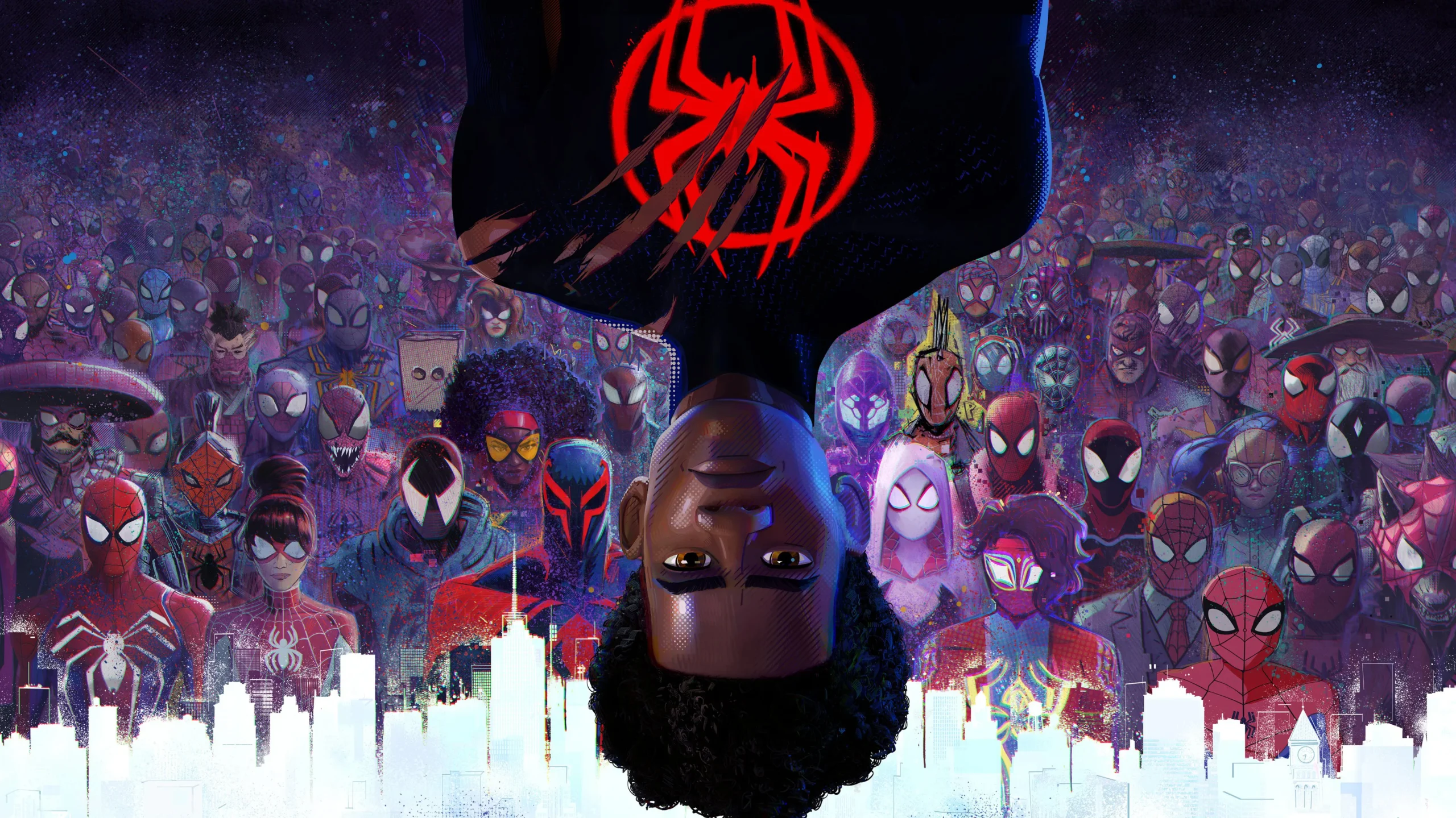
Screening Room: Spider-Man: Across the Spider-Verse, The Boogeyman, Shooting Stars, Esme My Love & More

The Politics of Sin

Padre Pio

by Brandon Thomas

Shortly after the end of the first World War, a priest named Padre Pio (Shia LaBeouf) finds himself suffering an enormous crisis of faith. Having had health issues that kept him from the front lines of the war, Pio’s guilt is slowly consuming him.

Outside the walls of the monastery, a less internal battle is brewing. Many townspeople, upset with fascist landowners and their own working conditions, are drawn to the rising Socialist Party. They see the town’s first free election as a way to make their voices heard. When the old rulers see the tide turning against them, violence becomes their only way of holding onto power.

Director Abel Ferrara made a name for himself by directing some of the most notable exploitation movies of the late ‘70s, ‘80s, and early ‘90s. Films like Ms. 45 and Bad Lieutenant were cultural firestarters in their day, and might even draw the ire of Film Twitter in the present should it stumble upon those seedy gems. However, in the latter half of his career, Ferrara has been drawn to more contemplative works. Pasolini, Tommaso, and Siberia show the filmmaker at his most introspective. Instead of trying to provoke an audience with violence and graphic sex, Ferrara is now trying to get them to look inward through quiet but haunted protagonists. 

Padre Pio is Ferrara’s attempt to subtly blend religion and politics, though neither topic is given its due. Unlike Paul Schrader’s more recent First Reformed, Ferrara’s film is far too disjointed and muddled to prove his own point. The religious fervor found in LaBeouf’s scenes never coherently connects with the film’s political half. There are hints at Ferrara’s initial intentions, but unfortunately very little of that appears on screen. 

LaBeouf’s casting is a major blunder. The actor has turned in very good work in movies like The Peanut Butter Falcon, Fury, and American Honey, but as an iconic Italian priest, he is horribly miscast. While the entirety of the film is in English, the bulk of the cast is made up of Italian and other European actors. LaBeouf’s distracting American accent drags any discerning viewer out of the film immediately. His inclusion, and the messiness of the overall storytelling, makes Padre Pio feel like a bad movie-within-a-movie from an Apatow comedy.

Ferrara’s ideas here are compelling and might’ve worked in movies of their own. When crammed together as competing – not complementary – narratives, the film never finds its footing and feels like a slog even at a reasonable 1 hour and 44 minutes.

Big Top of Broken Dreams

Balloon Animal

by Brandon Thomas

Movies set in or around circuses often have a darkness to them. If the animal cruelty doesn’t get to you then the limitless tales of alcoholism and depression will. Oh, and one of them has Pee-wee Herman running around. Thankfully Balloon Animal leaves the cruelty and boozing behind in favor of a thoughtful character piece about isolation and expectations. 

Poppy Valentine (Katherine Waddell) makes the balloon animals at Valentine’s Traveling Circus, owned by her overbearing father Dark Valentine (Ilia Volok). The once bustling circus now plays to sparse, apathetic crowds. Dark’s intense dependence on his daughter is fueled by his wife’s abandonment of him years before. After her father offers her a more significant role in the business, Poppy begins to question her place in the circus, her father’s life, and the world at large. 

At first glance, the premise of Balloon Animal reads like half of dozen indie dramas released since the mid-90s. That assessment isn’t completely untrue, to be fair. However, the difference is in the execution. Writer-director Em Johnson delivers an honest – but never quite brutal – drama that always feels real to its characters. Poppy’s trajectory through the film is natural and doesn’t end up where you think it will.

Setting this story inside a traveling circus is a fascinating choice. Johnson shows little interest in digging into the mechanics of the circus or its day-to-day. The focus is on the people who live and work inside this nomadic community. For them, it’s just a job (for now). For Poppy, though, there’s a cost of isolation and monotony that she’s unable to ignore and eventually begins to reject. 

The performances are just as notable as the film’s tight storytelling. Waddell’s naturalistic charm makes her a great focal point. She delicately straddles Poppy’s creeping loneliness while allowing the character’s meek pragmatism to shine through. It’s not a showy role, but Waddell does so much with it. Likewise, Volok turns what could be a wholly unlikable character into someone with pathos. His ferocity is equaled only by his ability to elicit empathy from the audience. 

Balloon Animal doesn’t end with any definitive answers for its characters. What it does, though, is give them a stopping point for this particular story in their lives and a starting point for an entirely new one.

Bloodbath at Sea

Project Wolf Hunting

by Brandon Thomas

South Korean filmmakers have never been shy about putting carnage on screen. From I Saw the Devil to Train to Busan, South Korean cinema often runs gloriously blood red. With Project Wolf Hunting, the ante has been upped considerably as geysers of gore are jettisoned out of every original – and disgustingly created – human orifice. Dead Alive this ain’t, but it’s not for lack of trying.

In Project Wolf Hunting, a cargo ship has been chartered to transport a group of South Korean prisoners back home from the Philippines. Along for the ride is a small unit of Korean police, a two-person medical team, and the ship’s crew. However, unbeknownst to them, there’s also a small group stowed away in the bowels of the ship protecting an undead creature that has ties to Japanese experimentation during World War 2.

Large-scale horror movies on boats petered out in the late 90s with films like Deep Rising (a good one!) and Virus (a bad one!), all but killing this particular subgenre. The isolation the open ocean provides is second only to deep space when it comes to a great horror movie setting. Project Wolf Hunting taps into that fear that naturally comes from battling the elements. The fact that there’s also a creature and a dozen psychotic felons only adds to the mounting anxiety.


No one is going to go out of their way to congratulate Project Wolf Hunting for its originality. The film proudly wears its influences on its sleeve with Con Air and Overlord being the most obvious. We’ve seen a lot of these beats and eventual reveals dozens of times before, but this film’s infectious energy makes all of that an afterthought. Even at two hours, Project Wolf Hunting never drags and, at times, keeps layering new craziness to an already bonkers film.

Director Kim Hong-sun must have challenged himself to use every kind of action beat imaginable in this movie. There are fantastic shootouts in confined spaces, brutal knife fights, and a few truly gnarly hand-to-hand combat scenes. However, the real star is the gore effects. A movie this wet and goopy hasn’t been seen in a while – and boy, does it make an impression. The gore never feels overly realistic but fits perfectly into the over-the-top approach the filmmakers establish early on. 
With no desire to reinvent the genre wheel, and a solid handle on action and gore, Project Wolf Hunting is a bloody bit of South Korean fun that’s well worth your time.

Skin Deep

Woman of the Photographs

by Brandon Thomas

Vanity has been a part of human existence for ages. The standards of beauty come and go with the passage of time, but no matter where we are in history, people have sought to look attractive. In Woman of the Photographs, director Takeshi Kushida offers a compelling statement on the broad spectrum of beauty, and how either end of it can be equally damaging. 

Kai (Hideki Nagai) is a Japanese photographer who spends most of his days taking standard portraits and then endlessly photoshopping them for his vain clients. Only on the side does Kai get to dabble in a more artistic expression of his photography. While taking photos of insects in the forest, Kai stumbles upon Kyoko (Itsuki Otaki), an Instagram influencer who has just fallen from a tree trying to get the perfect photo. It’s not your standard meet-cute, and Kyoko certainly isn’t your standard model. After inviting herself for a ride home with Kai, Kyoko slowly integrates herself into Kai’s daily life. What starts as a symbiotically awkward relationship slowly morphs into something more sinister as both Kai and Kyoko become obsessed with a more destructive form of beauty. 

What makes Woman of the Photographs so interesting is how delicately it dances around being a horror film. The first half of the movie feels more akin to a quirky indie drama than it does something in the genre realm. As Kai and Kyoko’s relationship deepens later in the film, the tendrils of horror finally make their appearance, calling to mind something close to Cronenberg-lite. 

The body horror in Woman of the Photographs isn’t as pronounced as that of David Cronenberg. No, Kushida’s desire seems to be to purposefully hold back on the excessive gore and instead force the audience to think about standards of beauty when it comes to surface-level imperfections. The horror emphasis is less on Kyoko’s wound itself and more the obsessiveness with which Kai and Kyoko marvel upon it. 

There’s also a fascinating commentary on the state of modern Japan and the isolation many of its citizens feel. While not exactly suffering from hikikomori (the Japanese phenomenon of extreme isolation), Kai’s relationship with other people is often felt only through the viewfinder of a camera. On the opposite end is Kyoko, whose only connection with others – outside of Kai – is through her Instagram page where she obsesses over each and every shot of herself that she posts. 
Woman of the Photographs slowly unravels from a quirky first act to a much more sinister final half. For those with the patience, the methodical descent into Japanese body horror will be well worth the investment.

Remember, Remember…

Back to the Wharf

by Brandon Thomas

Many of your favorite neo-noirs play with the idea of past transgressions coming back to haunt our hero(s). Whether it’s murder born of passionate jealousy or a botched robbery that places the lead on the run, the past hangs on this genre like a cheap suit. In director Xiaofeng Li’s Back to the Wharf, one tragic mistake has a ripple effect across an entire family and community.

Song Hao (Yu Zhang) has returned to his hometown after 15 years following the death of his mother. Once a promising student with university in his future, Song fled after mistakenly entering a neighbor’s home and stabbing him. What Song didn’t know at the time is that his father finished off the mortally wounded man to save his son – and that one of Song’s classmates, Li Tang (Hong-chi Lee) witnessed the crime and has been using it to blackmail his father ever since.

Back to the Wharf – unlike many modern neo-noirs – isn’t concerned with the tropes of the genre. The cool factor is toned down in favor of a more quiet character study. The bursts of violence that do happen are born out of believable character development, not a need to clumsily move the plot along. 

Zhang as Song Hao delivers a quiet, but enthralling performance. It’s easy to see Song is a powder keg, but the delicateness of Zhang’s performance has us as viewers begging for that eventual explosion not to happen. This is especially true once Pan (Song Jia), a former classmate of Song’s, enters his life again. Their meet-cute is made all the more adorable because of Pan’s quirky demeanor – one that has made her an isolated outsider in the community, just like Song. Jia’s jovial outward performance is a fantastic juxtaposition to Zhang’s stoic and guilt-ridden Song.

The film’s eventual conclusion is an unsubtle comment on how violence festers into more violence. There’s no crescendo of righteous vengeance from Song or his father against Li Tang as he squeezes the two for political favors. The cycle of greed and emotional reckoning remains unbroken even as Song tries to build a life of stability with Pan.
While straddling the line between typical neo-noir and quiet character drama, Back to the Wharf manages to satisfy fans of both genres.

https://www.youtube.com/watch?v=D9GCz_H1RB4

Born to Be Wild

Wildcat

by Brandon Thomas

Much has been made of how animals impact the lives of their humans. For a lot of people, many of the fondest memories they have are of a dog or cat that brought an enormous amount of joy to their lives. Of course, these stories usually revolve around domesticated pets and not wild animals. Wildcat deviates from your standard nature documentary and instead focuses on the deep bond between an emotionally fragile man and the wildcat that relies on him for survival.

Harry Turner is a twenty-something Englishman who deployed to Afghanistan when he was 18 years old. As Harry’s time in the armed forces comes to an end, he’s left with scars both physical and emotional. Looking for a fresh start, Harry travels to the remote Peruvian portion of the Amazon and links up with a Ph.D. student and her animal sanctuary. As Harry continues to struggle with the effects of debilitating depression and PTSD, fate drops an orphaned ocelot (ironically named Keanu) into his care and into his life.

There’s a breeziness to Wildcat that helps it feel more personal than most nature docs. A huge swath of footage is shot by Harry himself and helps the audience understand his state of mind much more quickly than a series of talking heads might have. When Harry’s doing well, there’s a tight focus to the footage of Keanu and of his testimonials. As his mental health deteriorates, so does the shooting style of the film. Entire scenes take place with participants off-screen or in the background – at times leaving us just as disoriented as Harry.

So much of the film begins to feel voyeuristic as Harry spirals. Not in a gratuitous or exploitative way, but in that Harry’s deep emotional connection to Keanu’s well-being feels like an exposed nerve. Seeing this vulnerable wildcat rely on an equally vulnerable human being is a beautiful juxtaposition that forms the core of the film. 

Wildcat isn’t the kind of film that gives one a better understanding of nature and its fragility. Instead, this is a film that seeks to better understand the delicate connection that can exist between humanity and the animals that co-exist with us.

Double Trouble

NR. 10

by Brandon Thomas

We all wonder why we are the way we are. As teens we blame our parents. In early adulthood we blame society. Then as we reach middle-age we blame our parents again. It’s a vicious cycle that most of us never grow out of nor get a satisfactory answer to. In Nr. 10, filmmaker Alex van Warmerdam (Borgman) suggests the ultimate nature vs. nurture question set against the absurdity of local theater. What’s the question you might ask? Well, that would be giving away far too much.

Gunter (Tom Dewispelaere) is a member of a local Dutch acting troupe. On the surface, Gunter has what looks to be a good life. He’s a respected member of the troupe, he has a close –  albeit complicated – relationship with his daughter, and he’s in a passionate relationship with a woman who just so happens to be the theater director’s wife. Things quickly begin to change for Gunter when a stranger approaches him and whispers a single word into his ear.

Nr. 10 is a difficult movie to discuss because getting too far into the weeds would potentially ruin any and all surprises the movie has. The surprises within the movie don’t necessarily make or break it, but they do constitute such a seismic shift that spoiling them might make future viewers feel cheated. 

I do feel comfortable saying that Nr. 10 comes across as almost two separate movies. The first half is a deeply funny portrait of local theater and its idiosyncratic nature. The shallowness and vanity of actors are on full display as Gunter and a colleague squabble over the meaning of their characters and whether they would stick up for themselves when challenged. The antics of the theater and its culture never become the full focus – just a jumping-off point for Gunter and the other fabulous set of characters.

As the focus on the theater begins to wear off, the strangeness of what’s going on around Gunter begins to take hold. Well-dressed older men watch Gunter’s home and his day-to-day activities and report back to several high-ranking Catholic clergymen. Part of me didn’t want the eventual explanation of what was happening. The peculiarity of these scenes was just askew enough of reality to feel right at home in a David Lynch movie.

The eventual narrative shift toward the end of the film is a bit awkwardly handled but still leads to a satisfying back-half. The absurdity of the stage and its inhabitants is traded for an almost equally mind-boggling reveal of Gunter’s early life. The inclusion of a completely different genre shouldn’t work, but Warmerdam’s commitment to keeping the tone in check allows the film to barrel forward and not lose the audience in its wake.

Dewispelaere does a terrific job anchoring the film with his central performance. As Gunter’s early confidence withers away, Dewispelaere dances back and forth between helplessness and bewilderment at what is unfolding before him. It’s a performance that could’ve gone too big, and Dewispelaere wisely keeps things subdued even as the story gets wilder and more unbelievable. 

Nr. 10 stumbles in trying to fasten together two separate narratives, yet the emphasis on dark comedy and character keeps the premise feeling fresh and fun the entire time.

Sister, Sister

Shadows

by Brandon Thomas

Growing up is tough, especially once adolescence rears its ugly head. Your body gets weird, emotions are all over the map, and you don’t know shit despite thinking you do. Now imagine growing up amidst a global catastrophe with an overbearing mother and not being able to step foot into the daylight. In Shadows, this scenario ends up being a recipe for disaster.

Alma (Mia Threapleton) and her sister Alex (Lola Petticrew) live in total isolation with their mother (Saskia Reeves). The girls remember nothing of their lives before a catastrophic event drove the family deep into the woods. By day, the family stays indoors hiding from mysterious entities known as “Shadows” – beings that live in the daylight and fully inhabit the land beyond the river. As the sisters’ rebellious curiosity takes hold, they begin to wonder about the world beyond the river, especially as their mother’s grip on reality becomes more and more tenuous. 

Director Carlo Lavagna makes the close bond between Alma and Alex the focal point of Shadows. The mother almost exists on the periphery of their lives – appearing to reprimand them or scare them back into obedience. Even though they are teens, there’s a stunted immaturity to the sisters that’s hard to ignore and makes their situation all the sadder. Threapleton, daughter of actress Kate Winslett, walks a tightrope between inner strength and debilitating reliance on her emotionally distant mother. Many times Threapleton does both within the same scene.

The depiction of Mother is another bright spot. Mother appears sparingly – keeping the audience at arm’s length just as she does with Alma and Alex. Her coldness is rivaled only by her calculated survival instincts and desire to keep the sisters confined and “safe.” The mysterious nature of Mother helps keep us in the same shoes as the constantly confused and fearful sisters. 

For a film that spends so much time in the same location, the cinematography is a standout. Cinematographer James Mather (Frank, Extra Ordinary) has an incredible eye for space and makes the world the family lives in feel spacious, yet closed in and emotionally walled off. The daytime threat of the Shadows themselves is visualized through a harshness in the few daylight scenes that is contrasted perfectly by beautiful nighttime photography.

Where Shadows stumbles is on its way to the finish line. Most viewers will see the “surprise” ending telegraphed a mile away and feel a bit underwhelmed at its perceived cleverness. The climax – while not wholly original – doesn’t retroactively make the rest of the film feel lesser. 
Shadows doesn’t break any new ground on a narrative level, but it does feature three captivating performances by an entirely female cast.