Hope & George review this week’s new releases: Tony, Sex and Death at Camp Miasma, Mutiny, Insidious: Out of the Further, The Magic Faraway Tree, Buffet Infinity, Bury the Devil, & Blood Shine!
Hope & George review this week’s new releases: Tony, Sex and Death at Camp Miasma, Mutiny, Insidious: Out of the Further, The Magic Faraway Tree, Buffet Infinity, Bury the Devil, & Blood Shine!
by Hope Madden
“The magic of childhood is always forgot, but this is the story of one who did not.”
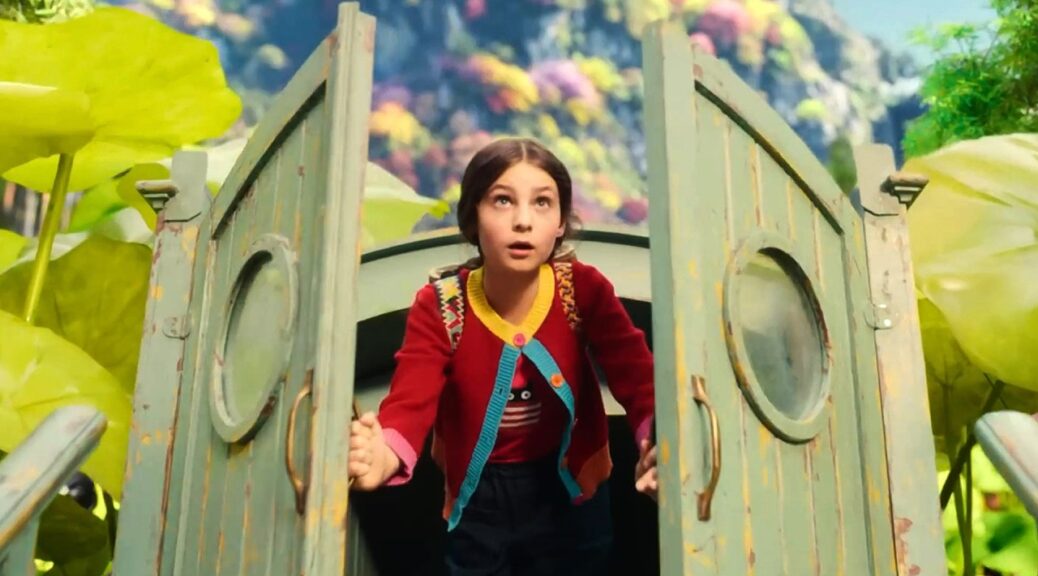
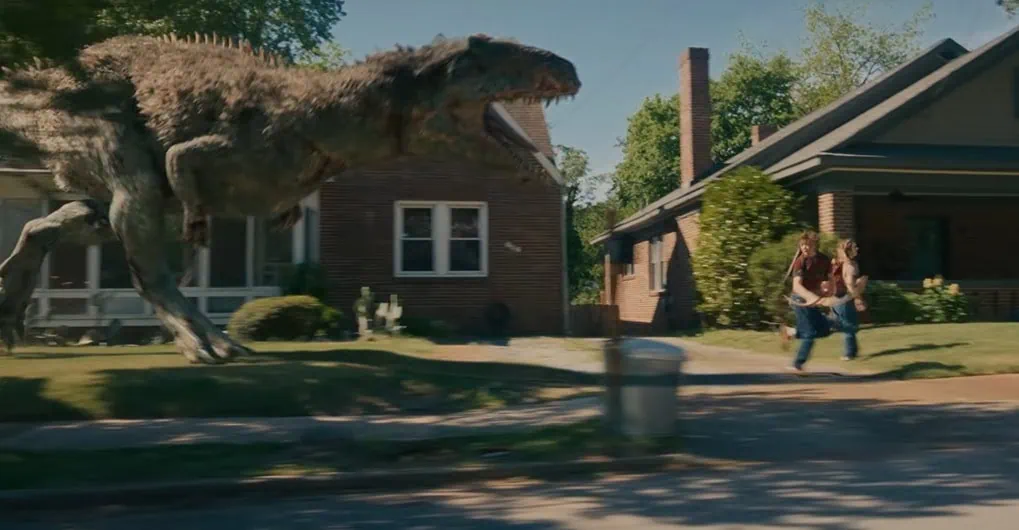
So begins The Magic Faraway Tree, director Ben Gregor’s fantasy about unplugging the family and rediscovering magic.
Tim Thompson (Andrew Garfield) is the one adult still searching for some joy, maybe even magic, for his family. When his wife Polly (Claire Foy) quits her corporate job (and the family immediately loses the corporate apartment and car), Tim has a grand idea. They’ll move to the country, live off the land and make pasta sauce.
Garfield’s a brilliant fit as the emotionally available dad, ready to make friends with a rooster and play Gregorian chants for his tomato plants. Tim and Polly’s kids fare less well without their devices, until they find a giant magic tree and make friends with the mainly friendly fae folk who live therein.
These folk include a fairy (Nicola Coughlan), a pixie (Hiran Abeysekera), and a saucepan man (Dustin Demri-Burns). What?
Writer Simon Farnaby (Paddington 2) adapts one of Enid Blyton’s beloved old books to tell a good story, but it’s caught in a trap. The fantastical elements are fun and brightly colored, but not nearly as interesting as the family drama.
This is partly a testament to the talent of the cast. Both Foy and Garfield are routinely wonderful but rarely does either get to play a loving parent and spouse finding silly ways to be with their family. Both seem to truly enjoy the work.
The child actors (Billie Gadsdon, Delilah Bennett-Cardy, and Phoenix Laroche) charm scene after scene. The crux of the drama falls on Bennett-Cardy, and she handles it beautifully.
Rebecca Ferguson, however, is criminally underused as the villainous Miss Snap. This is part of the trouble. The film gives more space to the non-magical side of the story, which leaves the magical portion feeling underfed.
It’s unfortunate that Gregor couldn’t find a more whimsical balance for the film, or simply streamlined the fae adventure to a more precise, if smaller, supporting side plot. Instead, the family drama feels like a full film often weighed down by a shapeless, overly busy but under developed side quest.

Because we already know what would be #1 if we didn’t limit it, and the thing is, it’s insane how many great horror films are based in Texas. Texas is like our very own Australia! So, here are our five favorites that do not include that one we always talk about.
5. Bubba Ho-Tep (2002)
Who wants to see Bruce Campbell play Elvis Presley?! We do.
Director Don Coscarelli (Phantasm) brings Joe R. Lansdale’s short story to the screen to depict the horror and sadness of aging, although its done with such humor that the film is impossible not to love.
Elvis never died, he swapped places with an impersonator who died and ever since then he’s been stuck living someone else’s life. And now he’s been stuck in this low-rent old folks home where his only real friend is a guy who believes he’s JFK (Ossie Davis). Obviously, when they realize that the recent spate of patient deaths is due to a mummy sucking the life from people through their assholes, who’d believe these knuckleheads?
The script is great and Coscarelli knows exactly how to make the most of budgetary limitations. The entire cast soars, but Campbell and Davis have such incredible chemistry that the film delivers not just laughs, message, and some scares but genuine tenderness.
4. Frailty (2001)
Director Bill Paxton stars as a widowed, country dad awakened one night by an angel – or a bright light shining off the angel on top of a trophy on his ramshackle bedroom bookcase. Whichever – he understands now that he and his sons have been called by God to kill demons.
Flash forward and we’re led through the saga of the serial killer God’s Hand by a troubled young man (Matthew McConaughey), who, with eerie quiet and reflection, recounts his childhood with Paxton’s character as a father.
Dread mounts as Paxton drags out the ambiguity of whether this man is insane, and his therefore good hearted but wrong-headed behavior profoundly damaging his boys, or is he really chosen, and his sons likewise marked by God? The film upends everything – repeatedly – until it’s as if it’s challenged your expectations, biases, and your own childhood to boot.
Paxton crafts a morbidly compelling tale free from irony, sarcasm, or judgment and full of darkly sympathetic characters. It’s a surprisingly strong feature directorial debut from a guy who once played a giant talking turd.
3. The Dark and the Wicked (2020)
Bryan Bertino is not a filmmaker to let his audience off the hook—if you’ve seen The Strangers, you know that. Like that effort, TD&TW is a slow burn with nerves fraying inside an isolated farmhouse as noises, shadows, and menacing figures lurk outside.
Bertino and cinematographer Tom Schraeder work the darkness in and around a goat farm to create a lingering, roaming dread. But where Bertino, who also writes, scores extra points is in crafting believable characters.
Too often in horror you find wildly dramatic behavior in the face of the supernatural. One character adamantly denies and defies what is clearly happening while another desperately tries to communicate with “it.” No one would do either, but this is the best way to serve the needed action to come in lesser films.
2. Pearl (2022)
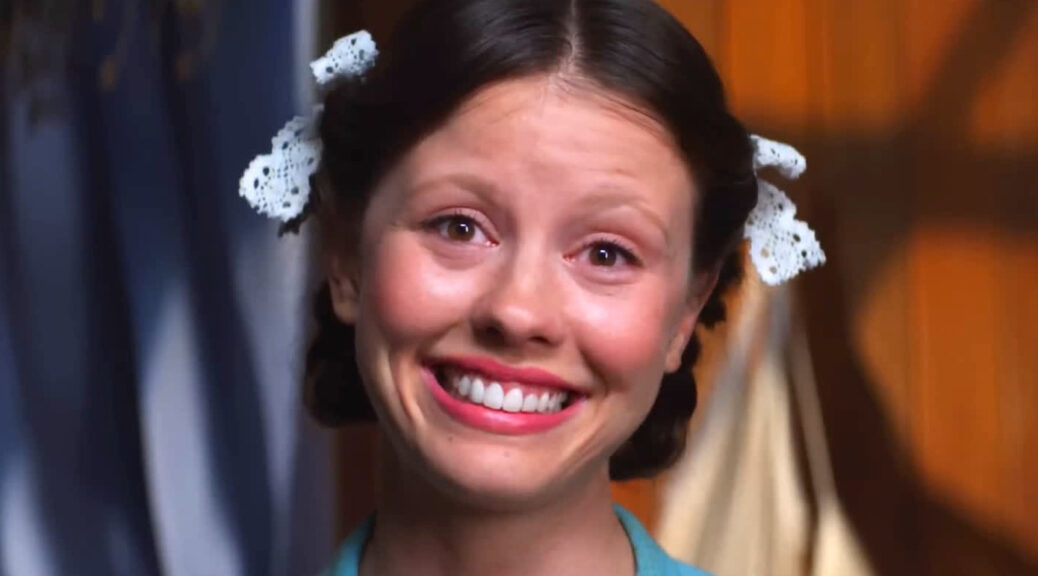
Mia Goth has been impressive in every film she’s graced. But nothing prepared us for Pearl.
With her first writing credit and her first no-question-about-it lead performance, Goth delivers an unerring combination of innocence and psychosis that is as captivating as it is terrifying.
The writing is sly and the direction a magically macabre take on classic American cinema, like the most wrong-headed Judy Garland movie you can imagine. But it comes together seamlessly to deliver a concoction spellbinding concoction.
Goth’s 8-minute monologue and that truly insane frozen smile over the end credits will stay with you forever.
1. X (2022)
The Texas Chain Saw Massacre meets Boogie Nights?
Yes, please!
Filmmaker Ti West delivers an utterly unexpected and absolutely inspired horror show like nothing he’s made before. A group of good-natured pornographers descends upon an out-of-the-way ranch to shoot a movie, unbeknownst to the owners. Mia Goth leads a thoroughly entertaining cast, each actor making the most of the humor crackling throughout West’s script.
West explores some common themes, upending every one without ever betraying his clear love of this genre. Blending homages of plenty of Tobe Hooper films with a remarkable aesthetic instinct, West fills the screen with ghastly beauty.
by Hope Madden
Don’t make the mistake of assuming Jane Schoenbrun’s new feature Teenage Sex and Death at Camp Miasma is a slasher. Or a slasher spoof. Or a satire about slashers.
It’s a sexual awakening brought about by Gillian Anderson. Obviously.
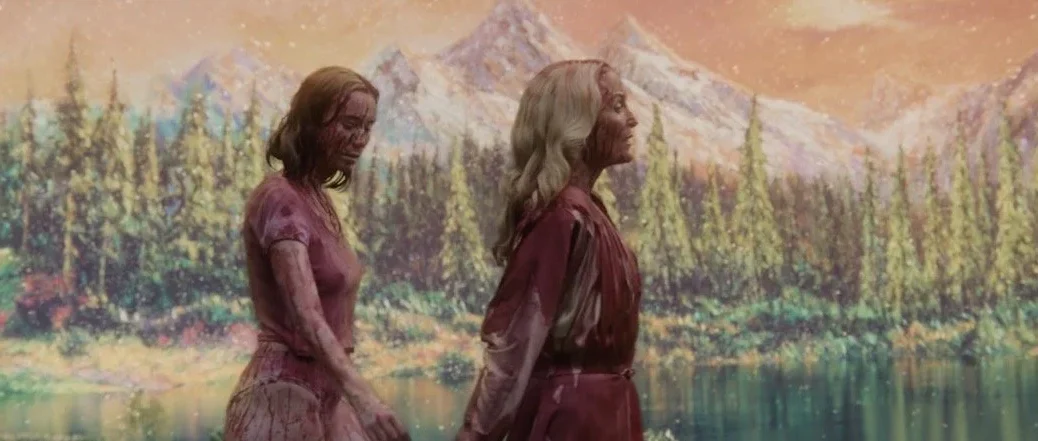
Up-and-coming (pun intended) queer filmmaker Kris (a wondrously vulnerable Hannah Einbinder) has been tapped to reboot a problematic slasher IP. She hopes to convince the Final Girl of the first installment, Billy (Anderson the Great), to return to cinema and star in the film. Turns out, Billy’s a recluse who bought and now lives in the camp from the original film. She hosts Kris for several days of movies, junk food, pot, and deeply sensuous slasher nerdery.
This is—and I say this with as much delight as possible—the nerdiest horror movie ever. How nerdy? The very second you hear yourself saying “that’s a split diopter,” Schoenbrun stand-in Kris says it out loud. When Kris apologizes for asking too personal a question of Billy, fearing it could be a #metoo violation, Billy replies, “I auditioned for The Burning. You know who made that, right?”
Nerds! And the best kind of nerds. Horror movie nerds! Sleepaway Camp trivia meets Friday the 13th nostalgia in a gloriously queer, brazenly shameless, wonderfully horny new horror film.
Like their last two features, We’re All Going to the World’s Fair and I Saw the TV Glow, Teenage Sex and Death at Camp Miasma concerns itself with transformation, identity, and horror. But Schoenbrun’s latest drops the dreamy melancholy of the previous films in favor of something tender, beautiful, and accepting.
The gender iconography littered across every scene finds its zenith in Little Death (that name!), the transgender marauder with a double-blade spear and an air vent helmet. (Honestly, if you haven’t read Carol J. Clover’s Men, Women, and Chain Saws, you should. Schoenbrun certainly has.)
TSADACM, like Schoenbrun’s last two films, is a gorgeous watercolor fever dream. It’s funny, incredibly bloody, and unabashedly in love with the aggressively sexual and sexually ambiguous slasher, no matter how problematic. Perhaps because it’s problematic.
The film is not just a wonderful walk through another person’s psyche, although it is that. It’s also a fascinating, deeply satisfying kick of a horror movie. You should go.

by Hope Madden
Things don’t often go well for live-in nurses in horror movies. Whether the caregiver is a loved one (Undertone, Relic, The Taking of Deborah Logan) or a professional (I Am the Pretty Thing That Lives in the House, The Dark and the Wicked), the patient always seems to bring with them an additional presence.
So, I guess Julia (Emmanuelle Lussier Martinez) only has herself to blame. If she’d watched more horror, she might have known that her latest gig in a gorgeous lakeside home with Evelyn (Dawn Ford) would take more from her than her time and compassion.
Writer/director Adam O’Brien’s Bury the Devil creates a great, spooky atmosphere. Long takes and a prowling camera give the film a haunted quality, and O’Brien makes the most of his limited budget with a small but talented cast and this stunning location.
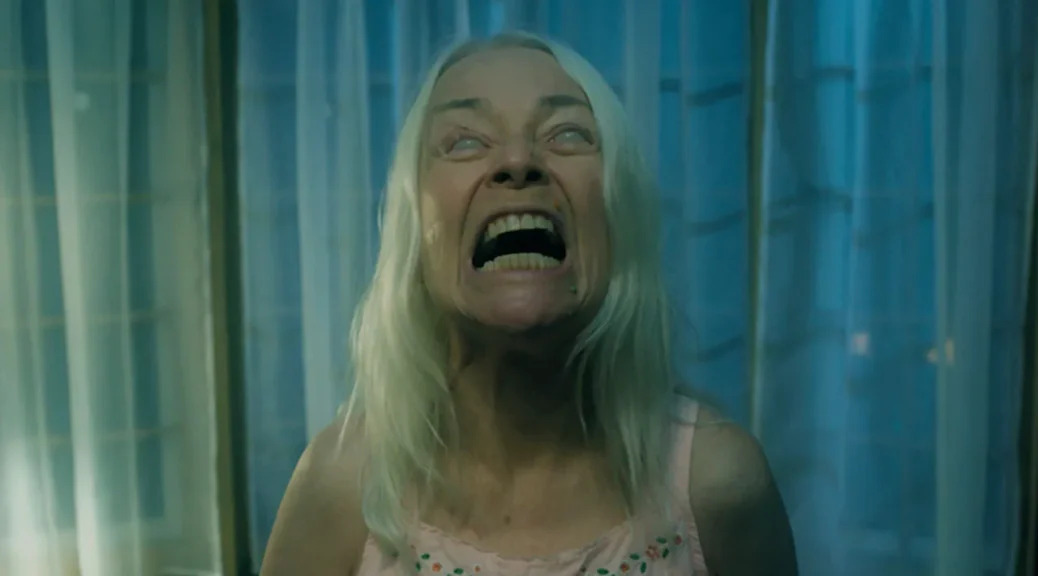
Ford takes advantages of the opportunities afforded her, gliding from wistful old woman to confused dementia sufferer to something sinister and back with ease. She commands the screen as patients in these films rarely do.
Likewise, Martinez carves out a believable character—not the martyr or conniver, just a working nurse on her first night in a new home.
The writing is occasionally pushy, trying too hard to wedge information into conversations without forced exposition. We exist only in the present tense. There are no flashbacks or days marked on the screen to help us along. Instead, O’Brien drops us into Julia’s first night and possibly Dawn’s last. It’s a structure that keeps the film moving and surprising, but it doesn’t offer a lot of opportunity to expand the story.
The gaps in the mythology weaken the climax. What you don’t know and couldn’t possibly understand without some guidance leaves you guessing at too much. That guesswork keeps the finale from feeling like a resolution, like pieces finally fit into a puzzle. It’s not enough to ruin the movie, but it’s enough to keep it from leaving a mark.
by George Wolf
Among other things, Tony is another reminder that we’d all be better off if everyone’s first job was in a restaurant. It certainly altered the course of Anthony Bourdain’s life, and director/co-writer Matt Johnson makes the most of focusing his biopic squarely in that one eventful summer of 1975.
“Tony” was 19 then, and by his own admission decades later in the Kitchen Confidential memoir, a narcissistic lout in need of a “good ass kicking.” The story of that BTA wakeup call makes for an entertaining coming-of-age tale full of humor, humanity and one righteous clambake.
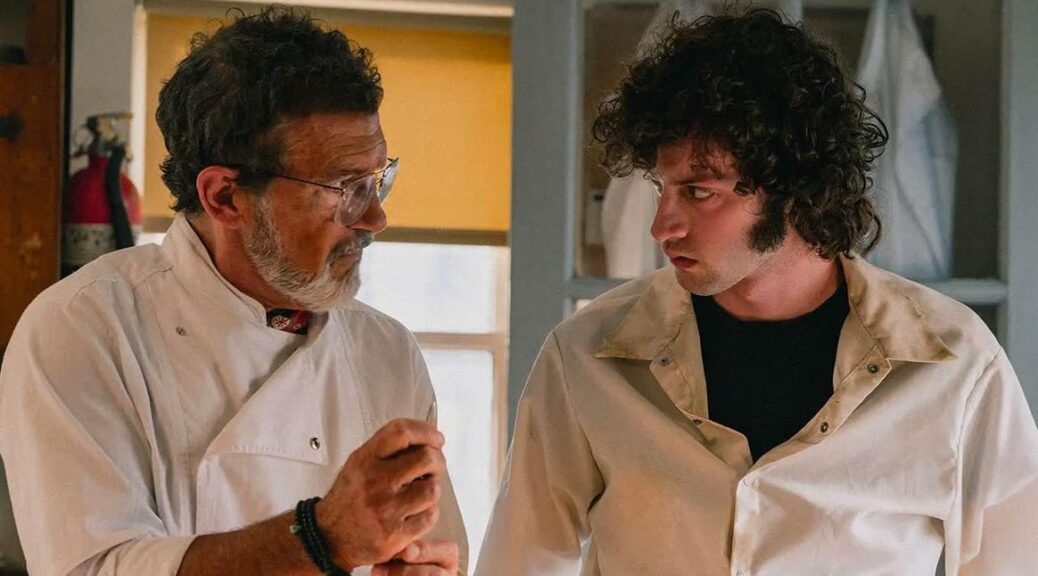
Dominic Sessa is exceptional as the young Bourdain, who is so caught up in his future writing genius that he lies to everyone about the huge Vassar fellowship that he didn’t get. Following his crush Nancy (Emila Jones) to Provincetown, Mass., Tony is forced to earn his keep by washing dishes at The Flagship restaurant and sleeping in Chef’s (Antonio Banderas) hammock out back.
And so the education begins. While co-worker Sal (Tuner‘s Leo Woodall) schools him on the local women and party life, Chef’s gentle and patient influence nudges Tony to stop pretending and follow his passions.
Sessa, with his frantic hair and brooding intensity, makes the gradual transition frustrating, relatable and heartfelt. His chemistry with Banderas (in a performance perfectly suited for an Oscar nod) is warm and real, providing the film a reliable anchor that does not disappoint.
Johnson (Blackberry, Nirvana the Band the Show the Movie) has been clear that he came to the project with little knowledge of the Bourdain brand. That helps the film avoid undue reverence, and lets Tony’s future accomplishments hang bittersweetly in the air, an unspoken but understood step in this character arc from lout to legend.
Because in the summer of 1975, Bourdain’s future could have taken many different paths. Though the end was tragic, Tony finds a messy, inspiration joy in the beginning, and in the subtle twists of fate that can change lives forever.
by Hope Madden
At about the 5-minute mark, I’d begun to worry about Buffet Infinity, co-writer/director Simon Glassman’s very Canadian sci-fi/horror/comedy hybrid. So far, we’d done nothing but flip through various low-fi, low-budget, very local Canadian TV ads. For five minutes.
That seemed like a long time for a prelude to a narrative. By 10 minutes, panic settled in as I realized the flipping from a few seconds of this law office ad to a few seconds of that used car commercial to a few seconds of this buffet advert would compose the entire film.
About one minute later I’d submitted to the mind-jangling force of Buffet Infinity. Which almost certainly means I would not have survived whatever it is that happened in Westridge County, Canada the day the sink hole appeared behind that mall.
Glassman’s premise, built from a script co-written with Allison Bench and Elisia Snyder, is clever, but its execution is bananas and perhaps brilliant.
The film mimics the experience of channel surfing in the Nineties with all the regional news and commercials. Did your small town have a car salesman who took on a superhero alter ego? Or a badly dressed ambulance chaser promising you a big payout for your negligence lawsuit? These are joined by a delightful pawn shop, an untested diet pill, a hilariously lip-synched series of insurance commercials, one low-rent L. Ron Hubbard (every ad is hilarious), and a nasty grudge match between neighboring restaurants.
Edited masterfully and performed atrociously (intentionally and enjoyably), and aided by a handful of quick news bits, the clips tell the tale of a town fighting to survive some cosmic capitalistic catastrophe.
Glassman’s instincts for presentation are on point. Whether it’s the crawl on the screen, the news channel jingles, the insane verbal descriptions attached to the buffet commercials, or just the relentless and twisted familiarity of each ad, Buffet Infinity nails its style.
I wouldn’t call it style over substance because that feels like a knock against the narrative being unveiled with each changing commercial. Still, certainly the presentation and its unlikely durability (93 minutes!) make style the more impressive of the two.
Buffet Infinity is a wild watch, and though—given its channel hopping style—it seems ideal for Shudder, don’t let the home viewing let you get distracted. Glassman repays you for your attention.

Hope & George review this week’s new releases: Union County, The End of Oak Street, The Rivals of Amziah King, The Wrong Girls, Do Us Part – and we’re joined by the director and cast, Reed Arnold, Kelly Russo & Travis Laughlin! —Don’t Say Good Luck, Hellcat, Feed, and The Legend of Juan Jose Mundo.
by George Wolf
Back in 2019, Andrew Patterson’s debut feature The Vast of Night was a welcome surprise. Meticulously crafted with a detailed throwback vibe and some snappy dialog, it got me excited for what Patterson had in store.
We finally get his second feature with The Rivals of Amziah King, and once again, I am charmed.
His timeline shifts to present day, and the setting moves from New Mexico to Oklahoma for an adventure filled with rousing roots music, the basics of beekeeping, a Southern Gothic mystery and one clever plan for revenge.
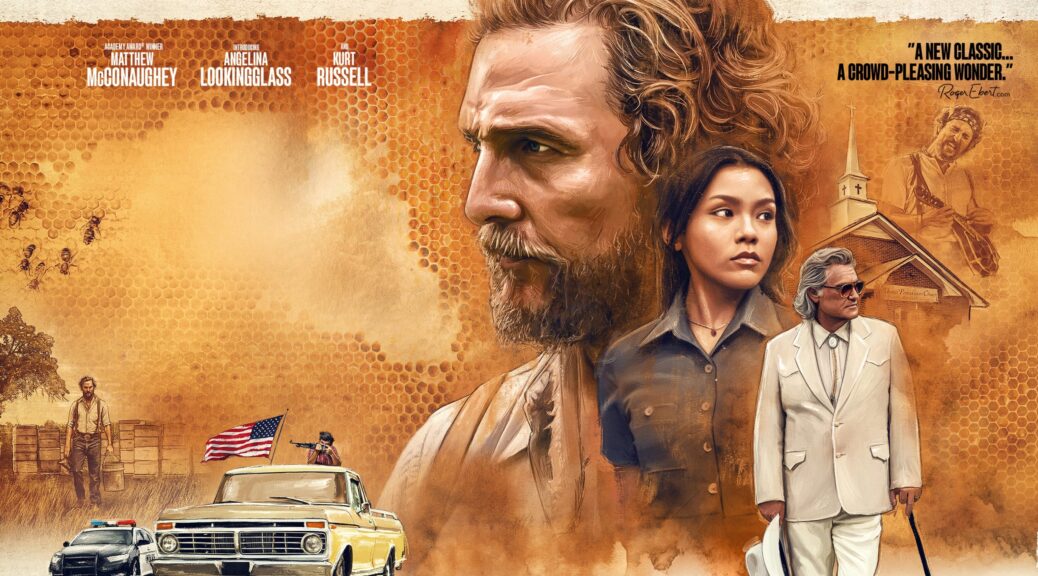
Matthew McConaughey is electric as Amziah King, a rural beekeeper, musician and all around character who’s asked to help find the rightful owner of twenty barrels full of stolen honey. But after some absurdist violence, a reconnection with his former foster daughter Kateri (Angelina LookingGlass in a captivating debut) and a memorable pot luck/jam session, King finds his own bee colony has been lifted.
Kateri’s affection for King as a father figure has never wavered over their years apart, and she commits herself to payback for the guilty party. And she’s pretty sure the trail will lead right to local tycoon Dob McCoy (Kurt Russell).
Patterson has a delightfully unique brand of storytelling, one that retains a youthful innocence no matter what adult themes are being juggled. His wordplay is fresh and often deadpan funny, and his camera can oscillate between fluidity and bits of slo-motion for effect.
Two films in, it’s clear Patterson is a skilled world-builder. And here, that world is a small Oklahoma community with many interconnected parts and memorable personalities. The parallels that Patterson draws with bee colonies are clear but not force-fed, and his wonderfully eclectic ensemble makes it a kick to follow them around.
Patterson seems to be enjoying the bigger canvas for his second film, with a few strands of excess and a 130-minute run time that does get a tad bloated when we reach some odes to Huck Finn in Act III. But it always feels in service of a big swing and a committed vision, and that will always bee easy to forgive.
Yes, bee.
by Rachel Willis
Do you remember what it’s like to be in high school and to be desperately in love with someone who doesn’t see you that way? Writer/director Michael Walker and his co-writer Susan Gomes sure do. What’s even better about their film The Legend of Juan Jose Mundo is that they remember being young and in love in the glamorous 1980s.
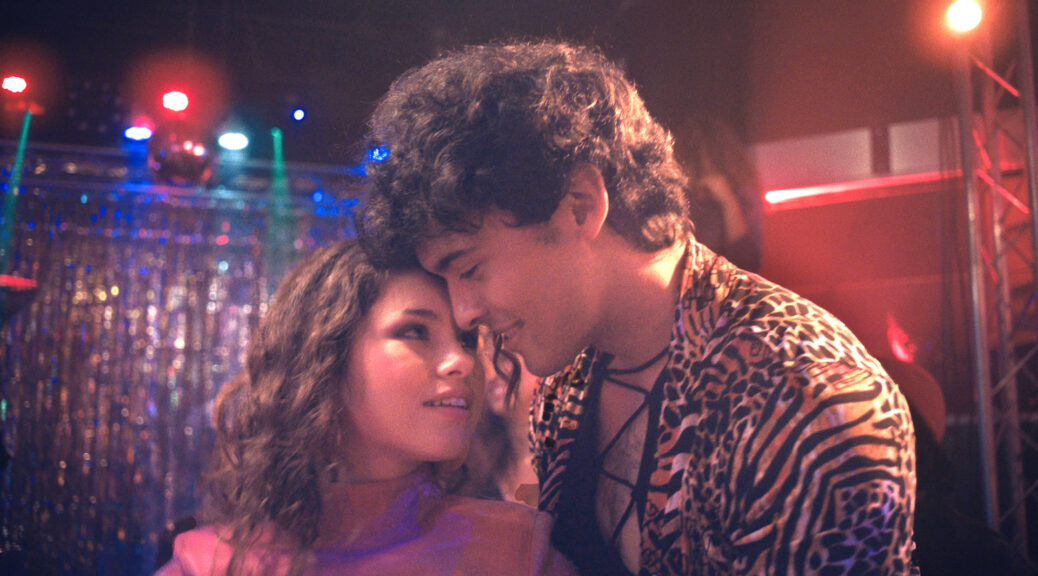
High school junior Julie (Anna Miroden) is upset when she finds out the Spanish exchange student she was expecting is being replaced by a boy named Juan (Alexandro Byrd). It’s not too hard to anticipate that Julie’s discomfort will give way to youthful lust. But of course, as easy as she seems to hit it off with Juan, he only has eyes for seemingly every other girl in school.
The formula might be familiar, but the film itself is a gem. Miroden is the perfect every girl. She’s the ideal balance of cute and insecure. Even when boys do like her, she freezes before anything can happen. She also has the conundrum of wanting the boys to like her, but only the “right” boys. When those boys don’t like her, it feels like none of them do, even when several show her how untrue that is.
As a perfect mirror to Julie’s insecurity, Juan is the model of confidence. He flirts and hooks up with countless girls. His legend grows within the school, and even Julie’s best friend Suzanne (a fantastic Hannah Kepple) is swept up in his wake.
But despite any mistakes or poor decisions the characters make, it’s impossible not to like them. Each one brings a level of realism that has you rooting for them to make better choices and figure out how to navigate the choppy waters of adolescence. There isn’t a dud among the cast, and the writing gives even ancillary characters enough to bring them to life.
This film has a lot of heart and puts many teen comedies from the 80s to shame.