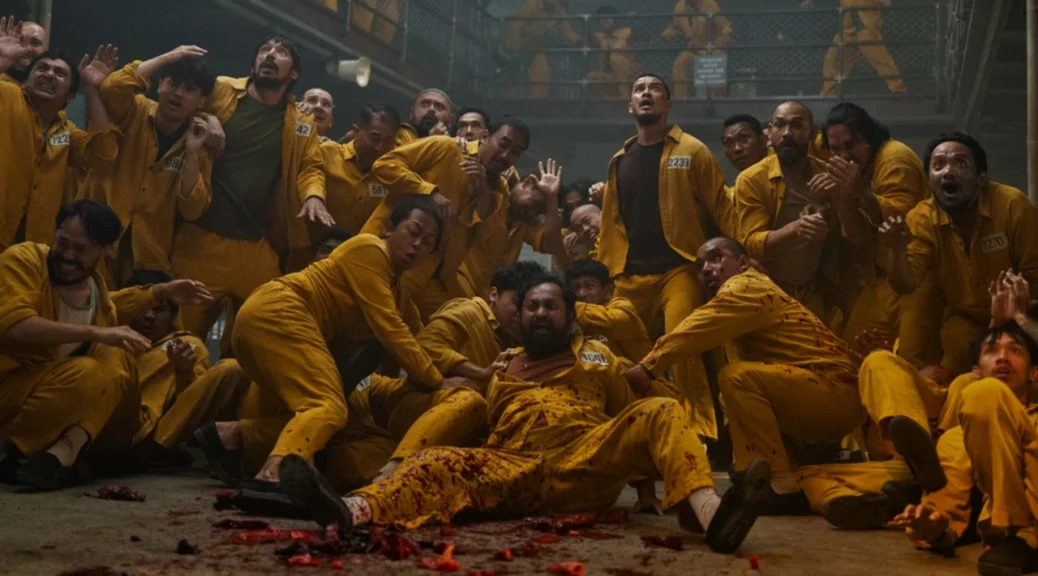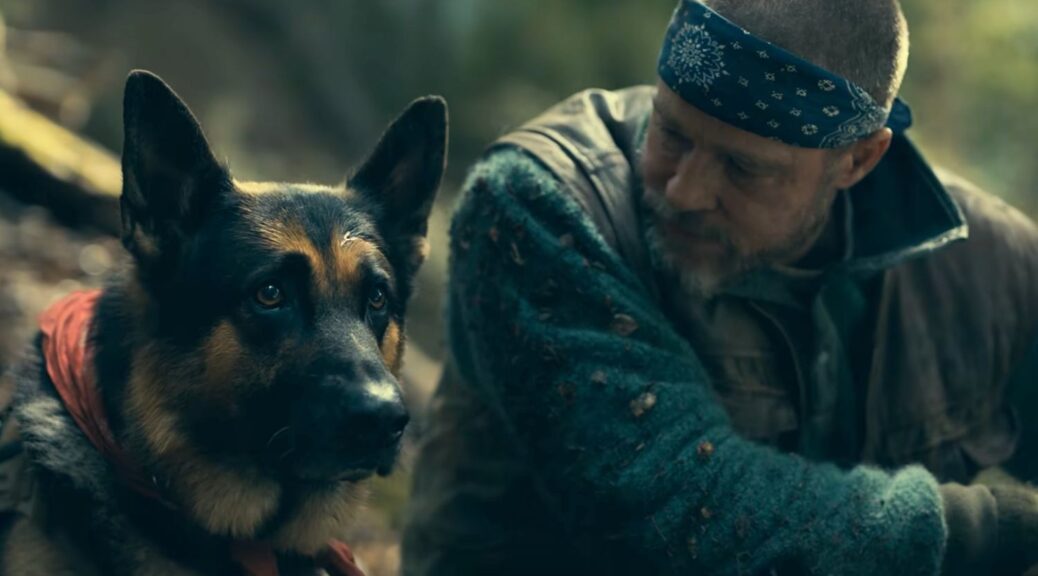
Somewhere Beyond the Sea

Magellan

by Hope Madden

Lav Diaz’s 2-hour and 40-minute epic Magellan is not for the impatient viewer. With no exposition, a primarily stationary camera, and only one internationally known actor (Gael García Bernal in the title role), the filmmaker quietly undermines a historically accepted notion of exploration and perseverance.

Scenes have a painterly quality, the framing and lighting especially of interiors giving the impression of an oil painting. Each scene, threaded loosely together by time and location, feels more like a work of art into which characters tumble and behave.

Relying almost exclusively on long takes with an unmoving camera, Diaz emphasizes not the characters in a scene but its geography, its ecology. Even in sound design, the crash of ocean waves, the rustle of jungle leaves, the creak and moan of a ship at sea are given equal, sometimes even primary attention. These set ups let the environment dictate the scene, emphasizing the natural world and not the puny individuals so desperate to leave a mark.

Diaz, who generally films in black and white, revels in the hues and tones of the environments. Rich, deep browns in ship quarters conflict with the steely blue grey of the sky and ocean, which pale beside the rich greens of land. And the filmmaker insists that you notice, holding every shot far longer than expected so there’s nothing for you to do but take note of the brutal beauty.

The showiest thing about Magellan is its silences, what Diaz leaves unexplored and disregarded. Don’t go into this film expecting a rousing image of endurance and vision. This film is not impressed by the explorer. Diaz’s languid camera empties his film of the urgency you might expect of a film so pointedly critical of colonizers and exploiters, and that seems to be the point.

Diaz robs Magellan of the passion and romance often attached to his single-minded mission. The film’s unhurried nature subverts expectations and leeches the nobility from the history, leaving instead the impression of blundering, cruel acts performed by misguided, greedy men who died in the mud, far from home, while trying to steal land and enslave human beings.

The Healing Skies

H Is for Hawk

by George Wolf

“I don’t have a hobby, I have a hawk.”

“Mabel” became much, much more than a hobby for Helen Macdonald, and H Is for Hawk adapts their award-winning memoir with nearly equal amounts of the magical and the mundane.

Claire Foy is understated and touching as Helen, who was teaching English at a university in Cambridge when their beloved father Alisdair (Brendan Gleeson, characteristically splendid) suddenly collapsed and died in 2007.

Leaning on memories of exploring nature and birding with their father, and their years of experience in falconry, Helen channelled feelings of grief into the adoption and training of a Eurasian goshawk.

Just the fact that the emotional vessel here is a notoriously stubborn bird of prey instead of a dog, a horse, or a wayward teen is enough to stir your interest. Director and co-writer Philippa Lowthorpe rewards it early. Foy and Gleeson shine in some bittersweet flashbacks, and Helen’s cautious bonding with Mabel is in turns emotional and educational.

As Mabel hones her hunting instincts, the wildlife framing from cinematographers Charlotte Bruus Christiansen and Mark Payne-Gill can be beautifully majestic. Eventually, though, the lack of firmer hands from Lowthorpe and editor Nico Leunen begins to take a toll.

The pace of the film becomes laborious and plodding, enough to even overshadow the introspective and touching work from Foy. There is never a doubt we believe the healing journey Helen and Mabel are sharing, but the excessive documentary-ready wildlife footage eventually increases our detachment while it bloats the run time.

Despite the similarities with 1969’s Kes, Lowthorpe isn’t trying for a Ken Loach-style social critique. At the heart of this film is an intensely personal story of “an honest encounter with death.” It is a unique and well-crafted film, but the honesty of H Is for Hawk is just spread too thin for a truly memorable flight.

Testify

The Testament of Ann Lee

by Hope Madden

Filmmaker Mona Fastvold (The World to Come) draws you into her latest by dancing into the woods with an ecstatic group dressed a bit like Puritans. The dance feels simultaneously choreographed and organic, but definitely somehow forbidden.

The Testament of Ann Lee spins its period tale, the true story of a founding leader of the Shakers, with none of the baggage expected of a historical drama. Snapshots of formative moments are held together with liltingly earnest narration from fellow shaker Mary Partington (Thomasin McKenzie), and with dance.

It’s a tough film to fit into a neat category, as, it would seem, was Lee herself. Played undiluted passion by Amanda Seyfried, Lee is a self-contained human in progress, aware of herself, her inclinations, and the pressures around her. She knows God in an uncompromising way and wants only to find community as devoted as she. She finds it with the Shakers, so named because, unlike the Quakers, they dance.

What Seyfried delivers is just shy of astonishing. There is no artifice, nothing calculated or naieve. And though the script offers you room to find reasons for Lee’s faith and the hang ups that fuel her fervor, it does not decide for you or judge her.

Fastvold’s script, (penned with Brady Corbet, with whom she wrote last year’s Oscar contender The Brutalist), does not ask you to believe that Lee was the second coming of Christ, as she and her assembly did. Nor does it ask you to disbelieve it. But it asks, quietly and regularly, all kinds of questions, delivers all kinds of information, suggests any number of possible answers. The approach to the writing is anthropological without being burdensome or dry, while the direction itself is passionate and bold, not an ounce of cynicism or pretension.

If you know little or nothing about the Shakers, we have that in common. Among the many joys of Fastvold’s film is that it unveils information without belaboring points. You’re left with questions, not because you can’t follow the film, but because you’re intrigued enough to want to know more.  

This is a passionate, bold film about building community, finding and remaining true to yourself, and the unrivaled power of dancing.

The Slate Is Never Clean

In Cold Light

by Hope Madden

Maxime Giroux’s gritty thriller In Cold Light keeps you off kilter, moving from dreamy confusion to full-on sprint and back again.

Maika Monroe is Ava, and our first sprint with Ava ends in a violent drug bust. But after her two-year sentence, she finds herself back in Ponoka, Alberta. No fresh start, she’s clean but she’s otherwise ready to return to leading the smalltime drug operation she left behind. But they’ve moved on.

Her twin brother (Jesse Irving) tries to reason with her, tries to convince her to take the 40k he’s been setting aside for her while she did her time, but Ava can see that her once small operation has bitten off more than it can chew and is now dealing with real big, real bad guys.

She’s right, and those bad guys are the reason for more sprinting.

The story itself is somewhat simple, but Giroux, working from Patrick Whistler’s script, keeps your attention by revealing information as necessary, and by situating Ava’s world inside something lived-in but not ordinary. The context gives the story roots, authenticity, and opportunity for some pretty wonderful, dreamlike sequences.

Monroe’s sharp. The character of Ava is interior, speaking only as necessary, always thinking, weighting options. The performance feels caged, desperate but simultaneously controlled. Monroe’s long been a master of using stillness to manipulate a scene and an audience. She did it with precision in Watcher, among other films. Once again, Monroe uses an electric silence to say more than dialog could properly manage.

Giroux surrounds her with a game supporting cast. Troy Kotsur delivers a particularly layered performance, and a cameo from Helen Hunt is chilling. There’s not a weak link in the ensemble, and barely a stray or needless phrase in the script.

If anything, the film could have used maybe a few more sentences of exposition, especially as it closes. To leave so much up to interpretation invites the suggestion of plot holes, which In Cold Light doesn’t have, but it does leave more to the imagination than it probably should. Regardless, it’s a more than solid thriller and another impressive turn from Monroe.

Screening Room: 28 Years Later: The Bone Temple, The Rip, No Other Choice & More!

On this week’s Screening Room podcast, Hope & George review 28 Years Later: The Bone Temple, The Rip, No Other Choice, Dead Man’s Wire, The Choral, Night Patrol, Maldoror, Resurrection and Obex! PLUS! News & Notes from Daniel Baldwin, ada The Schlocketeer!

Voices of Experience

The Choral

by George Wolf

In case you need a reminder about the versatility of Ralph Fiennes, here it is. In the same week we find him trying to outsmart a psychotic gang leader while working to cure a rage virus in 28 Years Later: The Bone Temple, he’s also looking to assemble a suitable group of singers in the midst of WW1 for The Choral.

The man has range, and he’s wonderful as Dr. Henry Guthrie, who has returned to Yorkshire in 1919 after a career in Germany. Those ties draw suspicious catcalls of “Fritz!’ from the locals, but with many of the best male voices leaving for the army, the choral committee feels he’s the best choice to move the group forward as chorus master.

The blunt and uncompromising Dr. Guthrie isn’t exactly thrilled at the prospect, which is evident right from the auditions. Fiennes gives him some delightfully pained expressions when notes are mangled, but glorious looks of enlightenment when true talent hits his ears.

Director Nicholas Hytner and writer Alan Bennett set a pleasing enough hook, but end up getting bogged down in a marsh of routine subplots and surface-level messaging.

Hytner (The Madness Of King George, The History Boys) gives the wartime period details a sheen that seems too glossy for an effective contrast between the boys who’ll soon go to the front and those coming home. It begins to resemble a more musical riff on Dead Poets Society, but the boys’ wartime bravado and impatience for sexual experience just distract from the more engaging conflict with Dr. Guthrie.

Due to the young age of his best male voice, Dr. Guthrie has to make some story changes to the Choral’s performance piece, “The Dream of Gerontius” by Edward Elgar – without telling Elgar himself.

And then guess who shows up.

If the themes of wartime loss and sacrifice cut deeper, the performance tension would play an understandable supporting role. But little outside of Fiennes’s orbit holds your attention, and The Choral settles into its place as a perfectly generic period drama.

Visual Insanity

OBEX

by Adam Barney

Filmmaker Albert Birney made quite an impression with his previous film, Strawberry Mansion, injecting whimsy and surrealism into a story about a government audit. Stuffed full of creatures and characters brought to life with an appealing DIY aesthetic, the film was a love letter to creating art and felt like it had been made by a less cynical Michel Gondry. It also made me excited for whatever Birney might be doing next.

OBEX is a black and white hallucination of a film that would be a perfect find if you were flipping channels at midnight and came upon it. It’s so weird that you’d wonder the next day if you actually watched it or just dreamed it up after some iffy late-night leftovers. It’s smaller in scale than Strawberry Mansion, but that is intentional as it is focused on one man’s odyssey to leave his home.

Conor (Birney) is a loner self-imprisoned in his home with his companion, a sweet dog named Sandy. His only apparent connection to the outside world is Mary (Callie Hernandez), a nice neighbor who delivers his groceries and tries to have conversations with him from the other side of his front door. Conor spends his days playing games on his old Macintosh and watching tapes from his vast VHS collection. One day he responds to an ad in a magazine about a new game that promises the adventure of a lifetime – OBEX.

OBEX appears to be quite dull as a computer game, but that is before the real adventure begins. A demon crawls out of Conor’s computer and kidnaps Sandy the dog and retreats to his nightmare castle beyond the dark forest. Conor must now face his fears and past traumas as he will risk everything to leave the safety of his home to go on a fantasy adventure to save poor Sandy.

Birney mashes up tropes from retro video games and the 80s to create an imaginative journey that has the right amount of madness to keep things interesting and rolling along. Conor must face off against evil skeletons and insect men with a sword that looks like it came from Spirit Halloween. He also makes friends with Victor, a guy who has an old television for a head, and a fairy (Hernandez, pulling double duty) who runs a shop that sells anything an adventurer might need. The cast is game and helps fill out the fantasy world Birney is building.

OBEX is a fun little journey about a man conquering his fears and rejoining the world. Not as crazy or stressful as Beau Is Afraid, OBEX wears its heart on its sleeve as a nostalgic adventure that feels like comfort cinema.

The Delights of Cruelty

Maldoror

by Hope Madden

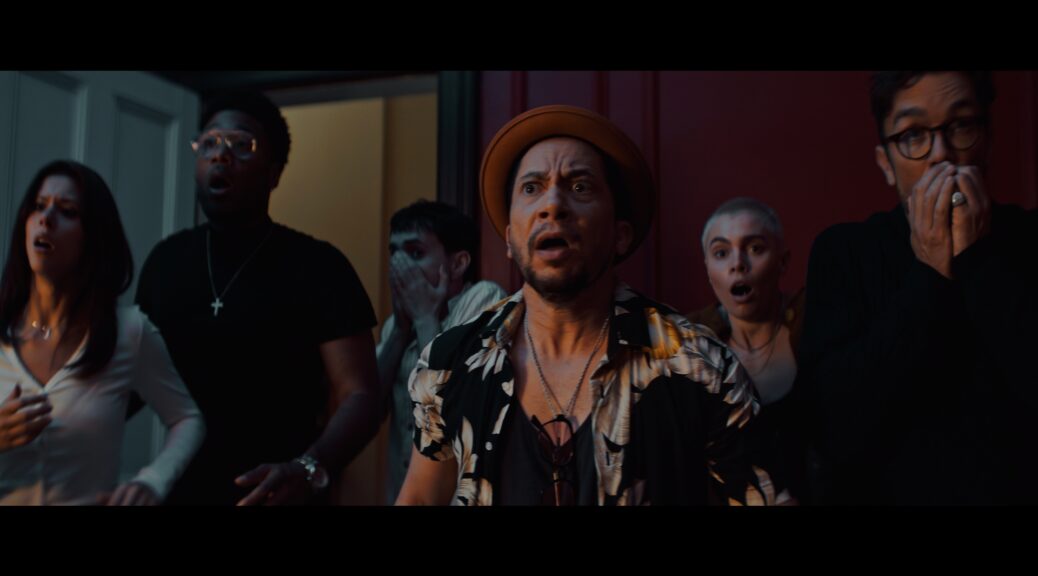
Deeply, darkly weird and surprising—that’s a good phrase to describe, to one degree or another, the films of Fabrice du Welz. His high-water mark for me is 2004’s Calvaire, a Christmas horror story that feels like something David Lynch might have done with Texas Chainsaw Massacre if he spoke French.

I am always eager to watch whatever springs next from a mind that conjures anything so harrowing and bizarre. His latest, Maldoror, is a true crime tale set in Belgium in the 1990s.

Paul Chartier (Anthony Bajon, Teddy) joins the Gendarmerie because he wants sincerely to make a difference. What he wants, as the film will slowly unveil, is to create for himself the life he was not born into—one with value, with family, with honor. For Paul, the unsolved missing persons case involving two small girls from the neighborhood provides the opportunity.

The crimes at the heart of the film are based on those of Marc Dutroux, a serial rapist, killer and pedophile who was able to continue to prey upon little girls in his community because of an inept and siloed legal system, as well as a corrupt justice department. Boy, there was a time when that would have sounded far-fetched, wasn’t there?

Du Welz surrounds Bajon with a large ensemble including the great Sergi López, always magnificent Béatrice Dalle, and du Welz regular Laurent Lucas. The filmmaker is at his loosest and most naturalistic with this film, a choice the cast embraces. Du Welz’s script, cowritten with Domenico La Porta, feels less well-suited to the approach.

The material is grim, covers more than a decade and casts a wide net. It’s sprawling and gritty, marked by a cynical unease about the possibility of finding truth or justice in a corrupt legal system. Yet somehow Maldoror becomes a tale of one man’s obsession, which neither fits the story being told nor the actor playing lead.

Bajon’s vulnerable, awkward cop and family man is played with an integrity that rings true. Even his early steps over the line in favor of eventual justice fit. But the character’s arc is a misfit for the film and the actor, and it reduces the story. Act 3 feels like it’s pulled from a different, lesser effort. The end result is that, though it boasts real tension and great performances, Maldoror feels like a misstep.

Zulu Up in Here

Night Patrol

by Hope Madden

Crime drama, social commentary, action flick, vampire movie—Night Patrol bites off a lot. But since director Ryan Prows and writers Tim Cairo, Jack Gibson and Shaye Ogbonna’s last teaming combined an organ harvesting crime caper with the life of a luchador, it shouldn’t come as a surprise.

Night Patrol opens on a young man (RJ Cyler) bleeding from a weapon still poking out of his ribs. He’s in police custody, sitting across from a nonplussed LAPD officer (Nick Gillie), who’d like him to explain himself.

Prows then flashes back a couple of days, introducing the young man, the girl he loves, and the LA cops known as Night Patrol. What follows is an allegory about white supremacy dressed up as some kind of higher calling but behaving as bloodthirsty beasts.

Apt, particularly after what we all witnessed in Minneapolis last Wednesday night.

Justin Long co-stars as a cop looking to get to the bottom of whatever it is Night Patrol is up to, and he’ll go to some regrettable means to meet those ends. But he hopes to be remembered as “one of the good ones”.

It’s unfair to compare Prows’s film with the similarly themed Sinners because it’s unfair to compare any film at all with Ryan Coogler’s masterpiece. Prows’s ire is focused on the here and now, and probably bears a closer resemblance to Bomani J. Story’s 2023 film The Angry Black Girl and Her Monster as well as Remington Smith’s 2025 festival favorite LandLord.

The theme is clear-eyed and relevant: Systemic racism in the U.S. is monstrous, its willing participants are monsters.

Prows solicits game performances from Cyler, Long, and especially Nicki Micheaux who dominates every scene she’s in, as only her character could.

Where Night Patrol falters is in its wild mix of tones and genres. For all its bloodsucking, this is no horror film. The violence is action violence, but even that is sometimes lost in the loonier, funnier moments. The rival gang is preoccupied with supernatural entities, including Lizard Men, giving the film a bizarre sense of humor that doesn’t fully fit.

The hodgepodge approach to genre hampers its castmates—Cyler, in particular—from finding a suitable performing style. Long is custom designed for this character, and Micheaux elevates the material, but with no discernable genre, Night Patrol leaves you a little dizzy.

Celluloid Atlas

Resurrection

by Matt Weiner

Chinese filmmaker Bi Gan set the bar high for himself with his second feature, the surreal sensation Long Day’s Journey into Night that capped off a dreamy neo-noir with an hour-long single take in 3D.

With his new film Resurrection, it’s clear that Bi’s ambition and technical skill have only grown. Resurrection trades the languorous pace of his first two films for short chapters that meticulously pay homage to distinct filmmaking genres. There’s the opening silent film with its eye-popping production design and nods to Expressionism and early greats like Méliès and Griffith, but if that’s not your taste just give it 20 minutes. Each section gives way to the next, including mid-century noir, a Buddhist parable and even a Y2K vampire love story.

The story (from Bi, with a screenplay by the director and Zhai Xiaohui) loosely unites the wide-ranging chapters—but emphasis on loosely. Jackson Yee plays a Deliriant, a dissident dreamer in a speculative future where “the secret to eternal life is to no longer dream.” These Deliriants must be hunted down by “Other One” (Shu Qi, who also narrates throughout the film).

This is explained at breakneck speed in the opening silent film cards, but don’t worry. The cinematic metaphors tend not to be subtle in each of the chapters, with story taking a backseat to Bi’s dazzling visuals. After the Other One tracks down the Deliriant in the opening chapter, the rest of Resurrection is a projection of his dying dreams across time.

The final chapter is the one with “that shot” – one of Bi’s now-trademark long takes that follows a whirlwind romance between the Deliriant (now a street tough named Apollo) and a vampire singer (Li Gengxi) through Chongqing’s foggy nighttime streets. It’s Before Sunset with vampires plus Bi’s stunning use of light, darkness and color coming together perfectly, and the cinematography is such an achievement on its own that the long take is almost superfluous.

It’s a neat encapsulation of what can be equal parts beguiling and frustrating about Resurrection. There’s a deft bit of poetry on ending with the vampire vignette, as the two lovers seek to find something real, something even more sublime than immortality. (And cinema is also something we find meaning in with each another, but only in fleeting darkness before the lights come up.)

And it also draws attention to its own artifice in ways that might be intentional but, over the course of a 150-minute movie, threaten to overshadow the emotion of an already threadbare story. Bi has the immaculate craft to look back at diverse eras of filmmaking, but the burning question in today’s climate is forward-looking: Can film as an art survive? Can we be at peace with the idea that art is not a cure for suffering but rather a place to find our shared humanity? It’s a little corny or maybe it’s a little deep, or both depending on your tolerance. But the questions are worth asking. Especially from a master technician who is practically demanding that you see this on a big screen, with a hushed crowd of strangers, all in agreement that there is still something essential about the power of stories through moving images on a screen.

Hope Madden and George Wolf … get it?