She’s a Brainiac..Brainiac!


Lucy

by George Wolf


Nearly ten years ago, Wedding Crashers taught us the best response to “people use only ten percent of our brains” is…”I think we use only ten percent of our hearts.”

Still, writer/director Luc Besson bases his new film Lucy on that old urban legend, and what might happen if someone could suddenly flex four, five or even ten times more grey matter muscle.

A ridiculous premise doesn’t have to sink a film, and this one actually gets off to a solid start as Lucy (Scarlett Johansson) unwillingly becomes a drug mule for ruthless Korean kingpin Mr. Jang (the always fascinating Min-sik Choi).

Jang’s henchman surgically stash a bag of his new product into Lucy’s abdomen, but the pouch breaks when she suffers a beating. In just minutes, the drug settles into Lucy’s bloodstream and begins opening countless new cognitive horizons.

It doesn’t take long to realize how much better this film is because of Johansson. She provides the terror-filled vulnerability to make us care about her character early on, then projects the right amount of wonder and determination as Lucy seeks out a famed brain researcher (Morgan Freeman, straight from Transcendence) to assist in her transformation.

Besson gets busy from the outset, as quick cuts and frenetic action are interspersed with scenes of animals in the wild, reinforcing the changing roles we see between hunter and prey. While not exactly subtle, it is stylish, and downright abstract compared to what Besson brings to the film’s second act.

As his characters begin to lament how we’ve all become more concerned with “having than being,” Besson shamelessly parrots Malick’s Tree of Life and Kubrick’s 2001, apparently believing the film to be an equally eloquent statement on mankind’s past, purpose, and future.

It isn’t, but with about 50 percent less pretension, Lucy could have been a fun guilty pleasure.


Verdict-2-5-Stars


Thumb Worthy

Life Itself

by Hope Madden

Whether you loved him or hated him, Roger Ebert was a massive cultural influence – particularly if you happen to be a film critic.

Arguably the most influential movie reviewer of all time, Ebert was also a far more unique and fascinating character than casual readers/viewers might realize. Life Itself, Steve James’s revelatory new documentary, unveils the highly complicated personality behind all those opinions.

Life Itself nearly bursts with intimacy and detail, embracing Ebert’s bawdy youth and epic ego as openly as his medical treatments and serene end. The minutia of Ebert’s life is a surprising thrill to take in, though James feels no compulsion to pretty it up. He asks an old friend at one point whether, deep down, Ebert was really a nice guy.

Yes, he says. But not that nice.

The sparring with his reluctant TV partner Gene Siskel, often taken directly from TV outtakes, is utterly hilarious, but James mines it for more than laughs. We are reminded that Ebert was a populist film critic before there was such a thing, and while we relive some of the highlights of the Pulitzer Prize winner’s eloquence, we also revisit some of his more questionable assessments, (as when he gave Full Metal Jacket a thumbs down, but pointed that digit skyward for Benji the Hunted).

James notes, sometimes hilariously and with absolutely no sugar coat, that Siskel & Ebert’s program was often derided by fellow reviewers as not being film criticism at all – at which time Ebert routinely pointed to his Pulitzer. By taking film criticism to the public, the show had more influence on ticket buying, film production, and the changing paradigm of the medium of film criticism than anyone could have predicted.

James spends a great deal of time with Ebert and his wife Chaz in the hospital during the last couple stays before Ebert’s death, detailing the medical treatments and witnessing more of the drive that motivated this prolific writer his whole life. More importantly, through these visits, as well as emails and excerpts from Ebert’s autobiography, James makes clear that he is not laying his subject naked before us, but that Ebert himself is the willing object of our scrutiny through this film – an act that takes on much power when you consider what the man did for a living.

With James, we wind and careen through Ebert’s personal and professional life and legacy, but the film never loses focus. It touches all the bases, and in the end not only offers a moving image of a life abundantly and uncommonly lived, but honors Ebert’s most enduring, most identifiable, and most tenacious attribute: his voice.

Verdict-4-0-Stars


It Doesn’t Go So Well

And So It Goes

by Hope Madden

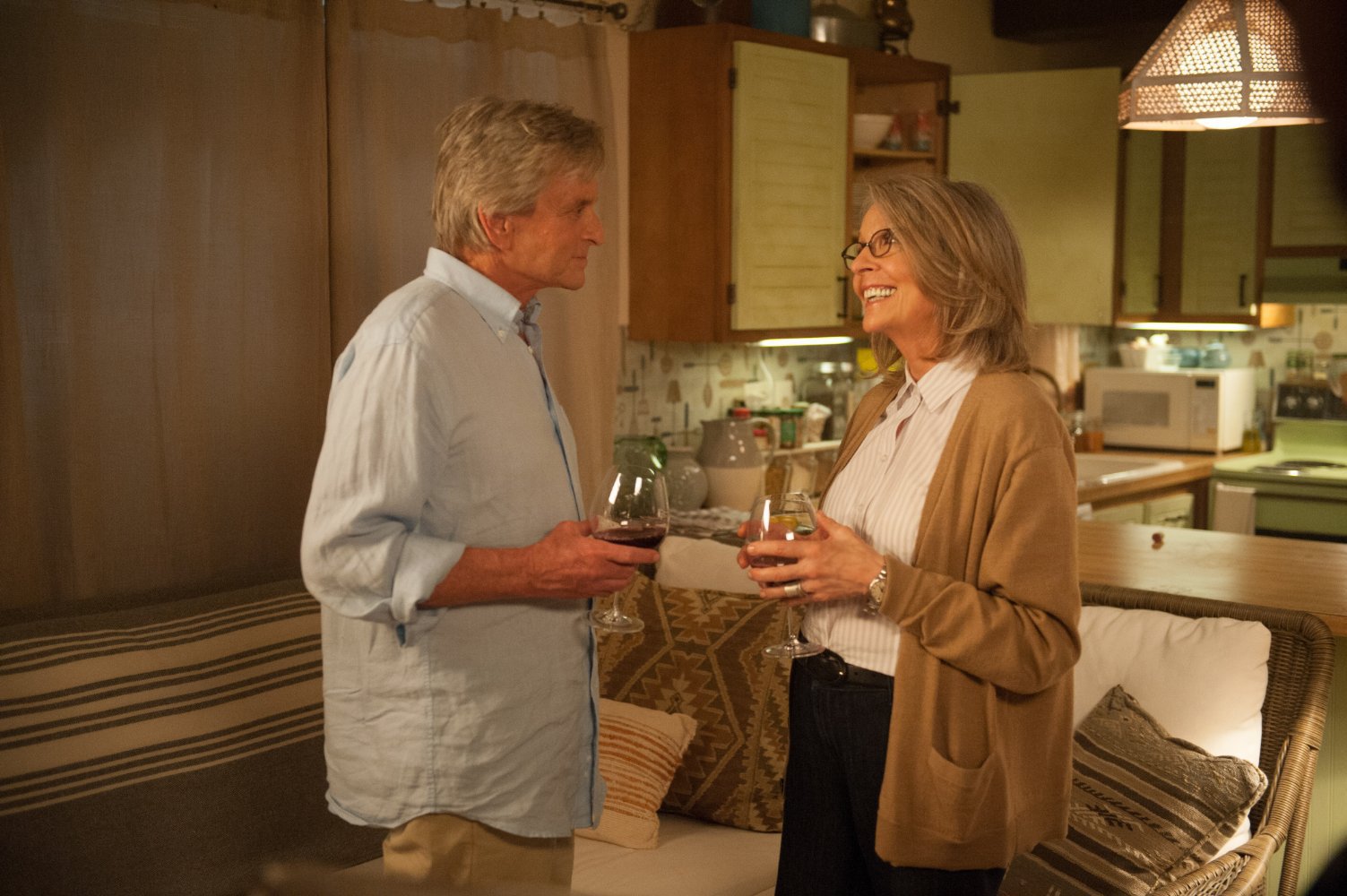
Michael Douglas turns 70 this year, and though, in younger years, he carved out some memorable characters, in his final lap he’s really found his niche. No longer dependent on the vain smolder of his unreasonably popular 90s output, the battle-tested pro has settled into a groove playing elderly scoundrels. And So It Goes offers him another opportunity, this time with Oren Little, widowed misanthrope.

Oren falls for lounge singing sweetheart Leah (Diane Keaton), but his abrasive personality and a mind-numbing series of contrivances stand in the way of true love.

Though Keaton simply recycles the same character she’s played with minor variations since 2003’s Something’s Gotta Give, the banter between these two vets is never less than charming.

But let me ask you something…when was the last time Rob Reiner made a good movie? Admittedly, he directed, bar none, cinema’s greatest mockumentary, as well as two of the best Stephen King adaptations on record. His whole Eighties catalog impresses and entertains.  A Few Good Men doesn’t suck outright.

After that, meh.

Even Douglas and all his geriatric charisma can’t overcome Reiner’s schmaltz or writer Mark Andrus’s insulting screenplay.

In 1997, Andrus wrote As Good As It Gets, a yarn about a curmudgeonly loner whose heart is warmed by a series of humanizing obstacles and the love of a good woman. In 2014 it’s the same story, different obstacles.

Conflict appears and conveniently disappears as soon as it’s served its purpose. One hollow plot device after another springs up to teach lessons and warm hearts, yet keep the two love birds apart. The lazy scripting is almost as offensive as the way the film casually embraces the stereotype that the elderly are racist. Reiner gives Andrus’s lines an eye rolling “oh those racist scamps” kind of spin that’s beneath the characters these actors are trying so valiantly to create.

The whole team is simply cashing in on the new market for old talent, films like Something’s Gotta Give and Best Exotic Marigold Hotel having proven that there is an audience for late life romances. The great thing about that revelation is that it allows talents like Keaton, Douglas and others the opportunity to lead films.

The unfortunate side effect – one felt in any proven cinematic market – is the soulless cash grab.

Like this movie.

Verdict-2-0-Stars


Countdown: Supporting Characters that Need Their Own Movie!


They come into our lives quickly, yearning for a state football title that never was, yelling “put that coffee down,” or jamming to Sister Christian on an awesome mix tape.

Then they’re gone..but never forgotten.

Here are ten supporting characters we’d love to see come back and take the lead:


Megan (Melissa McCarthy), Bridesmaids

Yes, please. Melissa McCarthy crafted a fully realized person with Megan, someone we kind of recognized, someone we’d like to see in almost any situation.

Carl Spackler (Bill Murray), Caddyshack

Drop us into Carl Spackler’s life at any point at all, and just leave us there for a couple hours. That’s really all we ask.

Blake (Alec Baldwin), Glengarry Glen Ross

We must have more! Alec Baldwin seared right through the celluloid with his one big speech, leaving us wanting more from this ball buster.

http://www.youtube.com/watch?v=8kZg_ALxEz0

Rosalyn Rosenfeld (Jennifer Lawrence), American Hustle

Jennifer Lawrence so fully developed this relatively minor character that we were mesmerized, and we want to see more. Maybe show us her courtship with Irving, maybe take us to her new life with mafioso Pete. Hell, just leave us at home with Rosalyn, her son and her “science oven” – that would probably be entertaining enough.

Charlie Meadows (John Goodman), Barton Fink

Few filmmakers can pack a screenplay with more fascinating supporting characters than the Coens, and John Goodman’s had the great fortune of playing many of them. Walter? He could get a movie. Roland Turner, junky bluesman from Inside Llewyn Davis could probably shoulder a full film. But Goodman’s most mysterious and complex performance came as Barton Fink‘s unusual neighbor Charlie Meadows, and we’d like to know what made him tick.

http://www.youtube.com/watch?v=xVCS9zV4wBo

Rahad Jackson (Alfred Molina), Boogie Nights

Indeed, almost every character in Paul Thomas Anderson’s brilliant Boogie Nights could hold our attention in a film of their own, but it’s Rahad Jackson, Night Ranger lover, who really piqued our interest.

Margie Hendricks (Regina King), Ray

Certainly Hendricks, longtime backup singer and secret girlfriend to Ray Charles, led a life fascinating enough to merit a film, but it was Regina King’s performance in Ray as the saucy, troubled chanteuse that compels her inclusion on this list. King ranks among the most underappreciated and versatile talents working today, but her turn in this biopic is her best.

Uncle Rico (John Gries), Napoleon Dynamite

What was high school like for Uncle Rico? Why is he living currently in that RV? What will his next business venture bring? Honestly, anything Uncle Rico does would entertain us.

Bobby Peru (Willem Dafoe), Wild at Heart

The David Lynch universe is populated by dozens of fascinating characters, including, of course, Dennis Hopper’s Frank Booth. But Bobby Peru is the one we just didn’t get quite enough time with. The most exciting item to hit Big Tuna since the ’86 cyclone, Bobby needs a full backstory movie.

Quint (Robert Shaw), Jaws

Here’s a guy who lived a life, workin’ for a livin’ and sharkin‘…right up until a shark ate him. We want to see some of his other adventures. You know, the ones he survived.

Whatever Gets You Thru the Night


The Purge:  Anarchy

by George Wolf


In case anyone didn’t catch last year’s not-so-subtle message in The Purge, writer/director James DeMonaco is back with The Purge:  Anarchy, this time wielding his class warfare sermon like a blunt instrument.

DeMonaco’s original premise – an American society that celebrates a yearly night of complete lawlessness – remains a solid one. And while the first chapter borrowed heavily from from various films (as does Anarchy), it offered enough visual style to offset the lack of nuance in the presentation.

Following the usual playbook for a sequel, it’s more of everything in round two.

The sirens that signal the start of the purge sound quickly, and we focus in on a group of five citizens who are out after dark for very different reasons. A mother and daughter (and ) are being hunted, a young couple ( and )  are on the run after suspicious car trouble, and one lone badass () is armed to the teeth with revenge on his mind.

DeMonaco again demonstrates his flair with a camera, offering several striking images of what the purge hath wrought – a bloody young woman’s desperate gaze or a flaming semi passing quickly in the background. Too often, though, his direction becomes obvious, muting any effect from a sudden scare or even a cloying red herring.

His script is worse, hammering home the plutocracy theme again and again until it is preached via a “bad guy to wounded guy” speech for the benefit of any audience members with a taste for Scooby-Dooings.

That’s not to imply DeMonaco’s grievances aren’t valid, they are, and there might even be a solid film buried in here somewhere, but success of The Purge lingers as a doubled-edge sword.

The path DeMonaco takes for Anarchy may seem the logical one, but it flirts with camp so often you wonder how much better it might have been with an outright satirical approach a la God Bless America.

By the time the morning sun brings this latest purge to a close, what began as a decent B-movie horror show becomes a sad imitation of The Running Man.


Verdict-2-5-Stars


Modern Problems

Sex Tape

by Hope Madden

With two kids, a job and a blog to handle, Annie (Cameron Diaz) and Jay (Jason Segel) have almost forgotten what it’s like to spend some quality time alone, so they decide to over-correct that situation by making their own sex tape. You know, kind of spice things up, put some pizzazz back into their marriage.

As seems to be the case generally, the sex tape turns out to be a bad idea, and the next thing you know, they are trying to retrieve the footage before it goes viral.

Segel and regular writing collaborator Nicholas Stoller penned this ode to poor decision making with Kate Angelo (The Back-up Plan), and among them they can’t decide on a reasonable tone any more effectively than they can muster enough jokes to keep 98 minutes of comedy afloat.

Director Jake Kasdan (Walk Hard) wants badly for the film to be simultaneously a  raunchy comedy and hip-but-earnest love story – an unusual combination so perfectly realized earlier this year with the Stoller-helmed Neighbors. But where Neighbors burst with inspired visuals, unexpected comedic chemistry, generous writing and frenetic humor, Sex Tape just sits there, flaccid.

The pace is leaden, the laughs scarce and scattered. The film’s prevailing, toothless humor leaves writers and actors alike falling back on foul language whenever they lack an actual punchline.

Though Segel and Diaz – both comedic talents – make an effort, they are forced to work too hard to create momentum. Their relationship – the love, the squabbles, the tension over the tape mix up – rings false, giving the comedy no grounding.

Potentially interesting characters pop up and vanish, though the diversion is sorely needed. Worse still, in the one supporting character with any screen time, reliably hilarious Rob Corddry is hamstrung in a best friend role allowed only a single, weakly recurring gag.

Rob Lowe flails, though valiantly, with an over-the-top character that never meshes with the film’s internal reality and feels like part of a set of tacked on bits from another film entirely.

A pretty big disappointment, given the talent in front of and behind the camera.


Verdict-2-0-Stars


Top of the World, Ma!


Beyond the Edge

by George Wolf


There’s a good chance you already know Sir Edmund Hillary was one of the first two men to reach the top of Mt. Everest. You may also know the other man was Sherpa Tenzing Norgay. Maybe you’ve seen Hillary’s famous photo of Norgay at the very top of the world.

Even after all these years, there’s more to their story, and the new documentary Beyond the Edge provides plenty of thrilling reasons to revisit the adventure.

No doubt, one of those reasons is 3D technology. Let’s be honest, if you’re looking for an excuse to play with the extra dimension, footage of Mt. Everest is a pretty damn good one.

Writer/director Leanne Pooley mixes deft reenactments with stirring archival footage and audio interviews, effectively pulling us into the launch of John Hunt’s Everest expedition in the spring of 1953.

The thirty three year old Hillary, a beekeeper and avid climber from New Zealand, was part of Hunt’s team, as was Norgay, an experienced and respected Nepalese mountaineer. Pooley lays the basic facts out clearly, and then slowly builds the drama as fate conspires to give the two men the chance to make history.

I’ve been fascinated by Mt. Everest for years and I’ve read many books on its climbing history, and the film still provided a fresh perspective.  The 3D perspective is indeed a treat, but it’s the human drama of Beyond the Edge that still inspires.


Verdict-3-5-Stars


Let’s Get Quantumphysical

Coherence

by Hope Madden

As a writer, James Ward Byrkit has made a name in family films (Rango, Pirates of the Caribbean), but he saved his savviest and most adult work for his debut as a director. Coherence is a lean, intimate SciFi mindbender.

Coherence combines a bit of Inception with the underseen dark comedy It’s a Disaster! A group of friends meets for a low maintenance dinner party, which turns out to be a little more fraught with drama than expected – and that’s before the comet flying overhead knocks out power.

Confused that this outage also affects their cell phones and internet,  the group decides to visit the one house on the block with power, only to find a dinner party for 8 shockingly familiar faces.

The nimble (mostly improvised) story remains fresh and surprisingly coherent, even as partygoers delve into theories, cross theories, and hair-brained theoretical musings on multiple realities. Byrkit allows us to grapple with our own disbelief by focusing on his befuddled guests’ incredulity as they attempt to puzzle out the reality (or realities?) of their situation.

And by keeping the focus close – zeroing in more and more on one guest’s evolving perception of events and potential actions – Byrkit develops a sense of intimacy that provides a solid foundation for all the astrophysical nuttiness.

As the dinner guests, the impressive cast portrays the kind of familiarity that breeds drama. Their pre-comet situation feels so familiar and honest that dread settles in even before the lights go out. From there, Byrkit ratchets up tensions with little more than his own ingenuity and the commitment of his cast.

The film is as economical as they come: limited sets, no real FX, no action sequences to speak of. It joins the likes of Under the Skin, Primer and Safety Not Guaranteed in the world impeccable no-frills SciFi.

It isn’t quite at that level, and yet, it’s among the more effective SciFi thrillers to come out this summer. Yes, Snowpiercer and Dawn of the Planet of the Apes are more likely to wow you, but the internal logic, fascinating choices and chilling conclusion to Coherence will leave you with just as much to think about.

Verdict-3-5-Stars


Uncommon Aliens for Your Queue


Rejoice! Under the Skin releases this week for home consumption. This hypnotic, low-key SciFi thriller – the latest from filmmaker to watch Jonathan Glazer – follows Scarlett Johansson around Glasgow in a van. Light on dialogue and void of exposition, Under the Skin demands your attention, but it delivers an enigmatic, breathtaking, utterly unique vision of an alien invasion.

http://www.youtube.com/watch?v=kMUwA7ekIgc

For a decidedly different take, do yourself a favor and look up Attack the Block, first time director Joe Cornish’s SciFi examination of gang violence in a London ‘hood. When something drops from the sky to interrupt a group of teens’ first mugging, the kids turn their pack mentality against the interstellar invaders. Cornish’s perceptive, funny screenplay strikes the right balance between exploring the tensions of urban decay and exploiting the thrills of an alien invasion. His efforts are bolstered by a spot-on cast effortlessly wielding the exuberance, loyalty, and dumb-assedness of youth.

http://www.youtube.com/watch?v=l3tOFejxPH0

Countdown: Best Horror Comedies

It’s time again for our celebration of under seen  horror, Fright Club! Join us Friday, 11:30 at the Drexel Theater in  Bexley for fun, prizes, and Tucker and Dale Versus Evil! In honor of this outstanding, hilarious piece of bloody chaos, we are counting down the 5 best horror comedies of all time.


5. Dead Snow

You had us at “Nazi zombies.” A fun twist on cabin-in-the-woods horror, this film sees a handful of college kids heading to a remote mountain cabin for some winter sport fun and maybe a little lovin’. Dead Snow boasts some of the tongue-in-cheek, referential comedy of the outstanding flick Cabin in the Woods, but with a great deal more actual horror. It’s grisly, bloody, hilarious fun.

4. Cabin in the Woods

Joss Whedon co-writes Drew Goddard’s celebratory homage, and their nimble screenplay and wickedly clever direction allow a spot-on cast to entertain holy hell out of you. Insightful, scary, hilarious and brimming with a love of the genre, Cabin in the Woods is one for the ages.


3. Shaun of the Dead

Shaun offers such a witty observation of both a generation and a genre, so well told and acted, that it is an absolute joy, even if you’re not a fan of zombie movies. As social satire, it is as sharp as they come. It also manages to hit the bull’s eye as a splatter horror film, an ode to Romero, a buddy picture, and an authentic romantic comedy. And it’s more than just a remarkable achievement; it’s a fresh, vivid explosion of entertainment. It’s just a great movie.


2. American Psycho

A giddy hatchet to the head of the abiding culture of the Eighties, American Psycho represents the sleekest, most confident black comedy – perhaps ever. Director Mary Harron trimmed Bret Easton Ellis’s novel, giving it unerring focus. More importantly, the film soars due to Christian Bale’s utterly astonishing performance as narcissist, psychopath, and Huey Lewis fan Patrick Bateman.

1. Zombieland

Zombieland is quite possibly the perfect movie. Just when Shaun of the Dead convinced us that those Limey Brits had created the best-ever zombie romantic comedy, it turns out they’d only created the most British zombie one. The Yank counterpart is even better, and with this amount of artillery, it’s certainly a more American vision. It is a gloriously filmed piece of action horror cinema, owned outright by Woody Harrelson. His gun toting, Twinkie loving, Willie Nelson singing, Dale Earnhart number wearing redneck ranks among the greatest horror heroes ever.

Hope Madden and George Wolf … get it?