So sorry to interrupt coverage of the latest shooting rampage, but Spike Lee wants to get in your face again.
Over 25 years since he delivered a generational wake up call with Do the Right Thing, Lee is back in the alarm business with Chi-Raq, a smart, stylish fable that pleads for peace in the land of the gun.
Lee and co-writer Kevin Willmott have relocated the Ancient Greek play Lysistrata to inner city Chicago, where a staggering number of murders has earned the city a new moniker: “Chi-Raq.” Rival gangs (Trojans and Spartans, natch) kill each other at will, and when a stray bullet finds another innocent child, the fed up Lysistrata (an electric Teyonah Parris) decides to reach out across gang lines for a solution.
The neighborhood women take a solemn pledge to “Lock it up!” and deny their men sex until they agree to a peace treaty. The men, including Trojan leader “Cyclops” (Wesley Snipes), and aspiring rapper/devoted Spartan “Chi-Raq” (Nick Cannon, impressive) don’t take the threat seriously, until the ladies dig in and take over a local armory.
As more and more women join the strike, the mayor gets involved and Operation Hot and Bothered is put in motion, with monster speakers blasting slow jams amid the battle cry of “Do your duty and give up the booty!”
Sure, Chi-Raq offers fast and funny social satire, except when it’s mad as hell. As in Do the Right Thing, characters often speak directly to the camera, and in keeping with the original play, much of the dialog is delivered through rhyming verse. Narrator Dolmedes (Samuel L. Jackson, demanding attention as only he can) updates us on just what is at stake while local pastor Father Mike (John Cusack) kicks ass and names names in a blistering sermon on racism, inequality and social justice.
Boasting an exuberant, combustible mix of style and outrage, Chi-Raq becomes a stirring cry for sanity from Spike Lee, as urgent and necessary as anything we’ve seen seen Raheem turned up his radio.
Hometown boy Michael Dougherty, whose 2007 directorial debut Trick ‘r Treat is a seasonal gem, returns to the land of holidays and horror with his second effort behind the camera, Krampus.
This Christmas tale – not unlike Joe Dante’s ’84 smash Gremlins – hopes to spin a weird and horrifying yet not entirely family unfriendly yarn suitable for seasonal viewing. Young Max (Emjay Anthony) secretly still believes in Santa, but Christmas just isn’t what it used to be. Sure, his German grandmother Omi shares his sentiment, but not the rest of the family – stressed out upper crust parents (Toni Collette and Adam Scott), boorish relatives (led by the ideal oaf, David Koechner), and a cranky great aunt, played by Conchata Ferrell.
When family dysfunction pushes him too far, Max tears up his letter to Santa, unwittingly inviting in his stead, the evil shadow-Santa, Krampus.
The film looks good, the performances are solid, but Dougherty has trouble finding and keeping a tone. Though Koechner does deliver a handful of decent lines, the film, on the whole, is not funny, nor is it particularly scary.
Perhaps hamstrung by a PG-13 rating (unlike the similarly themed 2010 Dutch film Saint), Krampus feels too restrained for horror lovers, too horrific for families.
The ancient demon and his anti-merry makers get too little screen time, and though a couple of them get a fantastic design, Krampus himself is never as visually articulated as he should be.
Dougherty has put together a very talented cast and crafted some interesting characters for them, the writing (duties he shared with Todd Casey and Zach Shields) feels lazy. Often the film pauses for what would be a one-liner zinger, and instead we get the talented Conchata Ferrell delivering a line no more interesting than, “I got this.”
Heavy with sentiment but light on redemption or terror, Krampus is one of those Christmas treats that doesn’t feel quite worth the caloric intake.
Aah, the precarious position of the alpha male. Oh should I say Aaaaaaaah!? Because that is the delightfully appropriate title of Steve Oram’s feature directorial debut.
An absurd horror comedy, the film offers no dialog at all, just grunts, as humans – devolved into ape mentality – go about their poop-throwing, territory marking, television smashing daily existence.
It’s the kind of overly clever premise you expect to wear thin, but honestly, it doesn’t. Much credit goes to a game cast (including Oram) that sells every minute of the ridiculousness, and to Oram again as director. He keeps the pace quick, his images a flurry of insanity you need to see more than once to fully appreciate.
Oram has more in store than a wickedly bloody send up, though. His film wisely deconstructs our own human preoccupations and foibles in a way that’s strangely touching, even sad at times.
The lack of dialog suits the experiment in the same way Steven Soderbergh’s meta-dialog suited his weirdly personal 1996 effort Schizopolis, or the way Miroslav Slaboshpitsky’s use of unsubtitled sign language fits his brilliant film The Tribe. While Aaaaaaaah! is far lighter and more madcap than either of these, it still asks you to use another means of understanding character actions, which allows you to see humanity on a more jarringly primal level.
It wouldn’t even be a horror movie were it not for all those severed penises.
Oram and his appealing cast keep you interested as seemingly divergent stories blend and reshape, and domestic hierarchies shift. Lucy Honigman is particularly compelling, but every actor has surprising success in articulating a dimensional character with nary a word to help.
A familiar face in British comedy, Oram stood out in Ben Wheatley’s 2012 horror comedy Sightseers. He’s playing against type here as the threatening male presence, but he’s equally hilarious. The talent has to rely primarily on sight gags, obviously, and Oram has a flair for presentation. His quick 79 minute running time helps, but there’s never a dull moment in this jungle.
Ever since Romero reimagined the mindless monster in 1968, horror cinema’s go-to beast has been the zombie. Perfect for true terror or splatter comedy – or, hell, even a romantic comedy now and again – films of the undead proliferated faster than a zombie horde. You can find them in nearly every genre, on almost every continent, and in just about every possible medium including children’s books. (If you have not read Ten Little Zombies, it makes an excellent stocking stuffer. Trust us!)
To help us hone our list we enlisted Dave Man, who kindly joins us on this week’s podcast. If you only have time for 5 (or maybe 6) zombie films, which to choose? Rest easy! We have some candidates.
5. Zombie (1979)
Originally filmed as an unofficial sequel to Romero’s Dawn of the Dead, this was director Lucio Fulci’s first true horror film, though he’d done several very violent films previously (Don’t Torture a Duckling, for instance). Shot to showcase violence, and immeasurably aided by Fabio Frizzi’s score, Zombie became a turning point in Z films and in Italian horror.
A boat docks in New York with one undead seaman aboard. A young woman and an investigative reporter head out to the island of that boat’s origins, where her father has been doing scientific work, only to find that the island is overrun with hungry walking corpses.
Fulci’s film tries to marry Romero’s take on the undead with the traditional voodoo narrative of films like White Zombie, but it’s the director’s vivid imagination for festering flesh, plus his now go-to shock of eye gouging, that helped the film make its mark. Plus, zombie-on-shark action!
https://www.youtube.com/watch?v=mqFWrGKLb4E
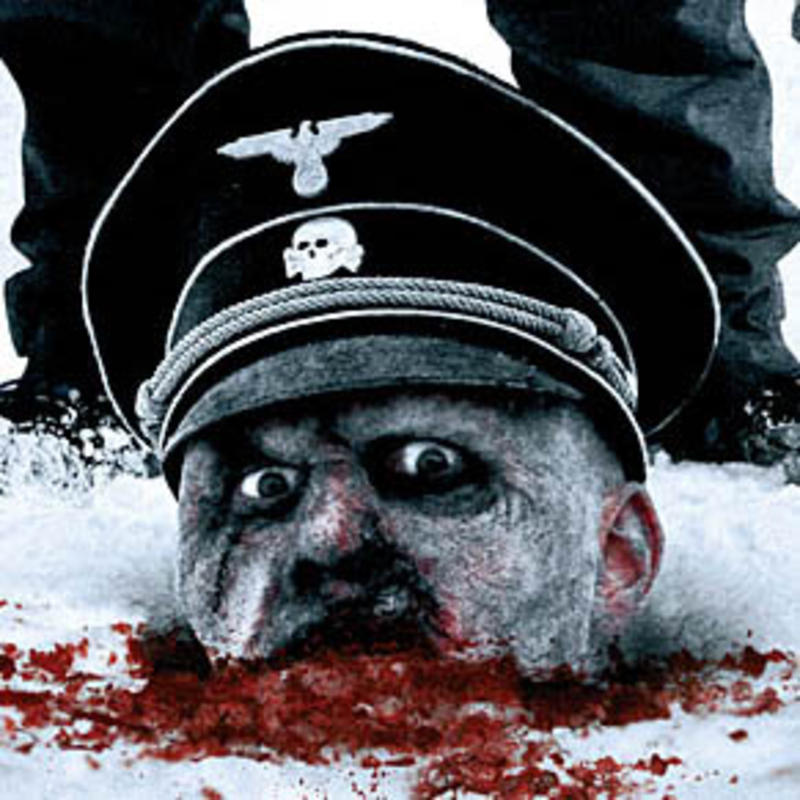
4. Dead Snow (2009)
Like its portly nerd character Erlend, Dead Snow loves horror movies. A familiarly self-referential “cabin in the woods” flick, Dead Snow follows a handsome mixed-gender group of college students as they head to a remote cabin for Spring Break. A creepy old dude warns them off with a tale of local evil. They mock and ignore him at their peril.
But co-writer/director/Scandinavian Tommy Wirkola doesn’t just obey these rules. He embraces our prior knowledge of the path we’re taking to mine for comedy, but he doesn’t give up on the scares. Wirkola’s artful imagination generates plenty of startles and gore by the gallon.
Spectacular location shooting, exquisite cinematography, effective sound editing and a killer soundtrack combine to elevate the film above its clever script and solid acting. Take the gorgeous image of Norwegian peace: a tent, lit from within, sits like a jewel nestled in the quiet of a snowy mountainside. The image glistens with pristine outdoorsy beauty – until it … doesn’t.
https://www.youtube.com/watch?v=55uGN58UOkk
3. Braindead (Dead Alive) (1992)
Rated R for “an abundance of outrageous gore,” Braindead is everything the early Peter Jackson did well. It’s a bright, silly, outrageously gory bloodbath.
Lionel Cosgrove (Timothy Balme) secretly loves shopkeeper Paquita Maria Sanchez (Diana Penalver). Unfortunately, Lionel’s overbearing sadist of a mother follows the lovebirds to a date at the zoo, where she’s bitten (pretty hilariously) by a Sumatran rat-monkey (do not mistake this dangerous creature for a rabid Muppet or misshapen lump of clay). The bite kills her, but not before she can squeeze pus into some soup and wreak general havoc, which is nothing compared to the hell she raises once she comes back from the dead.
Braindead is so gloriously over-the-top that nearly any flaw can be forgiven. Jackson includes truly memorable images, takes zombies in fresh directions, and crafts characters you can root for. But more than anything, he knows where to point his hoseful of gore, and he has a keen imagination when it comes to just how much damage a lawnmower can do.
2. Dawn of the Dead (1978/2004)
Romero returned to the land of the undead in ’78 with a full-color sequel to Night. Set in Philadelphia, at a news broadcast gone crazy, the film follows a news producer, her chopper pilot boyfriend, and two Philly SWAT cops ready to abandon the organized zombie fight and find peace elsewhere. The four board a helicopter, eventually landing on the roof of a mall, which they turn into their private hideaway.
Romero, make-up legend Tom Savini, and Italian horror director Dario Argento teamed up for the sequel. You feel Argento’s presence in the score and the vivid red of the gore. Ken Foree and Scott Reiniger as the buddies from SWAT create the most effective moments, whether character-driven tension or zombie-driven action. Romero’s politics are on his sleeve with this one. He uses the “z” word, digs at consumerism, shows full-color entrails, and reminds us again that the undead may not be our biggest enemy once the zombie-tastrophe falls.
Plenty of filmmakers have remade or reimagined Romero’s flicks, but none did it as well as Zack Snyder.
In Romero’s version, themes of capitalism, greed, mindless consumerism run through the narrative. Snyder, though affectionate to the source material, focuses more on survival, humanity, and thrills. (He also has a wickedly clever soundtrack.) It’s more visceral and more fun. His feature is gripping, breathlessly paced, well developed and genuinely terrifying.
https://www.youtube.com/watch?v=PpuNE1cX03c
https://www.youtube.com/watch?v=rhsutNfvuAY
1 Night of the Living Dead (1968)
From the brightly lit opening cemetery sequence to the paranoid power struggle in the house to the devastating closing montage, Night of the Living Dead teems with the racial, sexual, and political tensions of its time. An unsettlingly relevant George A. Romero knew how to push societal panic buttons.
As the first film of its kind, the lasting impact of this picture on horror cinema is hard to overstate. His inventive imagination created the genre and the monster from the ground up.
They’re dead.
They’re back.
They’re hungry for human flesh.
Their bite infects the bitten.
The bitten will eventually bite.
Aim for the head.
The shrill sense of confinement, the danger of one inmate turning on another, and the unthinkable transformation going on in the cellar build to a startling climax – one that utterly upends expectations – followed by the kind of absolutely genius ending that guarantees the film’s eternal position in the annals of horror cinema.
Simultaneously spoiled and neglected, handed every luxury imaginable and then abandoned to do with their time what they will, a group of 12-year-old girls at a sleepover pay the price for a too-modern childhood.
Loosely inspired by true events, #Horror tracks the evolution of the mean girl. Between cyberbullying and online gaming, one pre-adolescent clique elevates their coming-of-age angst into a post-modern horror show.
Writer/director Tara Subkoff populates her soullessly luxurious world with bizarre and arresting visuals, and her cast – both the seasoned adults and the mostly unknown child performers – offer a range of unique and compelling performances. The atmosphere created is so detached, stylized, and surreal, you can imagine almost anything happening.
Subkoff has provocative things to say about coming of age, and though none of them are entirely novel, she wisely avoids one-sided arguments. Yes, the five 12-year-olds ultimately blame their selfish, negligent parents for their own fucked-up-edness, although the film’s heroine Sam, (Sadie Seelert) chooses to reject her loving and protective mother in favor of the attention of her new school’s mean girl circle.
Subkoff’s film is at its best when it drops you into the undercooked logic of a child.
“Nothing is mean if you laugh,” explains a genuinely earnest and confused Cat (Haley Murphy). And that’s really the point of the film: kids are stupid, parents are blind, the world offers more immediate and accessible dangers than ever before, and that time between childhood and adulthood is a haze of misunderstood circumstances and unavoidable selfishness.
Chloe Sevigny and Timothy Hutton are over-the-top wonders, both horrifying yet wonderful in their own way, but Subkoff’s real victory is her ability to capture, with the help of a game pre-adolescent cast, the combination of cynicism and playfulness that marks these particular girls’ youth.
The horror story is a tad thin – derivative, even – but what Subkoff, her visual panache and her cast manage to do with it keeps you intrigued and guessing for the full 90 minute run.
Read Hope’s interview with director Tara Subkoff HERE.
As Daniel Radcliffe’s Igor begins to spin his Gothic yarn in voiceover, he tells us that everyone knows about the monster, but too few people know about Victor Frankenstein.
Here is the first problem with this movie.
In fact, only James Whale and Boris Karloff did Frankenstein’s monster proper. Everyone else – everyone else – has been preoccupied with the mad scientist whose compulsion to create life went wildly out of control.
Still, Paul McGuigan’s film invites us, not just to the headspace of the mad doctor, but to the bond between scientist and assistant, because VF is, at its heart, a buddy picture. In fact, we learn a lot more about Igor than we do the title character.
Radcliffe’s performance is tender and sincere as the malformed and bullied young man, rescued by the anatomically obsessed surgeon. As Victor, James McAvoy waffles between a believably wounded and vulnerable genius, and some hammy overacting.
Neither McAvoy nor Radcliffe are the issue, though. Max Landis’s screenplay meanders hither and yon without the slightest focus, from circus to laboratory to ball to medical college to isolated castle without a clear narrative path or sense of purpose. Worse still, the utterly baffling leaps in logic. (Igor is crippled circus clown who’s never known anything but cruelty; he is also the circus doctor. I’m sorry – what?)
McGuigan’s pacing only exacerbates the situation. The film feels twice as long as it is, and the very-late-entrance of the monster only makes the balance of the running time feel that much more tedious. Though he pastes together eye-catching images now and again – the twirl of a red skirt, an oversized medical sketch on the floor, enormous advertisement heads atop a building – on the whole he can’t capitalize on either a visual aesthetic or any sense of movement.
Victor Frankenstein is as stagnant and bloated as his corpses.
Regardless of all that, the question is, who needs another doctor with a God complex? Whale was right. It’s the monster who’s interesting.
“We are going to have to do some things that we never did before, and some people are going to get upset about it. But I think that now, everybody is feeling that security is going to rule.”
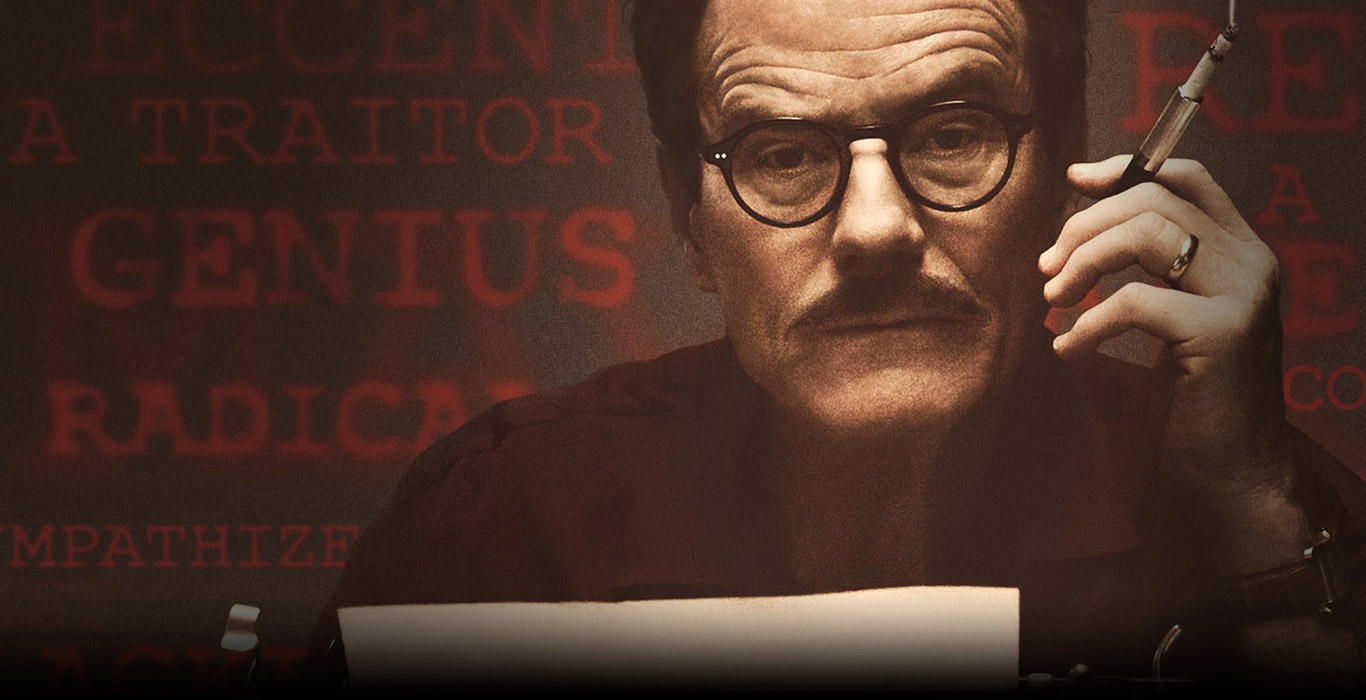
Those are Donald Trump’s words as to why he’d consider warrantless searches, Muslim databases, and closing or surveilling mosques – a fear-monger-fueled attack on civil liberties and basic humanity. What’s scary is the idea that he’d consider doing things “we never did before,” because, as Trumbo points out, we’ve done some pretty nasty things in the name of xenophobia.
Dalton Trumbo (Bryan Cranston) had been the highest paid screenwriter in Hollywood before the blacklist. He and nine others chose to stand up for their first amendment rights, finding themselves in contempt of Congress and facing jail time. What you may not know, and the film hopes to point out, is that Trumbo was at the center of the shameful period of history from its opening to its close.
As fascinating a history lesson as Trumbo is, too much competes for your attention.
Though the cast is lousy with talent, that almost becomes its weakness. There are so many people to draw your consideration, with few characters feeling as if they serve the larger story as much as they require attention of their own.
Elle Fanning is wonderful, as usual, as Trumbo’s eldest daughter – a social activist like her father. Helen Mirren is delightfully wicked as Hedda Hopper, gossip columnist and anti-Communist instigator. Louis C.K. offers perhaps the most naturalistic performance in the film, which, while quite solid on its own, actually emphasizes the sometimes stilted performances around him. Meanwhile, Diane Lane is utterly wasted in the conflicted but supportive wife role.
Even smaller roles sometimes rob focus from the central character and story. John Goodman and Stephen Root liven things up as Schlockmeisters Frank and Hymie King, and Christian Berkel is a scene-stealing scream as Otto Preminger.
Cranston’s central figure should be the undisputed star, though, and the fact that so many others pull for your attention is a shame, because the Breaking Bad star tosses off droll one-liners like an old pro, and his chemistry with every other actor onscreen is wonderful. He epitomizes the writer’s inherent yin and yang with effortless humor and skill.
There is an expression of weary panic on his face as he sees the direction his beloved country is taking – one of ignorance, fear, and hatred. It’s a look we can probably all recognize about now.
Intimate but universal, heartbreaking but hopeful, Brooklyn is a rich, wonderful tale of a young woman learning about life and love.
In the early 1950s, young Eilis (Saoirse Ronan) lives with her mother and sister in County Wexford, Ireland, but has dreams across the pond. Through connections with a helpful priest in New York, Eilis scores her boat ride, plus a room and a job, too, because, as Father Flood (Jim Broadbent) says, “We need Irish girls in Brooklyn.”
She lands at the boarding house of Mrs. Kehoe (Julie Walters, gleefully stealing scenes) and does her best to take social cues from her older housemates. Nightly dinners become downright hilarious, as Mrs. Kehoe scolds her girls over everything from overall giddiness to discussing “the Lord and stockings” at the dinner table. Priceless.
Suffering through crippling homesickness, Eilis perks up when she meets Tony, a young Italian who eventually takes Eilis home to a pretty funny family dinner of his own. The romance grows serious, but Eilis is called home for a family emergency, begins spending time with proper Irish boy Jim (Domhnall Gleason), and suddenly a choice is in Eilis’s future.
Writer Nick Hornby adapts Colm Toibin’s novel with wit and grace. He’s shown skill with coming-of-age stories before (About a Boy, An Education), but here he seems to relish fleshing out a character who’s taking control of her life in an era when the options for young women were more limited.
Irish director John Crowley (Closed Circuit, Boy A) does some relishing of his own, gorgeously framing his homeland, and then subtly changing color saturation and shot selection to mirror Eilis’s personal journey.
The entire cast gels as a stellar ensemble, but it is the sublime work of Ronan that pierces your heart. A New York native who was raised in Ireland, Ronan embodies Eilis from the inside out, and her character’s growth is never less than authentic and gently touching. Crowley knows it, regularly framing Ronan in picturesque glamour close-ups that his star holds with ease.
A luminous story of love, home, family and commitment that will lift you to another time and place, Brooklyn is a near perfect non-holiday film for the holiday season.
Is there any name in filmmaking more reliable, any surer bet, than Pixar?
Maybe not.
The Good Dinosaur, as is always the way with a Pixar film, opens with a fascinating short. Longtime Pixar animator Sanjay Patel directs his first effort, and Sanjay’s Super Team defies expectations to tell a lovely, warm story of overcoming father/son barriers and, in doing so, opens larger doors for similar cross-cultural embracing.
The animation giants’ second feature in less than a year takes us back to a magical time when dinosaurs were farmers and cowboys. That meteor? It missed Earth, you see, so this is what might have happened had we evolved right alongside those majestic beasts.
Rather than relying on a star-laden vocal cast (although Jeffrey Wright, Frances McDormand, Steve Zahn, and the unmistakable Sam Elliot do lend their talents), the bulk of the film features – almost solely – the work of 14-year-old Raymond Ochoa.
Ochoa plays Arlo, the runt of the dino litter who needs to battle his own insecurities to find a way to make his mark. He does so with the help of a feral whelp of a human called Spot.
Though the story borrows heavily from The Lion King, first time director Peter Sohn combines hyper-realistic scenery with very cartoony characters in a way that’s surprising and lovely. Punctuated frequently with silly humor, the mostly serious tale does not shy away from darker edges and a real sense of peril, eventually delivering a genuinely emotional punch.
Sohn is even craftier without the aid of dialog, as many of the funniest and most touching moments are delivered in silence or with grunts.
After producing arguably the best film of 2015, Pixar has the cajones to release a second feature this year. I guess when you’re the undisputed king of cartoons, that kind of swagger makes sense. And while The Good Dinosaur is no Inside Out (or Up or Toy Story, for that matter), it’s a worthy entry in their impressive canon.
When your debut feature film was a powerfully moving achievement that heralded limitless filmmaking potential, what’s your next move?
Yo, Rocky!
Yes, the film is called Creed, but what director/co-writer Ryan Coogler does to an old cinema warhorse is nearly as surprising as the rookie chops he brought to Fruitvale Station in 2013.
We catch up with Rocky living the life of a local legend in his native Philadelphia. He’s away from the fight game, quietly running a restaurant named for his dear departed Adrian, when an impressive young man shows up and starts asking some very pointed questions.
His name is Adonis Creed (Michael B. Jordan), though he’s intent on proving he is more than just Apollo’s son. He’s been training himself, fighting under the radar and out of the country as “Donny Johnson,” but figures now is the time to look up his father’s old friend and make a move toward the big time.
Coogler again shows sharp instincts, keeping Creed subtly rooted in the tradition of its characters while simultaneously taking the entire franchise in a new direction as vital as it is welcome.
Snippets of familiar music, landmarks and training methods are included but not overdone, reminding you that Rocky was a damn good movie, but never spending enough capital to let you forget that was yesterday.
The cliches are here, too. Adonis must declare that he’s “been fighting my whole life,” there’s the obligatory street fight defending a girlfriend (Tessa Thompson) and of course Rocky wants no part of training a young fighter. But miraculously, Coogler is able to make them all feel part of a larger plan, one that is cemented with moments of authentic emotion between the three principal actors.
Jordan, who also broke out with a stupendous performance in Fruitvale Station, finds layers in Adonis, and a drive that reveals without consuming. The kid is a star. Thompson, delivering another winning performance full of easy chemistry, isn’t far behind
And then there’s Stallone, better than he’s been in…well, awhile. Putting aside the lazy crutches (and the Botox), he returns to Rocky Balboa as a man wise enough not to waste this late chance to again be a contender.
The big fight scenes are ridiculously action-packed, sure, but they’re also dynamic, thrilling and as crowd-pleasing as they come. The push over the cliff? Coogler utilizes real anchors from ESPN and HBO more believably than anyone ever has.
Respect where you come from, but build your own legacy.