Halloween Countdown, Day 6: Green Room

Green Room (2016)

The 2013 revenge thriller Blue Ruin heralded writer/director Jeremy Saulnier as a filmmaker bursting with the instincts and craftsmanship necessary to give familiar tropes new bite. In Green Room his color scheme is horror, and the finished work is equally suitable for framing.

Young punk band the Ain’t Rights is in desperate need of a paying gig, even if it is at a rough private club for the “boots and braces” crowd (i.e. white power skinheads). Bass guitarist Pat (Anton Yelchin) eschews social media promotion for the “time and aggression” of live shows, and when he accidentally witnesses a murder in the club’s makeshift green room, Pat and his band find plenty of both.

Along with concertgoer Amber (a terrific Imogen Poots), they’re held at gunpoint while the club manager (Macon Blair from Blue Ruin) fetches the mysterious Darcy (Patrick Stewart, gloriously grim) to sort things out. Though Darcy is full of calm reassurances, it quickly becomes clear the captives will have to fight for their lives.

As he did with Blue Ruin, Saulnier plunges unprepared characters into a world of casual savagery, finding out just what they have to offer in a nasty backwoods standoff.  It’s a path worn by Straw Dogs, Deliverance, and plenty more, but Saulnier again shows a knack for establishing his own thoughtful thumbprint. What Green Room lacks in depth, it makes up in commitment to genre.

He drapes the film in waves of thick, palpable tension, then punctures them with shocking bursts of gore and brutality. Things get plenty dark for the young punkers, and for us, as Saulnier often keeps light sources to a minimum, giving the frequent bloodletting an artful black-and-white quality which contrasts nicely with the symbolic red of certain shoelaces.

And yet, Saulnier manages to let some mischievous humor seep out, mainly by playing on generational stereotypes. Poots, barely recognizable under an extreme haircut and trucker outfit, has the most fun, never letting bloody murder alter Amber’s commitment to bored condescension. Love it.

Only a flirtation with contrivance keeps Green Room from classic status. It’s lean, mean, loud and grisly, and a ton of bloody fun.

Listen to MaddWolf’s weekly horror podcast Fright Club. Do it!


The Rising

The Birth of a Nation

by George Wolf

Two years ago, Selma delivered a graceful reminder of one man’s courageous commitment to a civil rights movement rooted in non-violence.

Now, The Birth of a Nation recreates a primal scream of outrage from one man driven to a violent uprising against the inhumanity of slavery. It is a passionate, often gut-wrenching film that stands as a stellar achievement from director/producer/co-writer/star Nate Parker.

Parker pours his soul into this film, both behind the camera and in front, delivering a searing performance as Nat Turner, the Virginia slave who organized a bloody rebellion in 1831. Parker’s film is blunt and visceral, displaying a strong sense of visual style and narrative instinct.

Reportedly kicking in over one hundred grand of his own to ensure more creative control, Parker’s use of poetic license is understandable even when it is questionable. Here, Turner’s motives for turning from an obedience-teaching plantation preacher to a vengeful killer are rooted in retaliation for brutal rapes rather than a spiritual calling. This doesn’t help the definition of the film’s female characters (a criticism smartly addressed by co-star Gabrielle Union in recent interviews) but it does allow Parker space for a more dimensional religious undercurrent.

He shows us how faith can be both a source of comfort and an instrument of oppression. Samuel Turner (a terrific Armie Hammer) finds fellow plantation owners will pay handsomely for his “preacher” to come help them quiet unruly slaves. After multiple trips to preach salvation through obedience, Nat Turner decries that for every Bible passage the slaveholders cite to support their actions, he can find another “damning them to Hell.”

Parker’s debut as a director, while often short on nuance, is remarkably assured, displaying a sharp eye for framing, a nicely controlled pace and a confidence in the effect of his visuals. Using Nina Simone’s haunting version of “Strange Fruit” could have been jarringly anachronistic, but Parker lays it over a montage so striking the combination proves undeniably powerful.

The story of Nat Tuner’s rebellion absolutely deserves a big screen treatment like this, and Parker presents a brilliant irony right up front. The title rebuts one of the most notoriously racist films in history while it serves as a stark reminder that much of this country was built with slave labor. The Birth of a Nation is a truly raw and moving experience that finds humanity in the horrors of history.

Shouldn’t it be even more than that?

As unarmed black men continue to die at the hands of law enforcement, as non-violent protests are labeled anti-American and as overt racism stains a Presidential campaign, shouldn’t this film embrace its chance to be the generational bellwether we need right now?

Those are grandiose and mainly unfair expectations, as it’s not Parker’s responsibility to give us something to post about on social media to prove our “woke”-ness. This is an important film, due less to the climate in which it arrives than to the fact that it heralds an important new creative voice, and moves us one step closer to the day when this diversity in cinema is more commonplace.

Verdict-4-0-Stars


Halloween Countdown, Day 5: Man Bites Dog

Man Bites Dog (1992)

Oh, Belgium. How we do love your horror output.

In a bit of meta-filmmaking, Man Bites Dog is a pseudo-documentary made on a shoestring budget by struggling, young filmmakers. It is about a documentary being made on a shoestring budget by struggling, young filmmakers. The subject of the fictional documentary is the charismatic Ben – serial killer, narcissist, poet, racist, architecture enthusiast, misogynist, bird lover.

There’s more than what appears on the surface of this cynical, black comedy. The film crew starts out as dispassionate observers of Ben’s crimes. They’re just documenting, just telling the truth. No doubt this is a morally questionable practice to begin with. But they are not villains – they are serving their higher purpose: film.

Eventually the filmmakers’ commitment to the project, fear of retaliation, bloodlust, or sense of camaraderie pushes them toward aiding Ben, and then finally, to committing heinous crimes themselves.

Benoit Poelvoorde’s (who also co-directs) performance as Ben is just as quirky, ridiculous and self-centered as it can be. He’s perfect. His character needs to move the group toward fear, camaraderie, and sometimes even pity – but slyly, he also moves the audience.

The film examines social responsibility as much as it does journalistic objectivity, and what Man Bites Dog has to say about both is biting. It’s never preachy, though.

Theirs is a bitter view of their chosen industry, and – much like The Last Horror Movie – a bit of a condemnation of the viewer as well. The fact that much of the decidedly grisly content is played for laughter makes it that much more unsettling.

There are cynical chuckles to be has as members of the crew die off, one by one, and the remaining crew come up with teary excuses to soldier on with the film. But filmmaker and views alike have been made unclean by what we’ve chosen to participate in.

Listen weekly to MaddWolf’s horror podcast FRIGHT CLUB. Do it!

Halloween Countdown, Day 4: Bone Tomahawk

Bone Tomahawk (2015)

In 2015 -a year rife with exceptional Westerns – this film sets itself apart. S. Craig Zahler’s directorial debut embraces the mythos of the Wild West, populating a familiar frontier town with weathered characters and casting those archetypes perfectly.

Kurt Russell and Richard Jenkins, in particular, easily inhabit the upright sheriff and eccentric side kick roles, while Patrick Wilson’s committed turn as battered, heroic lead offers an emotional center.

Even the heretofore unexceptional Matthew Fox finds a little wounded humanity in his swagger as Brooder, the fancy-lad sharp shooter who volunteers to help Wilson and posse find his wife, believed to have been nabbed by cannibals.

Cannibals?! Hell yeah!

Zahler effortlessly blends the horror and Western genres, remaining true to both and crafting a film that’s a stellar entry into either category. Bone Tomahawk looks gorgeous and boasts exceptional writing, but more than anything, it offers characters worthy of exploration. There are no one-note victims waiting to be picked off, but instead an assortment of fascinating people and complex relationships all wandering into mystical, bloody danger.

This is not your typical cowboys and Indians film – Zahler is (perhaps too) careful to clarify that. This is more of an evolutionary wonder taking place – kind of a Hills Have Eyes in 1869.

Because the true horror is a long time coming and you’re genuinely invested in the participants in this quest, the payoff is deeply felt. This is a truly satisfying effort, and one that marks a new filmmaker to keep an eye on.

Listen weekly to MaddWolf’s horror podcast FRIGHT CLUB. Do it!

Halloween Countdown, Day 3: The Texas Chainsaw Massacre

The Texas Chainsaw Massacre (1974)

Not everyone considers The Texas Chainsaw Massacre a classic. Those people are wrong. Perhaps even stupid.

Tobe Hooper’s camera work, so home-movie like, worked with the “based on a true story” tag line like nothing before it, and the result seriously disturbed the folks of 1974. It has been ripped off and copied dozens of times since its release, but in the context of its time, it was so absolutely original it was terrifying.

Hooper sidestepped all the horror gimmicks audiences had grown accustomed to – a spooky score that let you know when to grow tense, shadowy interiors that predicted oncoming scares – and instead shot guerilla-style in broad daylight, outdoors, with no score at all. You just couldn’t predict what was coming.

Hooper also cast aside any concerns for dignity or fair play, a theme best personified by wheelchair-bound Franklin. Franklin is supremely unlikeable – whiney and selfish – ending horror’s long history of using personal vulnerability to make a character more sympathetic. Films such as Wait Until Dark, Whatever Happened to Baby Jane, and Rear Window (all excellent movies) ratcheted up tension through the sympathy they could generate toward the helpless character. These films’ anxiety and payoff both owe everything to watching the vulnerable protagonist in danger, and waiting for them to overcome the odds.

But Hooper is after an entirely different kind of tension. He dashes your expectations, making you uncomfortable, as if you have no idea what you could be in for. As if, in watching this film, you yourself are in more danger than you’d predicted.

But not more danger than Franklin is in, because Franklin is not in for a good time.

So, poor, unlikeable Franklin Hardesty, his pretty sister Sally, and a few other friends head out to Grampa Hardesty’s final resting place after hearing the news of some Texas cemeteries being grave-robbed. They just want to make sure Grampy’s still resting in peace – an adventure which eventually leads to most of them making a second trip to a cemetery. Well, what’s left of them.

Listen weekly to MaddWolf’s horror podcast FRIGHT CLUB. Do it!

http://www.youtube.com/watch?v=eY4ldz615FA

Halloween Countdown, Day 2: Goodnight Mommy

Goodnight Mommy (Ich seh, Ich seh) (2014)

There is something eerily beautiful about Severin Fiala and Veronika Franz’s rural Austrian horror Goodnight Mommy (Ich seh, Ich seh).

During one languid summer, twin brothers Lukas and Elias await their mother’s return from the hospital. They spend their time bouncing on a trampoline, floating in a pond, or exploring the fields and woods around the house. But when their mom comes home, bandaged from the cosmetic surgery she underwent, the brothers fear more has changed than just her face.

Franz and Fiala owe a great debt to an older American film, but to name it would be to give far too much away, and the less you know about Goodnight Mommy, the better.

Inside this elegantly filmed environment, where sun dappled fields lead to leafy forests, the filmmakers mine a kind of primal childhood fear. There’s a subtle lack of compassion that works the nerves beautifully, because it’s hard to feel too badly for the boys or for their mother. You don’t wish harm on any of them, but at the same time, their flaws make all three a bit terrifying.

The filmmakers’ graceful storytelling leads you down one path before utterly upending everything you think you know. They never spoon feed you information, depending instead on your astute observation – a refreshing approach in this genre.

Performances by young brothers Lukas and Elias Schwarz compel interest, while Susanne Wuest’s cagey turn as the boys’ mother propels the mystery. It’s a hypnotic, bucolic adventure as visually arresting as it is utterly creepy.

The film is going to go where you don’t expect it to go, even if you expect you’ve uncovered its secrets.

Listen weekly to MaddWolf’s horror podcast FRIGHT CLUB. Do it!

https://www.youtube.com/watch?v=hisSd7qyY40

Cash Money Homies

Masterminds

by George Wolf

Does Masterminds carry the stench of death? Let’s go to the evidence.

This film has been on the shelf for over a year despite impressive comic talent, and that cast may be the only thing keeping the film from straight-to-video status. It finally opens this week, with little fanfare in a crowded field, and features a blooper reel that can’t wait to push the actual film out of the way and get going.

In other words, we doubt you laughed much for the previous 90 minutes, how ’bout some funny outtakes as you leave?

Strong case, counselor, but in the words of master litigator Jules Winfield, “Allow me to retort!”

Masterminds is not horrible.

It’s actually based on the true events of a 1997 bank heist that scored 17 million dollars (2 million of which is still missing). If you think the director of Napoleon Dynamite is an odd choice to direct this story, you’re correct, and Jared Hess delivers a very odd, haphazardly funny movie.

Zach Galifiankis is a trailer-park livin’ armored truck driver engaged to Kate McKinnon (their announcement shots are a riot) but pining for his co-worker Kristin Wiig, who becomes the bait in Owen Wilson’s scheme to get the cash. Once the job is pulled, Zach waits south of the border for Wiig to join him (“I had to get a disguise, I look like Gene Shalit!”), while Wilson dispatches hitman Jason Sudeikis to hunt Zach down in Mexico. Meanwhile FBI agent Leslie Jones looks for clues and a jealous McKinnon attacks Wiig with a giant tube of feminine cream.

Long stretches where you aren’t laughing are suddenly broken up by a randomly uproarious gag (see tube of feminine cream above), and the veteran cast always makes it watchable despite the extreme absurdity. McKinnon steals scenes with facial expressions alone while Zach and Sudeikis engage in battles of improvised strangeness.

So ladies and gentlemen of the jury consider: this film will sink quickly and quietly from the multiplex, then slowly grow once it hits the video and streaming market.

As Zach says, “Brace your boobies,” Masterminds may be a cult favorite in waiting,

Verdict-2-5-Stars


Ain’t That Peculiar?

Miss Peregrine’s Home for Peculiar Children

by Hope Madden

The biggest problem facing Miss Peregrine’s Home for Peculiar Children is that the film is not nearly peculiar enough.

Tim Burton takes on director duties for Ransom Riggs’s popular young adult novel about how special it is to be special. Jake (Asa Butterfield) lost his beloved grandfather (Terence Stamp) mysteriously and visits the orphanage of his childhood looking for closure.

What he finds involves loops in the time space continuum, Burton-esque hotties, creepy twins dressed as scarecrows, and eyeball eating.

It’s impossible to watch this film without comparing it to both the X-Men and Harry Potter series, which means Peregrine has to be Goth enough to set itself apart. You would think, if anybody can Goth up a story, that body is Tim Burton.

Working again with cinematographer Bruno Delbonnell, Burton gives the film a lovely look that creates a nostalgic quality. He’s also made a couple of casting choices that elevate the effort.

Eva Green excels as the titular headmistress, giving the character just enough falcon-like characteristics to make her fascinating.

Samuel L. Jackson – working with some pretty weak dialog – still brims with more swagger than necessary to keep his villainous Baaron interesting.

Butterfield – so tender and wonderful in Scorsese’s 2011 Hugo – falls flat here. So, so flat. His awkward outsider, so weary with the ordinariness of his suburban Florida adolescence, is perhaps too convincingly flattened out by life.

There is a fun Ray Harryhausen-inspired fight sequence in the third act, but by that time you realize that the film has offered so little in the way of interesting visuals or action of any sort that it’s almost jarring.

Not as jarring as all that eyeball eating, though.

On first blush, Miss Peregrine’s Home for Peculiar Children felt like the perfect match of content and director. And Burton could use material that makes him work for it (Big Eyes), rather than just “Tim Buttoning” it (Alice in Wonderland). Maybe the most peculiar thing about the film is that he does neither.

Verdict-2-5-Stars

Grandmaster Flash

Queen of Katwe

by Hope Madden

Director Mira Nair has a long history of films told with respect to the cultural heritage of the story itself. Having begun her career as a documentarian, she also builds in an eye for authenticity that can be sorely lacking in underdog sports films – which, on its surface, does describe Queen of Katwe. In fact, those genre trappings tend to be the film’s only major flaws.

The film follows Ugandan teen Phiona Mutesi (Madina Nalwanga). A child of devastating poverty, Phiona finds escape – and eventually incredible success – in chess.

Nair periodically stumbles over her formula. Particularly effected are the talented David Oyelowo. As Phiona’s chess coach, Oyelowo’s lot is to be the comprehensively honorable, selfless mentor with little to do besides look heavenward as he worries over his students with the unflagging encouragement of his by-the-playbook supportive wife (Esther Tebendeke).

But fear not, because Lupita Nyong’o sets the screen ablaze with a performance that reminds us just why she won that Oscar. As Phiona’s mother, she depicts a survivor’s stubborn strength that belies deep, heartbreaking emotion. She’s magnificent.

Making her screen debut, Nalwanga also impresses, surrounded by a talented ensemble of young actors. The large, often loud group around her makes great use of dialog, argument and physicality, but Nalwanga expresses an enormous range of emotion with the slightest change in expression. Hers is a quietly memorable performance that easily carries the film.

There were so many ways this movie could have gone wrong. You can almost see it being told from the point of view of the white, American journalist Tim Crothers researching the tale and learning valuable lessons from the tenacity and noble sacrifice of its heroin. Thank God, this is not that movie.

Crothers’s book (based on his Sports Illustrated article) was adapted for the screen by William Wheeler. Wheeler penned Nair’s weakest feature, 2012’s The Reluctant Fundamentalist, using exactly that “white reporter learning from a subject of color” framework that is so, so tired. So tired.

While he – and by extension, Nair – can’t quite break free from “inspiring sports film” clichés, those weaknesses are easily eclipsed by a set of magnetic actors and a true story that cannot help but move you.

Verdict-3-0-Stars

https://www.youtube.com/watch?v=z4l3-_yub5A

Safety Dance

Deepwater Horizon

by George Wolf

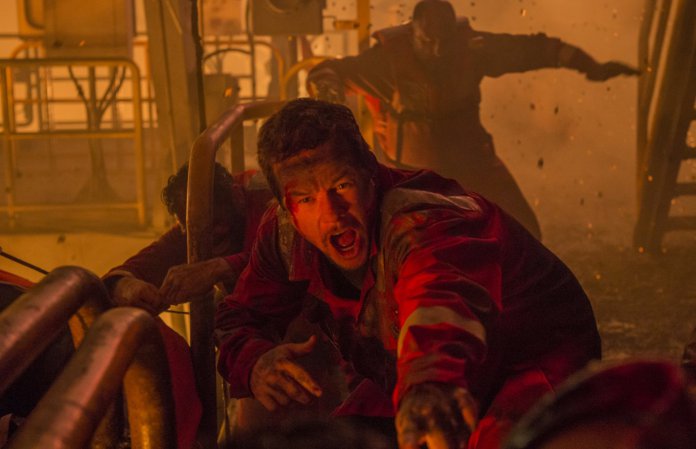
With a nice throwback vibe, crackling tension and terrific ensemble acting, Deepwater Horizon is a surprisingly compelling package. Director Peter Berg, surpassing his similar work with Lone Survivor three years ago, is again all about making sure a tragic true-life tale is told with proper respect for the heroes involved.

This tragedy was the worst in U.S. oil .drilling history, as the Deepwater Horizon rig exploded off the coast of Louisiana in 2010, killing 11 crew members and exposing a scandalous gap in safety protocols from BP.

Berg, armed with a crisp, economical script from Matthew Michael Carnahan and Matthew Sand, introduces us to the souls involved with a rapid succession of quick vignettes from their day, just hours just before boarding the rig. Mike (Mark Wahlberg, as good as he’s ever been) gets frisky with his wife Felicia (Kate Hudson), while Andrea (Gina Rodriquez from TV’s Jane the Virgin) can’t get her car started and has to hitch a ride to the airport from her boyfriend, and so on.

Snapshots of crew members’ lives crisscross each other, and the film needs minimal screen time to get us invested in multiple personalities. This is a roadblock for scores of films that Berg and his writers sweep away. They give us people to care about, and they increase the chance that events to come will resonate. Extra points for providing helpful primers on drilling practices in ways that feel organic, such as Mike’s daughter rehearsing a classroom presentation.

The tension builds steadily, with a single bubble of air escaping from an undersea drill line, and leads to a spectacularly staged string of explosions that engulf the entire structure. Berg has long shown his skill as a tactician, and here he gets us breathtakingly close to the chaos with an authenticity that’s refreshingly unencumbered by CGI effects.

You may be reminded of more recent movies (especially Wahlberg’s own The Perfect Storm), but Deepwater Horizon has a retro kinship with classic disaster films of the 70s, along with an in-the-moment humanity that salutes the real players whose lives hung in the balance.

Verdict-3-5-Stars


Hope Madden and George Wolf … get it?