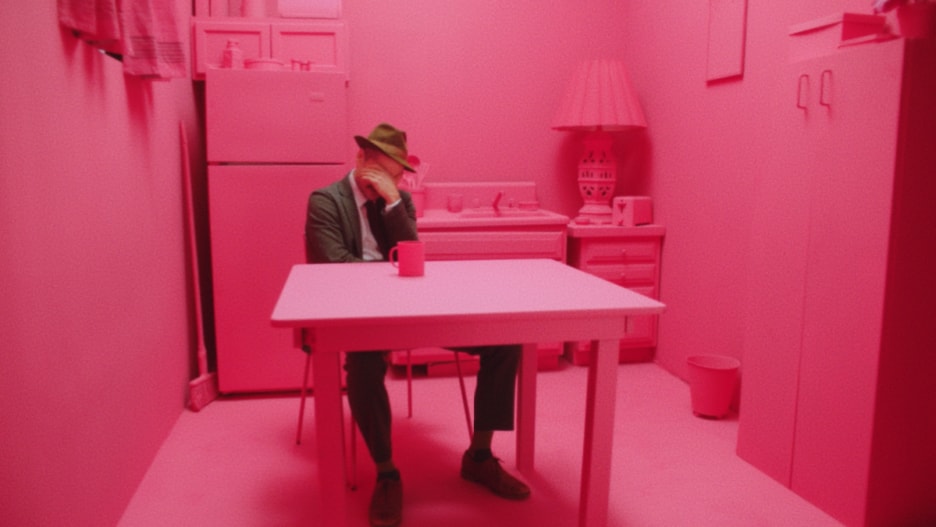
Profiler and the Mad Man

No Man of God

by Hope Madden

True crime is quite a phenomenon, isn’t it? It’s been a staple of watch-at-your-own-risk entertainment for generations, but podcasts have set a genre fire that seems unquenchable. Filmmakers have taken notice.

Still, do we need more Ted Bundy? Joe Berlinger made a miniseries (2019’s Conversations with a Killer: The Ted Bundy Tapes) and a feature (Extremely Wicked, Shockingly Evil and Vile, also 2019). Then there was 2020’s miniseries Ted Bundy: Falling for a Killer, which, like Extremely Wicked, told the Bundy tale with the voice of a former girlfriend. And in a few weeks, Daniel Farrands kicks off his American Boogeyman serial killer film series with a feature on Bundy.

Is it even possible for filmmaker Amber Sealy to tell us anything fresh? And even if she could, is there any legitimate reason to continue to rehash the behavior of such human garbage?

Working from a script by Kit Lesser, Sealy attempts to demystify Bundy, focusing not on his crime spree at all, but on his final years on death row. No Man of God spends most of its time in a confined, colorless chamber where Bundy (Luke Kirby) and FBI profiler Bill Hagmaier (Elijah Wood) converse.

Both actors deliver nuanced, unnerving performances. Their interplay and the evolving relationship help Sealy overcome the limited action, institutional color palette, and dialog-heavy run time.

Hagmaier is essentially the vehicle for the audience. Why is he spending his time with this heinous being? He just wants to understand.

That’s our excuse too, right? And that’s also the danger — at least it is in every movie ever made concerning an FBI profiler trying to get into the head of a serial killer, and No Man of God is no different. Is good guy Bill really Bundy’s opposite, or is he capable of the same acts of violence against women?

There are flashes in Sealy’s film where she nearly punctures her rote though well-acted tale with genuine insight about misogyny. But the film is never as interested in the women harmed by Bundy’s narcissism, insecurity and psychosis as it is in those traits he bore.  

Say His Name

Candyman

by Hope Madden and George Wolf

Sweets to the sweet, indeed.

This new Candyman is the most delicious brand of horror sequel. Thanks to the startling vision of director/co-writer Nia DaCosta and producer/co-writer Jordan Peele, it is a film that honors its roots but lives so vibrantly in the now that it makes you view the 1992 original from an urgent new angle.

We go back to Chicago’s now-gentrified Cabrini Green housing project with up-and-coming artist Anthony McCoy (Yahya Abdul-Mateen II), whose works have taken a very dark turn since he learned of the Candyman legend from laundromat manager William Burke (Colman Domingo).

Anthony’s obsession helps spark the interests of curious doubters, which means blood will soon be shed. Suspicions about Anthony’s possible role in the killings begin to grow, leading his girlfriend Brianna (Teyonah Parris) to worry about her own promising career in the art world – and eventually her own safety.

Research on the legend reacquaints us with events from the first film, gloriously reenacted through the paper and shadow puppet work first seen in the film’s trailer. Without dismantling the backstory, only shifting the point of view from white storyteller to Black, DaCosta takes ownership of the narrative—which is, itself, the point the film makes. Own the narrative.

DaCosta’s savvy storytelling is angry without being self-righteous. Great horror often holds a mirror to society, and DaCosta works mirrors into nearly every single scene in the film. Her grasp of the visual here is stunning—macabre, horrifying, and elegant. She takes cues from the art world her tale populates, unveiling truly artful bloodletting and framing sequences with grotesque but undeniable beauty. It’s hard to believe this is only her second feature.

Compelling performances throughout draw you into the saga. Abdul-Mateen II delivers terrifying layers while Parris gives the filmmaker a vehicle for outrage and satire. The always reliable Domingo (having a banner year) brings the film’s institutional knowledge — important in any sequel (somebody has to tell the protagonist what’s already happened), but invaluable in a film about the legacy of trauma.

And then there’s Vanessa Williams, whose return to the franchise is heartbreaking perfection.

Fans of the preceding films will find no reason to be disappointed, but that’s about the least of what this Candyman accomplishes. By the time a brilliant coda of sadly familiar shadow puppet stories runs alongside the closing credits, there’s more than enough reason for horror fans to rejoice and…#telleveryone.

O Brave New World

The Colony

by Christie Robb

Director/co-writer Tim Fehlbaum’s The Colony (originally titled Tides) is a new entry into science fiction’s grand tradition of working out issues of the past and present in imagined future contexts.

In this one, Earth’s elites packed into spacecrafts and blasted away from a planet wrecked by climate change, pandemics and war. (Imagine!)

They settled on a planet called Kepler 209, which provided a temporary refuge. While they could survive there, radiation had an impact on fertility and, two generations in, no children were being conceived by a now-aging population.

So, once the Keplerians got some data from beacons they’d left back on Earth that their home planet may have healed somewhat, they sent a reconnaissance party called Ulysses 1 to scout out the situation and see if Earth was safe to return to and, hopefully, procreate on.

They never heard from U1.

Some years later, they scraped together the resources and sent U2 with a small crew including Louise Blake (Nora Arnezeder), the now-grown daughter of a missing astronaut from U1. Blake’s crash to Earth is where the Colony begins.

From the moment she impacts the surface, things are grim. Crewmembers are inured. Some die.

There’s a perpetual and inhospitable fog that obscures the landscape rendering Blake unable to get a clear picture of her surroundings. And this thematically fits, as this initial slow-burn of a movie is all about Blake charting the lay of the land on this new Earth.

She’s not alone.

But exactly who she is sharing space with and whether their interests are aligned is something that Blake has to explore and uncover. As the movie progresses, the pace increases incrementally and the stakes get higher as Blake needs to decide what she stands for and whose side she is on.

It’s interesting how it works with the themes of colonization in a tweaked context.

The Colony is a good offering. It’s not perfect. Communication between different groups is managed with way too much ease. The plot is somewhat predictable. One character is so much without agency that he may as well be a Force ghost urging Blake to heroic action. And, for a movie that mentions pandemics in the intro, it really missed an opportunity to add a novel disease transmission subplot.

But the cinematography, particularly the play between extreme wide shots emphasizing the characters’ vulnerability in the forbidding landscape and the close-up point of view shots giving us Blake’s limited access to snippets of the action, is wonderful. As is Arnezeder’s portrayal of Blake’s full emotional range.

Of special note is Iain Glen (as Jorah Mormont), who manages to effortlessly show the violence lurking just beneath the veneer of civilization.

I Hate Your Face

Together

by George Wolf

We’re living in unprecedented times – that’s no news flash. But the daily process of navigating the minefield of consequences from this pandemic can beat down our psyche until acceptance is required for survival.

While it may be decades until we can fully fathom the extremes we’re going through right now, filmmakers have been showing impressive instincts for adapting to on-set constraints, and reflecting on our currently shared experience.

Enjoying Together may depend upon how much you welcome the reminder.

Filmed in under two weeks with a cast of just three in a single location, the film finds humor and poignancy while mining both the intimate and more universal aspects of a nationwide lockdown.

The nation is Great Britain, where we meet He (James McAvoy) and She (Sharon Horgan) at the beginning of the quarantine, when onscreen text begins keeping track of the days and the casualties.

He’s a bootstrap conservative just fine with buying privilege, while she’s a power to the people “communist.” They were splitting up even before lockdown, so now that they’re forced to stay together, he hates her face, she wants to feed him poison mushrooms, and they both speak directly to the camera while trying to keep the worst of their vitriol away from son Artie (Samuel Logan).

Directors Stephen Daldry (Billy Elliot, The Hours, The Reader) and Justin Martin (debut feature) use the broken fourth wall and the multiple extended takes to draw us in and make us part of the conversation.

Writer Dennis Kelly provides McAvoy and Horgan with funny, biting barbs and heartfelt monologues, and the two actors consistently find authentic levels of humor and emotion – even in the moments when it starts to feel we’re being talked to instead of with. He and She are demanding, intense roles, and both McAvoy and Horgan respond with fiery, nuanced turns that alone make the film worthwhile.

In between the mounting death toll and the promise of a vaccine, Together glimpses how our lives have been changed in small, inconvenient ways and larger, heartbreaking ones. And as an impressionable child waits in the next room while his parents get closer to their true feelings, American audiences may especially notice the missing chapter on pandemic death cults.

But in our darkest days, art has always been there to help us question, laugh, cry and heal. So while using a welcome night out to spend time back in lockdown may seem as entertaining as a poke in the eye with a sharp stick, this film just wants you to know there’s hope if we just stay…

You know.

Bzzz

Mosquito State

by Hope Madden

Right from its scientifically precise and profoundly unsettling opening, Filip Jan Rymsza’s Mosquito State is almost unwatchable. The film, about Wall Street analyst Richard Boca (Beau Knapp) and the 2008 financial collapse, takes on an upsetting metaphor.

Richard, brilliant and socially awkward in equal measure, brings two bodies home with him one evening: the poised and lovely Lena (Charlotte Vega) and a thirsty mosquito. Thanks to Richard’s intimacy ineptitude, things don’t go well with Charlotte, but that mosquito gets all she came for.

Though the buzzing of the bloodsuckers that soon breed in Richard’s apartment may suggest those Wall Street parasites whose appetites will soon collapse the market, Rymsza has something less obvious on his mind.

Any underlying themes about benevolence versus predation serve the filmmaker’s somewhat confounding allegory, but his aesthetic is as pointedly horrific as they come. My god, that whining buzz! The sound threatens to overwhelm you as certainly as the insects themselves overwhelm Richard, who becomes utterly submissive, offering his naked body to the unholy swarm.

Rymsza orchestrates a certain ghastly beauty, but first he has to immerse you in sounds and sights that trigger an automatic, primal revulsion and need to swat and flee.

Knapp’s performance suggests a bloodless Nicolas Cage as Elephant Man — bloodless not just because he’s made Richard the mosquitos’ feast, but because Knapp drains his character of charisma and flamboyance. Richard’s as unpredictable and difficult to enjoy as the film itself, but that makes him —and Mosquito State — no less distressingly intriguing.

Rymsza’s anticlimactic finale will leave many unsatisfied with his film. But for a wild combination of revulsion and beauty, Mosquito State is worth a look.

Bad Decisions

Echoes of Violence

by Rachel Willis

Alex (Heston Horwin) is having a terrible day. While trying to sell a leasing office in the middle of the Sedona desert, he hears a gunshot. When he hears a second shot, rather than calling the police, he runs off to investigate.

This is the first of several bad calls that Alex makes.

However, we might be able to get on board with this terrible decision because the lead-up to this moment is intriguing. From a funny opening, we’re then placed in this jarringly violent moment. Alex, endearing in his suit, waiting for his clients, is the right kind of naïve to help the film get underway.

It’s too bad this great opening is followed by such a weak story. But what writer/director Nicholas Woods delivers in Echoes of Violence is a juvenile take on the humanitarian crisis of human trafficking.

Upon meeting Marakya (Michaella Russell), Alex makes one more dumb decision after another as he’s caught up in her violent existence. A sex slave on the run from her immigration lawyer/human trafficker (another good idea that fails in the execution), Marakya enlists Alex’s help on a mission of revenge.

We never quite understand why Alex is so taken with Marakya, which is a problem. There’s no reason or explanation why he doesn’t call the police – or even just walk away – as it’s clear he’s in over his head.

Another poor choice on the film’s part is an attempt to create a sympathetic character out of a man who is part of the sex trafficking ring. Though we’re given reasons why this guy is ‘okay,’ it feels like a gut punch to root for someone who previously ignored the horrors around him. That his redemption arc is given the same weight as Marakya’s story is as unsurprising as it is disappointing.

But the film’s weakest element is the dialogue. Some of it is so bad it’s funny, but mostly it’s just bad. There’s too much needless exposition, too many lines that try to offer profound wisdom (when no one talks like that), and not enough time to let the characters come to life.

The actors are good, particularly Russell, but even the best actors will stumble around clumsy dialogue. And Sten Olson’s cinematography is spectacular, but there isn’t much else holding up this movie.

A weak script will nearly always tank a film, and this one is no exception.

Screening Room: Reminiscence, The Protege, Night House, Sweet Girl & More

Teacher’s Pet

The Protege

by Hope Madden

For one of those hired assassin thrillers to work, it helps to have a convincing lead who has chemistry with the bad guy. Martin Campbell’s The Protégé delivers on both fronts.

And yes, in these films story often takes a backseat to fight choreography, writing rides shotgun to action. This also sounds a lot like Campbell’s latest, although it would be more forgivable if the action stood out enough that you could overlook the shortcomings in story.

Maggie Q is protégé assassin Anna, and while her inner conflict never breaks the surface, Q convinces as she moves bewigged from one set piece to the next. Anna’s mission this time is personal, natch, and her soft spot comes from her mentor, played by Samuel L. Jackson.

How is he? Well, he’s, you know, Sam Jackson. He’s exactly Sam Jackson. That works in almost every other movie, and it works just as well here.

But the real shining treasure in The Protégé is Michael Keaton. His talent, charisma, easy charm and natural good humor elevate every scene. Luckily, he’s in a lot of them, so he elevates most of the film.

Campbell (Casino Royale) stages capable though uninspired action sequences. His script, by action veteran Richard Wenk (The Equalizer), can’t tie character motivation to mystery elements to location or conflict. Instead, it stitches together ideas from a smattering of other films with little concern for coherence.

Perhaps this is why Campbell struggles so mightily with tone. This thing swings back and forth between buddy picture and revenge fantasy, international espionage thriller and romance. The bit that generally drives a film like this—you know, when the steely lead finally faces their demons—feels almost coincidental, leaving it no room to resonate.

The Protégé is not a terrible film. At worst it’s just a waste of your time.  

Drug Problems

Sweet Girl

by George Wolf

You know that feeling when someone comes out of a security door at the precise moment you’re trying to come in without a key?

Or when a major cable news show puts your call right through to the air on the very same day you find a uniform in exactly your size hanging up and waiting for you to blend in somewhere you don’t really work?

Me neither. So while Netflix’s Sweet Girl calls attention to a very real problem in America, the narrative that drives it trades authenticity for gimmicky contrivanace.

Through a frequently changing timeline we meet Ray Cooper (Jason Momoa) and his daughter Rachel (Isabela Merced). Tragedy hits their Pittsburgh-based family when wife/mother Amanda Cooper’s life is cut short by cancer. Amanda fights hard, but finally succumbs when a promising new drug is withheld by obnoxious Pharma Bro Simon Keely (Justin Bartha).

While Keely and Congresswoman Diana Morgan (Amy Brenneman) are on live TV debating prescription drug prices, Ray calls in to blame the price-gouging Keely for his wife’s death, and to promise violent revenge.

Ray’s nationwide threat seems to only arouse the interest of an investigative reporter on the trail of a Big Pharma conspiracy, and when Ray’s meeting with the writer turns unexpectedly bloody, father and daughter become fugitives hunted by both the cops and the killers.

In his feature debut, director Brian Andrew Mendoza utilizes Momoa’s hulking charisma via some standard fight choreography, but the gifted Merced seems wasted. Writers Gregg Hurwitz (The Book of Henry) and Phillip Eisner (Event Horizon) serve up a journey of convenience on the way to a third act twist that will define how smoothly the film goes down.

If you can keep your eyes from rolling, this film may feel like the franchise kickstart it aims to be. Otherwise, Sweet Girl leaves a pretty sour aftertaste.

White Savior: The Documentary

Queen of the Beach

by Cat McAlpine

While returning from his trip filming traveling preachers in India, Chris McDonell becomes enamored with some young girls hawking their wares on a beach in Goa. One precocious girl, in particular, catches his eye, and her name is Shilpa Poojar. At the time, Shilpa’s only nine years old, and she works full-time to help support her family.

Almost desperately McDonnell repeatedly asks her, “Do you have a dream? Are you happy?” Shilpa shrugs several times before finally admitting that she’d like to go to school, but she can’t afford it. Unable to shake the idea that this young girl is working instead of getting an education, McDonell sets out to change her fate.

McDonell has many paths he could follow in his telling of Shilpa’s story, but he largely avoids any avenue except trying to convince her to go to school. As he returns to India year after year, Shilpa’s interest in school fluctuates. She’s the breadwinner for her family, and if she stops earning an income her family won’t eat. It’s rare that you see a documentary so heavily dependent on the director inserting themselves into the narrative, but McDonell is determined to “save” Shilpa in the way he deems best.

As he is entangled with Shilpa’s family, McDonell grows disheartened that there isn’t an easy win ahead of him. The girls he’s desperate to help are businesswomen who easily out-barter him. He’s constantly promising them gifts in exchange for their participation in the documentary, and his proximity to the young girls sometimes feels uncomfortable. He never acknowledges the obvious power imbalance between himself, a white adult man with the promise of money, and the young Indian girls who are desperate to earn their daily keep or otherwise be beaten. Once or twice, McDonell recognizes that India is often a location for sex tourism, but he doesn’t delve.

McDonell never delves, in fact. He is desperate to make a documentary about sending Shilpa to school, and that’s the documentary he makes despite all odds. He never ends his mission, even when Shilpa is run out of her shop on the beach because she is accused of having an inappropriate relationship with McDonell.

“I come here to help, and instead I cause all of these problems.” He worries out loud to her.

“This is called life, Chris.” She consoles him. “This is India life.”

The documentary is worth watching just to meet the whip-smart, incredibly charismatic Shilpa, who carries on despite horrible circumstances. But her journey seems halted and messy through McDonell’s insistence that she receive his help the way he wants to give it. Cultural context is sidestepped and ignored. Her story ends with no update on her adult life. Does she still have dreams? Is she happy?

We are left with a multitude of unturned stones and unanswered questions. The only thing that is clear is that McDonell is proud of what he thinks he’s accomplished.

Hope Madden and George Wolf … get it?