For anyone bemoaning the state of the film industry, claiming that there are no original films, only sequels and superheroes, may I introduce you to Boots Riley?
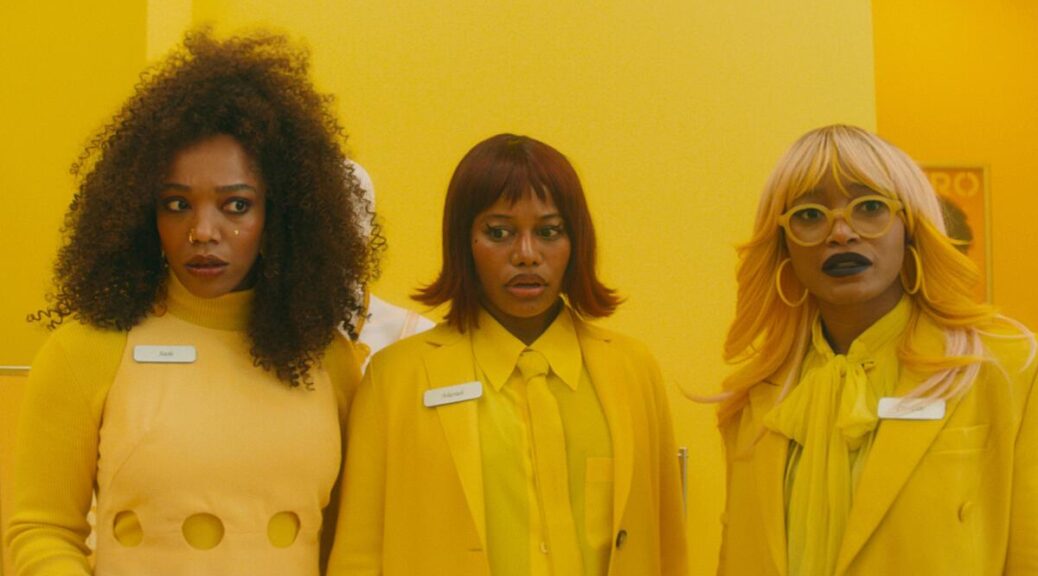
There is no more original voice in cinema today. And what’s extra great is that the voice is actually saying something worth hearing. His second feature, I Love Boosters, certainly proves that there’s talent looking to work with a visionary filmmaker. Look at this cast: Keke Palmer, Naomi Ackie, Taylour Paige, Don Cheadle, LaKeith Stanfield, Demi Moore, Eiza González, Will Poulter. Damn.
They tell a wild, boldly colorful, sometimes Claymation, often surreal, occasionally demonic, fantastical, consistently smart, regularly hilarious, and shockingly personal tale about the individual’s need for community. And, of course, the inescapable evils of capitalism.
Thanks to Palmer and Ackie, there’s a crackling emotional center that sets the friction between community and the individual on understandable ground. Stanfield is a hoot as an emotionally naked suitor (that storyline takes a turn!), Moore is great as the brash talking “innovator,” and it may take a moment to recognize Cheadle, but you won’t forget him.
If you saw Riley’s 2018 jaw-dropper Sorry to Bother You, you know to go in with no expectations. Predictability is not one of the tools this filmmaker wields. And though there are no horse men in I Love Boosters, the movie goes in wild directions.
But excess is Riley’s joyous medium. And no one paints revolution with such glorious color.
Underneath the metaphysical science fiction banter, beneath the scathingly comical evisceration of fast fashion, at the heart of the wacky heist flick, is a lonesome story that resonates. It’s all one struggle.
If that doesn’t sound entertaining, then I’m not doing my job correctly. Brazenly original, ridiculously entertaining, with relevance and immediacy to spare, Boots Riley’s second feature film I Love Boosters is the adventure of the summer.
Star Wars has been around for nearly a half century. We’ve seen films, sequels, prequels, TV series, books, animation, Legos, and one epically weird Christmas special. But we haven’t seen a feature film since 2019, and we’ve never seen a feature film based on a TV show. Until now, with Jon Favreau’s Star Wars: The Mandalorian and Grogu.
Much is still the same. Bad guys still have terrible aim, faulty weapons, and super cool monsters. Good guys have decent aim, reliable weapons but unreliable transportation, and cute and friendly beasties.
The film picks up where Season 3 left off as a sort of replacement for Season 4. And that’s kind of how it feels—not like an epic adventure, more like an extended episode. TheX Files movie of the Star Wars franchise.
Mando (Pedro Pascal) and Grogu agree to save Rotta the Hutt (voiced by Jeremy Allen White) from a gladiator-style imprisonment in return for information from his aunt and uncle, “The Twins.”
Naturally, it involves star fights, surprise monster battles, a barroom brawl, and dirty dealings. But no matter the odds, the Mandalorian is noble and Grogu is cute. The CGI, though? Sketchy.
Mando’s co-pilot Zeb Orrelios (Steve Blum) looks bad, especially his face. There is one gorgeously rendered dragon snake thing, but otherwise, most of the monsters are under articulated. The action, whether hand-to-hand or in the air, feels uninspired.
There is a long break in the live-action action that’s pretty great. First, we travel with Grogu and the Anzellans—gripey little mechanics who make baby Yoda look big. And later, Grogu has an episode all his own. Both sequences let the film breathe and let the audience spend some quality time with the character we probably came for.
Otherwise, the story is capably written and told. The score is adequate and the cinematography is OK. There are questions. Why does actor Jonny Coyne go by his actual name in this movie? And why is it so sexy to hear Sigourney Weaver (as Colonel Ward) say: “Going in weapons hot”?
But narratively, no. They cover everything. And it’s fine. It’s sometimes really fun, often super cute, frequently amusing, and easily the most forgettable film in the whole Star Wars galaxy.
Body image, binge behavior, shame, and desire fuel Natalie Erika James’s (Relic) third feature, Saccharine. From its fascinating opening sequence, you’ll be glad if you don’t buy popcorn.
That opening, scored with sensual moaning, cuts between extreme close ups of various body parts of a lithe woman on an elliptical, and extreme close ups of binge eating, but in reverse. As if the eater is removing those sloppy snacks rather than inhaling them.
Hana (Midori Francis) is the eater. She’s also the person eyeing the woman on the elliptical, Alanya (Madeleine Madden), a trainer who invites Hana to join her 12-week diet and exercise program. Profoundly self-conscious but smitten, Hana agrees.
Then she runs into old high school classmate Melissa (Annie Shapero), unrecognizable thanks to weight loss brought about by a technically illegal supplement called grey. What Melissa doesn’t know but med student Hana figures out is that the supplement is human ash.
Hana takes it anyway, loses weight, but the side effects are hardly what she bargained for. In the Ozempic era, the idea that someone might swallow pills of human ash to lose weight without regard to consequences feels right.
There’s a fetishistic quality to many of the film’s sequences. These become the sticky residue holding together a ghost story, a tale of generational and cultural identity crisis, and some serious body horror. That’s an awful lot for James to pack into her 112-minute run time. Though she doesn’t resolve everything, it’s the surprises and loose ends that are most intriguing.
Francis impresses as the fractured main character, driven and yet unable to control her binging, however hard she tries. James expertly uses the sympathetic, believable central figure to wind viewers through startling sensual indulgences punctuated by family drama.
It would feel overpacked were it not for Francis’s grounded, compelling turn, supported nicely by the film’s small ensemble (Madden, Danielle Macdonald, Showko Showfukutel). Just when it looks like the family drama horror trope has won out, James surprises again, and the film leaves you stunned and wondering.
Objectification, internalized beautify standards, and the fetishistic nature of consumption drive Hana’s behavior and James’s film. Art over the post credits amplifies an aesthetic that James might have used to better effect throughout the movie. Still, Saccharine delivers something intimate and disturbing—too unsettling to be solved with Pepto Bismol.
Doesn’t matter if it’s an antique store, new age beads and crystals shop, magic store or plain out curiosity shop, if it ain’t S-Mart, don’t trust its wares. We dive into our favorite shopping mishaps and wishes gone wrong!
5. Needful Things (1993)
Satan is from Ohio. That’s one of the drollest, funniest lines in Fraser C. Heston’s Stephen King adaptation. Max von Sydow is Leland Gaunt, and like many a ghoul before him, Gaunt has moved into a fictional King town (Castle Rock, the most famous this time) to open a little shop. Antiques. Curiosities. Cheap, but each purchase requires a little favor and exacts a specific cost.
What King does with W. W. Jacobs’s infamous Monkey’s Paw concept is proliferate. There’s no wish, but there is a trick, and soon everybody has an item, pulls a trick, and the town descends into chaos. It’s the Salem’s Lot effect, except with malicious mischief instead of vampirism. The film is cheeky fun elevated immeasurably by an amazing cast. Ed Harris, Amanda Plummer, Bonnie Bedelia, and J.T. Walsh join von Sydow in a slight but fun effort.
4. Gremlins (1984)
Joe Dante’s picture book madness toes the line between gorgeous, family-friendly Christmas film and bloodthirsty creature feature mayhem. Gremlins follows a sweet hearted fuckup of a dad (Hoyt Axton), who buys a cuddly little pet for his grown son who still lives at home (Zach Galligan). Tiny Kingston Falls, PA will never be the same.
Gremlins is iconic. The soundstage beauty of the town, the snow, the little downtown and the sitcom staging of the family home carnage are so specific and so perfect. Dante mixes and matches every type of family comfort media with a shockingly high body count, and the mom (Frances Lee McCain) is a total badass. Plus, the story about the dead dad in the chimney? Brutal! Nobody blends horror and cinematic nostalgia better than Joe Dante.
3. Oddity (2024)
Carolyn Bracken is Darcy, twin sister of the recently slain Dani (also Bracken). Darcy is a little touched—she still runs the curiosity/antique shop her mother left her and still holds on to the giant wooden man a witch gave her parents for their wedding. Darcy is also blind, so when she arrives at her brother-in-law’s home—the very spot where Dani came to her bloody end—Ted (Gwilym Lee) and his new live-in girlfriend (Caroline Menton) don’t know how to politely ask her to leave. And to take her giant wooden friend with her.
Writer/director Damian McCarthy hands this tapestry of folklore and soap opera to a nimble cast and a gifted cinematographer. Together this team casts a spell too fun to break.
2. Obsession (2026)
Obsession is a film about consent.
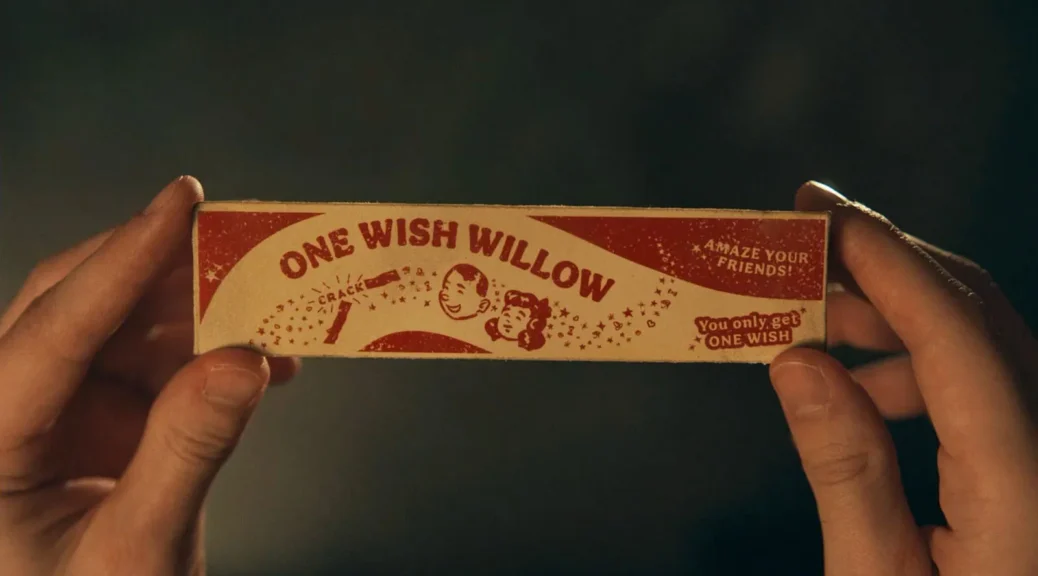
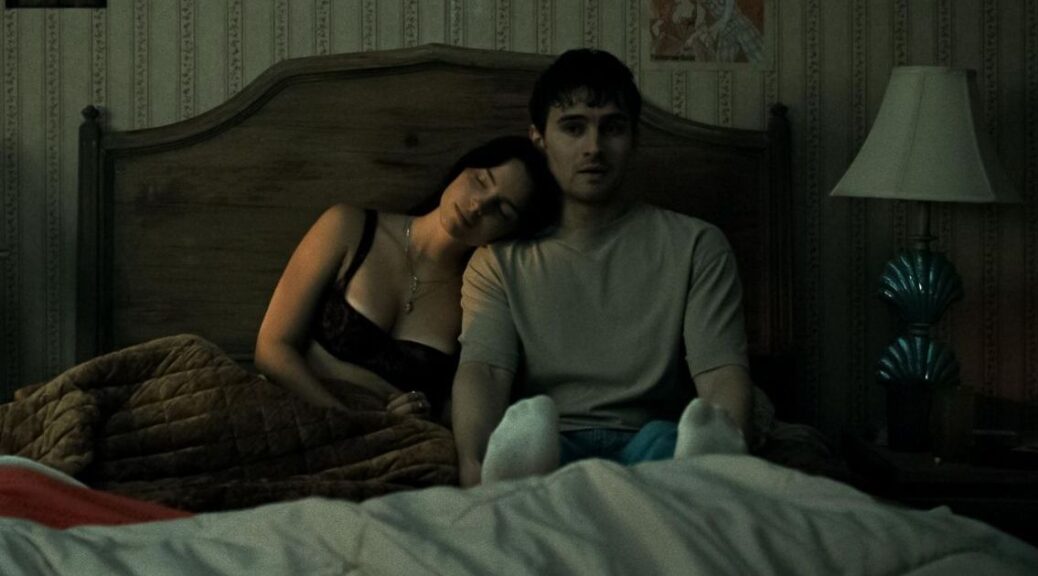
Filmmaker Curry Barker writes the “deadly wish” fable as well. Sad by Bear (Michael Johnston) can’t bring himself to confess his feelings for coworker Nikki (Inde Navarrette). He’s so desperate after one cringy missed chance that he breaks open a One Wish Willow he’d purchased as a joke and—without reading any of the warnings printed all over the box—wishes that she would love him more than anyone else on earth.
And she does.
The themes Barker mines are incredibly of-the-moment. Bear wants what he wants, but he wants it to be true. It isn’t, but that’s not good enough. Make it be true. But you can’t make something be true if it isn’t true, no matter how sad the boy is who wants it. Male entitlement masquerading as loneliness leads to violently self-centered behavior. Barker’s story, however jump-scary or genre friendly it becomes, never forgets this central, relevant concept.
1. The Monkey (2025)
Why is it that so many kids’ toys are creepy? Not that you should call The Monkey a toy. You should not, ever. Because this windup organ grinder monkey, with its red eyes and horrifyingly realistic teeth, is more of a furry, murder happy nightmare.
The film itself is a match made in horror heaven. Osgood Perkins (Longlegs, Gretel & Hansel, The Blackcoat’s Daughter) adapts and directs the short story by Stephen King about sibling rivalry and the unpredictability of death.
Perkins surrounds deliberately low energy leads with bizarre, colorful characters—even more colorful when they catch fire, explode, are disemboweled, etcetera. The film is laced with wonderful bursts of Final Destination-like bloodletting, as the Monkey’s executions are carried out via Rube Goldberg chain reactions that quickly become fun to anticipate.
Writer/director Aleshea Harris may be pulling from folklore and road movies, revenge flicks and historical dramas, noir and arthouse, exploitation and even horror. But the result of those inspirations is one of the most boldly original films of 2025.
Is God Is follows twins Racine (Kara Young) and Anaia (Mallori Johnson) on a “mission from God.” It’s a funny line in a film about two misfits behind the wheel of a dubious vehicle, but the twins’ holy work has nothing to do with blues music. Their God is the one who created them, their mother (Vivica A. Fox), a woman they’d believed dead. She is not dead yet, but death is coming for her, and she has one request of her daughters. They need to kill their father (Sterling K. Brown).
Too often road trip films offer little more than a thinly connected series of hijinks and antics. Harris takes advantage of that sensibility, introducing us to various oddballs and dropping us into wild situations. The filmmaker shows great affection for so many types of movies, and the way she bends these tropes and styles to the will of this narrative is fresh, unpredictable, and fascinating.
Still, there is an inevitability to the story, and to the character arcs, that haunts the twins’ destiny. However wild, however bloody, however zany, there is a broken and beating heart at the center of the story.
Violence and destiny, family trauma, classism and misogyny, and rage—Is God Is finds poetry and honesty and blood in all of it.
Young and Johnson are a remarkable yin and yang, and the ensemble impresses at every turn. Brown is characteristically undeniable, an emotional shapeshifter, both seductive and terrifying. Janelle Monáe and Erika Alexander also impress in smaller roles.
But the star of Is God Is has to be the storyteller herself. Harris’s command of the audience and of cinema deliver the summer’s most daring and satisfying adventure.
“Plus ça change, plus c’est la même chose.” It’s a fitting aphorism for the new Two Women, Chloé Robichaud’s remake of the original 1970 film that probes how much has really changed for women since the sexual revolution of the 1960s and 70s.
Florence (Karine Gonthier-Hyndman) and Violette (Laurence Leboeuf) have a lot in common. The two women live next to each other in a large Montreal apartment complex, share feelings of sexual frustration and a lack of desire with their current partners, and have to deal with mental health issues around new motherhood (for Violette) and depression (for Florence).
The two women bond with one another over their shared frustrations, a bond that deepens quickly when they both seek out casual affairs from relative strangers in the apartment complex. This breezy update, written by Catherine Léger, puts a modern spin on the original, with app-based encounters helping to supercharge the litany of cable guys, repairmen and delivery people who make up the anonymous casual sex for the women.
And these men (plus the occasional woman) are truly anonymous—they are credited by occupation only. This leads to some comic relief as the neighbors start to sense something going on with the revolving door of service workers going in and out of the women’s apartments. But it also adds a serious note to their sexual adventuring.
Florence and Violette reclaim these pornified archetypes for their own journeys of self-discovery, complete with intentionally awkward and turgid come-ons as the women make their desires known to the bemused workers. It helps that Gonthier-Hyndman and Leboeuf excel at giving the risqué romps emotional heft. We see both of their characters go from halting, even fumbling encounters to a fully realized confidence by the end of the film.
While the leading women are fantastic, the film is on shakier ground when it pulls back to ascribe some broader societal points about their sexual politics. Monogamy and mental health both factor into where the story winds up going, but Robichaud’s otherwise light comic touch winds up making these threads feel underbaked while also not given enough weight.
There’s a frank sweetness to the film that, along with the grounded performances, keeps the philosophical detours from ever derailing the movie’s charm, however. This is in no small part thanks to fully inhabited performances from the women’s partners, the tragicomic David (an excellent Mani Soleymanlou) and churlish Benoit (Félix Moati). We may have gone through enough waves of social change in the last 50 years to know that “having it all” is its own unrealistic myth for anyone in today’s world. But Two Women shows that, six decades on, that shouldn’t stop you from asking what you actually desire in your life, whether that’s fixing the cable or “fixing the cable.”
Documentarians Carl Dean and Tia Lessin open their riveting documentary, Steal This Story, Please! with P. Wells Griffith III running from Amy Goodman’s pointed questions about the Trump administration’s position on climate change. She is dogged and unforgiving in her pursuit of Griffith as he flees.
Amy Goodman is the storied host of Democracy Now! and it’s wonderful to see focus turned to her intrepid 30-year career.
For those unfamiliar with Goodman or Democracy Now!, a quick series of on-screen text brings the viewer up-to-speed on why Goodman and her show are so unique in the current media landscape.
Beginning with Goodman’s desire to work for the Phil Donahue show, Steal This Story, Please! recounts Goodman’s work in independent journalism. The film artfully moves from the professional to the personal, past and present, as it dives deep into Goodman’s approach to reporting.
The film highlights how important independent news reporting is, especially as governments not only demonize the free press, but allow conglomerates to buy up media outlets en masse. Goodman’s work at the forefront of independent journalism was as important when she started as it is now.
Covering the myriad stories Goodman has done shows how relevant and important her work has been in tackling injustice around the world. While some of her reports maybe have faded from collective memory, this documentary serves as a reminder of how much journalism influences the public to demand change.
Dogged reporting moves the needle. Good journalism strengthens and saves democracies. We need journalists like Amy Goodman now more than ever if we’re going to strengthen and support not only American democracy, but democracy worldwide. Let’s hope Goodman’s work, along with this documentary, will inspire a new generation of independent, relentless journalists.
Filmmaker Curry Barker made waves in 2024 with his free YouTube feature Milk & Serial, which you should watch if you have not. Made on a shoestring, the spare chiller is immensely impressive. His second feature shows what he can do with just a little bit more budget.
Barker writes a fresh and relevant take on the “deadly wish” fable. Sad boy Bear (Michael Johnston) can’t bring himself to confess his feelings for co-worker Nikki (Inde Navarrette). He’s so desperate after one cringy missed chance that he breaks open a One Wish Willow he’d purchased as a joke and—without reading any of the warnings printed all over the box—wishes that she would love him more than anyone else on earth.
And she does.
The themes Barker mines are incredibly of-the-moment. Bear wants what he wants, but he wants it to be true. It isn’t, but that’s not good enough. Make it be true. But you can’t make something be true if it isn’t true, no matter how sad the boy is who wants it. Male entitlement masquerading as loneliness leads to violently self-centered behavior. Barker’s story, however jump-scary or genre friendly it becomes, never forgets this central, relevant concept.
Navarrette is especially impressive, able to carve out a recognizable, realistic character quickly so you notice the changes. Johnston, also excellent, naturally unveils the selfish center of the “nice guy.”
Solid support work from Cooper Tomlinson and Megan Lawless root the fantasy in believable reality. The performances and dialog feel very authentic for this generation, and Barker settles us in to this familiar premise before making his pivot at just the right moment.
The third act not only ups the horror quotient, it draws Bear’s bargain with the sinister edges it deserves and begins a march toward a violent and satisfying payoff.
Barker has a bigger, more expansive canvas here, but his storytelling instincts remain impressively hungry. The film is atmospheric but never overstuffed, with a small group of well defined central characters delivering a clear, concise message of prices to be paid.
Reality can carry a sobering bias. Obsession is bloody reminder that no amount of spin can change the dangers that come from making desperate, narcissistic bargains with the future.
Remember when someone on social media tried to come at Martin Short, and it seemed like the entire internet rose up in protest?
That was awesome, because even if you don’t think Short is funny for some odd reason, he just seems like a peach of a human being.
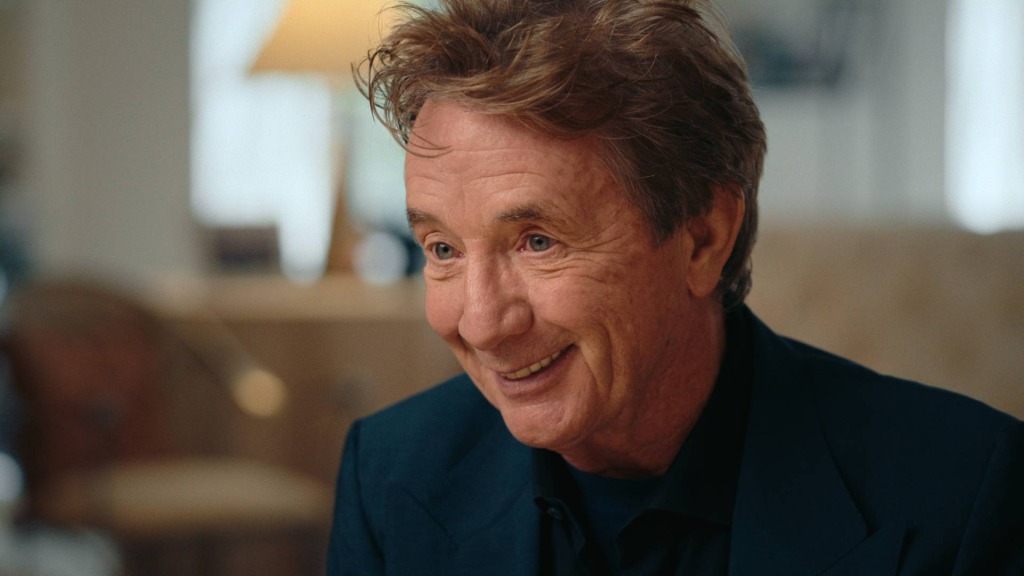
The Netflix doc Marty, Life Is Short confirms that peachiness, for just about every one of its 99 minutes. Full of home movies, TV and movie clips, interviews with family, famous friends, and a few new thoughts from Short himself, the film reveals him as a kind soul committed to fighting pain by spreading laughter.
And while Short insists that, as opposed to the well worn comic stereotype, his humor was not born from pain, he has endured plenty of it.
“It came from my whole life,” he says.
Short lost his brother at age 12, his mother at 18, his father at 20, his beloved wife of thirty years, Nancy Dolman, in 2010, and his daughter Katherine just three months ago. And still, as Steve Martin tell us, if Marty says he’ll be at your dinner party and then he can’t come, “you cancel the party.”
Martin is just one of the many longtime friends and colleagues that director Lawrence Kasdan assembles to sing Short’s praises. From Speilberg to Hanks, from former SCTV co-stars Eugene Levy, Andrea Martin, and the late Catherine O’Hara to Short’s own siblings and beyond, all of the love feels warm and one hundred percent authentic. It’s often touching.
Clearly, Kasdan is also a longtime friend, which brings both pluses and minuses. He’s an Oscar-nominated director with no shortage of inside access to his subject, yes, but his closeness to Short also fuels the feeling that all the film’s edges have been safely dulled. Kasdan also asks some onscreen questions without being mic-ed up, which can be frustrating to follow.
Recent docs such as Steve! (Martin) and Pee-wee as Himself have shown how these types of biographies can transcend the standard playbook for a deeper, more resonant type of engagement. Marty, Life Is Short keeps the ranks more closed, leaning into a greatest hits presentation, a box set with extended liner notes.
It’s an entertaining, funny, and star-studded salute to a guy who’s pretty easy to like and who, in the words of Tom Hanks, “moves at the speed of joy.”
And, man wait ’til you see the footage of his A-list Christmas parties from back in the day. Epic!
This week, Hope & George review Mortal Kombat II, The Sheep Detectives, Remarkably Bright Creatures, and Two Pianos. PLUS! A visit from The Schlocketeer Daniel Baldwin!