Livin’ on the Hedge

Sonic the Hedgehog 2

by George Wolf

I apologize in advance if I slip and call him Crash Bandicoot. I know it’s Sonic – Sonic the Hedgehog, but I’ve got limited first hand experience with any game after Frogger and sometimes get careless.

I do have experience with the first Sonic the Hedgehog movie from two years ago, so more of that same broadly-drawn, kid-friendly eye candy was not a surprise. What I wasn’t expecting was so much more of it, and those 30 extra minutes turn a harmlessly forgettable romp into a real test of patience.

Most of the gang returns from part one, including Ben Schwartz as the voice of Sonic, that speedy little alien who runs around Seattle looking for opportunities to earn the heroic moniker of “Blue Justice!”

But his human “dad” Tom (James Marsden) cautions Sonic of the need to grow up and remember that the moments that make a hero are not for him to choose.

Sonic will get those chances to prove himself, thanks to the return Dr. Robotnik aka “Eggman” (Jim Carrey) and a new, not blue meanie from space.

The ginger-maned Knuckles (voiced by Idris Elba) is a skilled Echidna warrior with an old score to settle against the hedgehog. That means Sonic and his buttcopter-powered pal Tails (voiced by Colleen O’Shaughnessey) will have to fight harder than ever to make sure the all-powerful Master Emerald does not fall into evil hands.

Director Jeff Fowler again shows a good feel for letting the effects department do some flexing, and the mixing of live action with animation is admittedly impressive.

But like the first film, the storytelling here is so exaggerated that even Carrey’s cartoonish mugging doesn’t seem that much over the top. Screenwriters Pat Casey and Josh Miller get an assist this time from John Whittington (The Lego Batman Movie), but are still committed to putting big, obvious eyebrows on nearly everything.

The welcome exception is Knuckles, and Elba’s perfectly authoritative delivery makes his character’s humorless interactions that much more humorous. It’s the one aspect of the film that doesn’t seem geared to keep the attention of easily distracted children.

But hey, kids, how do you like dance offs? Sonic 2 sets the needle drop and move busting level to unnecessary, pushing the run time to nearly two hours, even before the obligatory mid-credits peek at part three.

And all this time I thought speed was Sonic’s superpower.

Or maybe that’s Crash.

Alone in the Dark

See for Me

by Brandon Thomas

There’s nothing better than a thriller with a great hook. Sometimes it’s as simple as a private investigator with a fear of heights being used as a pawn in a murder, such as Hitchcock’s Vertigo. Sometimes the hook is much more elaborate like the narrative and truth-bending nature of Christopher Nolan’s Memento. In director Randall Okita’s See for Me, the hook falls somewhere in the middle as a blind housesitter is pitted against three thieves. 

After a skiing accident leaves her visually impaired, Sophie (Skyler Davenport) is hired to house sit for a wealthy client. After the sun sets, Sophie is surprised by three intruders looking for a massive cash score from the home’s safe. While able to call 911, Sophie needs immediate help and uses an app called “See for Me” to connect with a technician who can relay what they’re seeing through Sophie’s phone. Luckily for Sophie, Kelly (Jessica Parker Kennedy) is a former combat vet. As the intruders become aware of Sophie’s presence, Jessica uses her expertise to direct the at-risk Sophie out of harm’s way.

Great hook or not, See for Me is a fairly simplistic movie in execution. Okita never tries to jazz the picture up with crazy camera work or elaborate set pieces. Panic Room this movie is not (and more so for budget reasons, one would think). Okita uses the frame wisely as the suspense of Sophie’s predicament slowly plays out. The house is one of the stars of the movie with its large rooms, high ceilings, and exposure through floor-to-ceiling windows. Okita makes sure we’re allowed to see so much of what’s happening within the house while Sophie cannot, a strategic move that naturally increases the tension.

Davenport commands every second of her screen time. A visually impaired person in real life, Davenport’s approach to Sophie is one of complexity. There’s a stubbornness to the character as she refuses to be seen as anything less than capable in the eyes of those around her. Sometimes that comes out as hostility toward family, friends and even clients. This stubbornness becomes an important asset as Sophie barters with her would-be captors, and uses Kelly’s guidance to fight back. 

The use of the “See for Me” app threatens to strain believability at times, mostly in how Sophie is turned into an expert marksman with little to no guidance. For a film so grounded for most of its running time, these bits in the movie’s back half tend to stick out and betray its smarter elements. 

Through a clever hook and a great lead performance, See For Me becomes one of 2022’s first stand-out thrillers. 

Teenage Wasteland

Coast

by Christie Robb

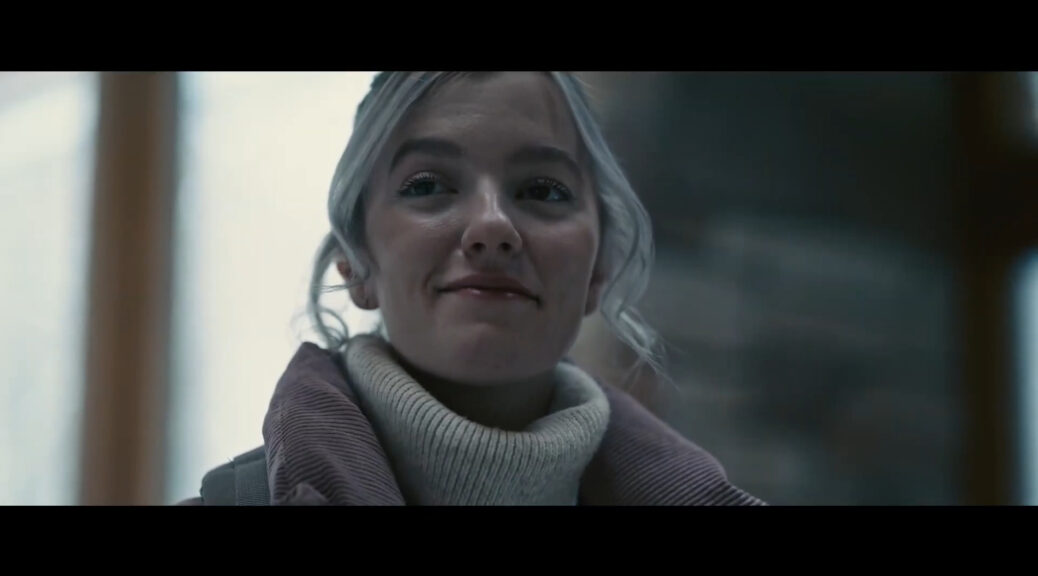
Directors Jessica Hester and Derek Schweickart take us on a spin through the life of alienated 16-year-old Abby (Fatima Ptacek) who has always felt like an outsider in her rural California town, certain she has to make it out to find herself.

Writer Cindy Kitagawa nails the egocentrism of adolescence. The arrival of a cool new girl in town (Mia Rose Frampton) and an indie rock band stuck in the area while their tour bus receives repairs precipitates Abby’s first life crisis. She’s thrown for such a loop that she’s willing to alienate her parents, teachers, and childhood friends in order to discover herself and her potential life path.

Is it with Dave (Kane Ritchotte), the sexy front man who tries to sweet-talk her into performing?

Running in counterpoint to Abby’s story is her mom’s (Cristela Alonzo). Abby is now the same age her mom was when she got pregnant. Mom’s hoping the apple falls very, very far from the tree on that one. Now, in her 30s, Mom is drinking a little too much, smoking in bed, and staring down the barrel of a divorce from a husband who got his coworker pregnant. During her job as a night nurse she hangs out with an older patient (played by the great Melissa Leo who doesn’t have nearly enough to do), also a former teenage mom, now estranged from her grown daughter.

At school, Abby struggles to complete a hometown history report. The purpose of the report, as the class frequently recites in unison is because: “Those who forget the past are condemned to relive it.” The hope is that Abby will come to terms with the past and learn from it so she can choose the path forward that is right for her. A somewhat heavy-handed final act directly addresses this.

Coast doesn’t exactly break new ground in the coming-of-age genre. Far too much time seems to be spent on the thinly-developed stock characters of edgy-new-friend and dreamy-boy when Abby’s childhood friends and her mother seem much more charismatic and potentially interesting. But Ptacek’s Abby believably cycles between the joyful naivete of childhood, the judgmental anger of adolescence, and the more balanced perspective of adulthood. And the soundtrack kinda rocks.


Sound of Silence

Midnight

by Rachel Willis

In the dark and deserted alleys of an unnamed Korean city, Do Shik (Wi Ha-Joon) hunts. His prey is mostly young women, but men are not invulnerable to his violent pursuits.

In writer/director Oh-Seung Kwon film Midnight, two Deaf women (mother and daughter) find themselves in a game of cat and mouse with the manipulative and persistent killer.

From the very beginning, Kwon’s focus is building tension. The gorier aspects of what Do Shik does are left to audience imagination. And by introducing the killer first, Kwon allows us to be privy to the type of games this hunter plays.

After a creepy opening scene, the movie takes a little time to introduce us to our other main characters. Kyung Mi (Ki-joo Jing) works as the Deaf representative in a call center and longs to take a vacation with her mother. We also meet an older brother and younger sister who playfully battle over the sister’s curfew for her blind date. The film moves back and forth between these pairs before reintroducing us to our sadistic killer.

Some of the tension is built upon the things mother and daughter can’t hear. A sticky door lock that, even while pulled slowly, emits an ear-splitting whine. The approach of hurried footsteps from behind. A thrown shoe.  

The second act is the film’s strongest portion. The incompetence of police officers trying to “help” leads to some funny moments, and the reactions of the officers and their inability to understand teeter between hilarity and frustration.

There are also some moments of teeth-grinding tension as the two women find themselves alone and taunted by Do Shik. His threatening words are delivered in low tones and close-lipped sentences, allowing the audience to understand what the two women can’t. Kyung Mi’s mother is not as quick as her innocent daughter to accept that Do Shik is trying to help. She quickly picks up on the contradictions in his attitude, which range from distraught to amusement.

Yet for all the strength of the second act, the movie unravels in the final segment. Suspension of disbelief is tested with some truly questionable character decisions. Though the tension carries over from the middle section, it’s hard to maintain when you’re too busy wondering why certain characters behave the way they do.

A disappointing climax muddies the film’s overall effect and overshadows the message. However, there’s enough working for this tense and exciting thriller to entertain even the most skeptical viewer.   

Her Hidden Life

You Won’t Be Alone

by Hope Madden

To suppose that filmmaker Goran Stolevski is a fan of Terrence Malick seems fair. His tale of 19th century Macedonian witchery offers the same type of visual aesthetic, whispery voiceover and absence of dialog in much of Malick’s work, especially 2018’s A Hidden Life.

You Won’t Be Alone follows Neneva (Sara Klimoska), a teenager raised in isolation, hidden from the Wolf-eatress (Anamaria Marinca) who’s claimed her. Freed from hiding, the teen shapeshifter takes on different forms (Noomi Rapace, Felix Maritaud, Alice Englert) and learns of life.

The vast majority of the film’s spoken language comes in the form of Neneva’s thoughts via voiceover. Having grown up alone and unable to speak, Neneva’s language is disjointed and poetic, her musings untouched by traditional socialization.

These reflections are periodically punctuated by the bitter logic of her lifelong tormentor, the Wolf-eatress, whose own upbringing among the human race has left her horribly scarred, literally and metaphorically.

Sections of the film are quite lovely. Admirable performances all around help to keep you engaged. Klimoska’s physical performance reflects the primal beginnings of Neneva’s explorations. Rapace brings an awkward adolescence feel to the character’s early interpretations of normal human behavior. Englert carries the character into adulthood with quiet curiosity, never losing that animalistic inquisitiveness carried throughout the earlier performances.

Stolevski’s cast gives him all he could have hoped. Unfortunately, he doesn’t entirely deliver on his end. The story free floats, its style often overwhelming its substance. You feel every minute of its running time.

That’s not to say Stolevski’s approach is a failure, only that it’s taken too far. His fractured storytelling suits his purposes of exploring gender identity and the nature of humanity. He builds dread well and his fluid camera allows his tale to cast a spell.

The result is mainly entrancing, but too often frustrating.   

It Takes a Village

Nitram

by Hope Madden

About a decade ago, director Justin Kurzel made one amazing true crime film. Working from a script by Shaun Grant, Kurzel took a notorious crime spree and created the most realistic and unnerving film of 2011 in Snowtown.

The pair reteamed for 2019’s underseen treasure based on true Australian events, True History of the Kelly Gang. They are back, once again digging into the seedier side of Aussie history with another true crime in Nitram.

In 1996, Martin Bryant murdered 35 people, injuring another 23 in Port Arthur, Tasmania. The horror led to immediate gun reform in the nation, but Kurtzel and Grant are more interested in what came before than after.

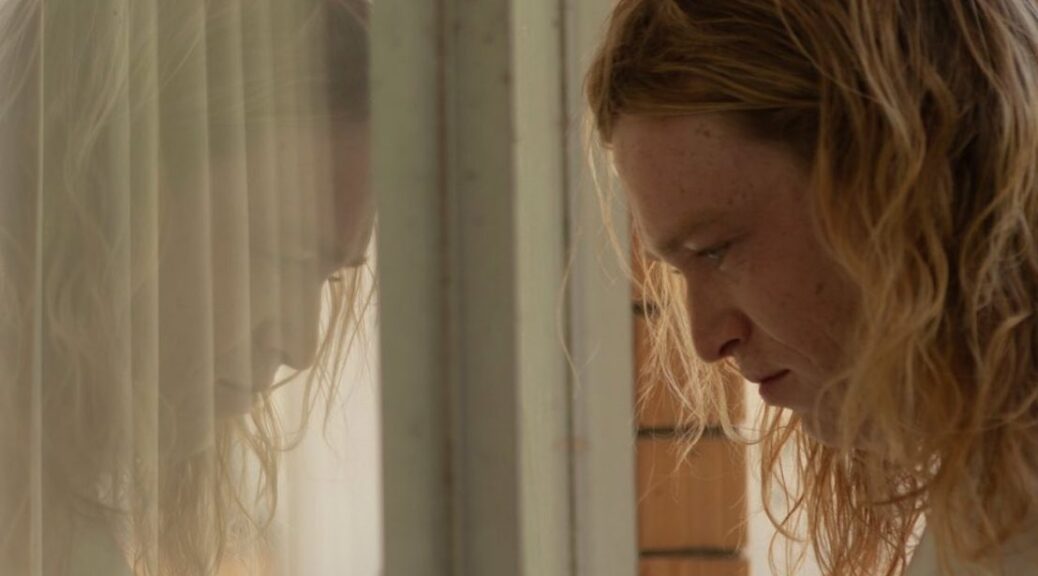
Playing the unnamed central figure (Nitram is Martin spelled backward), Caleb Landry Jones has never been better, and that’s saying something. He is one of the most versatile actors working today, effortlessly moving from comedy to drama, from terrifying to charming to awkward to ethereal. There is an aching tenderness central to every performance. (OK, maybe not Get Out, but that would have been weird.)

Kurzel surrounds him with veteran talent at the top of their games. Essie Davis matches Landry Jones’s with a fragile, winsome turn as the older misfit who becomes his friend. Anthony LaPaglia creates a believable, gentle presence as Martin’s father, while the formidable Judy Davis nails every nuance as his complicated, hard mother.

She’s mesmerizing and award-worthy.

Looking at the making of the monster is no new concept in film, and it’s often a misfire, either romanticizing or relishing in the lurid. Nitram does neither. Grant’s greatest gift as a writer may be his ability to mine difficult terrain without sentiment. (His script for Cate Shortland’s crushing 2017 thriller Berlin Syndrome is his greatest triumph in this area.)

Nitram looks at how nature and nurture are to blame. Socialization plus parenting plus bad wiring is exacerbated by the isolation and loneliness they demand. Everyone is to blame. It’s a conundrum the film nails.

But it’s Landry Jones you’ll remember. He’s terrifying but endlessly sympathetic in a bleak film that’s a tough but rewarding watch.

Wrestling with Family

Brighton 4th

by Brandon Thomas

Georgian filmmaker Levan Koguashvili’s Brighton 4th is a charming drama that surprises with some subtle comedic flourishes. It’s a film that never gets lost in a self-serious tale of immigrants “roughing it” – instead staying firmly grounded in interesting and likable characters.

Kakhi (Levan Tedaishvili), a former Olympic wrestler, travels from the central Asian country of Georgia to the Brighton Beach neighborhood of Brooklyn to visit his son. He finds him living in a shabby boarding house and learns that his son owes serious debts to a local mob boss. Hoping to get his son out of this jam, Kakhi begins looking for ways to raise the money to pay off his son’s debt and return home to Georgia. 

Tedaishvili wows with a beautifully stoic performance. Kakhi is a character that happily takes on the burdens of those he loves. From committing a “minor” case of kidnapping to help two women get the pay they’re owed, to letting that same man free out of a sense of respect, Kakhi is a man with a strong – but quiet – moral code. Tedaishvili’s performance is all the more amazing as this is only his second film. His debut was all the way back in 1987’s Khareba da Gogia.

Brighton 4th wonderfully blends drama and comedy. There’s a grounded absurdity to the comedy that makes it entirely relatable. Whether it’s the chaos from the kidnapping plot, or Kakhi’s family members continually losing money over minor annoyances, the laughs are good-natured and always centered in character. 

The most striking part of Brighton 4th is the spotlight it puts on basic decency. It would be easy to focus on the ugly parts of life when depicting the struggles of immigrants. That part is apparent in the film for sure, but Koguashvili’s interest is in how people treat one another when times get hard. Kakhi continually puts the hardships of his friends and family on his own shoulders and does so without complaint. One scene in particular – when the newly kidnapped man helps soothe a woman with epilepsy while she’s having a seizure – showcases the film’s core belief: that when things are hard, people will rise up to lend a helping hand.

While not being an overly complicated tale about the strife of new immigrants, Brighton 4th does offer a sweet, uplifting tale of a family doing what they can with what they have to help each other.

Dr. Feelbad

Morbius

by George Wolf

For a movie about a guy with a serious taste for blood, Morbius shows hardly any of it being spilled. That’s just one of the reasons the film feels hamstrung from what it wants to be.

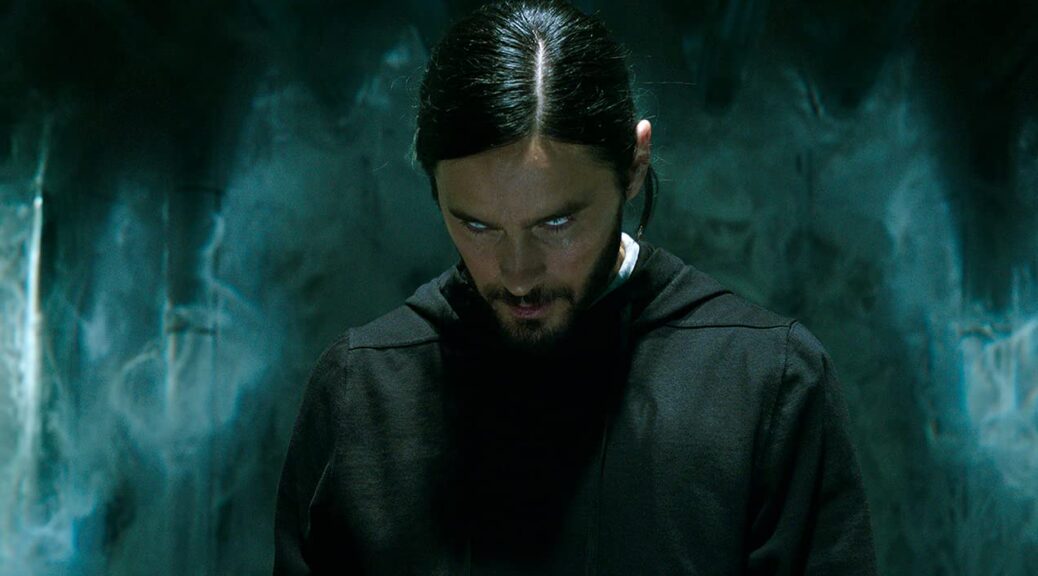
What Dr. Michael Morbius (Jared Leto) wants to be is healthy. Born with a strange DNA abnormality that paired a genius mind with a broken body, Michael put “Dr.” in front of Morbius at age 19 on the way to becoming the foremost expert on blood borne diseases.

And now, his research with vampire bats from Costa Rica has yielded a breakthrough…with a catch. He gets super human, downright monstrous powers, but they wear off without more servings of blood. And while he’s getting by with the artificial variety for now, Morbius knows the time is coming when only human blood will do.

So the clock is ticking, and not just for Morbius. His colleague Martine (Adria Arjona) is feeling the heat, while Milo (Doctor Who‘s Matt Smith, who seems to enjoy hamming it up), Michael’s childhood friend who suffers from the same DNA abnormality, is eager for the cure – and fine with the consequences.

Director Daniel Espinosa (Life, Safe House) has plenty of fun with the CGI, and while the facial morphing is mighty impressive, the increased battle sequences end up trending more toward soulless, Van Helsing-style gymnastics.

Abrupt editing does Espinosa no favors, either, and the pace that initially feels nicely brisk leads to a narrative that just seems impatient. Many of the themes at work here are common to comic book adaptations, but just checking off the boxes is no substitute for development.

Screenwriters Matt Sazama and Burk Sharpless (the duo behind Gods Of Egypt, The Last Witch Hunter and Dracula Untold – all dreadful) try to inject some humor via a pair of detectives (Tyrese Gibson and Al Madrigal) hunting the “vampire killer,” but what the script needs most of all is to take Milo’s advice.

Embrace what you are!

This Morbius seems too desperate to sit at the cool Spider-Man table right now, skirting the commitment to a more fully formed, standalone character that would only reap dividends down the road. And yes, sit tight during the credits for two extra peeks in that direction.

But come on, this is vampire stuff, right? Throw off those PG-13 shackles and really dig in! Go for the jugular, if you will. Man, that could have been a rush.

This isn’t.

Brother’s Keeper

The Devil You Know

by George Wolf

A morality play rooted in family bonds, The Devil You Know looks to carve a modern-day Cain and Abel allegory from the ripples of a brutal murder.

Marcus (Omar Epps) is an ex-con who finally has a handle on sobriety and is hopeful for the future. He has a solid new job as an L.A. bus driver, a promising relationship with new girl Eva (Erica Tazel), and an extended family always ready to offer support.

But at the big family party in his honor, Marcus stumbles across something that appears to link his wayward brother Drew (William Catlett) to the home invasion killings that are dominating the news.

Should Marcus tell detective McDonald (Michael Ealy) what he knows? Or should Marcus keep quiet, covering for his brother and hoping that the local hoods Drew runs with (B.J. Britt and Theo Rossi) don’t eye him any more suspiciously than they already do?

Writer/director Charles Murray (TV’s Luke Cage and Sons of Anarchy) layers a compelling crisis of conscience through family strife that feels authentic thanks to a fine ensemble including veterans Glynn Turman and Vanessa Bell Calloway. It takes more than just stoically reciting the word “family” into the camera multiple times to reveal strength in conflict, and Murray has a good feel for this nuance.

Less successful are the TV and news reports of the murders (like old-age makeup, these continue to be a conundrum for filmmakers) and the tendency of Murray’s script to retrace some of the moral terrain it’s traveling. As a result, you start to feel the nearly two-hour run time as the pace develops some unmistakable drag.

But Murray seems like a TV vet with potential for compelling features. There is a thoughtful and effective thriller at the heart of The Devil You Know, and it’s often glimpsed through the moments of bloat that hold it back.

Hope Madden and George Wolf … get it?