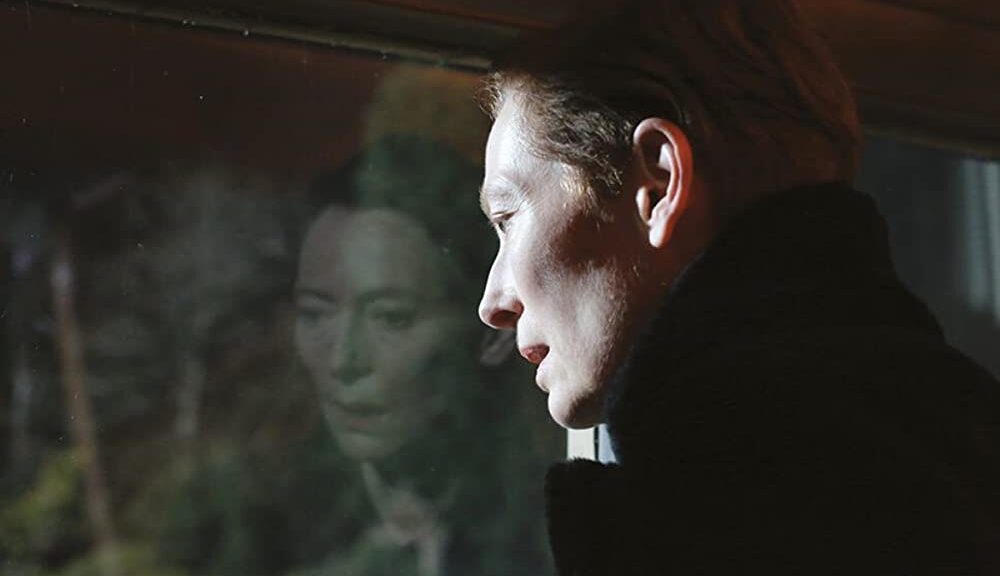
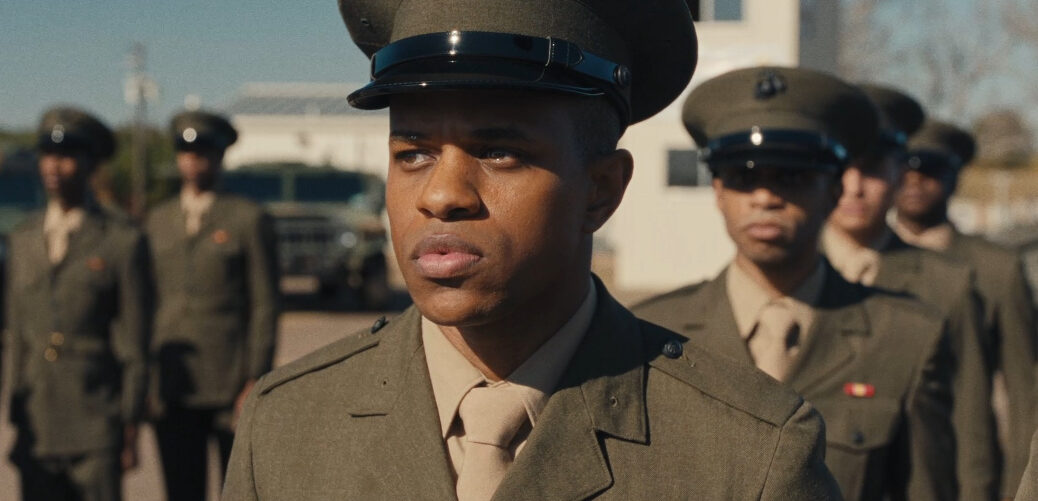
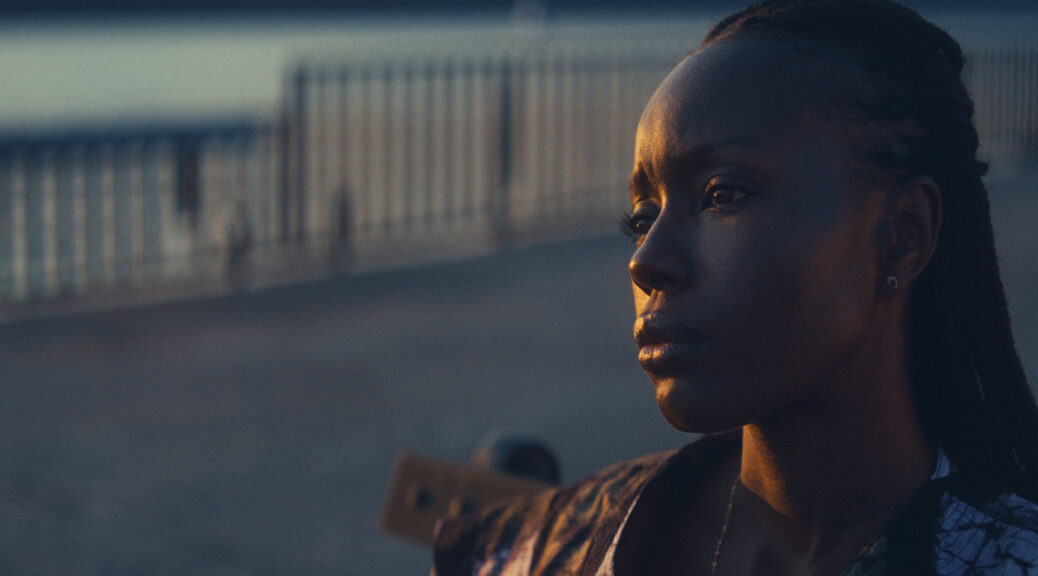
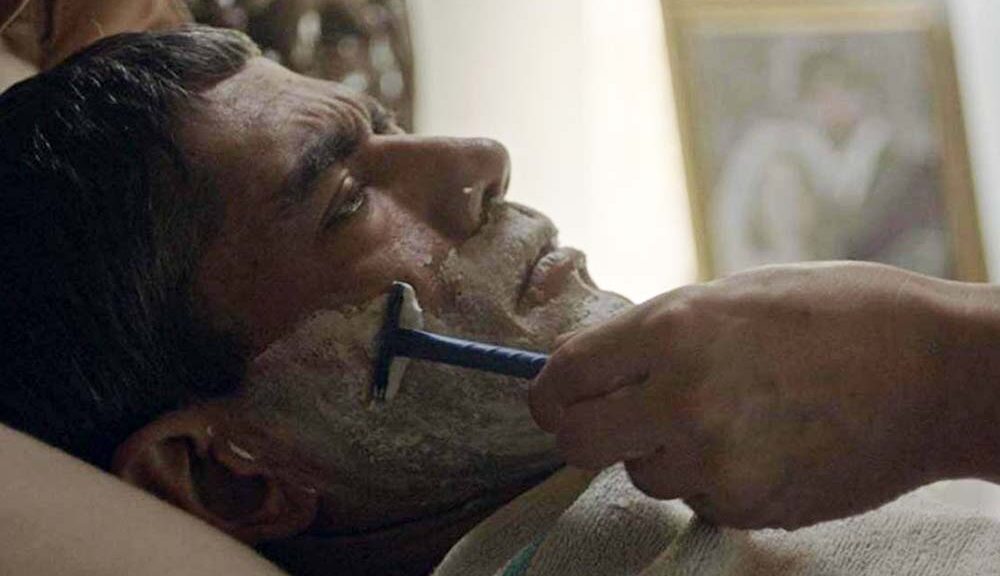
It’s rare for a film to tackle the difference between spirituality and religion with as much beauty and empathy as Nathalie Álvarez Mesén’s Costa Rican treasure, Clara Sola.
Clara (a remarkable Wendy Chinchilla Araya) is a middle-aged woman living with her mother and niece in a remote area of the country. Her closest friend is a white horse, Yuca, that the family lets to a neighbor each morning to use with tourists. When the neighbor hires a summer replacement named Santiago (Daniel Castañeda Rincón), something in Clara awakens.
Making her feature debut, Álvarez Mesén is already a master of showing without telling. Her film unveils Clara’s story moment by moment, but never feels deliberate. Using mainly nonactors gives Clara Sola a lived-in, authentic feel, while Sophie Windqvist’s camera and Ruben De Gheselle’s score immerse Clara and her family in something both natural and enchanting.
Chinchilla Araya, a dancer by trade, delivers an unaffected, unselfconscious performance you can’t look away from. Simultaneously delicate and fierce, it’s a turn perfectly suited to the magical realism the filmmaker develops.
Castañeda Rincón’s tenderness is forever surprising, and the two develop an easy but heartbreaking chemistry. Álvarez Mesén, who writes along with Maria Camila Arias, isn’t afraid to complicate characters—the kind of complexity rarely given to those in such a rural setting.
No one in Clara’s world is one-dimensional, nor is the filmmaker’s take on family. The love inside Clara’s house may be what feels most believable and sincere—and damaging. But what emerges is a clear look at the way spirituality is reined in and controlled by religion. Even clearer are the marks left by the women who enforce patriarchal order.
Clara Sola is an utterly gorgeous film unlike any other. It moves at its own pace, unnerves as it goes, and leaves you shaken but hopeful.
If the title Gabby Giffords Won’t Back Down immediately has you humming a certain Tom Petty tune, that’s fine. In fact, the way the film incorporates that and other hits, and music in general, is one of its many charms.
Giffords was an Arizona Congresswoman and a rising star in the Democratic party when she was shot in the head while meeting constituents in Jan. of 2011. Music therapy was pivotal to Giffords’s quest to regain her speech, and directors Julie Cohen and Betsy West are gifted with intimate home video footage that conveys the magnitude of her comeback story.
Giffords chances of surviving the gunshot were less than ten percent, and in fact her husband, astronaut Mark Kelly, was at one point informed that his wife had died. But when Gabby fought back, Kelly was convinced she would one day want to look back on her journey, so he picked up a video camera.
There’s little doubt that Cohen and West (the Oscar-nominated RBG) have a healthy admiration for Giffords, but they make a pretty compelling case why the rest of us should be “Gab-ified,” too. Her courage, strength and determination cannot be denied.
Archival footage and interviews with fans (including former President Obama) outline Gabby’s transition from manager of the family’s Arizona tire store to fresh-faced Washington centrist. She’s nearly impossible to dislike, while her partnership with the space-traveling Kelly sends the all-American appeal into the stratosphere.
And when Cohen and West line up footage of Gabby’s brain surgery alongside her husband’s intricate space station docking maneuver, it’s game over and the feels have won.
So when the film transitions to the horrors of America’s gun violence epidemic, it seems at first like too much of a tonal clash. But as Kelly is elected to the Senate and Giffords focuses on her Gun Owners For Safety movement, it’s clear that the issue is just as much a part of Gabby as is the music she loves. Avoiding her current advocacy would result in an incomplete picture.
Don’t be fooled by the relentless positivity here. Gabby Giffords Won’t Back Down isn’t simply a greatest hits mixtape made by fans for more fans. It’s a gritty story of survival, and of making a commitment to making a difference.
And the joy of jamming to the 80s. Can’t forget that one.
Brimming with wholesome, plucky charm reminiscent of an altogether lost style of filmmaking, Mrs. Harris Goes to Paris dares you to dream.
A working-class woman enchanted with a Dior gown decides to scrimp, gamble and save until she can afford one of her own. That’s an adventure in itself, but once the funds are secured, Mrs. Harris is off to the City of Light to make her dream come true.
Lesley Manville is wonderful in the title role. She manages somehow not to turn Ada Harris into a “by crikey guvna” cartoon character. Like the hero of Paul Gallico’s several “Mrs. ‘Arris” novels, the widowed cleaning lady does drop a quaint colloquialism now and again. But Manville’s performance glows from within, her lovely blue eyes convincing us of Mrs. Harris’s cleverness, optimism and indefatigable spirit.
Director Anthony Fabian surrounds Manville with remarkable talent, from Jason Isaacs to Lambert Wilson to the great Isabelle Huppert. Each has a lesson to teach Mrs. Harris, and each very definitely has something to learn. But the film never leans toward comeuppance as a means of satisfaction. Instead, Fabian’s tale, co-written with Carroll Cartwright and Keith Thompson, takes pleasure in warmth and extols the virtues of empathy.
The writing team delivers a nuanced version of Gallico’s tale, one that’s hardly about capitalistic pleasures. Mrs. Harris’s arc aligns more with the garbage men on strike than with the bourgeoisie who can afford (but may not deign to pay for) designer frocks.
Still.
The charm wanes long before the two-hour mark. Even Manville, whose performance is a sheer joy, can’t overcome some of the more tiresome and hokey material. There are too many characters with too many entanglements, each of which is too tidily and thoroughly buttoned up.
Had Fabian been able to trim about 20 minutes from Mrs. Harris’s adventure, the result might have been pure pleasure. Instead, it’s a sometimes tedious but just as often delightful way to window shop.
Hidden away in a sanctuary, a mother, her three daughters, and one son do their best to avoid a disease known as The Shred. Glasshouse is the kind of slow burn that drags you in gradually and inexorably. Co-writing with Emma Lungiswa De Wet, director Kelsey Egan knows how to pull the tension like thread through a wound.
Curiosity killed the cat, but it seems Bee (Jessica Alexander) can’t help herself when a stranger stumbles upon the family. While each of the women cares for brother Gabe, who has been affected by The Shred, their mercy has its limits.
A few particularly gruesome scenes make you wonder who to be afraid of in this world.
Egan’s world-building is richly detailed. The youngest girl sings a nursery rhyme with her older brother that centers around the new world. The mother holds a religious service with its own rites and rituals. Stories are told that suggest the world that once was.
The richness of the score and the beauty of the setting enhance the feeling of watching a fairy tale, but every so often something happens to remind us that this isn’t an idyllic other world. It’s a nightmare with no end.
After COVID, which has its cameo, The Shred has a false ring as a toxin. Egan isn’t interested in the realities of disease but in the unreliability of memory. When the world has been stripped away, whose memories are significant? Which ones are important? Does the truth matter anymore?
Each character comes to life in the film, but Anja Taljaard’s turn as Evie is a standout. Adrienne Pearce as Mother also commands the screen whenever she appears. Newcomer Kitty Harris plays a large role in the beginning as Daisy but her presence shrinks as the film progresses, which is a shame since the youngest member of the cast does the best job at convincing us to accept this world for what it is.
With a film that spins so many possibilities, it’s nearly impossible to land on explanations that will satisfy everyone. Some things are better left to the imagination, but it can be hard to leave loose ends untied. The film falls victim to wanting to find some reason for its events. Those reasons will rivet some and disappoint others.
For a film like this, it’s best to enjoy the journey rather than the destination.
Generally speaking, when a horror filmmaker inserts a dog into their film, it’s because they know you don’t want anything bad to happen to that sweet pooch. They raise the stakes.
That or they expect the dog to tear a throat out and terrify an audience.
But that’s not really why they put cats into their films. Cats plot and menace. You can’t figure them out. They seem innocent, but then they dart between your feet just as you reach the top of the stairs. Plus you know they’ll eat your carcass, and they probably won’t even wait that long.
Here is our salute to cats in horror movies.
5. Be My Cat: A Film for Anne (2015)
Adrian is a Romanian filmmaker who likes girls and cats. He does not like dogs or boys. His favorite thing? Anne Hathaway as Cat Woman.
He was so inspired by her performance that he knew he had to make a film with her. To convince her, he’s lured three actresses to shoot a film with him. That film is really just to convince Anne, his beloved, that she should star in the real movie.
She’s not going to want to.
This movie works on the sheer, weird charisma of writer/director/star Adrian Tofei. He is pathetic and charming and terrifying as he documents his direction as a kind of “behind the scenes” for Anne, so she can understand how truly perfect she is for his film and he is for her artistic future. The result is unsettling, unique and wildly entertaining.
4. Stephen King’s Cat’s Eye (1985)
Stephen King wrote the screenplay for this anthology. Two of the shorts come from King’s published work, the third he scripted directly for the screen. A cat named General travels among the three tales.
General gets the most screentime in an episode with Drew Barrymore, who wants the cat to protect her from a little troll living in her bedroom walls. But the best of the tales follows Dick Morrison (James Woods) follows a 100% effective way to quit smoking.
It’s an effective set of tales and one of the better screen adaptations of King’s work.
3. The Black Cat (1934)
Rocky Horror owes a tremendous debt to Edgar G. Ulmer’s bizarre horror show. The film – clearly precode – boasts torture, tales of cannibalism, and more than the hint of necromancy.
Plus Bela Lugosi and Boris Karloff?! What is not to love? It looks great, as does Karloff, whose lisp is put to the most glorious use.
Loosely based on Poe’s The Black Cat – so loose in fact that it bears not a single moment’s resemblance to the short – the film introduces Lugosi’s Dr. Vitus Werdegast. He’s come to seek vengeance on Karloff’s mysterious Hjalmar Poelzig, if only Werdegast can overcome his all-consuming terror of cats!
The cat thing has almost nothing whatever to do with the actual plot of this movie, but who cares? What a weird, weird movie. So good!
2. Cat People (1942)
Jacques Tourneur’s 1942 original explores that oh-so-common horror trope: women’s sexual hysteria. Beautiful Irena is afraid that if she has sex she will become a monster. And we know she’s evil because the tiny kitten her new beau brings her hisses at her.
It’s an often silly film and very dated, but there’s something unnerving in the shifts of power, the perversion the film finds in power. You see it in the way big cats are menaced by small cats.
1. The Voices (2014)
Director Marjane Satrapi’s follow-up to her brilliant animated Persepolis is a sweet, moving, very black comedy about why medicine is not always the best medicine.
Ryan Reynolds is Jerry. As Jerry sees it, his house is a cool pad above a nifty bowling alley, his job is the best, his co-workers really like him, and his positive disposition makes it easy for him to get along. Jerry’s kindly dog Bosco (also Ryan Reynolds) agrees.
But Mr. Whiskers (evil cat, also Reynolds) thinks Jerry is a cold-blooded killer. And though Mr. Whiskers is OK with that, Jerry doesn’t want to believe it. So he should definitely not take his pills.
There’s nothing like an underdog story to help you forget every miserable thing that’s happened and just remember that sometimes, things go right for good kids.
If that’s what you need—and honestly, who doesn’t right now?—filmmaker Eric Cochran would like you to meet Landis Sims.
Born with a condition that left him without hands or feet, Landis Sims decided early that he was a baseball player. And he is.
Cochran’s a veteran behind the camera and it shows. He balances baseball action with home movies, interview material with fly-on-the-wall family footage to deliver something that seems intimate without feeling like an invasion of privacy.
Never showy or sensational, the film settles into an earnest, understated groove that lets the story tell itself. We’re with young Landis as his prosthetist helps him figure out how to hold a bat. We’re there from tee ball through little league to high school baseball.
Nobody has to tell you this kid works hard. Nobody has to take you aside to point out that he’s actually quite a good ball player. Cochran lets his images speak for themselves.
The footage is often remarkable, and the way Cochran uses his camera to create echoes of Landis over the years bridges time. Following him for 8 years gives the documentary the intimacy of Richard Linklater’s 2014 masterpiece Boyhood.
Mercifully missing those maudlin moments that so often mark “inspiring true story” docs, Just Watch Me sidesteps wallowing and trauma because it doesn’t suit the subject. It doesn’t seem part of Sims’s makeup. This is not to say Cochran shies away from the reality of this particular life, just that there’s no manufactured sentimentality.
There’s nothing forced or false about the documentary. It sometimes feels as if Just Watch Me repeats information in an attempt to stretch its running time to feature-length, but it’s not hard to justify a few extra minutes with this extraordinary kid.
Filmmaker Taika Waititi hit a gleefully discordant note with his first venture into the Marvel Cinematic Universe. His Thor: Ragnarok was silly. It held no particular reverence for superheroes, even its own.
Who knew it would be such a welcome change of pace, and so very suited to Chris Hemsworth’s comic talent? Of course, Thor still had Loki (Tom Hiddleston) to play with, plus the great Cate Blanchette as a goth goddess Hela. Hell yes.
Thor: Love and Thunder does not benefit from the previous installment’s villainous one-two punch. But Christian Bale is no slouch.
Bale plays Gorr the God Butcher. The name alone gives you a sense of why Thor is in trouble. The weird thing is, though Bale’s performance intrigues, it’s as if he’s in an entirely different movie.
In Thor’s corner of this fight is the formidable Valkyrie (Tessa Thompson), as well as another familiar face. Natalie Portman returns as Thor’s ex, Dr. Jane Foster, who now commands the Hammer of the Gods herself.
But after fighting his own flesh and blood to save his entire people and culture in the last episode, crushing on his ex while protecting his own skin feels pretty superficial. It’s a slight premise with weak stakes.
Even Waititi seems to think so. Thor and company visit the secret assembly of the gods to ask for help in defeating this new menace. The way Waititi (who co-writes Jennifer Kaytin Robinson) stages the whole bacchanal makes it hard to argue Gorr the God Butcher’s logic.
An interesting act of subversion or wishy-washy storytelling? Hard to say. Waititi’s focus on the film’s aesthetic is clearer, though.
Thor: Love and Thunder evokes a Saturday morning kids’ show, complete with hokey costumes and props. Here Waititi revels in the superficial, the kitschy and commercial. He’s a filmmaker who balances cynicism and goofiness as few can. He hits a couple of clever gags with a jealous Stormbreaker, too.
So, it’s fun. But it’s by no means the inspired fun of Ragnarok. None of the jokes land as well, and the action never approaches the same level of swagger and panache. And it just keeps getting harder to root against Marvel’s villains.
Apples opens with the thump-thump-thump of Aris (Aris Servetalis) slowly and deliberately hitting his head against a wall. We won’t know why for about 90 minutes, as director/co-writer Christos Nikou reveals the layers of his debut feature as carefully as Aris peels his favorite fruit.
Later, on a city bus, a confused Aris becomes the latest victim of a worldwide pandemic that causes sudden amnesia. When his condition does not improve and no relatives can be located, Aris is enrolled as “14843” in a recovery program designed to help “unclaimed” patients build entirely new identities.
Armed with a Polaroid camera and a list of assignments from his doctors, Aris must document the completion of each directive with photos to be displayed on separate pages of an album.
Even if you didn’t know Nikou got his start as second unit director for Yorgos Lanthimos on Dogtooth, you would instantly notice the similarities in detached mood and deliberate pacing. And while it may be unfair to expect anyone to rival Lanthimos’s skill with deadpan irony, Nikou favors a dour, awkward brand of humor (Aris dances the twist!), and a more clear-eyed and gentle resolution to an opaque turn of events.
Nikou’s beautifully realized world resembles the present day, but it is consistently quiet, slow paced and free of digital tech (hence the Polaroid). The film’s comment on disassociation is a compelling surface layer, but Apples has a more haunting goal in mind.
How much of who we are do we owe to our memories? And how far might we be willing to go to put painful memories out of reach? Nikou’s approach to these questions is finely textured, displaying a blend of craftsmanship and vision that bears attention, both now and for whatever he takes a bite of next.
If you don’t really know anything about Manhattan’s Chelsea Hotel, don’t come to Dreaming Walls expecting a thorough biography.
But even if you’ve heard only a bit about the legendary building that has known “all the immortals of the 20th century,” check in to this enigmatic documentary for a dreamlike trip through time and headspace.
Opening in 1884, the Chelsea was designated a New York City landmark in 1966, and placed on the National Register of Historic Places in ’77. Along the way, its guestbook has seen names such as Janis, Marilyn, Dali, Cohen, Warhol, Ginsberg, and two Dylans (Bob, Thomas). Arthur C. Clarke wrote 2001 while staying at the Chelsea. Nancy Spungeon was stabbed to death there.
To put it mildly, the place has a history. But co-directors /co-writers Maya Duverdier and Amélie van Elmbt (along with executive producer Martin Scorsese) root their story in the present, and in the lives of current Chelsea tenants hanging on to ghosts of old New York.
Duverdier and van Elmbt artfully project some of those famous ghosts onto the Chelsea walls themselves. Others come to life through the deft weaving of old and new footage, creating touching moments such as tenant Merle Lister Levine effectively dancing with her younger self via choreography she first performed at the Chelsea decades ago.
Those were the halcyon days of a glorious bohemianism, days remembered by Merle and other current tenants while jackhammers and lawsuits bring the march of time and money to their apartment doors.
The Chelsea has been undergoing renovations for almost a decade. And the plan for a new, lavish and extremely expensive hotel has been prolonged by the legal maneuverings of longtime tenants fighting to stay.
As these residents compare the construction to “the slow motion rape of the building,” and “a grand old tree that’s been chopped down,” a compelling and bittersweet narrative emerges.
These rich personalities push aside the caution tape and stacks of knick knacks, inviting us in to honor the legacy of a place they call home. And, as the best of these stories often do, the intimacy actually allows for a more universal resonance.
Dreaming Walls is a story of art and commerce and bricks and mortar, of glory days usurped by time, and some wonderful, weary souls who find comfort in ghost stories.