By now, we’ve moved past the “it’s nice to see longtime supporting player Frank Grillo in the lead” phase, haven’t we? He’s established himself as a charismatic actor more than capable of carrying a film.
And while he’s still a reliably galvanizing presence in Little Dixie, the movie itself struggles to carve out its own identity as it vacillates between a generic crime narrative and some seedy sexual underbellies.
Grillo stars as Doc, a no-nonsense intermediary between Texas Gov. Richard Jeffs (Eric Dane) and a ruthless Mexican cartel run by Lalo Prado (Maurice Compte). But when the Gov. goes rogue and ignores the truce that Doc has brokered, Lalo’s bloodthirsty brother Cuco (Beau Knapp) crosses the border looking for payback – and his search starts with Doc’s daughter (Sofia Bryant).
So yes, expect plenty of “If you touch her I swear to God I’ll….,” but also writer/director John Swab’s penchant for hard turns.
This time Swab goes searching for subversion inside a Sicario-like setup, an approach similar to how he attacked truck stop horror in the recent Candy Land. But while that film managed to uncover something surprisingly human amid all the brutality, the persistent posturing and lurid details in Little Dixie do little to raise the resonance of characters or choices – and in at least one instance end up bordering on blood-soaked parody.
But the attempt to firebomb expectations almost works, more evidence that Swab may just need a little more seasoning to find his uniquely compelling voice. Until then, Little Dixie stands as a cluster of eyebrow-raising campaign promises drowned out by a standard stump speech.
Back in 2001, Brad Anderson scared the living shit out of us with the ingenious institutional horror, Session 9. He followed this up with the utterly remarkable The Machinist, and a few years later, the mind-bending thriller, Transsiberian.
Things began to peter out for Anderson as a filmmaker by 2010’s Vanishing on 7th Street, and as he found more success with episodic programming, he more or less stayed there, popping over to film every few years with routinely middling results.
Such is the case with his latest, the supernatural family drama, Blood.
Michelle Monaghan is Jess, a recently sober, recently divorced, harried nurse settling her pre-teen children into their new home, an isolated farmhouse owned by her aunt before she passed. But Pippin, the golden lab, knows something’s wrong out in them woods.
Whatever’s out there ends up in Pippin and then, shortly, in Jess’s 8-year-old, Owen (Finlay Wojtak-Hissong). The obvious tension is amplified by the fact that Jess is desperately afraid to lose custody of her children, so she is loath to admit there’s anything seriously wrong. But things are seriously, seriously wrong with Owen.
Writer Will Honley hits on a topic that was really popular in the genre maybe five years ago (The Hole, The Prodigy, Brahms: The Boy 2, Z, Brightburn).His updates actually recall slightly older films – Grace (2009), It’s Alive (the 2009 remake), even 1990’s nutty Baby Blood to a degree. What Blood is saying is not original at all, so to make it relevant, Anderson will need to mine Honley’s script for some real relevance.
The family dysfunction and addiction angle could be it. There’s an undercooked metaphor here concerning addiction and heredity. Owen’s bratty behavior buoys the film’s darker qualities, and that business down the basement is especially gruesome (as “down the basement business” so often is). But none of it pans out. In fact, some of it – the least forgettable bits – are forgotten entirely as the film delivers a kind of final grace that is wildly unearned.
Had that moral ambiguity felt intentional the film would have been at least provocative. The fact that it does not is alarming, but not in a way that makes the film more enjoyable.
All the performances are solid. Monaghan and June B. Wilde spar beautifully with each other. Meanwhile, Skeet Ulrich (nice to see you!) and young Skylar Morgan Jones fill out the problematic family well. They just won’t help you remember the movie.
You check in. You assume the best. You’d never think, as you doze off in total helplessness, that maybe the last guest is still lingering in spirit, or was fed to gators, or that the hotel itself may be the doorway to hell.
In all likelihood the worst thing you’ll bring home with you is bedbugs, but I’ll take the gators.
For this episode we’re joined by our dear friend Jamie Ray from the Fave Five from Fans podcast and, at his behest, we will run through horror cinema’s best – or worst? – hotels.
Listed below are our five favorites, but honorable mentions go to Eaten Alive‘s Starlite Hotel, Basket Case‘s Hotel Broslin, Hotel Quickie from Killer Condoms and Slausen’s Oasis from Tourist Trap.
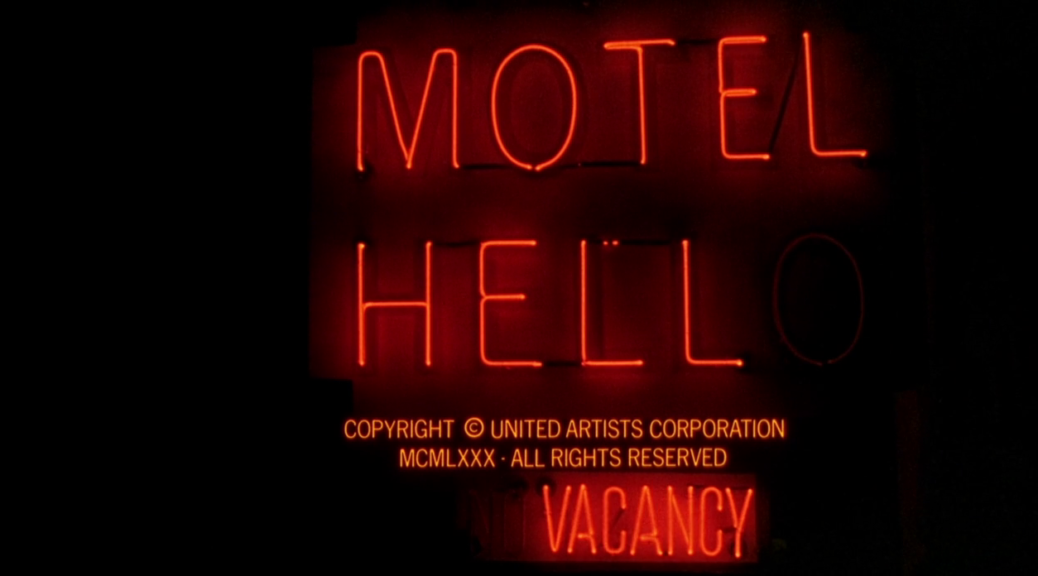
5. Motel Hello (Motel Hell, 1980)
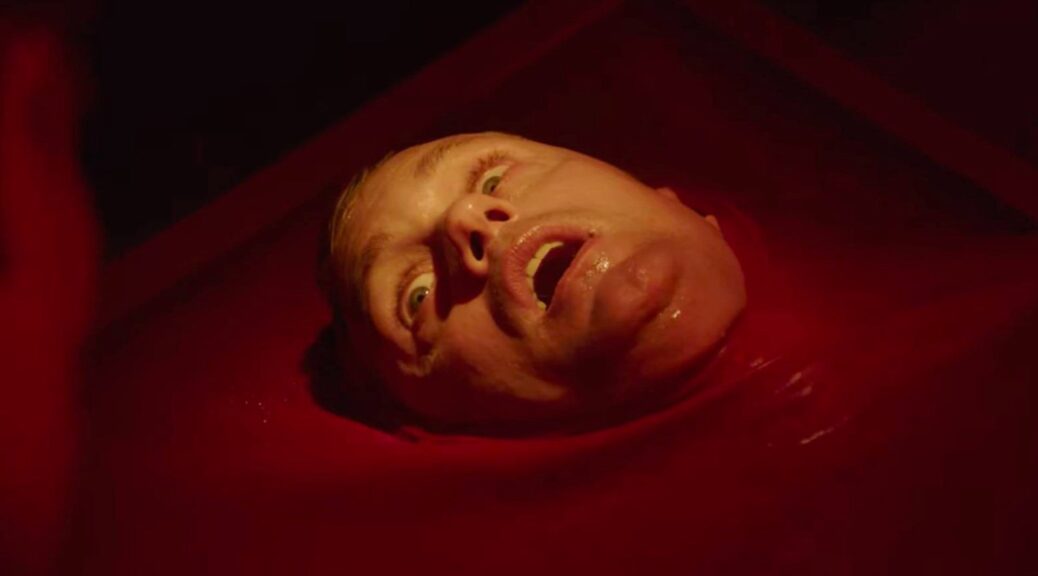
It takes all kinds of critters to make Farmer Vincent’s fritters, so swingers looking for a cheap motel in which to swing – be warned! Fifties heartthrob Rory Calhoun plays Farmer Vincent, who, along with his sister Ida (a super creepy Nancy Parsons) rid the world of human filth while serving the righteous some tasty viddles. Just don’t look under those wiggling, gurgling sacks out behind the butcherin’ barn!
Motel Hell is a deeply disturbed, inspired little low budget jewel. A dark comedy, the film nonetheless offers some unsettling images, not to mention sounds. Sure, less admiring eyes may see only that super-cheese director Kevin Connor teamed up with Parsons and Calhoun – as well as Elaine Joyce and John Ratzenberger – for a quick buck. But in reality, they teamed up to create one of the best bad horror films ever made.
4. White Lovers’ Inn (The Happiness of the Katakuris, 2001)
Guests rarely come and a strange fate awaits them.
Takashi Miike is an extremely prolific director. He makes a lot of musical films, a lot of kids’ movies, a lot of horror movies, and then this – a mashup of all of those things. Like Sound of Music with a tremendous body count.
The Katakuris just want to run a rustic mountain inn. They’re not murderers. They’re lovely – well, they’re losers, but they’re not bad people. Buying this piece of property did nothing to correct their luck, either because, my God, their guests do die.
You might call this a dark comedy if it weren’t so very brightly lit. It’s absurd, farcical, gruesome but sweet. There’s a lot of singing, some animation, a volcano, a bit of mystery, more singing, one death by sumo smothering, and love.
3. Hotel Ostend (Daughters of Darkness, 1971)
Seduction, homoeroticism, drowsy lustfulness – this one has it all.
Countess Bathory – history’s female version of Dracula – checks into an all-but-abandoned seaside hotel. The only other guests, besides the Countess’s lover, Ilona, is a honeymooning couple.
Effortlessly aristocratic, Delphine Seyrig brings a tender coyness, a sadness to the infamous role of Bathory. Seyrig’s performance lends the villain a tragic loveliness that makes her the most endearing figure in the film. Everybody else feels mildly unpleasant, a sinister bunch who seem to be hiding things. The husband, in particular, is a suspicious figure, and a bit peculiar. Kind of a dick, really – and Bathory, for one, has no time for dicks.
Caring less for the victims than for the predator – not because she’s innocent or good, but because her weary elegance makes her seem vulnerable – gives the film a nice added dimension.
The accents are absurd. The outfits are glorious. The performances are compellingly, perversely good, and the shots are gorgeous. Indulge yourself.
2. Bates Motel (Psycho, 1960)
It doesn’t look like much, but the old Bates place used to be something before the new highway. Now it’s really just Norman, some dusty bungalows, that ice machine, swamp out back, some stuffed birds and, of course, Mother.
Anthony Perkins was the picture of vulnerability in Hitchcock’s horror classic, but the motel itself is also about as benign as a spot can be. Hardly the downcast, shadowy, menacing lodging you think of today when you think of low-rent motels. It’s bright, clean and empty. Lonesome, but hardly frightening. Just like Norman.
1. The Overlook Hotel (The Shining, 1980)
You know who you probably shouldn’t hire to look after your hotel? Jack Nicholson.
A study in atmospheric tension, Kubrick’s vision of the Torrance family collapse at the Overlook Hotel is both visually and aurally meticulous. It opens with that stunning helicopter shot, following Jack Torrance’s little yellow Beetle up the mountainside, the ominous score announcing a foreboding that the film never shakes.
The hypnotic, innocent sound of Danny Torrance’s Big Wheel against the weirdly phallic patterns of the hotel carpet tells so much – about the size of the place, about the monotony of the existence, about hidden perversity. The sound is so lulling that its abrupt ceasing becomes a signal of spookiness afoot.
Nicholson outdoes himself. His early, veiled contempt blossoms into pure homicidal mania, and there’s something so wonderful about watching Nicholson slowly lose his mind. Between writer’s block, isolation, ghosts, alcohol withdrawal, midlife crisis, and “a momentary loss of muscular coordination,” the playfully sadistic creature lurking inside this husband and father emerges.
Brandon Cronenberg + Mia Goth + Alexander Skarsgård … for a very specific set of people, the sum there is hell yes.
Riding my favorite wave in horror – that rich people are unspeakably diabolical – writer/director Cronenberg takes us on a strange journey through privilege, debauchery, entitlement, boredom, narcissism, psychotropic drugs and more in his trippy new flick, Infinity Pool.
Skarsgård is James Foster, a writer of very little renown who’s vacationing on a fictional island nation with his wealthy wife (Cleopatra Coleman). They’re bored, but as luck would have it, James’s number one fan Gabi (Goth) and her husband have vowed to show them a good time.
Cronenberg’s ultimate concept is clearly, wildly his own, but moments sometimes call to mind ideas from last year’s Speak No Evil, as well as Society, Kill List, Hour of the Wolf, and A Serbian Film (no, not that part). Still, the film never feels borrowed. Uncomfortable, yes. Borrowed? No.
James represents the regular Joe – yes, a very good-looking version, but regular, nonetheless. And no matter how long he plays the part, he’s an outsider. The truly wealthy are alien. Beyond the sci-fi insanity, beyond the outright body horror, this is the most horrific element of the film because feels honest. It touches a nerve.
In 2020, Jeff Bezos racked up more than 16k in parking tickets. Because, why not? He wanted to park there. Once you reach a certain tax bracket – which is the one where you pay no taxes at all – no rules apply. And that does not create better people.
It’s fascinating and refreshing, this particular approach to the story. These particular villains. And Goth proves once again to be a seductive menace and a force to be reckoned with.
There are certain scenes in this – one in a group holding cell at the island prison, for instance – that are as insightful, impressive and memorably horrific as anything any Cronenberg has filmed.
It’s hard to believe this is only Brandon Cronenberg’s third feature. It does not pack the visceral punch of 2020’s Possessor, but it is a satisfyingly surreal piece of class warfare and an outstanding way for the genre to kick off 2023.
Two full hours of grit, sweat, and anxiety from all participants, both in the film and out. That’s what you can expect from the latest by director Jerome Salle.
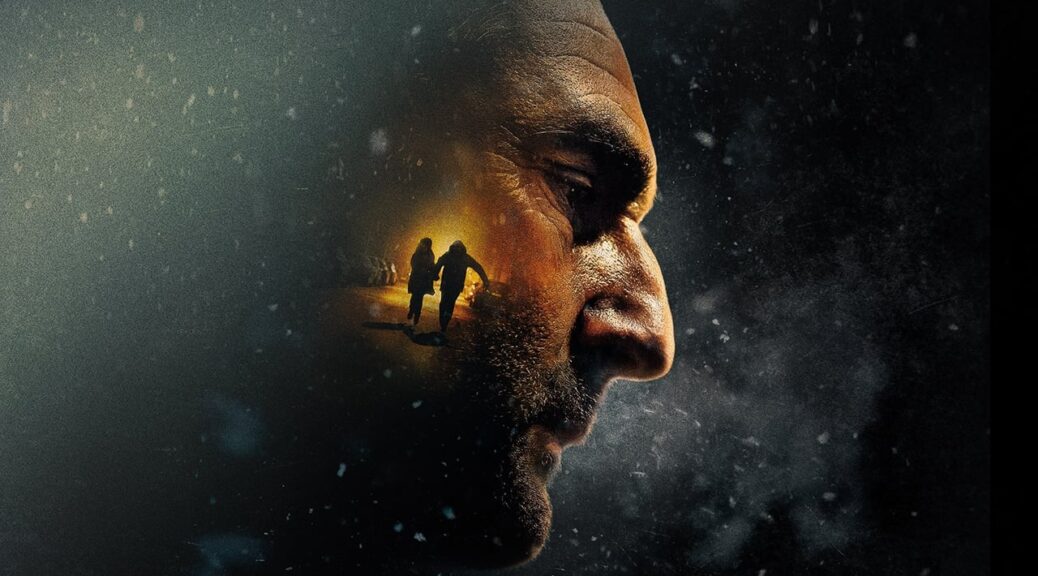
Kompromat is one of those unnerving instances for reviewers where your technical training and study of film confuses your internal perception. The film excels where it is meant to: it’s tense to the point of unbearable anxiety. It’s forcibly eye-opening, and it’s nauseatingly realistic. Lead actor Gilles Lellouche gives a standout performance as a grounded, gritty, desperate, resourceful anti-hero. The story, while seemingly convenient at times, builds masterfully while swerving down winding thoroughfares.
The viewing experience itself can be defined as less than pleasant. While Salle succeeds at delivering a hard-to-watch movie, he also creates… a hard-to-watch movie.
With something so viscerally unsettling, you might expect your worldview to be heightened as a result of the painstaking two hours spent. Kompromat doesn’t exactly succeed in this – it paints the illustration of a wrongly accused straight, white, French man in Russia’s highly unprogressive society. All facts and facades we’ve seen at play before. So it begs the question, what is the point?
The point, quite bluntly, seems to be tension. Building it, releasing it, savoring it. If the film makes you break a sweat, the crew can pat themselves on the back.
Obviously, there are advantages and disadvantages to this approach. Draping the background with a seemingly pressing political story convolutes the film’s actual intention. If Kompromat could be obvious in its goal, a more palpable connection between audience and film could be forged. Instead, there seems to be some thrashing in the netting Salle creates.
While Kompromat excels at holding a consistent fever pitch, it allows itself too much freedom. The two-hour runtime feels like a dumbbell lowering suffocatingly onto your chest. The film’s consistency in story and performance through the overly long run is a testament to Salle’s command of scene and pace but shows a streak of overindulgence.
If your New Year’s resolution is to elevate your heart rate for 2 hours at a time, pick this up. If breaking a sweat while sitting on your couch isn’t appealing, you may want to skip out on Kompromat.
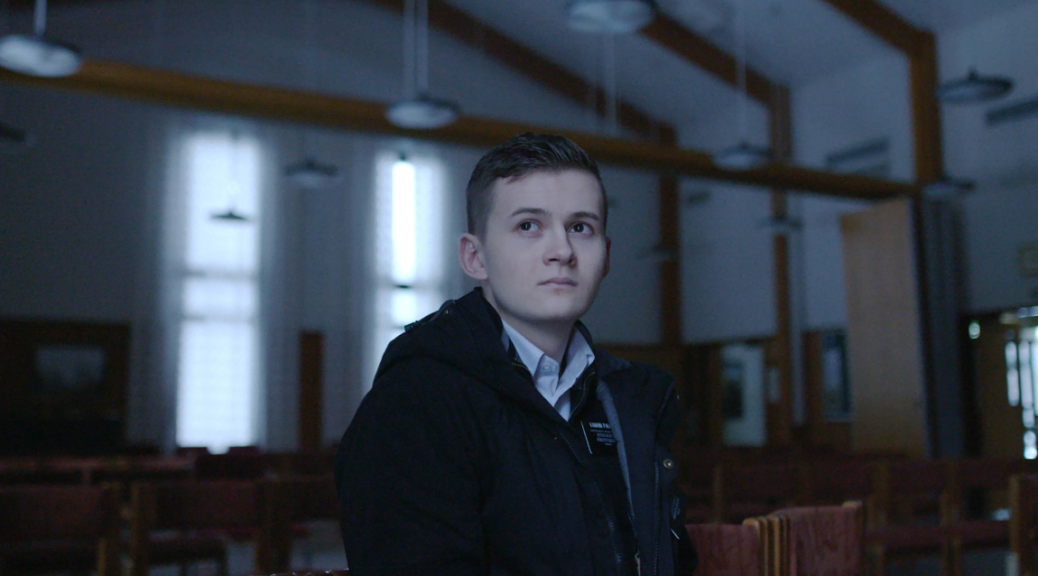
Tania Anderson’s documentary The Mission details the lives of four very young adults as they embark on two-year missions to try to spread the word of the Church of Jesus Christ of Latter-Day Saints to the population of Finland. Finland—a country in northern Europe with a high per-capita income, one of the best educational systems in the world, an extensive social safety net, and one that has ranked number one in every annual report of World Happiness since 2018. Not the kind of place where people are likely to be shopping for a new religious modality.
Barely out of childhood, the two American men and women spend a few weeks in a kind of missionary boot camp in Utah before being thrown into a new country, expected to converse with the locals despite only knowing a few stock phrases (and often stumbling over those) and ultimately convince them to convert. Their lives are regimented. Expected to rise at 6:30 AM each day and begin work, they are assigned a companion—a stranger—who spends all “non-hygiene-related time” with them for nine weeks before the companion is replaced with another. They are only allowed contact with family and friends once per week. And they have to pay for the privilege of doing this. The Church does not subsidize its missionaries.
Anderson emphasizes the loneliness. She lingers on the barren, spare quarters in which the subjects live. She uses long establishing shots of the landscape to show how small they are in this new country. She lingers on conversations that strain the viewer’s ability to handle social awkwardness.
In contrast to the aims of its subjects, the documentary itself is not preachy. It covers enough successful conversions and strengthening of faith to balance out the coverage of those dealing with doubt and existential despair. However, this balance is delivered at the surface level. We don’t really get to know any of the four subjects and what motivates them in any profound way. Their reasons for taking on this task, the logistics of the financial commitments, the cultural differences between Americans and Finns, and the missionaries’ personal struggles are only hinted at or covered at the depth one might expect while making small talk at a church bake sale.
The mission takes place between 2019 and 2021 and, unbelievably, it does not consider COVID-19 and the impact it had on a socially-focused pursuit, at all. Nothing about the fears these folks had at being stuck in a foreign country when the borders started closing. Nothing about how they reacted when millions of mink that had been culled from fur farms in nearby Denmark started to rise from the grave. There are some shots toward the end where the missionaries are wearing masks, but aside from that, the pandemic is completely erased from existence, much in the same way that you are likely to forget this entirely adequate documentary after you have watched it.
Writer/director Michael Jacobs is best known for producing TV shows that speak to teens: My Two Dads, Boy Meets World, and Girl Meets World. But just seconds after what feels like the longest pre-film credits in the history of cinema, his feature film Maybe I Do makes certain we know this is not that.
The romantic dramedy enlists four truly great veteran talents to take a peek at romance, love, and existential angst in your sixties.
Grace (Diane Keaton, who executive produces) can’t help but notice Sam (William H. Macy), who’s sobbing at a foreign film as he dumps M&Ms into his popcorn tub. She reaches out to him because he “seems distressed.” He assumes that, as she is also alone at a movie, she, too, is distressed.
She admits she is, but honestly, there’s nothing wrong with going alone to the movies. I’m saying that, not Diane.
Anyway, they bond. Meanwhile, Richard Gere and Susan Sarandon quietly out-hot each other. And across town, young Michelle (Emma Roberts) questions an uncertain future with Allen (Luke Bracey).
So, the film offers three different vignettes of couples talking, arguing, and ruminating about love until worlds collide in the most obvious and contrived way possible. The sheer volume of cliches at work here could drown out almost anything of value, but how do you dismiss a film starring Macy, Keaton, Sarandon and Gere? Even the tritest dollops of wisdom sound charming and/or wizened coming from one of these four.
Gere and Macy together are a particularly tender treat, and while I applaud the actors and the opportunity the film allows, this scene best articulates the movie’s most nagging weakness. The whole film is sad for successful men who are dissatisfied with how their lives turned out. No one on earth is less pitiable than a successful middle-aged white man and his angst over what he hasn’t accomplished. But Gere and Macy almost make it work.
The second biggest problem is that the film hits traditional romance so hard. The act that has Michelle rethinking her relationship with Allen should be a red flag, an end to the relationship. Instead, it becomes a “marry me or it’s over” ultimatum. No. No! And then the whole film, one brimming with wildly unhappy marrieds, intends to prove to us all that you just have to go ahead and take the leap with someone who publically humiliated you to make sure they didn’t have to commit to you.
No.
Maybe I Do is unabashedly romantic, deeply traditional, well-meaning and tired. So tired. But at least you get to see four tremendous actors riff off each other for 90 minutes.
It shouldn’t take a film such as Living to make us realize what a treasure we have in Bill Nighy.
But then it shouldn’t take a grim diagnosis for Rodney Williams to seek true meaning in his life, so maybe Nighy’s long wait for a first Academy Award nomination is somehow cosmically right.
In this adaptation of Kurosawa’s 1952 classic Ikiru(To Live), Nighy earns every bit of that Oscar nod as “Mr. Williams,” the humorless manager of a public works office in 1950s London. Various floors full of buttoned-up civil servants pass on projects to other departments until the papers finally come to rest on one desk or another, with piles always kept as high as possible so co-workers won’t “think you have nothing better to do.”
Mr. Williams doesn’t, until a fateful trip to the doctor makes him realize how sad this is. A night out with that rascal Sutherland (Tom Burke) offers some cheap thrills, but it’s the persistence of the local ladies petitioning for a new public playground that give Mr. Williams the chance to leave a legacy.
Nobel prize-winning writer Kazuo Ishiguro adapts Kurosawa (and lands his own Oscar nom) with a script that shaves about 45 minutes off the running time while it adds layers of beauty and sentiment. Mr. Williams’ distance from his son becomes more heartbreaking, while the relationships with his two youngest employees (Alex Sharp and Aimee Lou Wood) are given more arc and resonance.
Director Oliver Hermanus replaces the original film’s clinical narration and B&W palette with gentle grace and the splendidly picturesque cinematography of Jamie Ramsay. Outside the office confines, this is a gorgeous London of crisp lines among detailed color, light and shadow, all in orbit around a lead performance of endless humanity.
Nighy is just the epitome of wonderful, with every sigh, furrowed brow and slight smile conveying so much about Mr. Williams’ journey to contentment. Nighy’s every moment on screen nearly glows with honesty, and provides the film with a unique and dignified identity.
Kurosawa’s take still hits hard, but Living would have been foolish to follow a similar fight plan. These blows may indeed be softer, but don’t think for a second they won’t leave a mark.
“Maybe sometimes people confuse forgiveness with permission.”
With nuanced writing and what may be 2022’s finest ensemble, Women Talking, the latest from filmmaker Sarah Polley, delivers quiet, necessary insight.
Polley invites us to witness a secret gathering of women. A select group from an isolated religious community has been chosen to make a decision for the entire sisterhood: do nothing, stay and fight, or leave.
For as long as any of them can remember, the women of the flock have been sexually preyed upon and told that they were wrong – they were lying, imagining it, or in league with demons. And they believed this, more or less, until one attacker was caught in the act. Now, while the men are in town bargaining for the release of the attackers, the women must come to a consensus about what to do next.
Think of it as 12 Angry Men, only not all of them are angry and not one of them is a man.
The entire cast is miraculous. Rooney Mara delivers an unusually gentle performance, while Frances McDormand (who also produces) leaves a heavy weight with her few moments onscreen.
Jessie Buckley and Claire Foy are both on fire, one angry at everyone, the second angry enough at the men for everyone. The way Polley, who adapts Miriam Toews novel with Toews, unveils each individual’s motivations is remarkable. Her camera and script linger over moments of compassion and consideration. Women Talking dwells here, as if to point out that these women will offer each other everything the men they know would not.
Polley shows respect for these women – not just for their bodies, their agency, their humanity. She shows uncommon respect for their faith. This is what every faith-based film should look like.
Though dialog-heavy (as you might expect, given the title), the film never feels stagnant. A languid camera emphasizes the lovely tranquility of the community when the men are absent, but Polley generates palpable tension as time ticks away and the women’s opportunity to make a decision draws to a close.
Women Talking is a quietly stunning achievement and a reminder of the power of dialog and respect.