Category Archives: New In Theaters

Reviews of what’s out now

Team

Shooting Stars

by George Wolf

It’s a good time for basketball stories. Ben Affleck’s Air landed as a vital addition to the Michael Jordan legend, White Men Can’t Jump got a serviceable update, Boston and Miami just finished a thrilling NBA semi-final while Denver routed LeBron and the Lakers to make it to their first NBA finals.

But King James is still in the game this year, at least on screen. Peacock’s Shooting Stars relives LeBron’s days with the Akron Fab Four on his way to being hailed by Sports Illustrated as “the Chosen One” while he was still a teen.

Based on the book by James and Friday Night Lights author Buzz Bissinger, the film gives a dramatic treatment to much of the territory covered so effectively in the 2008 documentary More Than a Game.

James (Marquis “Mookie” Cook) and longtime friends Dru Joyce (Caleb McLaughlin from Stranger Things), Sian Cotton (Cobra Kai‘s Khalil Everage) and Willie McGee (Avery S. Willis, Jr.) grew up playing basketball together on teams coached by Dru, Sr. (Wood Harris). When it was time for high school, the Fab Four all eschewed local favorite Buchtel High and enrolled at Akron St. Vincent St. Mary, to ensure the diminutive “Lil Dru” would get a fair shot to play.

With no-nonsense coaching from college vet Frank Dambrot (Dermot Mulroney) and the addition of Romeo Travis (Sterling “Scoot” Henderson) to the inner circle, St. V’s Fab Five quickly became a national powerhouse.

Director Chris Robinson keeps things on a nice even keel, pulling solid performances from all with a good balance of off-court camaraderie and hoop excitement (the latter buoyed by future top-5 NBA pick Henderson and the Univ. of Oregon’s Cook – who has LeBron’s high school dunking pose down pat). Writers Juel Taylor (Creed II), Frank E. Flowers and Tony Rettenmaier do an admirable job of distinct characterizations, but with James and his business partner Maverick Carter as executive producers, a sanitized, almost after-school vibe starts to creep in, especially for anyone who enjoyed the home video authenticity of More Than a Game.

We know what became of James, but no matter where you stand on the GOAT debate, Shooting Stars will remind you that how he turned out continues to be taken for granted. In the public eye since adolescence, James is now the NBA’s all-time scoring leader, sends kids to college and speaks out on social justice while enduring the social media scrutiny MJ never imagined. And to this day, his biggest misstep has been an ill-advised television special.

Still, LeBron has been insistent that Shooting Stars “is our story,” which is indeed how the film ultimately feels. And while it’s rooted in one special team from Ohio that earned trophies and built some lifelong friendships, there are also healthy reminders of the universal life lessons that can come from organized sports and committed coaches.

That’s a winning combination.

Diary of a Mad Woman

The Attachment Diaries

by Hope Madden

Tell me you’re having a bad day without telling me you’re having a bad day.

Argentinian filmmaker Valentin Javier Diment knows how to articulate desperation with nothing more onscreen than a sidewalk, heavy rain, and a broken heel. From there, The Attachment Diaries sets up an eerie power dynamic between forlorn Carla (Jimena Anganuzzi) – pregnant, alone, very wet and in need of help – and Irina (Lola Berthet).

It’s 1970-something. Irina is a doctor willing to perform abortions, but Carla, is too far along. If she’s willing, Carla can stay with Irina, give birth and make some money with an arranged adoption.

Diment invests time in both characters, neither of whom is quite what she seems. The more we learn about each the less we really know, but trouble’s brewing, that’s for sure. And the greater the intrigue, the stranger the film.

The filmmaker wades hip deep into triggers: abortion, self-harm, sexual assault. And his approach unsentimental. No, it is blunt. Nothing is sacred, or to be honest, even interesting enough for Irina’s thoughtful consideration. Trauma and mental health are not treated delicately, either. No kid gloves, but loads of intentionality – Carla is often as shocked by Irina’s blasé attitude as we are, and Carla’s no delicate flower.

Berthet and Anganuzzi deliver everything a moviegoer needs from the heroes and villains of this twisted tale. Berthet is the hard candy shell to Anganuzzi’s messy middle, and neither character is easy to root for. But together, their almost hostile yet somehow tender chemistry fuels the human madness developing in the film.

Flashes of Hitchcock and Almodovar (that’s a fun pairing!) flavor the film’s aesthetic and movement, Diment blending inspiration with his own impeccable sense of detail to create a film full of intensity, eccentricity and style.

The filmmaker sets up gorgeous shots, both to keep you off balance and for the sheer odd beauty of them. His use of color is also fascinating. At first it feels a little too on-the-nose, but the truth is that, once again, he’s underscoring a change in the power dynamic.

The escalating lunacy nearly tips to melodrama or even parody, but the duo at the center of it all manages to hold it all together somehow. The Attachment Diaries is a dark, bizarre mystery thriller that flirts with B-movie status in a way that somehow makes the experience richer than it had any real right to be.

The Politics of Sin

Padre Pio

by Brandon Thomas

Shortly after the end of the first World War, a priest named Padre Pio (Shia LaBeouf) finds himself suffering an enormous crisis of faith. Having had health issues that kept him from the front lines of the war, Pio’s guilt is slowly consuming him.

Outside the walls of the monastery, a less internal battle is brewing. Many townspeople, upset with fascist landowners and their own working conditions, are drawn to the rising Socialist Party. They see the town’s first free election as a way to make their voices heard. When the old rulers see the tide turning against them, violence becomes their only way of holding onto power.

Director Abel Ferrara made a name for himself by directing some of the most notable exploitation movies of the late ‘70s, ‘80s, and early ‘90s. Films like Ms. 45 and Bad Lieutenant were cultural firestarters in their day, and might even draw the ire of Film Twitter in the present should it stumble upon those seedy gems. However, in the latter half of his career, Ferrara has been drawn to more contemplative works. Pasolini, Tommaso, and Siberia show the filmmaker at his most introspective. Instead of trying to provoke an audience with violence and graphic sex, Ferrara is now trying to get them to look inward through quiet but haunted protagonists. 

Padre Pio is Ferrara’s attempt to subtly blend religion and politics, though neither topic is given its due. Unlike Paul Schrader’s more recent First Reformed, Ferrara’s film is far too disjointed and muddled to prove his own point. The religious fervor found in LaBeouf’s scenes never coherently connects with the film’s political half. There are hints at Ferrara’s initial intentions, but unfortunately very little of that appears on screen. 

LaBeouf’s casting is a major blunder. The actor has turned in very good work in movies like The Peanut Butter Falcon, Fury, and American Honey, but as an iconic Italian priest, he is horribly miscast. While the entirety of the film is in English, the bulk of the cast is made up of Italian and other European actors. LaBeouf’s distracting American accent drags any discerning viewer out of the film immediately. His inclusion, and the messiness of the overall storytelling, makes Padre Pio feel like a bad movie-within-a-movie from an Apatow comedy.

Ferrara’s ideas here are compelling and might’ve worked in movies of their own. When crammed together as competing – not complementary – narratives, the film never finds its footing and feels like a slog even at a reasonable 1 hour and 44 minutes.

Lights On For Safety

The Boogeyman

by George Wolf

You see that a new horror flick is PG-13, and you might begin making some assumptions.

There will be jump scares, some dream sequence fake-outs, maybe a conveniently placed box ‘O clues. It’s hard to blame you for these expectations, and The Boogeyman does little to upend them.

Therapist Dr. William Harper (Chris Messina) recently lost his wife in a car accident. His teenage daughter Sadie (Yellowjackets‘ Sophie Thatcher) is withdrawing, while his younger one, Sawyer (supercute Vivien Lyra Blair from Bird Box and the Obi-Wan Kenobi series), has developed a strong fear of the dark.

And just when the family is trying to get back into some sort of routine, the troubled Lester Billings (David Dastmalchian) crashes the Dr.’s office with a wild claim.

Lester didn’t kill his three kids like the cops are claiming. A monster did it. A monster that lives in the darkness. A monster that follows you to places like home offices.

Writers Scott Beck and Bryan Woods help adapt a Stephen King short story with little of the tension or thrills that drove their script for A Quiet Place. Director Rob Savage (Host) has some visual fun with Sawyer’s round nite lite rolling through dark spaces, but it isn’t long before the familiar beats, questionable internal logic and middling creature effects bog the film’s 98 minutes down in tedium.

The cast (including Marin Ireland as a battle-weary Mrs. Billings) is strong and willing, but the darkened playground of The Boogeyman is only for the scaredy-est of cats. And for horror fans wanting another PG-13 gem like The Ring, or a grief metaphor as deeply felt as The Babadook, the long wait just gets longer.

Can’t Go Home Again

Esme, My Love

by Hope Madden

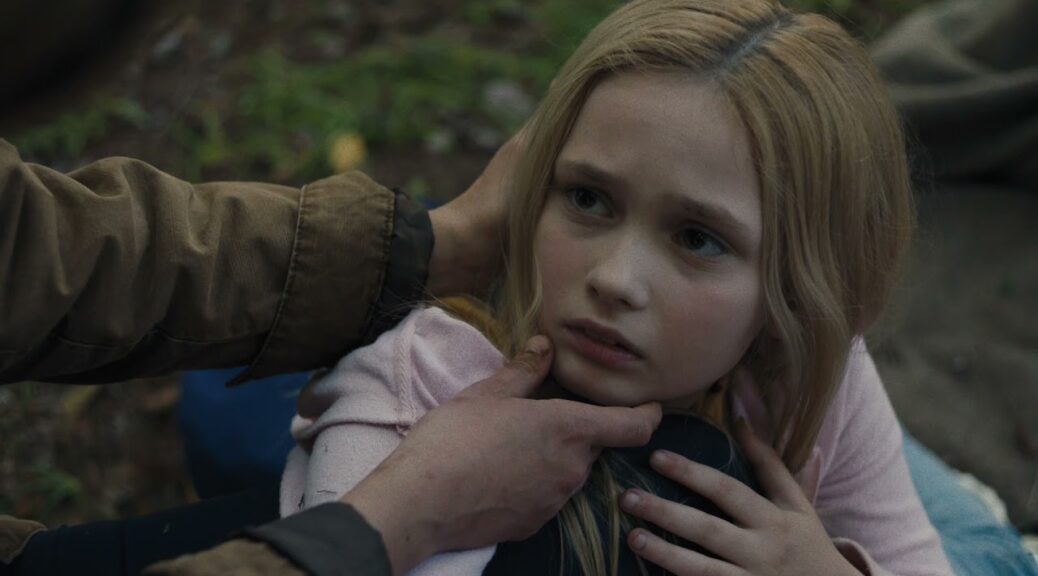
We don’t know much about Esme (Audrey Grace Marshall) or Hannah (Stacey Weckstein), really.

Director/co-writer Cory Choy’s feature debut Esme, My Love keeps us in the dark about a lot of things. Choy leaves us to piece together what we can of the duo’s mysterious trip into the woods, just as Hannah leaves Esme to do.

More brooding mystery thriller than outright horror, Choy’s film plays on your imagination with gorgeous sound design and cinematography. An eerie mismatch of voiceover and image in the early going suggests that not everything with Hannah is A-OK.

Ostensibly, she’s taking her daughter to visit the old, abandoned family stomping grounds so the two can spend some time together. Esme, Hannah suggests, is sick. She doesn’t seem sick. She seems fine. Hannah, on the other hand…

The atmosphere Choy develops creates a hypnotic world perfectly suited to Hannah’s psychological unbending. Thanks to two malleable performances, that meticulously crafted atmosphere pays off.

Choy and co-writer Laura Allen refuse to spoon-feed you information. Their structure is loose, their explanations all but nonexistent. You’re left to parse through the images and sensations, determine what’s real and what isn’t, and decide things for yourself.

The ambiguity often works in the film’s favor. Esme, My Love possesses a brooding, nightmarish quality that, along with the two performances, keeps you guessing and interested. But to be honest, a touch more structure would have strengthened the film, which begins to feel lovely but unmoored before it’s over.

At a full 1:45, the film’s fluid storytelling and disjointed imagery flirt with self-indulgence.

Esme, My Love never offers any solid catharsis, any true clarity. Yes, you can guess the meaning of the climax, but with so much guesswork throughout, it feels less like ambiguity and more like a cheat. Or worse still, indecisiveness.

While frustrating, it’s not enough to sink a film that submerges you in a dark family tragedy and leaves you stranded.

Truth Hurts

You Hurt My Feelings

by Hope Madden

One of filmmaker Nicole Holofcener’s great talents is to acknowledge within a film that there is no reason to feel for her characters, and then making you feel for the characters. She’s a master of the relatable if tedious angst of the privileged. In her hands, these primarily insignificant tensions are humanized and often hilarious.

Such is the case with her latest, You Hurt My Feelings, a story about a well-off couple, truly compatible and in love, who fall on hard times when one overhears the other’s honest opinion.

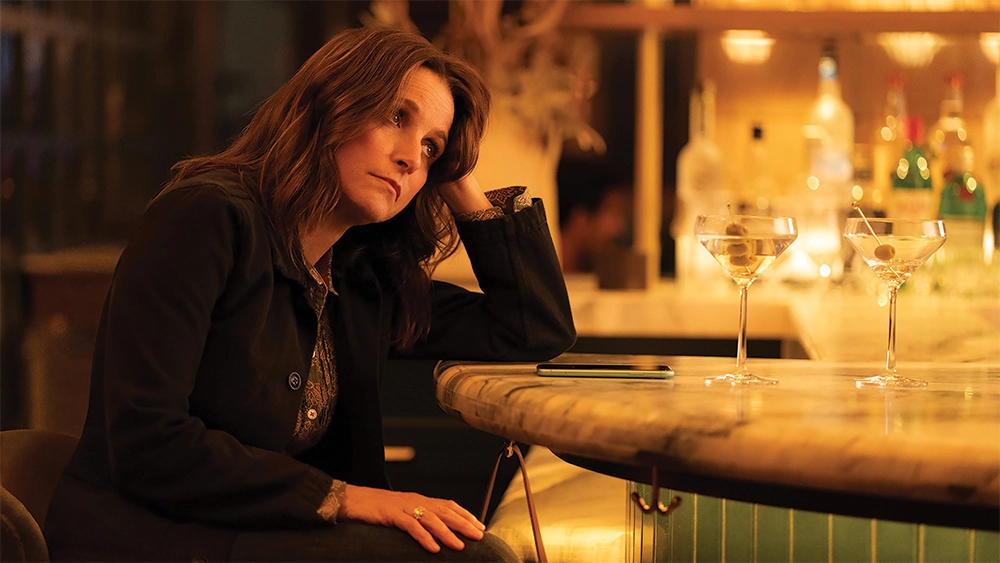
Julia Louis-Dreyfus, who was so magnificently flawed and empathetic in Holofcener’s 2013 film Enough Said, stars as Beth, a novelist. Well, she wants to be a novelist, but her memoir only did OK and now her agent doesn’t seem that thrilled with her first ever novel. Maybe it sucks?

No, supportive-to-a-fault husband and psychologist Don (Tobias Menzies) assures her. But secretly, honestly, maybe that’s not how he feels.

And that’s Holofcener’s next great talent – casting. Louis-Dreyfus is characteristically flawless. Her humanity, comic timing, and self-deprecating yet narcissistic humor make her every character endlessly watchable. Menzies–in many ways the emotional anchor for the film–equals her. Both face the wearying revelation that truth really does hurt, right as their midlife insecurities are at their highest.

Arian Moayed and the always amazing Michaela Watkins play a mirror couple, Beth’s sister – a discontented interior designer for the very wealthy – and her insecure if lovable actor husband. They are both tremendously endearing and funny. Capping the ensemble is Owen Teague (To Leslie), Beth and Don’s 23-year-old only son who’s coming to terms with the fact that he was raised to believe he was more special than he really is. Also, he’s a writer.

Hilarious cameos from Amber Tamblyn and David Cross as an angry couple in therapy help to clarify Holofcener’s themes and push the comedy value higher. But it’s with the core couples that the filmmaker delivers her finest moments, creating a lived-in world, a true microcosm that pokes fun at our insecurities and the little white lies that keep us happy.

Evil in Oils

Cracked

by Rachel Willis

Haunted objects are never creepier than when they have eyes that can stare back at you – even follow you as you move around the room. Such is the premise of director Surapong Ploensang’s film, Cracked.

When her father dies, Ruja (Chayanit Chansangavej) travels from the U.S. to Thailand to sell two of his paintings, both of a woman in a red scarf with gold snakes encircling her body. Though it’s clear that Ruja is uncomfortable in her childhood home, she braves the journey to oversee the restoration of the paintings because their sale will pay for a needed eye surgery for her daughter, Rachel (Nutthatcha Padovan).  

It’s a reasonable premise for horror, but Cracked never creates the right atmosphere to generate fear. The paintings at the center of the film aren’t very disturbing – although, as cracks begin to appear, they do become a little creepier. The use of snakes and their imagery result in the most success, mostly by playing on phobias. But a wrestling match with a white bed sheet is more humorous than scary. Ploensang’s attempts at jump scares are too heavy handed, and there isn’t enough tension to keep you on edge.

Most disappointing are missed chances for horror when we see through Rachel’s eyes. The camera work in these sequences is blurry, representing her deteriorating vision. Ample opportunity for creepiness, yes? Unfortunately, not in this film.

Cracked shifts between present day and flashbacks. Used more carefully, sequences of Ruja’s childhood could have added to the mystery of terror of her childhood home. Unfortunately, Ploensang flashes back too rarely in the beginning and too often at the climax.

Though supporting performances are uneven, ancillary characters add texture to the solid lead turns. In fact, the acting is the film’s strongest component. Chansangavej convinces, and Ruja’s fear might have been contagious if the surrounding elements had been more believable. And when Rachel is being terrorized, Padovan’s dread is heart wrenching.

It’s not enough, though. Within the subgenre of artwork horror or object-oriented horror, Cracked is one of the less memorable entries.

Smells Like Teen Sequel

The Wrath of Becky

by Hope Madden

Back in 2012, Lulu Wilson carved out a frighteningly believable pissed-off adolescent in Jonathan Milott and Cary Murnion’s Becky. As had been the case with the filmmakers’ 2014 horror Cooties, the duo indulges a subversive fantasy that makes you laugh and turn away in equal measure – often at the same moment.

Wilson returns with new directors Matt Angel and Suzanne Coote in The Wrath of Becky, playing the slightly older, no less angry youngster.

Becky and her trusty hound Diego have been on the lam for several years. They’ve found a kind of peace living off the grid with elderly misanthrope Elena (Denise Burse) and making a living at a nearby diner. That peace is shattered when some Proud Boys – I’m sorry, some Noble Men – come to town.

Last time around, Becky did serious damage to a handful of neo-Nazis. Seeing her gut and dismember Proud Boy stand-ins promised to be very fun. Cathartic, even. And it sometimes is, but too often the sequel gets lazy.

Seann William Scott (Goon, American Pie) leads up the contemptible group of baddies with a quietly sinister performance that carries a lot of weight. Jill Larson (The Taking of Deborah Logan), though underused, brings a sassy surprise to the villainy and Aaron Dalla Villa is spot on as the slacker smartass of the group.

Last time around, writers Ruckus and Lane Skye and Nick Morris offered their game cast a bit of intrigue and plot. The sequel’s script, penned by Angel, Coote and Becky’s Morris, misses any of the depth beneath the murder spree. 

Gone, too, is the tentative logic behind Becky’s bloodbath logistics. Millot and Murnion showed you how a 12-year-old managed not only to outwit the bad guys, but to physically annihilate them. Angel and Coote do not. They cut away, then cut back and miraculously Becky has accomplished something that defies not only reason but the laws of the known universe as well as the actual story itself.

In fact, every character makes a series of choices that defy the very storyline the film itself is trying to establish. Once or twice is forgivable, but eventually this lapse in internal logic becomes a real burden.

Wilson’s schtick lacks some of the vibrance of the original film, partly because watching a pre-teen on a murder spree is simply more novel, shocking and funny than witnessing another angry teen on a rampage. It would have helped if the filmmakers tried a little harder to convince us Becky could do it.

Family Ties

B-Side: For Taylor

by Hope Madden

A plucky YA drama that embraces the messiness of grief, identity and general adolescence, B-Side: For Taylor sidesteps cliché in favor of nuance.

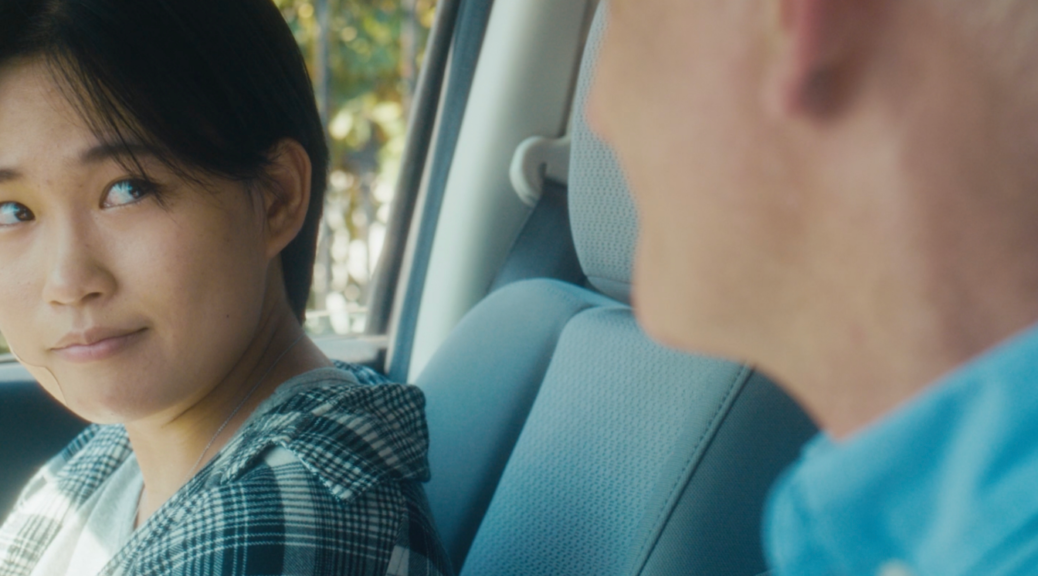
Jeannine Vargas is the titular Taylor, and she’s not having a great year. Her grades have slid to near failing since her adoptive mother died last year, and her adoptive father (Dave Huber) is so wrapped up in his own grief that he doesn’t know what to do about it. On top of that, every time Taylor stands up to the neighborhood bully (Dexter Farren Haag), her dad blames her, and she ends up in even more trouble.

Enter Da-Young (Jacky Jung), a new neighbor whose family has just emigrated from Korea. Da-Young needs help with her English. Taylor needs help finding her Korean birth parents.

The strength in writer/director Christina Yr. Lim’s film is the way it forgives its wounded and often unpleasant characters. There are no one-dimensional characters, even those whose stories remain unresolved and on the periphery. The result is a more authentic tale.

Vargas is especially strong, but Lim surrounds her lead with able support. Esther Moon, playing Da-Young’s demanding mother, delivers a performance that breathes humanity into what could easily have been a trope.

Jung’s upbeat teen brightens a film that deals with some pretty heavy material, and her comic sensibility is welcome. Huber struggles somewhat in the depressed father role, but he gives the character a vulnerability that adds depth to the film’s more emotional moments.

Lim doesn’t pretend that families are easy, or that fixes come quickly if at all. The families in this film struggle, each member trying to find their fit. The lonesome heartache of questioning your worth to those who should love you haunts the entire film. But B-Side: For Taylor is about resilience, forgiveness and acceptance.

Fresh Catch

The Little Mermaid

by Hope Madden and George Wolf

After knocking it out of the park early with The Jungle Book, Disney’s been hit-or-miss with the live-action reboots of its classic animation tales, especially the nearly shot-for-shot reimaginings. But there was plenty of reason for optimism when it came to Rob Marshall’s The Little Mermaid.

Halle Bailey shines as the irrepressible adolescent Ariel. She’s in fine voice, and thanks to some script updates from writer David Magee, the character has agency. She’s utterly charming, and – again thanks to some updating to the material – Jonah Hauer-King has an actual character to dig into. His Prince Eric has depth and personality. Both characters mirror each other in their longing and belief that they don’t into their own worlds. It’s easy to root for them.

But how is Ursula, one of the best Disney villains of all time?

Happy to report that Ursula the Sea Witch is still delightfully, deliciously evil. And the casting! Melissa McCarthy drips villainy as poor, unfortunate Ariel’s dastardly auntie. Her Ursula is campy, gloriously over the top and yet drolly above it all. The look is perfection, and her voice is magnificent. This villain is the highlight of the film.

And while we’re on casting, Javier Bardem makes a majestic King Triton, and some delightful voice work from Daveed Diggs as Sebastian and Awkwafina as Scuttle brighten scenes both in and out of the water.

Behind the camera, director Rob Marshall brings an impressive musical resume. From the Oscar-winning Chicago to the visionary Into the Woods to some dazzling sequences in the otherwise disappointing Nine, Marshall has proven he knows what makes a musical number pop onscreen.

Strangely, though, the film’s first big music moment, “Part of Your World,” seems a bit muted, leaving us wanting at least one more big crescendo for Bailey’s wonderful voice. Similarly, “Under the Sea” is rollicking fun, if not quite truly magical.

“Kiss the Girl” makes things right with a completely enchanting treatment, while Marshall and McCarthy both shine in a mischievously satisfying “Poor Unfortunate Souls.”

And while these numbers will remind you of the legendary talents of composer Alan Menken and lyricist Howard Ashman (who sadly passed in 1991), the additional of Lin Manuel Miranda will be unmistakable. Miranda not only brings some timely lyrical updates, he also teams with Menken for original songs, including “Scuttlebutt,” a showcase for Awkwafina full of Miranda’s typically snappy wordplay.

The look of the film is mainly strong. Underwater sequences are not quite as impressive as they were in Black Panther: Wakanda Forever, but still better than Aquaman. Above the water line set pieces – including a thrilling shipwreck – are beautifully executed. But Marshall struggles with scenes that break that barrier. When he can’t rely entirely on CGI for water scenes – when characters are partially submerged and the magical quality afforded by FX is missing – you feel it.

And as Ariel and her Prince struggle to find each other, you also feel the karmic beauty of the film’s culturally diverse cast – starting right at the top. Themes about different worlds living in harmony resonate more deeply when everyone doesn’t look the same.

This isn’t a revelation, and the film doesn’t treat it as one. It’s one of the many things The Little Mermaid gets right, and another example of how Marshall and his terrific ensemble manage to navigate the spotty squalls and bring this one home.