Category Archives: New In Theaters

Reviews of what’s out now

Death Becomes Him

Oppenheimer

by George Wolf

I love that “Barbenheimer” has become a thing. Why are people so excited that two films open in theaters on the same weekend? The polar contrast of tones is certainly a fun mashup, but it’s also the confidence we have in two uniquely visionary filmmakers.

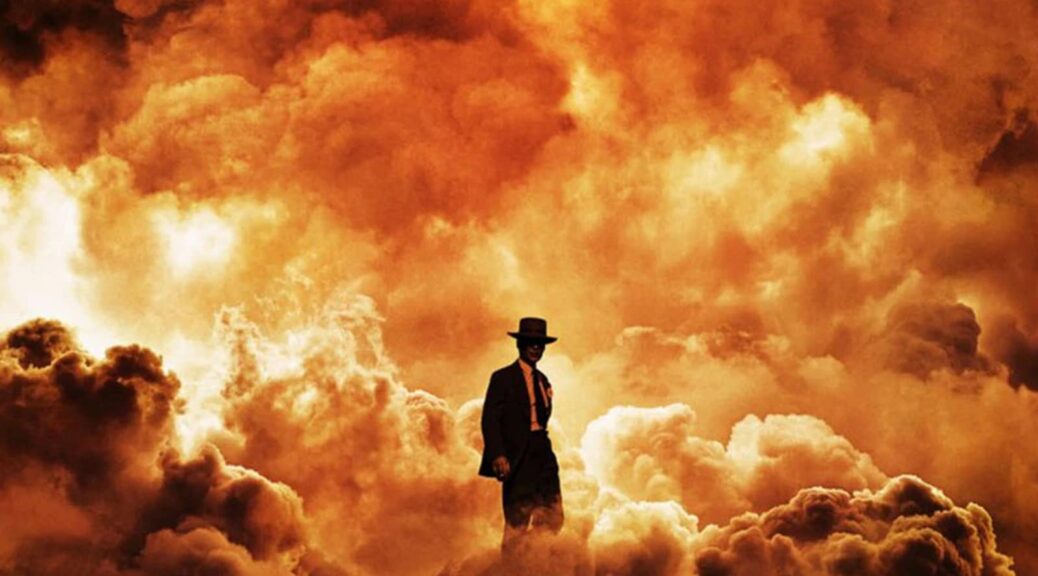
Christopher Nolan reportedly became invested in making a film about “the father of the atomic bomb” when Robert Pattinson gave Nolan a collection of J. Robert Oppenheimer’s speeches. In adapting two source books, writer/director Nolan gives Oppenheimer an engrossing IMAX treatment that serves up history lesson, character study and mystery thriller during three unforgettable hours.

Cillian Murphy is simply mesmerizing and absolutely award-worthy as Oppenheimer, who – years after his Manhattan Project delivered the bomb that ended WWII – is facing the possible loss of his security clearance and thus, career. With his wife Kitty (Emily Blunt) seated nearby, Oppenheimer endures grueling interrogation on his past associates and activities from an Atomic Energy Commission security board led by Roger Robb (Jason Clarke) and Gordon Gray (Tony Goldwyn).

In the film’s first two acts, Nolan uses this questioning as the anchor to chart Oppenheimer’s rise through academia to become not “just self important, but actually important.” On the campus of Berkeley, he embraces revolution in both physics and the world, enthralling his students, supporting “left wing causes” and carrying on an intense affair with avowed communist Jean Tatlock (Florence Pugh) before being hand-picked by no-nonsense General Leslie Groves (Matt Damon) to lead the team tasked with inventing a nuclear weapon before the Nazis do.

From the outset, Nolan and Murphy craft Oppenheimer as an endlessly fascinating creature, a man unable to turn off his mind from constantly questioning beyond this world. Murphy never shrinks from the close-ups that pierce Oppenheimer’s soul, and his body language and manner are often awkward and brusk, revealing an intellectually tireless man with little regard for alienating those not on his level, including AEC Chairman Lewis Strauss (Robert Downey, Jr., never better).

But Oppenheimer’s commitment is total, as is Nolan’s. With strategic use of black and white (an IMAX film stock developed exclusively for the film) to contrast cinematographer Hoyt Van Hoytema’s eye-popping detail, Nolan utilizes impeccable visual storytelling that enhances his script’s ambition without overshadowing it. Ludwig Göransson’s score dances beautifully with production design from Ruth De Jong, totally immersing us in the manufactured town of Los Alamos, where three years of development finally led to a successful bomb test (a breathless sequence that alone should land sound designer Randy Torres an Oscar nod).

For two hours, the historical tale is assembled through precision and care by a master craftsman with the finest tools at his disposal (including a spotless ensemble that also includes Kenneth Branagh, Rami Malek, Casey Affleck, Tom Conti, Matthew Modine, Olivia Thirlby, David Dastmalchian, James Remar and Benny Safdie), and then Nolan digs into the human failings, moral ambiguities and philosophical grappling that surround a man and his mission.

As Oppenheimer realizes that “genius is no guarantee of wisdom,” and his superiors only want to expand America’s nuclear arsenal, the film’s final act becomes a dizzying mix of JFK, Amadeus and The Tell Tale Heart.

Haunted by the devastation the bomb brought to both the “just and unjust,” Oppenheimer ignores his wife’s pleas to fight back as his character is assassinated, and a naive senate aide (Alden Ehrenreich) starts to piece together the puzzle about who is pulling the strings.

As the film races toward a tense and satisfying reveal, some of the dialogue does flirt with needless explanation, but these sensational actors never let a word of it land as completely false.

Much like any film of this nature, Oppenheimer takes its liberties and leaves room for further study. But Nolan takes you inside the personal journey of one of the most important men in history, with resonant and challenging lessons on hubris, envy, blind faith and the search for redemption. And by the end of hour three, he leaves you drained but thankful for the experience

There’s no Barbie here, but you will find a cinematic dream world with so very much to offer.

Think Pink

Barbie

by Hope Madden

The world today is split. On the one hand there is a rabid sect donning their finest sparkles in anticipation of Margot Robbie’s Barbie. On the other hand, there are those who cannot believe people are this unreasonably geeked over a movie about Barbie.

And then there are the Greta Gerwig fans, who perhaps have a complicated but mostly contemptuous relationship with the doll but will nonetheless stride through the pink boas and tiara glare to soak up whatever glorious wonder the filmmaker has to give us.

That was me, that last one. I’ve come to witness Gerwig’s hat trick.

Barbie, which director Gerwig co-wrote with Noah Baumbach (that slouch), delivers smart, biting, riotous comedy with more whimsy than anything this politically savvy has any right to wield.

It’s a role Robbie was clearly born to play. Barbie’s endless run of perfect days actually ends, and she has to seek the advice of Weird Barbie (Kate McKinnon, perfection). You’ve seen the ads – she has to go to the real world to solve her problem. But there’s one hiccup. (That’s not true, there are plenty of them, but it all starts with this first one.) Ken stows away in the back of the Barbie Dream Car.

Ryan Gosling, the man behind the tan, plays Existential Crisis Ken and it’s possible he’s never been better. That’s a big statement because he was nearly perfect in Drive. Also, The Nice Guys. Also, Half Nelson. Plus, Blue Valentine.

He’s good. This is my point. But his Ken delivers all the self-effacing humor of The Nice Guys with sincere pathos and a vacuous tenderness it’s hard to describe.

And my god, that dance number!

Simu Liu, Michael Cera, Issa Rae and Alexandra Shipp also get to carve out some funny screentime, but the whole cast shines. Barbie does not work without a tightrope of a tone, and everyone walks it with their heels off the ground.

Gerwig’s lack of cynicism may be the thing that shines brightest in all three of her films. Lady Bird was the most open and forgiving coming of age film I’ve ever seen, and also probably the best. Who on earth thought we needed another Little Women until Gerwig mined it for the gorgeous feminism that always drove it?

Barbie is a brilliantly executed, incredibly fun, brightly colored, completely logical feminist statement that should be remembered come awards season.

Movie Magic

Once Upon a Time in Uganda

by Rachel Willis

Cathryne Czubek’s film Once Upon a Time in Uganda might be the most fun you’ll have watching a documentary.

Centering her film around Ugandan filmmaker Isaac Nabwana (styling himself as Nabwana IGG), Czubek has fun bringing Isaac’s world to life for her audience.

Thrown into the mix is Alan Hofmanis, a New Yorker who became so enamored with Isaac’s work that he abandoned his life in New York (primarily a cat he left with his mom) and moved to Uganda.

The two struck up a partnership of sorts. Alan focuses on bringing international attention to Isaac’s films. Isaac focuses on the Ugandan side of the equation.

Once Upon a Time in Uganda’s only flaw is that it’s not sure where to fit Alan into the narrative. Though his role in Isaac’s success can’t be ignored, he has an overblown view of himself regarding Isaac’s creative process. The documentary places too much weight on Alan when this should be almost entirely Isaac’s story.

And what a story it is. A brick maker in Wakaliga, Kampala (restyled Wakaliwood by Isaac), Isaac’s dream is making action movies. The times we see Isaac behind the camera or at his computer in his living room working on special effects are a joy. His films are a community event. With a budget of $85 to $200, everyone, from the actors to the crew, volunteers to create action movies that are laugh-out-loud funny.

Also due to the low budget, the team works with what they have, welding prop guns and camera tracking arms whenever they need them. It’s a process unlike anything you’d see on a U.S. movie set, but the camaraderie of Isaac’s crew is what makes watching the documentary such a delight. It’s all hands on deck, and everyone is having a good time.

That’s not to say Isaac doesn’t have problems. Issues around money crop up from time to time. Even though it seems Isaac comes across some level of success, it isn’t monetary success. When he accepts a TV deal to create a series for Uganda’s largest media empire, it leads to strife with not only his crew, but with Alan as well.

But you will find yourself rooting for Isaac the entire time. Even if low-budget action movies aren’t your thing, Isaac’s enthusiasm for movie making is palpable. It makes Czubek’s documentary stand as one of the finest send ups to the joy that is movie making.

Portrait of the Artist as a Dead Man

Final Cut

by Hope Madden

Back in 2017, Shin’ichirô Ueda made a truly clever zombie comedy with no zombies or horror in it. It was a film within a film that delightfully hacked away at the undignified and thrilling process of moviemaking.

Between 2017 and 2023, two things have happened worth noting. 1) French filmmaker Michel Hazanavicius has remade Ueda’s movie. 2) I made an independent film. The first point will be the focus, but the second is worth bringing up because Hazanavicius’s Final Cut is an entirely different experience for me now. It made my stomach hurt. Not in a bad way – I mean, that’s never pleasant, but Hazanavicius mines Ueda’s material to create the same compelling, queasying anxiety that likely all filmmakers know.

How charmingly insane is it that the writer/director behind the 2011 surprise Oscar winner The Artist has remade Ueda’s shoestring zombie insanity One Cut of the Dead? He seems such an odd match, with his very fluid, very French comic sensibilities. And his Oscar. But maybe this story compelled him because it’s every filmmaker’s living nightmare.

The screenplay, which he adapted, is almost exactly the same except for a handful of jokes that explain how very Japanese the content is. (The zombies, for instance, are the undead result of Japanese military experiments. “Japanese? Here?” asks one actress. “Improbable, but not impossible,” answers her co-star.)

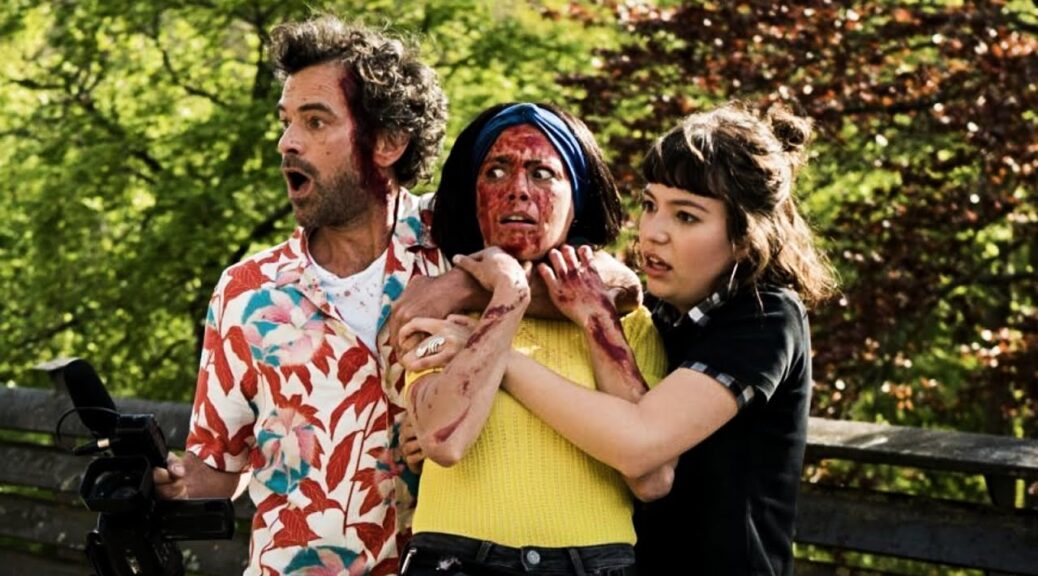
Like Ueda’s original, Final Cut is split basically into two movies. In the first, the cast and crew of a low-budget zombie flick find their set under attack from real zombies. The zealot auteur (Romain Duris) films on, gleeful at the authenticity his movie has finally achieved.

It’s a clever way to deconstruct filmmaking, but it’s only the beginning. And even though Final Cut is a remake, the likelihood that you missed the original requires that I forego additional plot details. I’d hate to spoil the silly ingenuity to come.

Duris is wonderful in a lead performance that requires a lot. Finnegan Oldfield brings wonderful layers to his pretentious young actor character and the whole ensemble seems to have a blast.

Final Cut is missing the manic, raw authenticity of Ueda’s original, though. It feels too well constructed, its jokes too perfectly timed and placed. And yet it is otherwise so similar to One Cut of the Dead that it’s tough not to wonder over the point of remaking it.

If you have not seen One Cut of the Dead, this is a fun film but you should do yourself the favor of finding the original. If you have seen it, Final Cut a good time. If you’re a filmmaker, bring the Pepto.

Cruise Control

Mission: Impossible – Dead Reckoning Part 1

by Hope Madden

How do Christopher McQuarrie and Tom Cruise outdo Mission Impossible: Fallout? Because even the most impressive of the previous MI films couldn’t hold a candle to that one. I mean, the public restroom fisticuffs alone!

Mission Impossible: Dead Reckoning Part I has big shoes to fill and bridges to blow up and buildings to scale and masks to wear and trains to stop and whatnot. Does it succeed?

Of course, it does.

Ethan Hunt (Cruise) accepts a mission from his sketchy government contact (Henry Czerny). But Ethan and his team will do what they do best: go rogue. Because this key is too powerful for any one man, any one nation.

We know Ethan will do the right thing because he’s a beautiful soul. Come on, have you not been paying attention? But this villain – sentient AI “the Entity” – constantly calculates odds and probabilities. It knows Ethan’s weakness and will use it against him.

It’s a clever script by Bruce Geller, Erik Jendresen and McQuarrie. By weaponizing AI and falling back on the old rubber mask disguises, MI: DR1 mines contemporary anxiety with old school solutions.

But McQuarrie et al know what’s made the best of these films stand out. It’s not the plot – although there’s nothing at all wrong with this plot. It’s not really the villains (that’s Bond’s territory). The MI franchise lives and dies on two things: Ethan Hunt’s humanity and Tom Cruise’s willingness to risk his own life for thrilling stunts.

Expect both – aplenty! – in Episode 7.

Incredibly fun and impressive car chases follow some nifty rooftop running before turning to a magnificent series of train-related set pieces. Plus, of course, that motorcycle/mountain thing they tease in the trailer. Lunacy!

The core team – Cruise plus Simon Pegg, Ving Rhames and Rebecca Ferguson – continue to share entertaining camaraderie. Franchise newcomers Esai Morales, Hayley Atwell and Pom Klementeiff bring varying degrees and styles of badassedness. But, let’s be honest, all eyes are on Cruise.

He sells it. There is something old timey about a runaway train, and yet, in Cruise and McQuarrie’s hands, it’s never looked more fun or more thrilling. It’s a long film ­– just a hair under 3 hours – and it tells only half the story. Part 2 is due out in 2024. Still, Cruise and company manage to exceed expectations yet again.

Our Lady

The Miracle Club

by Hope Madden

Wasting an exceptional if oddly miscast ensemble, Thaddeus O’Sullivan’s The Miracle Club has something important on its mind. It just can’t quite articulate it.

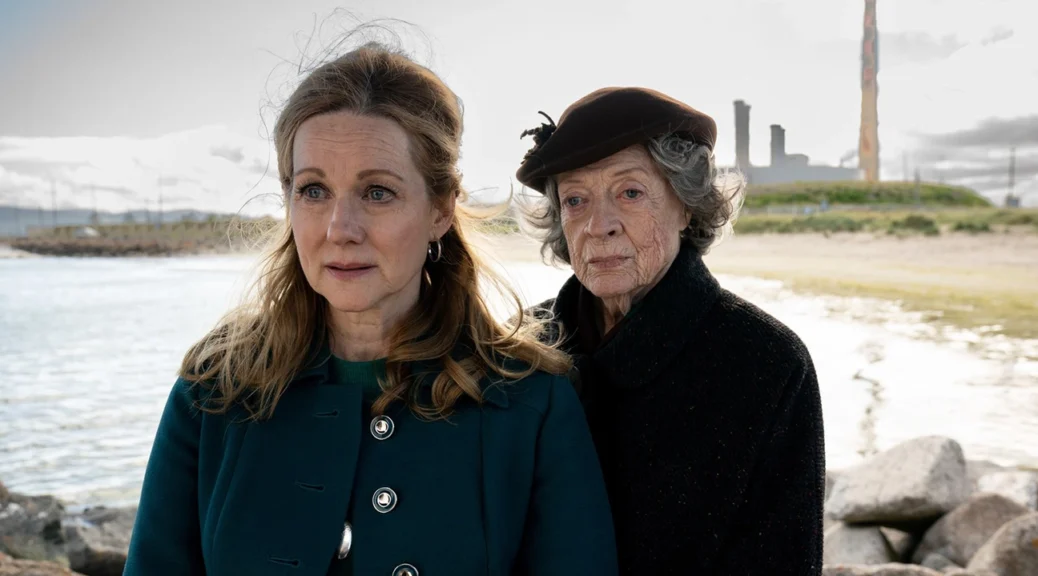
Two Americans and a Brit lead the cast as scrappy Irish folk. Chrissie (Laura Linney) is the prodigal daughter returned for her mother’s funeral. Eileen (Kathy Bates) is her childhood friend who cannot believe Chrissie had the gall to return after what she did. The deceased’s best friend Lily (Maggie Smith) is disappointed the girl didn’t come sooner to comfort her mother during her time of need.

Chrissie’s timing is actually amazing. The whole parish is taking part in a talent show in honor of her mother. The winners get a trip to Lourdes to ask for a miracle. One contrivance follows another and next thing you know, Chrissie, Eileen and Lily are all en route to the holy city in France, begrudgingly together.

The Miracle Club is frustratingly evasive when it comes to Chrissie’s backstory. We get a sense but no real clarity, but it seemed to have been something quite dire. And yet, all is forgiven without much a do.

What O’Sullivan – working from a script by Joshua D. Maurer, Timothy Prager and Jimmy Smallhorne – tries to bring to the surface is an image of systemic oppression relieved only when women support each other.

There is one moment – a climactic confession – where the film’s themes resonate, thanks mostly to Linney’s quietly desperate performance. Dolly (Agnes O’Casey) is hoping that, with the help of the Blessed Virgin, her son will finally speak. But she has a secret, and she believes she’s to blame for whatever ails little Daniel (Eric D. Smith, adorable).

In this moment, O’Sullivan’s film seems to find its miracle, as four women recognize the burden their faith and the patriarchy have put on them. But we must rely on the weighty stares from one talented actor to the next because the film has no intention of pinpointing its deeper concerns.

Worse still, O’Sullivan’s film is so entirely forgiving of both the church and the patriarchy that these themes feel as artificial as the leads’ accents.

O’Sullivan’s tone is forever uplifting, sometimes comically so, but the underlying peril these women have faced and forced is anything but light. He and his writers (men, all) honor these put-upon women who manage. God bless them for managing. God forbid they revolt.

Extraordinary Gentlemen

The League

by George Wolf

As James Earl Jones so eloquently told us in Field of Dreams., you can’t tell the story of America without baseball. And in The League, acclaimed documentarian Sam Pollard builds a gracefully powerful reminder about how important the Negro Leagues were to both game and country.

Pollard (Mr. Soul!, MLK/FBI, Oscar nominee for 4 Little Girls) weaves together the interviews, archival footage and re-enactments with the care of a master craftsman. He builds a timeline that informs and inspires, introducing us to professional players – such as Moses Fleetwood Walker – who came before Jackie Robinson but were left behind once the Supreme Court endorsed “separate but equal” in 1896.

And when the Black community “only had themselves to rely on,” we see how a new path to success was forged, thanks to the visionaries such as Rube Foster and a litany of players who got the attention of white sports writers with their athletic, fast-paced style of play.

Of course, all of this is a baseball fan’s dream, but Pollard (with Executive Producer Ahmir “Questlove” Thompson) also achieves compelling resonance through socioeconomic lessons. The film illustrates how symbiotic relationships developed between the Negro Leagues and the social, political and geographical movements of the day, creating a fascinating push and pull that continued through the integration of Major League Baseball.

And speaking of integration, the story doesn’t end once Robinson and Larry Doby debuted in the National and American Leagues, respectively. In fact, the film is ready with some lesser known receipts from a less-than-admirable side of Branch Rickey’s decision to add Robinson to the Brooklyn Dodgers.

Certainly, the story of the Negro Leagues is worthy of a multi-part mini series, but The League lands as both a satisfying overview and an enticing invitation to dig deeper. There is a wonderful sense of joy here. It’s a feeling born from a community that loved the game, players that lived to make it their own, and a movement that never backed down from the challenge of “finding other ways to succeed.”

Recalled to Life

The Cow Who Sang a Song Into the Future

by Matt Weiner

A family haunted by the unexplained resurrection of their dead mother from a nearby river sounds like a good setup to a horror movie. But it works even better as a sparse, lushly filmed parable about environmental destruction and humanity’s relationship to the world that sustains us.

Chilean director Francisca Alegria’s feature film The Cow Who Sang a Song Into the Future sounds a clarion call to repair the destruction humans are doing to the world before it’s too late. It’s a message delivered urgently and unsubtly, but with moments of great beauty that make the warnings that much more stark.

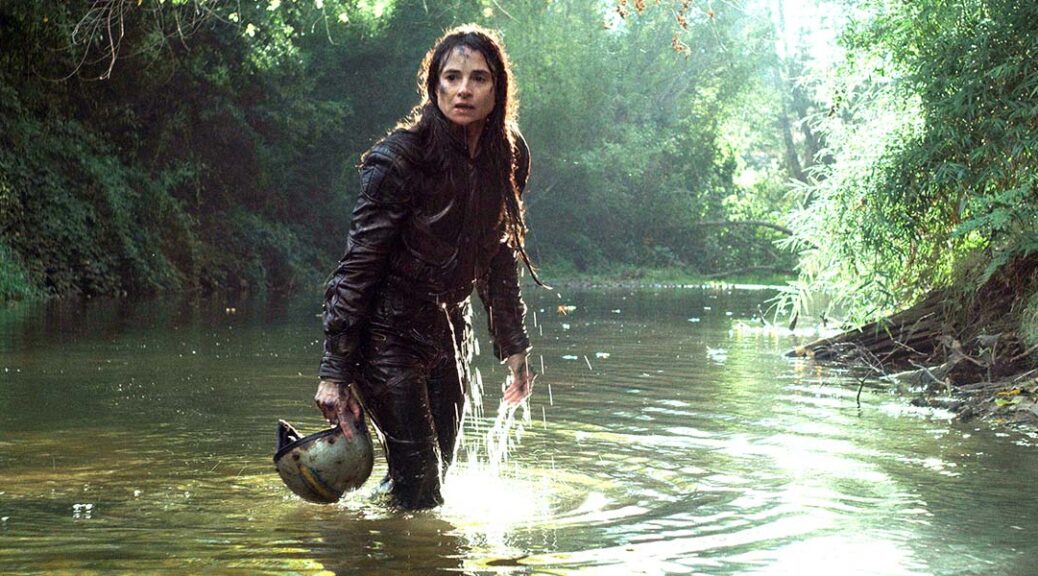
When Magdalena (Mía Maestro) returns to life and walks from the polluted Cruces River to her family dairy farm, she shocks her now-aged husband Pablo (Benjamin Soto) so much that he ends up in the hospital. Magdalena’s extended family returns to the farm, and soon everyone has to confront the long-dead specter of Magdalena as they reckon with the holes her absence left on their lives.

And while the eco parable stays repetitively on message, the heart of the film is a more intimate examination of the inseparable connection between the environment and ourselves. The sense of loss that Magdalena left behind across generations of her family—and the trauma that continues to reverberate for her daughter Cecilia (Leonor Varela) as she carries this forward to her own children—mirrors the broader fight for environmental justice that we owe to people who come after us.

Grounding the film’s flights into magical realism is a riveting silent performance from Maestro as Magdalena. Maestro channels grief, wonder and even moments of sublime joy into the resurrected Magdalena.

The family’s initial response to seeing their reanimated matriarch ranges from love and excitement to the (perfectly understandable) horror, a note that Alegria brings out to great effect. In a different movie, Magdalena’s eerie wet footsteps through the house and across town would dog Cecilia and her father relentlessly.

It’s a confrontation that seems equally likely to end in catharsis or carnage. Alegria ratchets up the tension, as well as the environmental devastation, until the metaphorical dam breaks for Cecilia.

For a film whose songs into the future traffic in death and “the end” being here, the movie also holds out hope for an ending that has yet to be written. The film is agnostic on whether civilization writ large has earned our reprieve. But if a more connected world starts with just one family—then that’s a start.

There’s No Going Home

Joy Ride

by Hope Madden

Adele Lim’s Joy Ride puts the R in raunchy comedy, but beneath a by-the-numbers R-rated roadtrip is a smart, irreverent, confident tale about owning your identity.

The film opens on Day 1 of the friendship between Audrey & Lolo in the funniest comeuppance scene since the 1993 Thanksgiving pageant at Wednesday Addams’s summer camp. The two are fast friends, even though Audrey (Ashley Park) is ambitious, applied, and constantly proving herself while Lolo (Sherry Cola) makes sex positive art instead of working in her parents’ Chinese restaurant.

But Audrey is about to make partner and move to LA, while Lolo is still living in Audrey’s garage, getting high, making art and enjoying dick.

It’s a phrase you should definitely get used to.

Though Lolo is not the film’s centerpiece, the way the character upends stereotypes about women generally and about Asian women specifically is part of the film’s success. Lim and co-writers Cherry Chevapravatdumrong and Teresa Hsiao use the beats of a familiar story to undermine its relatively misogynistic history. Joy Ride is more than just smart, racially savvy, sexually open and foul mouthed.

It’s funny.

Park is an excellent vehicle for both the core idea of claiming your identity and the necessary schmaltz at the heart of any raunchy comedy. But she is not carrying the comedic burden. Leave that to Cola and Audrey’s other two travel companions, Deadeye (Sabrina Wu, hilarious) and Kat (Stephanie Hsu, hello glorious!).

The commentary on microaggressions, aggressive aggression, all manner of racism, and glass ceilings feels honest, sometimes brave, often borderline (and joyously) lewd.

Don’t be confused. The plot itself is dumb as hell. It’s a roadtrip (well, it’s more of a globe trot) as the four pals travel through China to support Audrey as she lands the big client that will mean a big promotion. Hijinks do what they do best, they ensue.

Not every wild situation lands. Each emotional climax feels destined, obvious. But somehow, even well-worn tropes feel revolutionary when claimed by a filmmaking team (director, all writers, all leads) of nothing but Asian women.

Two Men and a Fishy

Biosphere

by George Wolf

As the pandemic raged a few years back, all of us had to adapt. For filmmakers, that meant getting creative to remain creative: small casts, limited settings and remote locations.

One of the better films to meet these challenges was Language Lessons, a two-hander co-written by Mark Duplass and Natalie Morales that also served as one of Morales’s first projects as a feature director.

Biosphere follows a similar blueprint, but with a much higher concept that ultimately hampers its chance at real poignancy.

This time out, Duplass co-writes with first-time feature director Mel Eslyn, and also co-stars as Billy, one of the two men left on Earth. The other survivor is Billy’s old friend Ray (Sterling K. Brown), and the pair spends the days inside a self-sustaining biosphere of Ray’s design.

The two actors share a wonderful and warm rapport, and through their conversations we learn that Billy was President and Ray his lead advisor when the unthinkable went down.

Was Billy to blame? Well, Ray has superior intellect and Billy’s middle initial might as well be “dubya,” so maybe. But that was then and this is now, and now “Diane,” the last female fish in their pond is dead, leaving “Sam” and “Woody” behind.

Ray knows that could mean the end of the “self-sustaining” part of their setup, so the conversations start to get a lot heavier.

To say any more would be saying too much, but the “once upon a time…” message that opens the film readies us for the attempted parable on hope and human evolution.

And this is an extremely talky parable. That might be hard to avoid in a two-character, one-room setting, but the hour and forty-five minute run time becomes excessive despite the mixing of wry humor with Duplass and Brown’s commitment to the exercise.

The bigger problem is that once the film goes where it goes, it feels like the end of a great short film that never was. The main point then becomes the pitch, and not so much about where it ends up. Give Duplass and Eslyn credit for the ambition, and Eslyn some props for making the treatment more cinema than sit-com, but the end is satisfying only if the mean was to be a conversation-starter.

And Biosphere should indeed start some, just not about the big issues it has in mind. Those end up getting caught in a narrative corner that’s covered in too much paint.