Category Archives: New In Theaters

Reviews of what’s out now

Lonely is the Night

Dark Night

by Hope Madden

An eerie soundtrack echoing with alienation and longing pairs with a roaming camera in search of human connection. With these and little more filmmaker Tim Sutton creates the loose and lonesome architecture for Dark Night.

His film glimpses disparate lives that will eventually meet and, in some cases, end in a bland suburban movie theater.

Sutton bases this prelude to a massacre around a fictional copycat shooting. With no help from exposition, he builds an unsettling dread as we and the camera so dispassionately watch each character.

This anxiety grows as we realize one of these people will eventually act on the same urge that pushed James Eagan Holmes to open fire, killing 10 and wounding 20 more in an Aurora, Colorado screening of The Dark Night Rises in 2012.

The focus remains splintered, meandering from one character to the next – an Iraq veteran struggling with PTSD, a video game obsessed teen, a selfie-compulsive would-be model, a skate kid tellingly dying his hair orange. The only discernible commonality – aside from the lifeless landscape of their suburban digs – is personal alienation.

As their stories begin to coalesce, you’re asked to guess who will become the shooter. You understand that there will be an incident and instinctively begin to distinguish potential culprits from likely victims. It’s a sort of whodunit in reverse.

Sutton’s interest is in our preconceived notions as well as possible inspirations for this particular brand of American mayhem.

The filmmaker creates a drowsy cadence – clearly reminiscent of Gus Van Sant’s own meditation on mass shootings, Elephant – pulling each thread tighter and tighter as the climax draws near.

Much of the power in Sutton’s film comes not from imagery but absence. Dark Night is adamantly bloodless. You know what is coming, feel the weight of its inevitability. What’s the use in seeing it?

Dark Night becomes a lyrical American nightmare, although at times its pursuit of authenticity feels more like cinematic sleight of hand. Characters begin to feel like red herrings, undercutting the basic, flawed humanity Sutton offered each one early in the film.

Still, between Hélène Louvart’s fluid camerawork, Maica Armata’s doleful score, naturalistic performances from an ensemble of newcomers and Sutton’s hypnotic structure is a potent vision of the damage of disconnection.

Verdict-3-5-Stars

Seeds of Love

Bitter Harvest

by Rachel Willis

The love story of Yuri and Natalka is the thread that ties together director George Mendeluk’s Bitter Harvest. Set in Ukraine in the early 1930’s, the Soviet oppression under Stalin (the Holodomor) is the backdrop for their relationship.

As Yuri, Max Irons shines as the artist who’s loved Natalka (Samantha Barks) since they were children. The bulk of the film is his story, as we follow him from the small town of his childhood to Kiev, where he is able to pursue his artistic passions. Though Natalka is primed to join Yuri in Kiev, the influx of Soviets into their country keeps the lovers separated.

Unfortunately, rather than keep the story simple and focus solely on Yuri’s attempts to get home to Natalka, the film tries to take on too much. As if trying to convey the entirety of the horrors inflicted on the Ukrainian people, the audience sees Yuri in a number of far flung locations and situations. What could be a three-hour epic is condensed into less than two hours, so the audience never feels a true connection to any of the characters.

Expository dialogue further removes the viewer from the movie. It’s hard to stay in the moment when characters break out of tense scenes to explain to the audience what’s happening in the greater context. A heavy handed score also does the film a disservice, as it turns moments of tension into melodrama.

Though the story is weakened by these elements, the actors bring heartfelt emotion to their roles. While never given the depth they deserve, they are nonetheless sympathetic. A scene in which a young boy kneels by his mother’s grave is moving because the actor conveys the depth of sorrow the character feels. It also speaks to the larger situation, as many more children will be orphaned by the Holodomor.

If the film could have stayed with the smaller, more personal moments, it would have been a stronger film. Even so, this is a story that needs to be told, and Bitter Harvest is a heartfelt endeavor to share it.

Verdict-3-0-Stars

https://www.youtube.com/watch?v=BpcYA4Xnhhk

Don’t Meet the Parents

Get Out

by George Wolf

You want to know the fears and anxieties at work in any modern population? Just look at their horror films.

You probably knew that. The stumper then, is what took so long for a film to manifest the fears of racial inequality as smartly as does Jordan Peele’s Get Out.

Last year’s Keanu proved Key & Peele could smoothly transition from sketch comedy to an extended (and often hilarious) narrative. Now Peele has his solo album, writing and directing a mash of Guess Who’s Coming to DinnerRosemary’s Baby and a few other staples that should go unnamed to preserve the fun. Opening with a brilliant prologue that wraps a nice vibe of homage around the cold realities of “walking while black,” Peele uses tension, humor and a few solid frights to call out blatant prejudice, casual racism and cultural appropriation.

When white Rose (Alison Williams) takes her black boyfriend Chris (Daniel Kaluuya) home to meet the fam, she assures him race will not be a problem. How can she be sure? Because her Dad (Bradley Whitford) would have voted for Obama’s third term “if he could.” It’s the first of many B.S. alerts for Peele, and they only get more satisfying.

Rose’s family is overly polite at first, but then mom Missy (Catherine Keener) starts acting evasive and brother Jeremy (Caleb Landry Jones) gets a bit threatening, while the gardener and the maid (both black – whaaat?) appear straight outta Stepford.

Peele is clearly a horror fan, and he gives knowing winks to many genre cliches (the jump scare, the dream) while anchoring his entire film in the upending of the “final girl.” This isn’t a young white coed trying to solve a mystery and save herself, it’s a young man of color, challenging the audience to enjoy the ride but understand why switching these roles in a horror film is a social critique in itself.

Get Out is an audacious first feature for Jordan Peele, a film that never stops entertaining as it consistently pays off the bets it is unafraid to make.

Verdict-4-0-Stars


https://www.youtube.com/watch?v=A2JbO9lnVLE

Gifted & Talented

The Girl with All the Gifts

by Hope Madden

It is the top of the food chain that has the most reason to fear evolution.

Isn’t that the abiding tension in monster and superhero movie alike? The Girl with All the Gifts explores it thoughtfully and elegantly – for a zombie movie.

In 2010, director Colm McCarthy took an unusually restrained and intimate look at lycanthropy in his underseen Outcast – kind of a werewolf Romeo and Juliet among Irish travelers. This time he mines Mike Carey’s screen adaptation of his own novel with the same quietly insightful bent.

Melanie (startlingly strong newcomer Sennia Nanua) lives out her young life in a cell, then restrained head, hands and feet in a wheelchair as part of ongoing research conducted by Dr. Caldwell (Glenn Close).

Let’s pause. When 6-time Oscar nominee and all around acting badass Glenn Close deems a zombie film worthy of her talent, we should all pay attention.

So, what’s the deal? A horde of “hungries,” each infected with a plant-based virus, has long since overrun the human population. Dr. Caldwell, her researchers and the military are holed up while trying to derive a cure from the next generation, like Melanie – the offspring of those infected during pregnancy.

It is an unsettling premise handled with restraint and realism, bolstered by uniformly admirable performances.

Melanie aside, the characters could be standard fare zombipocalypse cogs: gung ho military guys, driven researcher, tender-hearted woman here to remind us all of the civilization we’re fighting to save.

But expect something surprising and wonderful out of every actor involved – from Paddy Considine as the Sarge with something to learn to Gemma Arterton as Melanie’s beloved teacher to Close, steely and cagey in a underwritten role.

But much of the weight sits on Nanua’s narrow shoulders, and she owns this film. The role requires a level of emotional nimbleness, naiveté edged with survival instinct, and command. She has that and more.

McCarthy showcases his bounty of talent in a film that knows its roots but embraces the natural evolution of the genre. It’s not easy to make a zombie film that says something different.

Girl brims with ideas and nods to films of the past – in many ways, it is the natural extension of the ideas Romero first brought to the screen when he invented the genre in ’68. It definitely picks up where his Day of the Dead left off in ’85, working in nods to 28 Days Later as well as other seminal flicks in the genre.

But what Girl has to say is both surprising and inevitable.

And she says it really, really well.

Verdict-4-0-Stars

Shell Shocked

The Red Turtle (La Tortue Rouge)

by Hope Madden

Life, death, the natural world and the redemptive love of a redhead – all excellent topics, all simply but beautifully explored in the Oscar-nominated animated film The Red Turtle.

When Dutch filmmaker Michael Dudok de Wit got word from Studio Ghibli that they wanted him to be the first foreign filmmaker to work with them, he agreed, even though it would mean leaving the world of short subjects behind in favor of something feature length.

The filmmaker, who’d been contentedly animating shorts since 1981 and directing his own work since ’92, took the next nine years to complete The Red Turtle.

Like his Oscar-winning short Father and Daughter, The Red Turtle boasts minimalistic visuals to convey solitude, longing and the harsh realities of nature. But the melancholy of the previous effort is missing, something more hopeful in its place.

We join a nameless man – survivor of a shipwreck now stranded on a deserted island – as he fights to save himself from his fate. With no company but the skittering beach crabs, he explores enough of the island to determine the best ways off.

But each raft he builds is destroyed from below by an unseen force.

Without the help of dialog, musical numbers or flashy visuals – indeed, the entire effort borders on the monochromatic – The Red Turtle becomes a hypnotic experience. De Wit asks you to wonder whether the extraordinary events are happening or are the hallucinations of a desperate man – perhaps even the visions of a man in the throes of death.

He doesn’t answer your questions, instead weaving a fable as easily taken for symbol as it is taken literally. Perhaps the man didn’t survive the shipwreck. Perhaps he did, and the inexplicable power and magic of the natural world convinced him to stop fighting and live the life he has.

Either way, this spare and often somber film, punctuated as it is with both joyous outbursts and peril, is a welcome piece of poetry in Oscar’s roster.

Verdict-4-0-Stars

https://www.youtube.com/watch?v=t1Yw3AVDr6U

Cure for Insomnia

A Cure for Wellness

by Hope Madden

Not too far into The Silence of the Lambs, Hannibal Lecter suggests that Buffalo Bill’s behavior seems “desperately random.”

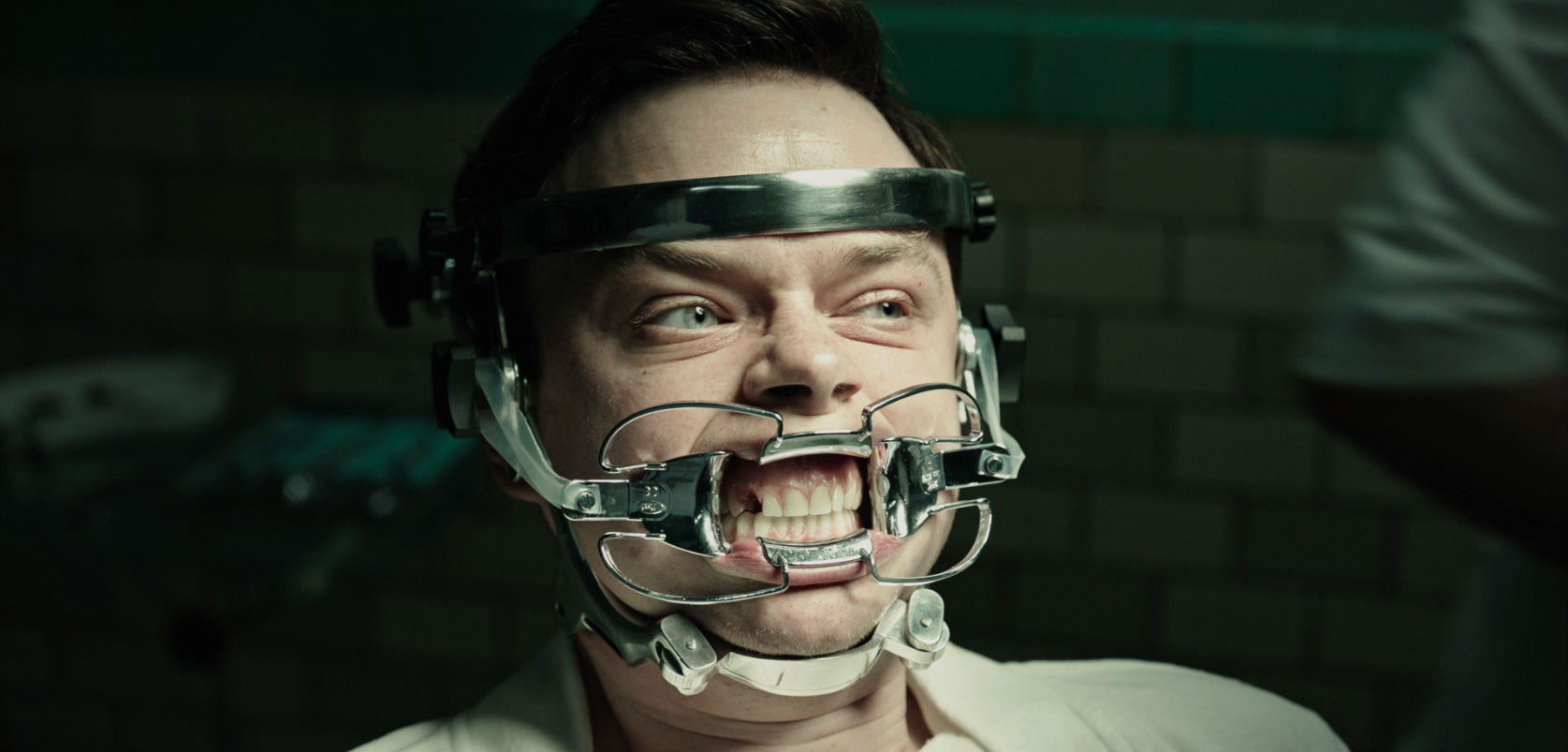
Director Gore Verbinski’s latest, A Cure for Wellness, feels desperately creepy – and far too random.

His film is a little bit Kubrick, a little more Cronenberg, a touch Scorsese and an awful lot Burton. Maybe that’s why it’s so long – it takes Verbinski a while to squeeze all those other people’s vision into his movie.

What’s it about? How avaricious humanity’s lost its way, how an ambitious corporate cog travels to a spa in the Swiss alps to retrieve his boss, and eels.

All of it amounts to a bunch of nothing, but man, the package is great.

Dane DeHaan plays Lockhart, relentless executive headed for the top. When the firm sends him to a “wellness center” in hopes of retrieving a missing CEO, Lockhart sees his chance for the big time. But, like Scorsese’s Shutter Island, things are not as they seem.

Verbinski hasn’t been as visually unleashed in years, and his picture is very pretty, very creepy and endlessly stylized.

Beneath that distracting layer of polish is a hodgepodge – a mainly incoherent assortment of unrelated ideas. A Cure for Wellness slides images at you, each of them meant to conjure a particular feeling, but it never lays out any cohesive narrative to bring them together.

And, my God it’s so long.

On the surface is a familiar story of a man who is not a patient at a sanitarium becoming a patient against his will. And then, of course, is the mystery he must solve concerning his CEO – unless he’s going mad in the process? Mwa ha ha ha ha….

Plus some confluence of vaguely Nazi imagery (this is the whitest film you will ever see), a bit of a creature feature, odds and ends that feel like folklore horror, flashbacks and/or dream sequences, and a dance scene that could be straight out of Harry Potter. (The fact that Lucius Malfoy – Jason Isaacs – plays the villain doesn’t hinder that notion.)

Random creepy images grow tiresome after 80 or so minutes. Unmercifully, A Cure for Wellness has another sixty minutes to go, without a coherent thread or satisfying payoff. Or any payoff, really.

Verdict-2-5-Stars

Don’t Knock At All

Don’t Knock Twice

by Hope Madden

Two Thomas the Tank Engine writers team up with fledgling director Caradog James to talk of witches, urban legends, estranged children and doors.

They just don’t do it very well.

Do you ever watch a horror film where a storyline leads to a jump scare, and then characters move on with their lives as if no spindly legged giant demon woman just crawled out of their closet toward them? They just go to the next scene?

Frustrating, right?

Welcome to Don’t Knock Twice.

The film follows a recovered addict turned successful sculptor (Katee Sackhoff) as she tries to regain custody of the teen daughter she gave up years ago. Chloe (Lucy Boynton – who was so good in last year’s Sing Street) wants nothing to do with her mum until buddy Danny goes missing and Chloe suspects the long dead neighborhood witch is to blame.

A mishmash of horror tropes follows as Chloe and her mother believe idiocy and do ridiculous things.

There’s a Baba Yaga – nice! Now there’s a fresh idea.

There’s also a beautiful foreigner spinning hocusy pocusy nonsense, which is straight out of every “her husband left town and something supernatural is happening” piece of garbage ever to be set to film.

Lucy Boynton has talent. Katee Sackhoff, as far as Don’t Knock Twice exposes, does not. Her flat delivery never suggests the maternal devotion meant to drive her character’s actions and her chemistry with the rest of the cast is nonexistent.

The main trouble, however, is James. He cannot create a cohesive mythology, which is especially important in supernatural horror. Very little holds together and even less holds your attention.

It’s a mystery, you see – one that routinely mentions doors without ever really doing anything with that; one that returns repeatedly to clues just to pretend they mean something different this time; one that asks you to accept that a conscious human could find a box of evidence in her own art studio and not ask, “Hey, how did this get here?!”

It’s bad, is what I’m saying.

And worse yet, it’s dull.

Verdict-2-0-Stars

Readin’, Writin’, Teacher Fightin’

Fist Fight

by George Wolf

At Roosevelt High, it’s the last day before summer break, and the school’s online newspaper gets a breaking story:

WHY MR. CAMPBELL WILL DIE

Seems the meek Mr. Campbell (Charlie Day) snitched on the scary Mr. Strickland (Ice Cube), and you know what they say about snitches. They get their asses beat on the playground while the whole school watches…and they will most likely require stitches at some point.

Fist Fight is often contrived and ridiculous, and has those funny bloopers ready to roll as soon as possible, but ya know, it fills the class with enough likable clowns to get a pass.

The two leads aren’t asked to venture beyond their respective comfort zones, but do display some nice comic timing that bolsters their easy chemistry. Cube pushes his menacing persona and steely glare for all they are worth while Day does the same with the naturally funny pairing of his diminutive stature and high-pitched wheeze. The conflict of their characters is grounded just by these two actors sharing the same frame, giving the film a comic foundation from the start.

Then you have the always weird and welcome Jillian Bell as a guidance counselor who’s really fond of drugs and “that tenis” (teenage penis), Kumail Nanjiani’s by-the-book school security officer and Tracy Morgan dispensing wisdom as Coach Crawford (“You can’t run away! Who is you, Seabiscuit?”) for a steady stream of nuttiness.

Director Richie Keen makes his feature debut after years of TV episodes (including Day’s It’s Always Sunny in Philadelphia), keeping the pace lively and the mood raunchy. He even shows a little theatrical flair once the students’ start spreading rumors of Mr.Strickland’s murderous past, and the fantasies play out with hilarious excess.

Fist Fight offers violence, plenty of sex-fueled gags and the obligatory foul-mouthed grade-schooler. It’s an adult education, for sure, and just funny enough not to skip.

Verdict-3-0-Stars


Just Another Brick

The Great Wall

by Hope Madden

You’ve seen the trailers for The Great Wall, right?

It looks terrible, doesn’t it?

It’s not.

It’s not good – let’s not get crazy. But I was expecting Warcraft bad – maybe worse – and The Great Wall is a borderline-passable piece of monster-laden eye candy.

Matt Damon plays William, a bow-for-hire who travels with a band of ne’er-do-wells into China seeking the legendary black powder.

Dreams of selling this weapon in the West keeps the Irish…Scottish…what kind of accent is Damon attempting?And why does it only show up in about 25% of the film?

Anyway, William and his mercenary friend Tovar (Pedro Pascal) must eventually surrender to the color-coordinated forces within The Great Wall – who actually have better things to do.

After that, director Yimou Zhang (House of Flying Daggers, Raise the Red Lantern) does what he can to visually wow an audience and draw attention away from the leaden screenplay.

Zhang is a nearly unparalleled visual showman, and though Great Wall never approaches the style of his best efforts, the aesthetic will keep your attention and create wonder. Vivid color and rhythm drive a joyous spectacle of monster carnage once the CGI swarms come calling.

And then we’re back inside, with one-dimensional characters stumbling through obviousness about greed, trust and teamwork.

Zhang takes advantage of 3D as few filmmakers have. The approach rarely serves a larger purpose than to transport and amaze, but those who come to The Great Wall seeking a larger purpose should prepare for crushing disappointment.

The generally strong Damon struggles with more than the accent. Though glib humor enlivens several scenes with Pascal, the deadly serious tone the film takes and the broadly drawn characterizations of the Chinese warriors make chemistry or human drama impossible.

But damn, look at those hills and swirling bodies, the acrobatics of monster mayhem.

It may be that the only thing The Great Wall did right was to swap out director Edward Zwick (associated early in development with the film) for Zhang, because if you weren’t so distracted by how glorious this film looks, it might really be as bad as the trailers made it out to be.

Verdict-2-5-Stars

Truth to Power

I Am Not Your Negro

by George Wolf

It may be driven by content decades old, but I Am Not Your Negro wastes no time in driving home its urgency.

As author James Baldwin tells Dick Cavett why he doesn’t view 1968 as a year of “progress for Negroes,” disturbing images of recent conflicts roll in succession, connecting the two eras with gut-wrenching irony.

Director Raoul Peck weaves notes from Baldwin’s unfinished 1979 novel Remember This House, along with interview and archival footage, to give new life to Baldwin’s assertion that the history of Negroes in American tells the story of America itself.

“It is not pretty.”

At its very core, the film is a  reminder of Baldwin’s intellect and clarity of thought. From page to interview to personal letter to public debate, Baldwin had an innate ability to communicate his ideas with laser focus and biting precision. And Peck (Sometimes in April) finds an effective balance between letting the historical Baldwin (who died in 1987) speak for himself, and entrusting a famous voice to speak for him.

Samuel L Jackson recites Baldwin’s prose, wisely trading the voice that is so recognizable for a hushed delivery that lends gravity to each carefully chosen word. There is a furious anger here, but Jackson’s trademark boom would have been both out of character and a needless distraction. In its place is a perfect tone of reverence and wisdom that commands attention as effectively as any of Jackson’s fiery movie monologues.

As Baldwin speaks of his own time, there’s no doubt he is also speaking directly to ours. It is no coincidence that the last twelve months have given us three of the most compelling documentaries on racial strife we have seen in years. 13th, OJ: Made in America and I Am Not Your Negro (all Oscar-nominated this year) are all worthy of any course in American history, each dissecting our deeply troubled times from unique perspectives.

If there is any point that shows the age of Baldwin’s original essays – and make no mistake, the depth of their relevance is often stunning – it is the lack of any substantial female perspective beyond that of suffering wives. Though the male-centric view is more understandable when considering Baldwin’s original book idea was based on the lives of Medgar Evers, Malcolm X and Dr. Martin Luther King, Jr., it remains noticeable.

But through Peck and Jackson, an unforgettable voice from the past becomes an indispensable storyteller for today. I Am Not Your Negro tells that story.

No, it is not pretty, but it demands to be seen.

Verdict-5-0-Stars