“Invented” might be an exaggeration, but Charles Dickens certainly gave the Christmas spirit a boost. Published less than a week before Christmas in 1843, his A Christmas Carol sold out in days, igniting an instant spike in charitable giving.
As the well-meaning but unremarkable The Man Who Invented Christmas points out, the soon-to-be holiday classic arrived under a looming publishing deadline, at a time when Dickens badly needed a hit.
Director Bharat Nalluri (Miss Pettigrew Lives for a Day) and screenwriter Susan Coyne (in her feature debut) adapt Les Stanford’s book with a mix of fantasy and biography, never making the commitment to either that might have elevated the film beyond merely pleasant holiday distraction.
As Dickens (Dan Stevens) searches for inspiration, it arrives in the form of Mr. Scrooge (Christopher Plummer). Their interactions, though often charming, only touch on the personal demons Dickens was exorcising through his tale of mercy and goodwill, and the film is too eager to trade darker edges for sustained wholesomeness.
The peeks we do get into Dickens’s life are worthy, the period setting effectively detailed, and the whimsy entirely likable. Though certainly no classic, file this one under “satisfactory.”
In any form, great writing is a joy to behold. On the movie screen, pair it with skilled actors and you’re more than halfway home to a memorable experience.
Three Billboards… gets all the way home.
Writer/director Martin McDonagh provides his stellar ensemble with smart, insightful dialog that crackles with bite, poignancy and scattershot hilarity. His tale is offbeat but urgent and welcome, speaking as it does to grief, compassion, and navigating the contrasts between the good and evil in our flawed selves.
Frances McDormand is sensational as Mildred, a woman still haunted by the unsolved murder of her daughter seven months earlier. Passing by a series of abandoned billboards on her rural drive home one evening, Mildred decides to rent them, publicly asking Sheriff Willoughby (Woody Harrelson, capping off a year of multiple great performances) why there have been no arrests.
This is not a popular move, not with the Sheriff, his violent deputy (Sam Rockwell – fantastic), Mildred’s abusive ex-husband (John Hawkes), her embarrassed son (Lucas Hedges) or…who else ya got?
Only an enthusiastic co-worker (Amanda Warren) and a hopeful suitor (Peter Dinklage) offer support, leaving Mildred as a small-town pariah.
She is unmoved, and McDormand crafts Mildred with meaningful layers, as a foul-mouthed firebrand lashing out at injustice and sorrow with a defiant lack of concern for consequence. She is absolutely award-worthy, as are Rockwell and Harrelson, and as their character arcs take unexpected detours, the film displays its relevant social conscience through both subtlety and aggression.
McDonagh (In Bruges, Seven Psychopaths) compliments his usual knack for piercing wordplay with well-paced visual storytelling and some downright shocking tonal shifts. We are constantly engaged but never quite at ease, as McDonagh demands our attention through brutality and dark humor, holding the moments of humanity until they will be most deeply satisfying.
Behind Three Billboards..are performers able to create rich, indelible characters and a bold filmmaker whose vision and instincts have never been more on point.
It’s still an iconic image of the 1970s: bearded, bushy-haired Al Pacino staring back at us as Serpico, avenging cop on a mission to bring down corruption from the inside.
To hear the real Frank Serpico tell it, the starring role was first offered to him, and even after Pacino was cast, Frank got thrown off the set of his own movie for complaining about inaccuracies.
What else would you expect from a guy who was nearly whacked for exposing crooked cops?
Writer/Director Antonino D’Ambrosio presents an engaging, mostly first-person documentary on Serpico’s life, following him through the years and various hair/beard combinations to get us closer to a restless spirit who still doesn’t understand why honesty is so difficult.
Impressive archival footage paired with biographical timelines reveal Serpico’s personal journey while providing glimpses into effective means of law enforcement, as well as the roots of systemic corruption.
Now and then the film could benefit from keeping a tighter rein on Frank’s storytelling, but there’s no denying the respect the man deserves, or the frustration he still carries with him.
As cool as it is to hang out with this cat, the film’s prevailing takeaway becomes the naivete in thinking police corruption can ever truly be corralled.
Small town sociopath, isolated farmhouse on land littered with rusted out car carcasses, a basement freezer full of human heads—Poor Agnes has all the trappings of your garden variety serial killer flick.
All but one: Lora Burke.
Burke plays Agnes, a woman who knows what she likes.
The film plays out like the origin story of some unstoppable slasher, and that works pretty well. Director Navin Rameswaran complicates his narrative and Agnes’s life with a side trip into Stockholm syndrome territory.
Agnes spends her days either chopping wood or injecting men with a concoction featuring “rat poison, mostly.” But she takes a liking to would-be victim Mike (Robert Notman), a low-rent private investigator whom no one will miss.
Rather than dispatching him quickly, Agnes indulges her inclination to play God and see how well she can re-mold Mike in her own image. Things seem to go smoothly until their twosome becomes a threesome.
While Burke’s unapologetically convincing, Notman’s performance is less so. Maybe his metamorphosis is too truncated by James Gordon Ross’s script, or maybe Notman can’t manage to sell the transformation. Whichever, too often his behavior feels utterly false. What we needed out of Notman was a version of Patty Hearst, but his face is a blank slate, his actions inauthentic.
That’s a real problem for this film because a tangy villain can only carry a story so far. Burke’s turn commands attention. She’s unafraid to be profoundly unlikeable, but she’s never over-the-top. It’s an alarmingly natural, more alarmingly believable portrait of a psychopath.
On its surface, Wonder is about feeling like an outsider.
Auggie Pullman (Jacob Tremblay, proving that his remarkable turn in Room was no fluke) is about to start middle school. There’s anxiety enough in that, but this will be Auggie’s first “real school,” having spent his formative education being homeschooled by his more than capable mother (Julia Roberts).
But there’s more. Auggie suffers from a congenital malady which, after dozens of surgeries, leaves him with an unusually misshapen and scarred face. This is why he prefers to wear a space helmet whenever he’s in public.
To its enormous credit, Wonder makes Auggie’s plight universal. Doesn’t everyone entering middle school desperately fear some kind of ostracism? Doesn’t every parent fear the same for their tender youngster?
How much worse will it be for Auggie? Few parents will not recognize the sincerity in his mom’s plea as she sends her son off to his first day of real school: “Please, God, let them be nice to him.”
Roberts, whose work in recent years has radically outshone everything from the first couple decades of her career, offers a strong and believable center of gravity for both the Pullman family and the film.
Director Stephen Chbosky also co-wrote this adaptation of R.J. Palacio’s popular juvenile fiction book. Chbosky waded into similarly angst-ridden waters when he directed the screen version of his own novel Perks of Being a Wallflower, but with Wonder he manages to find an emotional truthfulness missing from his previous film.
Wonder is surprisingly—almost amazingly—understated, given the content. The film avoids many a tear-jerking cliché and sidesteps sentimentality more often than you might expect.
It’s also dishonest— well-meaning, but wildly dishonest. Conflicts are easily resolved, lessons quietly learned, comeuppance generally had and loose ends carefully tied.
Wonder is about as wholesome a movie as you will see, lacking even an ounce of cynicism, which certainly makes Auggie’s ordeal easier to bear. But it’s still a cinematic cop out.
Fair or foul, each new superhero film release spurs a check of the scorecards: Marvel vs. DC. Last year, Wonder Woman finally put a solid check in the DC column, one that Justice League only leaves frustrated and alone.
Nearly every facet of the film not only betrays a few promising avenues left undeveloped, but also its basic superhero tenets that are bettered by similar films (including the underrated Batman v. Superman). These friends aren’t super, they’re awkwardly forced and often helpless against some distracting CGI.
Perhaps even more than superpowers, big screen heroes need memorable villains, and the newly formed Justice League offers none. Instead, they have Steppenwolf.
Steppenwolf is a mass of weak computer graphics (voiced by Ciaran Hinds), born to be wild but currently in search of the three “mother boxes” he needs to unleash “the end of worlds” and send everyone back to the Dark Ages.
With Superman (Henry Cavill) still dead, Batman (Ben Affleck) and Wonder Woman (Gal Gadot) recruit the surly Aquaman (Jason Momoa), the young Flash (Ezra Miller) and the brooding Cyborg (Ray Fisher) to join the cause.
They have the bodies. What they don’t have are characters worthy of investment.
Director Zack Snyder has them pose, trade overly dramatic declarations, and then do some additional posing while you may be checking your watch.
Comparisons to the first Avengers film are inevitable, especially with Joss Whedon on board as a co-writer, but Justice League just cannot get any resonance from the darker tone of the DC franchise. The push to be heavy and meaningful is an empty suit, despite well-meaning lip service to refugees and the importance of science.
Ironically, as the Marvel films continue to lean more comedic, the humorous moments in Justice League, usually courtesy of Miller and Mamoa, are among the film’s best. Rather than undercutting any dramatic tension, the humor here feels more logical and organic, similar to the highly effective funny bone in the recent Spider-Man: Homecoming.
And, with Gadot back on board, the difference in Wonder Woman through a male director’s lens is hard to miss. Yes, she gets some bad ass moments that she’s more than earned, but she also gets a more sexualized, less earnest presentation.
There are two extra “stinger” scenes to send you out discussing who the JL is fighting next, but perhaps the lasting impression of Justice League is just how behind-the-curve it all looks. Steppenwolf seems lifted from an old gaming commercial you might find on that VHS tape still lurking in your basement, while Cavill’s digitally-altered mouth (to remove a contractually obligated porn ‘stache he had during reshoots) sits there proudly like a new zit on prom night.
There is substance to be gleaned from DC, Wonder Woman was proof of that. But for now, Justice League is two tired steps back.
Lady Bird, written and directed by Greta Gerwig, may be the most delightfully candid and refreshingly forgiving coming-of-age film I’ve seen.
The great Saoirse Ronan—because honestly, is there now or has there ever been a more effortlessly talented 23-year-old?—plays Christine “Lady Bird” McPherson. Uniformed senior at Sacramento’s Immaculate Heart, Lady Bird is a work in progress.
Ronan is surrounded by talent. Lucas Hedges (Manchester by the Sea) shines as a sweetly gawky budding thespian while, as Lady Bird’s devoted bestie Julie, Beanie Feldstein (Neighbors 2) is heart-achingly wonderful.
Tracy Letts, playwright turned go-to character actor, proves again his natural ability in his newer profession as LB’s softie father. But it’s Laurie Metcalf who matches Ronan step for step.
As Lady Bird’s tough, even scary, mother, Metcalf is near-perfect. I wouldn’t be surprised to see the Rosanne star nab her first Oscar nomination for a turn that’s brave, funny, hard to watch and painfully authentic.
Lady Bird’s greatest desire is to escape Sacramento—“the Midwest of California”—in favor of someplace, anyplace, with culture. Preferably a liberal arts college in NYC. But her grades, her mom and her family’s financial situation present some (often hilarious) obstacles.
Though the film is hardly a straight-up comedy, its irreverent humor is uproarious. I laughed louder and more often during Lady Bird than any film this year.
The plot and the comedy are less the point here than you might expect. They are really just a device Gerwig uses to explore adolescence and its characteristic stage of reinvention. She throws in the surprisingly accurate image of a family’s financial struggle to boot, just to make sure we never mistake this for a John Hughes film, or, God forbid, Perks of Being a Wallflower.
No, this is not a cheese-clothed indictment of all the ills facing adolescents. It’s Rushmore with less camp and more authenticity, and that’s got more to do with Gerwig than her formidable cast.
Though Lady Bird’s landscape is littered with coming-of-age tropes, there is wisdom and sincerity in the delivery. Gerwig offers genuine insight rather than nostalgia or, worse yet, lessons to be learned. The result ranks among the best films of the year.
Ruben Ostlund is a filmmaker fascinated with social contracts. He dissects them with a precision that can be both insightful and comedic. And now with The Square, he displays an equally deft handling of the absurd.
In 2014’s Force Majeure, Ostlund brilliantly exposed the folly of mixing societal assumptions and righteous intentions. This time out, his eye is trained on the growing distance between the classes and the social quandaries of privileged egocentricities.
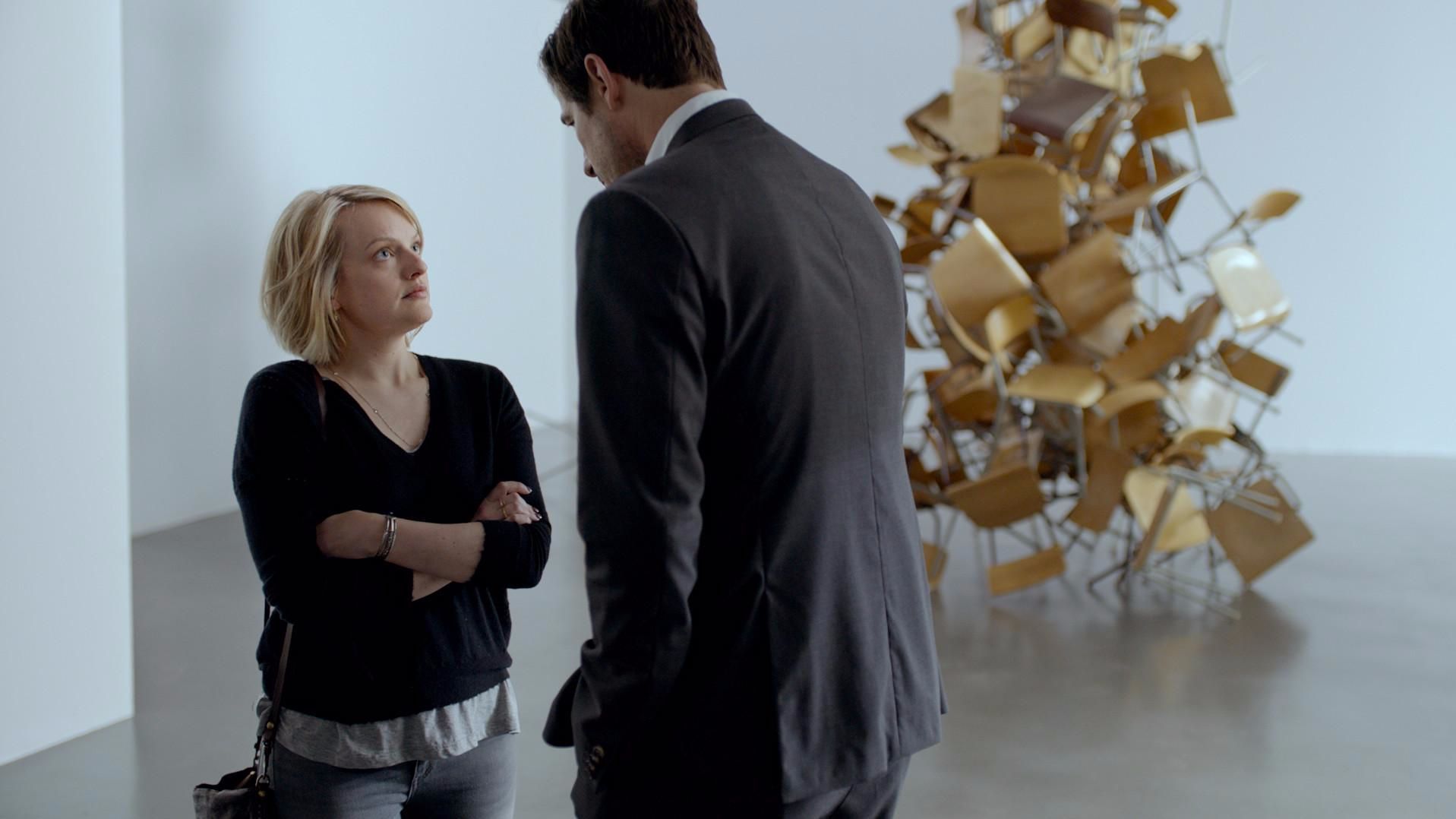
Christian (Claes Bang) is curator at an art museum in Sweden, making preparations for the debut of a new exhibition called The Square. Once unveiled, it promises a “sanctuary of trust and caring,” where all will enjoy equal rights.
As Christian and his team ponder various marketing plans for the new venture, Christian’s phone and wallet are stolen, he must fight Anne (Elizabeth Moss) for possession of a used condom, a monkey puts on makeup in a lavish hotel suite, an aggrieved young boy makes good on a promise to fill Christian’s life with chaos, and two men race to right a wrong in a vehicle they giddily dub the “Tesla of Justice.”
Regardless of whether you’re able to make sense of it all, Ostlund continues to bring visionary scope to his writing and direction. Nearly every frame becomes a lavishly fascinating microscope, probing deep into the inner impulses and outward pressures that are constantly forming our actions and reactions.
The humor is dark and droll, often awkward and sometimes laugh-out-loud funny, but The Square (winner of the Palme d’Or at Cannes) is also alternatively weird and occasionally freakish. Scenes are filled with subtle subtexts, shifting tones and burgeoning ideas, but through it all, Ostlund weaves a persistent, telling theme.
Character after character is seen, through different forms and varying levels of desperation, asking for help. As society is not quite the sanctuary of trust and caring offered by the new exhibit, Ostlund digs into both the motivations for, and reactions to, these pleas, always relishing the chance to open wounds and twist knives.
The Square is more evidence that Ostlund is a challenging, ambitious filmmaker whose work demands attention. It’s a visceral, thoroughly rewarding experience.
To simply label Richard Turner a “blind magician” would be to insult a man whose pursuit of perfection is all the more admirable considering his impairment. Turner, the subject of Dealt, is much more than a spell-binding “card mechanic.” He is also a father, a husband and an all-around legend within the magic community.
The film, directed by Luke Korem, introduces Turner and what he is best known for: his card tricks. Or, rather his card mechanics. Turner specifies that he is a card mechanic which means he can “fix” a card game—something he can without any vision at all.
Korem pulls TV spots featuring Turner dating back to the late 1970s. From these television appearances, we witness how one man has managed to capture our attention over the years with his impeccable abilities.
His jovial attitude is disarming, even as he explains how he will bend the card game. He uses his mechanics to cheat you, yet all the while explaining how he is doing so. You can’t help but smile while he succeeds.
The film really shines, though, when it shifts focus from the mesmerizing card tricks to Turner’s family. We get a glimpse of a man who relies so much on his wife and child to assist him throughout the journey of his life.
Turner also shares a strong bond with his younger sister, who is also visually impaired. She proves to be a point of strength for him, helping him begin to shed the stigma of his blindness.
The film is a brief look into a rather compelling and friendly character. Richard Turner and his family definitely stick around with you once the film is over—a film that will have you buying a deck of cards and trying out some tricks on your friends and family, just like Richard did when he started.
You know that nice lady at work who gets bronchitis every time she flies, then she coughs and hacks and spews DNA all over the office?
Let’s say you have issues with that kind of office contamination. And with office politics. And with your boss, her boss, and the way you’ve basically given up everything that makes you feel alive and happy for this stupid job you hate where germs are everywhere…
Wouldn’t it be cathartic to explode, right there, in the middle of everything, righteously and with no repercussions?
Mayhem, the new film from director Joe Lynch, is just that emotional release.
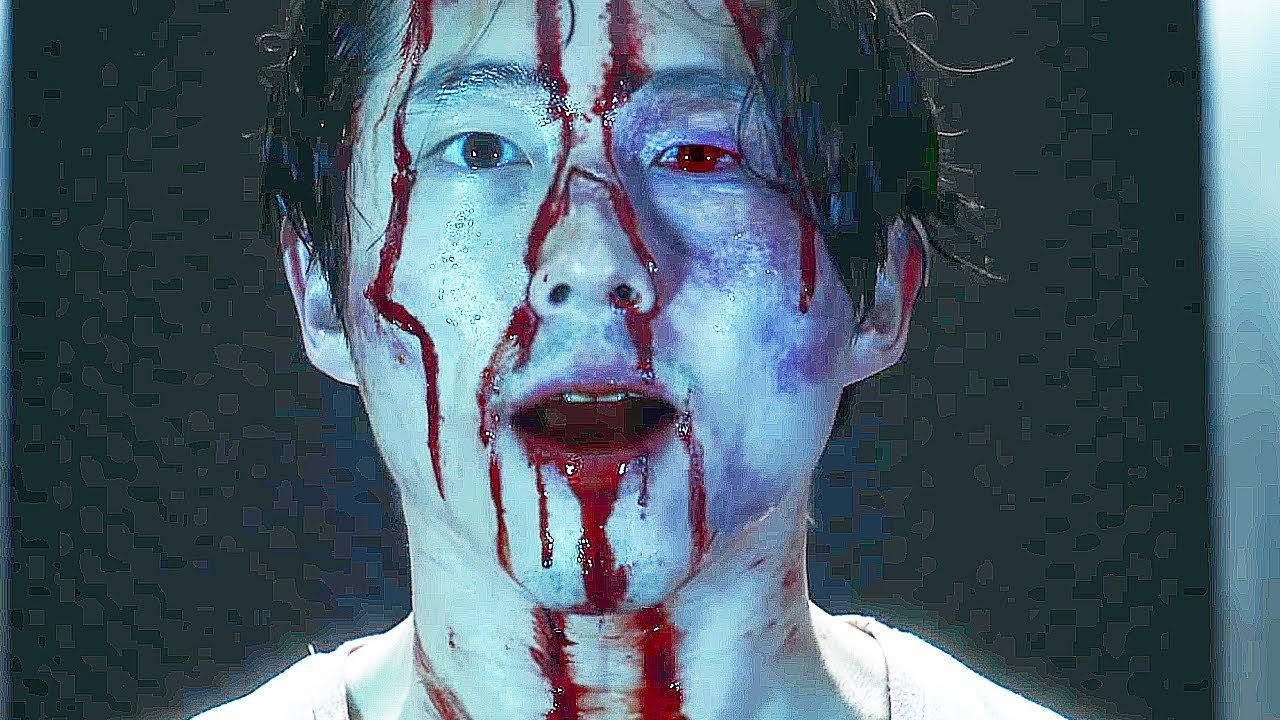
Steven Yeun (The Walking Dead) plays Derek, mid-level white-collar prick in a law office. Just mid-level, though—there’s some conscience left in him. Still, he got where he is by finding the loophole that got a broad-daylight-surrounded-by-witnesses murderer off the hook.
The murderer had a virus—the Red Eye virus—which disrupts your ability to manage your emotions. You might weep uncontrollably, masturbate during a conference call, or stab your boss in the throat with a pen.
Here’s what’s important: we like Derek, his building is contaminated, his court case set the precedent allowing public murder and mayhem while under the 8-hour-ish influence of the virus.
Let’s just quarantine this building and see what happens.
The film is an exercise in workplace catharsis, and a pretty fun one. It’s far superior to other recent attempts at office-bound carnage The Belko Experiment and Bloodsucking Bastards, partly because Lynch has a crisp sense of pace and knack for comedy.
Matias Caruso’s script doesn’t hurt. Though it never mines deeply enough for the film to resonate beyond the “I hate my job and wouldn’t mind killing my boss” level, it’s clever fun from start to finish.
Yeun makes an excellent everyman and his enjoyable performance is matched by those of many of his evil colleagues. Dallas Roberts (also The Walking Dead) is exceptional as the head of HR, also known as The Reaper.
The film is little more than an id explosion in service of workplace fantasy. It keeps a light heart despite the carnage, doesn’t dig deep and doesn’t really hold up to scrutiny. But it’s fun. Especially if you’ve ever wanted to kill your boss.