Category Archives: New In Theaters

Reviews of what’s out now

Mythbuster

Smallfoot

by George Wolf

So, while we’re down here debating the existence of Sasquatch/Yeti/Bigfoot, an entire community of them lives above the clouds, wondering the same about us shorter, wee-footed folk.

That’s a cute and clever conceit for a family tale that might look a lot like Pixar’s Monsters, Inc., which makes it even more surprising when WB’s Smallfoot instead flirts with becoming the most ballsy, subversive animated film since Zootopia. It’s a film with big ideas, some generic and some risky, but just too many to juggle into a truly memorable takeaway.

Channing Tatum leads the voice cast as Migo, an affable Yeti who has always bought in to everything his village’s “Stonekeeper” (Common) was selling, including the fact that the legendary Smallfoot wasn’t real. But then Migo sees one, which raises some questions, and questions themselves are a problem.

Migo, like all the Yeti, has been taught to suppress any questions he may have about the stones the Stonekeeper is keeping. Those stones guide the beliefs of the Yeti through the various statements written on each. You might even call them…commandments.

Woah.

Smallfoot raises eyebrows early, but once Migo manages to bring smallfooted Percy (James Corden) back to his village, it settles into a pleasantly entertaining mix of messages, music, and Looney Tunes-worthy pratfalls.

Tatum gives our hero a fine voice (though his singing is a bit thin), Corden is always fun and the support cast (including Zendaya, Danny DeVito, Gina Rodriguez and LeBron James) is capably unique, but co-directors Karey Kirkpatrick and Jason Reisig chase too many snowtrails.

Some moments, like the Stonekeeper telling Migo about the ease of deception, find their mark, while others such as Percy’s struggles with reality TV become overly familiar distractions.

The driving theme here is truth, and how very hard it can be to find. Question, be brave, explore science as well as faith. Maybe sing a song. Though Smallfoot doesn’t deliver on its radical beginnings, it finds a comfort zone less likely to spark partisan rancor in the aisle.

School of Hart Knocks

Night School

by Hope Madden

The endlessly likeable Kevin Hart and the undeniably talented Tiffany Haddish join forces, which sounds like a solid plan except that Night School is a Kevin Hart movie, and when was the last time one of those was any good?

Sure, Jumanji had some laughs. In fact, Hart’s films almost always boast a few chuckles, mainly because of the actor’s infectious energy and self-deprecating humor. But they’re not good.

Neither is Night School which, even with Haddish and a handful of other proven comic talents, isn’t funny, either.

Hart plays Ted, a good-hearted hustler, talking big and spending bigger, pretending to be more than he is to compensate for his own insecurities. Of course he is, it’s a Kevin Hart movie.

Haddish is Carol, the overworked, underpaid night school teacher here to believe in Ted and the collection of losers in her class. It’s tough love, though, because Haddish is funnier when she’s mean.

What the film does well could have been packaged into an enjoyable 15-minute short. Hart gets off a few laughs working for a Christian fast food chicken joint, and the camaraderie among his late blooming classmates sometimes draws a giggle.

The actors portraying those night school chums work hard to establish memorable, funny characters with limited screen time and an even more limited script. Still, Mary Lynn Rajskub, Rob Riggle, Al Madrigal, Anne Winters and especially Romany Malco work wonders. Taran Killam amuses on occasion as the uptight principal with a grudge.

But there’s only so much they can do. Director Malcolm D. Lee (Girls Trip) drags every gag out about 8 minutes longer than necessary. The script, penned by Hart and five other writers, does Lee no favors. Even Haddish struggles to be funny with flat dialog and pointless, contrived physical comedy bits.

While you’re not laughing you might notice that Night School does make a few surprising choices. Its comedy is good hearted. This is a film that likes all its characters—the females, the losers, those with success and even the parents whose coddling and/or verbal abuse may or may not be to blame for the whole night school problem.

Those are small successes in a film that squanders a lot of talent and all of our time.

Hellhound on My Trail

Blaze

by George Wolf

Outlaw country musician Blaze Foley lived too hard and died too young, a life so steeped in cultish mystery that even the director of his biopic believed an urban legend about what led to Foley’s tragic death.

Ethan Hawke, who also co-wrote the film with Foley’s ex-wife Sybil Rosen, presents Blaze’s story with respectful grace and an observational tone that moves casually but cuts deeply. Seemingly drawing inspiration from frequent collaborator Richard Linklater (who has a cameo role in the film), Hawke’s directing style is unassuming and unhurried, mining resonance from small moments that define his subject.

It seems cosmically right that a virtual unknown singer-songwriter, Ben Dickey, plays Foley, who may be best known to mainstream country fans as the writer behind songs recorded by artists such as Merle Haggard, Willie Nelson, Lyle Lovett, and John Prine.

Dickey, who was working as a chef when Hawke offered him the role, is a revelation. Though more physically imposing than the real Foley, Dickey reveals the demons that frequently bested Blaze, pushing him to sabotage his relationship with Sybil (Alia Shawkat-also stellar) as well as his chances at big-time music business success.

With music such a big part of the film, Hawke’s decision to present it in its live, raw glory reaps big dividends.

Dickey mimics Blaze’s phrasing, picking and rambling onstage persona to eerie perfection, getting an impressive assist from Charlie Sexton as fellow troubadour Townes Van Zandt. Sexton (who had an 80s hit with “Beats So Lonely,” has been Bob Dylan’s guitarist for years and appeared alongside Hawke in Boyhood) gives the film solid layers of reference as the drawling Van Zandt charms a radio DJ (Hawke) with stories of Blaze, the little-known legend.

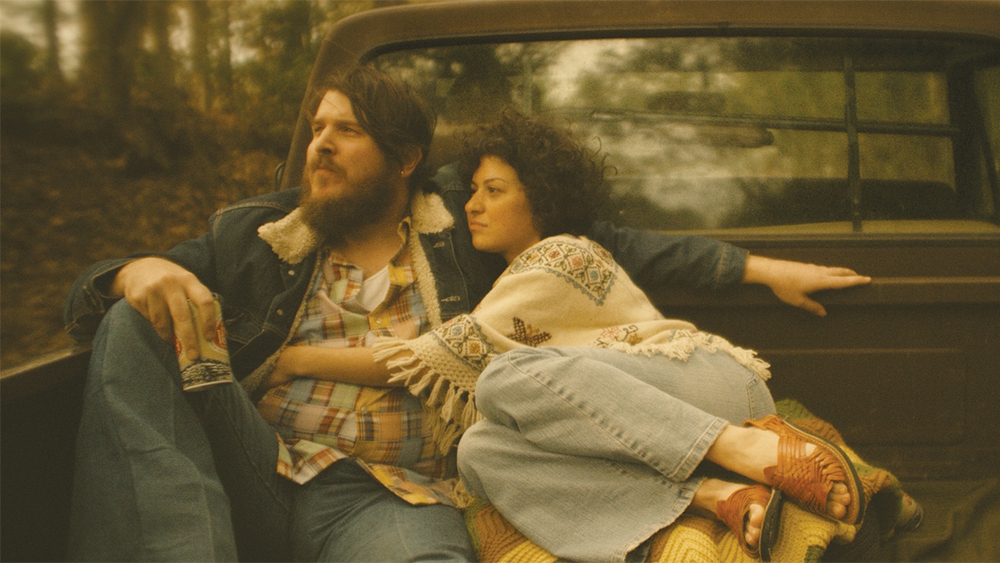
From dreaming of stardom while riding in a truck bed, to antagonizing barroom audiences, to a visit with Blaze’s once-abusive, now senile father (Kris Kristofferson), sequence after sequence rings more organic and true than most found in music biopics.

It’s clear this a passion project for Hawke (and, of course, for Rosen), who is smart enough not to let that passion interfere with authenticity. Blaze gives Foley the re-birth he clearly earned – as a conflicted, damaged soul longing to be heard.


Animal Logic

We the Animals

by Rachel Willis

Imaginative Jonah is the focal point of director Jeremiah Zagar’s family drama, We the Animals. Based on Justin Torres’s novel of the same name, Zagar and co-writer Daniel Kitrosser successfully enter the realm of adolescent boys.

The youngest of three brothers, Jonah is the film’s narrator. His quiet observations allow him to remain nearly invisible to the adults around him. He sees things others might miss, and with an artist’s eye, he renders his observations into illustrations that jump off the page.

With his two older brothers, Manny and Joel, Jonah navigates his parents’ volatile relationship. Though there is love between his Paps and Ma, there are also moments of violence.

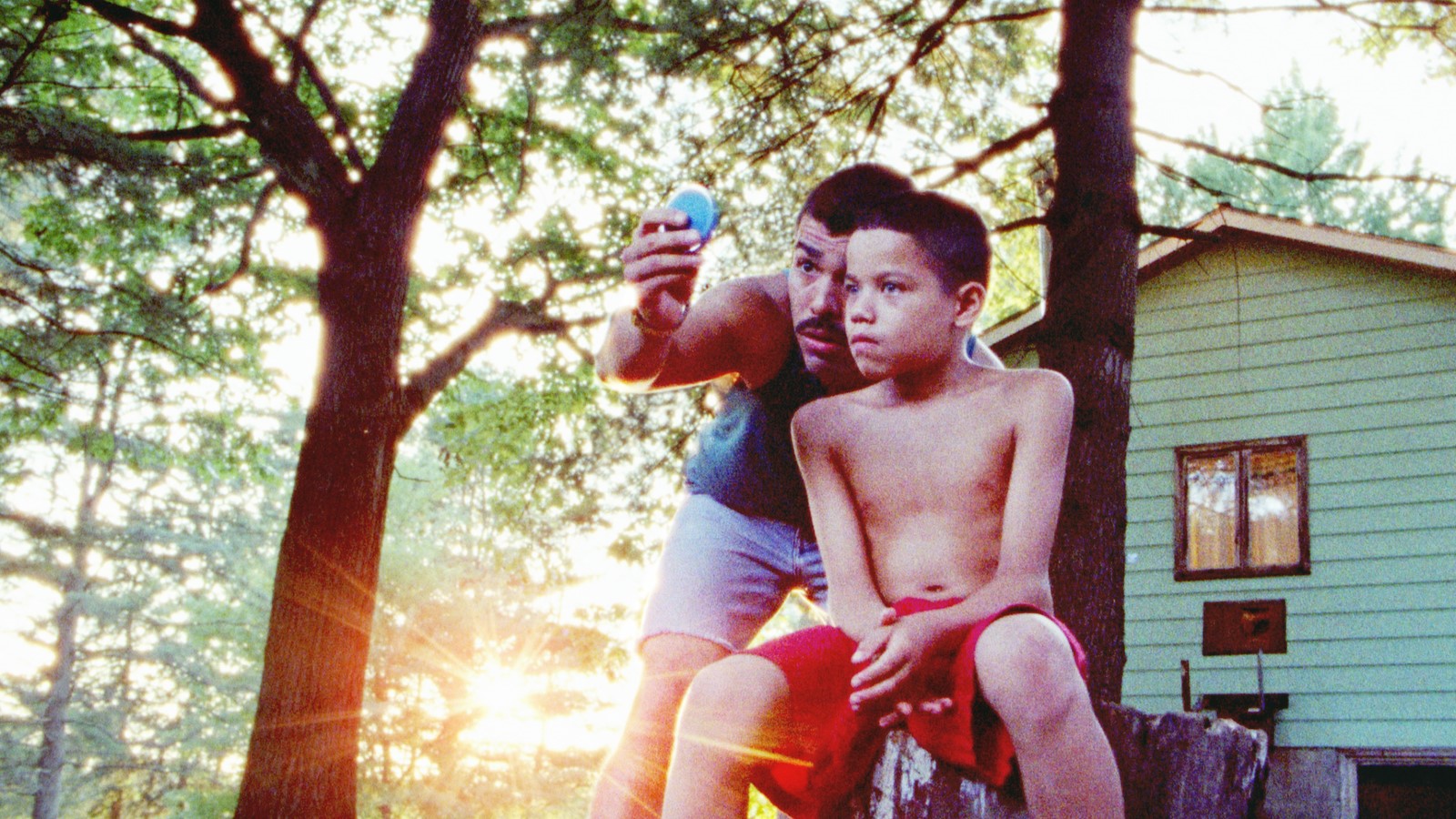
While the time period of the film is never explicitly stated, based on a few clues it’s likely the mid-1980’s. It’s a time when kids ran wild outdoors without cell phones or tablets in hand. The cinematography captures the sunny summer days when aimless kids roamed far and wide. It perfectly evokes the innocence and curiosity of young children.

As Joel and Manny enter into adolescence and leave childhood behind, Jonah falls further into his own world. The three brothers, at first inseparable, start to drift apart. While Joel and Manny seek to become men just like their father, Jonah tries to carve out his own identity. It puts him at odds not only with his siblings, but his parents as well.

There’s a dream-like quality to the movie reminiscent of films such as Beasts of the Southern Wild and Pan’s Labyrinth. Though Zagar’s approach is slightly less fantastic than either film, there is still a lovable, magnetic child at the center. As Jonah, Evan Rosado joins the ranks of child actors whose talent belies their age.

Zagar proves his mettle as both writer and director. His previous works include a number of solid documentaries (Captivated: The Trials of Pamela Smart, In a Dream), but as his first feature film We the Animals is a marvelous addition to his body of work.

https://www.youtube.com/watch?v=fghaoNoQcRU

Blinding Us with Science

Science Fair

by Rachel Willis

One year back in high school, my school decided participation in the science fair would be compulsory. I resented this since the last thing I wanted to do was “science.”

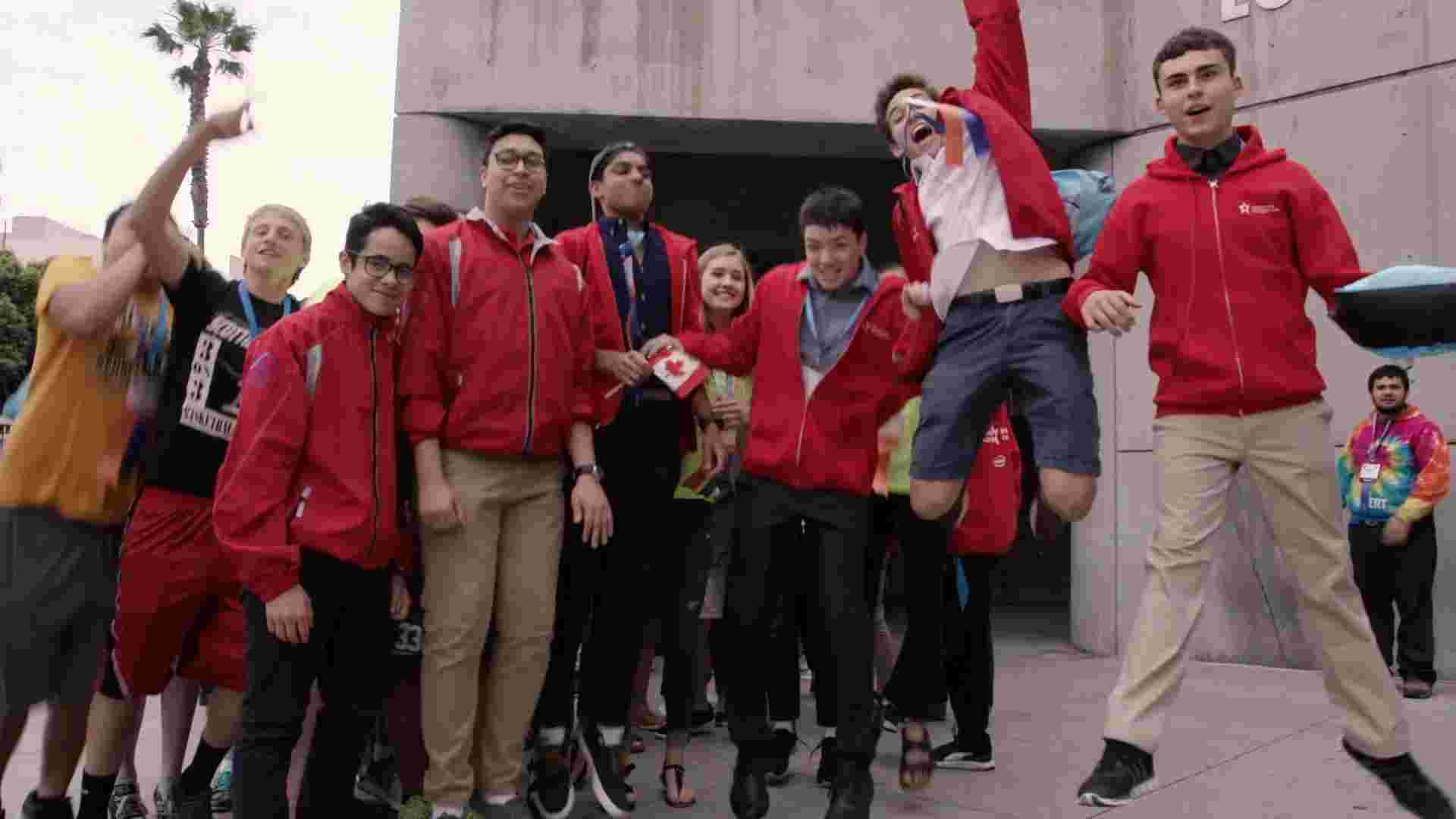
Watching the teenagers profiled in documentarians Cristina Costantini and Darren Foster’s film Science Fair, I start to understand the appeal of sincere participation in regional, national and international science fairs. If I had seen film the year I participated, I might have taken it more seriously.

What these kids invent, build and research makes my greenhouse in a shoe box look prosaic. From research into ways to prevent Zika transmission to monitoring and testing for arsenic in groundwater, these kids are smart, ambitious, and driven.

The crème de la crème of science fairs is the International Science and Engineering Fair (ISEF). To qualify for participation in ISEF, first these students must win their area science fairs, which can be state-wide or regional competitions. However they make it to ISEF, the teenagers who qualify have already faced stiff challenges from their fellow science enthusiasts.

To help the viewer understand the pressure these kids face, former ISEF winner Jack Andraka sheds light on the stress of presenting to judges. Projects that students have worked on for months, even an entire year, must be broken down into ten minute presentations to a handful of judges who will decide if their project is worth the prestigious Gordon E. Moore Award.

It’s hard to pick a  favorite. All of the teenagers profiled are charming and their desire to win is infectious. You wish they could all win.

Science Fair follows the familiar structure of other films depicting students engaged in fierce competition – First Position, Spellbound, and Make Believe. We’re given time to get to know the students profiled, to watch them hard at work on their craft, and then we follow them through the competitions as they fight their way to the finish line.

Costantini and Foster make a point to profile students from varied backgrounds. Some of the kids attend private schools especially focused on STEM education. Others attend public schools so focused on athletics that science achievements are completely ignored. The directors want to make a point that science is for everyone and anyone can achieve the level of success that these students find.

In a country that frequently devalues science and scientists, this documentary reminds us that these kids are our future.

That future is very bright.

Tragedy Purge

Assassination Nation

by Hope Madden

What if a rich white man reclaimed Salem, Mass for ostracized and victimized women by creating an outrageous, violent yarn about our out-of-control, whatever world?

In the case of Sam (son of Barry) Levinson’s latest, a cross between Tragedy Girls and The Purge, the result is the self-conscious, self-righteous and sloppy Assassination Nation.

A cautionary tale about online living, social media saturation, toxic masculinity, mob mentality, rape culture…I’m sorry—where was I? A lot. Levinson’s film is mad about a lot of stuff. And it will empower young women, mainly by filming them braless and wearing shorts that are bound to cause a yeast infection.

Four high school besties (Odessa Young, Hari Nef, Suki Waterhouse, Abra) find themselves unsure if they will survive the night once a hacker shares half the town’s digital secrets with the world. What follows is a vibrant, kinetic spectacle that deserves note if only for its raucous attention to basically anything and everything that might make a teenage girl feel violently self-righteous.

All of it’s empty, of course: lurid and stylish, pseudo-feminist and pretend-woke. Like the opening sequence “trigger warning,” the film promises something it lacks the spine to deliver.

Here’s the point, if there is one: the perils of high school are more horrifying than they were a generation ago. Hell, they’re probably twice as bad as they were two years ago. But high school kids are just as idiotic, self-absorbed, naïve and insecure as they ever were, so things are going badly.

But rather than empathize or provide insight, Assassination Nation offers exploitation and voyeurism. It’s one of those things you can try to get away with by passing it off as culturally relevant, zeitgeist embracing irony. That’s a tactic that might work if you aren’t just cribbing from two more clever and socially aware films where characters wear bras.

We Call BS

Fahrenheit 11/9

by George Wolf

Michael Moore may set up his latest film by asking “How the F did we get here?”, but thankfully Fahrenheit 11/9 isn’t just another empty load of hand-wringing on the perils of ignoring the “economic anxiety” of the heartland.

Moore has much more legitimate axes to grind, and not just about Donald Trump.

In fact, after a compelling open that reminds us how sure we were that Trump was never going to win in the first place, Moore shifts his focus entirely.

From the water crisis in Moore’s hometown of Flint, Michigan, to striking teachers in West Virginia to the school shooting in Parkland, Florida to a history professor at Yale and beyond, the provocateur filmmaker is after the converging forces that made Trump possible, and the dangers of continued complacency.

The film is at turns enraging, funny, chilling and inspirational, a rallying cry for a populace that may still be interested in maintaining any “aspirations of democracy.”

At his worst, Moore can be self-aggrandizing and overly eager to connect certain dots. Here, outside of one needless stunt at the Michigan governor’s mansion, he’s at his most forthright and committed.

Beyond the question of how we got here lies the bigger problem of how we get out. Moore presents a wide-ranging and compelling argument that the answer starts with, in the words of the Parkland student activists, “calling BS.”

He calls it on the myth of “real America,” and unveils his film’s true target is not Trump, but a government that can rule by minority.

Plutocratic cronyism, unabashed appeals to bigotry, and spineless capitulation from the “opposition party” have led to a voter apathy rooted in hopelessness. Amid flashbacks from Roger & Me, Moore’s 1989 debut, we see the counter lies in “mobilizing for freedom, not safety.”

And if we don’t?

History points to some very unsettling answers.

Accuse him of preaching to the choir if you want, but that’s not who Moore is most interested in reaching. Pairing lessons from the past with hope for the future, Fahrenheit 11/9 is his plea to get invested and mobilize.


Clock Management

The House with a Clock In Its Walls

by Hope Madden

Eli Roth made a family film. That’s weird. Although there is certainly something juvenile about the filmmaker’s work in general.

Yes, the Hostel director (and Cabin Fever, The Green Inferno and any number of other hard-R flicks) indulges a sillier side with his big screen adaptation of John Bellairs’s 1973 novel, The House with a Clock in Its Walls.

Set in a mid-Fifties slice of Americana (New Zebedee, Michigan), the film lazily crosses Spielberg with Tim Burton by way of Nickelodeon.

Orphaned Lewis (Owen Vacarro) finds himself in the charge of weird Uncle Jonathan (Jack Black), who is a warlock. The two items most likely to be found in Uncle Jonathan’s big, weird house are his next door neighbor/best friend/fellow witch Mrs. Zimmerman (the always formidable Cate Blanchett), and clocks. Loads of clocks.

Why so many? Jonathan likes the ruckus they create—keeps his mind off that one ticking sound he can’t quite locate…that ominous harbinger of something terrible.

The house also boasts a number of bewitched items, none of which are given much point or presence as Lewis struggles with the loss of his parents, unpopularity at school, and the sudden realization that he might have just triggered the end of days.

Roth and screenwriter Eric Kripke streamline Bellairs’s charming prose. Some updates are sensible, although neutering the novel’s image of powerful women is not one of the more courageous or welcome choices the filmmakers made.

They entirely miss the novel’s tone, amplified with intermittent illustrations by the great Edward Gorey: subdued, wondrous yet melancholy. These are not adjectives used in conjunction with the work of Eli Roth.

What he substitutes instead is colorful, artificial, sloppy fun.

Black—more or less revisiting his role from 2015’s Goosebumps—charms exactly as he always does. Watching the incandescent Blanchett slyly deliver lines and easily steal scenes from Black—and anybody else who happens to be present—is a joy.

Vacarro isn’t given much opportunity. His is a story about grief and loneliness. Or maybe it’s about embracing your inner weirdo. Roth can’t seem to decide, and he’s far too sidetracked by the demonic jack-o-lanterns, topiary Griffin and inexplicable roomful of carnival freakshow dummies to pay attention to the story.

There is utterly forgettable fun here, mainly thanks to Black and Blanchett, but the intended audience is a little tough to gauge. Things are likely a bit too slow-moving and eventually too wicked for the very young, while teens and adults may be bored by the lack of logic or what passes for humor. Still, if you have a 10-year-old who wants a seasonal scare that’s not too scary, here you go.

Guiding Light

Pick of the Litter

by Brandon Thomas

Whether it’s true or not, dogs make us feel like their sole purpose in life is to fill us full of happiness. Dancing at the front door when you come home from work… a sneak attack of kisses that always ends with you in a fit of giggles…nice long naps together on the couch. More than just making us feel good, dogs can serve a greater purpose in the lives of people with visual impairments. That journey to find this purpose is where Pick of the Litter takes us.

The documentary opens with the birth of Labrador pups Patriot, Potomac, Phil, Primrose and Poppet. They are the newest arrivals on the campus of Guide Dogs for the Blind, and their training will start on only their second day of life. The training to become a guide dog isn’t easy; out of the 800 dogs born there each year, only 300 become actual guides. The process is time-consuming, strict and unemotional… but it’s never, ever boring.

Directors Don Hardy, Jr. and Dana Nachman give us plenty of cute puppy footage, but never shy away from the seriousness of what a guide dog will end up doing. Bonds immediately form between the puppies and their “raisers,” who will work to socialize them. They can be quickly pulled away from those same raisers if it’s felt that the dogs can benefit more from being in another home. It’s that pull between emotion and dedication that gives Pick of the Litter its ultimate strength.

The urge to root for these pups is there from the beginning. Pick of the Litter doesn’t get too clinical in its approach to the dogs. We’re allowed to get to know them and pick out those distinct personalities. It also stings when one of them isn’t able to make the cut.

The stories of the people involved are just as important. The frustration felt by the trainers when the dogs don’t pass is palpable. Of course, the end game is for these dogs to end up with someone who will rely on them as their guides. Those stories are thankfully not lost, and give the audience that light at the end of the tunnel for our pup stars.

It’s easy to forget that dogs can do more than fetch, roll over and shake. They can give some people their independence back.

Man’s best friend, indeed.

40 Whacks

Lizzie

by Hope Madden

Screenwriter Bryce Kass has some interesting thoughts on the case of Lizzie Borden, the American woman suspected in the 1892 ax murders of her father and stepmother. In director Craig William Macneill’s hands, those intriguing ideas receive a proper, historical treatment.

Whether they have merit or not is mainly beside the point.

Lizzie (Chloe Sevigny) was a spinster of 32 when her parents died. She was home at the time, as was the family’s Irish immigrant servant, Bridget Sullivan (Kristen Stewart).

The film does not create a whodunit atmosphere, instead painting a historically realistic picture of some of the details that may have driven Borden to commit the crimes—likelihoods that wouldn’t have been considered in 1892 and have, therefore, rarely been taken into account over the years.

The struggle facing a single woman—economic and otherwise—is handled throughout this film with a desperate grace that elevates most scenes. Sevigny’s wily, lonesome outsider role plays to her strong suit. She shows here, as she did in 2016’s Love & Friendship, a capacity with the delicate language of the entitled.

Kristen Stewart continues to impress, even with a brogue. Yes, she is again morose, conflicted and put-upon, so maybe her range isn’t as strong as I’m suggesting, but she really knows her niche.

The way Macneill and Kass piece together the well-known pieces to this puzzle, this time considering how each may impact and be impacted by the fact that Lizzie was an unmarried woman, is consistently compelling.

Do the filmmakers take their somewhat subversive approach a step further than necessary, moving from honest if overlooked likelihood to vague possibility to “are they doing this just to be lurid”?

They do.

It doesn’t sink the film, though, mainly because Stewart and Sevigny commit to the direction and keep it from feeling exploitive. Plus, it is a fresh and believable take on a very old, oft-told story, so that counts for something.

https://www.youtube.com/watch?v=qwgtDHISXtQ