Category Archives: New In Theaters

Reviews of what’s out now

Dovidl the Conservatory Boy

Song of Names

by Matt Weiner

A Holocaust movie where the central tragedy haunts the characters just offscreen like a specter, anchored by two forceful leads and a mystery that spans decades. What could go wrong? A lot, it turns out.

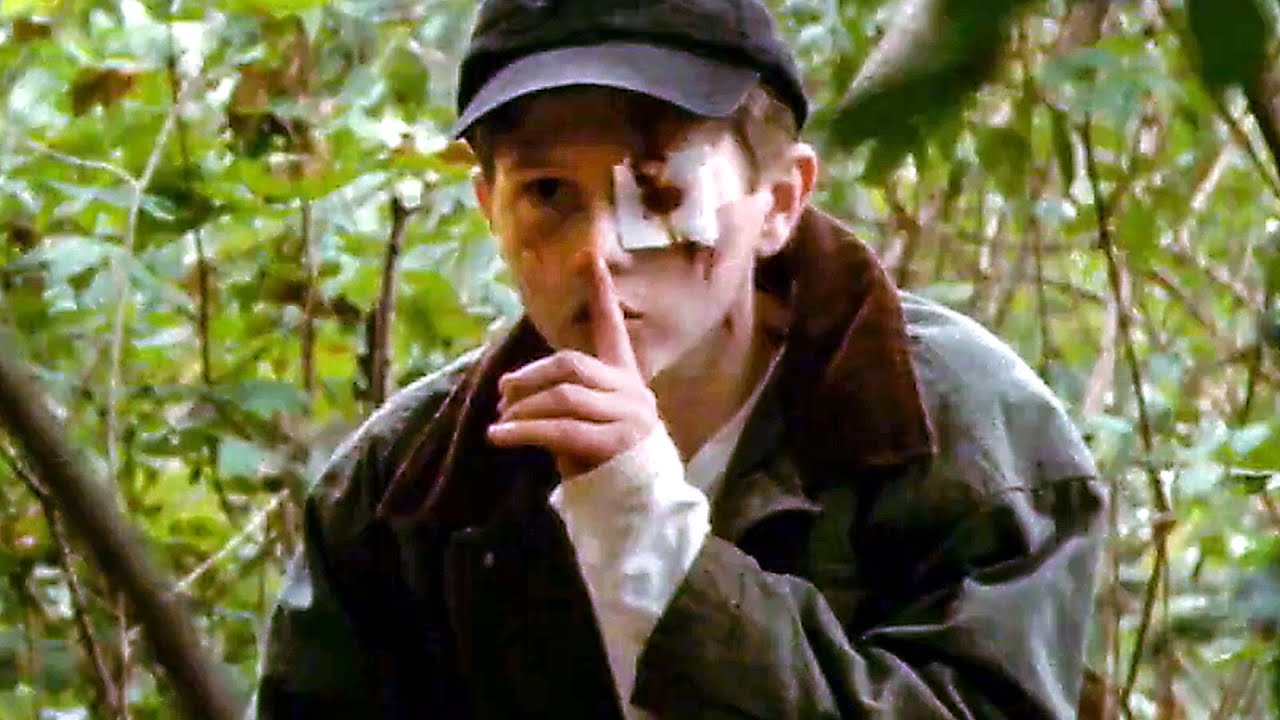
Dovidl (Clive Owen/Jonah Hauer-King) is a Jewish violin prodigy from Poland. Martin (Tim Roth/Gerran Howell) is an accomplished musician in his own right, but once Dovidl joins the household as a wartime refugee, Martin seems to lack both the talent and the affection to win over his father’s attention.

When Dovidl disappears on the night of a big coming-out concert, it tears families apart and leaves Martin with a lifelong quest for answers about what happened that fateful evening. Directed by François Girard and written by Jeffrey Caine (based on the novel by Norman Lebrecht), The Song of Names jumps back and forth in time between Martin’s contemporary search for the missing genius Dovidl and the wartime London childhood that originally brought them together.

The second biggest problem the film is up against is that while Roth does yeoman’s work keeping the present-day mystery engaging, it’s the slow drips of revelations from the past that hold the movie back.

But the biggest weakness is how flat and inoffensive those revelations end up being, which points to a sad milestone for the genre. It’s not that The Song of Names is aggressively bad with its background treatment of the Holocaust. In fact, it goes out of its way not to take offense. (Although Clive Owen’s spirit gum Haredi beard comes dangerously close.)

That inoffensiveness holds the movie back from being memorable, or at least different enough to merit the solemn subject. If we’re so far removed now from the Holocaust that not every movie needs to be a Prestige Event (remember that time we collectively lost our minds pretending Life Is Beautiful was deeply observed and worthy of awards, rather than a peerless grotesquerie of the era?), we should also be far enough removed for those involved to add something new to the conversation.

And for a brief moment, The Song of Names comes close. The World War II-era storyline trembles with pregnant pauses around themes like there might be nothing inherently heroic about survival, or that losing hope might be a recognizably sane response to unfathomable enormities.

But the schmaltzy resolution is a hard comedown. And given what it’s all about in the end, The Song of Names would’ve been better off playing up the mystery—at least Tim Roth is great. And who doesn’t like a mystery that wraps up with tidy answers?

Screwed

The Turning

by Hope Madden

Way back in 1961, Jack Clayton directed Deborah Kerr to an Oscar nomination with the atmospheric thriller, The Innocents, a nerve-jangling screen version of Henry James’s oft-adapted novel The Turn of the Screw.

Respectful of the book without being a slave to it, Clayton perfectly balanced that ever-important horror theme: is this woman insane or is something supernatural afoot? The novel’s been remade for TV and the big screen dozens of times in countries the world over. Given that, director Floria Sigismondi must have something new to say with her latest, The Turning.

She certainly has a hell of a cast.

Mackenzie Davis has impressed in every film she’s made, regardless of the fact that most of those films have gone utterly unnoticed by moviegoers. She quickly morphs into whatever is needed—badass, emotional wreck, whimsical youth, badass again—without losing an authentic human grounding. She’ll need that as Kate, the new live-in nanny.

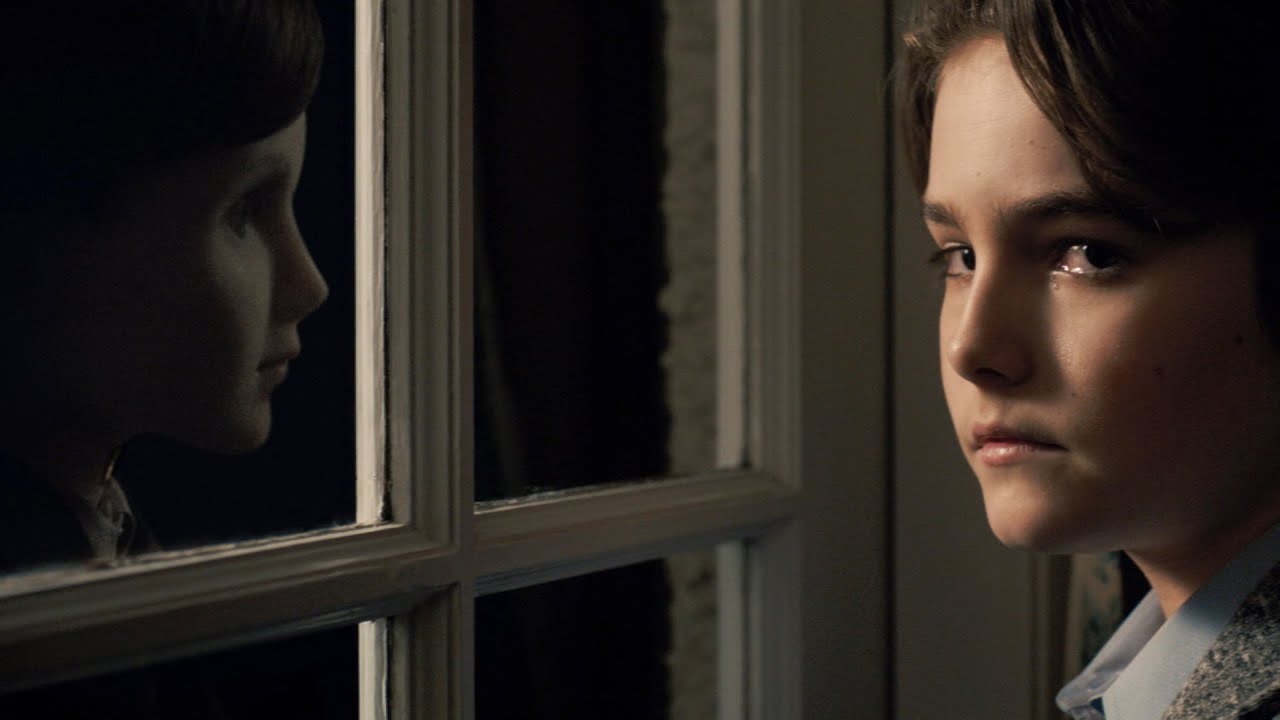
Finn Wolfhard (It) and Broklynn Prince (The Florida Project) portray her charges, Miles and Flora. Both kids are amazing. Wolfhard masters the contemptuous sneer of the privileged but still convinces as a tender, protective older brother.

Prince, so entirely stunning in Florida Project, again owns the screen. Her timing is spot on and her sassiness magnificent. In a smaller role as prim housekeeper Mrs. Grose, British TV actor Barbara Marten delivers the perfect mix of brittle and caustic.

Not one of them manages a convincing argument as to why this film was made.

It’s been ten years since director Floria Sigismondi made a feature. A groundbreaking music video director, Sigismondi moved primarily to television after her impressive 2010 feature debut, The Runaways. For The Turning, her eye for setting and framing are clearly on display and, again, the performances are strong. There’s just not much she can do with this script.

Written by Carey W. and Chad Hayes (The Conjuring), The Turning suggests no solid reason for its existence. Every scene is rushed, every revelation unearned. Early red herrings prove pointless (cheats, even, as they make no narrative sense in retrospect).

Worse yet, Sigsimondi fails to develop any real tension or sense of dread and there’s not a single scare in the entire film.

I knew better than to get excited about a January release, but it’s hard not to hold out hope with this group of artists. Give yourself the gift of the Clayton version instead.

Rumble in the Jungle

The Gentlemen

by George Wolf

If nothing else, Guy Ritchie and his Gentlemen are not lacking in self-confidence. This is a film, and a filmmaker, anxious to prove the old guys can still cut it, and that any young upstart who thinks otherwise has a painful lesson coming.

Ritchie returns to the testosterone-laden, subtitle-needin’ bloody British gangster comedy terrain of Snatch and Lock, Stock and Two Smoking Barrels – the early films that still define him – for a stylish ride through a violent jungle with a man who’s not sure he still wants to be King.

Matthew McConaughey is Mickey Pearson, an American Rhodes Scholar who put his brains to work in the drug trade, utilizing a string of expansive British estates to build an underground network that controls the supply of “bush” aka “supercheese” aka weed.

But now it seems he’s ready for a quiet life of leisure with wife Roz (Michelle Dockery), and offers to sell his entire operation to brilliant criminal nerd Matthew (Jeremy Strong) for a sizable sum.

As Matthew is mulling, Roz smells “fuckery afoot,” and she smells wisely.

There’s plenty, and a PI named Fletcher (Hugh Grant) thinks he has it all figured out, so much so that he visits Ray (Charlie Hunnam), Mickey’s number two, with an offer to save Mickey’s hide…in exchange for a hefty fee.

Ya follow? There’s plenty more, and it’s all spelled out via the screenplay Fletcher has conveniently written. As Fletcher joyously outlines the plot to Ray (and us) over scotches and steaks, Ritchie uses the device to play with possible threads, backtrack, and start again.

The Gentlemen is not just meta. As the double crosses and corpses mount, it becomes shamelessly meta, a sometimes engaging, other times tiresome romp buoyed by slick visual style and committed performances (especially Grant and Hunnam), but marred by self-satisfaction and stale humor that might have been less tone deaf a decade ago.

You get the feeling that after a marriage to Madonna and some big Hollywood franchise films (Sherlock Homes, Aladdin), Ritchie is out to prove he hasn’t gone soft with a little raucous, chest-beating fun.

But while The Gentlemen does show Ritchie’s way with a camera can still be impressive, its best parts only add up to a fraction of their promise.

The Dream I Dreamed

Les Miserables

by Hope Madden

“Remember this, my friends. There is no such thing as bad plants or bad men. There are only bad cultivators.”

Victor Hugo penned those words as he watched the suffering and oppression in the streets of Montfermeil.

Set in July 2018, when the World Cup victory made celebratory compatriots of everyone in France, at first blush, Ladj Ly’s film Les Miserables bears little resemblance to the saga of Jean Valjean and that tenacious Javert. But it doesn’t take long for the filmmaker to use the story of law enforcement and the population of modern day Montfermeil to show that little has changed since Hugo set quill to parchment 150 years ago.

Damien Bonnard (Staying Vertical) plays Stéphane. Ly taps Julien Poupard’s camera to follow Stephane on his first day in Paris as part of a three man unit tasked with keeping an eye on a mainly poor, primarily Muslim district.

Stéphane’s new partners, Chris (Alexis Manenti) and Gwada (Djibril Zonga), have been on the job long enough to have developed relationships and tensions in the neighborhood. Thanks to an almost absurd subplot involving a traveling circus—whose lion delivers an apt metaphor and a heartbreaking scene—Stephane’s first days on the force will be regrettable.

Ly was inspired to write the film by riots that broke out in his own apartment building and neighborhood in 2005. That authenticity lends the film both a visceral dread as well as a complicated compassion.

Like Hugo, Ly seems unwilling to abandon those in authority to the fate of villain any more than he’s willing to entirely forgive the actions of the oppressed. Rather, each side is implicated (one far more boldly than the other), but it’s the lack of tidy resolution that makes the fate of these characters compelling.

While every performance is impressive, young Issa Perica is the film’s beating heart, its undetermined destiny, and he’s more than up to the task. His lines are limited but his performance is heartbreaking, his character really the only one that matters.

A devastating social commentary masquerading quite convincingly as an intense cop drama, I’d say Les Miserables would do Hugo proud. The truth is, it would probably break his heart.

Have Mercy

Clemency

by Hope Madden

Alfre Woodard has primarily provided crucial supporting turns in film and television since 1978. With writer/director Chinonye Chukwu’s Clemency, Woodard delivers an astonishing lead turn as a prison warden dealing with inmates on death row.

Examining capital punishment from the eyes of a prison warden is certainly a novel approach. The warden has generally been relinquished on film to a cowboy hat wearing good ol’ boy with no qualms about flipping that switch. Chukwu and Woodard are disinterested in clichés. Instead they carve out something truly new in this genre.

The thing Chukwu gets most right in this film is an overwhelming sense of responsibility and grief, and it’s a tough line to toe. Warden Bernadine Williams understands that, while her own grief threatens to swallow her whole, it doesn’t compare with the pain she comes in contact with. For that reason, she never defends her position or betrays her sympathies when confronted by victims’ families, the families of the condemned or the condemned themselves.

Her own grief is so acutely individual that she refuses to seek sympathy and she outright rejects empathy, because who could put themselves in her place? She is in charge but has no control. She is responsible, yet she does not determine these men’s fates.

If Chukwu hits the right notes here, it’s Woodard who sings. This journeyman has played just about everything across her four decades in the business, and she brings a palpable sense of hard won wisdom to this role.

The film is essentially a character study, and one of a character determined not to discuss or betray her feelings. That’s a tough nut to crack because you have to let the audience know what’s going on without telling us anything at all. More than that, what Woodard has to convey is far beyond the scope of what anyone in the audience can really understand. And yet, she succeeds poignantly.

Aldis Hodge, playing death row inmate Anthony Woods, balances Woodard’s practiced stoicism with barely contained jolts of emotion. Clemency gives Hodge the opportunity to shine and he grabs it, conveying a tumult of raw feelings that will leave you heartbroken.

If Clemency is a miraculous package of performances, it doesn’t entirely work as a film. Bernadine’s story—her existential crisis—doesn’t have a beginning or an end, just an unhappy middle. But maybe that’s necessary for a film that breaks new ground while delivering the same message: we need criminal justice reform.

You Can Dance If You Want To

Cunningham

by Hope Madden

“The audience was puzzled.”

Such was modern dance legend Marce Cunningham’s wry, almost tickled description of one reaction to a performance. An enigmatic presence on and offstage, he makes for a fascinating if ultimately unknowable center to documentarian Alla Kovgan’s new documentary.

With Cunningham, the filmmaker seeks to reignite the peculiar audience response the dancer/choreographer’s performances once garnered, and perhaps drive wider appreciation for his work.

Kovgan chronicles the ways in which Cunningham challenged the traditional concept of dance, combining ballet and modern choreography and creating works without relation to music. His avant garde approach drew the attention and collaboration of other boundary-pushing artists of the time, including Andy Warhol, Robert Rauschenberg, and Cunningham’s eventual life partner, John Cage.

Speaking of his interest in Cunningham’s work, Cage says, “I would like to have an art that was so bewildering, complex and illogical that we would return to everyday life with great pleasure.”

Kovgan goes about exploring not only that very work but the mind and imagination behind it through an appealing combination of archival footage, audio and onscreen text, as well as re-stagings of some of the artist’s most memorable pieces.

The result is provocatively piecemeal, a visually arresting if intentionally untidy image of Cunningham’s life and work. Most often, Kovgan’s style suits the content beautifully, but other times it’s a misfit.

Where Wim Wenders employed 3D to immerse the viewer in the dance of Pina, Kovgan is as concerned with the surrounding as the movement. She stages performances on rooftop, in meadows, among trees and within train tunnels. While the combination creates a vibrant visual impression, it steals emphasis from the movement itself, which feels out of step with Cunningham’s most basic philosophy.

Kovgan takes chances, capturing the dance from above, close up, far away, and at odd angles. This sometimes creates a vibrant, off kilter sensibility that complements the material. At other times, you wish you could see more of the dancers, feeling as if you’re missing something amazing in favor of needless close up footage of a face.

It’s a small knock, honestly, with dances this arresting and accompanying material this compelling. Kovgan’s respect for the work as well as the life of her subject is clear and she’s captured much of that spirit.

Rite Here, Right Now

Color Out of Space

by Hope Madden

HP Lovecraft has influenced horror cinema in ways too varied and numerous to really articulate. But true Lovecraft is tough to bring to the screen for a number of reasons, chief among them that his madness tends to involve something indescribable: a color no one’s ever seen before, a sound entirely new to the human ear, a shape that defies all laws of geography and logic.

Alex Garland pulled inspiration from Lovecraft’s 1927 short Colour Out of Space for his brilliant 2018 mindbender, Annihilation. But for direct adaptations, Richard Stanley’s newest may be the best.

Naturally, the film’s success is due in large part to Nicolas Cage’s performance, because who descends into madness quite as entertainingly?

Cage plays Nathan Gardner. Nathan and his wife (Joely Richardson), their three kids and their squatter (Tommy Chong – nice!) live a quiet life in the New England forest not far from Arkham. A meteorite changes all that.

Cage basically strums a favorite old tune, landing somewhere on his “nice guy gone insane” spectrum just this side of Brent (Mom and Dad) and Red Miller (Mandy). In fact, the voice that begins emerging once the meteorite hits is gleefully reminiscent of Peter Lowe from Vampire’s Kiss (a call back I can get behind).

Is that the only reason to see the movie? No. Tommy Chong is a hoot, Richardson gets one especially creepy carrot chopping scene, and things go a little Cronenberg just when you want them to.

There’s a lot wrong with the film, too. Scenes are sloppily slapped together, one rarely leading to the next. The film’s budget is betrayed by its FX and supporting performances are not especially strong.

But Stanley’s long-awaited comeback (this is his first narrative feature since being fired from The Island of Dr. Moreau in 1996) infuses Lovecraft with a much needed dark streak of comedy and entrenches his tale of madness within a loving family dynamic, offering an emotional center to the story that the author rarely delivered.

The film lacks the vibrant subversiveness of Mom and Dad and comes nowhere near the insane vision of Mandy, so Cage fans might be only mildly impressed. Lovecraft fans, though, have reason to be excited.

Sleepless in Mexico City

Midnight Family

by Hope Madden

For a population of 9 million, Mexico City keeps only 45 official ambulances. Private ambulances compete with each other to fill the need for additional resources. Midnight Family rides along with the Ochoas, one family making their living transporting the injured to government and private hospitals around the city.

Do they have training? The equipment they need to tend to a medical emergency?

Hell, they may not even have gas.

The nuance of the act of goodwill or commerce tightens the film’s emotional grip. As one member of the team worries over an infant while police question the father, clearly unable to pay for these services, it’s obvious that the Ochoa family takes its life saving mission seriously.

At the same time, every action is calculated: how to beat another ambulance to an accident, how to evaluate each situation to best secure payment, which hospital will be the most forthcoming with payment, which police are willing to alert them to accidents in return for a bribe.

It all sounds seedy until you realize what would happen to the injured without them.

And while you’re weighing the ghoulish balance between money and mercy, director Luke Lorentzen shows you just how a high speed chase should be filmed as 17-year-old Juan races and weaves his ambulance through traffic to beat another unit to the scene. (Honestly, you’d think a group of people this well-informed on the ills of Mexico City’s healthcare situation might be a little less daring!)

Juan is all business, a savvy worker with ambition and wisdom to share with his little brother Josue, who rides along at night instead of getting ready to go to school. In these moments, when family members cobble together enough cash for a dinner of tuna on saltines before going home to shower without hot water, the larger context and struggle takes shape.

An urgent portrait of a system in collapse, Midnight Family also uncovers one family’s raft of hope amid an ocean of desperation.

Who’s Bad?

Bad Boys for Life

by Hope Madden

It’s been 17 years since we last checked in on Detective Mike Lowery (Will Smith) and his goofy partner Marcus (Martin Lawrence). One of them has intimacy issues. One of them always wants to retire. They drive recklessly around Miami and wreak general havoc.

In those 17 years, Generation X has gotten old.

Marcus has a grandbaby now and wants to retire again. Then Mike is almost killed, so now Marcus really wants to retire. That means frustrated Mike, desperate to reestablish his manhood by finding the guy who tried to kill him, must team up with Miami PD’s new superteam, AMMO.

That’s right, AMMO, which stands for literally the most attractive group of police officers in the history of crime. They’re tech-tactical. They have a drone and shit, and no one would ever notice a drone flying into the abandoned warehouse while they do an arms deal.

But Mike don’t play that. He’s old school. And old. You know he’s old because he’s always wearing long sleeved shirts and jackets in Miami.

Is Bad Boys for Life ludicrous? Oh, hell yes. Luckily its casual sexism and jingoism are offset by its refreshing pro-violence stance.

Directors Adil El Arbi and Bilail Fallah—whose Shakespearean take on Brussels gang violence, Black, is well worth finding—offer no such lyrical balance of carnage and emotion here. It’s actually hard to imagine a film franchise so single-mindedly opposite of their insightful gangster drama.

It’s clear the marching orders were: get the bad boys back together, blow stuff up and trade quips! Fine, but who ordered all the forced ridiculousness and tonal whiplash?

Saddled with a breathtakingly by-the-numbers script by committee (Chris Bremner, Peter Craig and Joe Carnahan), the directing duo punctuates dramatic moments with comic relief while they distract from a weak story with nonsensical car chases and explosions, and when all else fails, fall back on daddy issues.

Don’t look at the credits and you’d swear Michael Bay directed this movie. (Bonus: Bay has a cameo.)

The film broaches interesting themes as one partner turns to God while another turns to bloodthirsty vengeance in the face of death. But Lawrence, ever the sloppy sidekick, makes clear that spirituality and peace are only fodder for jokes and neither partner will regain his manhood until there’s a massive weapon between his legs and he’s shooting Mexicans out of the sky.

Will Mike learn to love? Will he whip his tech-savvy and law abiding new team into shape (that is, help them to embrace lethal and mainly illegal justice)?

And finally, can we expect more of this?

Maybe. Whatcha gonna do?

Dolittle Jones

Dolittle

by George Wolf

Man, when I was a kid I wanted a Pushmi-Pullyu so bad.

I would try to get all the way through “If I Could Talk to the Animals” without messing up a lyric, and imagine how fun it would be to get one of those mythical Pushmis delivered in a crate, just like Rex Harrison in 1967’s original Dr. Dolittle.

Over thirty years later, Eddie Murphy ditched the tunes for a more straightforward comedic approach in two franchise updates, and now Robert Downey, Jr. steps in to move the doctor a little closer to Indiana.

Jones, that is.

But’s it’s Indy by way of Victorian-era Britain, as Young Lady Rose (Carmel Laniado) calls on the famous animal-taking doctor with a dispatch from Buckingham Palace and an urgent plea to help the deathly ill Queen Victoria herself (Jessie Buckley).

As suspicions arise about Royal Dr. Mudfly (Michael Sheen) and the true nature of the Queen’s ills, Dolittle and friends (some human, most not) set sail on a grand adventure to acquire the cure from King Rassouli (Antonio Banderas), who just happens to be the father of Dolittle’s dear departed Lily (Kasia Smutniak).

Plus, there’s a big dragon.

Director/co-writer Stephen Gaghan (Syriana) re-sets the backstory with an animated fairy tale, then ups the ante on action while letting Downey, Jr. and a menagerie of star voices try to squeeze out all the fun they can.

From Emma Thompson to John Cena, Octavia Spencer to Rami Malek, Tom Holland, Ralph Fiennes and Kumail Nanjiani to Selena Gomez and more, the CGI zoo juggles personalities, while Downey curiously chooses a whispered, husky delivery that sometimes makes his Do a little hard to understand.

But, of course, he still manages to craft an engaging character, even centering the Dr. with a grief just authentic enough for adults without bringing down the childlike wonder.

This is a Dr. Dolittle set on family adventure mode, with plenty of talking animal fun for the little ones and a few clever winks and nudges for the parents. But as the start of a possible franchise, it’s more of a handshake than a high-five. It may not leave you with belly laughs or tunes stuck in your head, but it’s eager to please manner doesn’t hurt a bit.