Category Archives: New In Theaters

Reviews of what’s out now

We Are Family

Bloody Nose, Empty Pockets

by George Wolf

Similar to the hybrid reality it creates, Bloody Nose, Empty Pockets is an oddly compelling cocktail. It’s like a foul odor you step back from quickly, then find perversely comforting once you’ve had time to soak in it.

And no matter how many of the film’s most effecting moments are manufactured, there’s much authenticity to be found in the smoke-filled haze of the Roaring 20’s lounge.

“This is a place you can go when nobody else don’t want your ass.”

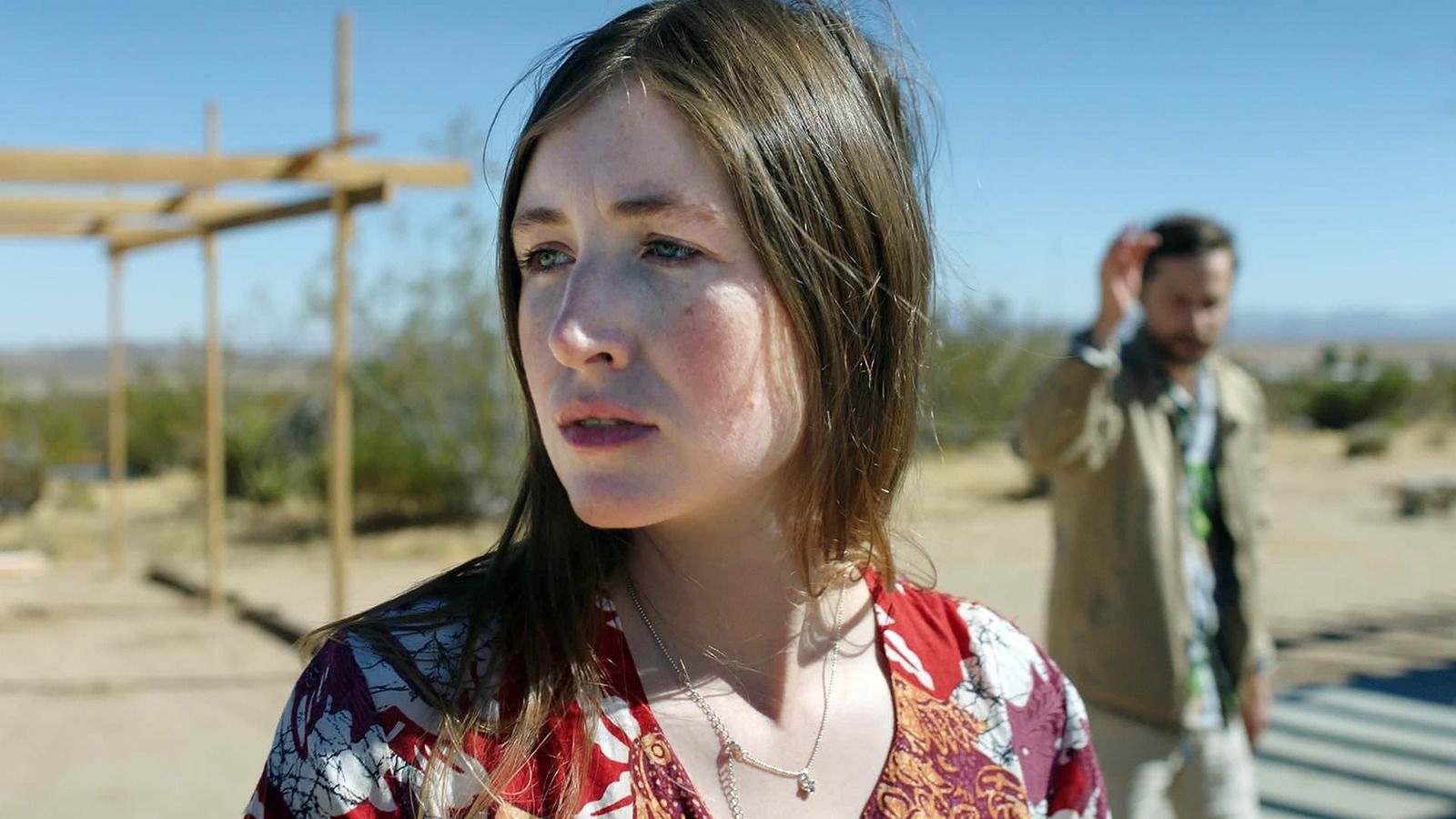
Sitting unceremoniously at the edge of Las Vegas, the “20s” is down to its final day. Directors Bill Ross IV and Turner Ross drop us off before noon, when grizzled regular Michael (Michael Martin) is cleaning up in the bathroom and daytime bartender Mark is hanging up some cheap decorations for the farewell party.

“What kind of party is it if an Australian guy doesn’t take his pants off?”

As drinks are poured, ashtrays are emptied and daytime TV gives way to nighttime jukebox singalongs, we get to know the parade of souls that have come to call this dive bar home.

What The Florida Project was to Disney World, Bloody Nose is to Lost Wages, eschewing tourist playgrounds for the world weariness of an existence in exile, and of outsiders no longer bothering to look in.

“You think I’m better than Fireball? I’m not!”

The Turner brothers shot their exteriors outside Vegas, but couldn’t find a suitable bar for filming until they landed in a New Orleans dive. Their cameras don’t always make it out of the frame, but the film’s mood is so encompassing you hardly care. This is a storytelling experiment left to its own ends, which end up being delightfully and desperately character-driven.

“You know how much I love you?”

As the night bartender (Shay Walker) tries to keep her teen son and his friends from smoking weed and stealing beer, we’re reminded how quickly the outside world will move on, scattering these barflies without mercy.

My friend Jason recently remarked that “bars are the only enduring sacred human places,” and these 98 minutes at the Roaring 20s are full of that sacred humanity. There may have been a few strings pulled at setup, but those tears – both theirs and yours – will feel plenty real.

“I always come to this bar…and feel like family.”

Generational Terror

Relic

by Hope Madden

Many a film has used a building—a haunted house, for instance—to represent the mental state of a character. From Shirley Jackson to Stephen King to Daniel Kehlmann, writers have lured us into perfectly lovely structures only to hold us inside, our ugly thoughts manifesting as danger, our madness creating a labyrinthine, Escher-esque trap.

Such is the case for Relic, a compassionate but clear-eyed look at a different type of hereditary horror.

Edna (Robyn Nevin) has been missing for at least three days. Her daughter Kay (Emily Mortimer) and her granddaughter Sam (Bella Heathcote) move into Edna’s place to keep an eye out for her while local police investigate.

And then, there she is, and it’s entirely likely she never even left the house.

Well, that can’t be—unless there’s something seriously weird about this house.

Co-writer/director Natalie Erika James keeps her metaphor right at the surface of the film. That keeps Relic from ever truly terrifying, honestly. There’s no simultaneous pull that something supernatural is afoot. But the sense of dread takes on a whole new tenor, and the film’s horror is honest as it hits on an emotional level.

Nevin does an admirable job with Edna, creating a fully dimensional character, one who’s tough enough that when she becomes vulnerable, it comes as a jolt.

Mortimer and Heathcote strike a believable love/disappointment/blame balance and the emotional tug of war among the three women rings sadly true.

There’s not a lot of depth to this story. Relic isn’t hiding its themes—there are no subplots or red herrings, and the a-ha moments that allow Sam and Kay to piece together the mystery of Gram’s troubles feel almost perfunctory.

But James doesn’t shy away from the ugliness, guilt, anger or grief that fuel relationships tied up in this particularly painful genealogical horror. With its evocative analogy, Relic shows us what we are really afraid of, and it isn’t ghosts.

Music Man

David Foster: Off the Record

by George Wolf

Imagine being so successful at something that it bores you.

After decades in the music business, millions of records sold, 16 Grammy awards, scores of nominations, and multiple careers launched, improved or saved, that’s where legendary producer David Foster found himself.

His new passion is Broadway, where he hopes to launch a hit musical and maybe even check off the the T in EGOT (with a Tony award). This career shift has seemingly inspired Foster to look back, talking at length to director Barry Avrich for David Foster: Off the Record.

With an introductory promise to Avrich to “be over your shoulder the whole f-ing way,” Foster is very definitely on the record. The ego is healthy but understandable, and some frank self-assessment helps Foster come off as a complex, demanding, uniquely talented charmer who can be a bit of a Richard.

His perfect pitch was revealed during a self-described “perfect childhood” in Victoria, B.C., and by the time he was a young man was out-earning his parents through a variety of music gigs. After a year in London, he landed in L.A., became one-hit wonderful with Skylark (“Wildflower”) in ’72, caught the ear of Streisand in a recording session, and the rocket ride began.

Obviously, the man’s got some great stories. What Avrich has is a great editor in Eugene Weis, and together they set the perfect pace for a film about a guy who admits to only feeling comfortable in the fast lane.

Weis supercuts interview footage to create lively “conversations” between Foster and his colleagues, while Avrich lingers on Foster when he listens hard to one of his creations (such as Celine Dion’s “All By Myself”), drinking it in and relishing the effect.

Even if you don’t love all the tunes (and it’s clear members of Chicago aren’t exactly big fans of Foster’s bombastic 80’s ballads that rescued their career), it’s hard to resist the engaging nature of the storytelling. And they just keep coming, from crashing a party at Streisand’s and fighting over The Bodyguard soundtrack to saving a broadway star’s life by almost killing him and helping launch reality TV.

But while most of the film is gracefully laced with Foster’s honest introspection on his multiple failed marriages and concerns about being a good father, the final act wavers with a more glossy, choreographed concentration on his personal life.

Avrich recovers with a parting nod to Foster’s new focus on Broadway, the unconquered quest in the city he doesn’t enjoy. But hey, at least he’s not bored.

Thanks to what’s on the record in Off The Record, you won’t be, either.

Legacy

John Lewis: Good Trouble

by Rachel Willis

With a man as active as John Lewis, finding a focal point from which to craft a story could prove challenging. Should a documentarian focus on his early years as a civil and voting rights activist? His first years as a politician? His contemporary battle to overturn voter suppression laws?

Director Dawn Porter decides to highlight a little bit of everything in John Lewis: Good Trouble. The result is a fascinating, if messy, portrait of one of America’s greatest fighters for equality and justice.

Porter’s efforts have previously featured John Lewis as an interviewee (the magnificent docu-series Bobby Kennedy for President), but this time, she mines the wealth of material surrounding the man himself.

Congressman Lewis is a more than worthy subject. His early years on the front lines of the fight for racial equality alongside Dr. Martin Luther King, Jr. to his current stumps along the campaign trail offer endless archival footage, colleagues and siblings to interview, and opportunities to follow the Congressman during his day-to-day life on the Hill. 

Some of the most noteworthy parts of the documentary showcase conversations with those who have been inspired by Lewis. Representative James Clyburn says Lewis is “the most courageous person [he] has ever met.” Representative Ilhan Omar quotes John Lewis saying she took to heart his message to “love your country like you love yourself.”

The bulk of the film addresses Mr. Lewis’s continuing struggle to ensure voting is accessible to everyone. In the 50’s and 60’s, it involved (among other things) walking door to door in black neighborhoods to encourage the residents to vote. Today, he wages the war in Congress, trying to strengthen the Voting Rights Act after it was gutted by the Supreme Court in 2013. On the campaign trail, he encourages those who are most affected by restrictive voting laws to turn out in waves.

Some moments drag, as Porter tries to cram as much information about Lewis as she can into her 96-minute documentary. Certain stories seem added as an afterthought that would perhaps have been better left on the cutting room floor.

Mr. Lewis says he is deeply concerned about the future of democracy in America, but that he still believes “we shall overcome.” Anyone who needs inspiration or hope in these chaotic times can always look to John Lewis for guidance.

Unforgiving

The Outpost

by Hope Madden

Films concerning the US’s two decade war in Afghanistan have not managed to find much of an audience. I’m not sure Summer 2020—the year we welcomed meth gators as a needed distraction from our own personal hell—will improve those odds.

And yet, director Rod Lurie’s The Outpost bravely ventures to the streaming environment this week to remind us that a solid, understated war movie can still thrill.

The ensemble piece features Caleb Landry Jones and Scott Eastwood as two sides of a coin. Eastwood’s Staff Sgt. Clint (that’s right) Romesha is a born leader with quiet dignity, grit and a mind for strategy. Cynical of the Army’s “frat boy” culture, Jones’s Staff Sgt. Ty Carter doesn’t quite fit in.

Where doesn’t he fit in? A sitting duck army outpost situated at the basin of surrounding mountains where Taliban forces travel, watch and shoot.

Screenwriter Eric Johnson’s bread and butter has been teaming with Paul Tamasy to create the cinematic presentation of a true story. They nearly won an Oscar for Johnson’s first foray into feature length screenplays, David O’ Russell’s powerful The Fighter (with Scott Silver).

The duo join forces again, this time adapting Jake Tapper’s investigative book concerning one extraordinary battle in our war in Afghanistan.

Understatement works in the film’s favor, Lurie favoring overlapping dialog and naturalistic settings to bombast and a leading score. In fact, much of the film plays without a score, a refreshing change that gives The Outpost a grittier, more realistic feel that serves it well. Because truth be told, a true tale that delivers this amount of sheer will, courage, perseverance and spirit is undermined by flapping flags and swelling strings. Lurie’s restraint says, “This is really what happened. Can you effing believe that?!”

That’s not to say The Outpost eliminates every cowboy moment. Indeed, this may be the first role in which Eastwood makes the most of his famous last name, clearly channeling his father in a performance punctuated by controlled, hushed rage and squinting blue eyes.

But Caleb Landry Jones, as remarkable and versatile actor as you will find, is the broken soul of this film. Jones does “haunted” in a way that makes every other performance feel like a performance.

Together Lurie, his writers and his cast sidestep clichés, delivering instead a clear-eyed look at bravery, failure, and the cost of war.

I’m Not Saying It Was Aliens…

Skyman

by Brandon Thomas

To say that The Blair Witch Project made an impact upon its summer 1999 release would maybe be the understatement of the year. Not only is The Blair Witch Project one of the most profitable independent films of all time, but it also ushered in the rise of found footage horror.

Twenty-one years after the phenomenon of Blair Witch, that film’s co-director, Daniel Myrick, returns to the mockumentary fold with Skyman.

Carl Merryweather (Michael Selle) claims he was visited by an extraterrestrial, Skyman, when he was 10- years-old. That event made Carl a minor celebrity in his small California town and it’s completely shaped his life. As his 40th birthday draws near, Carl becomes more convinced that the Skyman is going to return. With his skeptical sister Gina and a documentary film crew, Carl goes back to the spot in the desert where the original encounter took place.

If you think Skyman is going to be overflowing with murderous E.T.s, outlandish found-footage F/X, and tense scares, then you are going to be sorely disappointed. Myrick’s approach to Skyman is more akin to the original Blair Witch than to the found-footage spectacle we’re now used to. It’s a very deliberately paced film — maybe too deliberate.

Given Myrick’s pedigree with the genre, it’s fair to have expected something a little more scary with Skyman. Maybe not a “vengeful witch in the woods” scary, but I would’ve settled for a Fire in the Sky kind of disturbing found footage vibe. The film’s more sci-fi finale is a tacked-on afterthought. The audience, like Carl, eagerly awaits the return of the Skyman. Unlike Blair Witch with its tantalizing nuggets of the witch spaced through the film, the Skyman himself is a virtual no-show.

Selle is outstanding as the awkward Carl. Selle and Myrick have created a character driven by his obsession, but not at the expense of his friends and family. Roy Neary from Close Encounters he ain’t. This decency, along with Selle’s subdued performance, makes it easy to root for Carl. 

Outside of a great lead performance, Skyman offers up nothing the audience hasn’t seen before, and mostly just leaves you wanting. 

Survival Island

Madagasikara

by Hope Madden

As little Anna tells viewers and her elementary school classmates, Madagascar is the 4th largest island on earth, and likely the single poorest country. Ninety three percent of Madagascar lives on less than $2 a day and half the population is children.

Madagascar is also devastatingly beautiful, not unlike Cam Cowan’s documentary Madagasikara.

Beautifully photographed and expertly edited, Madagasikara introduces you to a world you just didn’t know existed—one that’s never been site to war and yet grows more ravaged by poverty daily. It’s a world where breaking quarry rocks with hand tools offers the most stable occupation, for as long as your body holds out. The world of this film is one so impoverished it may as well be medieval—part of a long forgotten period where a family’s best hope for the survival of their children is the convent.  

For all the destitution, Cowan’s film is surprisingly joyous at times, primarily because of the beautiful little faces surrounding the three mothers—Deborah, Tina and Lin—that are the documentary’s main focus. It’s hard to watch so many sweet, cute children and not feel joy.

Their pain is also more punishing.

A decade of botched elections put the island nation at the center of a tug of war between a millionaire looking to exploit what he can for his own gain (sounds familiar) and a pro-military dictator even less interested in the wellbeing of his citizens. It also put Madagascar in the crosshairs of a global community more focused on sanctioning its leaders than in feeding its population.

Wisely, Cowan humanizes the tale of strife by dropping us into the day-to-day of three different women. Their struggles, joys and heartaches breathe life into statistics that could otherwise overwhelm, their resilience and their frailty speak powerfully to the human condition.

Swing Time

Ella Fitzgerald: Just One of Those Things

by George Wolf

Just One of Those Things has plenty of things going for it, but catch it right now, and you can add “timing” to the list.

Really, there’s never a bad time to be swept away by one of music’s all time great voices, but these 90 minutes seem even sweeter right about now.

Director Leslie Woodhead assembles a wealth of performance footage, archived interviews and even some home movies to trace Ella’s rise from reform school and homelessness to concert stages across the globe.

Buoyed by the tender narration from actress Sophie Okonedo, Ella’s story becomes one of happenstance, perseverance and one-of-a-kind talent.

Her original aspiration was to be a dancer, but when other dancers at the Apollo Theater’s amateur night in 1934 were too good, 16 year-old Ella decided to sing. From that night until her death in 1996, she mastered jazz, big band, the great American songbook, and of course, be-bop swing.

In fact, the film’s non-performance highlight is a truly fascinating, nearly clinical deconstruction of the otherworldly ability that made Ella perhaps the greatest “scat” vocalist the world has ever known. Watch and learn, hepcats, it’s amazing.

Though the bulk of the film is given a linear, by-the-numbers presentation, the musical history it recounts is essential. An important and timeless biography, Ella‘s got that swing.

Which, as you may have heard, means a thing or two.

https://www.youtube.com/watch?time_continue=1&v=or1kqkeGXrI&feature=emb_logo

Belle of the Ball

The Truth

by Matt Weiner

Actors getting lost in a role can become the stuff of legends, or the butt of jokes—as Olivier’s advice allegedly went to Dustin Hoffman, “Why don’t you just try acting?” In The Truth, director Hirokazu Kore-eda takes one of film’s most iconic actresses and sets to demolishing the notion that an artist could ever separate who they are from what they have to say.

The film is Kore-eda’s first foray outside of Japan, and a worthy follow-up to his masterful 2018 drama Shoplifters. The drama, also written by Kore-eda, has a lighter touch in The Truth, but it’s no less arresting thanks to a brilliant self-referential performance from Catherine Deneuve.

Deneuve plays Fabienne, an idol of French cinema now at a point in her life when she’s ready to look back on her storied career. Fabienne’s daughter Lumir (Juliette Binoche) has brought along her family from America to pay Fabienne a visit. When Lumir gets an early look at Fabienne’s memoir, she lashes out at the wide gulf between Fabienne the myth and Fabienne the mother, the one who pursued her art to the detriment of everything else in her life.

One family’s drama becomes a delightful interrogation of memory and art. And as if the unreliable memoir weren’t enough to drive the point home, Fabienne is also currently filming a new movie against an up-and-coming actress playing her younger version.

The film’s quirky sci-fi twist forces Fabienne to face her younger self, and the grande dame of French cinema isn’t quite ready to relinquish her fading star power to what she sees as a poor imitation of her own youthful rise to celebrity.

Kore-eda blurs the lines even further by referencing Deneuve’s breakout years, specifically Belle de Jour, with posters and costumes dotting Fabienne’s house and still exerting a powerful hold on her sense of self-worth. (Ethan Hawke’s understated turn as Lumir’s bohemian husband Hank also feels like an alternate universe version of Jesse from the Before trilogy… but that might also just be Hawke’s natural “these are my ‘just chilling in France’ vibes.” Either way, the man is living his best life.)

The result is a family drama that manages to humanize the dysfunction without fully absolving anyone. Fabienne might be a legend, but she’s still only human. Living an entire life unmoored, unable to process anything in the moment without layers of artifice to mediate any real emotion, seems like it should be punishment enough.

Strange Bedfellows

Irresistible

by George Wolf

Some of the best moments during Jon Stewart’s years on The Daily Show happened when his guest was some smug politician who had not done their homework.

Because Jon always did his, and the squirming politico would realize pretty quickly that Jon could throw some heaters. This funnyman was whip smart, too, and pretty handy with the b.s. detector.

It should come as little surprise, then, that Irresistible, Stewart’s second feature as writer/director, employs some purposeful, intelligent comedy as it sets about skewering today’s ridiculous political climate.

Daily Show vet Steve Carell is Democratic strategist Gary Zimmer. Stinging badly from the 2016 election, he’s inspired by a YouTube video of a former Marine hero dressing down the city council in tiny Deerlacken, WI.

Zimmer decides right then that Col. Jack Hastings (Chris Cooper) and his “redder kind of blue” appeal could be the centerpiece of a new nationwide project to expand the Democratic base. And it all begins with getting Hastings elected Mayor of Deerlacken.

This does not go unnoticed on the other side. Once GOP strategist Faith Brewster (Rose Byrne) and her crew come to town, the Mayor’s race in Deerlacken starts carrying some pretty high stakes – including one hilarious sexual side bet between the two opposing operatives.

After an impressively dramatic filmmaking debut with 2014’s Rosewater, Stewart returns to the satirical stomping grounds where he became a respected (and, to some, reviled ) voice that drove many worthwhile conversations.

Though the bite of this screenplay may be a bit softer, his narrative approach betrays a long game that trades the sharper knives for the chance at a wider reach. Because the cure for what’s infecting American politics is not going to spread through niche marketing.

Sure, you could call that a sellout, and for the first two acts of this movie you might be right. The “all politics is local” premise is certainly not new, nor are many of the talking points. But thanks to the two veteran leads, those points are just funnier.

Carell’s default manner is perfect for the quietly condescending Zimmer, an elitist who confuses nobility with blind ambition, and somehow thinks he has a shot with the Col’s much younger daughter (Mackenzie Davis).

The real treat, though, is seeing Byrne finally dig into another role worthy of her comedy pedigree. With the right material, Byrne is a comedic MVP, as she reminds anyone who’s forgotten that fact by making Brewster one hilarious, shameless, priceless piece of work.

Stewart may be known for his progressive leanings, but both the left and the right are in his sights here, along with unchecked political cash and obsessive pundits complicit in fostering the fear and shame game.

Easy targets? Sure. But if you don’t think Stewart’s smart enough to know that, than you never saw him blindside a back-slapping incumbent on late night TV.

Irresistible caters to your expectations just long enough to make you think you knew where it was going all along. The unassuming way the film upends those expectations might seem overly convenient, but it feels right, as if Stewart is practicing what he is taking care not to preach. And that’s just what might make it hard for mainstream America to resist.