Category Archives: Fright Club

A celebration of horror movies with updates on our monthly Fright Club film series at the Gateway Film Center.

Fright Club: Best Horror Sequels

Who says a sequel can’t be better – or at least as good – as the original? If you look closely, there are loads of excellent horror sequels: New Nightmare, Scream 2, 28 Weeks Later, Ringu 2, The Devil’s Rejects. But which are the best of the best? We have the answer!

5. Exorcist III (1990)

William Peter Blatty wrote and directed this dialogue-dense sequel to the 1973 phenomenon William Friedken had made of his novel. Blatty starts strong enough, garnishing shots with vivid, elegantly creepy images. He enlists George C. Scott to anchor the tale of a cop drawn back into a supernatural case. In other inspired casting, New York Nicks great Patrick Ewing plays the angel of death in one of Kinderman’s freaky dream sequences, joined by romance novel coverboy Fabio as another angel. Also, the always great character actress Nancy Fish plays the bitchy but reluctantly helpful Nurse Allerton.

There are also two of the scariest scenes in cinema. Eventually the story moves into a hospital and stays there, but just before that move, there’s a terrific confessional scare – crazy spooky voice, effective cackle, blood – that elevates the entire project.

And then there’s that insane flash of terror as one nurse crosses the narrow hallway in front of the camera, quickly followed by some gauze-draped figure, arms outstretched. Eep!

4. Dawn of the Dead (1978)

Romero returned to the land of the undead in ’78 with a full-color sequel to Night of the Living Dead. The film follows a news producer, her chopper pilot boyfriend, and two Philly SWAT cops ready to abandon the organized zombie fight and find peace elsewhere. The four board a helicopter, eventually landing on the roof of a mall, which they turn into their private hideaway.

Romero, make-up legend Tom Savini, and Italian horror director Dario Argento teamed up for this sequel. You feel Argento’s presence in the score and the vivid red of the gore. Bloated, dated, and suffering from blue zombie make up, the film does not stand up as well as the original, but it still packs a punch.

Ken Foree and Scott Reiniger as the buddies from SWAT create the most effective moments, whether character-driven tension or zombie-driven action. Romero’s politics are on his sleeve with this one. He uses the “z” word, digs at Eighties consumerism, shows full-color entrails, and reminds us again that the undead may not be our biggest enemy once the zombie-tastrophe falls.

3. The Texas Chainsaw Massacre 2 (1986)

Tobe Hooper revisited his southern cannibal clan 12 years after unleashing The Texas Chain Saw Massacre on an unsuspecting world, and he had the great Dennis Hopper in tow. Hopper plays a retired Texas Marshall. He joins forces with a radio host, played gamely by Caroline Williams. Together they flush the Sawyer family out of hiding. And just in case we’d missed how Leatherface got his name, the act of removing someone’s face to wear as a mask is revisited in a kind of weird wooing ritual.

TCM2 certainly gets weird, and boasts an unhinged performance by Hopper as a lawman willing to make some ugly choices to follow his obsession. Jim Siedow (The Cook) returns, and veteran genre favorite Bill Moseley adds a quirky ugliness to the proceedings. There’s also an awful lot of screaming, even for this kind of a film, but it’s a worthy genre flick. It pales in comparison to the original, but it deserves its own appreciation. Hold it up against any other low-rent horror output of 1986 and it’s a standout.

https://www.youtube.com/watch?v=xUyEaYxTI2U

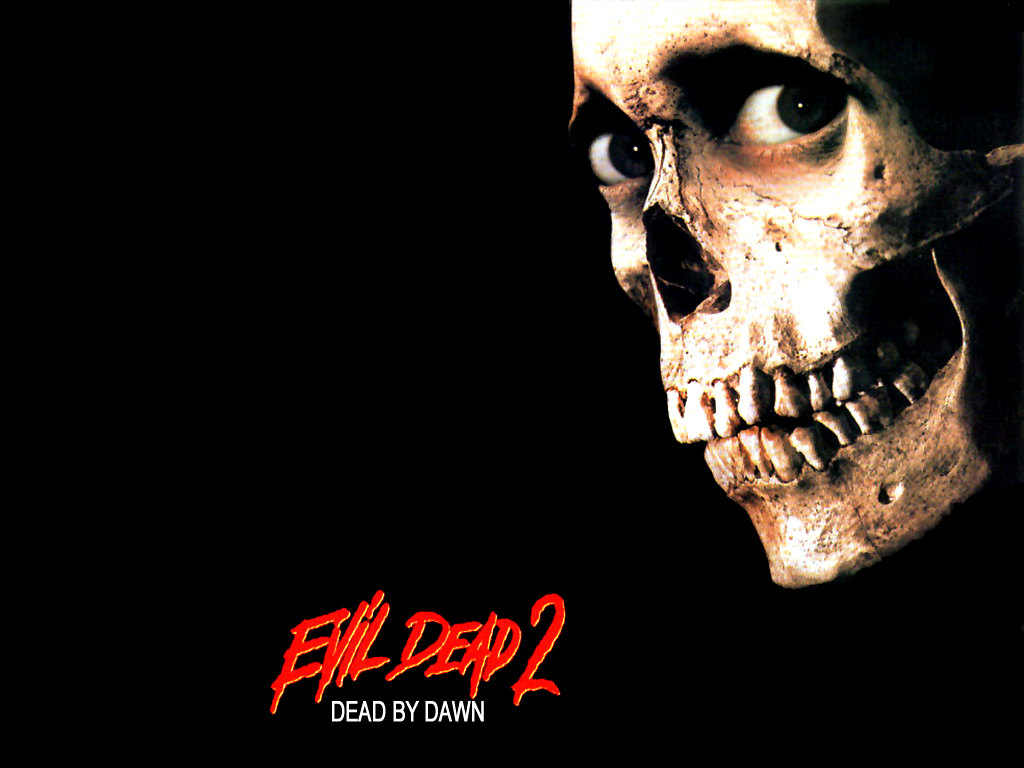
2. Evil Dead II: Dead by Dawn (1987)

In 1981, Sam Raimi and Bruce Campbell crafted the single bloodiest film ever made. Six years later, Raimi gets a little Ray Harryhausen and Campbell gets a makeover in a sequel that’s mostly a remake. An even broader comedy, with clay-mation monsters aplenty, Evil Dead II works harder for laughs than for scares.

Expect a lot of the same: Necronomicon, possessed friends, demonic woods, dismemberment, and fun. Plus hundreds of gallons of black, green, and red goo. Nice.

The wide eyed, romantic Ash from episode one slowly morphs into the ass kicking, catch phrase spouting, boom-boom stick toting badass we’ll see in all his glory in the third installment. Ash would finally learn how important it is not to listen to tapes left by the owners of the cabin you’re secretly squatting in for the weekend. And we’d eventually learn never to wear Michigan State paraphernalia when camping with Bruce Campbell.

1. The Bride of Frankenstein (1935)

James Whale and Boris Karloff returned to Castle Frankenstein for an altogether superior tale of horror. What makes this one a stronger picture is the dark humor and subversive attitude, mostly animated by Frankenstein’s colleague Dr. Pretorius (Ernest Thesiger).

Thesiger’s mad doctor makes for a suitable counterpart to the earnest and contrite Henry Frankenstein (Colin Clive, again), and a sly vehicle for Whale. This fey and peculiar monster-maker handles the most brilliant dialogue the film has to offer, including the iconic toast, “To gods and monsters.”

The sequel casts off the earnestness of the original, presenting a darker film that’s far funnier, often outrageous for its time, with a fuller story. Karloff again combines tenderness and menace, and Elsa Lanchester becomes the greatest goth goddess of all film history as his Bride.

Listen to the whole conversation on our FRIGHT CLUB PODCAST.

Fright Club: Best Onscreen Satan

In honor of our next Fright Club Live – where we unspool the unhinged French horror show Sheitan (French for Satan) – we decided to pick through all the performers who’ve played the dark lord onscreen. George Burns to Dave Grohl, we considered them all. Here, though, is our list of the best of the best.

5. Jack Nicholson (The Witches of Eastwick– 1987)

Old Jack really breathed life into the idea of wretched excess in this one, coming across equally as frightening and charming. Appropriate. He seems to be playing off of his own persona, but given the comedic nature of the effort, and the absurdity that this slovenly old cuss could seduce three stunning, intelligent women (Susan Sarandon, Cher, Michelle Pfeiffer) – well, it’s a charm Nicholson seemed to come by naturally, so why not exploit it here?

4. Peter Stormare (Constantine – 2005)

There are two reasons to remember this film – Tilda Swinton and Peter Stormare – and luckily they have one epic scene together. But Stormare manages to even outdo the effortlessly glorious Swinton – androgynous perfection as Gabriel – and that’s something to crow about. He’s been preparing to play the dark lord ever since he pushed Steve Buscemi into that wood chipper in Fargo. Once he got the shot, he was sinister, funny, frightening…and eventually undone by Keanu Reeves, which was almost enough reason to leave him off the list, but not quite.

https://www.youtube.com/watch?v=7rVFse1LLQs

3. Viggo Mortensen (The Prophecy – 1995)

There is no question this film belongs to Christopher Walken – as do all films in which he graces the screen. His natural weirdness and uncanny comic timing make the film more memorable than it deserves to be, but when it comes to sinister, Viggo Mortensen cuts quite a figure as Lucifer. Unseemly, gorgeous and evil, he seethes through his few scenes and leaves the celluloid scorched.

2. Robert DeNiro (Angel Heart – 1987)

De Niro’s well manicured and articulate Louis Cyphre perfectly balances Mickey Rourke’s handsome slob, and both fit beautifully into this sultry version of 1955. It’s really a beautifully made film, courtesy of Alan Parker, who adapted William Hjortsberg’s novel Fallen Angel and directed the film. Deceptively bloody, unusually classy, effortlessly creepy, Angel Heart stays under your skin. Maybe it’s the casual evil, the lurid atmosphere. Maybe it’s De Niro’s understated menace, with those long nails and that hardboiled egg.

1. Tim Curry (Legend – 1985)

Best Satan Ever. That voice, the sultry way he drawls out every syllable, the sweltering inappropriateness of his seduction, the look. Wow. This image clearly influenced both South Park‘s vision, as well as the Dave Grohl part in Tenacious D’s Pick of Destiny. But Curry pulls it off like no one else. Tim Curry is the world’s greatest sweet transvestite, the world’s greatest terrifying clown, and the world’s greatest Satan. Too bad the character is trapped in such a crap film.

Join the whole conversation on the FRIGHT CLUB PODCAST.
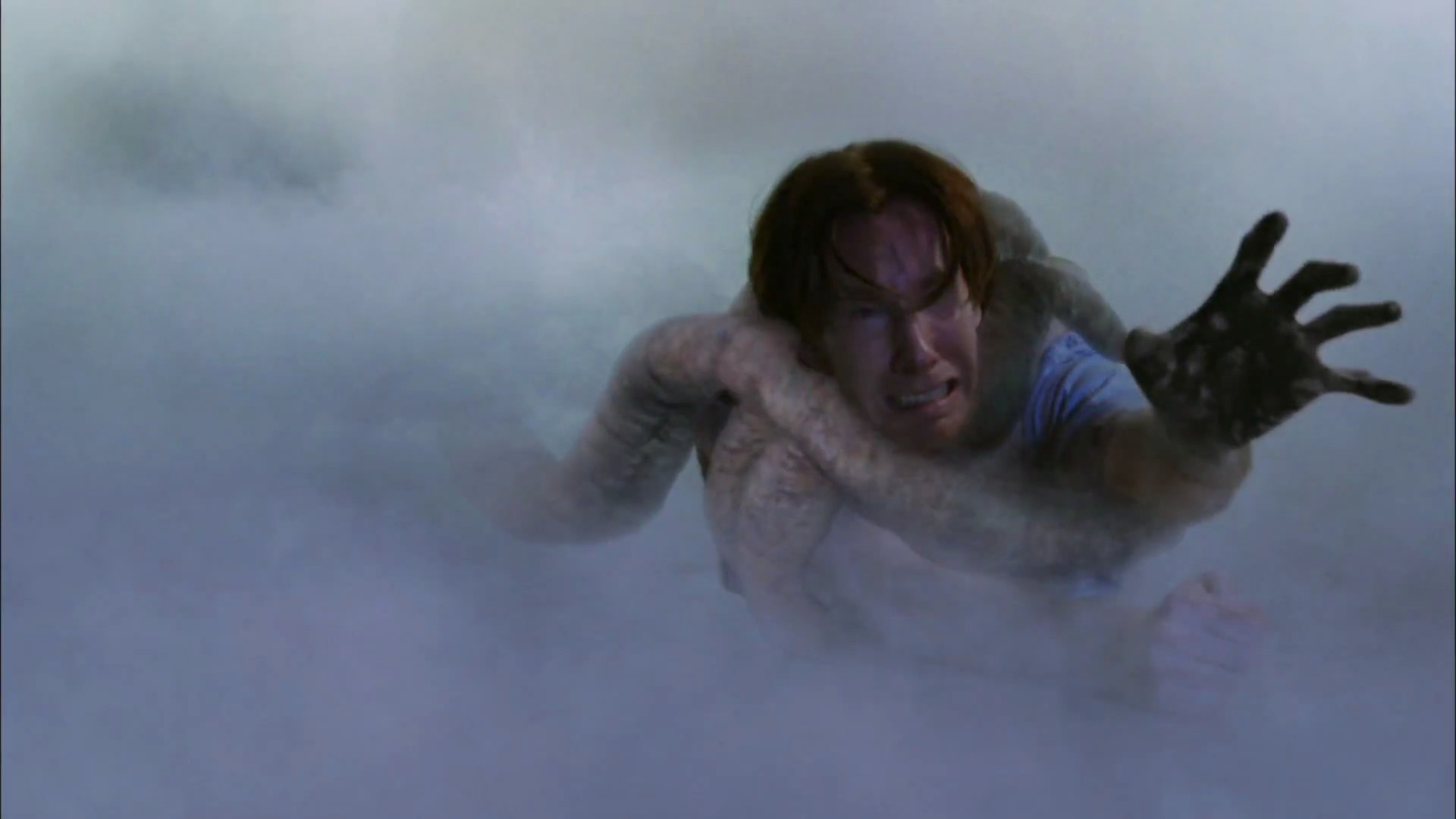
Fright Club: Best Medical Horror

Where are you most vulnerable, if not in the hands of doctors? You don’t know what they’re doing. It’s likely to hurt. There are needles, saws maybe. Suturs. Staples. Blood. Is there more fertile, gory ground for horror? We say no, and today we celebrate the very best there is in medical horror.

5. American Mary (2012)

Twin sisters, Canadians and badasses Jen and Sylvia Soska have written and directed a smart, twisted tale of cosmetic surgery – both elective and involuntary.

Katharine Isabelle (Ginger Snaps) stars as med student Mary Mason, a bright and eerily dedicated future surgeon who’s having some trouble paying the bills. She falls in with an unusual crowd, develops some skills, and becomes a person you want to keep on your good side.

Were it not for all those amputations and mutilations, this wouldn’t be a horror film at all. It’s a bit like a noir turned inside out, where we share the point of view of the raven haired dame who’s nothin’ but trouble. It’s a unique and refreshing approach that pays off.

4. Re-Animator (1986)

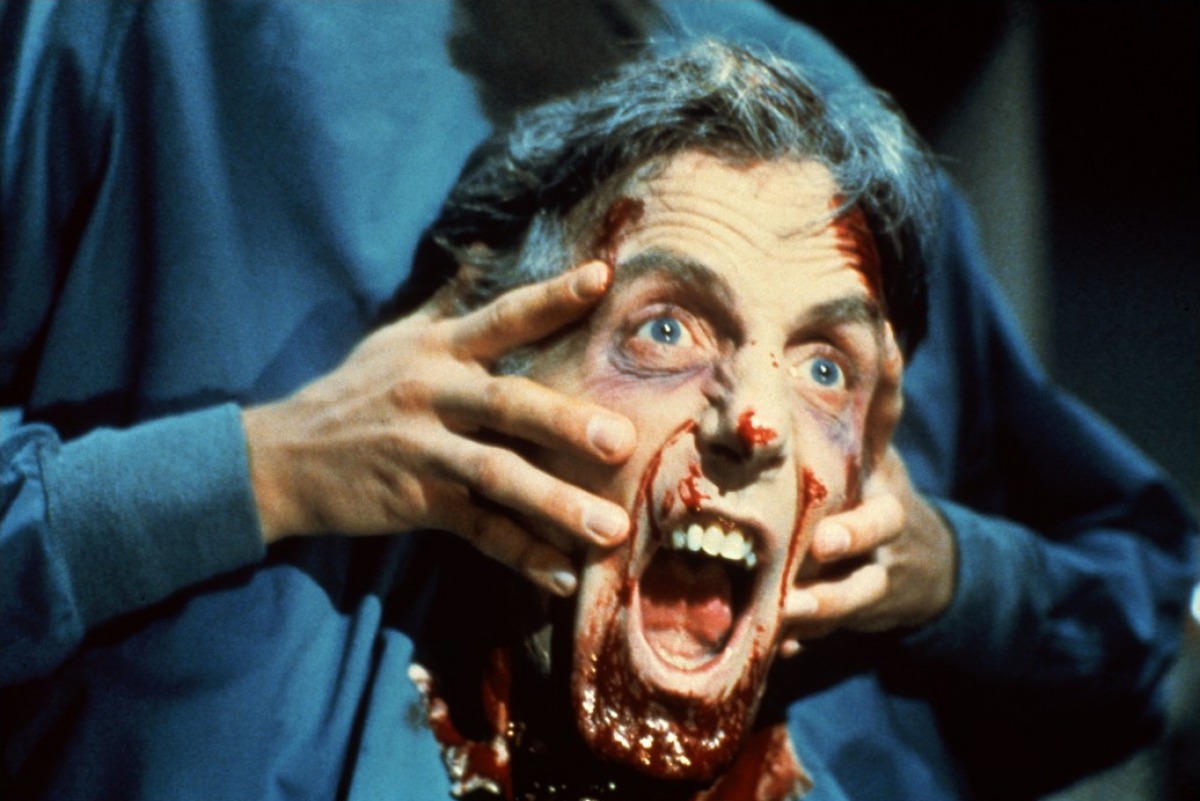
Stuart Gordon’s Re-Animator reinvigorated the Frankenstein storyline in a decade glutted with vampire films. Based, as so many fantasy/horror films are, on the work of H. P. Lovecraft, Re-Animator boasts a good mix of comedy and horror, some highly subversive ideas, and one really outstanding villain.

Jeffrey Combs, with his intense gaze and pout, his ability to mix comic timing with epic self righteousness without turning to caricature, carries the film beginning to end. His Dr. Herbert West has developed a day-glo serum that reanimates dead tissue, but a minor foul up with his experimentations – some might call it murder – sees him taking his studies to the New England medical school Miskatonic University. There he rents a room and basement laboratory from handsome med student Dan Caine (Bruce Abbott).

They’re not just evil scientists. They’re also really bad doctors.

Re-Animator is fresh. It’s funny and shocking, and though most performances are flat at best, those that are strong more than make up for it. First-time director Gordon’s effort is superb. He glories in the macabre fun of his scenes, pushing envelopes and dumping gallons of blood and gore. He balances anxiety with comedy, mines scenes for all they have to give, and takes you places you haven’t been.

3. Dead Ringers (1988)

This film is about separation anxiety, with the effortlessly melancholy Jeremy Irons playing a set of gynecologist twins on a downward spiral. Writer/director David Cronenberg doesn’t consider this a horror film at all. Truth is, because the twin brothers facing emotional and mental collapse are gynecologists, Cronenberg is wrong.

Take, for instance, the scene with the middle aged woman in stirrups, camera on her face, which is distorted with discomfort. Irons’s back is to the screen, her bare foot to his left side. Clicking noises distract you as the doctor works away. We pan right to a tray displaying the now-clearly-unstable doctor’s set of hand-fashioned medical instruments. Yikes.

Irons is brilliant, bringing such flair and, eventually, childlike charm to the performances you feel almost grateful. The film’s pace is slow and its horror subtle, but the uncomfortable moments are peculiarly, artfully Cronenberg.

2. The Skin I Live In (2011)

In 2011, the great Pedro Almodovar created something like a cross between Eyes Without a Face and Lucky McGee’s The Woman, with all the breathtaking visual imagery and homosexual overtones you can expect from an Almodovar project.

The film begs for the least amount of summarization because every slow reveal is placed so perfectly within the film, and to share it in advance is to rob you of the joy of watching. Antonio Banderas gives a lovely, restrained performance as Dr. Robert Ledgard, and Elena Anaya and Marisa Paredes are spectacular.

Not a frame is wasted, not a single visual is placed unconsciously. Dripping with symbolism, the film takes a pulpy and ridiculous story line and twists it into something marvelous to behold. Don’t dismiss this as a medical horror film. Pay attention – not just to catch the clues as the story unfolds, but more importantly, to catch the bigger picture Almodovar is creating.

1. Frankenstein (1931)

Obviously, any exploration of medicine in horror cinema – no matter how amateurish that exploration – must begin with Frankenstein.

James Whale’s genius was in finding the monster fascinating, rather than the doctor. Nearly every other Frankenstein made before or since has been preoccupied with the doctor, but Whale understood that it was this unique beast, baby and man, evil and innocent, that should compel our interest. Who cares about one more doctor with a god complex?

Luckily for Whale, he had Boris Karloff. Karloff’s gift was in seeing the monster as a neglected child. His monster is sweet and tragic, characterized by the terrible freedom of a loosed child full of fear, unbridled excitement, and shame. Karloff nails this childlike energy and ignorance married to a grown man’s strength in a way that no other actor truly has.

https://www.youtube.com/watch?v=McUce_xwxeA

Join the full conversation on the FRIGHT CLUB podcast.

Fright Club: Best Cannibal Horror

Perhaps any living thing’s most primal fear is that of being eaten, and horror cinema has taken advantage of that built-in tension with every zombie movie and creature feature ever made. But there’s an added element of the macabre, the unseemly, when it isn’t some “other” preying on us for our own tasty flesh. Today we celebrate those brave, carnivorous souls who crave the other, other white meat. You are what you eat.

Who’s hungry?

5. Trouble Every Day (2001)

Writer/director Claire Denis doesn’t offer a great deal of exposition, relying instead on startling images to convey themes. Her approach, and her provocative film, may do a better job of linking not just sex and death – which is commonplace to the point of being a bore in horror – but lust and bloodlust, carnality and hunger.

Beatrice Dalle’s Core – lovingly held captive by her husband – routinely escapes to seduce and consume unsuspecting men. Meanwhile a honeymooning groom seeks her because of his own obsession and/or similar sexual disposition.

This is a tough film to watch. The murder sequences are particularly bloody and profoundly uncomfortable, but the film gets under your skin and stays there, which is the point of horror, right?

4. Ravenous (1999)

The blackest of comedies, the film travels back to the time of the Mexican/American War to throw us in with a cowardly soldier (Guy Pearce) reassigned to a mountainous California outpost where a weary soul wanders into camp with a tale of the unthinkable – his wagon train fell to bad directions, worse weather, and a guide with a taste for human flesh.

Pearce is great as the protagonist struggling against his own demons, trying to achieve some kind of peace with himself and his own shortcomings, but Robert Carlyle steals this movie. As the wraithlike Colonel Ives, he makes the perfect devil stand-in. Smooth, compelling and wicked, he offsets Pearce’s tortured soul perfectly. The pair heighten the tensions with some almost sexual tension, which director Antonia Bird capitalizes on brilliantly.

3. We Are What We Are (2010)

Give writer/director Jorge Michel Grau credit, he took a fresh approach to the cannibalism film. His Spanish language picture lives in a drab underworld of poverty, teeming with disposable populations and those who consume flesh, figuratively and literally.

Grau’s approach is so subtle, so honest, that it’s easy to forget you’re watching a horror film. Indeed, were this family fighting to survive on a more traditional level, this film would simply be a fine piece of social realism focused on Mexico City’s enormous population in poverty. But it’s more than that. Sure, the cannibalism is simply an extreme metaphor, but it’s so beautifully thought out and executed!

We Are What We Are is among the finest family dramas or social commentaries of 2010. Blend into that drama some deep perversity, spooky ambiguities and mysteries, deftly handled acting, and a lot of freaky shit, and you have hardly the goriest film on this list, but perhaps the most relevant.

https://www.youtube.com/watch?v=nQ4-UOB3Y-U

2. The Texas Chainsaw Massacre (1974)

Not everyone considers The Texas Chainsaw Massacre a classic. Those people are wrong. Perhaps even stupid.

It is classic because Hooper masterfully enlisted a low rent verite for this bizarre story to do something utterly new. The camera work, so home-movie like, worked with the “based on a true story” tag line like nothing before it, and the result seriously disturbed the folks of 1974. It has been ripped off and copied dozens of times since its release, but in the context of its time, it was so absolutely original it was terrifying.

Friends on a road trip pick up a hitchhiker, played with glorious insanity by Edwin Neal. The Hitchhiker is part of a family of cannibals, and the youths will eventually stumble upon their digs. Here we find this unemployed family of slaughterhouse workers just teasing and mocking each other with little mercy. Like Sally Hardesty, we’ve entered a lived-in world belonging to them, and their familial bickering and cruelty only reinforce our helpless otherness. This inescapable absurdity is one of the things that make TCM so unsettling.

https://www.youtube.com/watch?v=Vs3981DoINw

1. The Silence of the Lambs

Everyone loves this film, even people who hate horror films. Those pretentious bastards call the film a “psychological thriller.” But to clarify, any film about one man who eats human flesh helping to track down another man who wears human flesh is a horror movie.

It’s to director Jonathan Demme’s credit that Silence made that leap from lurid exploitation to art. His masterful composition of muted colors and tense but understated score, his visual focus on the characters rather than their actions, and his subtle but powerful use of camera elevate this story above its exploitative trappings. Of course, the performances didn’t hurt.

Anthony Hopkins’s eerie calm, his measured speaking, his superior grin give Lecter power. Everything about his performance reminds the viewer that this man is smarter than you and he’ll use that for dangerous ends. He’s toying with you. You’re a fly in his web – and what he will do to you hits at our most primal fear, because we are, after all, all part of a food chain.

Listen to the whole conversation on our FRIGHT CLUB PODCAST.

Fright Club: So Bad it’s …. Good?

Here’s an unusual list, not because it’s out of the ordinary to ironically appreciate bad horror movies, but because Madd and Wolf disagree so vehemently about a) the movies on this list, and b) the entertainment value in bad movies. So just know that, though there are bones of contention aplenty, we’re still happy with the final six. How about you?

6. House (Hausu) (1977)

If Takashi Miike’s Happiness of the Katakuris were to marry Pee-wee’s Playhouse, this would be their offspring.

A spoof of sorts, Hausu tells the story of six uniform-clad high school girls named Gorgeous, Fantasy, Sweet, Melody, Kung Fu, and Mac. The nomenclature alone should clue you in on the film’s lunacy. The giggling sextet spend spring break at an aunt’s spooky house – or, in fact, a cheaply made set of an aunt’s spooky house. Not a single thing that follows makes sense, nor is it really meant to.

Expect puppets, random musical sequences, remarkably bad backdrops, slapstick humor, and an amazingly sunny disposition given the sheer volume of human dismemberment. The trippy nonsense wears a bit thin eventually. Luckily director Nobuhiko Obayashi’s film clocks in at under 90 minutes, so the screen goes dark before the novelty wears off.

Score: Hope does not consider this a bad movie in any respect. George considers it so bad it’s just bad.

5. Motel Hell (1980)

It takes all kinds of critters to make Farmer Vincent’s fritters, so swingers looking for a cheap motel in which to swing – be warned! Fifties heartthrob Rory Calhoun plays Farmer Vincent, who, along with his sister Ida (a super creepy Nancy Parsons) rid the world of human filth while serving the righteous some tasty viddles. Just don’t look under those wiggling, gurgling sacks out behind the butcherin’ barn!

Motel Hell is a deeply disturbed, inspired little low budget jewel. A dark comedy, the film nonetheless offers some unsettling images, not to mention sounds. Sure, less admiring eyes may see only that super-cheese director Kevin Connor teamed up with Parsons and Calhoun – as well as Elaine Joyce and John Ratzenberger – for a quick buck. But in reality, they teamed up to create one of the best bad horror films ever made.

So gloriously bad!

Score: Hope and George agree completely on the absolutely entertaining badness afoot in this one.

4. Sleepaway Camp (1983)

A seriously subversive film with blatant homosexual undertones, Sleepaway Camp is a bizarre take on the summer camp slasher.

It may be the shocking finale that gave the film its cult status, but it’s writer/director Robert Hilzik’s off-center approach to horror that makes it interesting. Dreamy flashbacks, weirdly gruesome murders, and a creepy (yet somehow refreshing) preoccupation with beefcake separate this one from the pack.

It’s not scary, certainly, but it is all manner of wrong. The kill sequences are hugely imaginative, and the subversive approach to the entire film makes it hard to believe more people haven’t seen this gem.

Score: Once again, George and Hope are in total agreement. This one’s a keeper.

3. Squirm (1976)

Writer/director Jeff Lieberman drops us off in rural Georgia, where small town hottie Geri (unrepentant ginger Patricia Pearcy) receives a visit from big city pal and possible boyfriend Mick (Don Scardino). Natch, the down home folk don’t take kindly to this city slicker – especially Roger, a menacing rube who wants Geri for his own.

So, the low budget gem creates a little of that Deliverance dread, but the payoff is, of course, the worms brought out by the pantload via voltage from a downed power line.

Lieberman does a fantastic job with the worms. They are everywhere, they’re nasty, they make that gross gummy noise as they squirm around on top of each other, and they may not only eat you but bore right into your face to turn you into a monster. That’s what happens to poor, lovelorn Rog, and it is awesome!

The acting and writing entertain, if ironically, but the movie offers a few real freakout moments and it goes in unexpected directions more than once. It’s weird, start to finish, and that’s always welcome.

Score: George does not care for Squirm, ironically or otherwise. Hope’s still smiling with joy just thinking about this movie.

2. Slugs: The Movie (1988)

Mike Brady (Michael Garfield) must save himself, his town, and his lustrous waves from the menace of man-eating slugs– acting ability or no! And if Sherriff Reese and Mayor Eaton can’t get their heads out of their asses, then dammit, Mike Brady will take care of this himself!

Once it’s discovered that the entire population of mutant slugs is in a single area, Mike Brady makes the level-headed, finely coiffured decision to literally explode the entire town from beneath. Why not dose their hive with salt, you ask? What are you, a wuss?!

But that’s beside the point because Mike Brady has a town to save! He’s getting scant help from the Brit chem teacher who can’t even lift a manhole cover. Weak limey! Do Mike Brady and his hair have to do everything?

The epic saga finishes with a hearty embrace. Mike Brady squeezes his puffy-coat wearing wife, and we all ignore the untold damage he’s just done to the town he singlehandedly blew to pieces. People were killed, certainly. Perhaps an arrest was more in order than a hug. But Mike Brady doesn’t do arrested.

Score: George really hates this movie and considers it an almost criminal waste of his time. Slugs: The Movie fills hope with glee and she’d gladly watch it again right now.

1. The Night of a Thousand Cats (1972)

Oh my God.

This one has to be seen to be believed. It moves at a dreamlike pace, as chopper pilot/monk/playboy/cat lover Hugo (Hugo Stiglitz!) flies his helicopter menacingly close to sexy women lounging poolside, and they act like that’s not weird at all. He mouths flirtations toward them as their towels and lawn furniture blow hither and yon. Eventually they find this dangerous harassment charming enough to be wooed.

Oh, you trusting, slutty ladies.

But things don’t always go smoothly for the handsomely wooden Hugo – as flashbacks to Head in the Jar #2 attest. It’s a deeply weird movie full of cannibalism, bad parenting, questionable facial hair decisions, and a blatant disregard for the dangers of sun damage. Plus, a thousand cats.

I know. Bad movies are often just not worth it. This one is. I swear it.

Score: Even George has to admit that the awe-inspiring incompetence of this film begs for your viewing.

Listen to the whole conversation on the FRIGHT CLUB podcast.

Fright Club: Best True Crime Horror

“Inspired by a true story” is a tag line that has been used beyond the point of meaninglessness. If you google “true story horror movies,” Dracula will come up, for lord’s sake. But there are some films that can take true events and mine them for the psychological underpinnings that chill us all. Here’s a list of our five favorites.

5. Stuck (2007)

A nasty tabloid feature boasting both gallows humor and blood by the gallon, Stuck is an underappreciated gem from director Stuart Gordon (Re-Animator). Mena Suvari plays a role based on a real life woman who, inebriated, hit a man with her car. The victim became lodged in her windshield. She chose to park her car in the garage and wait for the man to die rather than face the consequences and save his life.

While this sounds unbelievable, the fact that it’s based in true events helps the story build credibility. Stuart’s direction makes the most of the mean laughs available given the subject matter, never taking the situation too seriously, but never treating the victim’s predicament as an outright joke, either.

More impressive, though, is the commitment the cast brings to the proceedings. Suvari offers almost uncalled for nuance and character arc, while Stephen Rea’s crumpled, hangdog appearance belies an intestinal fortitude the driver didn’t see coming.

This is a wild movie, and one that’s far more watchable than the premise may suggest. Like any tabloid trash or car accident, you know you shouldn’t watch, but you just can’t look away.

4. Wolf Creek (2005)

Though Greg McLean wrote the story for Wolf Creek years before the film was made, by the time he polished the screenplay he’d blended in elements from two different Aussie marauders. Ivan Milat was a New South Wales man who kidnapped hitchhikers, torturing and killing them in the woods. Much closer to the time of the film’s release was the case of Bradley John Murdock. He had a tow truck, forced two British tourists off the road, murdering one while the other escaped. Wolf Creek’s actual release was delayed in the northern part of the country where Murdock’s trial was still going on.

Using only digital cameras to enhance an ultra-naturalistic style, McLean’s happy backpackers find themselves immobile outside Wolf Creek National Park when their car stops running. As luck would have it, friendly bushman Mick Taylor (John Jarratt) drives up offering a tow back to his camp, where he promises to fix the vehicle. The two different murderers influenced McLean’s tale and Jarrett’s character amiable sadist, but it’s at least comforting to know that this isn’t 100% nonfiction.

3. The Snowtown Murders (2011)

First time filmmaker Justin Kurzel’s movie examines one family’s functional disregard for the law and hinges on the relationship between a charismatic psychopath and a quiet, wayward teen. Unfortunately, The Snowtown Murders mines a true story. John Bunting tortured and killed eleven people during his spree in South Australia in the Nineties.

An unflinching examination of a predator swimming among prey, Snowtown succeeds where many true crime films fail because of its understatement, its casual observational style, and its unsettling authenticity. More than anything, though, the film excels due to one astounding performance.

Daniel Henshall cuts an unimpressive figure on screen – a round faced, smiling schlub. But he brings Bunting an amiability and confrontational fearlessness that provides insight into what draws people to a sadistic madman.

2. Compliance (2012)

Compliance is an unsettling, frustrating and upsetting film about misdirected and misused obedience. It’s also one of the most impeccably made and provocative films of 2012 – a cautionary tale that’s so unnerving it’s easier just to disbelieve. But don’t.

Writter/director Craig Zobel – who began his career as co-creator of the brilliant comic website Homestar Runner (so good!) – takes a decidedly dark turn with this “based-on-true-events” tale. It’s a busy Friday night at a fast food joint and they’re short staffed. Then the police call and say a cashier has stolen some money from a customer’s purse.

A Milgram’s experiment come to life, the film spirals into nightmare as the alleged thief’s colleagues agree to commit increasingly horrific deeds in the name of complying with authority.

Zobel remains unapologetically but respectfully truthful in his self-assured telling. He doesn’t just replay a tragic story, he expertly crafts a tense and terrifying movie. With the help of an anxious score, confident camera work, and a superb cast, Zobel masterfully recreates a scene that’s not as hard to believe as it is to accept.

1. Henry: Portrait of a Serial Killer (1989)

Like Snowtown Murders, released more than two decades later, Henry is an unforgivingly realistic portrayal of evil. Michael Rooker is brilliant as serial killer Henry (based on real life murderer Henry Lee Lucas). We follow him through his humdrum days of stalking and then dispatching his prey, until he finds his own unwholesome kind of family in the form of buddy Otis and his sister Becky.

What’s diabolically fascinating, though, is the workaday, white trash camaraderie of the psychopath relationship in this film, and the grey areas where one crazy killer feels the other has crossed some line of decency.

Director John McNaughton’s picture offers a uniquely unemotional telling – no swelling strings to warn us danger is afoot and no hero to speak of to balance the ugliness. He confuses viewers because the characters you identify with are evil, and even when you think you might be seeing this to understand the origins of the ugliness, he pulls the rug out from under you again by creating an untrustworthy narrative voice. It’s a genius technique given the subject, a serial killer who confessed to as many as 3000 killings, most of those discredited as fiction. His film is so nonjudgmental, though, so flatly unemotional, that it’s honestly hard to watch.

Listen to the whole conversation on our FRIGHT CLUB PODCAST.

Fright Club: Best British Horror

We are thrilled to have Senior British Correspondent Craig Hunter of SCREENRELISH join us to look at some of our favorite British horror movies. From classics of Hammer to some of today’s most disturbing films, we count down the five best.

5. Dracula (Horror of Dracula) (1958)

In 1958, Hammer Films began its long and fabulous love affair with the cloaked one, introducing the irrefutably awesome Christopher Lee as the Count.

Their tale varies a bit from Stoker’s, but the main players are mostly accounted for. Peter Cushing steps in early and often as Van Helsing, bringing his inimitable brand of prissy kick-ass, but its Lee who carries the film.

Six foot 5 and sporting that elegant yet sinister baritone, Lee cuts by far the most intimidating figure of the lot as Dracula. Director Terence Fisher uses that to the film’s advantage by developing a far more vicious, brutal vampire than what we’d seen previously.

Still the film is about seduction, though, which gives Lee’s brute force an unseemly thrill. Unlike so many victims in other vampire tales, it’s not just that Melissa Stribling’s Mina is helpless to stop Dracula’s penetration. She’s in league. She wants it.

Ribald stuff for 1958!

https://www.youtube.com/watch?v=HTyBClMmoyQ

4. Kill List (2011)

Never has the line “Thank you” had a weirder effect than in the genre bending adventure Kill List.

Hitman Jay (a volcanic Neil Maskell) is wary to take another job after the botched Kiev assignment, but his bank account is empty and his wife Shel (an also eruptive MyAnna Buring) has become vocally impatient about carrying the financial load. But this new gig proves to be seriously weird.

Without ever losing that gritty, indie sensibility, Ben Wheatley’s fascinating film begins a slide in Act 2 from crime drama toward macabre thriller. You spend the balance of the film’s brisk 95 minutes actively puzzling out clues, ambiguities and oddities.

As Kill List drifts toward its particular flavor of horror, Wheatley pulls deftly from some of the most memorable films of a similar taste. For those looking for blood and guts and bullets, Kill List will only partially satisfy and may bewilder by the end. But audiences seeking a finely crafted, unusual horror film may find themselves saying thank you.

3. Eden Lake (2009)

The always outstanding Michael Fassbender takes his girl Jenny (Kelly Reilly) to his childhood stomping grounds – a flooded quarry and soon-to-be centerpiece for a grand housing development. He intends to propose, but he’s routinely disrupted, eventually in quite a bloody manner, by a roving band of teenaged thugs.

James Watkins’s screenplay keeps you nervous and guessing with some clever maneuvers and horrific turns.

The acting, particularly from the youngsters, is outstanding. Fassbender’s bravado strikes an honest note, and Reilly’s Jenny is capable, smart and compassionate. More than anything, though, the film owes its unsettling ability to stay with you to an unnerving performance from the up and coming Jack O’Connell.

It’s an upwardly mobile urbanite nightmare, well made and crafted to stay with you.

2. The Descent (2005)

A caving expedition turns ugly for a group of friends, who will quickly realize that being trapped inside the earth is not the worst thing that could happen.

This spelunking adventure comes with a familiar cast of characters: arrogant authority figure, maverick, emotionally scarred question mark, bickering siblings, and a sad-sack tag along. And yet, somehow, the interaction among them feels surprisingly authentic, and not just because each is cast as a woman.

Writer/director Neil Marshall makes excellent use of the story’s structure. Between that and the way film and sound editing are employed, Marshall squeezes every available ounce of anxiety from the audience. Long before the first drop of blood is drawn by the monsters – which are surprisingly well conceived and tremendously creepy – the audience has already been wrung out emotionally.

1. 28 Days Later (2002)

Activists break into a research lab and free the wrong fucking monkeys.

28 days later, bike messenger Jim wakes up naked on an operating table.

You know you’re in trouble from the genius opening sequence: vulnerability, tension, bewilderment, rage and blood – it marks a frantic and terrifying not-really-a-zombie film. (They were not dead, you see. Just super pissed off.)

Danny Boyle is one of cinema’s visionary directors, and he’s made visceral, fascinating, sometimes terrifying films his entire career – Shallow Grave, Trainspotting, Millions, 127 Hours – but 28 Days Later is certainly his one true horror film. And it is inspired.

The vision, the writing, and the performances all help him transcend genre trappings without abandoning the genre. Both Brendan Gleeson and Cillian Murphy are impeccable actors, and Naomie Harris is a truly convincing badass. Their performances, and the cinematic moments of real joy, make their ordeal that much more powerful.

Listen to the whole conversation on the FRIGHT CLUB PODCAST.

Fright Club: Feminist Horror

Horror’s come a long way from the days of nubile, sexually wayward teenage girls being victimized and/or rescued by men. Strong female characters have become staples of the genre, thanks in part to a rise in female writers and directors, but likely just as much credit goes to an audience unwilling to accept ridiculous stereotypes. Today we are joined by Senior Feminist Correspondent Melissa Starker as we pay tribute to half dozen of the best feminism horror has to offer.

6. The Descent (2005)

This spelunking adventure comes with a familiar cast of characters: arrogant authority figure, maverick, emotionally scarred question mark, bickering siblings, and a sad-sack tag along. And yet, somehow, the interaction among them feels surprisingly authentic, and not just because each is cast as a woman.

These ladies are not Green Berets who, unlike the audience, are trained for extreme circumstances. These particular thrill seekers are just working stiffs on vacation. It hits a lot closer to home.

More importantly, the cast is rock solid, each bringing a naturalness to her character that makes her absolutely horrifying, merciless, stunningly brutal final moments on this earth that much more meaningful.

Writer/director Neil Marshall must be commended for sidestepping the obvious trap of exploiting the characters for their sexuality – I’m not saying he avoids this entirely, but for a horror director he is fantastically restrained. He also manages to use the characters’ vulnerability without patronizing or stereotyping.

5. The Woman (2011)

In horror movies, things don’t always go so well for the ladies. But sometimes we’ll surprise you, and your pervy freak of a son, as director Lucky McKee details in his most surefooted picture, the gender role horror show The Woman.

There’s something not quite right about Chris Cleese (an unsettlingly cherubic Sean Bridgers), and his family’s uber-wholesomeness is clearly suspect. This becomes evident once Chris hunts down a feral woman (an awesome Pollyanna McIntosh), chains her, and invites the family to help him “civilize” her.

The film rethinks family – well, patriarchy, anyway. Writer Jack Ketchum may say things you don’t want to hear, but he says them well. McKee has no qualms about showing you things you don’t want to see. Like most of Ketchum’s work, The Woman is lurid and more than a bit disturbing. Still, nothing happens in this film by accident – not even the innocent seeming baking of cookies – nor does it ever happen solely to titillate.

4. Ginger Snaps (2000)

Ginger Snaps picks at most of the same adolescent scabs as Carrie – there’s the underlying mania about the onslaught of womanhood accompanied by the monsterization of the female, which leads to a mounting body count.

Ginger (Katharine Isabelle) and her sister Bridget (Emily Perkins), outcasts in the wasteland of Canadian suburbia, cling to each other, and reject/loathe high school (a feeling that high school in general returns). On the evening of Ginger’s first period, she’s bitten by a werewolf. Writer Karen Walton cares not for subtlety: the curse, get it? It turns out, lycanthropy makes for a pretty vivid metaphor for puberty. It also proves especially provocative and appropriate for a film that upends many mainstay female cliches.

Walton’s wickedly humorous script stays in your face with metaphors, successfully building an entire film on clever turns of phrase, puns, and analogies, stirring up the kind of hysteria that surrounds puberty, sex, reputations, body hair, and one’s own helplessness to these very elements. It’s as insightful a high school horror film as you’ll find, peppered equally with dark humor and gore.

3. Alien (1979)

Ridley Scott made a lot of great decisions with this film – the pacing, the look, the monster, and the casting. Especially the casting. Because the Ripley characgter was not specified on the page as a female – no character was – but Scott decided that a couple of these crewfolk would certainly be women by this point in human history. And history was made.

Ellen Ripley is just the next in charge. She’s just a solid, smart, savvy crewman. That’s what makes the film so special. In Aliens – an all around outstanding film – Ripley is out to save a little girl. She draws on her maternal instinct, which is a far more traditional and comforting reason for audiences to accept a female behaving this way. But in Alien, her gender really is not an issue. She happens to be the strongest, most ass kicking survivor on board.

2. The Babadook (2014)

A weary single mother contending with her young son’s erratic, sometimes violent behavior begins to believe that her son’s imaginary boogeyman may well be a monstrous presence in her house.

The film’s subtext sits so close to the surface that it threatens to burst through. Though that does at times weaken the fantasy, it gives the film a terrifying urgency. In the subtext there is a primal horror, a taboo rarely visited in film and certainly never examined with such sympathy. Indeed, the compassion in the film may be the element that makes it so very unsettling.

Writer/director Jennifer Kent’s film is expertly written and beautifully acted, boasting unnerving performances from not only a stellar lead in Essie Davis, but also the alarmingly spot-on young Noah Wiseman. Davis’s lovely, loving Amelia is so recognizably wearied by her only child’s erratic, sometimes violent behavior that you cannot help but pity her, and sometimes fear for her, and other times fear her.

1. The Silence of the Lambs (1991)

Jonathan Demme did the impossible. He took the story of a flesh eater who helps the FBI track down a flesh wearer and turned it into an Oscar magnet. How did he do it? With muted tones, an understated score, a visual focus on the characters rather than their actions, and a subtle but powerful use of the camera. The performances didn’t hurt, either.

Yes, it’s awesome, but how is it feminist? Mainly, through Jodie Foster’s character of Clarice Starling – our point of view character and the film’s hero. We are meant to identify with and root for this fledgling FBI agent as she navigates the horrifying mind of Dr. Hannibal Lecter (an epic Anthony Hopkins) in the hopes of stopping a serial killer (the under appreciated Ted Levin).

Usually, a director shoots a villain from below, making him look larger and more menacing. (It’s also not a very flattering angle, which doesn’t hurt when you’re trying to make someone seem mean.) The victim is usually shot from above, which makes them seem smaller, less powerful, more vulnerable, and cuter. When Starling and Lecter are talking in the prison, they’re shot at the same angle, eliminating that power struggle. They’re shot as equals. In this way the film as a whole affords Starling all the respect and credibility the character proves to deserve.

Thanks to Senior Feminist Correspondent Melissa Starker for joining us today! Listen to the whole conversation on our podcast FRIGHT CLUB.

Fright Club: Best Horror Documentaries

Sometimes the truth is scarier than fiction, which is why we decided to look at documentaries this week. From true crime to weird tales, from psychological nightmares to war crimes, we look at the best documentaries the genre has to offer.

5. Room 237 (2012)

Stanley Kubrick’s magnificent film The Shining inspires close examination. Director Rodney Ascher assembled some of the most inspired – obsessed, even – for his documentary on the Kubrick ghost story, Room 237.

It would be too simplistic to take Room 237 as a deconstruction of The Shining, and those hoping to uncover Kubrick’s deeper meaning may be disappointed. But what the film does, it does well. It explores one of cinema’s most exquisite films, using it to encourage the spectator’s active participation in viewing. In doing so, it positions film as an art equal to literature or painting in terms of thematic dissection.

It also opens our eyes to the abject nuttiness of Kubrickian “scholars” – and a documentary always gets extra points if it introduces an audience to an entirely new concept, like that of the Kubrickian scholar.

More than anything, though, Room 237 is a documentation of obsession, and a fascinating one at that. It bares more insight into the act of obsessing than it does on Kubrick’s work itself, but it helps that these people spend all their time analyzing such a great movie. If they were this excited about tessellations or ringworm, well, the movie would have lacked that certain panache.

4. My Amityville Horror (2012)

The film begins as yet another tale spun ‘round the Long Island home called High Hopes, where Ronald DeFeo Jr. killed his parents and siblings before the Lutz family took up residence, remaining only 28 days. The Lutzes’ tale informed a fantastically popular book and no fewer than 12 films, as well as plenty of hoax accusations. What sets My Amityville Horror apart is that it quickly becomes a character study of the eldest of the Lutz children, Daniel.

He’s a troubled, heartbreaking, mesmerizing central figure for the film. His stories are so wild and yet he believes them so earnestly that, whether phantasms traumatized his family or whether these tales are the coping mechanism of a young boy subjected to a different kind of abuse becomes hazy and deeply sad.

Director and Amityville fanatic Eric Walter uses a compassionate but unerring focus to illuminate something honestly troubling: the struggle of one of the Amityville horror victims, regardless of the actual horror that went on inside the house.

3. Cropsey (2009)

Cropsey was the Hudson River area summer camp name for a boogeyman. In Staten Island’s Boy Scout camp tales, Cropsey lived in a tunnel system beneath the borough’s abandoned mental hospital. He nabbed children while their parents weren’t looking and killed them out in the woods.

But in Staten Island, the story of Cropsey was true, only his name is Andre Rand.

As filmmakers Barbara Brancaccio and Justin Zemen dig into this story of a convicted sexual predator/mental hospital orderly suspected in the disappearances of as many as seven children, they pull us through fact and myth, expertly choosing news footage to anchor modern interviews.

Their clever approach combines the best of any serial killer drama with the haunting reality of Capturing the Friedmans. They explore the investigation of a serial child killer, all the while exposing the human foibles, mob mentality, and lurid fascination that makes you wonder, even though they clearly have a very bad man, do they have the right one?

2. The Act of Killing (2012)

Surreal, perverse, curious and horrifying, The Act of Killing demands to be seen.
It is anchored in the atrocities committed during the overthrow of the Indonesian government in 1965. Paramilitary death squads and ruthless gangsters captured, tortured and killed at will, all under the guise of exterminating “communists.” Over one million Indonesians lost their lives, and those responsible continue to gloat about their actions from a seat of power they still enjoy today.

Co-director Joshua Oppenheimer met with some of the most famous death squad leaders and made them a distasteful yet ultimately brilliant offer: would they re-enact their savagery on camera?

The result is mesmerizing, can’t-believe-what-I’m-seeing-stuff.

Recalling the finest of their work, The Act of Killing is unforgettable. It calls to mind past cruelty, an Orwellian present and an uncertain future, emerging as essential, soul-shaking viewing.

1. The Nightmare (2015)

An effective scary movie is one that haunts your dreams long after the credits roll. It’s that kind of impact most horror buffs are seeking, but even the most ardent genre fan will hope out loud that Rodney Ascher’s documentary The Nightmare doesn’t follow them to sleep.

His film explores sleep paralysis. It’s the phenomenon that inspired Wes Craven to write A Nightmare on Elm Street. It’s a clear creative root for Insidious, Borgman and scores of other horror movies. But it isn’t fiction. It’s a sometimes nightly horror show real people have to live with. And dig this – it sounds like it might be contagious.

Ascher’s a fascinating, idiosyncratic filmmaker. His documentaries approach some dark, often morbid topics with a sense of wonder. His films never seem to be pushing an agenda, he doesn’t seem to have made up his mind on his subject matter. Rather, he is open which, in turn, invites the audience to be open.

We spend a great deal of time watching horror movies, and I cannot remember an instance in my life that I considered turning off a film for fear that I would dream about it later. Until now.

Listen to the whole conversation on our FRIGHT CLUB podcast.

Fright Club: Best Horror Comedies

After last week’s look at the most horrific scenes in horror, we needed something light. Today we celebrate the great, rich tradition of mixing horror and comedy, whether slapstick or splatter, dark and dry or red and wet, these are the best of a wonderful sub-genre.

6. Housebound (2014)

Funny and scary, smartly written and confidently directed, this is a film that makes few missteps and thoroughly entertains from beginning to end.

An inspired Morgana O’Reilly plays Kylie, a bit of a bad seed who’s been remanded to house arrest and her mother’s custody after a bit of bad luck involving an ATM and a boyfriend who’s not too accurate with a sledge hammer. Unfortunately, the old homestead, it seems, is haunted. Almost against her will, she, her hilariously chatty mum (Rima Te Wiata) and her deeply endearing probation officer (Glen-Paul Waru) try to puzzle out the murder mystery at the heart of the haunting. Lunacy follows.

Good horror comedies are hard to come by, but writer/director Gerard Johnstone manages the tonal shifts magnificently. You’re nervous, you’re scared, you’re laughing, you’re hiding your face, you’re screaming – sometimes all at once. And everything leads up to a third act that couldn’t deliver better.

5. Tucker and Dale vs Evil (2010)

Horror cinema’s most common and terrifying villain may not be the vampire or even the zombie, but the hillbilly. The generous, giddy Tucker and Dale vs. Evil lampoons that dread with good natured humor and a couple of rubes you can root for.

In the tradition of Shaun of the Dead, T&DVE lovingly sends up a familiar subgenre with insightful, self-referential humor, upending expectations by taking the point of view of the presumably villainous hicks. And it happens to be hilarious.

Two backwoods buddies (an endearing Tyler Labine and Alan Tudyk) head to their mountain cabin for a weekend of fishing. En route they meet some college kids on their own camping adventure. A comedy of errors, misunderstandings and subsequent, escalating violence follows as the kids misinterpret every move Tucker and Dale make.

T&DVE offers enough spirit and charm to overcome most weaknesses. Inspired performances and sharp writing make it certainly the most fun participant in the You Got a Purty Mouth class of film.

4. Cabin in the Woods (2012)

You know the drill: 5 college kids head into the woods for a wild weekend of doobage, cocktails and hookups but find, instead, dismemberment, terror and pain. You can probably already picture the kids, too: a couple of hottie Alphas, the nice girl, the guy she may or may not be into, and the comic relief tag along. In fact, if you tried, you could almost predict who gets picked off when.

But that’s just the point, of course. Making his directorial debut, Drew Goddard, along with his co-scribe Joss Whedon, is going to use that preexisting knowledge to entertain holy hell out of you.

The duo’s nimble screenplay offers a spot-on deconstruction of horror tropes as well as a joyous celebration of the genre. Aided by exquisite casting – particularly the gloriously deadpan Richard Jenkins and Bradley Whitford – the filmmakers create something truly special.

3. Shaun of the Dead (2004)

This is a hard movie not to like. Writer/director Edgar Wright teams with writer/star Simon Pegg to lovingly mock the slacker generation, 80s pop, and George Romero with this riotous flesh eating romance. But what is easy to overlook is the genuine craftsmanship that went into making this picture.

Every frame of every scene is so perfectly timed – pauses in conversation synchronized with seemingly random snippets of other conversations, or juke box songs, or bits from the tele. (The movie will turn you British. By the end you’ll be saying holiday instead of vacation, spelling colour with a u and saying, “How’s that for a slice of fried gold?” even though you don’t really know what that means.)

Shaun offers such a witty observation of both a generation and a genre, so well told and acted, that it is an absolute joy, even if you’re not a fan of zombie movies. As social satire, it is as sharp as they come. It also manages to hit the bull’s eye as a splatter horror film, an ode to Romero, a buddy picture, and an authentic romantic comedy. And it’s more than just a remarkable achievement; it’s a fresh, vivid explosion of entertainment. It’s just a great movie.

2. Slither (2006)

Writer/director James Gunn took the best parts of B-movie Night of the Creeps and Cronenberg’s They Came from Within, mashing the pieces into the exquisitely funny, gross, and terrifying Slither. The film is equal parts silly and smart, grotesque and endearing, original and homage. More importantly, it’s just plain awesome.

Cutie pie Starla (Elizabeth Banks) is having some marital problems. Her husband Grant (the great horror actor Michael Rooker) is at the epicenter of an alien invasion. Smalltown sheriff Bill Pardy (every nerd girl’s imaginary boyfriend Nathan Fillion) tries to set things straight as a giant mucous ball, a balloonlike womb-woman, a squid monster, projectile vomit, zombies, and loads and loads of slugs keep the action really hopping.

Consistently funny, endlessly quotable, cleverly written, well-paced, tense and scary and gross – Slither has it all.

In fact, it’s the perfect movie to see in a big, screaming group – some come join us Wednesday, 7/8 as we screen it at Fright Club Live! Join us at 8pm/6:30 for happy hour and prizes, at the Gateway Film Center in Columbus, OH.

1. American Psycho (2000)

A giddy hatchet to the head of the abiding culture of the Eighties, American Psycho represents the sleekest, most confident black comedy – perhaps ever. Director Mary Harron trimmed Bret Easton Ellis’s novel, giving it unerring focus. More importantly, the film soars due to Christian Bale’s utterly astonishing performance as narcissist, psychopath, and Huey Lewis fan Patrick Bateman.

There’s an elegant exaggeration to the satire afoot. Bateman is a slick, sleek Wall Street toady, pompous one minute because of his smart business cards and quick entrance into posh NYC eateries, cowed the next when a colleague whips out better cards and shorter wait times. For all his quest for status and perfection, he is a cog indistinguishable from everyone who surrounds him. The more glamour and flash on the outside, the more pronounced the abyss on the inside. What else can he do but turn to bloody, merciless slaughter? It’s a cry for help, really.

Harron’s send up of the soulless Reagan era is breathtakingly handled, from the set decoration to the soundtrack, but the film works as well as a horror picture as it does a comedy. Whether it’s Chloe Sevigny’s tenderness as Bateman’s smitten secretary or Cara Seymour’s world wearied vulnerability, the cast draws a real sense of empathy and dread that complicate the levity. We do not want to see these people harmed, and as hammy as it seems, you may almost call out to them: Look behind you!

Listen to the whole conversation on the FRIGHT CLUB podcast!