All posts by maddwolf

Fright Club: They Had Sex with What?!?

Horror flirts with taboo, teases decency, and sometimes comes right out and has sex with a monster. Most often this is a violation of the flesh, but we’re most interested in films and characters that are pretty OK with it. Most of those movies are gloriously bonkers. We count down our favs in episode 225:

5. The Shape of Water (2017)

An unforgettable Sally Hawkins—an actor who has never hit a false note in her long and underappreciated career—gets her chance to lead a big, big show. She plays Elisa, a mute woman on the janitorial team for a research institute in Cold War-era Baltimore.

Enter one night a malevolent man (Michael Shannon), and a mysterious container. Color Elisa intrigued.

In its own way, The Creature from the Black Lagoon is a tragic romance. But what if it weren’t? Tragic, I mean. What if beauty loved the beast?

Writer/director Guillermo del Toro is an overt romantic. So many of his films—CronosThe Devil’s BackboneCrimson Peak—swim in romance, but he’s never made as dreamily romantic or hypnotically sensual a film as The Shape of Water.

4. Spring (2014)

Evan (a spot-on Lou Taylor Pucci) has hit a rough patch. After nursing his ailing mother for two years, Evan finds himself in a bar fight just hours after her funeral. With grief dogging him and the cops looking to bring him in, he grabs his passport and heads to the first international location available: Italy.

It’s a wise setup, and an earnest Pucci delivers the tender, open performance the film requires. He’s matched by the mysterious Nadia Hilker as Louise, the beautiful stranger who captivates Evan.

At its core, Spring is a love story that animates the fear of commitment in a way few others do. The film’s entire aesthetic animates the idea of the natural world’s overwhelming beauty and danger. It’s a vision that’s equally suited to a sweeping romance or a monster movie, and since you’ll have a hard time determining which of those labels best fits Spring, it’s a good look.

3. The Untamed (2016)

Sexual frustration leads to a lot of bad choices, but sexual satisfaction may be the real monster in Amat Escalante’s wild scifi/horror flick.

Alejandra (Ruth Ramos) is one of the sexually frustrated. Veronica (Simone Bucio) is not. Angel (Jesus Meza) is making bad choices. But there was this meteor, and it landed out by this isolated farm. What if the answer to all their problems is there?

Taking direct inspiration from Andrzej Zulawski’s Possession, Escalante reframes the taboo-defying frenzy of unbridled sexuality. Where Zulawski’s surreal, antiseptic environment suggested absurdism, Escalante grounds the fantasy in profoundly ordinary and relatable human drama. The result is horrifying.

https://www.youtube.com/watch?v=v9tkf3WHYmk

2. Possession (1981)

Andrzej Zulawski – writer/director/Czech – created this wild ride with doppelgangers, private investigators, ominous government (or are they?) agencies, and curious sexual appetites. 

Sam Neill plays Mark. Mark has just left his job – a mysterious position with some kind of lab.

Back at home, he greets his genuinely adorable son Bob (Michael Hogben). Mark’s wife Anna (Isabelle Adjani) is also at home with Bob.

Anna, it seems, is in love with someone else. Is it the sexually open – really, really open – Heinrich? Is it a bloody, mollusk-like monster? Is Mark boning Anna’s mean friend with a cast on her leg? Does Bob’s kindergarten teacher bear an unreasonable resemblance to Anna? Is anyone caring properly for Bob?

These questions and more go basically unanswered in a deviant, summary-defying bit of filmmaking that mocks the idiocy, even insanity of obsession and boasts a handful of weirdly excellent performances. And sex with a bloody mollusk-like monster.

1. Titane (2021)

Julia Ducournau’s Palme d’Or-winning Titane is alive with alternating color palettes, pulsating sounds and endless shocks of body horrific visuals. The sudden bursts of violence are downright pedestrian alongside the parade of boldly squirm-inducing clashes of flesh, bone and other.

But as she did with her first feature, Raw, Ducournau finds humanity clawing out from the inhumane. Truly unforgettable performances from Vincent Lindon and Agathe Russell provide intimate examples of the extremes that even the most damaged souls are capable of in the search to care and be cared for.

It may not be shy about homages and influences, but Titane is indeed its own ferocious animal. Open the cage look the F out.

With Teeth

Jurassic World: Dominion

by Hope Madden

Trite. Insipid. Derivative. Safe.

Oh, that’s harsh. I may still be mad that the Jurassic franchise ruined J.A. Bayona for me. But no matter the hot garbage that was Jurassic World: Fallen Kingdom, I vowed to keep my hopes high for Jurassic World: Dominion.

I mean, Laura Dern’s back. And Sam Neill. And Jeff Goldblum! What’s not to love?

Too much. There is unquestionably too much not to love.

Colin Trevorrow returns to helm the franchise he rebooted with the surprisingly popular 4th installment, 2015’s Jurassic World. It was fun. It had problems (it really embraced outdated ideas of gender roles and romance, for instance), but it was a decent slice of nostalgia wrapped in excellent FX.

Then came the abomination of Fallen Kingdom. So, now Trevorrow is back to rein in the franchise with the one thing that can save it: the cast we loved from Spielberg’s ’93 original.

Dern, Neill and Goldblum – as Ellie, Grant and Malcolm — are more interested in these giant hybrid locusts than in dinosaurs, though. Whereas Owen (Chris Pratt) and Claire (Bryce Dallas Howard) want to save their daughter.

Essentially, no one gives a shit about dinosaurs in this one.

See, that’s how zombie franchises derail. Filmmakers think we pay money to see their people on a big screen. People we can see in any movie. Hell, we can see people by turning our heads away from the screen.

Dinosaurs, please!

They’re here, and they look cool, but they’re filler. Trevorrow, co-writing with Emily Carmichael and Derek Connolly, stuffs the script with so much needless human backstory and drama that the dinosaur danger offers little more than set dressing.

In its place, loads and loads of traditional family values, Spielberg nods and nostalgia. The tone is insincere at best. Rather than feeling inspired by Spielberg, Jurassic World Dominion comes off as a hollow, cynical facsimile. It’s as authentic as a theme park ride.

We’re Gonna Need a Montage

Hustle

by George Wolf

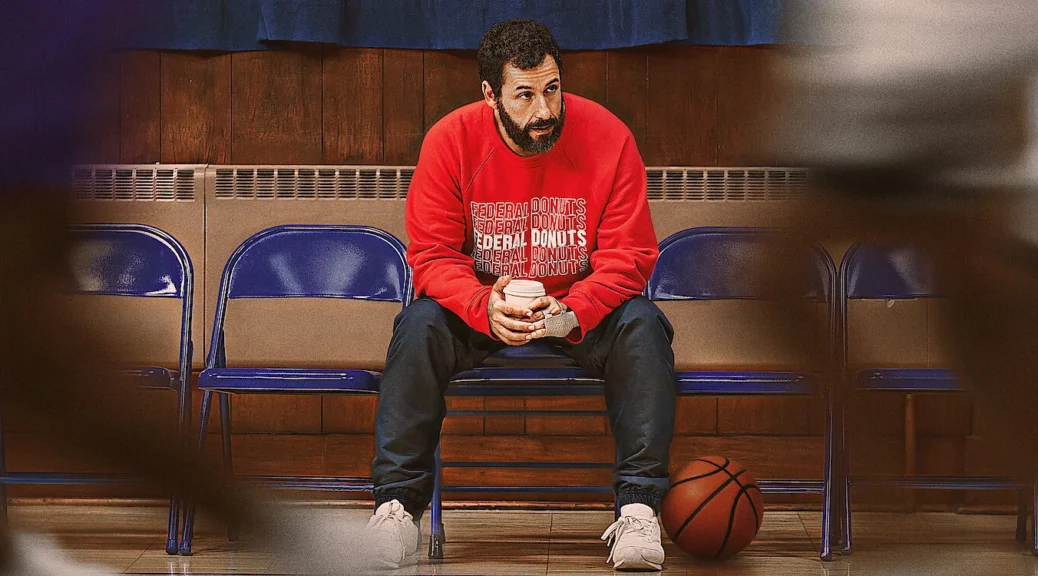
Adam Sandler’s passion for basketball is fairly well known, so the fact that Hustle is a love letter to the NBA shouldn’t be a huge surprise. And, this being a sports movie, you can expect some familiar benchmarks the film wisely doesn’t shy away from.

But this film about the heart and commitment that’s required in the Association boasts plenty of both from nearly everyone involved, landing Netflix an enjoyable winner.

Sandler plays Stanley Sugerman, a road-weary scout for the Philadelphia 76ers whose devotion to team owner Rex Merrick (Robert Duvall) is finally rewarded with a job on the bench as Assistant Coach.

But with clear shades of the Buss family drama in L.A., Rex’s son Vince (Ben Foster) wrestles control of the team from his sister (Heidi Gardner), and Stan is back living out of a suitcase while he scours the globe for a susperstar.

Writers Will Fetters and Taylor Materne set some nice stakes early, as Vince dangles a return to coaching in front of Stan. The quicker he finds the team a game-changing phenom, the sooner he can be home closer to his wife (Queen Latifah) and daughter (Jordan Hull).

On a gritty playground in Spain, Stan thinks he’s found his unicorn in the 6’9” Bo Cruz (NBA vet Juancho Hernangomez). The talk of big money lures Bo to Philly, but the path to a payday hits some roadblocks, and Bo’s longing for this mom and daughter back home creates some effective character-driven parallels with Stan.

Sandler and Hernangomez share a sweet, funny chemistry, and a constant stream of past and present NBA stars adds plenty of authenticity. Even better is director Jeremiah Zagar’s (We the Animals) skill in framing on-court action with speed, sweat and a tense, in-the-moment feel that gives the standard sports themes some needed vitality.

Hustle is a story of father figures, redemption, perseverance, and leaving your mark. No one’s claiming to re-invent anything here, and the winking nod to an iconic Rocky moment cements a self-awareness that only adds to the film’s charm.

It’s also another example of Sandler’s versatility, and the good that comes from surrounding himself with unique voices. When Sandler cares, he shines.

And he clearly cares about basketball.

Rites of Passage

Tahara

by George Wolf

If you saw Rachel Sennot’s breakout performance in last year’s wonderful Shiva Baby, the setup of Tahara is going to look pretty familiar. But in their feature debut, writer Jess Zeidman and director Olivia Peace find a vibrant, refreshing lens for their own look at one funeral’s anxious aftermath.

Sennot is terrific again as the self-centered Hannah, who joins her more reserved best friend Carrie (Madeline Grey DeFreece, also excellent) at the service for their Hebrew school classmate Samantha. Samantha killed herself at the age of 18, and after the funeral the girls will join other classmates at a grief session to talk about their feelings.

They will also gossip, navigate cliques, and bitch about having to be there while they try to catch the eye of Tristan (Daniel Taveras).

At least Hannah will be flirting with Tristan. Because Carrie is hiding some true feelings for her bestie, a conflict that Peace and Zeidman surround with some touching and effective parallels.

Peace frames most of the film in a square, 1:1 aspect ratio, but goes wide at important moments, most of which are animated. It’s a clear nod to the times when Carrie, a young Jewish queer woman of color, sees herself – and the world – in new ways.

Though the animation sequences and lack of score can give the film an experimental feel, a juxtaposition with the Jewish ritual meant to cleanse the body before burial (Tahara) ultimately grounds it as a deeply personal journey.

The students tell their teacher (and by extension, those not familiar with Jewish traditions) that the ritual’s goal is to “erase social status,” which feeds perfectly into the teenage power struggles (and one suicide) we see through the eyes of a type of character not often represented.

At times funny, uncomfortable, and heartbreaking, Tahara is an ambitious and ultimately moving film, from a pair of voices we should look forward to hearing again.

Nippon Dynamite

Ninja Badass

by Matt Weiner

The title of Ninja Badass also serves as a statement of purpose: if nothing else, this is a movie that knows what it wants to be.

Ryan Harrison, the movie’s (take a quick breath) writer/director/producer/actor/special effects guy, clearly has a vision for his low-budget cult flick. Ninja Badass aims for somewhere between midnight grindfest and “so bad it’s good.” Harrison remains dedicated to hitting that mark far more than sticking to an even remotely coherent story.

Rex (Harrison), an aimless Midwesterner fresh out of jail, finds himself on a journey. He aims to become a “real ninja” and save hot babes from ritual sacrifice at the hands of the Ninja VIP Super Club, run by the supremely evil Big Twitty (Darrell Francis). Along for the ride are his best friend Kano (Mitch Schlagel), new sensei Haskell (Steven C. Rose), and the mysterious and formidable Jojo (Tatiana Ortiz).

And… that’s pretty much it. The movie is less concerned with developing its leads than using them as human canvases for explosions, torn limbs and pureed puppies. The trail of destruction these ninjas leave across Indiana is immense, with copious digital blood sprays augmented by enjoyably gross practical effects and gore.

It would be a category error to spend a lot of time trying to figure out whether or not Ninja Badass is a good movie. Are numbers spicy? Can vegetables convert Eastern to Mountain Time? These aren’t the right questions.

Good movie? Bad? Ninja Badass is certainly an offensive one, almost deliriously so with the star-spangled Midwesterners constantly misunderstanding and conflating an entire continent’s worth of influences and languages. We’re clearly meant to be in on the joke, although Harrison dips into that well a bit too often.

Ninja Badass is also highly watchable, if you can allow yourself to have as much fun as Harrison clearly had getting this made. The action wears too thin by the end for the film to become a full-blown cult classic like the unintentionally bad films it borrows from. But this is also a country that gave American Ninja enough sequels to be considered a proper franchise. In the pantheon of weird white dude ninja movies, Ninja Badass more than holds its own.

Birds, Bees and Whatnot

A Sexplanation

by Rachel Willis

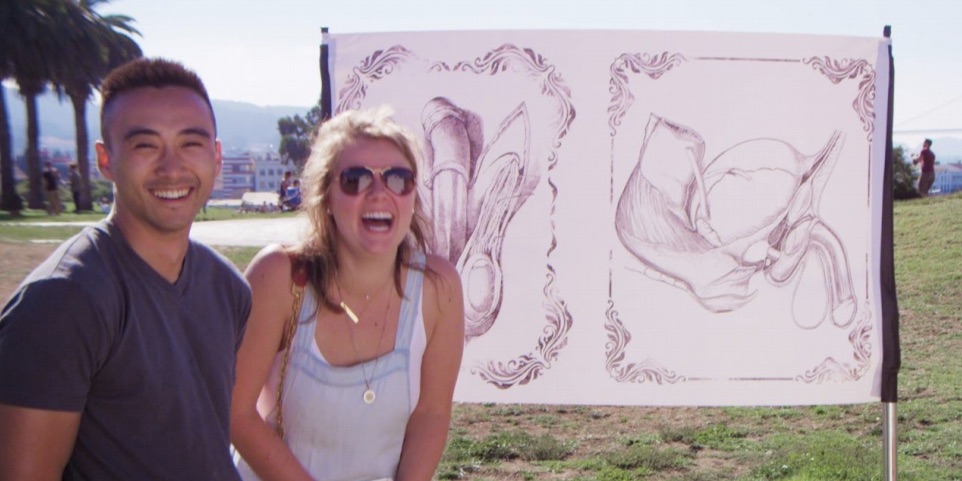
Director Alex Liu is on a quest to overcome the shame he feels regarding sex. He’s also out to understand why sex is such a taboo subject in America – especially when it comes to our kids, their curiosity, and their own drives (whatever they may be) – in his documentary, A Sexplanation.

Part exploration of sex education in the United States, healthy sexual conversation, and personal memoir, the doc wants to understand why Liu was made to feel such shame about his own sexual acts and preferences. In a heart-wrenching moment, he even admits to contemplating suicide because of it.

This is a heavy sequence in an otherwise very lighthearted and funny documentary. Liu might still feel some of the embarrassment of his upbringing (in one particular interview it’s obvious from his blush he’s asking questions that bring discomfort), but he is determined to upend the current notion of sex as shameful.

This is the kind of documentary that would be a wonderful conversation starter for parents and their teenagers, as some of its queries are a bit too advanced for younger children. One of the points the documentary makes is that there shouldn’t be “The Talk” with kids, but a continuing conversation around age-appropriate topics. There’s no reason why a two- or three-year-old can’t know the proper terminology for their body parts. Or why a six-year-old can’t begin to understand the biological differences between the sexes. In the case of sex, silence from parents can be just as damaging as outright shaming.

This is what appears to have happened to Liu. As he talks with his parents, both of whom seem quite open to his questions, it doesn’t appear that they intended for Liu to feel awkward, embarrassed, or even wrong for a natural part of development. But their silence meant he was left to the wayward American education system, which primarily values abstinence-only over comprehensive sex-ed.

Conversations with others his age reveal the woefully inadequate education most of us have, not only concerning sex, but also some of the basics of human biology.   

Liu could probably have done a bit more exploring. Still, A Sexplanation offers a non-judgmental safe space for the questions that many of us (okay, probably all of us) have had when it comes to masturbation, sexual proclivities, and the whole exciting and wonderful topic that is sex. 

Scream Queen

All About Evil

by Hope Madden

Creepy twins! Librarians! Drag queens! These are a few of my favorite things…

The long-lost 2010 cult-film-in-the-making All About Evil brings all this and more to its Shudder debut this week. What’s it about?

The business of show!

Natasha Lyonne is Deborah Tennis, anxious librarian. Deb inherits her dad’s beloved single-screen San Francisco theater and vows to keep it afloat, no matter how. Her plan of action: make grisly, hyper-realistic horror shorts with literary puns for titles.

You’d be surprised how well it works.

Writer/director Joshua Grannell (aka Peaches Christ, who co-stars) surrounds Lyonne with some underground heavy-hitters including Mink Stole and Cassandra Peterson. Between that and the Herschel Gordon Lewis love, All About Evil is a mash note to camp.

Performances and writing fall right in line. It’s community theater bad, but in the best way. Lyonne is in her element, hamming her arc from mousy literary type to vampy directress with Gloria Swanson skill. She’s even more fun when she’s directing her fine crew (Jack Donner, Noah Segan, and Nikita and Jade Ramsey – all so fun).

The underlying story that we need to stop assuming every troubled, white high school boy is a danger to society has not aged well. But Grannell also hits on timeless lessons about cell phone use during a movie (never OK!) and Elvira’s hotness (eternal!).

All About Evil offers clever midnight-movie fun from start to finish. The filmmaker is clearly a devotee of cult and kitsch, a love that brightens every frame of the film. Plus, the film memorabilia! Come for the movie posters, stay for more movie posters, enjoy some madcap campy mayhem in between.

Chillier than Casual Friday

Nude Tuesday

by Hope Madden

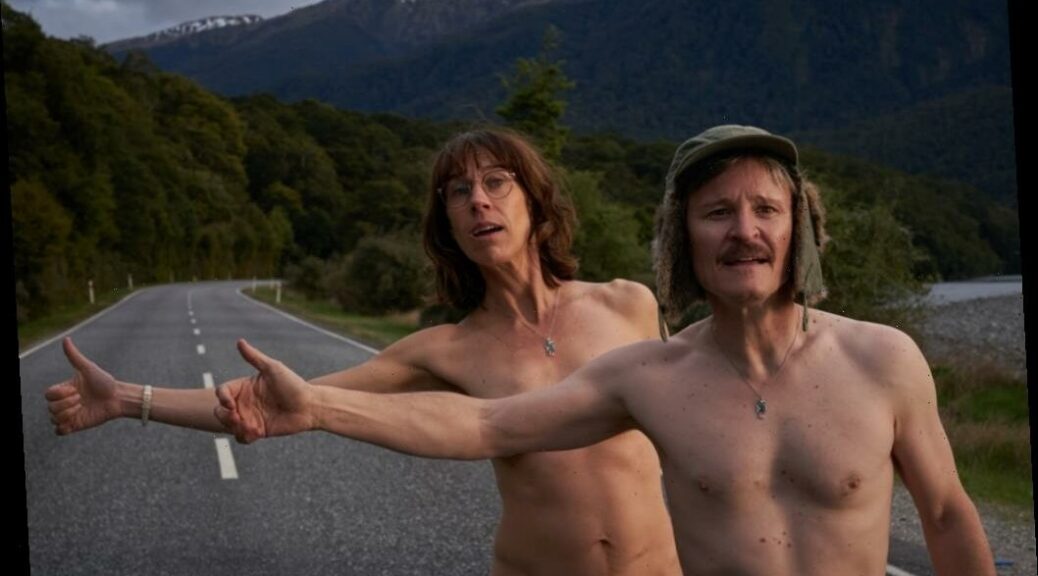
“It’s rude not to be nude on Nude Tuesday.”

It’s with this kind of casually dropped line and its sincere acceptance that co-writer/director Armagan Ballantyne laughingly challenges status quo and self-help in equal measure.

It’s nothing if not an odd film.

Ballantyne writes with star Jackie van Beek (What We Do in the Shadows) and Ronny Chieng. Ballantyne and van Beek composed the script, which is written entirely in a very Nordic-sounding gibberish language. Chieng wrote the subtitles.

This makes you wonder, was the English language version available to the actors, or did Chieng figure out what they were saying later? And why?

Either way, the actors convince. You’ll immediately forget that this is not a real language (which means you’ll cease to marvel at its delivery, and that’s a crime).

Van Beek is Laura, whose marriage to Bruno (Damon Herriman) has been unsatisfying for a while. His mum has noticed, so she bought them a trip to a retreat run by the charismatic Bjorg (Jemaine Clement).

The duo will try new things, learn about themselves, slowly unveil the buried troubles in their relationship, and work toward that day of days: Nude Tuesday.

Before we get there, though, Ballantyne runs through an absurd comedy of manners. Van Beek’s awkward, do-what’s-expected delivery is perfect, and Herriman’s over-eager approach creates a funny balance.

Clement’s simpleton narcissism delivers the most consistent laughter in a film that’s cleverly delightful if not bust-a-gut funny.

The cast wields the language impressively. Still, the creative decision is a head-scratcher. The fictional language doesn’t impede enjoyment of the film, but it doesn’t heighten it, either. Because of the subtitles, it doesn’t do anything at all. Would we be able to follow along without captions? And if not, why put the cast through learning the false dialog and the audience through reading the real deal?

It’s a conundrum, but not one worth a lot of energy. Nude Tuesday delivers a charming coming-of-middle-age comedy (and a lot more nudity than you probably need).

Not All Men

Watcher

by George Wolf

If you’re a fan at all of genre films, chances are good Watcher will look plenty familiar. But in her feature debut, writer/director Chloe Okuno wields that familiarity with a cunning that leaves you feeling unnerved in urgent and important ways.

Maika Monroe is sensational as Julia, an actress who has left New York behind to follow husband Francis (Karl Glusman) and begin a new life in Bucharest. With a mother who was Romanian and a fluent grasp on the language, Francis instantly feels at home.

Julia does not, and her feelings of vulnerability are compounded by her trouble communicating, the news reports of a serial killer, her husband’s late nights at the office…and the man in the window across the street (the effortlessly creepy Burn Gorman) who is constantly watching her.

And as soon as Julia makes accusations, the games begin.

Is the watcher really a threat? Is he stalking Julia, or is she the one who’s following him?

None of these beats are new, and as events escalate, others are pretty clearly telegraphed. But it’s the way Okuno (who helmed the impressive “Storm Drain” segment from V/H/S /94) slowly twists the gaslighting knife that makes the film’s hair-raising chills resonate.

She finds a perfect conduit in Monroe, who emits an effectively fragile resolve. The absence of subtitles helps us relate to Julia immediately, and Monroe never squanders that sympathy, grounding the film at even the most questionably formulaic moments.

Even as Julia pleads to be believed, the mounting indignities create a subtle yet unmistakable nod to a culture that expects women to ignore their better judgment for the sake of being polite.

And from the friendly bystander who jokes about the creeper’s “crush” to Francis’s weak-willed humoring, Okuno envelopes Julia in male gazes that carry threats of varying degrees, all building to a bloody and damn satisfying crescendo.