A magical young princess leaves her sister’s side amid some heavy emotional trauma, taking her cold heart to a frozen environment and staking her claim as the Ice Queen. This one, though, has no interest in building a snowman.
Winter’s War is both prequel and sequel to Snow White and the Huntsman, the competent fantasy drama from 2012. You might wonder about the need for another film in this franchise, but it’s hard to argue with the cast.
Chris Hemsworth is back as Eric the Hunstman, along with Jessica Chastain as his beloved Sara and Charlize Theron’s evil Queen Ravenna. Theron was easily the best thing about the first film, and adding the great Emily Blunt as Ravenna’s chilly sister Freya seems like a pretty safe play.
Yeah, um, about that…
Blunt’s unbeaten streak of onscreen chemistry with every living human ends here, as she and Theron can’t get their considerable talents to gel. Instead, Blunt’s “love is evil” act and Theron’s power-mad malevolence wander into a curiously campy section of the castle.
How can you put two actors of this caliber side by side, and end up with scenes this dull?
Director Cedric Nicolas-Troyen is a visual effects veteran making his feature debut, and he seems much more confident presenting Eric and Sara’s woodland journey to recover the magical mirror, mirror no longer on the wall.
The film’s first act is nearly insufferable, ploddingly paced and weighted by exposition shared via the buttery (if uncredited) voice of Liam Neeson.
Things pick up midway as the adventure proper begins, but Nicolas-Troyden and cast stumble again as their tale comes to a close. Though it often looks fantastic, Winter’s War is uneven at best, with a mishmash of ideas that barely hold together, and cannot capture attention.
Worse still, it is an unforgivable waste of three of the most talented women working in film today.
If you harbor a mad desire to see the film, you may want to let it go.
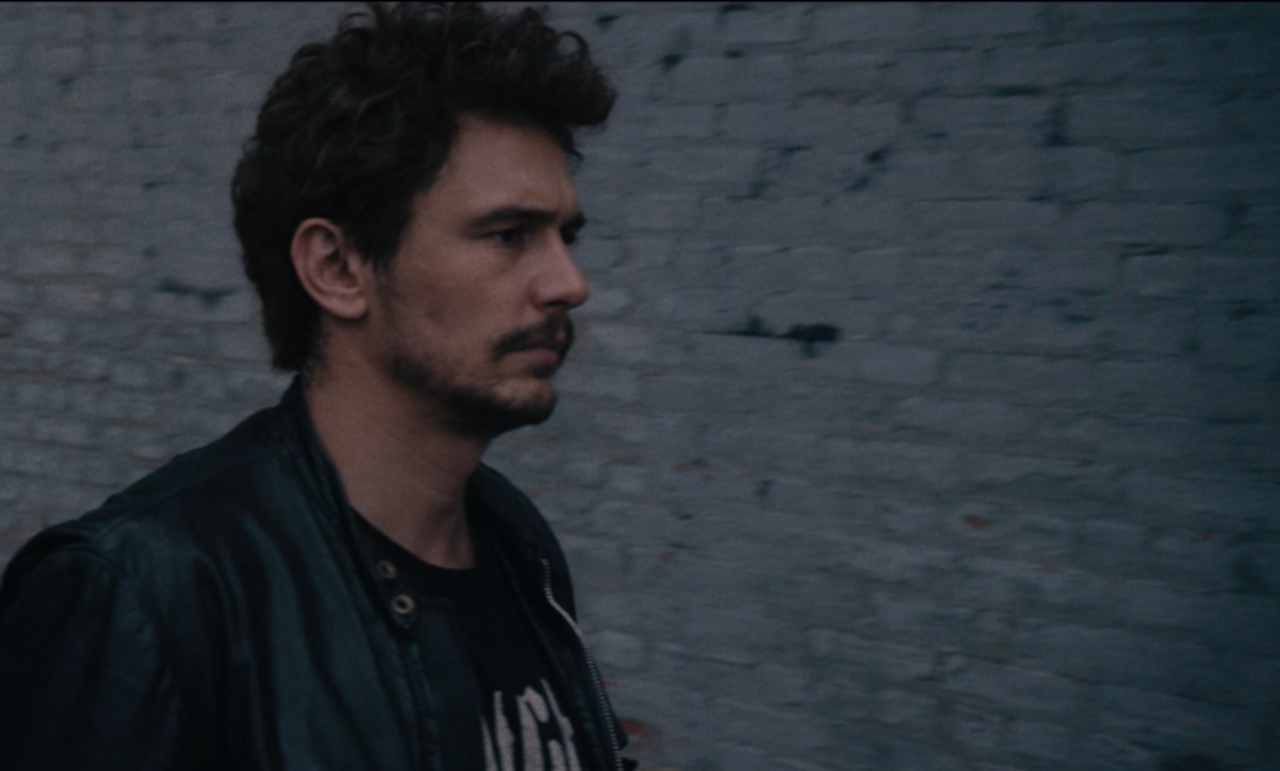
James Franco is nothing if not prolific. The Adderall Diaries was his 8th completed feature slated for release in 2015. He is a frenzy of artistic ambition and he deserves credit for embracing independent filmmaking as well as bigger budget stuff, doling out comedies and dramas in between arty TV bits. But maybe if he slowed down a little, some of the material would be better.
In Adderall Diaries, Franco plays Stephen Elliott, the real-life writer who penned the nonfiction text on which the film is based. As Franco depicts him, Elliott is a self-destructive man-child wallowing in self-pity.
What caused his sour mood? An adolescence of abuse at the hands of a father he pretends is dead (in print and in public, no less). When Dad (Ed Harris) shows up in the flesh at a book reading, Elliott’s cushy world falls to pieces. Combine that with writer’s block and a misdirected interest in a high-profile murder trial, and what can Elliott do but snort, smoke, shoot, and pop every substance he comes into contact with?
There is something interesting buried here about how we use our own memories to justify our behavior, or about how writers are inherently liars, or a bit of both – hard to say because it’s never fleshed out or clearly articulated. But boy, the old ‘downward spiral of the artistic genius’ thing – that is hard to miss.
Though Harris turns in a characteristically strong performances, all other supporting turns are perfunctory at best, which leaves us with little but Franco’s whining protagonist to cling to.
Writer/director Pamela Romanowsky flails about with indie director clichés, creating an overly-filtered world of seediness and confused flashbacks, while her prose cannot deliver the introspection required to make an audience invest in what happens to Elliott.
Subplots go nowhere – the murder trial, in particular, feels as if it should mean something imperative but seems needless and tacked on. Relationships, the writer’s craft, self-examination and anything else the film attempts to tackle are too muddled to stand out. Even Franco’s damaged writer seeking redemption bit is so tired, and the character so unlikeable, that it’s just hard to care about the film’s outcome.
Director Ariel Vroman has crafted an interesting character study within the bones of an action movie with Criminal.
When CIA agent Bill Pope (Ryan Reynolds) is killed in the line of duty, his boss, Quaker Wells (Gary Oldman), desperate to obtain the information Pope was bringing to him, enlists the help of Dr. Franks (Tommy Lee Jones) to perform a radical memory transfer from Pope to Jericho Stewart (Kevin Costner). Dr. Franks is unsure if the procedure will work, as he’s only performed is successfully on small mammals, but Wells pushes him to perform the surgery.
Predictably, the operation is successful. However, Jericho Wells is unpredictable. He is a man without a conscience, and his predilection for destruction jeopardizes Wells’s objective.
Costner is marvelous as Jericho, first playing the character with cold indifference, but shaping him to the memories and feelings of Pope as they overwhelm him. Attempting to use Pope’s knowledge for his own gain, he finds himself drawn to Pope’s life, particularly Pope’s wife and daughter.
As the deceased’s wife, Jill Pope, Gal Gadot (the new Wonder Woman) gives a compelling performance as a woman who is suddenly confronted with a very dangerous man who happens to know things about her life that only her husband would know. The characters’ initial interaction is tense, and it’s unclear how Jericho will act toward Jill and her daughter.
Unfortunately, the situation plays out the way one would expect, as Jericho is influenced more and more by Pope’s thoughts and feelings. What could provide for an unexpected, and possibly deadly, confrontation is instead relegated to a predictable attack of conscience before anything truly sinister occurs.
Though Costner ably carries the weight of the film, many of the supporting characters feel flat, with little to do other than attempt to steer Jericho in the direction they want. Gary Oldman is especially mundane in his role as a CIA director who seems inept and impulsive.
Only Gadot, and Michael Pitt (The Dreamers, Funny Games) as Jan Stroop, imbue their characters with emotions and wants that have nothing to do with Jericho. Pitt is especially effective, radiating various emotions and providing a nice contrast to Jericho.
Despite the weakness of some of the characters, the film is an intriguing study of Jericho. There are a number of tense, and occasionally funny, moments as we watch him navigate his new memories and feelings.
On the whole, Criminal is an enjoyable, if predictable, film.
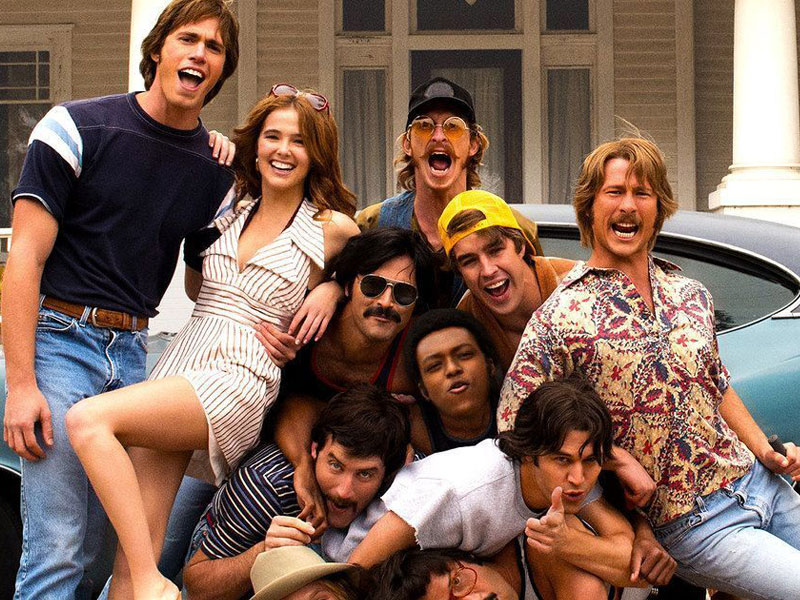
Of all filmmakers in the world, few – if any – can do slice-of-life as well as Richard Linklater. Never weighed down by plot structure or the rigid expectations of modern cinema, Linklater’s the master of fluid, easygoing, day-in-the-life filmmaking. His latest exercise in the craft, Everybody Wants Some, is a charmer.
You’re invited to a 3-day bender in the late summer of 1980 – the long weekend before the first day of classes – and Linklater’s meandering camera makes you feel like you’re just wandering through the party.
Everybody Wants Some is, without question, too forgiving. A South Texas university baseball team settles into the new year by scoping out the female action on and off campus. They’re adaptive – disco one night, urban cowboys the next, punk rockers on a random Sunday. Linklater not only nails 1980, but pinpoints the almost invisible moments of import in a person’s life.
This is a consequence-free zone that smells a bit of nostalgia and self-congratulations. And yet, thanks to a slew of utterly charming performances, the film still works exceptionally well.
Linklater has assembled an outstanding ensemble – not a false note in the lot, from the quiet everyman Jake (Blake Jenner) to the hypercompetitive McReynolds (Tyler Hoechlin) to the philosophical ladies’ man Finnegan (Glen Powell) to the ranting wacko Jay (Juston Street) – and basically the entire team. The first thing Linklater does is establish each ballplayer’s type, just to quietly destroy your preconceived notions of character.
Billed as the “spiritual sequel” to 1993’s coming of age classic Dazed and Confused, Everybody Wants Some is even more laid back, decidedly more masculine, and quite a bit more existential. Linklater’s more existential films tend toward the bittersweet – some more bitter, this one more sweet.
Like Dazed, the new film litters its fluid storyline with hijinks and casually perceptive dialog.
“It’s all so damn tribal.”
“Embrace your inner strange.”
It’s a film about competition and identity, the battle between self-discovery and authenticity, but with Linklater’s light, affectionate touch, nothing ever feels heavy. The writing is as good as anything Linklater has produced, positively glowing with “unsolicited wisdom and fuckwithery.” And all of it leads to an absolutely perfect ending.
The Boss is a comedic story of one woman’s fall from the top and her struggle to regain her position in the world.
Melissa McCarthy is Michelle Darnell, a high powered executive who writes a brand of self-help books. Her fall comes at the hands of former lover and business rival, Ronald (Peter Dinklage).
Kristen Bell is Michelle’s long suffering assistant, Claire, who is forced to find a new employer when Michelle is incarcerated for insider trading. The early setup foretells the redemption of Michelle, though the ways in which it happens are unpredictable and provide the bulk of the movie’s many jokes.
As a vehicle for Melissa McCarthy, The Boss has a number of laughs. Sharp wit, foul language, and bodily humor combine to offer an appealing repertoire of McCarthy’s talents. However, the movie itself falls flat. The supporting cast is underutilized. Kristen Bell, herself a witty and capable actress, is lackluster against McCarthy. The chemistry is non-existent, and the two characters never seem to foster a believable relationship.
The screenplay doesn’t know what to do with anyone other than McCarthy. Though a decent portion of the film revolves around Bell’s character, her scenes independent of McCarthy are mildly tedious.
Peter Dinklage, another actor with an incredible range of talent, has a woefully small amount of screen time, and though he plays Michelle’s former lover who both hates and still wants her, he has no sexual chemistry or tension with McCarthy. The interaction between the characters frequently feels forced.
The only actor who plays well of off McCarthy’s humor is Cedric Yarbrough, the “yes man” Tito, who appears briefly in the beginning of the film, but sadly, doesn’t return after Michelle’s release from prison.
On the whole, the film is disjointed. What could be a cohesive story of Michelle’s fall and attempted rise back to the top is unfortunately punctuated with scenes that don’t really fit the narrative: a comic book style slow motion fight scene between girls from two warring Girl Scout-like troops, a scene where Michelle has a bad reaction to puffer fish, and others.
Despite the movie’s flaws, it’s not without appeal. Ella Anderson who plays Claire’s daughter, Rachel, is a delightful foil to Michelle’s brash and sarcastic nature. Her emotions based on Michelle’s actions come across as genuine. Her joys and pains are felt by the audience. McCarthy’s humor and flair carries the film in places where in another’s hands it might suffer.
It’s a shame so many of the other characters are without appeal, as The Boss could have been a much stronger comedy.
Get to know Jeff Nichols. The Arkansas native is batting 1000, writing and directing among the most beautiful and compelling American films being made. His latest, Midnight Special, is no different. But then again, it is very, very different.
You should know as little as possible going into this film because Nichols is the master of slow reveal, pulling you into a situation and exploiting your preconceived notions until you are wonderfully bewildered by the path the story takes.
Suffice it to say, Nichols mainstay Michael Shannon, as well as Joel Edgerton, are armed men in a seedy motel. They have a child in tow (Jaeden Lieberher – wonderful). Local news casts a dark image of the trio, but there’s also a Waco-esque religious community looking for the boy, not to mention the FBI. So, what the hell is going on?
Nichols knows, and he invites your curiosity as he upends expectations. The film toys with the clash between logic and the supernatural, not unlike the themes of Nichols’s masterpiece Take Shelter (also starring a magnificent Shannon). While moments of Midnight Special will feel more reminiscent of memorable films in the SciFi vein, what this filmmaker does with his subject is beautifully novel.
The film, like all of Nichols’s work, is deeply rooted in traditions and atmosphere specific to the American South, and the filmmaker boasts a deep and easy skill as a storyteller. He’s also truly gifted with casting.
Lieberher, who showed amazing natural talent in 2014’s St. Vincent, again offers a beautifully restrained central figure. Edgerton and Kirsten Dunst are likewise wonderful, both turning in nuanced performances that reflect Nichols’s uncanny way of dealing with the extraordinary in the most naturalistic way.
But Michael Shannon, a remarkable talent no matter what film he graces, anchors the film with a heartbreaking, award-worthy performance.
Midnight Special is just another gem of a film that allows Nichols and his extraordinary cast to find exceptional moments in both the outlandish and the terribly mundane, and that’s probably the skill that sets this filmmaker above nearly anyone else working today. He sees beyond expectations and asks you to do it, too.
Look at little Tommy Solomon! Joseph Gordon-Levitt has proven himself a versatile actor in the years since his TV career in the guise of a pre-pubescent Earthling. With his newest effort, Don Jon, he exhibits surprising confidence and aptitude as both a screenwriter and a director.
The film follows Jon (Gordon-Levitt), a Jersey player who cares deeply about only a handful of things: his bod, his pad, his ride, his family, his church, his boys, his girls, his porn.
Guess which one of those gets him into trouble.
Maybe the best way to appreciate what Don Jon is, is to quickly cover what it is not. Don Jon is not a traditional romantic comedy. It is not a sexy romp, or a perfect flick for hangin’ with your bros.
No. It’s a sexually frank, cleverly written, confidently directed independent comedy/drama about our culture of objectification. It’s an alert comment on a society that fears intimacy, collects trophies, and looks to get more than it gives; a culture that raises girls to want to be princesses, and guys to collect sexual conquests. A culture where a fast food restaurant honestly advertises its newest sandwich by having an oiled up, bikini clad super model spread her legs while she enjoys the tasty burger.
The effort certainly carries its flaws, but JGL gets credit for upending expectations, and for brilliantly paralleling romantic comedies and porn – because, let’s be honest, they are equally damaging to our concept of relationship.
Writing and direction are nothing without a cast, and Gordon-Levitt proves just as savvy in that department. Tony F. Danza, ladies and gentlemen! Danza has fun as Jon’s role model father, while this season’s go-to girl Brie Larson – with barely a word – scores as his observant sister.
Gordon-Levitt’s own perfectly crafted swagger finds its match in a gum-chewing Scarlett Johansson, whose sultry manipulator is spot-on.
The fledgling auteur stumbles by Act 3 – quite a letdown after such a well articulated premise. The underdeveloped resolution would hinder the effort more were it not for the presence of Julianne Moore as the eccentric and wise Esther. The role may be a bit clichéd, but Moore is incapable of anything less than excellence.
It won’t be long before we’re saying the same of Joseph Gordon-Levitt. Until the end, he proves himself an insightful observer of his times, a cagey storyteller, and an artist with limitless potential.
In 2010, Stuart Blumberg wrote a film that frankly depicted the crisis of a loving but stagnant marriage upended by infidelity. Though it may have been the intrigue of “new era family” that piqued audience interest in The Kids Are All Right, it was the talented cast and the casually insightful writing that made the film worth seeing.
In fact, Blumberg has made a career out of clever scripts that take a familiar approach to an unfamiliar topic, such as The Girl Next Door, the teen romance between a shy young man and his porn star neighbor.
For his directorial debut he pulled from a screenplay he co-wrote with Matt Winston. Thanks for Sharing offers a romantic dramedy about sex addiction.
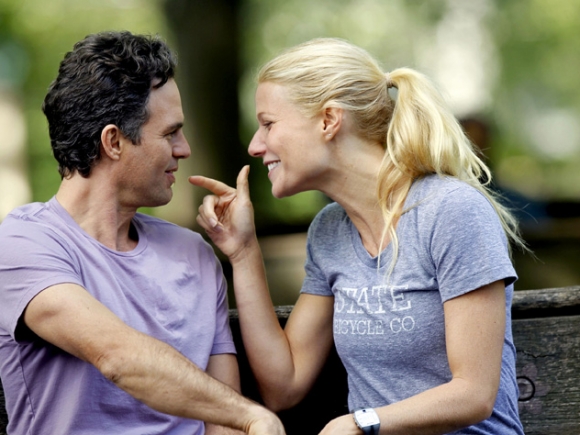
The great Mark Ruffalo anchors the cast as Adam, sex addict. Adam’s been sober for 5 years, thanks in part to the salty wisdom of his sponsor, Mike (Tim Robbins), though he’s having trouble with his new court-appointed sponsee Neil (Josh Gad), who isn’t taking the program seriously.
Complications arise for all three addicts, who face temptation anew as life asks them to juggle adversity and addiction simultaneously. The film is refreshingly clear on the point that overcoming addition is harder than most movies make it out to be.
Credit Blumberg once again for his script’s candor. Every character is gifted with sharp dialogue that does more than shape the role; it articulates profound difficulty of overcoming this particular problem. This cast takes advantage.
Ruffalo finds humanity in every character, and his take on Adam’s wobbly sense of control is touching. Gwyneth Paltrow offers another strong turn, and both actors benefit as much from Blumberg’s bright dialogue as the film benefits from the duo’s easy onscreen chemistry.
Though Robbins delivers a lot of the film’s funnier lines, Gad brings schlubby humor while sparring with a charmingly vulgar Alecia Moore (taking a break from her day job as pop star “Pink”).
Unfortunately, Blumberg the director is less confident than Blumberg the writer. He’s too uncomfortable with the tension he creates, switching from one storyline to the next when things get dark and confining his characters with predictable, tidy formulas.
It may be impossible to watch a film about sex addiction without remembering Michael Fassbender’s scarring performance in 2011’s Shame. While that film wallows in the filth and self loathing, Thanks for Sharing dips a toe and quickly hoses off. For a man who’s made a career of exploiting the mundane inner workings of naughtiness, he should be more comfortable getting a little messy.
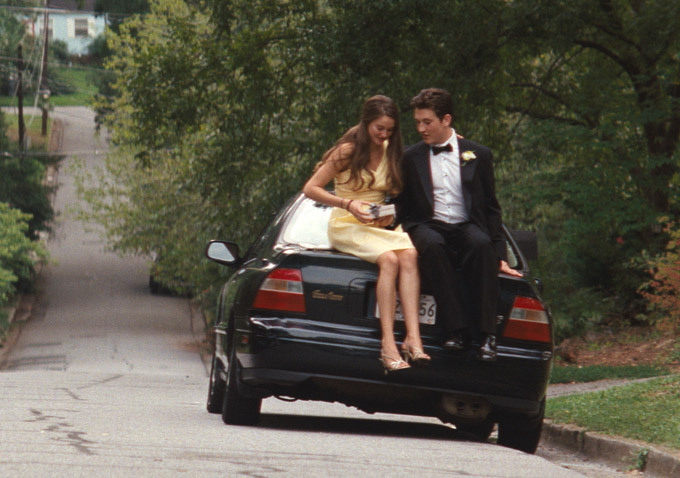
The Spectacular Now suffers slightly from high expectations. National critics quickly heralded the film the summer’s best, and its quirky indie pedigree is tough to argue. The film marks Shailene Woodley’s first feature since her breathtaking turn in The Descendents. Penned by the duo that delivered 500 Days of Summer, directed by Smashed helmsman James Ponsoldt, and starring the charmingly charismatic, damaged doofus Miles Teller, the film’s buzz certainly felt potentially deserved.
A popular, life-of-the-party high school senior rebounds from a break up by dating a quiet, hard-working, nice girl. Brace yourself, there’s no make-over, no peer pressure, no angst.
No angst – what?!
It’s true. In fact, it is the film’s fresh approach that makes the safe decisions and clichés stand out. For a high school romance with an edge, The Spectacular Now is an engaging dramedy boasting stronger scripting and far superior performances than what you find in other likeminded works. Indeed, it sparkles in comparison to similar genre titles – the sickeningly overrated Perks of Being a Wallflower, for example.
Polsoldt never drapes his high school romance in nostalgia – a common mistake in films such as these – but looks at the situation with the clear view his protagonist lacks. With a handful of exceptions, the writing holds up, and when it doesn’t, credit Teller and especially Woodley for the sheer talent to buoy the occasional weak scripting.
Woodley, who wowed audiences with her turn as the thoroughly modern, cynical teen in Descendents, shows true range that proves her wealth of talent.
Viewers who remember Teller from his recent work in Project X and 21 and Over may see the young actor as a one-trick pony, again playing the likeable screw up with an alcohol dependency. In his performance here, though, we glimpse a bit of the nuance and power fans of his turn in 2010’s Rabbit Hole will remember.
Unfortunately, The Spectacular Now falls too conveniently into a formula framed by the dreaded college essay. Ponsoldt lets his crisis off the hook far too simply, and where the resolution should have felt appropriately ambiguous, it instead seems superficially settled.
But cast that all aside and drink in two of the most fully crafted teens ever to hit the screen. The team of Ponsoldt, Woodley and Teller plumb for that bittersweet combination of longing, confidence, vulnerability and potential that marks adolescence. While his film may be merely better than average, his leads are truly spectacular.
Yes, the humorless Kick-Ass 2 disappointed, as sequels so often do. Which are the biggest disappointments? And on a brighter note, which sequels lived up to – even exceeded – expectations? Read on!
Most Disappointing Sequels
5) Hangover Part 2
In 2009, Todd Phillips shared a clever conceit starring an amiable, talented threesome with real chemistry on film. Oh, how we laughed. In 2011 he found out that a clever conceit is only clever once. Revisiting every single joke was, indeed, Hangover 2’s only original joke. What we’ve learned is that one joke in 102 minutes does not a comedy make.
http://www.youtube.com/watch?v=RYL_T7f59o8
4) Exorcist II: The Heretic
Jesus. A drunken and flummoxed Richard Burton wanders through Africa on the advice of a demon locust; a hypnotized, angelically dressed Linda Blair looks on from her bedroom in the States. They followed perhaps the greatest horror film of all time with this lunacy? Who’s responsible for this atrocity? Is it Regan’s dangerously incompetent therapist? Director John Boorman? Satan?
3) Jaws 2
Hey, you know who’s not Steven Spielberg? Jeannot Szwarc. Wait, who’s Jeannot Szwarc, you ask? Exactly! He’s the guy who used to direct Beretta episodes who inexplicably helmed the story of a little island community that looks positively delicious to sharks. Szwarc’s disinterests? Character development, storytelling, understatement, bathers.
2) Caddyshack 2
For the love of God. Eight years after one pesky gopher and a slew of vulgarians beat Judge Smails at his own game (golf), a new set of classless sportsmen descend upon Bushwood. What happens if you swap out Ted Knight for Robert Stack, Rodney Dangerfield for Jackie Mason, and Bill Murray for Dan Aykroyd? Nothing funny, I’ll guarantee you that.
http://www.youtube.com/watch?v=saREFwdhKH0
1) Ghostbusters II
Stop it! Just stop it right now! Need you crush all our childhood happiness with your greed and listless comedies?! Why is this the most offensive of the sequels? Because the same director, writers and cast returned to cash in on the joy their first film left in our hearts by telling us that we can fight off the bad ectoplasm if we have more joy in our hearts. Ironic, since that’s what they killed with their movie.
Best Sequels
5) Spider-Man 2
Better villain, less predictable storyline, equal parts exciting and tender, Spider-Man 2 exceeded expectations. Few (if any) superhero films can boast such joyous thrills tied to such well-crafted storytelling because few (if any) superhero films care as much about the “human” as the “super”.
http://www.youtube.com/watch?v=SCLTJJZ8gas
4) The Bride of Frankenstein
In 1931, the great James Whale rocked the cinematic universe with a familiar story, one outstanding performance, and the greatest make up job to date. But with Frankenstein’s 1935 sequel, he was able to show some real talent. This subversive, darkly humorous gem betters the original by a mile.
3) The Empire Strikes Back
When the time came for George Lucas to second his mind blowing ’77 blockbuster Star Wars, he made one terrific decision. He hired somebody else to write and direct. New characters, exceptional battles, and epic surprises help this unpredictable storyline not just live up to the original, but exceed it.
2) Aliens
Oh, hell yes. How was James Cameron to top Ridley Scott’s breathlessly terrifying original? By taking it in an entirely different direction, from terror in space to intergalactic ass-kicking. Bigger-better-faster-more doesn’t always work, but put Sigourney Weaver in a giant metal suit, and things turn out OK.
http://www.youtube.com/watch?v=zNE0dlHcmgA
1) Godfather Part II
Francis Ford Coppola outdid himself. The origin story, the familial conflict, Fredo. Oh, Fredo. You break our hearts. Godfather Part II doesn’t just follow one mob family, it finds its heartbeat and exposes what it is that differentiates them from us. Flawless.