Tag Archives: movies

Some of Them Want to Be Abused

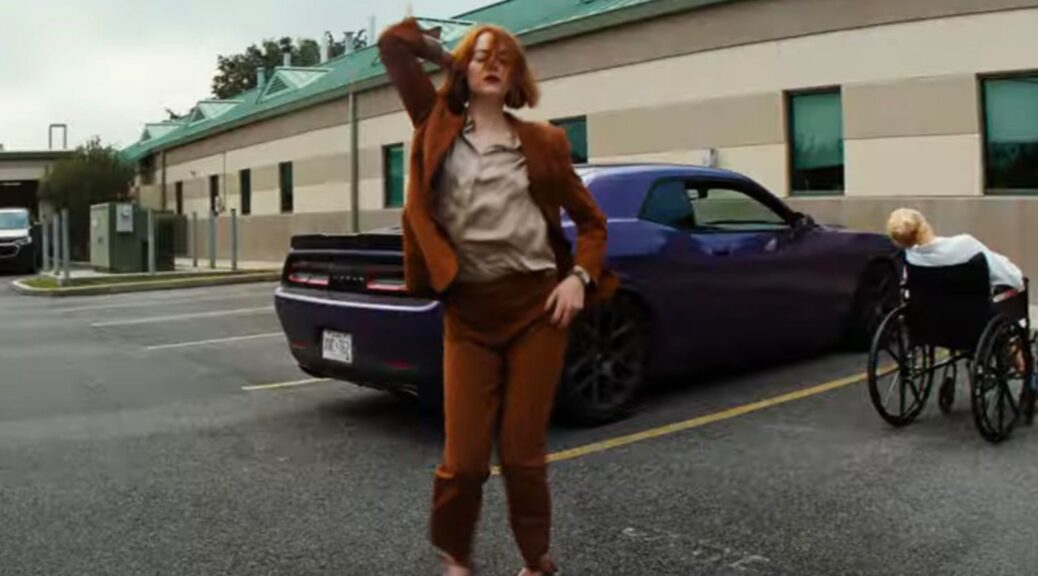
Kinds of Kindness

by George Wolf

Yorgos Lanthimos debuted as a writer/director nearly twenty years ago, with 2005’s Kinetta. Since then, each feature has seemed to push his brand of black comedic satire closer and closer to the mainstream. His last two features, The Favourite and Poor Things, brought him new levels of acceptance and praise.

Well, don’t get used to it. Kinds of Kindness finds Lanthimos at his most abstract, curious and unexpectedly hilarious.

Writing again with Efthimis Filippou, Lanthimos crafts an anthology with a strong stable of actors that includes Emma Stone, Jesse Plemons, Willem Dafoe, Hong Chau, Margaret Qualley and Mamoudou Athie. They rotate through various roles in three chapters, each connected by a strange man known only as “the R.M.F.”

Part one finds a man exiled from his years-long benefactor after deviating from the strict life schedule chosen for him. We then move to the story of a cop who is relieved when his missing wife returns, and then suspicious that the woman is not his wife at all. Finally, a woman abandons her family to join a cult and search for a spiritual guide with the ability to raise the dead.

Lanthimos reunites with cinematographer Robbie Ryan, but don’t expect more fisheye lenses or unnerving POVs. Here, we’re kept off balance by imposing architecture and wide, sparsely populated spaces, all waiting to be firebombed by Lanthimos and his sudden blasts of heavy metal music, insane driving, group sex, and bit part players that don’t seem like actors at all among this splendid ensemble.

A soundtrack full of staccato piano and chorale harmonies adds to the tightly controlled exercise that often speaks to lost control and uneasy compliance. You have no idea where any of this is going, which allows Lanthimos to keep levels of interest and fascination high as the running time balloons to nearly three hours.

This is dense and demanding cinema, complex and sometimes utterly confounding. It can wander self-indulgently, then slap your face with moments of brilliance, hilarity, insight and even horror.

No doubt, Kinds of Kindness is all kids of trippy. But it’s a trip that is unquestionably and unapologetically stamped by Yorgos Lanthimos. No brand of weird can comment on our human condition quite like his or trust us enough to take from it what we need the most.

Mommy Issues

A Family Affair

by George Wolf

First off, A Family Affair seems like it might have been a better fit for Netflix’s November slate. Not only does the film have an important Holiday sequence and at least one Christmas tune, a fall release would have put more distance between it and Amazon’s very similar May release The Idea of You.

But here we are again, where the Nancy Meyers rom-com fantasy formula is tweaked by having the mature rich white lady find love with a very famous younger man.

Here, the famous guy is the 34 year-old Chris Cole (Zac Efron), a major action star with an upcoming film in need of a script re-write. Chris’s 24 year-old assistant Zara (Joey King) is tired of just running his errands and would like to move up in the movie biz, but it’s her 50-something mother Brooke (Nicole Kidman) that gets Chris’s attention.

Zara’s not happy about Mom’s “sexcapades” with her demanding boss, but Grandma Leila (Kathy Bates) reminds Zara that Brooke is not just a mother, but a woman, too. And it’s been over ten years since Zara’s Dad passed, so surely she’s “earned” this indulgence, right?

Nothing wrong with a fantasy aimed toward older women, but like any familiar formula, the key lies in executing it well enough to move beyond the generic and develop a distinctive voice. Director Richard LaGravenese (Beautiful Creatures, P.S. I Love You) and first-time screenwriter Carrie Solomon can’t summon many wins beyond the three likable leads.

Not only will the inevitable comparisons to the warmer, more organic The Idea of You come up short, but madcap peeks behind the production of Chris’s latest action film instantly recall one of Tugg Speedman’s (“Tuggernuts!”) sequels in Tropic Thunder.

There are a few amusing jabs at fame and self-absorption, but A Family Affair never feels any fresher than a plate of reheated leftovers.

Which usually taste better at Christmas.

Zeros and Ones

Daddio

by George Wolf

I’m no math whiz, but I imagine there’s some theorem to explain how much acting talent needs to increase as a film’s cast of characters decreases.

Daddio is a classic two-hander, which means there’s plenty of heavy lifting for both Sean Penn and Dakota Johnson. And they prove to have strong backs, indeed, more than enough to cover the film’s occasionally heavy hands.

Johnson plays an unnamed woman coming back home to New York, and looking for a ride from JFK to midtown Manhattan. She piles in Clark’s (Sean Penn) Yellow cab, and isn’t long before he’s pleasantly surprised.

“It’s nice that you’re not on your phone.”

She’s distracted, but is drawn into a conversation by Clark’s description of how currency has evolved in his years behind the wheel. Clark reads his fare pretty well, and they agree that her job dealing with the zeros and ones in computer coding is just another way of balancing “true” and “false.”

But the woman eventually starts exchanging very provocative texts with a mystery someone, and she becomes more guarded when Clark starts probing her relationship status and offering his views on what men and women really want.

One thing women rarely want is to hear the word “panties.” Clark really should have known that.

In her feature debut, writer/director Christy Hall crafts an extended dialogue that ebbs and flows in compelling, organic and sometimes touching ways. Yes, the traffic jam that stops the cab dead seems pretty convenient, but Hall also keeps things visually interesting by varying our views of the texting thread and weaving the verbal banter through window reflections, focus pulls and front seat/back seat partitions.

But all of that would crumble if we don’t care about these two people, and these two actors make sure we do.

Penn’s Carl is just this side of a smug a-hole in the early going, but eventually lessens his own defenses enough to drop the street-wise sage persona and share parts of himself. Penn also seems willing to bring shades of his offscreen image into the cab, giving Carl an added layer of mischief.

“Girlie” has even more of a journey, and Johnson responds with perhaps her finest performance to date. She spars with Clark over philosophies on life and love, while revealing her reactions to incoming texts mainly through facial expressions alone. Johnson juggles both with nuance and emotional pull, taking an hour and forty-minute ride up to the next level of dramatic talents.

You may not applaud where each character stands at the end of the cab ride, but that’s not exactly the point here. Daddio (not gonna lie, still a little curious about that title) is about taking the time for human connection, and about how much understanding can come from truly listening to each other.

That’s not exactly a novel concept in our plugged-in world, but Daddio proves adding the right messengers can still deliver a resonate message.

Just do the math.

Ride or Die

The Bikeriders

by Hope Madden and George Wolf

Jeff Nichols has never made a bad movie.  Hell, he’s never made a mediocre movie. Nothing but glory with this guy. And The Bikeriders has everything a good Nichols film delivers—location, bruised masculinity, lyrical realism, Michael Shannon—but this time the writer/director has cast for days. Tom Hardy. Austin Butler. Jodie Comer. Shannon (natch). Columbus hometown hero Mike Faist, Boyd Holdbrook, Norman Reedus, Damon Herriman—all in top form, all clinging to camaraderie and connection and that fleeting American rebellion that is freedom.

Based on Danny Lyon’s 1968 book of photos and interviews of the Chicago-based motorcycle club the Vandals, Nichols’s tale catches a moment in history.

The setting—mainly areas in and around Cincinnati—captures the texture of the era, allowing this fine ensemble to transport you. Butler’s the James Dean to Hardy’s Brando. As gang leader Johnny, Hardy stalks the screen in a deeply felt performance full of pathos, tenderness and fear. His spiritual opposite, Butler (as Benny) haunts the film, a beautiful phantom forever outside anyone’s grasp.

But as Benny”s wife Kathy, it is Comer who drives The Bikeriders. As she warily enters this fringe existence, Kathy brings us along. And it is through her interviews with Danny (Faist, standing in for the actual photojournalist Danny Lyons) that the tales emerge, eventually interconnecting and expanding to mirror not only the Vandals’ evolution but a moment of cultural shift in American history.

Comer’s a force. Her Midwest accent is a strangely melodic storytelling device, but her impish facial changes tell us even more about Kathy. Marrying Benny barely a month after they meet, Kathy becomes the narrative lynchpin standing between Johnny and Benny’s undevided devotion.

This love triangle of sorts gives the film its magnetic center, but those oddballs who orbit the trio are almost as compelling. Shannon, with limited screen time, is transfixing and both Boyd and Reedus carve out memorable madmen.

Nichols’s character building and patient, lyrical pace combine with cinematographer Adam Stone’s gritty, gorgeous, picture postcard pastiche for an immersive experience that gracefully echoes the source material. Pages are turned and stakes are raised for these characters, their way of life and the country they call home.

And like most of us, that’s what these people are searching for: a place to feel like they belong. Weaving thematic threads from The Wild One, Goodfellas and even Shakespearean tragedy, The Bikeriders gives that search brutal beauty and compelling life.

Stop or My Grandma Will Shoot

Thelma

by George Wolf

Within the first few minutes of Thelma, writer/director Josh Margolin establishes two important things: 1) 90+ year-old Thelma (June Squibb) and her twenty-something grandson Danny (Fred Hechinger) share a sweetly authentic relationship, and 2) we’re not here to simply laugh at old people eating hot wings or talking dirty.

The laughs are here, but they are lightly organic and relatable across generational divides, consistently peppered around a kinda sorta heist caper and the search for a getaway scooter.

After getting computer lessons from her helpful and patience grandson, Thelma receives a convincingly scary phone call. The boy on the line sure sounds like Danny, and he says he’s been arrested. Then an authoritative voice (Malcolm McDowell) takes over, telling Thelma to cough up $10,000 for her grandson’s quick release.

Danny, and his parents (Parker Posey and Clark Gregg) eventually sort out the scam, but not before Thelma has dropped the cash in a mailbox. The police don’t offer much help, so Thelma sets out to “borrow” her friend Mona’s (Bunny Levine’s) gun and her other friend Ben’s (the late Richard Roundtree) tricked out scoot, and go get her 10k back.

Yes, Ben worries that they’re “old, diminished,” and Thelma laments that most or her friends are “dead, got sepsis or moved to Cleveland.” But they’re not the only ones struggling with their current phase of life. Danny is full of anxiety about his move into adulthood, his parents can’t seem to let go, and Margolin makes sure the message here is that we all have our good and bad days.

“And what’s today?” Ben wonders.

“We’ll find out!” Thelma is quick to reply.

Squibb is an absolute delight (shocker!), and her pairing with the distinguished Roundtree makes for an irresistible duo of vigilantes. Posey and Gregg supply some effective slapstick, and Hechinger (so good in News of the World) impresses again as a young man who worries that caring for his grandma may be the only thing he’s really good at.

Thelma is Margolin’s feature debut, and it displays a fine flair for madcap comedy that comes with a crowd-pleasing, easily digestible message. You’ll be laughing with Thelma, not at her, and that’s an important difference that Squibb rides all the way to the ATM.

Feels Like Teen Spirit

Inside Out 2

by George Wolf

It’s been nine years since Pixar’s Inside Out took us on that wonderful ride through a young girl’s feelings. Almost a decade, and I’m still not over what happened to Bing Bong.

Revisiting Riley (voiced by Kensington Tallman) when she hits her teen years seems like a natural exercise. And beyond that, Inside Out 2 delivers enough warmth, humor and insight to make the sequel feel downright necessary.

Riley’s now turning 13, and all seems status quo. Joy (Amy Poehler) keeps the reins on Anger (Lewis Black), Fear (Tony Hale), Sadness (Phyllis Smith) and Disgust (Liza Lapira) as Riley gets set to head to the Bay Area hockey skills camp.

Then, overnight, the puberty alarm goes off. Oh Lord.

Director Kelsey Mann and writers Meg LeFauve (returning from part one) and Dave Holstein unleash this emotional onslaught with a mix of laughs and empathy that sets the perfect catalyst for another winning Pixar trip into a secret world.

And this world is more chaotic than ever. Anxiety (Maya Hawke) turns up with a plan to take over, leaning on Envy (Ayo Edebiri), Embarrassment (Paul Walter Hauser) and Ennui aka Boredom (Adèle Exarchopoulos) to steer Riley away from who she is and toward “who she needs to be”.

Will Riley abandon her BFF teammates Bree (Sumayyah Nuriddin-Green) and Grace (Grace Lu) to cozy up to star player Val (Lilimar) and the other older girls? Will Riley’s belief that “I’m a good person” crumble under doubt and desperation?

In his feature debut, Mann proves adept at showcasing what Pixar does best: meaningful stories for kids that are also emotional for parents. From the demo crew that arrives with puberty to the “sar-chasm”, this is another very clever romp through all that builds the sense of self. The film’s battle between joy and anxiety is relatable for all generations, and it’s filled with levels of creativity, humor, and visual flair that are undeniably fun.

And while it may not be Toy Story 4 funny, it is funny, especially when a leftover memory from Riley’s favorite kiddie show turns up to help our heroes out of “suppressed emotions” exile. His name is Pouchy (SNL’s James Austin Johnson). He’s a pouch. He’s hilarious. Trust me on this.

Could we now be moving closer to a Disney-fied treatment of Paul Almond’s Up series? Well, June Squibb’s charming cameo as Nostalgia just might be a peek at things to come. Either way, Inside Out 2 is a completely entertaining two-hour guide toward understanding – or appreciating – the messy emotions of growing up.

Limbo Time

Coma

by George Wolf

Bursting with contrasts of art and ideas, Coma lands as a captivating time capsule of creativity, waiting to be savored by future viewers looking to understand a uniquely unsteady time.

Writer/director Bertrand Bonello casts his own daughter, Louise Labèque, as “L’adolescente,” a teenage girl trying to cope with life in lockdown. She FaceTime chats with friends and looks to YouTuber Patricia Coma (Julia Faure) for guidance on living in a present that has “come to a halt.”

Coma calmly and seductively stresses the need for achieving “limbo” – where we become “blank spaces waiting to be filled,” no longer needing to worry about making our own choices.

Bonello (The Beast) weaves together existential dread, dream and dreamlike narratives, and some black comedy with alternating live action and animation styles to create a hypnotic patchwork that probes a simple idea with utter fascination.

Among the understandable glut of lockdown films, this one stands out as a different animal indeed. The true effects of the pandemic – particularly on the young – may not be fully known for decades. Bonello wants us to realize that now, and Coma is an intriguing and insightful thought starter.

Now Hiring

Hit Man

by George Wolf

What better way to have some breezy fun with our identity-challenged times than by embellishing the true-life story of one Gary Johnson?

Johnson was a phony hitman in Texas who would don different disguises working undercover work for the police. After a 2001 article in Texas Monthly profiled his adventures, various screenwriters toyed with the project. And though Johnson died in 2022, he can sleep well knowing Richard Linklater and Glen Powell’s Hit Man finally does him proud.

In the Linklater/Powell take, Johnson (Powell) is a mild-mannered psych professor at a New Orleans college who likes birding and jean shorts. A proficiency for tech gadgets lands him a moonlighting gig doing surveillance with the cops. But when their undercover man gets suspended for shady activities, Gary emerges from the van as “Ron,” fake hitman for hire.

Turns out, Gary has a knack for this new identity, and impresses his team with some suave method acting.

“Okay, Daniel Day!”

He also impresses Maddy (Adria Arjona from Morbius) who wants her abusive husband dead. “Ron” talks her out of the hit, they begin a steamy affair, then the husband turns up dead anyway.

And so the heat (the Body Heat?) is on.

Powell is all charm and charisma as he bounces from one persona to the next (the Patrick Bateman impression is particularly hilarious), Arjona is a captivating possible femme fatale, and the chemistry between them is undeniable.

Linklater’s direction is slick and well-paced, with a vibe that recalls a winning mix of Fletch whodunnit, Spy humor and Ocean’s 11 sex appeal. But Hitman still feels very much in-the-moment, with a repeated focus on how our point of view can shape our reality, and how our path to change starts by being honest with ourselves.

That’s right, Powell and Linklater find room for a serious message in Hit Man. But don’t worry, you’ll be having so much fun it won’t hurt a bit.

https://www.youtube.com/watch?v=DXwa8DKIK7g

Handle With Care

Handling the Undead

by George Wolf

With his source novel and screenplay for Let the Right One In, John Ajvide Lindqvist mixed vampire bloodlust and emotional bonds. Handling the Undead (Håndtering av udøde) finds Lindqyist turning similar attention to zombies, teaming with director/co-writer Thea Hvistendahl for a deeply atmospheric tale of grief, longing, and dread-filled reunions.

We follow three families in Norway, each one dealing with tragedy. An old man and his daughter (Renate Reinsve, The Worst Person in the World) have lost their young son/grandson; an elderly woman still grieves for her lifelong partner; while a man (Anders Danielsen Lie from The Worst Person in the World and Personal Shopper) and his children struggle to accept that the wife and mother they depend on (Bahar Pars) may now be gone.

Hvistendahl sets the stakes with minimal dialog and maximum sorrow. Characters move through sweaty summer days in a fog of grief that’s expertly defined by cinematographer Pål Ulvik Rokseth. They grasp at memories and battle regret over feelings left unexpressed.

And then an unexplained electro-magnetic event hits Oslo…and the dead aren’t so dead anymore.

In the film’s first two acts, Hvistendahl unveils these awakenings with a barren and foreboding tenderness. Everyone knows this can’t end well, but the tears of joy that come from seemingly answered prayers create moments that straddle a fascinating line between touching and horrifying.

How much of our grief is defined by selfishness? And how far could it push us before we finally let go?

Those may not be new themes for the zombie landscape, but the way Hvistendahl frames the inevitable bloodshed goes a long way toward making her shift of focus less jarring. While so much time is spent exploring the pain of those left behind, we know that eventually zombies gonna zombie.

And indeed they do, but Hvistendahl sidesteps excess carnage for a more subtle form of gruesome. The interactions between the living and the undead take on a surreal, experimental quality that seems plenty curious about whether we’d really think dead is better.

After all, the grieving family in Pet Sematary went asking for trouble. Here, the trouble comes calling, and Handling the Undead answers with a bleak but compelling study of desperation meeting inhuman connection.

We Got Blisters Yes We Do

Backspot

by George Wolf

Yes, Backspot is a film about the drama surrounding members of an all-star cheerleading squad. But 2-4-6-8, you will no doubt appreciate a mindset that aims higher than a standard Young Adult pandering.

Riley (Devery Jacobs) and her girlfriend Amanda (Kudakwashe Rutendo) both cheer for their high school squad in Cananda. Riley hides serious anxiety behind her outward confidence, but she jumps at the chance to try out for the Thunderhawks, an elite team run by the no-nonsense Eileen McNamara (Evan Rachel Wood).

Assistant coach Devon (Thomas Antony Olajide, bringing some expert level attitude) lays down the law on day one: “Don’t sing that song, Come On Eileen.”

Okay, then.

Riley, Amanda and their friend Rachel (Noa DiBerto) make the cut, and with the championships looming in just two weeks, the girls are immediately thrown into an intense training regimen that will test their physical and mental limitations.

Director and co-writer D.W. Waterson expands her 2017 short as a mix of Whiplash, Personal Best and Bring It On. With writing that’s often smart and performances that are reliably authentic, Backspot urges you to respect the athleticism, commitment and battered feet of these competitors, while not shrinking from the problematic aspects of the competition culture.

Jacobs, returning from the short film, is terrific. Riley isn’t a shy YA teen just waiting for her specialness to be seen; she’s a real world young woman driven to succeed while trying to navigate the expectations at home, on the mat, and in her relationship with Amanda.

Wood digs into her gum-chewing taskmaster role with understandable relish. Because while Eileen delivers one of the film’s most pointed messages (“the world is not kind to weak people, especially people like us”), she’s not held up as an infallible beacon of integrity.

These shades of grey are welcome, and they help Waterson overcome a reliance on shaky cam closeups or moments when certain actions come with consequences that seem a bit too tidy. Bonus points for Amanda’s Ohio State sweatshirt.

And as the championship cheer action comes to a close, you may hit the showers thinking you’ve just seen a sports movie, a queer anthem or a coming-of-age dramedy, and you wouldn’t be wrong.

Which means there’s plenty right about Backspot.