Tag Archives: movie reviews

Wicked

Heresy

by Hope Madden

I’m really enjoying the evolution of the witch movie. There was a time when you either had 1) evil witches out to damn the souls of all in their view, or 2) evil men damning innocent women with claims of witchcraft. But lately, there seem to be other ideas. Like, what if choosing witchcraft over religion is actually the best option?

Credit Robert Eggers for getting the push started with his 2015 masterpiece The VVitch. Saïd Belktibia’s Hood Witch (2023) tangled the natural female versus patriarchal male threads with the complications and complicity of capitalism, further blurring right from wrong. And now Didier Konings wonders whether the morally superior choice is to disappear into the woods to commune with the fae.

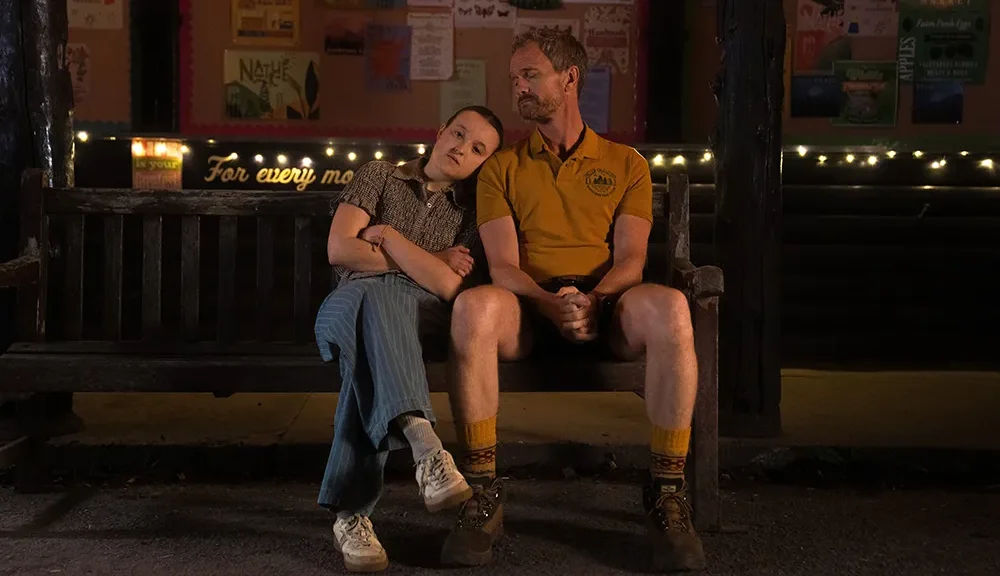
Konings sets his latest, Heresy, in a medieval Dutch village. Frieda (Anneke Sluiters) awakens to find she’s started her period again. Still not pregnant. Sluiters’s despondent look tells you all you need to know.

In fact, Konings relies on gestures, glances, and weighty expressions to tell a lot of his tale of religion versus nature, male versus female. Heresy runs barely more than an hour, but it doesn’t feel skimpy. You learn what you need to know when Sasha (Nola Elvis Kemper), her throat and wrists purple with bruises, is required by priest and community to forgive Gelo (Léon van Waas) as they release him from the cramped wooden cage in the village center. And again, when Hikko (Len Leo Vincent) chastises Frieda for referring to her barrenness as “their problem.”

And when Frieda has no choice but to run from Gelo into the dark, forbidden forest, who would blame her for wanting to return?

Heresy is not heavy on horror, but what Konings delivers is memorable.  Like the balance of the film, the horror is primarily implied. But when we do see something, it’s quite something.

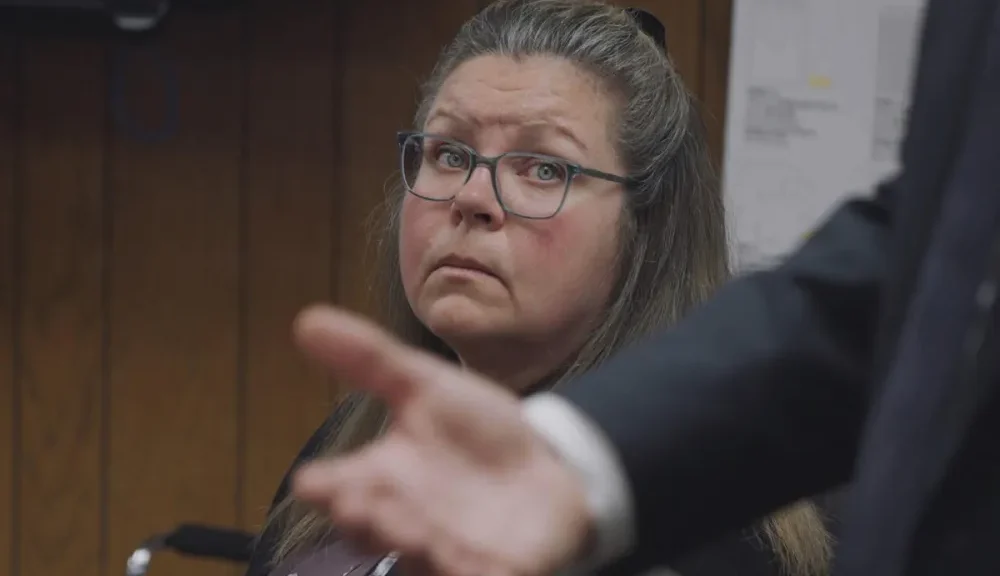
As is Sluiters’s performance. She covers an enormous emotional range with very little dialog to support her. Her chemistry with the ensemble and her physical performance, particularly the way every indignity hangs on her expression, are captivating. Her rage, when it finally breaks the surface, is glorious.

Heresy probably could have used a little more time to fill out its story, but at 61 minutes, it certainly doesn’t outstay its welcome. Konings gives you what you need to understand why women choose the bear.

Irish Spirits

Hokum

by Hope Madden

Damian Mc Carthy is doing something right. The Irish filmmaker writes original stories, invests time and attention to visual storytelling, and produces eerie, memorable horror. There’s an elegance to his movies, but his tales are not meant simply to provoke thought or to elevate the genre. Caveat, Oddity, and now Hokum draw from a long tradition of Irish horror storytelling and love a jump scare as much as anybody.

Mc Carthy’s latest sees an absolute prick of an American writer (Adam Scott) checking into an Irish inn to spread his parents’ ashes. Is he having a problem with writer’s block? He is! Is the hotel haunted? It is!

Hokum does feel less original than either of the filmmaker’s previous features, but somehow that works in its favor. Mc Carthy knows you think you’ve seen this before, and he leans into its familiarity to lull you.

Scott’s prickly, unpleasant performance at the center of the film is a gift. His unlikability gives the film a nice edge. Scott’s lowkey, brittle performance anchors the macabre whimsy so gorgeously brought to life by Til Frolich’s production design. The inn looks like a place where time stood still, quaint to the eyes of a tourist, spooky in the hands of a talented filmmaker.

Though Mc Carthy’s script feels less original than expected, he knows how to light, pace, and frame scenes to heighten dread. The sound design is also an eerie delight. And Mc Carthy reminds you that jump scares are not just for kiddie horror.

It would be easy for Hokum to feel overstuffed. The protagonist’s own ghost story, a very flesh-bound horror, and don’t forget the witch—that’s a lot to fit into a honeymoon suite. Scott’s grounded performance provides a clear path through it, and Mc Carthy ‘s skill at crafting intelligent yet primal horror pulls it together.

Scene after scene balances a funhouse vibe with Irish folktale spookiness, and the vintage horror beauty of every frame beguiles you. Caviat offered quietly claustrophobic terror. Oddity delivered clever, melancholy horror. Hokum feels more polished yet more old school. It is perhaps less terrifying than Mc Carthy’s previous features, but it’s a haunting good time.

Full of Grace

Mother Mary

by Hope Madden

Whatever it is director David Lowery is making, I’m watching. Not every film lands but he always delivers something thought provoking, and his best films are unlike anything else you’ll see.

Ain’t Them Bodies Saints, A Ghost Story, and The Green Knight were cinematic wonders. His latest, Mother Mary, is as tough to pin down as any of these, and just as gorgeous.

Anne Hathaway is Mother Mary, a Lady Gaga styled music icon and diva in the midst of some kind of prolonged torment who seeks the aid of an old friend. Michaela Coel is Sam, Mother Mary’s oldest confidant and the designer who created the pop star’s legendary look. Ostensibly, Mother Mary needs a gown. In reality, both women are open wounds who need the other, either to heal or to die.

Essentially a chamber piece—more than half of the film takes place in Sam’s barnlike studio—Mother Mary is as poetic and dramatic as a pop song. Lowery, who also writes, seems genuinely empathetic of the isolating nature of superstardom, particularly for those vulnerable souls who create their own art.

Lowery’s vision benefits immeasurably from two outstanding performances. Hathaway seems equally comfortable in semi-surreal concert footage as she does with the raw, constant verge-of-tears intimate drama. And Coel may be the one person who cuts so fascinating a figure that she makes Hathaway look ordinary.

Their fraught back and forth, though occasionally overwritten, feels lived in and wounded but seeking. What they ask of each other allows the filmmaker to pose, but not answer, questions about connection, authenticity, superficiality, fame, creativity, and who ultimately owns the artist and their art.

It’s a heady piece wrapped in silks and sequins, and it won’t be for everybody. But Lowery and his small cast make bold, risky choices. It works because the actors are fully committed and taking those risks themselves, some of which don’t pay off. But Cole and Hathaway bring their vulnerability, buoyed by tremendous talent. The result is a film that feels quite unlike anything else, and for any piece of art, sometimes that’s accomplishment enough.

War Toys

Fuze

by Rachel Willis

An unexploded bomb from World War II is discovered at a construction site in the heart of London and a massive effort to diffuse it gets underway in writer/director Ben Hopkin’s film Fuze.

As wild as it sounds, 80-year-old bombs exploding in populated cities in England is not unheard of. A bomb discovered in Exeter in 2021 resulted in the evacuation of 2,600 homes and caused massive property damage.

However, the bomb uncovered in Fuze seems out of the ordinary, and to say anything more would remove the elements of suspense and surprise Hopkins works into every minute.

The best thing about the movie is the unrelenting pace. It never gives you time to second guess some of what’s happening on screen. While some moments might falter under the weight of skepticism, Fuze keeps you hooked by the action. There’s something bigger at play, and the film demands you stay focused as it unfolds.

The cast is more than game for the material. Aaron Taylor-Johnson and Theo James play opposite sides of the action. The film moves from one to the other, tension continuing to build as you’re kept on edge, waiting for the next link in the overarching chain.

The downside, though, is that the film doesn’t offer anything in the way of character development. We get little bits and pieces through dialogue, but it’s not enough for us to feel invested in any character. The stakes aren’t high enough, which is a major blunder. The overfocus on plot makes for a tense thriller but not a very interesting one.

Pushed to the Limit

Apex

by Hope Madden

What is it about Charlize Theron that you totally buy her badassedness? Maybe it’s her natural athleticism. She was a ballerina, leaving her with grace and fitness that suggest power. She hangs by fingertips from a rock face, and you think, yep, that’s Charlize Theron. Not, that’s a really skilled stunt performer.

That’s probably because it is Charlize Theron. According to her interview with Outside Magazine, Theron learned to rock climb for the new Netflix thriller Apex, so nearly all of that dizzying  and astonishing  footage is, indeed, the actor herself.

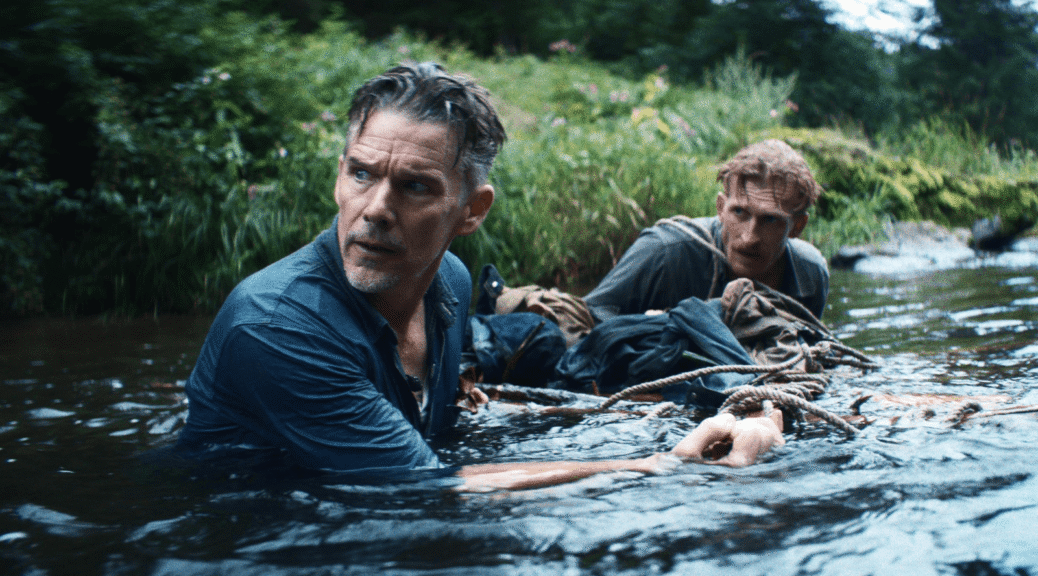
Baltasar Kormákur’s outback survival film pits Theron’s Sasha, an extreme adventure enthusiast, against Ben (Taron Egerton), an extreme psychopath.

Sasha, still stinging from the death of her partner (Eric Bana), is looking to do some solo Outback water adventuring. Ben seems like a helpful Boy Scout type, and when Sasha finds her gear missing, she hikes up to Ben’s shelter to ask for assistance. Ben is less than helpful.

Like Theron, Egerton also does his own stunt work. The reality this offers the film, framed to emphasize its death-defying glory by cinematographer Lawrence Sher (Joker, The Bride), elevates Apex above its spare Aussie horror script.

Jeremy Robbins’s screenplay takes a mid-story genre turn that doesn’t entirely work. Egerton more than convinces as the sweet-faced psycho, but the plot turn asks a little more than he can deliver. Theron’s sharp acting instincts—and a well-timed bite—almost salvage the scene.

But Apex rights itself pretty quickly. As long as we’re watching Theron tearing through forests, up rock faces, and down rapids with Egerton in jolly pursuit, all is well. And honestly, that’s about half the film.

Kormákur’s passion has always been the survival thriller: The Deep, Everest, Adrift, Beast. In every case, it’s the writing, not the directing, that’s been the drawback. Apex suffers less from writing woes. Robbins gives Theron a character to dig into, and Egerton’s dialog is deeply unnerving, particularly as it’s delivered with such a cherubic grin.

But it’s definitely the way Kormákur frames the action, and the way his actors push themselves physically, that make Apex such a fun watch. 

Pop Life

Michael

by George Wolf

Two of the best things about Michael are hardly shockers. One is a pleasant surprise.

Colman Domingo and Nia Long are both terrific as Michael’s parents Joe and Katherine Jackson. The surprise is Jaafar Jackson, rising to the challenge of carrying this move as his real life, iconic uncle Michael. In an impressive acting debut, Jaafar is assured and charismatic, flashing plenty of natural talent.

And for the first half of this two-hour biopic, director Antoine Fuqua and writer John Logan find some depth with the story of the Jackson 5’s rise from Gary, Indiana to major chart success at Motown.

That’s the movie I would have loved to spend more time with, ditching the greatest hits nostalgia package that followed. Because from the pivotal moment that Michael seeks management from John Branca (Miles Teller) and starts to break away from his domineering father, the film feels force fed and surface level.

The second half is reduced to a parade of very slick recreations of Michael’s most famous pop culture moments (Motown 25, the “Thriller” video, “Beat It” video, Pepsi commercials, the Victory Tour), unabashed fan service wrapped around an overcooked metaphor of a messianic Peter Pan battling an unrelenting Captain Hook.

With most of the family (Janet’s name is noticeably missing) on board as producers, a warts-and-all biography wasn’t to be expected. And while Father Joe takes plenty of hits, they become the springboard for a reminder about Michael’s greatness that’s as nuanced as a fan club prize package.

Though there’s already chatter about a sequel, I’m not convinced the parting bit of onscreen text is guaranteeing a part two that picks things up in the late eighties. As we know, Michael’s later years came with plenty of complications. The smarter play for the family might be take a cue from Baz Luhrmann’s Elvis EPiC.

After these impressive imitations, just raid the vaults, and put the real footage up there in all its IMAX glory. That might fit like a sequined glove.

Michael ends up feeling like an empty suit.

Living Out Loud

I Swear

by George Wolf

Honestly, I didn’t know that much about I Swear until Robert Aramayo’s amazing performance won a BAFTA Award earlier this year. Now, after seeing it, I have to wonder why officials from BAFTA and the BBC didn’t take more of its lessons to heart.

The film follows the life of Scottish Tourette’s campaigner John Davidson, and opens with Davidson yelling “F*&$ the Queen” moments before Queen Elizabeth herself presented him with an MBE for services to the Tourette’s community.

As a teenager, Davidson developed Tourette’s with coprolalia, a complex vocal tic which causes “the involuntary, uncontrollable utterance of obscene words, sexual/racial slurs, taboo phrases or profane language.” The condition brought isolation within his community and his own family, leading Davidson to move in with the family of a friend, where he found the unconditional support that launched his journey to help others.

Aramayo’s turn as Davidson is simply astonishing. Beyond the physical and vocal authenticity, Aramayo crafts an endlessly sympathetic arc of frustration, acceptance, perseverance and triumph. Heartbreaking but ultimately joyful, Aramayo’s is a deeply felt performance that fills each scene with a humanity that buoys the film.

Writer/director Kirk Jones (Waking Ned Devine) is careful to keep events accurate, drawing from the 1989 doc John’s Not Mad, actual clinical trials, and Davidson himself. Nothing here feels overwritten or sensational, as Jones allows the terrific actors (including great support from Maxine Peake as John’s surrogate mother and Shirley Henderson as his actual mum) to work specific moments for emotional depth.

The message of education, patience and understanding is meaningful and lasting. And it reminds you that, with more of each, there was certainly a way to host Davidson at the BAFTA ceremony and still safeguard other attendees and the television audience from the slurs that occurred.

But I Swear can stand on its own merits. It is a film that is able to turn simple human compassion into a crowd-pleasing event. May it play to large, humanity-pleasing crowds.

Death Do Us Part

Over Your Dead Body

by George Wolf

Why would Jason Segel plot to kill Samara Weaving?

Has he not seen Ready or Not? Borderline? Azreal? Ready or Not 2?

Segel is surely smart enough to play nice, but Dan – his character in Over Your Dead Body – is not. Dan and Lisa (Weaving) are off on a secluded weekend in a cabin by the lake. After 7 years together, they can barely say a cordial word, but this time Dan is laying the sweetness on pretty thick.

He’s cooked up a great dinner, along with a great alibi. Because after a nice boat ride on the lake, Lisa will sleep with the fishes.

Or not. Because Lisa has a plan of her own. And so do some convicts on the run (Timothy Olyphant, Keith Jardine) and the corrections officer who helped bust them out (Juliette Lewis).

Power shifts, violence and blood splatter ensue!

Writers Nick Kocher and Brian McElhaney, fresh off the hilariously unhinged Pizza Movie, adapt the 2021 Norwegian film The Trip with a healthy scoop of witty cynicism atop one good ol’ American mean streak.

Segel and Weaving make an excellent pair of frassasins (friendly assassins), he of the emasculated man child and she of the exasperated younger wife wondering what she saw in this guy. Neither is blameless in the demise of the marriage, and the two actors make the deadly bobbing and weaving (pun intended) a surprising, squirm-inducing delight.

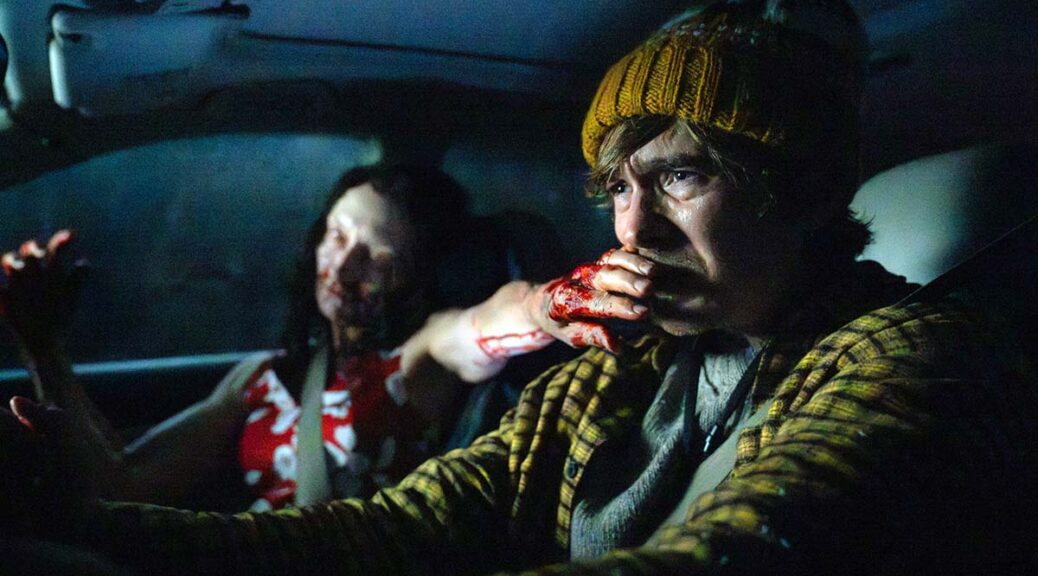
Those squirms only increase once the three fugitives enter the fray, and comic director Jorma Taccone (Popstar, MacGruber) forays into body horror with a respectable aversion to sparring the rum or the wisecracks. What starts out as an in-the-moment sendup of how couples avoid therapy takes a nasty turn in the second half. The threat of violence inherent in the premise makes for a smoother transition, but make no mistake: Taccone leans into that R-rating with some serious bloodshed.

If you’re fine with that, Over Your Dead Body is an entertaining genre blast that’s pretty hard to ignore. And by pretty, I mean pretty funny.

And pretty gross.