Tag Archives: movie reviews

Be My Frankenstein

The Angry Black Girl and Her Monster

by Hope Madden

An awful lot of people have reimagined Mary Shelley’s Frankenstein in an awful lot of ways. What makes writer/director Bomani J. Story’s take, The Angry Black Girl and Her Monster, so effective is that it tackles a lot in very little time and handles all of it heartbreakingly well.

Laya DeLeon Hayes is Vicaria, a gifted student whose heart and brains overtake her wisdom when she decides that death itself is the disease that must be cured, and that she’s the one to cure it. It was Dr. Frankenstein’s vanity that pushed him to discover the secret to life itself. For Vicaria, the reason is far more tragic, but the result is the same.

To say that Story situates Shelley’s tale in the context of drug violence would be to sell his film short. He’s moved the story from European castles and laboratories to the projects, where Vicaria’s mother fell victim to a drive-by shooting, her brother was shot to death on a drug deal gone wrong, and her father deals with his grief by using. But drugs are just part of the larger problem, the almost escapable, systemic and cyclical nature of violence and poverty.

One of the reasons the Frankenstein monster is so effective so often is that he is tragically monstrous. He is violent through no real fault of his own but as a reaction to an environment that hates him, treats him with cruelty, fear and malice. We simultaneously root for and against this monster.

The trick is to make us root for the creator, and DeLeon Hayes delivers a layered, touching performance that accomplishes this. Vicaria is so young, so hopeful, and so full of fight that we forgive her short sightedness and her immediate (and understandable) fear. Vicaria’s missteps are understandable because she’s a kid, and her heart’s in the right place, which is why she keeps making the worst decisions. It’s a powerfully compelling performance.

Story’s chosen genre may feel slight, even campy, but the tropes belie some densely packed ideas, and there’s a current of empathy running through the film that not only separates this from other Frankenstein tales, but deepens the film’s genuine sense of tragedy.

Not every performance is as strong as DeLeon Hayes’s, and sometimes Story’s dialog is asked to carry too much historical significance. But there’s no denying the power he wrung from the source material.

Masculinity Is a Spectrum

All Man: The International Male Story

by Daniel Baldwin

In 1970, former Air Force pilot Gene Burkard launched a mail-order fashion catalog that would ultimately help revolutionize post-‘60s men’s attire: International Male. His goal was to craft and sell clothing to men – queer and straight alike – that moved beyond the drabber business and business-casual attires of post-World War II America. He succeeded.

All Man lays out the history of both Gene Burkard’s life and his magazine creation, from its beginnings to its ultimate closure in the late-2000s. Nary a stone is unturned, as the documentary speaks to Burkard, his business partners, designers, models, photographers, sales reps, store managers, office workers, and more than a few subscribers – including those who are now celebrities (such as narrator Matt Bomer).

The magazine’s journey runs hand in hand with that of the LGBTQIA+ community’s history in America, so the fact that none of these macro issues are overlooked is a major positive. So too are the more personal issues tied to the magazine, such as gay men of all types being able to use the magazine as an outlet for their fantasies and their own personal self-expression through fashion across multiple decades where being out and proud was less culturally acceptable than it is today. This also holds true for straight men, who – through the changes in fashion pioneered within the magazine – were also able to express themselves with more colorful and dynamic clothing than just the suits, slacks, and dress shirts that had a stranglehold on men’s styles in post-war America.

Documentarians Bryan Darling and Jesse Finlay Reed have crafted a thoroughly engaging and deeply informative piece of filmmaking that is well worth seeing, regardless of your background in life. All Man focuses on a piece of history that many may not be aware of – very likely, given that the publication’s current Wikipedia page is shockingly shorter than this review.

The above title “Masculinity is a spectrum” comes from a statement in the film and it couldn’t be more accurate. It IS a spectrum and we all can choose how we want to express ourselves on that spectrum, in part because of the work done by the people behind this magazine.

Screening Room: Spider-Man: Across the Spider-Verse, The Boogeyman, Shooting Stars, Esme My Love & More

Spider-Animania

Spider-Man: Across the Spider-Verse

by Hope Madden

Do you remember how cool Spider-Man: Into the Spider-Verse was? It was the coolest! A film that celebrated everything a comic book film could be, everything a hero could be, and everything a cartoon could be.

Expect all that again as Miles Morales (Shameik Moore) returns, this time sharing screentime and character arc almost 50/50 with Spider-Woman Gwen Stacy (Hailee Steinfeld), who starts us off with her own troubled tale of balancing great responsibility with great power. Things get so bad she has to abandon this universe, and her one real friend.

That friend has his own troubles. Mr. and Mrs. Morales (do not call them by their first names) know Miles is keeping something from them, a problem that’s only exacerbated by some goofy villain-of-the-week (Jason Schwartzman, priceless).

Or is Miles taking The Spot less seriously than he should?

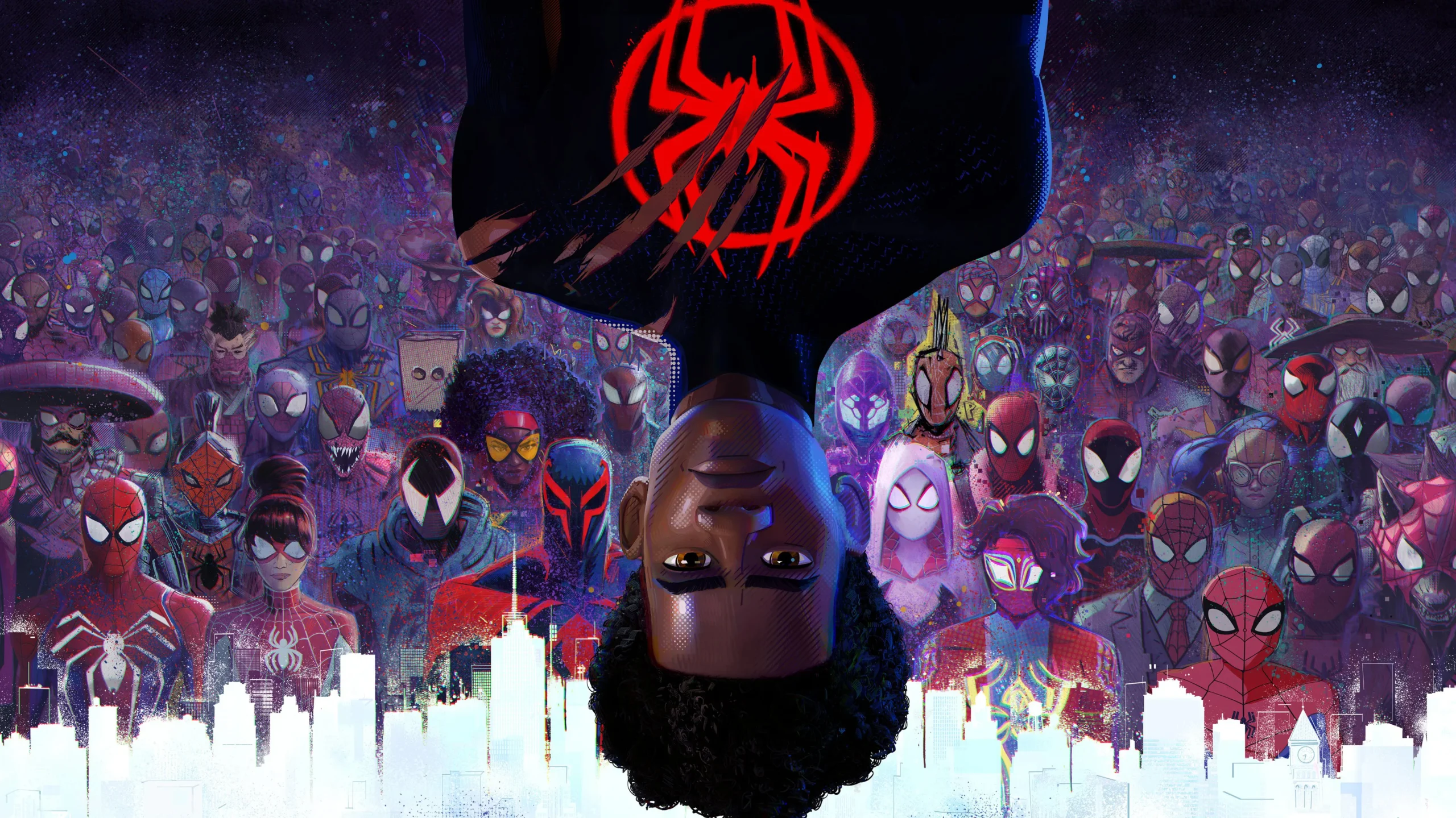
He is! No matter, he gets to help Gwen and bunches of other (often hilarious) Spider-Men (and -Women and -Cats and -Dinosaurs). But it all goes to hell in a riotous celebration of animated style and spot-on writing that simultaneously tease and embrace comic book lore.

Schwartzman is not the only killer new talent crawling the web. Daniel Kaluuya lends his voice to the outstanding punk rock Spider-Man, Hobie; Issa Rae is the badass on wheels Jessica Drew; Karan Soni voices the huggable Pavitr, or Spider-Man India. Rachel Dratch plays essentially an animated version of herself as Miles’s high school principal, and the great Oscar Isaac delivers all the serious lines as Spider-Man Miguel O’Hara. Add in the returning Brian Tyree-Henry, Luna Lauren Velez and Mahershala Ali, and that is a star-studded lineup. Studs aplenty!

That wattage is almost outshone by the animation. Every conceivable style, melding one scene to the next, bringing conflict, love and heroism to startling, vivid, utterly gorgeous life.

Writers Phil Lords and Christopher Miller (The Lego Movie, The Mitchells vs. the Machines) return, bringing Shang-Chi and the Legend of the Ten Rings writer Dave Callaham along for the sequel. Their story is wild but never illogical, delivering a heady balance of quantum physics, Jungian psychology and pop culture homages while rarely feeling like a self-congratulatory explosion of capitalism. Heart strings are tugged, and it helps if you’ve seen the previous installment. (If you haven’t, that’s on you, man. Rectify that situation immediately.)

If there is a drawback (and judging the reaction of some of the youngsters in my screening, there may be), it’s that Across the Spider-Verse is a cliffhanger. If you’re cool with an amazing second act in a three-story arc (The Empire Strikes Back, The Two Towers), you’ll probably be OK with it. Maybe warn your kids, but don’t let it dissuade you from taking in this animated glory on the biggest screen you can find.

Diary of a Mad Woman

The Attachment Diaries

by Hope Madden

Tell me you’re having a bad day without telling me you’re having a bad day.

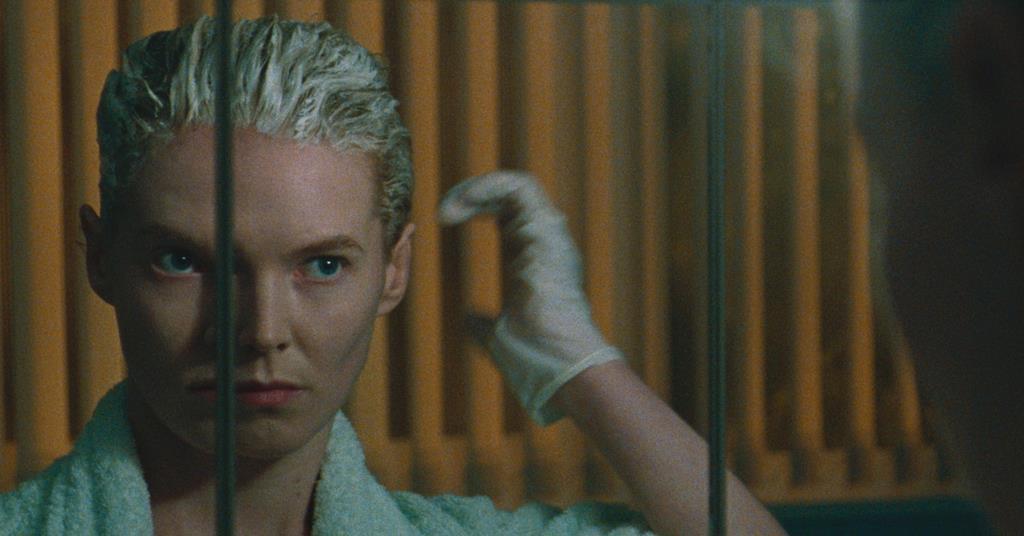
Argentinian filmmaker Valentin Javier Diment knows how to articulate desperation with nothing more onscreen than a sidewalk, heavy rain, and a broken heel. From there, The Attachment Diaries sets up an eerie power dynamic between forlorn Carla (Jimena Anganuzzi) – pregnant, alone, very wet and in need of help – and Irina (Lola Berthet).

It’s 1970-something. Irina is a doctor willing to perform abortions, but Carla, is too far along. If she’s willing, Carla can stay with Irina, give birth and make some money with an arranged adoption.

Diment invests time in both characters, neither of whom is quite what she seems. The more we learn about each the less we really know, but trouble’s brewing, that’s for sure. And the greater the intrigue, the stranger the film.

The filmmaker wades hip deep into triggers: abortion, self-harm, sexual assault. And his approach unsentimental. No, it is blunt. Nothing is sacred, or to be honest, even interesting enough for Irina’s thoughtful consideration. Trauma and mental health are not treated delicately, either. No kid gloves, but loads of intentionality – Carla is often as shocked by Irina’s blasé attitude as we are, and Carla’s no delicate flower.

Berthet and Anganuzzi deliver everything a moviegoer needs from the heroes and villains of this twisted tale. Berthet is the hard candy shell to Anganuzzi’s messy middle, and neither character is easy to root for. But together, their almost hostile yet somehow tender chemistry fuels the human madness developing in the film.

Flashes of Hitchcock and Almodovar (that’s a fun pairing!) flavor the film’s aesthetic and movement, Diment blending inspiration with his own impeccable sense of detail to create a film full of intensity, eccentricity and style.

The filmmaker sets up gorgeous shots, both to keep you off balance and for the sheer odd beauty of them. His use of color is also fascinating. At first it feels a little too on-the-nose, but the truth is that, once again, he’s underscoring a change in the power dynamic.

The escalating lunacy nearly tips to melodrama or even parody, but the duo at the center of it all manages to hold it all together somehow. The Attachment Diaries is a dark, bizarre mystery thriller that flirts with B-movie status in a way that somehow makes the experience richer than it had any real right to be.

The Politics of Sin

Padre Pio

by Brandon Thomas

Shortly after the end of the first World War, a priest named Padre Pio (Shia LaBeouf) finds himself suffering an enormous crisis of faith. Having had health issues that kept him from the front lines of the war, Pio’s guilt is slowly consuming him.

Outside the walls of the monastery, a less internal battle is brewing. Many townspeople, upset with fascist landowners and their own working conditions, are drawn to the rising Socialist Party. They see the town’s first free election as a way to make their voices heard. When the old rulers see the tide turning against them, violence becomes their only way of holding onto power.

Director Abel Ferrara made a name for himself by directing some of the most notable exploitation movies of the late ‘70s, ‘80s, and early ‘90s. Films like Ms. 45 and Bad Lieutenant were cultural firestarters in their day, and might even draw the ire of Film Twitter in the present should it stumble upon those seedy gems. However, in the latter half of his career, Ferrara has been drawn to more contemplative works. Pasolini, Tommaso, and Siberia show the filmmaker at his most introspective. Instead of trying to provoke an audience with violence and graphic sex, Ferrara is now trying to get them to look inward through quiet but haunted protagonists. 

Padre Pio is Ferrara’s attempt to subtly blend religion and politics, though neither topic is given its due. Unlike Paul Schrader’s more recent First Reformed, Ferrara’s film is far too disjointed and muddled to prove his own point. The religious fervor found in LaBeouf’s scenes never coherently connects with the film’s political half. There are hints at Ferrara’s initial intentions, but unfortunately very little of that appears on screen. 

LaBeouf’s casting is a major blunder. The actor has turned in very good work in movies like The Peanut Butter Falcon, Fury, and American Honey, but as an iconic Italian priest, he is horribly miscast. While the entirety of the film is in English, the bulk of the cast is made up of Italian and other European actors. LaBeouf’s distracting American accent drags any discerning viewer out of the film immediately. His inclusion, and the messiness of the overall storytelling, makes Padre Pio feel like a bad movie-within-a-movie from an Apatow comedy.

Ferrara’s ideas here are compelling and might’ve worked in movies of their own. When crammed together as competing – not complementary – narratives, the film never finds its footing and feels like a slog even at a reasonable 1 hour and 44 minutes.

Growing Pains

Falcon Lake

by Hope Madden

Co-writer/director Charlotte Le Bon crafts a melancholy poem to that fleeting moment of the last real summer of your childhood with her moody coming-of-age tale Falcon Lake.

Thirteen (almost 14) year-old Bastien (Joseh Engel) and his family go to visit friends on a lake for a couple of weeks over the summer. Bastien and his little brother will room with Chloe (Sara Montpetit), two years older, gorgeous, a little weird, a little bored. As Bastien tags along, Chloe is the one we see playing tug of war with adulthood.

The summer orbits these two kids, navigating the vanishing moments of childhood, blinking into the blinding future. Le Bon captures these moments perfectly, aided immeasurably by two truly wonderful performances.

Montpetit unveils something vulnerable beneath Chloe’s capricious behavior. But it’s Engel who mesmerizes. His smile, genuine as it can be, is uplifting and heartbreaking in equal measure. He punctuates a hauntingly quiet performance with bursts of joy, silliness and tenderness that make Bastien achingly lovable. But more than that, he’s authentic. As lovely and lyrical as Falcon Lake can be, rather than crafting a romantic nostalgia about innocence lost, Le Bon delivers a slice of life.

Cinematographer Kristof Brandl’s camera evokes the mood, lonesome silhouettes, isolating crowds, awkward intimacy. Le Bon exhibits a delicate if controlled touch to her tale of young love. Few topics are more oft tread in cinema, on stage, in print or in song. But Falcon Lake, though its honesty gives it the feel of familiarity, never seems tired or worn.

Can’t Go Home Again

Esme, My Love

by Hope Madden

We don’t know much about Esme (Audrey Grace Marshall) or Hannah (Stacey Weckstein), really.

Director/co-writer Cory Choy’s feature debut Esme, My Love keeps us in the dark about a lot of things. Choy leaves us to piece together what we can of the duo’s mysterious trip into the woods, just as Hannah leaves Esme to do.

More brooding mystery thriller than outright horror, Choy’s film plays on your imagination with gorgeous sound design and cinematography. An eerie mismatch of voiceover and image in the early going suggests that not everything with Hannah is A-OK.

Ostensibly, she’s taking her daughter to visit the old, abandoned family stomping grounds so the two can spend some time together. Esme, Hannah suggests, is sick. She doesn’t seem sick. She seems fine. Hannah, on the other hand…

The atmosphere Choy develops creates a hypnotic world perfectly suited to Hannah’s psychological unbending. Thanks to two malleable performances, that meticulously crafted atmosphere pays off.

Choy and co-writer Laura Allen refuse to spoon-feed you information. Their structure is loose, their explanations all but nonexistent. You’re left to parse through the images and sensations, determine what’s real and what isn’t, and decide things for yourself.

The ambiguity often works in the film’s favor. Esme, My Love possesses a brooding, nightmarish quality that, along with the two performances, keeps you guessing and interested. But to be honest, a touch more structure would have strengthened the film, which begins to feel lovely but unmoored before it’s over.

At a full 1:45, the film’s fluid storytelling and disjointed imagery flirt with self-indulgence.

Esme, My Love never offers any solid catharsis, any true clarity. Yes, you can guess the meaning of the climax, but with so much guesswork throughout, it feels less like ambiguity and more like a cheat. Or worse still, indecisiveness.

While frustrating, it’s not enough to sink a film that submerges you in a dark family tragedy and leaves you stranded.

Truth Hurts

You Hurt My Feelings

by Hope Madden

One of filmmaker Nicole Holofcener’s great talents is to acknowledge within a film that there is no reason to feel for her characters, and then making you feel for the characters. She’s a master of the relatable if tedious angst of the privileged. In her hands, these primarily insignificant tensions are humanized and often hilarious.

Such is the case with her latest, You Hurt My Feelings, a story about a well-off couple, truly compatible and in love, who fall on hard times when one overhears the other’s honest opinion.

Julia Louis-Dreyfus, who was so magnificently flawed and empathetic in Holofcener’s 2013 film Enough Said, stars as Beth, a novelist. Well, she wants to be a novelist, but her memoir only did OK and now her agent doesn’t seem that thrilled with her first ever novel. Maybe it sucks?

No, supportive-to-a-fault husband and psychologist Don (Tobias Menzies) assures her. But secretly, honestly, maybe that’s not how he feels.

And that’s Holofcener’s next great talent – casting. Louis-Dreyfus is characteristically flawless. Her humanity, comic timing, and self-deprecating yet narcissistic humor make her every character endlessly watchable. Menzies–in many ways the emotional anchor for the film–equals her. Both face the wearying revelation that truth really does hurt, right as their midlife insecurities are at their highest.

Arian Moayed and the always amazing Michaela Watkins play a mirror couple, Beth’s sister – a discontented interior designer for the very wealthy – and her insecure if lovable actor husband. They are both tremendously endearing and funny. Capping the ensemble is Owen Teague (To Leslie), Beth and Don’s 23-year-old only son who’s coming to terms with the fact that he was raised to believe he was more special than he really is. Also, he’s a writer.

Hilarious cameos from Amber Tamblyn and David Cross as an angry couple in therapy help to clarify Holofcener’s themes and push the comedy value higher. But it’s with the core couples that the filmmaker delivers her finest moments, creating a lived-in world, a true microcosm that pokes fun at our insecurities and the little white lies that keep us happy.