A spare, competent take on the isolating toll of caregiving and grief from first-time feature writer/director Patrick Dickinson, Cottontail explores the beauty in human connection and the ability to find that connection though emotional vulnerability and honesty.
When Japanese widower Kenzaburo (Lily Franky, Shoplifters) receives a last request from his late wife, he embarks on a journey to Lake Windemere in England’s Lake District. He’s been drained by trying to care for Akiko (Tae Kimura, House of Ninjas) alone as she struggled with dementia, attempting to shield his adult son, Toshi, from the more unpleasant (and literally shitty) parts of this work. This only drove the two men apart.
But it’s clear that their estrangement started years earlier. Akiko was the glue that held the family together. Kenzaburo was too focused on his own work to let Toshi into his life. And now, he wants to take this last journey alone, as if he is the only one who lost someone.
Weaving together the main narrative with key flashbacks, Kenzaburo wanders lost—metaphorically, in his own grief and shame, and literally, as he attempts to find Lake Windemere on foot, having gotten on the wrong train.
There’s a brief interlude where Kenzabro asks for help at an English cottage door and finds fellowship with another widower (an underutilized Ciarán Hinds), but otherwise the film keeps its focus on the main family and the drama that pulls them together even as they drift apart.
Simple and straightforward, like the beautifully prepared plate of sushi that appears in the first act of the film, Cottontail lets Franky carry the movie with the strength and confidence of an emotionally nuanced performer.
Is the film predictable? Yes. But so, sadly, is loss and grief and the struggle to stay emotionally available when adulthood means growing old and falling apart.
Mia Goth and Ti West had both existed successfully separately in moviedom for years, West having become an indie horror filmmaking darling with his third feature, 2009’s The House of the Devil. Goth’s unique beauty and malleable ennui made her a showstopper as early as her 2013 feature debut, Nymphomaniac: Vol. II.
But, appropriately enough, it was with their collaboration that they both became stars.
Their 2022 feature X delivered a magnificent mashup of Boogie Nights and A Texas Chain Saw Massacre, a late Seventies grindhouse ode with style for miles. Easily the best film of West’s career, it was followed quickly with a prequel, the absolute lunatic genius of 2023’s Pearl.
If X articulated just how much skill West brought to a feature, Pearl declared Goth a talent to be reckoned with. She deserved an Oscar nomination. She was breathtaking.
And so, obviously, horror fans have been giddy since the trailer for the third film in the trilogy, Maxxxine, dropped. We circle back to Goth’s X character some years since the incident in Texas. A popular porn star, Maxine Minx is about to make the leap to legit films with a starring turn in a horror sequel.
The popularity of West’s series means a boost in both budget and cast. Elizabeth Debicki, Kevin Bacon, Giancarlo Esposito, Halsey, Michelle Monaghan and Bobby Cannavale class up the ensemble this go-round in a film that feels more apiece with late 70s/early 80s urban thrillers a la Eyes Of Laura Mars.
As warnings about California’s “Night Stalker” plead with women to be careful, Maxine asserts her ability to take care of herself, even as it becomes clear that she is being stalked. Maxine’s director (Debicki) warns her to eliminate the distractions in life, and Maxine makes a promise to do just that.
Okay, then, here we go!
But though blood does flow around West’s pastiche of 80s pop and fashion, nothing here pops like the uniquely stylized timestamps that helped make the first two horrors so memorable. Much of the film begins to feel like a series of setups in search of that elusive, satisfying payoff.
There’s no doubt Goth still commands attention, but West’s foray into the 80s seems less edgy, less ambitious, and just less horrific. The comments on fame and excess become broadly generic, and somehow Maxine herself becomes a little less interesting.
On its own, the film fits nicely into the role of a competent urban thriller. But when cast as the final piece of a potentially iconic horror trilogy, MaXXXine ends up limping to the finish.
Despicable Me is a nice franchise—harmless and colorful, filled with engaging personalities. And perhaps what has made it as endearing as it has been for allthese years and episodes is that Gru (Steve Carell) is actually, almost effortlessly, a good dad.
He’s had practice. For 14 years he’s been caring for the non-aging sisters Edith, Margo and Agnes, the orphans he took in so long ago to better pull off his greatest (to date) heist! Only to find out that he preferred fatherhood.
It helps—both in practicing paternal instincts and in entertaining movie theaters brimming with highly sugared tots—that he also cares for an army of oblong yellow goofballs.
So, 14 years, many capers, one wife and new son later, Despicable Me 4 finds Gru and his family hiding from his first arch-nemesis, high school bully Maxime (Will Ferrell), who swears vengeance from a class reunion slight with a plan to steal Gru’s infant son.
That is villainy.
Plus, there’s a counterattack operation involving superpowered minions. And there’s a wealthy neighbor family (Stephen Colbert and Chloe Fineman ably voice the upper-crusty parents) whose precocious teen Poppy (Joey King) hatches her own villainous schemes.
With all the crisscrossing, Easter egg bedecked, vibrant plot threads, it’s the one between Gru and Poppy that most satisfies as it reminds us again what a great girl dad Gru makes.
Kristin Wiig is underutilized (again) as Gru’s wife, Lucy and Sofia Vergara deserves more than what her character, Valentina, offers. Some of the secondary plot sequences feel like filler, but some bits of outright filler (a Dance Dance Revolution bit and everything with a vending machine) are highlights.
Ken Daurio’s been part of the DM writing team since the start, but Episode 4 marks the first collaboration with Mike White, whose previous work includes real highs (School of Rock, Beatriz at Dinner) and real lows (The Emoji Movie). Together the writers find a nice balance of nuttiness for characters—legacy and new—to continue to make this franchise a fun one.
Within the first ten minutes of Netflix’s Axel F, we hear the big hit songs from both Beverly Hills Cop 1 (“The Heat Is On”) and 2 (“Shakedown”). So the promise of 80s nostalgia is made early, and then part 4 in the franchise makes good on that promise for nearly two hours.
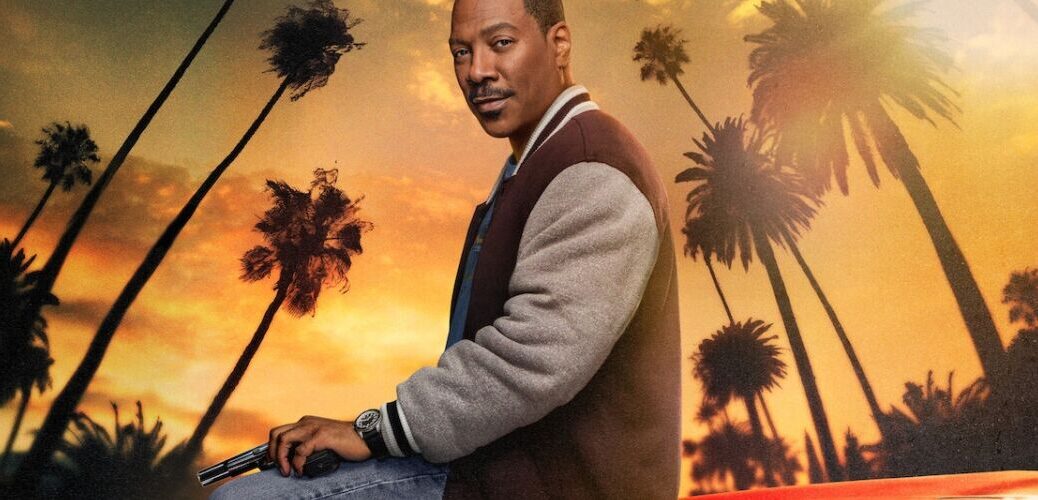
Thirty years after the dreadful BHC III, Axel Foley (Eddie Murphy) still has the same Detroit Lions jacket, and the same penchant for stirring up trouble.
He also has an estranged daughter named Jane Saunders (Taylor Paige, classing up the joint) who’s a successful defense lawyer in…anyone?…Beverly Hills. And Jane sometimes works with now P.I. Billy Rosewood (Judge Reinhold), who left the Beverly Hills police force after now Chief Taggart (John Ashton) didn’t have his back on a complicated case.
Jane is defending an accused cop killer that Billy thinks might have been framed. Their work doesn’t sit well with Taggart, or with the Rolex-wearing Captain Grant (Kevin Bacon), head of the new narcotics task force. So when some goons try to scare Jane off the case, Billy feels responsible and….anyone?…calls Axel.
First-time feature director Mark Molloy dutifully rolls out a workmanlike series of recognizable franchise faces (Bronson Pinchot, Paul Reiser) and situations (Axel crashes an exclusive club, Axel startles cops by jumping in the back seat of their cruiser). And while it’s nice to see the addition of Joseph Gordon-Levitt as a well meaning cop/ex boyfriend of Jane, little of the script from Will Beall, Tom Gormican and Kevin Etten deviates from the convenient and the predictable.
But is it fun? Yeah, it kinda is.
Murphy seems engaged about the character again (especially during a surprisingly relevant exchange with a parking valet), and the film is perfectly happy to remind you of happier times and take your mind off of Supreme Court decisions.
Come back in the room after feeding the cat: oh, look it’s Serge! Check your phone for minute: there’s a shoot-em-up car crash! You know who the bad guys are, you know fences will be mended, and you know you love the 80s.
Axel F knows you know, and this time, that’s just enough.
Humanist Vampire Seeking Consenting Suicidal Person
by Hope Madden
Late bloomers, right? Every family has one. One parent thinks they’re going too easy on their child, the other says they’re being too hard. Is the kid spoiled? Soft? Sensitive?
Ariane Luis-Seize’s Humanist Vampire Seeking Consenting Suicidal Person understands this feeling and empathizes with both perspectives, parent and child. It’s just that, in tender young Sasha’s case, it’s a family of vampires and the trauma of the whole “clown situation” at her 10th birthday might have something to do with her delayed adulthood.
This darkly comedic take – almost sitcomesque – on vampire family matters rings of Vincent Lannoo’s 2010 Belgian mockumentary, Vampires. But here, the cynicism is offset by genuine tenderness. I mean, there’s meanness and bloodshed. But there’s also a lot of sweetness afoot.
Sasha (Sara Montpetit, Falcon Lake) can’t bring herself to kill. Can she drink a Capri Sun style blood bag left in the fridge for her? She can. But cause the actual suffering? Nope. And then she spies Paul (Félix-Antoine Bénard) on the roof of a bowling alley, contemplating a jump.
Sasha is intrigued, though she may not be entirely clear as to why. But Paul might be the solution to her problem.
The pathos in Luis-Seize’s film benefits from both a widespread undercurrent of suicidal thought—both as a parent’s nightmare and a child’s misguided salvation—and an understated theme of neurodivergent love.
Montpetit and Bénard share a charming chemistry, their pairing buoyed by the harsher comedic stylings of Sasha’s cousin Denise (Noémie O’Farrell), and her douchebro sidekick (Gabriel-Antoine Roy). Sasha’s parents (Sophie Cadieux and Steve Lapiante) and her saucy aunt (Marie Brassard) help the angsty romance maintain a healthy comedic balance.
The resolution may be too tidy, but Louis-Seize draws real anxiety from the empathy her leads create. She also injects admirably dark (dare I say biting?) humor throughout, guaranteeing that good hearted sentiment never undoes the brilliant nastiness we witness in those early moments with Rico the Clown.
Husband and wife hit man with car. They think he is dead. He is not. Chaos ensues.
Cold Blows the Wind, written and directed by Eric Williford, is a zombie movie with notes of possession that does have an interesting premise, but gets overshadowed by lackluster performances.
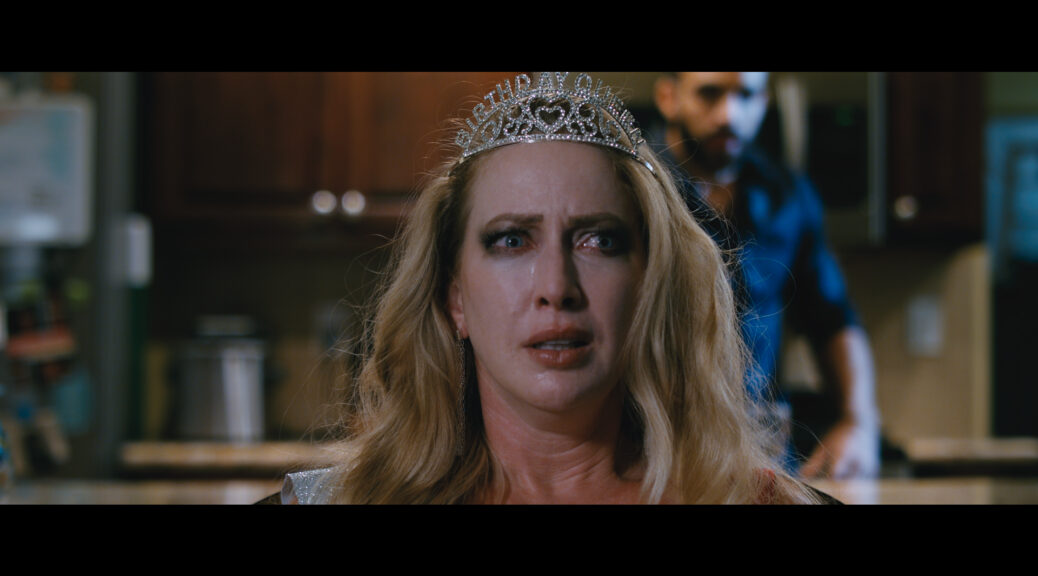
The film starts off rather cryptically, with a woman covered in blood singing a song. This chilling excerpt is immediately broken by the main couple, Dean (Danell Leyva) and Tasha (Victoria Vertuga), whose chemistry is nonexistent and whose acting feels robotic. They open the trunk of their car, where a pointedly undead jogger (Brandon Tyler Jones) cowers. From this moment on, the couple immerses themselves in a dangerous world of murder and what comes next when their efforts fail.
Everything about the film is visually stunning— the lighting, with its cool and warm tones; the sound, with its exacting and disturbing realism; the special effects; the fight scenes; and the cinematography by Marc Martinez, which diversifies the slasher label with complex shots. The main issue is that the tech does all the work.
Cold Blows the Wind loses the plot in its dedication to shock factor and gore above all else. Once the film moves past the exposition and starts living up to its horror label, the acting improves—or maybe the phenomenal tech distracts from it. That being said, Briar (Jamie Bernadette) and Uncle Stevie (Torrey B. Lawrence) play convincing and thrilling roles that hold the film up in its weakest moments.
Cold Blows the Wind commits to disturbing viewers, but in the process, discards its originality. If a good thrill and some gore are what you’re looking for, this film may be for you. If you want an enticing film whose plot is strengthened by its lead performances, look elsewhere.
Horror sequels—absolutely no genre turns out more of them. There are twelve Friday the 13ths, eleven Hellraisers, nine Texas Chainsaw Massacres Hell, there are eight Leprechaun movies! Usually the first one’s great and each successive sequel is weaker than the last. But are there any series where the third installment really stands out? There are! And we are here to count those lucky numbers three down in podcast form.
6. A Quiet Place: Day One
Recency bias? Maybe. Writer/director Michael Sarnoski has more than inventive scares to live up to as he helms A Quiet Place: Day One. The third installment of John Krasinski’s alien invasion series may boast breathless tension, sudden gore, and the most silent theaters you’re likely to visit. Beyond all those things, Krasinski shows no mercy at all when it comes to ripping your heart out. In that area, he does more damage than aliens. Sarnoski is ready for it—all of it—so you should bring some tissues.
Lupita Nyong’o leads a stellar cast as Sam, an unhappy woman on a day trip with her cat to NYC. Her plans are upended when giant ear-head monsters begin dropping from the sky, smack into the noisiest city in the nation. Any time you can watch a film with giant extra-terrestrials bearing ear drums where a face should be and you find yourself fully believing anything, you’re watching a pretty good movie. A Quiet Place: Day One is a pretty good movie.
5. Annabelle Comes Home (2019)
Easily the best in the outright Annabelle series (not specifically ranking the rest of the Conjuring universe in which she’s also situated). Annabelle Comes Home delivers a blast of fun, and a remarkable tonal shift from its precedessors.
Mckenna Grace is Judy Warren, daughter of Ed (Patrick Wilson) and Lorraine (Vera Farmiga, both in cameo). Folks go out of town to save some souls or buy more polyesther, whichever, and leave Judy with reliable babysitter, who invites an unreliable buddy, who touches every object in the Warrens’ “do not touch by reason of demonic possession” room and all hell breaks loose.
It’s fun—mindless PG13 fun, but definitely fun.
4. Son of Frankenstein (1939)
Basil Rathbone plays the estranged son of the wacky Dr. Frankenstein. He’s spent his life abroad, but now that his father’s dead, he’s decided to look into that old property left to him. His lovely wife and precocious son accompany him, but they find nothing but ill will in the village.
Which does nothing to dissuade the young Dr. Frankenstein from reviving his father’s monster the first chance he gets. Boris Karloff is back, this time taking orders from Ygor (Bela Lugosi), a vindictive little villager who helps out in the laboratory. It’s a tense, sad and often funny film littered with some of the biggest stars of the age, and though it never comes near the heights of the James Whale films, it’s rock solid.
https://www.youtube.com/watch?v=PdgtQoxDiy8
3. Day of the Dead (1985)
The third and in George Romero’s original Dead series, Day of the Dead delivers a cynical look at humanity. The filmmaker turns his eye toward what happens to civilization long after the zombiepocalypse ravages humanity.
It’s clear that this is the episode where Romero began to really identify with the zombies, a thread he pulls more clearly through later installments – Land of the Dead in particular. But if you compare Bub with any of the civilians, even Sarah Bowman, it’s clear who’s the favorite character. Not that anyone blames Romero for that.
2. Army of Darkness (1992)
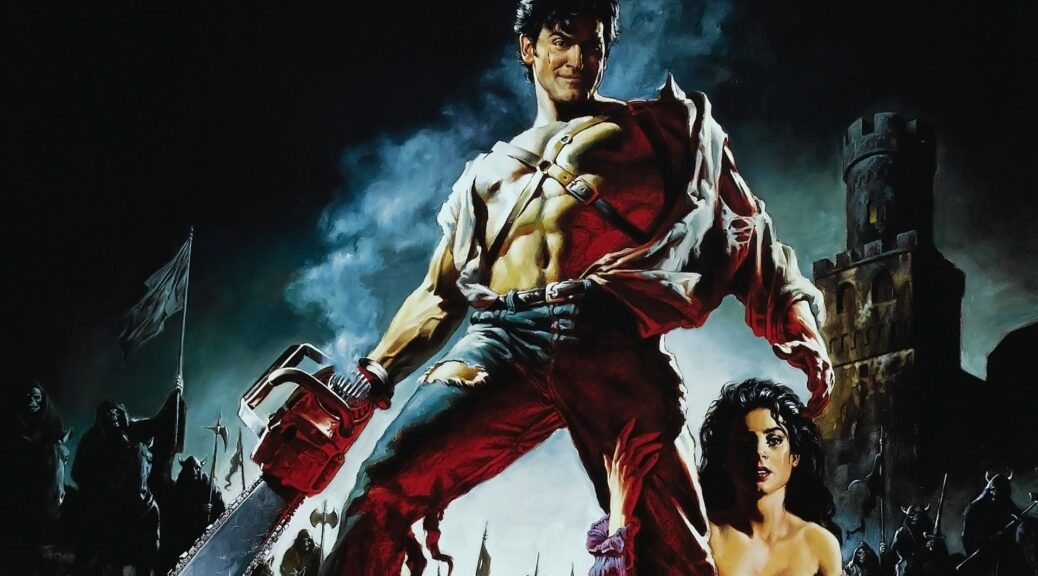
Yes, all of Sam Raimi’s Evil Dead films are a laugh riot, a visceral delight, a spew-happy celebration. But the Ashley J. Williams of the first two episodes gets a big makeover for Part 3.
Bruce Campbell loses the unibrow, gains some pecs, biceps and abs, and turns the attitude up to 11. The result is a medieval fantasy spilling over with one liners, bravado, idiocy of the best kind, and angry dooting. That’s right, angry dooting!
1. Exorcist III
Hands down the best third installment of any horror franchise, William Peter Blatty wrote and directed this dialogue-dense sequel to the 1973 phenomenon William Friedken had made of his novel. Blatty starts strong enough, garnishing shots with vivid, elegantly creepy images. He enlists George C. Scott to anchor the tale of a cop drawn back into a supernatural case. In other inspired casting, New York Nicks great Patrick Ewing plays the angel of death in one of Kinderman’s freaky dream sequences, joined by romance novel coverboy Fabio as another angel. Also, the always great character actress Nancy Fish plays the bitchy but reluctantly helpful Nurse Allerton.
There are also two of the scariest scenes in cinema. Eventually the story moves into a hospital and stays there, but just before that move, there’s a terrific confessional scare – crazy spooky voice, effective cackle, blood – that elevates the entire project.
And then there’s that insane flash of terror as one nurse crosses the narrow hallway in front of the camera, quickly followed by some gauze-draped figure, arms outstretched. Eep!
It cannot be that time already! No! All right, well, OK—if we have to, we have to. There’s much to be excited about in the coming months: Longlegs, Maxxxine, Heretic, Nosferatu. But that doesn’t mean we should forget the banner year horror is having already. Here, in alphabetical order, are our favorite horror films so far this year.
The Coffee Table
A remarkably well written script fleshed out by a stunning ensemble becomes utter torture as you want so badly for some other outcome. Co writer/director Caye Casas ties threads, builds anxiety, plunges the depths of “what’s the worst that could happen?” and leaves you shaken.
David Pareja and Estefania de los Santos craft indelible, believable, beautifully flawed characters so convincing that their experience becomes painful for you. Casas salts the wounds with dark comedy, but the tenderness and tragedy collaborate toward something far more crushingly human.
Handling the Undead
With his source novel and screenplay for Let the Right One In, John Ajvide Lindqvist mixed vampire bloodlust and emotional bonds. Handling the Undead (Håndtering av udøde) finds Lindqyist turning similar attention to zombies, teaming with director/co-writer Thea Hvistendahl for a deeply atmospheric tale of grief, longing, and dread-filled reunions.
In the film’s first two acts, Hvistendahl unveils these awakenings with barren and foreboding tenderness. Everyone knows this can’t end well, but the tears of joy that come from seemingly answered prayers create moments that straddle a fascinating line between touching and horrifying. While so much time is spent exploring the pain of those left behind, we know that eventually zombies gonna zombie.
Immaculate
Working from a script by Andrew Lobel, director Michael Mohan mines the desperate helplessness of Rosemary’s Baby. And star/producer Sydney Sweeney does a fine job of swimming the murky waters of faith, innocence, and the wisdom born of innocence lost.
What’s most stunning is how well two male filmmakers channel female rage. Immaculate digs into the way organized religion constrains, punishes, silences, bullies, vilifies and oppresses women and then unleashes glorious fury. Fearless, cathartic, bloody, beautifully sacrilegious fury.
In a Violent Nature
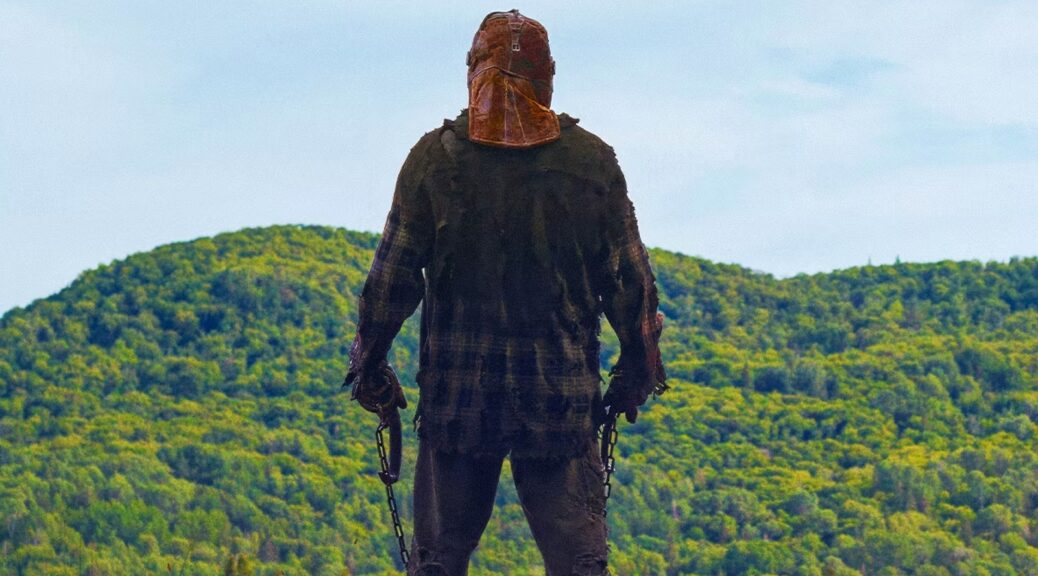
What Chris Nash does with his retake on the slasher—utterly minimalistic except for the carnage, which is generally inspired—is both a deconstruction and loving ode. This movie loves slashers. It does not mock them, doesn’t wink and nod at what we accept when we watch them. Nor does it add any depth to them.
People watch slashers to see characters you don’t care about meet inventive, bloody death in a beautiful landscape. We watch slashers because death is comeuppance, it is coming no matter what, and it’s coming in the form of a hulking, horrifying mass with a tragic backstory. If you don’t like slashers, you won’t like In a Violent Nature. If you sincerely do, though, this film is not to be missed.
Infested
Remember Quarantine (or Rec, for that matter)? Remember that moment when you realize you’re locked inside an apartment building, trapped with the ravenous undead? OK, so that but spiders. Nice, right?! Sébastien Vanicek’s Infested (co-written with Florent Bernard) doesn’t steal from other movies as much as it mines the primal fears that have plagued the most effective horror movies from the beginning.
Apartment horror can be so creepy when it’s done well: dark hallways, grimy elevators, creepy parking garages, too many floors until safety, and loads of places for spiders to nest. Vanicek makes excellent use of these spaces, and he shows solid instincts for creature FX—when to go practical, when to show little, when to show lots (and lots and lots). But his film succeeds on the lived-in world of these neighbors and friends. You may find yourself shaking out your sleeves and pulling the drawstring tight around your hoodie. I did. But at least the cockroaches are under control.
Invader
Lean, mean and affecting, Mickey Keating’s take on the home invasion film wastes no time. In a wordless—though not soundless—opening, the filmmaker introduces an unhinged presence. Immediately Keating sets our eyes and ears against us. His soundtrack frequently blares death metal, a tactic that emphasizes a chaotic, menacing mood the film never shakes. Using primarily handheld cameras from the unnerving opening throughout the entire film, the filmmaker maintains an anarchic energy, a sense of the characters’ frenzy and the endless possibility of violence.
Scenes possess an improvisational quality that coincides with the rawness of the overall effort. Keating is spare with exposition—if you can’t figure out what’s going on without having it explained to you, you are clearly not paying attention. The verité style accomplishes what it’s mean to, lending Invader an authenticity that amplifies the horror. Invader delivers a spare, nasty, memorable piece of horror in just over an hour. It will stick with you a while longer.
I Saw the TV Glow
Fulfilling the promise of 2021’s We’re All Going to the World’s Fair, writer/director Jane Schoenbrun’s follow-up, I Saw the TV Glow, is a hypnotically abstract and dreamily immersive nightmare of longing.
Justice Smith (Dungeons & Dragons: Honor Among Thieves) is heartbreakingly endearing, while Bridgette Lundy-Paine (Bill & Ted Face the Music) provides a revelatory turn of alienation and mystery. It’s hard to take your eyes of either one of them, with Schoenbrun often framing their stares through close-ups that become as challenging as they are inviting. And that feels organically right. Because Schoenbrun is channelling characters who imagine life as someone else, to again emerge as a challenging and inviting filmmaker with a thrillingly original voice.
Late Night with the Devil
If you grew up around 1970s TV, you’re likely to have an even deeper appreciation for this high-concept homage from filmmakers Cameron and Colin Cairnes. The Australian brothers who gave us the terrific low budget horror 100 Bloody Acres have essentially crafted their found footage genre entry, all centered around broadcast and BTS footage from the last episode of Night Owls with Jack Delroy, a nighttime talk show trying to compete with Carson.
David Dastmalchian—a longtime supporting MVP blessed with a memorable face—is finally getting his chance to carry a film, and he does not disappoint. Ultimately, what Late Night with the Devil has in mind is more like an R-rated Twilight Zone, with a twisty moral backed up by blood. Expect devilish fireworks and frisky throwback fun, even if you’re not scared out of your bellbottoms.
A Quiet Place: Day One
Lupita Nyong’o leads a stellar cast as Sam, an unhappy woman on a day trip with her cat to NYC. Her plans are upended when giant ear-head monsters begin dropping from the sky, smack into the noisiest city in the nation. Watching as folks figure out how to survive without saying a word offers Episode 3 an excellent way to carve new ground.
Plus there’s a cat, Frodo. Yes, it’s a cheap way to generate tension as you spend the entire film asking, “Wait, where’s the cat? How is the cat?” The script calls for a handful of other easy ploys for anxiety, fear and emotion, but Sarnoski and his cast rise above these. They make you believe them.
Any time you can watch a film with giant extra-terrestrials bearing ear drums where a face should be and you find yourself fully believing anything, you’re watching a pretty good movie.A Quiet Place: Day Oneis a pretty good movie.
Stopmotion
There will be moments when you’re watching Robert Morgan’s macabre vision Stopmotion that you’ll think you see the twists as they’re coming. That’s a trick. Morgan, writing with Robin King, assumes you’ll catch the handful of common horror twists, but he knows that you won’t predict the real story unfolding.
Stopmotion delivers a trippy, uncomfortable, and deeply felt tale of a struggling artist. This is a descent into madness horror of sorts, but it’s also the story of an artist coming to a realization about what scares her most.