Matthew Vaughn and Jane Goldman work well together. The writing/directing team produced two new era superhero movies – Kick-Ass and X-Men: First Class – and now they want to create a new kind of spy movie with Kingsman: The Secret Service.
Based on comics by Mark Millar and Dave Gibbons, their screenplay hips up the old Bond-style gentlemen agent when Code Name: Galahad (a very fit Colin Firth) introduces a talented street kid to the world of espionage.
Eggsy (Taron Egerton) is Galahad’s candidate to join the Kingsmen – a nation-agnostic spy organization as old and as prim as they come. If Eggsy makes it through training and beats the other candidates, he will take his place alongside Galahad as the group’s newest member, Code Name: Lancelot.
Unless, that is, some lisping billionaire (Samuel L. Jackson) takes his super villain role too seriously and ends the world before training is over.
Firth is a charmer and a joy in the mentor role, and though Jackson’s lisp comes and goes, he makes for a fun villain and his odd-couple onscreen chemistry with Firth is priceless. Egerton, who shoulders much of the film, is an effortlessly likeable presence.
But Vaughn is the star of this film. Kingsmen is often vulgar and crass but always fun and sometimes shockingly funny. The whole affair feels a tad like a British version of Kick-Ass: lovable loser turned unexpected hero, affectionate nods to cinematic forebears, brash new ideas taking familiar genre tropes in excitedly sloppy new directions. Aaah, the refreshing chaos of youth.
The comic timing is fresh and the action sequences are a blast There’s one scene in particular of hillbilly church service carnage set to Skynyrd’s redneck classic Free Bird that is magnificent.
Not every joke lands well. Some fly off in crass directions, but none more than the Bond-esque romantic entanglement that finishes the film. It starts off a saucy little homage, turns questionably but forgivably rank, then, quite unfortunately takes that ugly joke two steps further. Maybe you always thought Bond has too much respect for women? This is not that film, bro.
But, you know, leave after that last bit with Jackson and this movie is really good!
Unless something goes terribly amiss Julianne Moore will finally win an Oscar this year, and that’s simply good news. She probably should have won one for Savage Grace, Magnolia, Boogie Nights, Far From Heaven, Safe and maybe half a dozen other films. Moore is among the most versatile and talented performers of her generation, and Still Alice represents that talent well. Too bad it’s just not that great a film.
Moore plays Alice Howland, a psychology professor at Columbia University who suffers from early onset Alzheimer’s.
Perhaps the best film on Alzheimer’s is Michael Haneke’s brilliant and devastating Amour, a breathtaking journey into one couple’s struggle with the disease. By comparison, Still Alice feels under developed and tidy, particularly as the disease affects the minor characters in the piece. Alec Baldwin, in particular, is hamstrung with an underwritten role as Alice’s husband. Only Kristin Stewart manages to uncover a real character arc as Alice’s daughter, much thanks to an intriguing chemistry with Moore.
The film too often feels like a made for television tragedy, with the only really interesting choice being the decision to make the victim of the disease the point of view character. In Amour as well as Away From Her and other films treading similar ground, our vehicle into the medical tragedy is a loved one. Still Alice wants to give us the first hand sense of what it is like to watch yourself disappear.
It’s a risky choice, but thanks to Moore’s impeccable, understated handling of the role, Still Alice avoids a maudlin, self-congratulatory or sentimental fate. She’s more than up to the challenge.
Moore establishes a character that is more than the irony and heart tugging on the page. Characteristically nuanced and honest, it’s a performance that makes up for many of the weaknesses in the rest of the film.
Moore’s understatement keeps the film from melodrama, but unfortunately, everything else about the movie needed a bit more drama. It’s a superficial tale with contrived bits of tension that end in uninspired resolutions. The lack of insight into the marriage itself is probably the film’s most noticeable failing, but aside from Moore’s ability to show us how the disease ravages a once sharp mind, we don’t get to know Alice – her relationships, her past, her passions – well enough to really understand what she’s losing.
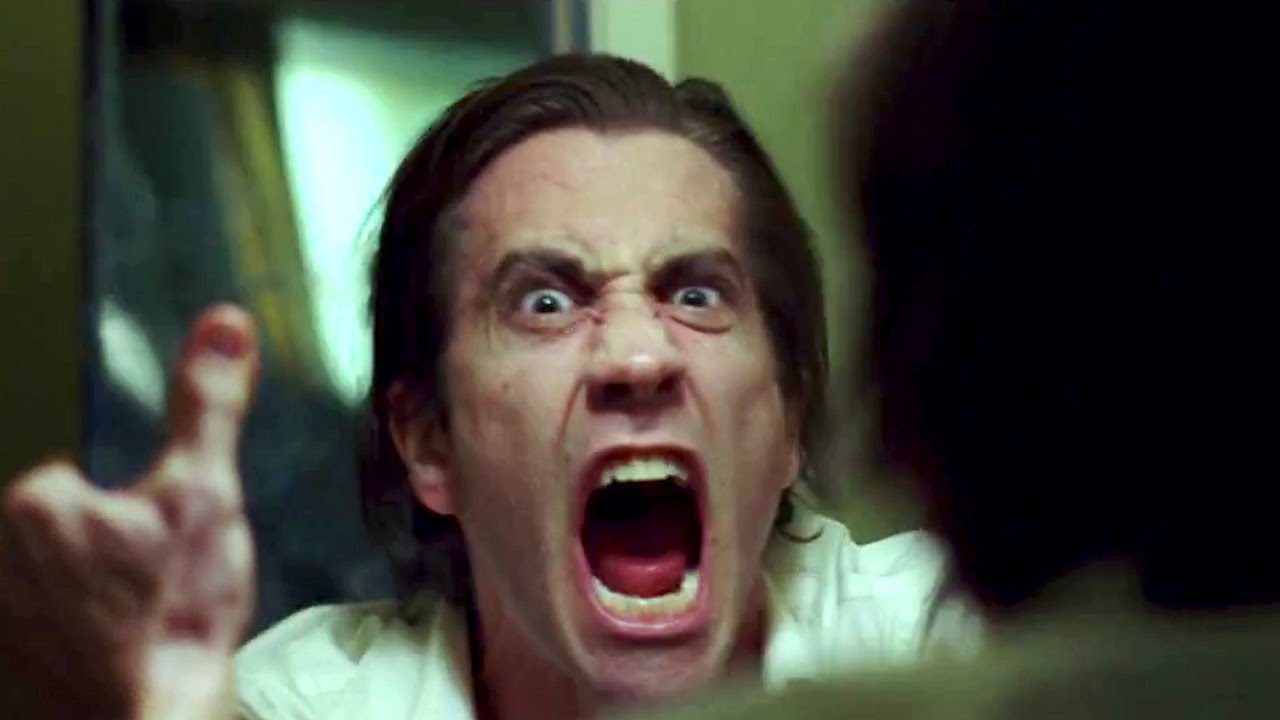
One of the best films of 2014 and the very best performance of Jake Gyllenhaal’s career becomes available for home entertainment today.
No telling why it took so long to combine Network and American Psycho, but Nightcrawler is here now, so buckle down for a helluva ride. Jake Gyllenhaal is at his absolute best in a film that is as scorchingly relevant an image of modern media as it is a brilliant character study in psychosis. You should see Nightcrawler.
There may be no better pairing for this acidic look at modern media than the only film that could do it one better, Sidney Lumet’s masterpiece Network. The film is as prescient as any movie could be, predicting with wicked humor and weird precision the catastrophic consequences of pairing network news and profit. It’s one of the best films ever made.
This week the new Ghostbusters cast was announced and for the first time, we were excited about this reboot. The reimagining of a classic is hard to do well, which is obvious when you count the unforgivably botched horror reboots there are: Shutter, The Eye, The Hills Have Eyes, Prom Night, Rob Zombie’s Halloween – don’t even make us say Oldboy. It’s a long, depressing list. But that only makes those rare gems – the well-made reboots – shine the brighter.
Here is a list of horror reboots we love – maybe even as much as we loved the original!
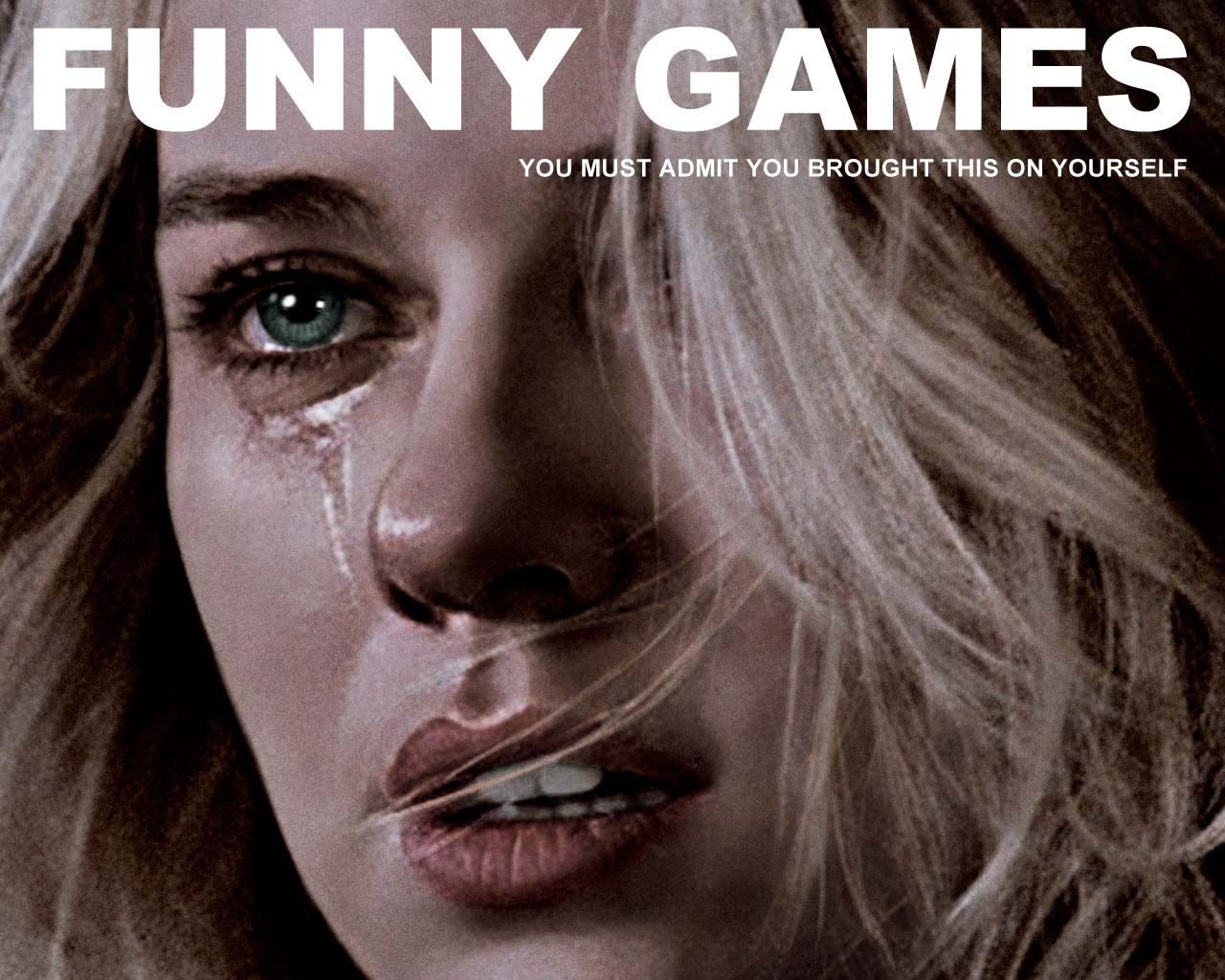
Funny Games (1997, 2007)
Michael Haneke is a genius, an amazing creator of tension. Everything he’s done deserves repeated viewing. With Funny Games, he makes it easy because he made it twice.
A family pulls into their vacation lake home to be quickly bothered by two young men in white gloves. Things deteriorate.
Haneke begins this nerve wracking exercise by treading tensions created through etiquette, toying with subtle social mores and yet building dread so deftly, so authentically, that you begin to clench your teeth long before the first act of true violence.
As teen thugs put the family through a series of horrifying games, they (and Haneke) remind us that we are participating in this ugliness, too. We’ve tuned in to see the family tormented. Sure, we root for them, but we came into this with the specific intention of seeing harm come to them. So, the villains rather insist that we play, too. In one particularly famous scene, Haneke decides to play games with us as well.
His English language remake is a shot for shot repeat of the German language original. In both films, the performances are meticulous. This is true of the entire cast, but it’s the villains who sell this. Whether the German actors Arno Frisch and Frank Giering or the Americans Brady Corbet and Michael Pitt, the bored sadism that wafts from these kids is seriously unsettling, as, in turn, is each film.
https://www.youtube.com/watch?v=48s781bxWF8
Dawn of the Dead (1978, 2004)
Zack Snyder would go on to success with vastly overrated movies, but his one truly fine piece of filmmaking updated Romero’s Dead sequel with the high octane horror. The result may be less cerebral and political than Romero’s original, but it is a thrill ride through hell and it is not to be missed.
The flick begins strong with one of the best “things seem fine but then they don’t” openings in film. And finally! A strong female lead (Sarah Polley). Polley’s beleaguered nurse Ana leads us through the aftermath of the dawn of the dead, fleeing her rabid husband and neighbors and winding up with a rag tag team of survivors hunkered down inside a mall.
In Romero’s version, themes of capitalism, greed, and mindless consumerism run through the narrative. Snyder, though affectionate to the source material, focuses more on survival, humanity, and thrills. (He also has a wickedly clever soundtrack.) It’s more visceral and more fun. His feature is gripping, breathlessly paced, well developed and genuinely terrifying.
The Ring (1998)/Ringu (2002)
Gore Verbinski’s film The Ring – thanks in large part to the creepy clever premise created by Koji Suzuki, who wrote the novel Ringu – is superior to its source material principally due to the imagination and edge of the fledgling director. Verbinski’s film is visually arresting, quietly atmospheric, and creepy as hell.
This is basically the story of bad mom/worse journalist Rachel (Naomi Watts) investigating the urban legend of a video tape that kills viewers exactly seven days after viewing.
The tape itself is the key. Had it held images less bizarre the whole film would have collapsed. But the tape was freaky. And so were the blue-green grimaces on the dead! And that horse thing on the ferry!
And Samara.
From cherubic image of plump cheeked innocence to a mess of ghastly flesh and disjointed bones climbing out of the well and into your life, the character is brilliantly created. (It’s actually a full grown man who climbs herky-jerky out of the TV.)
Hideo Nakata’s original was saddled with an unlikeable ex-husband and a screechy supernatural/psychic storyline that didn’t travel well. Screenwriter Ehren Kruger did a nice job of re-focusing the mystery.
Sure, it amounts to an immediately dated musing on technology. (VHS? They went out with the powdered wig!) But still, there’s that last moment when wee Aidan (a weirdly perfect David Dorfman) asks his mom, “What about the people we show it to? What happens to them?”
At this point we realize he means us, the audience.
We watched the tape! We’re screwed!
https://www.youtube.com/watch?v=_PkgRhzq_BQ
Let the Right One In (2008)/Let Me In (2010)
In 2008, Sweden’s Let the Right One In emerged as an original, stylish thriller – and the best vampire flick in years. A spooky coming of age tale populated by outcasts in the bleakest, coldest imaginable environment, the film breaks hearts and bleeds victims in equal measure.
Kare Hedebrant‘s Oskar with a blond Prince Valiant cut falls innocently for the odd new girl (an outstanding Linda Leandersson) in his shabby apartment complex. Reluctantly, she returns his admiration, and a sweet and bloody romance buds.
Hollywood’s 2010 version is the less confusingly entitled Let Me In, and fans of the original that feared the worst (ourselves included) can rest easy. Director Matt Reeves (Cloverfield) managed to retain the spirit of the source material, while finding ways to leave his own mark on the compelling story of an unlikely friendship.
Twelve year old Owen (Kodi Smit-McPhee) is a lonely boy who’s being bullied at school. When young Abby (Chloe Moretz) and her “dad” (Richard Jenkins) move in next door, Owen thinks he’s found a friend. As sudden acts of violence mar the snowy landscape, Owen and Abby grow closer, providing each other a comfort no one else can.
While the original had an ominous sense of dread, a feel of bleak isolation, and a brazen androgyny that the update can’t touch, Let Me In scores points all its own.
Together the films set the standard for child vampire fare, and neither one should be missed.
https://www.youtube.com/watch?v=DYcBSQokyBU
https://www.youtube.com/watch?v=7oQFXaAj5xE
The Crazies (1973/2010)
Just five years after Night of the Living Dead, George A. Romero found himself interested in taking his zombiism concepts in a different direction. Building a cumulative sense of entrapment and dread, the both versions of this film rely on a storyline whisper-close to a zombie tale, but deviate in a powerful way. The slight alteration plumbs for a different kind of terror.
The military has accidentally tainted a small town’s drinking supply with a chemical. Those who drink the water go hopelessly mad. Both films begin by articulating humankind’s repulsion and fear of infection and loss of control before introducing the greater threat – our own government.
Romero was more interested in social commentary than in horror, therefore his film is not as scary as it could be. Military incompetence, the needless horror of Vietnam, and the evil that men can do when ordered to do so are all central conceits in his film.
Breck Eisner’s remake offers solid scares, inventive plotting, and far better performances than expected in a genre film. Eisner’s languid pace builds dread and flirts with an effectively disturbing sense of compassion. His sense of timing provides a fine balance between fear of the unknown and horror of the inevitable. He also has a far more talented cast, and he mines individual madness for more terror – although he pulls one punch Romero was happy to land.
Listen to our Frihgt Club PODCAST at Golden Spiral Media!
Match opens on a ballet instructor – smilingly supportive yet rigorous, the kind of mentor with a joy for teaching that inspires. He is Tobi, an aging Julliard ballet instructor played with confidence and enthusiasm by the wonderful Patrick Stewart.
Director Stephen Belber adapts his own Broadway play for the screen, and though Frank Langella originated the role on stage, it feels custom made for Stewart.
Tobi craves his solitude, yet he’s agreed to meet with Lisa (Carla Gugino), who, with her husband Mike (Matthew Lillard) in tow, wants to interview Tobi for her dissertation on classical dance choreography.
Like the Richard Linklater film Tape, also penned by Belber from his own stage play, Match is a three-way dialog about the effects of the past. But where Tape was a grim exercise in regret, Match pairs regret with celebration, and the entire effort is buoyed by Stewart’s nervous showman’s energy.
Gugina and Lillard are solid as well, she conveying the depths of tenderness and heartbreak with an expression, and he capably animating his character’s pain and its protective layer of anger. Their chemistry with the lead, particularly in more intimate, one-on-one scenes, packs a punch. But the show belongs to Stewart.
Tobi is a character, not a type, and Stewart so fully inhabits this fascinating, multi-dimensional man that the actor ceases to exist.
Belber’s casting is spot on, and his dialog is sharp and insightful. How could Stewart do anything but soar with such magnificent lines? But the film feels trapped, confined. Belber is rarely able to open up, take advantage of the opportunities cinema offers that the stage cannot. His film feels like a play.
And though the second act, surprisingly fresh and raw as Lisa and Tobi get to know each other, is very strong, the entire effort feels just slightly stale, a bit contrived, and inevitably predictable.
Still, it’s a lovely film about chance, consequences, choice. If nothing else, it’s a magnificent showcase for an underappreciated talent.
A dozen years after the world defeated an alien invasion, sending their mother ship back to the heavens in retreat, a handful of surviving aliens – “heavies” – are still holed up here and there around the world. The global military force established outposts to eliminate the remainders. We journey with a documentary crew – Oh, God, another found footage movie about aliens? Seriously? How many low budget found footage genre films must we endure?
Sorry. The documentarians of Alien Outpost embed with three reinforcements sent to Outpost 37, sandwiched between Afghanistan and Pakistan. And though inter-human combat ceased when the aliens arrived more than a decade ago, the locals are suddenly armed and skittish. What gives?
It’s a recipe for disaster, truth be told, and I don’t just mean for the documentarians. But truth be told, director/co-writer Jabbar Raisani knows how to make the most of his tight budget.
No, there is no integrity to the found footage angle, but he doesn’t draw enough attention to the gimmick to make it unbearable. He spent some cash on a helicopter sequence and a handful of explosions and made up for it with low rent sets, cinematography, and unknown actors. The verite style of the faux-documentary helps obscure some of the weaker sets, and the storytelling gives fresh enough twists to genre clichés to keep you from nodding off.
The film’s real spark comes by way of Raisani’s background in FX. The aliens on the ground are impressive and the battle carnage is believable.
While none of the acting is worth a note home, none of it embarrasses anybody, either.
Alien Outpost won’t leave you breathless, but Raisani invests well, pouring attention and cash in the right places, keeping the pace and story tight, and getting us in and out before we lose interest. As low budget, independent genre filmmaking goes, this is as solid as they come.
One of the year’s most impressive directorial debuts is available for home viewing today. Justin Simien makes the leap from shorts to features with one of the smartest films of the year. Dear White People tackles racial issues with confidence and a mix of sarcasm, outrage, hilarity and disgust. Simien never abandons comedy for preaching, but there is not an issue he isn’t willing to spotlight, however uncomfortable. It’s an insightful, biting comedy too few people saw this year. Witty, incisive and one step ahead of you, this excellent indie comedy needs to make everyone’s home entertainment watch list.
There hasn’t been as funny, insightful and thoughtful a look at perceptions of race since Spike Lee’s groundbreaking 1989 Do the Right Thing. As Mookie makes his pizza deliveries on the hottest day of the summer, his alter-ego Lee unveils racism and other ugliness that bubbles up on days like this. It’s worth a revisit.
J. C. Chandor knows what he wants to say. He knows the content, the concepts, and the situations, and while you may not, do not expect to be spoon fed. His 2011 debut Margin Call wasted no time getting audiences up to speed on Wall Street’s inner workings, nor did Chandor preface last year’s All Is Lost with a tutorial on yachting. Chandor believes you are wise enough to keep up, which is a daunting but wonderful change of pace.
Like the filmmaker’s previous work, A Most Violent Year drops you in the center of an episode in progress, and while you may know little of the crime in New York City in 1981, and less still about the fuel business, Chandor hopes you’ll push all that aside to take in the kind of period drama we haven’t seen since Sidney Lumet.
Oscar Isaac plays handsome, proud, honorable man Abel Morales, who bought his father-in-law’s heating oil business and is brokering a deal that will allow him to break free from that shadow and control his own fate – if he can complete the payment in 30 days.
Meanwhile, a gunman’s been prowling his property, hijackers are taking his trucks, his terrified drivers want to arm themselves illegally, and the DA promises coming indictments.
A Most Violent Year is a film about the merits versus moral compromise of the American Dream, and Chandor’s slow boil of a film keeps you on edge for a full 125 minutes because there is absolutely no guessing what is coming next.
Isaac and Jessica Chastain, playing his wife Anna, are measured perfection – an impeccable, in-control Abel balanced by a volatile Anna. They become a force, survivors who check and balance each other. Their chemistry is amazing. Co-stars David Oyelowo and Albert Brooks are also excellent.
The film is satisfyingly untidy – a fact that makes it unpredictable and genuinely life-like. No flashbacks remind you of one legacy or explain another character’s behavior because that doesn’t happen in life, either. People are as they are, situations complicate and unravel, marriages take shape and morph in to something else.
It’s also a piece of atmospheric perfection, a provocatively gritty and realistic image of NYC in 1981. As much authenticity as you’ll find in Chandor’s screenplay, his wide shots, subway graffiti, lighting and wardrobe complete the picture. It’s just another reason you feel as if you’re watching an old Sidney Lumet film, and wishing there were more filmmakers willing to make a location and point in time as grand a character as anyone in the ensemble.
A woman wakes from a nap due to a phone call. She’s baking for the kids. It seems like a lovely way to spend your afternoon, really, drowsy and surrounded by the smell of baked goods. So why does Sandra (Oscar-nominated Marion Cotillard) sound defensive about the nap and too enthusiastic about the treats with whoever is on the phone?
Because there are layers and layers to the most ordinary of circumstances, a point Two Days, One Night explores so effectively.
Sandra’s co-workers were faced with a vote: each stands to gain a large bonus in return for eliminating one salary – Sandra’s. She has the weekend to convince them to give up their bonus and save her job.
If it sounds contrived, rest assured that writing/directing brothers Jean-Pierre and Luc Dardenne embrace their characteristically naturalistic style to great effect. The films lacks any hint of melodrama, thanks in part to the brothers’ honest style and in greater part to a lead performance utterly absent of artificiality.
Cotillard is a master, and this film is no exception, it’s a highlight. Her gestures, her gaze, her posture, every syllable of dialogue simply convince you this is a woman fighting for her dignity as well as her job. She’s aided by a large, capable cast and buoyed by the Dardennes’ fly-on-the-wall camera work.
The film has larger goals, looking at ideas as concrete as corporate indifference, as amorphous as depression, and as grand as human nature. Grounding all this examination in the intimate and mundane details of one woman’s struggle keeps the film anchored in the reality so precious to the filmmakers.
Two Days, One Night is not as touching as the Dardennes’ Kid with a Bike or as gripping as L’Enfant – two of their finest efforts. It feels more contrived than those films, its craftsmanship more obvious. But Sandra’s challenge and her personal journey are so beautifully articulated that you won’t care. The film is a small, potent wonder.
American Sniper contiues to generate loads of box office cash and social backlash. Director Clint Eastwood – a figure absolutely synonymous with the badass, the gunman – continues to be fascinated with telling that guy’s story. His most powerful films are always stories of the physical and emotional damage the badass accrues over the course of a lifetime of violence, and American Sniper is another in this potent vein. Debate rages over whether it’s a responsible depiction of Chris Kyle as a man, but as a film American Sniper is a brilliantly acted, well executed thriller, ranking as one of the best of its genre.
Military films have often riled audiences and critics alike. Here’s a non-sequential list of ten of our other favorites.
Full Metal Jacket (1987)
This is Stanley Kubrick’s chilly vision of the war in Vietnam and its impact on the American psyche. More intense and yet more controlled than any of the other Vietnam epics of the ’80s, this film is a punch to the gut from boot camp through the Tet Offensive. It’s brilliant.
https://www.youtube.com/watch?v=x9f6JaaX7Wg
No Man’s Land (2001)
Two soldiers – one Bosnian, one Serb – are trapped in a trench between the Serbian and Bosnian fronts. Their position is symbolic of the fuzzy barrier dividing compassion and hatred, as well as a symbol of the film itself – balancing and blending the bitter comedy of absurdities and the devastating human issues of war. This often comedic, often punishing look at the idiocy of war, in concept and in particulars, took the best screenplay prize at Cannes 2001.
Stripes (1981)
Yes, a change of pace for Army training, sir, but no doubt the most entertaining film on the list. Every list should have a Bill Murray film on it, and if you can pull from the exceptional bank of Harol Ramis-penned comedies, all the better. Plus, it’s a history lesson about all kinds of Eastern European nations that no longer exist.
The Bridge on the River Kwai (1959)
A timeless examination of the madness of war and the bone-deep respectability of the British upper class, The Bridge on the River Kwai hauled in 7 Oscars. Director David Lean knows what he’s doing with a camera. The film looks amazing, and the choices made by every major character continues to surprise and confound almost 60 years later.
The Hurt Locker (2008)
Far and away the best of the Iraq War films, this unflinching and politics-free look at a U.S. bomb squad operating inside Baghdad is a triumph for director Katheryn Bigelow. It won 6 Oscars, including Best Picture and the historic Best Director nod. Four years later Bigelow upped the ante with the even more gripping Zero Dark Thirty (not an outright “military” film for our purposes here but we can have that debate another time). The Hurt Locker gets to you with the quiet intelligence of a film benefitting from years of history and hindsight. The fact it had neither makes the achievement all the more startling.
Das Boot (1981)
Wolfgang Peterson’s study in claustrophobia is the most tense and terrifying look at WWII you are likely to find.
Saving Private Ryan (1998)
Great performances and an excellent story follow what is one of the most devastating and visceral action sequences in war movie cinema. Steven Spielberg was robbed a best picture Oscar for this one, but he can rest assured that his WWII effort is holding up a little better than some fluffy Shakespeare tale.
Apocalypse Now (1979)
Trippy, violent and hypnotic, Francis Ford Coppola’s iconic take on Conrad’s Heart of Darkness is hard to watch and harder to turn away from. The film stinks of death and insanity thanks to Coppola’s bizarre vision and equally unsettling performances from Marlon Brando, Martin Sheen and Dennis Hopper.
The Dirty Dozen (1967)
Twelve criminals execute a suicide mission in WWII. Here’s a throwback thriller where the guy who has your back in your top secret mission is very likely insane. Never trust a guy named Maggot.
https://www.youtube.com/watch?v=CE-m6zUNKH0
Good Morning, Vietnam (1987)
Robin Williams’s best performance comes in the form of an obnoxious radio DJ sentenced to a station in Vietnam during the war. Funny and tragic, boasting an endlessly quotable screenplay and excellent performances all around, it’s one of the decade’s best films.