Tag Archives: MaddWolf

Monster Mash

Monstrum

by Hope Madden

Very little in life brings me joy quite like a decent creature feature. Even the silly ones where a big, boil-riddled muppet winds up slathering pus leakage all over Korean mountain people in the 1500s.

Especially those.

Hun Jong-ho’s new import takes us back to 1506, a time when the king is beset by troubles: his disloyal prime minister, a plague across the land. That is a lot for one man to handle, and an even larger load once his most loyal guard, Yoon Gyeom (Kim Myong-min), abandons him to save a little girl’s life.

Fast forward a decade or so and strife still divides the nation, but that strife has a new name: Monstrum.

But is that monster really there? Or is it all just a figment of mass hysteria planted by a conniving prime minister? The sleuthing sets up a clever-enough through line and the deception creates space for plenty of gory action sequences.

Jong-ho’s story, which he penned along with Byeon Jeong-uk and Heo-dam, offers a relatively simple “the people have the power” narrative elevated by some nice set pieces and a handful of choice performances.

Myong-min cuts a properly heroic figure: quiet, savvy, handy in a fight. Kim In-kwan makes the perfect sidekick, his comedic moments (though often anachronistic) offer welcome moments of levity.

With K-pop’s Lee Hye-ri (of the band Girl Day), Jong-ho delivers a little 16th century girl power via one spunky adolescent who’s smart, capable, irreverent and fearless. (Another anachronism? Probably, but again, it’s a movie with a giant, pus-dripping puppet. You came looking for realism?)

And hey, who’s that handsome young man beguiled by Hye-ri’s badassedness? It’s Parasite’s Choi Woo-sik, charming as ever.

The film looks great, thanks in part to some exceptional costuming but mainly to cinematographer Kim Dong-Yeon’s capable maneuvering through interiors and exteriors, false backdrops and lushly wooded hills.

Monstrum is no masterpiece—go in expecting The Host and come out disappointed. But for creature feature fun and just a touch of flatulence humor, Monstrum delivers.

An Eye for Style

The Times of Bill Cunningham

by Brandon Thomas

In 1994, rookie producer Mark Bozek sat down with New York Times fashion and street photographer, Bill Cunningham. The casual chat about an award Cunningham was receiving was supposed to only be a quick 10-minute in and out.

The interview didn’t end until the tape in Bozek’s camera ran out.

Twenty-five years after conducting this interview, Bozek makes his feature documentary debut with The Times of Bill Cunningham. Less a look or critique of the New York fashion scene, Bozek’s interest is sharply focused on the unassuming Cunningham. 

Bozek uses the ample footage at his disposal to let Cunningham share his thoughts and insights about his life and career. Cunningham’s almost child-like zeal for his work comes across as both disarming and curious all at once. From his beyond-modest “apartment” in the old Carnegie Hall Studios building, to his uniquely un-chic wardrobe consisting mainly of hand-me-downs, Cunningham wasn’t your typical New York fashion figure. 

As the layers peel back more and more, Bezok is able to capture and celebrate Cunningham’s genuine kindness — whether that be his enthusiasm for catching people “as they are” on the street, or the financial support he showed a friend who was fighting a losing battle with the AIDS virus. 

Peppered throughout the film are many of Cunningham’s photos. The juxtaposition of these wonderful photographs with his animated interview makes for an appreciative experience. Many of these photos were splashed across Cunningham’s weekly spread in the New York Times. A few gems, however, were never published during Cunningham’s storied career. 

Sparse narration by Sarah Jessica Parker (Sex and the City) provides needed connective tissue and context. It’s one thing to take Cunningham’s word for it, but highlighting his accomplishments in the broader fashion world is a poignant statement on how important he was to the fashion industry and to New York City itself. 

Documentaries focused on one individual aren’t new. Specific filmmakers, politicians, and athletes have all received this treatment. What’s so different, and enthralling about The Times of Bill Cunningham is how much Cunningham gets to speak for himself. It’s an honest, unfiltered look at a man that did what he loved — and did it well. 


Hindsight 2020

Capital in the Twenty-First Century

by George Wolf

You want to understand the economic mess we’re in? Simple. It all comes down to horses and board games.

Wut?

Watch Capital in the Twenty-First Century, and more than just vague analogies will come into startling focus.

New Zealand filmmaker Justin Pemberton has assembled an array of scholars and historians (including Thomas Piketty, author of the source book) for a 103-minute presentation that is so informative, measured and concise it should earn you college credits.

There are graphs, illustrations and pop culture snippets from film and television that Pemberton weaves throughout the lecture material to attract the eye and boost the film’s overall entertainment value. But make no mistake, his mission is about breaking down the 400 years of history that explain the social and economic precipice we’re teetering on right now.

The breakdown is an accomplishment in itself, but Pemberton and his scholars never condescend or confuse, bringing an immeasurable value to the medium delivering this invaluable message.

And while some of the lessons are not new (i.e. we need a strong middle class) the context here is so vivid and relevant many observations may land with an echo of “eureka!” inside your head.

The history of nations carrying staggering wealth inequality and stagnant social mobility is not pleasant, but the ironic timing of Pemberton’s film helps fuel the hope that total socio-economic collapse may still be avoided.

The key lies in totally re-shaping the way a population thinks, which historically has only been achieved through seismic cultural shifts such as a war or a depression.

Or a pandemic?

We’ll see, but by the time Capital in the Twenty-First Century is done telling you about the horses and the board games, there will be little doubt why the “job creators” are so anxious to give us the business.

Seeking Harmony

Gay Chorus Deep South

by Brandon Thomas

On Tuesday, November 8, 2016, Donald Trump was elected president of the United States. Over the next few weeks and months, many Americans responded by organizing and protesting. The San Francisco Gay Men’s Chorus’s call to arms was quite different: tour the conservative American South. In the timely documentary Gay Chorus Deep South, director David Charles Rodrigues tackles the decades of discrimination, shame and emotion that led to this tour.

Choir director Tim Seelig has the best of intentions: he hopes to change hearts and minds with a tour of uncharted territory. Many of the choir’s members originally hail from the South, and they vividly remember the rejection and outright hate directed toward them. For these members, the tour is less about changing minds. This tour is about closing a chapter.

At times, Seelig and the choir wade directly into the belly of the beast. They appear on conservative talk radio. They meet with a church that ultimately doesn’t allow them to perform due to a newly-placed homophobic head pastor. Seelig expected these reactions, but it doesn’t soften the sting. 

The pain of past experiences vividly pours off the screen—tales of humiliation at the hands of adults who should’ve been there for protection. Seelig himself was separated from his children and cast out of the church he gave so much to. The film’s strength is in its devotion to these individual stories.

Through the choir members, Rodrigues is able to immerse the film in Southern culture rather than look at it entirely as an outsider. Seelig knows how to shrewdly navigate not only the Southern world but the religious one, too. The discrimination during the tour isn’t blatant as one would expect but is instead wrapped subtly inside the veil of Southern hospitality. This hypocrisy is something Seelig expected and isn’t afraid to constructively call out.

While politics is squarely at the forefront, Gay Chorus Deep South isn’t interested in political proselytizing. The “fish out of water” aspect to the film is political enough without dozens of talking heads telling the audience how to feel. Rodrigues wisely lets the choir members naturally move the story along as they navigate a complex, and at times uncomfortable situation.

While the music and performances are as impressive and moving as you would expect, the real heart of Gay Chorus Deep South is in those personal stories. Song and dance are easy to sell, but building community inside a structure of fear and hate takes conversation and empathy.

https://youtu.be/IGN_NDfo5gw


The Perfect Beast

How to Build a Girl

by Hope Madden

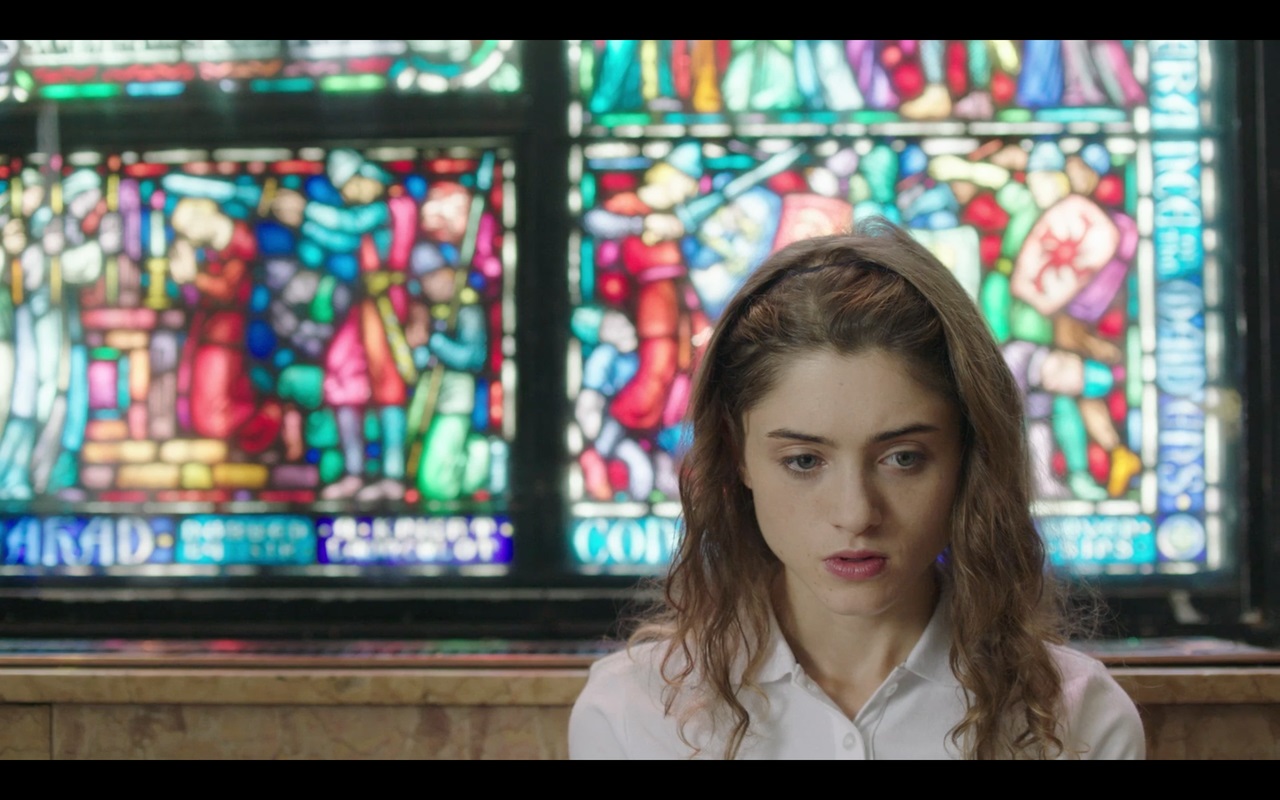
There may be nothing braver than an open heart. That kind of bravery accompanies a lack of cynicism that makes others hide their eyes. It is also what drives Coky Giedroyc’s big screen depiction of Caitlin Moran’s memoir (adapted by Moran herself), How to Build a Girl.

Though events have been condensed and details changed (including the main character’s name), Moran’s inimitable upbeat and insightful voice remains, finding its ideal avatar in Booksmart’s Beanie Feldstein.

Feldstein is Johanna, unrepentantly resilient odd duck. Friendless, in love with life, desperate for an adventure, Johanna is the fearless hero in this quest. Feldstein, aside from a few struggles with the accent, commands your attention and very best wishes. You root out loud for her.

After a local TV spot as student poet turns mortifying, Johanna’s brother (one of four) suggests she audition for a London magazine’s “gunslinger” opening as music critic. She unironically writes up a piece on the soundtrack to Broadway’s “Annie”—which nabs her an interview, but only as a joke. Undeterred, she overwhelms the smarmy hipsters into an assignment.

There are moments where How to Build a Girl transcends its coming-of-age trappings. Those are the moments when it directly quotes the book, giving us a peek inside the skill as a writer that will carry Johanna through it all.

The film bears a resemblance to Lady Bird, in which Feldstein portrayed shy bestie to Saoirse Ronan’s adolescent work-in-progress. Like Lady Bird, Johanna craves life outside her hometown. The two heroines also share a lovely knack for forgiveness (of self and others) as well as a strength for self-definition.

Feldstein’s work thus far (Neighbors 2, Lady Bird and, most notably, Booksmart) has announced her as the go-to for funny, brainy, less-than-popular teens—which is not to call her a one-trick pony. Part of her draw is her ability to carve out individuals, to recognize and unveil the human heart inside each girl. Her charisma is almost blinding in this film.

That’ll help you miss some of the weaker elements. Minor characters are allowed little opportunity to develop and the story feels boiled down to the most obvious plot points. There is nothing superficial about Johanna, but the film itself fails to dive far enough beneath the surface to do her justice.

Moran’s audacious humor sometimes feels muted, and that is an outright shame. Nonetheless, Feldstein’s a 1000 watt bulb who makes even the most ordinary scene glow happily. There is also something fearless in a film that decides it is up to every girl to build and rebuild herself in her own image.

No Mountain High Enough

South Mountain

by Cat McAlpine

Lila is trying to hold it together, but things keep falling apart. Her best friend has cancer. Her daughters have both left for the summer. Her husband might be leaving forever. The ants will be back soon.

Written and Directed by Hilary Brougher, South Mountain refuses to settle into one place.

At first, we follow the youngest daughter, Dara (Naian González Norvind), back home from the woods. Then the older daughter, Sam (Macaulee Cassaday), arrives home before her big sail across the Atlantic. We discover that father Edgar (Scott Cohen) has a secret. Gigi (Andrus Nichols) has a lump and her daughter is scared. Everyone has an opportunity, even if glancing, to be the main character. Life’s like that.

But it is Lila (Talia Balsam) with whom the camera stays. Lila is at the center of it all.

There is only one reference, in passing, to South Mountain’s namesake but the title still fits the tone of the film. Brougher never lets you forget how close the outside world is or how integral it is to this family’s backdrop.

We see nature in micro and macro as Lila’s journey comes in and out of focus. The credits open on a nearby waterfall, but as the story narrows, the details get smaller and more mundane. Flies are constantly zooming around the dining room. Fresh blackberries are picked for dessert. We even get a look inside the compost bin because life and leftovers are messy.

The narrative is loose. Sometimes new scenes are introduced with a date stamp. “June 22nd”, announces one, in unassuming white letters. Other scenes come and go without any anchor. The clothes change, the light shifts, and you simply realize that this must be a different day. Time never seems to move linearly, but it does keep moving forward. Paired with a shifting focus at the start, Brougher paints a more realistic story of grief and acceptance where some days matter and some do not.

Overall, what carries South Mountain is Balsam’s fantastic performance. The story can be too slow and too scattered at times. But it’s impossible to not keep watching Balsam as she moves from self-assured to train wreck to something in-between.

Is Lila going to be okay? There won’t be a definite answer but it’s worth the journey. Life’s like that.

Imagine There’s No Heaven

Z

by Hope Madden

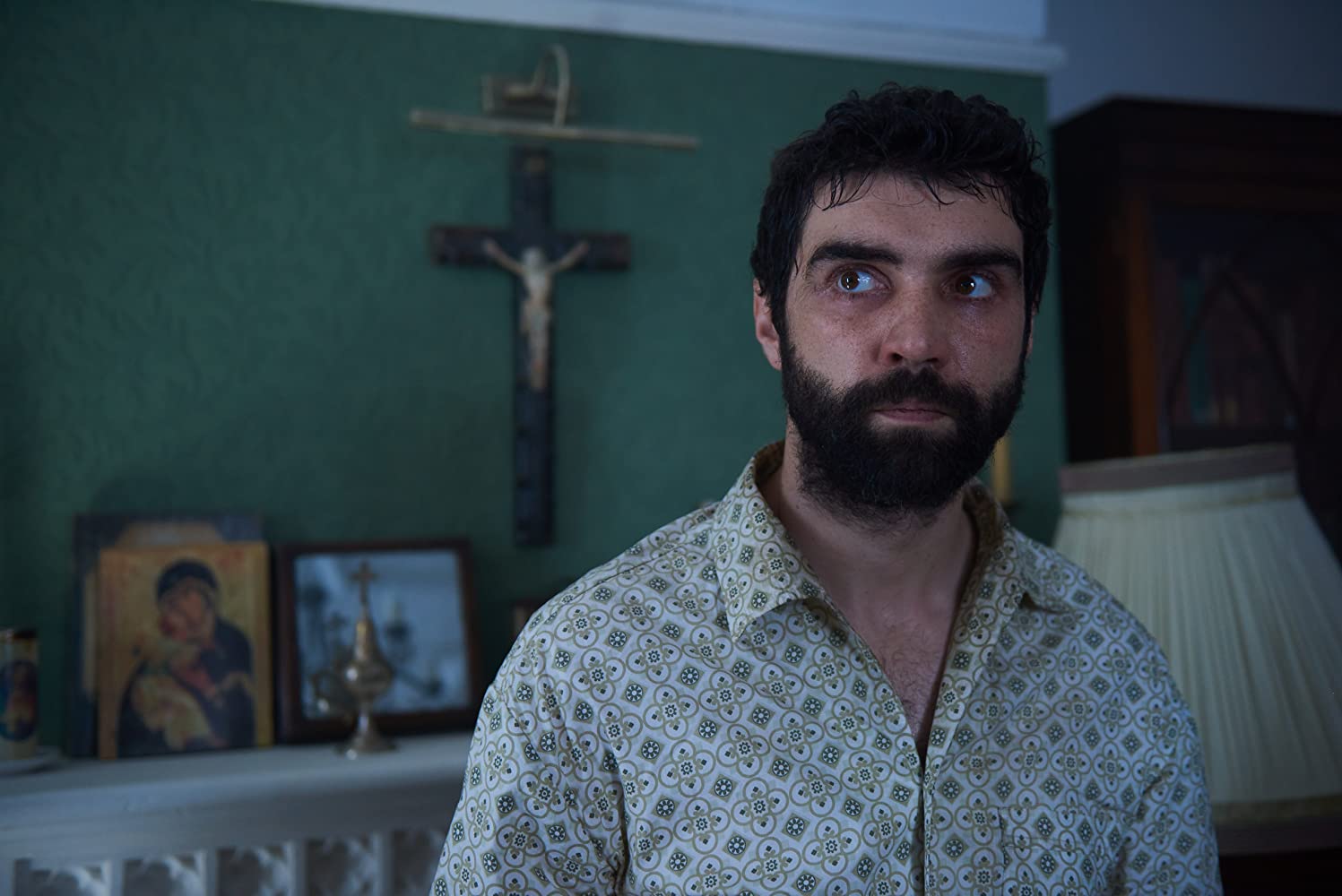
There is a moment that currently fascinates horror filmmakers. It is the moment when we forever lose the sweet little white boy destined to become a sociopath.

Director Brandon Christensen (writing with Colin Minnihan) examines parental involvement and even responsibility with the imaginary friend horror, Z.

Beth Parsons (Keegan Connor Tracy) and her husband Kevin (Minnihan regular Sean Rogerson) are at odds about how best to handle son Josh (Jett Klyne) and his new buddy.

This sounds familiar.

Mother is immediately creeped out. Dad is lenient. Boy begins to lash out, blaming imaginary friend. Mom wants to enlist expert help. Dad agrees within reason, but begins to pull away once Mom becomes convinced of a supernatural presence. Bodies begin to pile up.

Brightburn

The Boy

Brahms: The Boy II

Hole in the Ground

Prodigy  

That’s just in the last three years. This phenomenon means two things: filmmakers have hit upon a provocatively of-the-moment topic and it will be hard to find a unique perspective on that topic.

Though Z never seems fresh, there are moments that feel more authentic than they have any right to. Christensen’s direction lets conversations, in particular, breathe. Actors get the chance to give their characters a heartbeat. Adult family relationships have a lived-in quality that both reinforces themes and carves out layers for the story.

As is often the case in this subgenre, the film lives or dies on the role of the mother. Lucky, then, that Tracy gives such a powerful performance. Never showy, Tracy’s weary, passive, put-upon delivery creates a mysterious yet believable character. Beth’s actions feel both natural and unpredictable, which creates a lot of space for the filmmaker to build in surprises.

Too much convenience, too many unearned jump scares and too much predictability threaten to sink the effort, but a handful of narrative choices and a few truly solid performances (plus a cameo from the always welcome Stephen McHattie) elevate the film.

It’s no We Need to Talk about Kevin (the high water mark for the category), but what is? It is an unsettling way to worry about what we pass on to our kids.

Fright Club: Best of Troma

Here it is—the topic to test the marriage. Luckily, so George did not have to watch every film on the list, we were able to snag a couple of experts. Phantom Dark Dave and Jen Dreadful join Fright Club to gush, ooze, splurt, spray and basically get sloppy with Troma.

5. Poultrygeist: Night of the Chicken Dead (2006)

Are you squeamish? If so, best of luck trying to make it through anything on this list. Poultrygeist is certainly not recommended.

Part Better Off Dead, part Night of the Living Dead, a whole lot of Poltergeist, Kaufman’s film picks apart horror tropes and fast food chains. The film will do nothing for your appetite.

https://www.youtube.com/watch?v=s74J-XtfOE4

4. Tromeo and Juliet (1996)

James Gunn is one of many cinematic giants who got started with Troma. Along with Troma co-founder Lloyd Kaufman and Shakespeare, Gunn penned a troma-tastic version of the Bard’s star-crossed romance. Truth be told, things work out a little better for Gunn’s cute couple.

Incest, cannibalism, homoeroticism, body fluids, poor food safety protocols and more delirious nastiness mark this as a bone-deep Troma effort, so don’t let the highbrow source material throw you.

3. The Toxic Avenger (1984)

Here’s the classic. No way we could put together a tribute to Troma without Toxie. The Eighties underdog flick feels tame compared to what came before and after, but Eighties Troma tended to be a little friendlier, almost mainstream.

Well, that might be an exaggeration, but Toxic Avenger offers an excellent first toe into the massive, polluted gene pool that is Troma.

2. Father’s Day (2011)

The creative team behind loving giallo spoof Editor started off making what could reasonably be considered a spoof of a Troma film that wound up being an actual Troma film because, let’s be honest, who could tell the difference?

Story schmory—the film sets up every conceivable way to offend, disgust and dismay and it has the best time doing it. You’ll know if this film is for you within two minutes. Chances are good you won’t make it through that opening scene, and even better that you be sickened before the end of the movie if you do stick it out. What they do is vile and hilarious.

https://www.youtube.com/watch?v=tMZBXdf-6qA

1. Killer Condom (1996)

A Troma-distributed splatter/horror/comedy, Killer Condom is an enormous amount of fun. This is a German film—German actors delivering lines in German—but it’s set in NYC. You can tell because of the frequent shots of someone opening a New York Times newspaper machine.

Luigi Mackeroni (Udo Samel) is the grizzled NYC detective who longs for the good old days in Sicily. In German. He’s assigned to a crime scene in a seedy Time Square motel he knows too well, where it appears that women just keep biting off men’s penises.

Or do they?

This film is refreshingly gay, to start with, as nearly every major character in the film is a homosexual. The run-of-the-mill way this is handled is admirable, even when it is used for cheap laughs. (Babette, I’m looking at you).

It’s fun. It’s funny. It’s gory and wrong-headed and entertaining from start to finish. Who’d have guessed?

She Said She Said

What She Said: The Art of Pauline Kael

by George Wolf

Even with the fragmented and ubiquitous nature of film criticism in the social media age, Pauline Kael’s summation may still be the best.

Kael believed it was her job to “alert or interest people,” and without critics, “it’s all advertising.”

Falling into a movie reviewing gig almost by accident in the 1950s, Kael rode her obvious passion and expressive prose to a seat of tremendous power in the film industry. Many credit her positive review of Bonnie and Clyde with saving the film from ruin, while her negative reaction to Lawrence of Arabia made director David Lean question his future.

For What She Said: The Art of Pauline Kael, writer/director Rob Garver gathers interviews with Kael, her daughter and various film industry faces, weaving in passages from Kael’s writings amid snippets – with occasionally cheesy placement – from hundreds of movies.

It’s a spirited, engaging celebration of not only Kael, but of film itself as a source of entertainment, inspiration and discussion.

Garver supplies pertinent biographical info, showcasing Kael’s unlikely rise through sexist attitudes and editors uneasy with a critic unafraid to buck popular sentiment. And though it never quite feels as if we get to know Kael well, Garver makes sure we are aware of her complexities and contradictions.

She was grateful to be “paid for thinking,” not caring much about dissenting opinions or any hurt feelings on the other end of her sharpest barbs. She championed American New Wave cinema, but openly dismissed arthouse elitism for a populist lean, favoring sentences with the “sound of a human voice.”

It is that voice that speaks loudest in What She Said, with clear illustrations of how her self-assurance (and yes, self-promotion) elicited hatred, praise, and even the respect of those whose work fell below her standards.

And though Kael died in 2001, the film’s parting shot shows her approach as one both original and prescient. Putting some of Kael’s memorable thoughts inside imagined tweets, Garver leaves little doubt her following today would be impressively large.

That’s what she said.